


Liposuction Devices Market Size
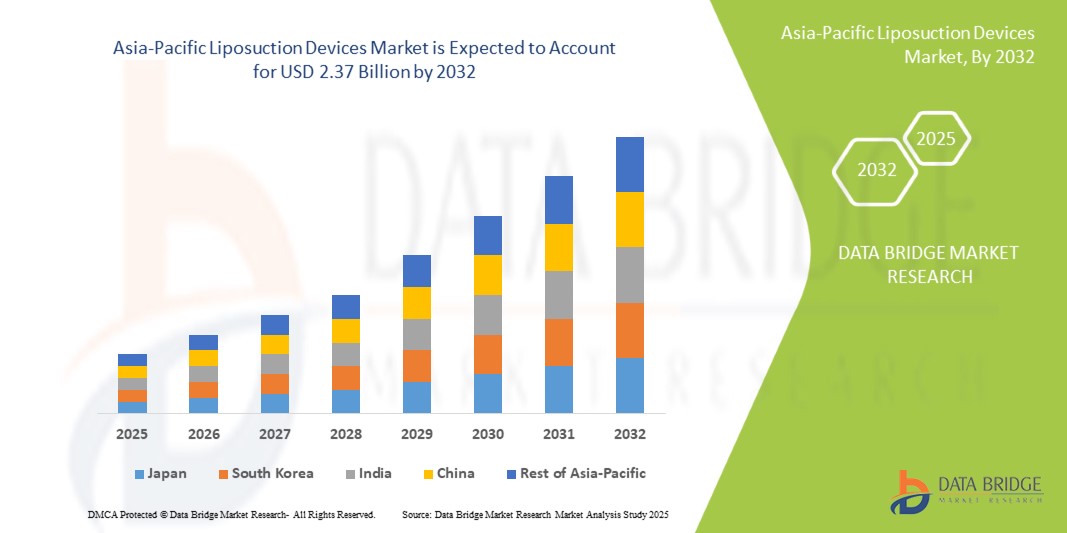
- The Asia-Pacific Liposuction Devices Market was valued at USD 1.44 billion in 2024 and is expected to reach USD 2.37 billion by 2032, at a CAGR of 6.3% during the forecast period.
- The growth of the Asia-Pacific Liposuction Devices Market is propelled by several key factors. Innovations in liposuction technologies, such as laser-assisted liposuction (LAL), ultrasound-assisted liposuction (UAL), and power-assisted liposuction (PAL), are enhancing the precision, safety, and effectiveness of procedures. These technologies offer benefits like reduced recovery times and improved aesthetic outcomes, contributing to their growing popularity.
Asia-Pacific Liposuction Devices Market Analysis
- The Asia-Pacific liposuction devices market plays a crucial role in the region's growing demand for aesthetic treatments, driven by the increasing prevalence of obesity, lifestyle-related conditions, and a rising focus on body contouring. The market includes a wide range of liposuction technologies such as laser-assisted liposuction, ultrasound-assisted liposuction, power-assisted liposuction, and traditional suction-assisted techniques. These devices are increasingly adopted by individuals seeking effective solutions for fat removal and body shaping, enhancing physical appearance and self-esteem.
- The demand for liposuction devices in the Asia-Pacific region is primarily driven by rising disposable incomes, urbanization, and a growing middle-class population with a higher inclination toward cosmetic and aesthetic procedures. Additionally, the increasing awareness of cosmetic surgery options, social media influence, and changing beauty standards are contributing to the popularity of liposuction as a preferred solution for body contouring. As a result, both male and female consumers are turning to liposuction to address concerns related to stubborn fat deposits and body image.
- Asia-Pacific holds a significant share of the global liposuction devices market, with key players in the region benefiting from technological advancements and growing medical tourism. Countries such as South Korea, Japan, India, and China dominate the market with a share of 36.4%, in particular, is a prominent hub for cosmetic surgery, with an established reputation for high-quality, affordable procedures, which contributes to the country's robust market growth. Similarly, India and Thailand are also popular destinations for international patients seeking affordable liposuction treatments.
- The tumescent liposuction segment is expected to dominate the Asia-Pacific liposuction devices market, accounting for a market share of 34.5%, driven by its widespread clinical adoption, affordability, and procedural familiarity among cosmetic surgeons across the region. Despite the growing interest in advanced technologies such as laser-assisted and ultrasound-assisted liposuction, tumescent liposuction continues to be the preferred method in many healthcare and aesthetic settings. Its established clinical efficacy, lower complication rates, and minimal infrastructure requirements contribute to its sustained popularity. Furthermore, the method's proven track record in safely delivering consistent body contouring results reinforces its strong position in the market.
Report Scope Liposuction Devices Market Segmentation
|
Attributes |
Liposuction Devices Key Market Insights |
|
Segments Covered |
|
|
Countries Covered |
Asia-Pacific
|
|
Key Market Players |
|
|
Market Opportunities |
|
|
Value Added Data Infosets |
In addition to the insights on market scenarios such as market value, growth rate, segmentation, geographical coverage, and major players, the market reports curated by the Data Bridge Market Research also include import export analysis, production capacity overview, production consumption analysis, price trend analysis, climate change scenario, supply chain analysis, value chain analysis, raw material/consumables overview, vendor selection criteria, PESTLE Analysis, Porter Analysis, and regulatory framework. |
Liposuction Devices Market Trends
“Evolving Health Technologies and Innovations in Personalized Liposuction Devices”
- The Asia-Pacific liposuction devices market is undergoing a dynamic transformation fueled by rapid advancements in health technologies and personalized care innovations. The integration of digital tools—such as wearable fitness trackers, AI-powered diet monitoring systems, and mobile health applications—is significantly reshaping the delivery of liposuction services.
- Technologically advanced countries such as Japan, South Korea, and China are leading this shift by investing in personalized nutrition and digital therapeutics. These efforts support the development of individualized liposuction programs tailored to genetic, metabolic, and behavioral profiles. In India, for example, health-tech startup HealthifyMe has launched AI-powered virtual health coaching services that integrate with cosmetic clinics to support personalized pre- and post-liposuction plans—addressing both aesthetic goals and underlying lifestyle factors.
- Moreover, the rising adoption of preventive healthcare and wellness-oriented lifestyles is driving interest across all age groups. Consumers are increasingly combining liposuction with scientifically backed supplements, personalized fitness regimens, and dietary interventions to ensure sustainable results. The growth of functional foods and nutraceuticals—such as fortified beverages, plant-based proteins, and metabolism-boosting supplements—is further enhancing the ecosystem of weight management tools that complement traditional fat reduction procedures.
- For instance South Korea's JK Plastic Surgery Center partnered with a local health-tech company to implement a smart post-operative care program that uses wearable devices and mobile apps to track recovery progress, dietary habits, and activity levels, enabling personalized follow-ups and faster patient recovery.
- This convergence of personalized medicine, digital innovation, and aesthetic treatment is creating new opportunities for healthcare providers and manufacturers to offer holistic and tech-integrated liposuction solutions across the Asia-Pacific region.
Liposuction Devices Market Dynamics
Driver
“Rising Demand Driven by Lifestyle Disorders and Innovations in Personalized Wellness”
- The Asia-Pacific liposuction devices market is experiencing robust growth, primarily fueled by the escalating prevalence of lifestyle-related disorders such as obesity, type 2 diabetes, cardiovascular diseases, and metabolic syndrome. As traditional weight loss methods often yield inconsistent results for individuals with chronic conditions, the demand for effective medical interventions like liposuction is rising across the region.
- Countries such as China, India, Japan, and South Korea are seeing increased urbanization and sedentary lifestyles, leading to a higher incidence of weight-related health issues. This trend has intensified the focus on body contouring solutions and integrative weight management programs. The rising consumer shift toward wellness and preventive healthcare is further accelerating the adoption of minimally invasive liposuction procedures, especially among the urban middle class and aging populations seeking aesthetic and metabolic health benefits.
- Technological advancements are playing a critical role in shaping this demand. Innovations in personalized wellness platforms, including fitness tracking devices, metabolic assessment tools, and AI-powered coaching, are allowing for more tailored and effective liposuction outcomes.
For instance,
- Herbalife Nutrition expanded its product offerings in Asia-Pacific to include app-integrated, personalized coaching tools and targeted nutrition solutions. These are designed to support lifestyle modification programs that often precede or complement body sculpting procedures like liposuction—particularly in emerging markets where obesity rates are rising.
- Moreover, government-backed health initiatives and increased public-private partnerships are strengthening regional wellness infrastructure, making advanced liposuction technologies more accessible. This environment presents a favorable opportunity for market players to expand their footprint by offering safe, efficient, and patient-centric body contouring solutions across Asia-Pacific.
Opportunity
“Rising Demand for Clean-Label Products and Ethical Wellness Solutions in Emerging Markets”
- The Asia-Pacific liposuction devices market is witnessing a notable transformation, driven by growing consumer preferences for clean-label, ethically produced, and scientifically backed wellness solutions. This shift reflects broader trends in health consciousness, ethical consumption, and personalized wellness, particularly among urban populations in countries like China, India, South Korea, and Japan.
- Consumers in the region are increasingly prioritizing transparency, safety, and efficacy in aesthetic and medical procedures. This has led to a rising demand for liposuction devices that use biocompatible, allergen-free materials, support minimally invasive techniques, and come from manufacturers that adhere to ethical sourcing and GMP (Good Manufacturing Practice) standards. The integration of natural, plant-derived anesthetic agents and sustainable materials in disposable components is also gaining traction among providers seeking to align with patient expectations for safer, more eco-conscious solutions.
- The expansion of personalized wellness—including DNA-based aesthetic planning, metabolic profiling, and AI-driven patient monitoring—has accelerated the adoption of advanced liposuction technologies. Devices that incorporate real-time feedback, smart energy modulation (ultrasound, laser, or radiofrequency-assisted), and post-procedure recovery optimization tools are becoming key differentiators in the competitive landscape. These innovations promote better clinical outcomes while aligning with the broader push toward individualized and ethical care.
For instance,
- In January 2024, Nestlé Health Science (Switzerland) introduced a line of plant-based supplements in Asia-Pacific with full traceability and clinical validation, highlighting a broader regional trend toward efficacy-driven, clean-label wellness solutions that is also influencing the medical aesthetics space.
- Asia-Pacific is emerging as a global manufacturing and distribution hub, offering cost-effective production capabilities and access to region-specific consumer insights. This enables international and domestic players to scale operations efficiently while customizing liposuction device offerings to meet local aesthetic preferences, skin types, and recovery expectations.
Restraint/Challenge
“Regulatory Complexities and Product Authenticity Concerns Hindering Market Expansion”
- The Asia-Pacific liposuction devices market faces notable headwinds stemming from fragmented regulatory landscapes across the region. Differing standards and approval processes among countries such as China, India, Japan, and Southeast Asian nations complicate device registration, labeling compliance, and marketing authorizations. These inconsistencies delay time-to-market for new technologies and significantly increase regulatory burden and associated costs for manufacturers.
- Rising scrutiny from regional health authorities and consumer protection agencies has further intensified concerns surrounding product authenticity and performance claims—especially in the context of ancillary weight management solutions like non-invasive lipolysis and adjunctive cosmetic treatments. Instances of misleading claims, undeclared components, or non-compliance with safety standards—particularly in devices marketed online or through non-traditional channels—have eroded consumer confidence and prompted stricter enforcement measures.
- Moreover, growing consumer demand for clinical validation, safety transparency, and ethically sourced materials is compelling manufacturers to invest heavily in quality testing, third-party certifications, and post-market surveillance. While these efforts enhance long-term credibility, they also lengthen product development timelines and elevate operational expenses.
For instance,
- In 2023 regulatory authorities in India and Indonesia issued multiple advisories and recalls targeting unauthorized weight-loss and body contouring products, including non-compliant herbal formulations marketed in conjunction with liposuction devices. These actions negatively impacted market momentum and brand trust.
- Simultaneously, supply chain disruptions—including shortages of critical components, inflation-related cost spikes, and international shipping delays—have constrained access to high-quality raw materials and specialized device parts. These challenges hinder scalability, affect pricing, and restrict access for clinics and consumers in emerging economies.
Liposuction Devices Market Scope
The market is segmented on the basis, Product type, technology, and end user
|
Segmentation |
Sub-Segmentation |
|
By Product Type |
|
|
By Technology |
|
|
By End User |
|
In 2025, Portable Liposuction Surgery Devices is projected to dominate the market with a largest share in type segment
In 2025, Portable Liposuction Surgery Devices are projected to dominate the market with the largest share in the type segment. The Liposuction Devices segment is expected to lead the Asia-Pacific Liposuction Devices Market, accounting for the largest share of 35.12% in 2025. This growth is fueled by the increasing demand for non-invasive and minimally invasive body contouring procedures, driven by the rising popularity of aesthetic treatments. As consumer interest in body sculpting and fat reduction grows, liposuction devices—ranging from traditional to advanced, high-tech options—are being widely adopted across urban and semi-urban populations. The rising prevalence of body image concerns, coupled with an increasing number of medical professionals offering liposuction treatments, is accelerating the market growth. Additionally, technological advancements, such as laser-assisted liposuction and ultrasound-guided systems, are improving the safety, effectiveness, and recovery time of procedures.
The Suction-Assisted Liposuction is expected to account for the largest share during the forecast period in application market
In 2025, the Suction-Assisted Liposuction segment is projected to dominate the Asia-Pacific Liposuction Devices Market, accounting for the largest share, with an estimated 31.34% of the market. Suction-Assisted Liposuction is a widely used technique in the liposuction procedure, particularly in the Asia-Pacific region, where there is growing demand for aesthetic and weight management solutions. This method involves the use of a cannula (a thin tube) that is inserted into the fat layer beneath the skin. The cannula is then connected to a vacuum or suction device that helps to remove excess fat from specific areas of the body. The Suction-Assisted Liposuction technique is one of the most traditional and effective methods of fat removal. It allows for precise contouring, making it a popular choice among individuals looking to improve body shape and tone. SAL is commonly used for removing fat from areas such as the abdomen, thighs, arms, and buttocks. It is known for its ability to achieve smooth and consistent results, which makes it a preferred option for many patients and practitioners alike.
Liposuction Devices Market Regional Analysis
“China is the Dominant Country in the Liposuction Devices Market”
- China is expected to dominate the Asia-Pacific Liposuction Devices Market, holding the largest share due to its robust healthcare infrastructure, increasing disposable income, and growing consumer awareness about aesthetic procedures and body contouring solutions.
- As urbanization accelerates in China, there has been a significant rise in obesity rates, particularly among the working-age population. This has led to an increased demand for liposuction devices as part of broader weight management strategies, including both cosmetic and health-related fat removal.
- The growing prevalence of obesity-related diseases such as diabetes, hypertension, and cardiovascular issues is further driving the demand for liposuction procedures. Consumers are seeking efficient solutions to manage body fat and improve their appearance, which boosts the need for advanced liposuction devices.
- The Chinese government has introduced several initiatives to address obesity, encouraging healthier lifestyles through national campaigns that promote physical activity and balanced diets. This has fostered a greater acceptance of liposuction and other aesthetic procedures as part of wellness programs, contributing to the market's growth..
“India is Projected to Register the Highest Growth Rate”
- India is projected to register the highest growth rate in the Asia-Pacific Liposuction Devices Market due to its rising obesity rates, particularly among urban populations, and the growing awareness of aesthetic and weight management solutions. The increase in obesity-related chronic diseases such as diabetes, hypertension, and heart disease is driving the demand for effective fat removal procedures, including liposuction.
- The Indian government has taken significant steps to address the obesity epidemic through public health campaigns promoting physical activity, healthy eating, and weight management. These efforts are raising awareness and encouraging more individuals to consider liposuction as part of their overall wellness and weight management strategies.
- As consumers in India become more health-conscious, there is a growing preference for personalized healthcare solutions, including custom weight management and body contouring treatments. This trend is expected to drive demand for liposuction devices that offer tailored treatments for individuals seeking specific aesthetic outcomes.
Liposuction Devices Market Share
The market competitive landscape provides details by competitor. Details included are company overview, company financials, revenue generated, market potential, investment in research and development, new market initiatives, global presence, production sites and facilities, production capacities, company strengths and weaknesses, product launch, product width and breadth, application dominance. The above data points provided are only related to the companies' focus related to market.
The Major Market Leaders Operating in the Market Are:
- Allergan (U.S.)
- Hologic, Inc. (U.S.)
- Lumenis Ltd. (Israel)
- Merz Pharmaceuticals (Germany)
- Cynosure, Inc. (U.S.)
- InMode Ltd. (Israel)
- Zimmer Aesthetics (Germany)
- Venus Concept (Canada)
- Toshiba Medical Systems (Japan)
- Bovie Medical (U.S)
Latest Developments in Liposuction Devices Market
- In May 2025, InMode Ltd. launched its robotic-assisted liposuction system in Japan, aiming to enhance surgical precision. This move targets Japan's increasing demand for minimally invasive procedures, providing faster recovery times and superior patient outcomes.
- Alma Lasers introduced its advanced laser-assisted liposuction technology in South Korea in May 2025. This innovation aligns with the country’s high demand for cosmetic procedures, offering enhanced precision and improving both fat removal and skin tightening results for patients
- Solta Medical, a Bausch Health division, launched its Thermage FLX device in India in May 2025. This new technology is designed for non-invasive skin tightening and body contouring, meeting the growing demand for advanced aesthetic treatments in the Indian market.

- Interactive Data Analysis Dashboard
- Company Analysis Dashboard for high growth potential opportunities
- Research Analyst Access for customization & queries
- Competitor Analysis with Interactive dashboard
- Latest News, Updates & Trend analysis
- Harness the Power of Benchmark Analysis for Comprehensive Competitor Tracking
Data collection and base year analysis are done using data collection modules with large sample sizes. The stage includes obtaining market information or related data through various sources and strategies. It includes examining and planning all the data acquired from the past in advance. It likewise envelops the examination of information inconsistencies seen across different information sources. The market data is analysed and estimated using market statistical and coherent models. Also, market share analysis and key trend analysis are the major success factors in the market report. To know more, please request an analyst call or drop down your inquiry.
The key research methodology used by DBMR research team is data triangulation which involves data mining, analysis of the impact of data variables on the market and primary (industry expert) validation. Data models include Vendor Positioning Grid, Market Time Line Analysis, Market Overview and Guide, Company Positioning Grid, Patent Analysis, Pricing Analysis, Company Market Share Analysis, Standards of Measurement, Global versus Regional and Vendor Share Analysis. To know more about the research methodology, drop in an inquiry to speak to our industry experts.
Data Bridge Market Research is a leader in advanced formative research. We take pride in servicing our existing and new customers with data and analysis that match and suits their goal. The report can be customized to include price trend analysis of target brands understanding the market for additional countries (ask for the list of countries), clinical trial results data, literature review, refurbished market and product base analysis. Market analysis of target competitors can be analyzed from technology-based analysis to market portfolio strategies. We can add as many competitors that you require data about in the format and data style you are looking for. Our team of analysts can also provide you data in crude raw excel files pivot tables (Fact book) or can assist you in creating presentations from the data sets available in the report.













