


Asia-Pacific Ophthalmology Lasers Market Size
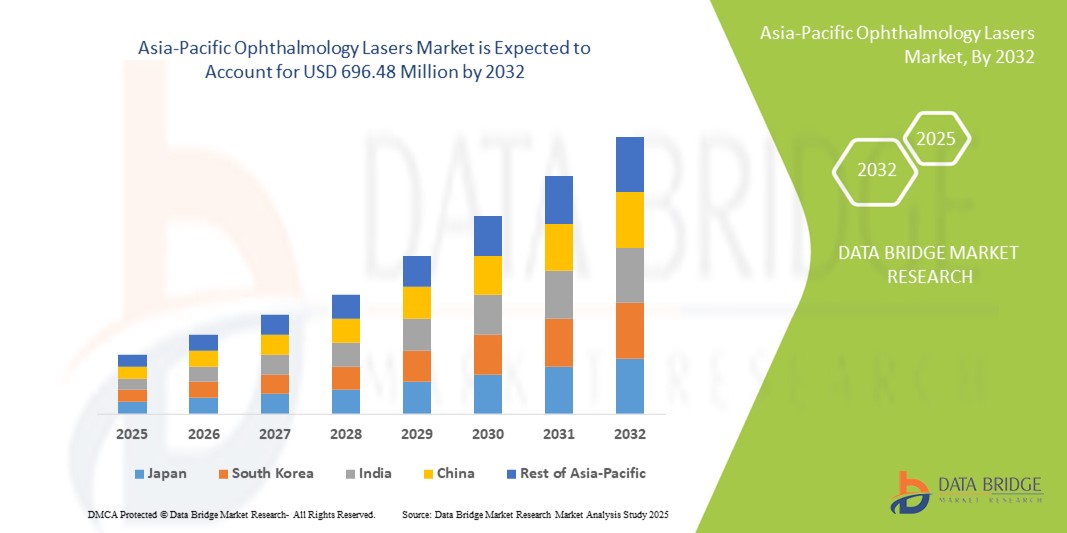
- The Asia-Pacific ophthalmology lasers market size was valued at USD 450.40 Million in 2024 and is expected to reach USD 696.48 Million by 2032, at a CAGR of 5.60% during the forecast period
- The market growth is largely fueled by the growing adoption and technological advancements in ophthalmic procedures, including minimally invasive surgeries and laser-assisted treatments, leading to improved precision and patient outcomes in both clinical and hospital settings
- Furthermore, rising demand for advanced, safe, and efficient treatment solutions for eye disorders, such as cataracts, glaucoma, and refractive errors, is establishing ophthalmology lasers as a preferred choice among eye care professionals. These converging factors are accelerating the uptake of ophthalmology lasers solutions, thereby significantly boosting the industry's growth
Asia-Pacific Ophthalmology Lasers Market Analysis
- The Ophthalmology Lasers market is witnessing rapid adoption due to technological advancements in laser-assisted eye treatments, increasing prevalence of ocular disorders, and growing demand for minimally invasive procedures. Patients and ophthalmologists are increasingly preferring laser-based solutions for their precision, safety, and faster recovery times compared to traditional surgical methods
- Rising demand for improved vision correction procedures, including cataract surgery, refractive surgery, and retinal treatments, is driving the market growth. Growing awareness about early detection and treatment of eye disorders is contributing to the adoption of advanced laser systems across hospitals and specialized eye care centers
- China dominated the Asia-Pacific ophthalmology lasers market with the largest revenue share of 36.5% in 2024, attributed to the country’s large population, increasing healthcare access, expanding ophthalmology infrastructure, and rising healthcare awareness. Strong government initiatives promoting advanced medical technologies and the presence of domestic manufacturers producing high-quality laser equipment further strengthen China’s market leadership
- India is expected to be the fastest-growing country in the Asia-Pacific ophthalmology lasers market during the forecast period, registering a CAGR of 10.8% from 2025 to 2032. Growth is fueled by rising disposable incomes, increased awareness about eye health, expansion of specialized ophthalmology clinics, and the penetration of modern laser technologies in urban and semi-urban areas
- The Therapeutics segment dominated the Asia-Pacific ophthalmology lasers market with a revenue share of 56.3% in 2024. This dominance is fueled by the increasing use of lasers in cataract, glaucoma, and retinal treatments, which significantly improve surgical outcomes and patient satisfaction
Report Scope and Asia-Pacific Ophthalmology Lasers Market Segmentation
|
Attributes |
Asia-Pacific Ophthalmology Lasers Key Market Insights |
|
Segments Covered |
|
|
Countries Covered |
Asia-Pacific
|
|
Key Market Players |
|
|
Market Opportunities |
|
|
Value Added Data Infosets |
In addition to the insights on market scenarios such as market value, growth rate, segmentation, geographical coverage, and major players, the market reports curated by the Data Bridge Market Research also include in-depth expert analysis, pricing analysis, brand share analysis, consumer survey, demography analysis, supply chain analysis, value chain analysis, raw material/consumables overview, vendor selection criteria, PESTLE Analysis, Porter Analysis, and regulatory framework. |
Asia-Pacific Ophthalmology Lasers Market Trends
Rising Adoption and Technological Advancements in Ophthalmology
- A significant and accelerating trend in the Asia-Pacific Ophthalmology Lasers market is the increasing adoption of advanced laser systems for cataract, refractive, and retinal surgeries. Healthcare providers are increasingly investing in cutting-edge laser technologies to improve precision, reduce surgical complications, and shorten recovery times for patients
- For instance, in March 2023, Carl Zeiss Meditec (Germany) expanded its presence in Asia-Pacific by launching the new VisuMax 800 femtosecond laser system in key markets such as China, Japan, and India, aimed at enhancing refractive surgery outcomes. Such product expansions by major players are expected to drive growth in the ophthalmology lasers market during the forecast period
- The trend toward minimally invasive procedures is supporting adoption, as patients prefer laser-assisted treatments over conventional surgical methods for faster recovery and improved safety. Ophthalmologists are increasingly recommending laser procedures for both routine and complex eye conditions, further boosting market demand
- Increasing prevalence of eye disorders, including cataracts, myopia, and glaucoma, is driving the need for ophthalmology lasers across hospitals, eye clinics, and specialty centers. Rising awareness among patients regarding early diagnosis and treatment is further accelerating market adoption
- Continuous innovations in laser technology, including improvements in precision, patient comfort, and multi-functional platforms, are enabling healthcare providers to expand services and attract more patients. Companies are focusing on enhancing equipment efficiency and clinical outcomes, making laser treatments more accessible and reliable
- The rising healthcare infrastructure in Asia-Pacific, especially in countries such as China, India, and Japan, supports market expansion. Government initiatives promoting advanced eye care technologies and investments in hospitals and specialty clinics further contribute to growth
- Increasing disposable incomes and greater accessibility of ophthalmology treatments in urban and semi-urban areas are enabling a larger population to opt for laser-assisted procedures, further driving the adoption of advanced laser systems
- Overall, the Asia-Pacific Ophthalmology Lasers market is witnessing strong growth due to a combination of technological advancements, growing patient awareness, rising prevalence of ocular disorders, and expanding healthcare infrastructure, making laser-based eye care solutions an essential part of modern ophthalmology
Asia-Pacific Ophthalmology Lasers Market Dynamics
Driver
Growing Need Due to Rising Eye Disorder Prevalence and Technological Advancement
- The increasing prevalence of ocular disorders among the population, including cataracts, glaucoma, myopia, and retinal conditions, is a significant driver for the heightened demand for ophthalmology lasers. Rising awareness of early diagnosis and treatment options is encouraging both hospitals and specialty clinics to adopt laser-based solutions
- For instance, in April 2024, Topcon Corporation (Japan) announced the launch of its next-generation retinal laser system in key Asia-Pacific markets, aiming to improve precision in retinal surgeries and enhance patient outcomes. Such product innovations and expansions by leading companies are expected to drive the ophthalmology lasers market growth during the forecast period
- As healthcare providers focus on minimally invasive procedures, laser-assisted treatments are increasingly preferred due to faster recovery times, reduced complications, and higher surgical accuracy. Ophthalmologists are recommending these systems for both routine and complex eye surgeries, which further strengthens adoption
- Furthermore, increasing investment in healthcare infrastructure across Asia-Pacific, particularly in countries such as China, India, and Japan, is facilitating wider adoption of ophthalmology laser systems in hospitals, eye care clinics, and diagnostic centers
- The growing availability of advanced laser equipment and increasing patient access to specialized eye care services are making laser-based treatments more mainstream. Hospitals and eye clinics are investing in multi-functional laser platforms that can handle multiple procedures efficiently, reducing operational costs and improving patient satisfaction
- Rising government initiatives and healthcare programs focusing on eye health, coupled with expanding insurance coverage for ophthalmic procedures, are further driving adoption of laser technologies across the region
- Despite high initial costs of advanced laser systems, the long-term benefits in terms of clinical outcomes, reduced surgical time, and patient safety make them a preferred choice among healthcare providers. Continuous training programs and technical support from manufacturers are helping clinics adopt these systems effectively
- Overall, the demand for ophthalmology lasers in Asia-Pacific is being propelled by technological advancements, growing prevalence of eye disorders, increasing awareness about preventive eye care, and expansion of healthcare infrastructure, making them an essential component of modern ophthalmology practice
Restraint/Challenge
High Initial Costs and Limited Skilled Workforce
- One of the major restraints in the Asia-Pacific ophthalmology lasers market is the relatively high initial cost of advanced laser systems, which can be a barrier for smaller clinics and budget-conscious hospitals. Premium features such as multi-procedure functionality, high-precision targeting, and integrated imaging modules often come with substantial price tags, limiting adoption among price-sensitive healthcare providers
- In addition, the maintenance and calibration of these sophisticated laser systems require trained personnel, which can be scarce in certain regions, particularly in rural or semi-urban areas. This shortage of skilled operators can delay adoption and limit the effective utilization of the devices
- The limited availability of financing options and capital investment support for smaller healthcare facilities further restricts the deployment of advanced ophthalmology lasers. As a result, many clinics continue to rely on conventional surgical methods despite the clinical advantages offered by laser systems
- Another challenge is the slow penetration of advanced laser technologies in low-income and developing countries within Asia-Pacific, where awareness about laser-based treatments and their benefits is still growing
- Although costs have gradually decreased due to technological improvements and local manufacturing, the perception of high investment requirements can still hinder widespread adoption, especially for first-time purchasers
- Overcoming these challenges requires a combination of affordable system models, training programs for healthcare professionals, and increased awareness among ophthalmologists and patients about the benefits of laser-based treatments
- Manufacturers focusing on service contracts, leasing options, and technical support packages are helping mitigate these barriers, but the cost factor remains a significant restraint in market expansion
- Addressing these challenges effectively will be crucial for sustained growth in the Asia-Pacific ophthalmology lasers market, ensuring broader access to advanced eye care solutions across hospitals, clinics, and diagnostic centers
Asia-Pacific Ophthalmology Lasers Market Scope
The market is segmented on the basis of product, type, application, gases, and end user.
- By Product
On the basis of product, the ophthalmology lasers market is segmented into femtosecond lasers, excimer lasers, Nd:YAG lasers, diode lasers, and others. The excimer lasers segment dominated the largest market revenue share of 38.7% in 2024. This is largely due to its extensive use in refractive surgeries such as LASIK and PRK, where precision and safety are critical. Excimer lasers allow for highly accurate removal of corneal tissue, resulting in improved visual outcomes and faster patient recovery. Hospitals and specialized eye clinics favor excimer lasers due to their proven track record and ability to handle complex vision corrections. In addition, the technology has matured over the years, with enhanced control systems and customization options for patient-specific treatments. Its widespread adoption in both urban and semi-urban regions of Asia-Pacific reinforces market dominance. Established clinical protocols and surgeon familiarity also contribute to its sustained preference.
The diode lasers segment is expected to witness the fastest CAGR of 15.2% from 2025 to 2032. This growth is driven by the increasing application of diode lasers in glaucoma and retinal therapies. Their compact design, ease of use, and adaptability in small clinics make them highly attractive for outpatient treatments. Diode lasers also provide precise energy delivery with minimal tissue damage, improving patient comfort and procedural efficiency. The rising prevalence of retinal disorders and diabetic retinopathy across Asia-Pacific further fuels adoption. Continuous innovations, such as portable and battery-operated diode lasers, are facilitating penetration in tier-2 and tier-3 cities. Training programs for ophthalmologists and growing awareness of laser-based interventions also support market expansion.
- By Type
On the basis of type, the Asia-Pacific ophthalmology lasers market is segmented into photodisruption lasers, selective laser trabeculoplasty (SLT), and photocoagulation lasers. The photodisruption lasers segment held the largest revenue share of 41.5% in 2024. This dominance is due to its critical use in cataract surgeries and posterior capsulotomy procedures, offering minimally invasive, precise interventions. Photodisruption lasers allow surgeons to achieve controlled tissue separation with high accuracy, reducing the risk of complications. Their effectiveness in both primary and follow-up surgeries makes them a preferred choice in major hospitals. Adoption is further driven by the availability of advanced systems with automated focusing and energy modulation features. These lasers are integrated into established surgical protocols and are supported by extensive clinical training programs. Patient demand for safer, faster recovery surgeries enhances usage, particularly in developed regions such as Japan and South Korea. Hospitals and leading eye centers continue to invest heavily in photodisruption technology due to its reliability and long-term clinical benefits.
The selective laser trabeculoplasty (SLT) segment is projected to record the fastest CAGR of 14.8% from 2025 to 2032. SLT is increasingly preferred for glaucoma management due to its repeatability, safety, and ability to reduce reliance on medications. The non-invasive nature of SLT allows ophthalmologists to treat patients in outpatient settings, lowering operational costs. Rising awareness of glaucoma and growing patient populations in China and India are driving demand. Technological improvements in laser delivery systems enhance treatment precision and patient comfort. Clinics are adopting SLT to offer safer alternatives to surgical interventions, improving patient compliance. Training and certification programs are helping ophthalmologists expand their SLT offerings, further accelerating growth. Increased insurance coverage for laser procedures also supports market penetration.
- By Application
On the basis of application, the Asia-Pacific ophthalmology lasers market is segmented into diagnostics and therapeutics. The therapeutics segment dominated the market with a revenue share of 56.3% in 2024. This dominance is fueled by the increasing use of lasers in cataract, glaucoma, and retinal treatments, which significantly improve surgical outcomes and patient satisfaction. Therapeutic laser applications are preferred for their precision, minimal invasiveness, and ability to accelerate recovery times. Hospitals and specialized ophthalmic centers invest heavily in therapeutic lasers due to their versatility across multiple treatment types. The growing prevalence of eye disorders and aging populations in Asia-Pacific also boost demand. Regulatory approvals and clinical guidelines favor laser-based therapies, further supporting widespread adoption. Advanced features, such as automated energy modulation and real-time imaging, make these systems indispensable in modern ophthalmic surgeries.
The diagnostics segment is expected to register the fastest CAGR of 12.7% from 2025 to 2032. Diagnostic lasers are increasingly used in corneal mapping, retinal imaging, and ocular surface evaluation, enabling early detection of vision-threatening conditions. Rising awareness of preventive eye care and technological advancements in imaging systems drive this growth. Clinics and hospitals are adopting compact, high-resolution diagnostic laser systems for faster and more accurate assessments. Integration with electronic medical records and AI-assisted analysis further enhances efficiency. The ability to detect diseases at earlier stages improves treatment planning and patient outcomes. Increased government and private funding for eye care infrastructure supports the adoption of diagnostic laser technologies.
- By Gases
On the basis of gases, the Asia-Pacific ophthalmology lasers market is segmented into noble gas, halogen gas, buffer gas, and others. The noble gas segment accounted for the largest revenue share of 42.1% in 2024. Noble gases are essential for delivering stable, precise laser outputs, which are critical for ophthalmic procedures requiring high accuracy. Their chemical inertness ensures long-term performance and safety during surgeries. Hospitals prefer noble gas lasers for procedures such as photodisruption and retinal photocoagulation. Technological refinements, including energy modulation and beam focusing, enhance procedural efficiency. The high reliability and reduced maintenance requirements contribute to their widespread use. In addition, the established presence of noble gas-based systems in premium surgical setups supports continued market leadership.
The buffer gas segment is projected to witness the fastest CAGR of 13.4% from 2025 to 2032. Buffer gases enhance laser stability and performance while minimizing risks of tissue overheating. Their adoption is increasing due to innovations in portable and compact ophthalmic laser systems. Hospitals and clinics in emerging Asia-Pacific markets prefer buffer gas lasers for cost-effective and safer procedures. Manufacturers are continuously improving gas mixtures to optimize energy efficiency and procedural outcomes. Increased awareness about advanced ophthalmic care and expanding laser treatment programs in developing regions are boosting adoption. Training programs on buffer gas-based systems further facilitate market growth.
- By End User
On the basis of end user, the Asia-Pacific ophthalmology lasers market is segmented into hospitals, clinics, and others. The hospitals segment dominated the largest market revenue share of 47.8% in 2024. Hospitals are major adopters of ophthalmology lasers due to high patient inflow, availability of specialized surgical teams, and preference for advanced systems that support multiple treatments. Large-scale procedures, including cataract and glaucoma surgeries, are often performed in hospital settings, driving demand for reliable and high-capacity laser systems. Established hospitals invest in state-of-the-art lasers to maintain clinical reputation and provide comprehensive ophthalmic care. Integration with electronic health records and surgical workflow management further enhances hospital efficiency. The segment benefits from government funding, insurance reimbursements, and training programs for ophthalmologists.
The clinics segment is expected to witness the fastest CAGR of 15.6% from 2025 to 2032. Growth is fueled by the expansion of specialized eye care centers and outpatient procedures that require compact, versatile, and cost-effective laser systems. Clinics are increasingly adopting lasers for diagnostic and therapeutic purposes, especially in urban and semi-urban areas. Rising patient awareness and demand for minimally invasive treatments support market penetration. Technological improvements and lower acquisition costs of laser devices encourage clinic adoption. Training initiatives and demonstration programs by manufacturers enhance clinician confidence. The segment also benefits from telemedicine and AI-assisted diagnosis integration in modern ophthalmic practices.
Asia-Pacific Ophthalmology Lasers Market Regional Analysis
- The Asia-Pacific ophthalmology lasers market is poised to grow at a CAGR during the forecast period from 2025 to 2032, driven by increasing urbanization, rising disposable incomes, and technological advancements in countries such as China, Japan, and India
- The region’s expanding healthcare infrastructure, combined with growing awareness about eye care and the rising prevalence of ophthalmic disorders, is significantly boosting demand for advanced laser systems
- Furthermore, the presence of domestic manufacturers and local production hubs is improving affordability and accessibility, enabling wider adoption across hospitals and specialized clinics
Japan Ophthalmology Lasers Market Insight
The Japan ophthalmology lasers market is witnessing steady growth due to the country’s high-tech healthcare infrastructure, rapid urbanization, and increasing demand for advanced ophthalmic treatments. Hospitals and clinics in Japan are rapidly adopting laser technologies for procedures such as cataract surgery, refractive surgeries, and retinal treatments. Moreover, the aging population in Japan is driving demand for effective and minimally invasive eye care solutions. Investments in healthcare modernization and government initiatives supporting advanced medical technologies are further enhancing market growth.
China Ophthalmology Lasers Market Insight
The China ophthalmology lasers market dominated the Asia-Pacific market with the largest revenue share of 36.5% in 2024, attributed to the country’s large population, increasing healthcare access, expanding ophthalmology infrastructure, and rising awareness about eye health. Strong government initiatives promoting advanced medical technologies, coupled with the presence of domestic manufacturers producing high-quality laser systems, further reinforce China’s leadership. The growing number of specialized ophthalmology hospitals and diagnostic centers also supports the widespread adoption of laser-based treatments.
India Ophthalmology Lasers Market Insight
The India ophthalmology lasers market is expected to be the fastest-growing country in the Asia-Pacific market during the forecast period, registering a CAGR of 10.8% from 2025 to 2032. Market growth is fueled by rising disposable incomes, increasing awareness about eye health, and expansion of specialized ophthalmology clinics in urban and semi-urban areas. In addition, the penetration of modern laser technologies and growing investments in healthcare infrastructure are contributing to the rapid adoption of ophthalmology laser systems in both hospitals and outpatient facilities.
Asia-Pacific Ophthalmology Lasers Market Share
The ophthalmology lasers industry is primarily led by well-established companies, including:
- NIDEK CO., LTD. (Japan)
- Quantel Medical (France)
- Aurolab (India)
- Alcon Inc. (Switzerland)
- Ziemer Ophthalmic Systems AG (Switzerland)
- LIGHTMED (U.S.)
- Johnson & Johnson and its affiliates (U.S.)
- Bausch & Lomb Incorporated (U.S.)
- MEDA Co., Ltd. (Japan)
- Topcon (Japan)
- Lumenis Be Ltd. (Israel)
- IRIDEX Corporation (U.S.)
- Zeiss (Germany)
Latest Developments in Asia-Pacific Ophthalmology Lasers Market
- In March 2025, NIDEK Co., Ltd. showcased its innovative ophthalmic technologies at the Asia-Pacific Academy of Ophthalmology (APAO) 2025 conference in New Delhi, India. The company highlighted advancements in laser systems and diagnostic equipment, underscoring its commitment to enhancing eye care through cutting-edge solutions
- In August 2025, Topcon Healthcare announced the acquisition of Intelligent Retinal Imaging Systems, aiming to enhance connected care across primary and eye care sectors. This strategic move underscores Topcon's commitment to advancing retinal imaging and diagnostics in the Asia-Pacific region
- In October 2022, Johnson & Johnson Vision launched a new line of femtosecond lasers, expanding its portfolio in advanced ophthalmic surgical technologies. This development reflects the company's ongoing efforts to innovate and provide state-of-the-art solutions for eye care professionals
- In June 2022, Ziemer Ophthalmic Systems reported significant sales growth in Asia, driven by the adoption of its FEMTO Z8 NEO femtosecond laser platform. The company's expansion in the region highlights the increasing demand for advanced laser technologies in ophthalmology

- Interactive Data Analysis Dashboard
- Company Analysis Dashboard for high growth potential opportunities
- Research Analyst Access for customization & queries
- Competitor Analysis with Interactive dashboard
- Latest News, Updates & Trend analysis
- Harness the Power of Benchmark Analysis for Comprehensive Competitor Tracking
Data collection and base year analysis are done using data collection modules with large sample sizes. The stage includes obtaining market information or related data through various sources and strategies. It includes examining and planning all the data acquired from the past in advance. It likewise envelops the examination of information inconsistencies seen across different information sources. The market data is analysed and estimated using market statistical and coherent models. Also, market share analysis and key trend analysis are the major success factors in the market report. To know more, please request an analyst call or drop down your inquiry.
The key research methodology used by DBMR research team is data triangulation which involves data mining, analysis of the impact of data variables on the market and primary (industry expert) validation. Data models include Vendor Positioning Grid, Market Time Line Analysis, Market Overview and Guide, Company Positioning Grid, Patent Analysis, Pricing Analysis, Company Market Share Analysis, Standards of Measurement, Global versus Regional and Vendor Share Analysis. To know more about the research methodology, drop in an inquiry to speak to our industry experts.
Data Bridge Market Research is a leader in advanced formative research. We take pride in servicing our existing and new customers with data and analysis that match and suits their goal. The report can be customized to include price trend analysis of target brands understanding the market for additional countries (ask for the list of countries), clinical trial results data, literature review, refurbished market and product base analysis. Market analysis of target competitors can be analyzed from technology-based analysis to market portfolio strategies. We can add as many competitors that you require data about in the format and data style you are looking for. Our team of analysts can also provide you data in crude raw excel files pivot tables (Fact book) or can assist you in creating presentations from the data sets available in the report.













