


Asia-Pacific Pingueculum Drugs Market Size
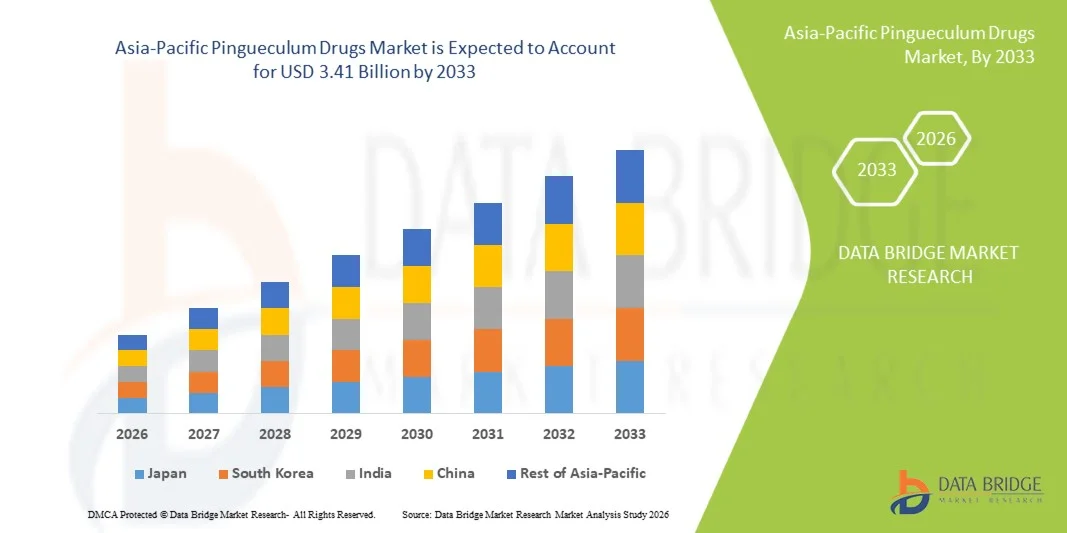
- The Asia-Pacific Pingueculum Drugs Market size was valued at USD 1.78 Billion in 2025 and is expected to reach USD 3.41 Billion by 2033, at a CAGR of 8.50% during the forecast period
- The market growth is largely fueled by the increasing prevalence of ocular surface disorders and rising exposure to environmental factors such as UV radiation, dust, and pollution, leading to higher demand for effective pingueculum drug treatments
- Furthermore, growing awareness regarding eye health, increasing adoption of over-the-counter ophthalmic solutions, and advancements in anti-inflammatory and lubricating eye therapies are establishing pingueculum drugs as an essential component of modern eye care. These converging factors are accelerating the uptake of Pingueculum Drugs solutions, thereby significantly boosting the industry's growth
Asia-Pacific Pingueculum Drugs Market Analysis
- Pingueculum drugs, including lubricating eye drops, anti-inflammatory medications, and protective ophthalmic formulations, are increasingly important in eye care due to the rising incidence of ocular surface disorders caused by environmental exposure and aging
- The escalating demand for pingueculum drugs is primarily fueled by increasing awareness of eye health, growing prevalence of dry eye conditions, and improved access to ophthalmic treatments and over-the-counter medications
- China dominated the Asia-Pacific Pingueculum Drugs Market with the largest revenue share of approximately 33.6% in 2025, characterized by a large patient population, improving healthcare infrastructure, and increasing awareness regarding eye health, with the country witnessing strong growth driven by rising pollution levels and increasing adoption of ophthalmic treatments
- India is expected to be the fastest growing country in the Asia-Pacific Pingueculum Drugs Market during the forecast period, with a projected CAGR of around 9.5%, due to rising healthcare expenditure, increasing screen time, growing awareness of eye care, and expanding access to affordable ophthalmic solutions
- The generics segment dominated the largest market revenue share of 64.7% in 2025, driven by affordability and widespread accessibility
Report Scope and Asia-Pacific Pingueculum Drugs Market Segmentation
|
Attributes |
Pingueculum Drugs Key Market Insights |
|
Segments Covered |
|
|
Countries Covered |
Asia-Pacific
|
|
Key Market Players |
|
|
Market Opportunities |
|
|
Value Added Data Infosets |
In addition to the insights on market scenarios such as market value, growth rate, segmentation, geographical coverage, and major players, the market reports curated by the Data Bridge Market Research also include in-depth expert analysis, patient epidemiology, pipeline analysis, pricing analysis, and regulatory framework. |
Asia-Pacific Pingueculum Drugs Market Trends
“Growing Focus on Advanced Ophthalmic Therapies and Anti-Inflammatory Treatments”
- A significant and accelerating trend in the Asia-Pacific Pingueculum Drugs Market is the increasing focus on advanced ophthalmic formulations, including anti-inflammatory drugs, lubricating eye drops, and targeted therapies aimed at improving ocular surface health and patient comfort
- For instance, preservative-free artificial tears and corticosteroid-based eye drops are widely used to reduce irritation, dryness, and inflammation associated with pingueculum, improving patient outcomes and comfort
- Pharmaceutical companies are increasingly investing in the development of novel drug delivery systems such as sustained-release eye drops and gels that enhance drug retention time on the ocular surface
- There is also growing adoption of combination therapies that address multiple symptoms, including inflammation, redness, and dryness, providing comprehensive treatment solutions for patients
- In addition, increasing awareness regarding eye health and early treatment of ocular surface disorders is encouraging patients to seek timely medical intervention, boosting demand for effective drug therapies
- This trend toward more effective, patient-friendly, and long-lasting ophthalmic treatments is transforming the Asia-Pacific Pingueculum Drugs Market and improving overall disease management
Asia-Pacific Pingueculum Drugs Market Dynamics
Driver
“Increasing Prevalence of Ocular Surface Disorders and Rising Awareness of Eye Health”
- The increasing prevalence of ocular surface disorders, including pingueculum, driven by factors such as prolonged screen exposure, environmental pollution, and aging population, is a key driver for the growth of the Asia-Pacific Pingueculum Drugs Market. As more individuals experience eye irritation and dryness, the demand for effective therapeutic solutions continues to rise significantly
- For instance, the growing use of digital devices across all age groups has led to a surge in cases of digital eye strain and related ocular conditions, prompting higher consumption of lubricating and anti-inflammatory eye medications
- In addition, increasing awareness regarding eye health and hygiene, supported by healthcare campaigns and ophthalmology consultations, is encouraging early diagnosis and timely treatment, thereby boosting market demand
- The expansion of healthcare infrastructure and improved access to ophthalmic care, especially in emerging economies, is further supporting the adoption of advanced treatment options for pingueculum
- Moreover, the availability of a wide range of over-the-counter eye care products, coupled with continuous product innovation by pharmaceutical companies, is making treatments more accessible and convenient for patients
Restraint/Challenge
“Limited Awareness in Developing Regions and Availability of Alternative Treatments”
- One of the key challenges in the Asia-Pacific Pingueculum Drugs Market is the limited awareness regarding the condition and its treatment options, particularly in developing regions
- For instance, many individuals do not seek medical treatment for mild symptoms and instead rely on home remedies or ignore the condition, which reduces the demand for prescription drugs
- The availability of alternative treatment approaches, including surgical removal in severe cases, can also limit the long-term use of drug therapies
- In addition, variability in treatment outcomes and the need for prolonged use of medications may affect patient compliance
- Limited access to specialized eye care services in rural areas further restricts early diagnosis and proper treatment
- Addressing these challenges through awareness programs, improved access to ophthalmic care, and development of more effective drug therapies will be crucial for sustained market growth
Asia-Pacific Pingueculum Drugs Market Scope
The market is segmented on the basis of treatment, formulation type, mode of purchase, drug type, population type, end user, and distribution channel.
• By Treatment
On the basis of treatment, the Asia-Pacific Pingueculum Drugs Market is segmented into artificial tears/topical lubricants, steroid eye drops, non-steroidal anti-inflammatory (NSAID) drops, and others. The artificial tears/topical lubricants segment dominated the largest market revenue share of 48.5% in 2025, driven by its widespread use as the first-line therapy for managing mild to moderate pingueculum symptoms such as dryness, irritation, and redness. These products are highly preferred due to their safety profile and minimal side effects, making them suitable for long-term use. Increasing environmental pollution and prolonged screen exposure are major factors contributing to rising demand. The segment benefits significantly from its over-the-counter availability, enabling easy accessibility without prescriptions. Growing awareness regarding preventive eye care further strengthens its adoption. Physicians frequently recommend lubricants before initiating stronger medications. Advancements in preservative-free and long-lasting formulations improve patient comfort and compliance. Rising geriatric population prone to dry eye conditions also supports growth. Expanding retail pharmacy networks enhance product reach globally. Continuous product innovation by pharmaceutical companies further drives market penetration. These factors collectively ensure sustained dominance of the artificial tears segment.
The steroid eye drops segment is expected to witness the fastest CAGR of 9.2% from 2026 to 2033, driven by increasing prevalence of severe inflammatory pingueculum cases requiring targeted pharmacological intervention. Steroid eye drops are highly effective in reducing inflammation, swelling, and redness in acute conditions. Rising awareness among healthcare professionals regarding early treatment of ocular inflammation supports adoption. Increasing diagnosis rates and improved access to ophthalmic care further boost demand. Technological advancements in corticosteroid formulations have significantly reduced the risk of side effects, improving safety profiles. Growing availability of combination therapies enhances treatment effectiveness. Expansion of specialty eye care centers contributes to increased prescriptions. Rising healthcare expenditure globally supports access to advanced treatments. Increasing research and development in ophthalmology further drives innovation. Improved clinical outcomes strengthen physician confidence in steroid use. These factors position steroid eye drops as the fastest-growing segment in treatment.
• By Formulation Type
On the basis of formulation type, the Asia-Pacific Pingueculum Drugs Market is segmented into eye drops, eye ointments, and others. The eye drops segment held the largest market revenue share of 62.4% in 2025, driven by their convenience, ease of administration, and rapid onset of action in treating ocular conditions. Eye drops are the most commonly prescribed formulation due to their ability to deliver medication directly to the affected area. The segment benefits from wide availability across both prescription and OTC categories. Increasing prevalence of dry eye syndrome and ocular irritation supports sustained demand. Technological advancements have improved drug penetration and minimized discomfort during application. Rising awareness regarding eye hygiene and early treatment contributes to higher adoption rates. Expanding Asia-Pacific healthcare infrastructure enhances accessibility. Physicians prefer eye drops as a primary treatment option due to their effectiveness. Growing aging population further drives demand for easy-to-use formulations. Continuous innovation in multi-dose and preservative-free packaging supports growth. These factors ensure the continued dominance of the eye drops segment.
The eye ointments segment is expected to witness the fastest CAGR of 8.4% from 2026 to 2033, driven by their longer retention time and ability to provide sustained relief in severe cases. Ointments are particularly effective during nighttime use as they offer prolonged lubrication. Increasing prevalence of chronic ocular dryness and irritation supports growth. Patients with persistent symptoms often prefer ointments for long-lasting comfort. Advancements in formulation technology have improved consistency and reduced visual disturbance. Growing awareness about extended-release treatment options enhances adoption. Rising geriatric population further contributes to increased demand. Expansion of ophthalmic treatment options supports market growth. Improved accessibility in both hospital and retail pharmacies boosts usage. Increasing clinical recommendations for severe cases strengthen demand. These factors position eye ointments as the fastest-growing formulation segment.
• By Mode of Purchase
On the basis of mode of purchase, the Asia-Pacific Pingueculum Drugs Market is segmented into prescription and over-the-counter (OTC). The OTC segment accounted for the largest market revenue share of 58.9% in 2025, driven by easy accessibility and widespread availability of lubricating eye drops and artificial tears. Consumers increasingly prefer OTC products for managing mild symptoms without consulting healthcare professionals. The segment benefits from lower costs and convenience of purchase. Rising awareness of self-care and preventive healthcare further boosts adoption. Increasing screen time and environmental exposure contribute to higher demand. Expanding retail pharmacy chains enhance product availability across regions. Growth of digital health platforms supports informed consumer decisions. Increasing marketing and branding strategies by pharmaceutical companies further strengthen market presence. Availability of multiple product options improves consumer choice. These factors ensure the dominance of the OTC segment.
The prescription segment is expected to witness the fastest CAGR of 9.0% from 2026 to 2033, driven by increasing need for specialized treatment in moderate to severe cases. Prescription medications such as steroid and NSAID drops require medical supervision. Rising awareness regarding complications associated with untreated conditions encourages professional consultation. Increasing availability of ophthalmologists supports diagnosis and treatment. Advancements in drug formulations improve therapeutic outcomes. Growing healthcare infrastructure enhances accessibility to prescription drugs. Expansion of insurance coverage supports affordability. Rising patient preference for targeted therapy boosts demand. Continuous research and innovation further strengthen the segment. These factors position prescription drugs as the fastest-growing segment.
• By Drug Type
On the basis of drug type, the Asia-Pacific Pingueculum Drugs Market is segmented into branded and generics. The generics segment dominated the largest market revenue share of 64.7% in 2025, driven by affordability and widespread accessibility. Generic drugs provide cost-effective alternatives without compromising efficacy. Increasing healthcare cost pressures encourage patients to opt for generics. Government initiatives promoting generic drug usage further support growth. Expanding pharmaceutical manufacturing in emerging markets boosts supply. High patient volume in developing regions strengthens demand. Availability across multiple distribution channels enhances reach. Growing awareness regarding cost-effective treatment options supports adoption. Continuous increase in chronic ocular conditions sustains demand. These factors ensure dominance of the generics segment.
The branded segment is expected to witness the fastest CAGR of 7.9% from 2026 to 2033, driven by innovation and advanced drug formulations. Branded drugs often provide improved efficacy and enhanced safety profiles. Increasing R&D investments support development of novel therapies. Growing consumer trust in established brands boosts adoption. Strong marketing strategies enhance product visibility. Rising demand for premium healthcare solutions supports growth. Expansion in developed markets further strengthens the segment. These factors position branded drugs as the fastest-growing segment.
• By Population Type
On the basis of population type, the Asia-Pacific Pingueculum Drugs Market is segmented into geriatric and adults. The geriatric segment held the largest market revenue share of 53.8% in 2025, driven by the higher susceptibility of elderly individuals to ocular surface disorders due to age-related degeneration. Aging leads to reduced tear production, increasing the risk of dry eye and pingueculum formation. Prolonged exposure to ultraviolet (UV) radiation over a lifetime further contributes to the condition. The rising Asia-Pacific geriatric population significantly supports sustained demand for treatment. Increasing awareness regarding age-related eye conditions enhances early diagnosis and treatment rates. Expansion of geriatric healthcare services improves access to specialized ophthalmic care. Higher healthcare spending among elderly populations further supports adoption of advanced treatments. Physicians often prioritize elderly patients for regular eye checkups, boosting treatment demand. Growing use of lubricating and anti-inflammatory drugs in this population supports market expansion. Improved healthcare infrastructure in developed regions strengthens accessibility. Increasing incidence of chronic conditions also contributes to higher eye-related complications. These factors collectively ensure the dominance of the geriatric segment.
The adults segment is expected to witness the fastest CAGR of 8.6% from 2026 to 2033, driven by increasing exposure to risk factors such as prolonged screen time and environmental pollution. The growing use of digital devices leads to higher cases of eye strain and dryness. Rising urbanization exposes individuals to dust and harmful UV radiation, increasing susceptibility. Growing awareness regarding preventive eye care encourages early treatment adoption. Expanding working population further strengthens demand for eye care solutions. Increasing lifestyle-related disorders contribute to ocular surface irritation. Availability of OTC lubricants and protective eye care products boosts usage among adults. Technological advancements in eye care products improve effectiveness and convenience. Rising health consciousness among younger populations supports preventive measures. Growth in teleconsultation services enhances access to eye care professionals. Increasing disposable income enables higher spending on healthcare products. These factors position adults as the fastest-growing population segment.
• By End User
On the basis of end user, the Asia-Pacific Pingueculum Drugs Market is segmented into hospitals, specialty clinics, home healthcare, and others. The specialty clinics segment accounted for the largest market revenue share of 41.5% in 2025, driven by the availability of specialized ophthalmic care and advanced diagnostic technologies. These clinics are equipped with modern tools for accurate detection and treatment of eye disorders. Patients prefer specialty clinics due to shorter waiting times and focused care. Increasing awareness regarding eye health supports higher patient footfall. Availability of skilled ophthalmologists enhances treatment outcomes. Growing prevalence of eye conditions further drives demand for specialized services. Clinics offer personalized treatment plans, improving patient satisfaction. Expansion of private eye care centers strengthens accessibility. Rising investments in ophthalmology infrastructure support growth. Increasing adoption of advanced treatment techniques boosts efficiency. These factors collectively ensure the dominance of the specialty clinics segment.
The home healthcare segment is expected to witness the fastest CAGR of 9.5% from 2026 to 2033, driven by increasing preference for convenient and cost-effective treatment options. Patients are increasingly opting for home-based care for managing mild eye conditions. Availability of OTC eye drops and lubricants supports self-treatment. Growing adoption of telehealth services enhances access to professional consultation. Increasing awareness of self-care practices further boosts demand. Expansion of digital health platforms supports remote monitoring. Rising elderly population preferring home-based care strengthens growth. Improved distribution of eye care products enhances accessibility. Increasing healthcare costs encourage patients to choose home treatment options. Growth in e-commerce platforms supports easy product availability. Technological advancements in home-use medical products improve outcomes. These factors position home healthcare as the fastest-growing end-user segment.
• By Distribution Channel
On the basis of distribution channel, the Asia-Pacific Pingueculum Drugs Market is segmented into hospital pharmacies, retail pharmacies, online pharmacies, and others. The retail pharmacies segment dominated the largest market revenue share of 46.9% in 2025, driven by their widespread presence and easy accessibility across urban and rural areas. Retail pharmacies serve as the primary point of purchase for OTC eye care products. Consumers prefer retail outlets due to immediate availability of medications. Strong distribution networks ensure consistent product supply. Increasing number of pharmacy chains enhances accessibility. Pharmacist recommendations also influence purchasing decisions. Growing demand for self-medication supports retail sales. Availability of a wide range of products improves consumer choice. Rising awareness of eye care products further boosts footfall. Affordable pricing and promotional strategies support growth. Expansion of healthcare infrastructure strengthens retail presence. These factors collectively ensure the dominance of the retail pharmacy segment.
The online pharmacies segment is expected to witness the fastest CAGR of 10.3% from 2026 to 2033, driven by rapid digital transformation in the healthcare sector. Increasing internet penetration and smartphone usage support online purchases. Consumers prefer online platforms due to convenience and home delivery services. Availability of discounts and competitive pricing further boosts adoption. Growth of e-commerce platforms enhances accessibility of eye care products. Rising awareness of digital health solutions supports market expansion. Increasing demand for contactless purchasing options strengthens growth. Expansion of telemedicine services integrates with online pharmacies. Improved logistics and delivery systems ensure timely access. Growing trust in online healthcare services further drives demand. These factors position online pharmacies as the fastest-growing distribution channel.
Asia-Pacific Pingueculum Drugs Market Regional Analysis
- The Asia-Pacific Pingueculum Drugs Market is expected to grow at the fastest CAGR of around 8.8% during the forecast period, driven by rising pollution levels, increasing screen time, growing healthcare expenditure, and improving access to eye care services
- Rapid urbanization and expanding population base in countries such as China, Japan, and India are significantly contributing to market growth
- Furthermore, increasing awareness regarding eye health and the availability of affordable treatment options are expanding the adoption of pingueculum drugs across the region
China Asia-Pacific Pingueculum Drugs Market Insight
The China Asia-Pacific Pingueculum Drugs Market dominated with the largest revenue share of approximately 33.6% in 2025, attributed to the country’s large patient population, improving healthcare infrastructure, and increasing awareness regarding eye health. Rapid urbanization, rising pollution levels, and growing adoption of ophthalmic treatments are key factors driving market growth. Moreover, increasing availability of cost-effective treatment options and expanding access to eye care services are further supporting the expansion of the Asia-Pacific Pingueculum Drugs Market in China.
India Asia-Pacific Pingueculum Drugs Market Insight
The India Asia-Pacific Pingueculum Drugs Market is expected to be the fastest growing, with a projected CAGR of around 9.5% during the forecast period. This growth is driven by rising healthcare expenditure, increasing screen time, and growing awareness regarding eye care among the population. Additionally, expanding access to affordable ophthalmic solutions, improving healthcare infrastructure, and increasing prevalence of eye disorders are contributing significantly to the market’s rapid growth in India.
Asia-Pacific Pingueculum Drugs Market Share
The Pingueculum Drugs industry is primarily led by well-established companies, including:
- Novartis AG (Switzerland)
- F. Hoffmann-La Roche Ltd. (Switzerland)
- Pfizer Inc. (U.S.)
- Bayer AG (Germany)
- Sanofi S.A. (France)
- Bausch + Lomb Corporation (U.S.)
- AbbVie Inc. (U.S.)
- Alcon Inc. (Switzerland)
- Johnson & Johnson Vision (U.S.)
- Sun Pharmaceutical Industries Ltd. (India)
- Cipla Ltd. (India)
- Teva Pharmaceutical Industries Ltd. (Israel)
- Santen Pharmaceutical Co., Ltd. (Japan)
- Allergan (AbbVie) (U.S.)
- Lupin Pharmaceuticals Inc. (India)
- Ocular Therapeutix, Inc. (U.S.)
- Kala Pharmaceuticals, Inc. (U.S.)
- Eyevance Pharmaceuticals LLC (U.S.)
- Thea Pharmaceuticals Ltd. (France)
- Akorn Operating Company LLC (U.S.)
Latest Developments in Asia-Pacific Pingueculum Drugs Market
- In May 2021, a Phase 2 clinical study of CBT-004 ophthalmic solution for vascularized pinguecula was officially registered on ClinicalTrials.gov, marking the initiation of a controlled clinical evaluation of a targeted drug therapy for this condition. This study aimed to assess safety and efficacy of a novel multi-kinase inhibitor eye drop for treating pinguecula
- In April 2025, Cloudbreak Pharma Inc. announced the successful completion of its Phase 2 clinical trial of CBT-004 for the treatment of vascularized pinguecula in the United States. The study met its primary efficacy endpoint and demonstrated a strong safety profile, marking a significant milestone in drug development for this condition
- In July 2025, Cloudbreak Pharma reported positive topline results from its Phase 2 clinical trial of CBT-004 ophthalmic solution, showing statistically significant improvements in conjunctival hyperemia and patient-reported symptoms. The company indicated plans to advance the therapy into Phase 3 development, highlighting progress toward a potential first approved drug for pinguecula
- In July 2025, clinical experts emphasized that CBT-004 demonstrated rapid onset of action and sustained efficacy with no treatment-related adverse events, addressing a major unmet need in pinguecula treatment where current therapies are largely off-label. This reflects growing innovation in targeted ophthalmic drug development
- In June 2025, updated clinical trial records confirmed completion of the CBT-004 Phase 2 study, including successful achievement of safety and efficacy endpoints across multiple patient cohorts. This reinforces the readiness of the drug candidate for late-stage clinical development

- Interactive Data Analysis Dashboard
- Company Analysis Dashboard for high growth potential opportunities
- Research Analyst Access for customization & queries
- Competitor Analysis with Interactive dashboard
- Latest News, Updates & Trend analysis
- Harness the Power of Benchmark Analysis for Comprehensive Competitor Tracking
Data collection and base year analysis are done using data collection modules with large sample sizes. The stage includes obtaining market information or related data through various sources and strategies. It includes examining and planning all the data acquired from the past in advance. It likewise envelops the examination of information inconsistencies seen across different information sources. The market data is analysed and estimated using market statistical and coherent models. Also, market share analysis and key trend analysis are the major success factors in the market report. To know more, please request an analyst call or drop down your inquiry.
The key research methodology used by DBMR research team is data triangulation which involves data mining, analysis of the impact of data variables on the market and primary (industry expert) validation. Data models include Vendor Positioning Grid, Market Time Line Analysis, Market Overview and Guide, Company Positioning Grid, Patent Analysis, Pricing Analysis, Company Market Share Analysis, Standards of Measurement, Global versus Regional and Vendor Share Analysis. To know more about the research methodology, drop in an inquiry to speak to our industry experts.
Data Bridge Market Research is a leader in advanced formative research. We take pride in servicing our existing and new customers with data and analysis that match and suits their goal. The report can be customized to include price trend analysis of target brands understanding the market for additional countries (ask for the list of countries), clinical trial results data, literature review, refurbished market and product base analysis. Market analysis of target competitors can be analyzed from technology-based analysis to market portfolio strategies. We can add as many competitors that you require data about in the format and data style you are looking for. Our team of analysts can also provide you data in crude raw excel files pivot tables (Fact book) or can assist you in creating presentations from the data sets available in the report.












