


Asia-Pacific Sarcopenia Treatment Market Size
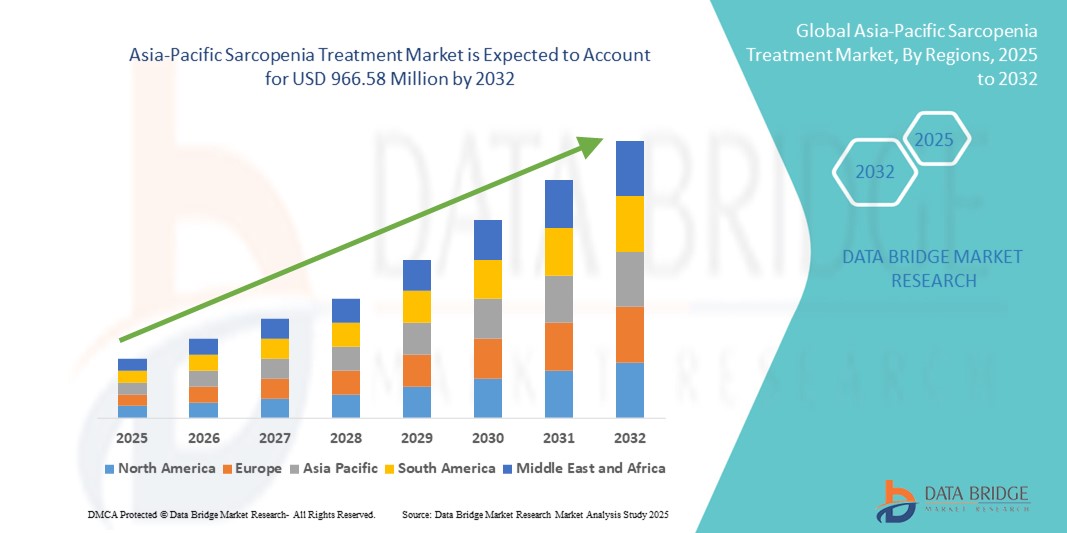
- The Asia-Pacific sarcopenia treatment market size was valued at USD 611.04 million in 2024 and is expected to reach USD 966.58 million by 2032, at a CAGR of 5.9% during the forecast period
- The market growth is primarily driven by the increasing aging population in the region, coupled with rising awareness and diagnosis of sarcopenia among healthcare providers and patient
- In addition, advancements in pharmacological therapies and the integration of nutritional and physical rehabilitation approaches are fueling demand for effective sarcopenia treatments, supporting market expansion across both clinical and homecare settings
Asia-Pacific Sarcopenia Treatment Market Analysis
- Sarcopenia treatments, targeting age-related muscle loss and functional decline, are gaining importance in the Asia-Pacific region due to its rapidly aging population and increasing health awareness
- The market growth is driven by rising prevalence of sarcopenia, improved diagnostic capabilities, and growing adoption of pharmacological therapies combined with nutritional and physical rehabilitation approaches
- Japan dominated the Asia-Pacific sarcopenia treatment market with the largest revenue share of 38.5% in 2024, supported by advanced healthcare infrastructure, high elderly population, and early adoption of innovative treatments
- China is expected to be the fastest growing country in the Asia-Pacific sarcopenia treatment market during the forecast period, due to its expanding geriatric population, increasing healthcare expenditure, and government initiatives promoting elderly care and sarcopenia awareness
- Medications segment dominated the Asia-Pacific sarcopenia treatment market with a share of 45.5% in 2024, fueled by the approval of new drugs and ongoing clinical trials focusing on muscle regeneration and strength improvement
Report Scope and Asia-Pacific Sarcopenia Treatment Market Segmentation
|
Attributes |
Asia-Pacific Sarcopenia Treatment Key Market Insights |
|
Segments Covered |
|
|
Countries Covered |
Asia-Pacific
|
|
Key Market Players |
|
|
Market Opportunities |
|
|
Value Added Data Infosets |
In addition to the insights on market scenarios such as market value, growth rate, segmentation, geographical coverage, and major players, the market reports curated by the Data Bridge Market Research also include in-depth expert analysis, pricing analysis, brand share analysis, consumer survey, demography analysis, supply chain analysis, value chain analysis, raw material/consumables overview, vendor selection criteria, PESTLE Analysis, Porter Analysis, and regulatory framework. |
Asia-Pacific Sarcopenia Treatment Market Trends
Advancements in Pharmacological Therapies and Holistic Care Approaches
- A key and rapidly evolving trend in the Asia-Pacific sarcopenia treatment market is the development of novel pharmacological therapies combined with integrated nutritional and physical rehabilitation programs to holistically manage muscle loss and functional decline
- For instance, emerging drug candidates targeting muscle regeneration, such as myostatin inhibitors and selective androgen receptor modulators (SARMs), are progressing through clinical trials, offering new hope for effective sarcopenia management
- In addition, combination therapies incorporating vitamin D and protein supplements alongside resistance training protocols are gaining traction, emphasizing a multifaceted approach to treatment that addresses both physiological and lifestyle factors
- The increasing integration of telehealth and remote monitoring technologies is facilitating personalized sarcopenia management, allowing clinicians to track patient progress and adjust treatments dynamically
- Companies such as Daewoong Pharmaceutical and Eisai Co., Ltd. are focusing on research and development of innovative therapies and comprehensive care solutions tailored to the aging Asia-Pacific population
- The growing emphasis on early diagnosis and intervention, supported by improved screening tools and public awareness campaigns, is driving demand for these advanced treatment modalities across healthcare settings
Asia-Pacific Sarcopenia Treatment Market Dynamics
Driver
Increasing Aging Population and Growing Health Awareness
- The rapidly aging population in Asia-Pacific, coupled with rising awareness about sarcopenia’s impact on health and quality of life, is a primary driver of market growth
- For instance, Japan’s government launched the “Gold Plan” elderly care initiative that includes sarcopenia screening and treatment programs to improve elderly health outcomes
- Governments and healthcare providers are increasingly prioritizing elderly care programs and sarcopenia screening initiatives, which are boosting early diagnosis rates and subsequent treatment adoption
- Improved access to healthcare services and expanding insurance coverage in key markets such as Japan, China, and South Korea further facilitate patient access to sarcopenia treatments
- The rising prevalence of lifestyle-related diseases that exacerbate muscle loss, such as diabetes and osteoporosis, is increasing the need for targeted therapeutic interventions
- Advances in clinical research and approvals of new drugs offer promising treatment alternatives, enhancing patient outcomes and fueling market expansion
Restraint/Challenge
Limited Awareness, Diagnostic Challenges, and Treatment Accessibility
- Despite growing awareness, sarcopenia remains underdiagnosed and undertreated in many parts of Asia-Pacific due to insufficient screening infrastructure and lack of standardized diagnostic criteria across countries
- For instance, in rural India and Southeast Asia, limited healthcare facilities and lack of trained specialists impede early detection and management of sarcopenia
- Limited access to specialized healthcare services, particularly in rural and underdeveloped regions, restricts timely diagnosis and treatment initiation
- The high cost of emerging pharmacological therapies and rehabilitation programs can limit affordability for a significant portion of the elderly population, especially in low- and middle-income countries
- Variability in reimbursement policies and healthcare funding across the region presents challenges to market penetration and sustained growth
- Addressing these barriers through increased public education, standardized diagnostic protocols, expanded healthcare infrastructure, and affordable treatment options is essential for unlocking the full potential of the sarcopenia treatment market in Asia-Pacific
Asia-Pacific Sarcopenia Treatment Market Scope
The market is segmented on the basis of treatment type, type of sarcopenia, stages, route of administration, gender, end user, and distribution channel.
- By Treatment Type
On the basis of treatment type, the Asia-Pacific sarcopenia treatment market is segmented into medications, vitamin/dietary supplements, and others. The medications segment dominated the market with the largest revenue share of 45.5% in 2024, driven by the increasing approvals of novel drugs such as myostatin inhibitors and selective androgen receptor modulators (SARMs), which offer targeted muscle regeneration and strength improvement. These medications are widely adopted in clinical settings for moderate to severe sarcopenia cases, supported by ongoing clinical trials and growing physician preference.
The vitamin/dietary supplements segment is expected to be the fastest growing during forecast period, fueled by rising health awareness among the aging population and preference for preventive care. Supplements such as protein powders, vitamin D, and amino acids are gaining traction, especially among early-stage patients and those seeking to complement pharmacological therapies.
- By Type
On the basis of type, the Asia-Pacific sarcopenia treatment market is segmented into primary sarcopenia and secondary sarcopenia. The primary sarcopenia segment dominated with 60% market share in 2024, as it represents age-related muscle loss, the most common form affecting the rapidly aging Asia-Pacific population. This segment benefits from extensive public health initiatives focused on elderly care and early screening programs.
The secondary sarcopenia segment is anticipated to grow fastest during forecast period, driven by increasing incidences of chronic diseases such as diabetes, cancer, and chronic kidney disease that accelerate muscle wasting. The growing burden of such comorbidities is expanding the patient pool requiring targeted interventions.
- By Stages
On the basis of disease stages, the Asia-Pacific sarcopenia treatment market is segmented into pre-sarcopenia, sarcopenia, and severe sarcopenia. The sarcopenia stage segment dominated with 50% share in 2024, encompassing patients actively diagnosed and undergoing therapeutic management. This stage typically sees the highest demand for pharmacological treatments and rehabilitative care.
The pre-sarcopenia segment is expected to witness the fastest growth during forecast period, reflecting increased early diagnosis through screening programs and growing adoption of preventive supplements and lifestyle interventions designed to slow disease progression. Growing public awareness and physician education efforts are driving this trend. The severe sarcopenia segment, though smaller, requires more intensive and costly care, influencing market dynamics.
- By Route of Administration
On the basis of route of administration, the Asia-Pacific sarcopenia treatment market is segmented into oral, injectable, and others. The oral segment dominated with 70% market share in 2024, favored due to ease of administration, high patient compliance, and the wide availability of oral drugs and supplements. Oral therapies are commonly prescribed for long-term management in outpatient and homecare settings.
The injectable segment is projected to grow fastest during forecast period, supported by advances in clinical research and the emergence of injectable biologics and peptide-based treatments that offer rapid, targeted action, primarily administered in hospital or specialty clinic environments. The growth of injectable options is expected to expand as these therapies gain regulatory approvals and wider clinical adoption.
- By Gender
On the basis of gender, the Asia-Pacific sarcopenia treatment market is segmented into male and female patients. The male segment dominated with 52% share in 2024, driven by higher prevalence rates of sarcopenia reported among elderly men, partly due to differences in muscle mass decline patterns and hormonal influences.
The female segment is expected to grow faster during forecast period, supported by increasing awareness of post-menopausal muscle loss and targeted treatment programs aimed at women, including nutritional supplements and hormone-related therapies. The closing gender gap in diagnosis and treatment is expected to boost this segment’s growth during the forecast period.
- By End User
On the basis of end users, the Asia-Pacific sarcopenia treatment market is segmented into hospitals, specialty clinics, home healthcare, and others. Hospitals dominated with 55% revenue share in 2024, as they are the primary centers for sarcopenia diagnosis, clinical treatment initiation, and management of advanced cases. The availability of specialized medical expertise and access to pharmacological therapies contribute to this dominance.
Home healthcare is anticipated to register the fastest growth during forecast period, driven by increasing demand for aging-in-place solutions and personalized rehabilitation programs that allow elderly patients to receive care in the comfort of their homes. This shift is supported by expanding homecare infrastructure, telemedicine integration, and government policies promoting decentralized elderly care.
- By Distribution Channel
On the basis of distribution channel, the Asia-Pacific sarcopenia treatment market is segmented into direct tender, retail sales, and others. The retail sales segment dominated with 60% market share in 2024, propelled by the widespread availability of sarcopenia medications and supplements through pharmacies, health stores, and rapidly growing e-commerce platforms. Retail sales offer convenience and accessibility, particularly for vitamin and dietary supplement products consumed for preventive care.
The direct tender segment is expected to grow fastest during forecast period, primarily catering to institutional procurement by hospitals, specialty clinics, and government healthcare programs. This channel benefits from bulk purchasing, long-term contracts, and the inclusion of advanced pharmacological treatments in hospital formularies and national health schemes. Other channels, including online healthcare portals and specialty distributors, are also emerging to support niche and remote market access.
Asia-Pacific Sarcopenia Treatment Market Regional Analysis
- Japan dominated the Asia-Pacific sarcopenia treatment market with the largest revenue share of 38.5% in 2024, supported by advanced healthcare infrastructure, high elderly population, and early adoption of innovative treatments
- Consumers and healthcare providers in Japan prioritize early diagnosis and innovative treatment options, supported by government initiatives such as the “Gold Plan” that focus on improving elderly health outcomes and sarcopenia management
- The widespread adoption of pharmacological therapies, supplements, and rehabilitative care is further supported by rising health awareness, increasing healthcare expenditure, and growing investments in research and development
The Japan Sarcopenia Treatment Market Insight
The Japan sarcopenia treatment market dominated the Asia-Pacific market, owing to its advanced healthcare system, highest proportion of elderly citizens, and strong government focus on aging-related health issues. National programs such as the “Gold Plan” encourage early screening and management of sarcopenia, driving widespread adoption of comprehensive treatment approaches, including medications and home healthcare. The country is also a hub for clinical research and pharmaceutical innovation, contributing to a steady pipeline of novel therapies.
China Sarcopenia Treatment Market Insight
The China sarcopenia treatment market is witnessing rapid growth in the sarcopenia treatment market, fueled by its large aging population and expanding middle class with increased healthcare access. Government policies promoting elderly care, along with investments in healthcare infrastructure and telemedicine, are improving diagnosis and treatment rates. The rising prevalence of lifestyle diseases that exacerbate muscle loss further intensifies demand for effective sarcopenia therapies. Moreover, domestic pharmaceutical companies are actively developing affordable treatment options tailored to local needs.
India Sarcopenia Treatment Market Insight
The India sarcopenia treatment market is emerging rapidly due to increasing geriatric population, growing urbanization, and rising awareness about muscle degeneration and its health impacts. Though challenges in rural healthcare access remain, urban centers are experiencing heightened demand for pharmacological treatments and nutritional supplements. Initiatives to promote healthy aging and chronic disease management, combined with the rise of private healthcare providers, are facilitating market expansion.
South Korea Sarcopenia Treatment Market Insight
The South Korea sarcopenia treatment market is showing significant growth in the sarcopenia treatment market driven by government support for elderly care, increasing health consciousness, and rapid adoption of advanced healthcare technologies. The country’s focus on personalized medicine and rehabilitation services is encouraging the integration of multidisciplinary treatment models. South Korea’s robust pharmaceutical sector is also contributing to the availability of innovative sarcopenia therapies, further propelling market growth.
Asia-Pacific Sarcopenia Treatment Market Share
The Asia-Pacific sarcopenia treatment industry is primarily led by well-established companies, including:
- Pfizer Inc. (U.S.)
- Novartis AG (Switzerland)
- GSK plc (U.K.)
- Lilly (U.S.)
- Boehringer Ingelheim International GmbH (Germany)
- Sanofi (France)
- Astellas Pharma Inc. (Japan)
- Takeda Pharmaceutical Company Limited (Japan)
- Chugai Pharmaceutical Co., Ltd. (Japan)
- Dong-A ST Co., Ltd. (South Korea)
- Mitsubishi Tanabe Pharma Corporation (Japan)
- Samsung Bioepis Co., Ltd. (South Korea)
- Mediherb Group (Australia)
- Healthspan Ltd. (U.K.)
- Amgen Inc. (U.S.)
- Ipsen S.A. (France)
- Nestlé Health Science (Switzerland)
- AbbVie Inc. (U.S.)
- Hutchison China MediTech Limited (China)
- Natco Pharma Limited (India)
What are the Recent Developments in Asia-Pacific Sarcopenia Treatment Market?
- In April 2025, researchers developed and validated an accurate, interpretable predictive model for sarcopenia risk in elderly Chinese adults. This model aims to identify individuals at high risk, enabling early intervention and personalized treatment strategies
- In March 2025, a study published in PubMed highlighted that the use of Semaglutide is associated with muscle loss and functional decline in older adults with type 2 diabetes, particularly at higher doses. This finding underscores the need for careful consideration of medication effects on muscle health in the elderly
- In May 2025, Rejuvenate Biomed initiated the first patient dosing in a Phase II clinical trial for RJx-01, its lead investigational compound targeting muscle weakness and sarcopenia associated with chronic obstructive pulmonary disease (COPD). This trial marks a significant step in developing targeted therapies for sarcopenia in patients with COPD
- In February 2025, a study in Taiwan introduced the Z-score for the sarcopenia composite index (ZoSCI), a new composite quantitative indicator for diagnosing sarcopenia in older adults. The tool integrates grip strength, walking speed, and muscle mass into a standardized single score, which could enhance clinical evaluation and help identify at-risk populations earlier
- In December 2024, Indian experts published a consensus document identifying features of sarcopenia in Indians and providing culturally relevant recommendations for its management. This initiative aims to address the unique challenges of sarcopenia in the Indian population and improve healthcare strategies

- Interactive Data Analysis Dashboard
- Company Analysis Dashboard for high growth potential opportunities
- Research Analyst Access for customization & queries
- Competitor Analysis with Interactive dashboard
- Latest News, Updates & Trend analysis
- Harness the Power of Benchmark Analysis for Comprehensive Competitor Tracking
Data collection and base year analysis are done using data collection modules with large sample sizes. The stage includes obtaining market information or related data through various sources and strategies. It includes examining and planning all the data acquired from the past in advance. It likewise envelops the examination of information inconsistencies seen across different information sources. The market data is analysed and estimated using market statistical and coherent models. Also, market share analysis and key trend analysis are the major success factors in the market report. To know more, please request an analyst call or drop down your inquiry.
The key research methodology used by DBMR research team is data triangulation which involves data mining, analysis of the impact of data variables on the market and primary (industry expert) validation. Data models include Vendor Positioning Grid, Market Time Line Analysis, Market Overview and Guide, Company Positioning Grid, Patent Analysis, Pricing Analysis, Company Market Share Analysis, Standards of Measurement, Global versus Regional and Vendor Share Analysis. To know more about the research methodology, drop in an inquiry to speak to our industry experts.
Data Bridge Market Research is a leader in advanced formative research. We take pride in servicing our existing and new customers with data and analysis that match and suits their goal. The report can be customized to include price trend analysis of target brands understanding the market for additional countries (ask for the list of countries), clinical trial results data, literature review, refurbished market and product base analysis. Market analysis of target competitors can be analyzed from technology-based analysis to market portfolio strategies. We can add as many competitors that you require data about in the format and data style you are looking for. Our team of analysts can also provide you data in crude raw excel files pivot tables (Fact book) or can assist you in creating presentations from the data sets available in the report.












