


Asia-Pacific Topical Skin Adhesive Market Size
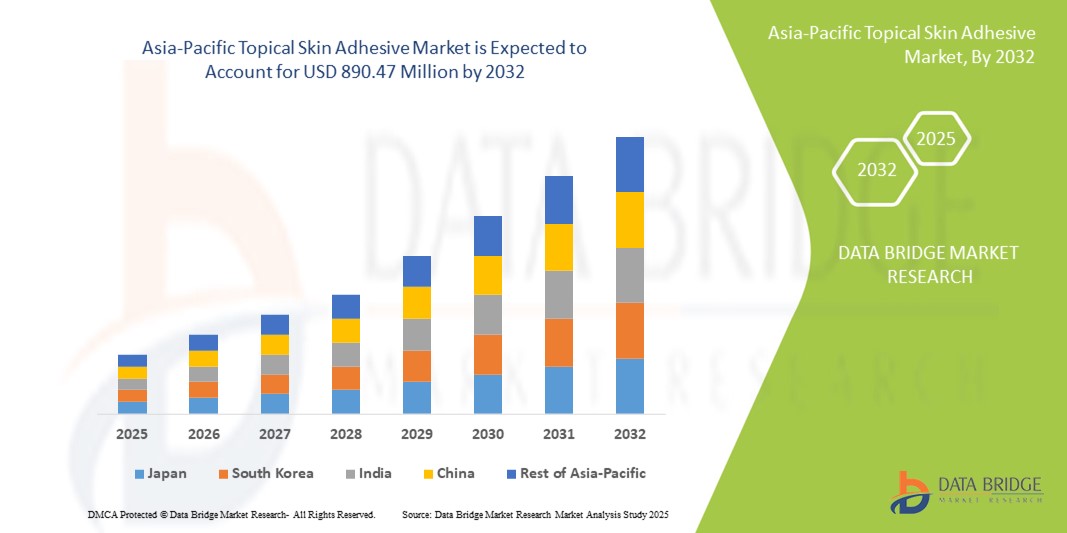
- The Asia-Pacific topical skin adhesive market size was valued at USD 588.66 million in 2024 and is expected to reach USD 890.47 million by 2032, at a CAGR of 5.31% during the forecast period
- The market growth is largely fueled by increasing awareness about post-surgical wound care, rising incidence of surgical procedures, and the need for faster wound closure methods in both hospital and outpatient settings
- Furthermore, rising demand for minimally invasive surgical techniques and enhanced patient safety is driving the adoption of Topical Skin Adhesive solutions, thereby significantly boosting the industry's growth
Asia-Pacific Topical Skin Adhesive Market Analysis
- Topical skin adhesives, offering advanced wound closure solutions for surgical and dermatological applications, are increasingly vital components of modern healthcare settings in both hospitals and outpatient care facilities due to their enhanced convenience, reduced infection risk, faster healing, and improved cosmetic outcomes
- The escalating demand for topical skin adhesive products is primarily fueled by the growing prevalence of surgical procedures, increasing awareness about advanced wound closure solutions, and rising adoption in both hospitals and outpatient care settings. These adhesives are preferred for their ability to reduce infection risk, accelerate healing, and provide cosmetic benefits compared to traditional sutures and staples
- China dominated the topical skin adhesive market with the largest revenue share of 37.85% in 2024, driven by its well-established healthcare infrastructure, high surgical volumes, and increasing awareness about wound care. Strong government initiatives promoting advanced medical technologies, combined with the presence of both domestic and multinational adhesive manufacturers, further reinforce China’s market leadership
- India is expected to be the fastest-growing country in the topical skin adhesive market during the forecast period, registering a CAGR from 2025 to 2032. Growth is fueled by rising disposable incomes, expanding access to surgical care in urban and semi-urban regions, and increasing adoption of minimally invasive procedures that favor adhesive use. Educational campaigns on postoperative care and wound management are further encouraging adoption
- The Cyanoacrylate segment dominated the topical skin adhesive market largest market revenue share of 46.5% in 2024. Its dominance is attributed to its rapid polymerization, strong adhesion, and wide applicability across surgical and trauma wound closures
Report Scope and Asia-Pacific Topical Skin Adhesive Market Segmentation
|
Attributes |
Asia-Pacific Topical Skin Adhesive Key Market Insights |
|
Segments Covered |
|
|
Countries Covered |
Asia-Pacific
|
|
Key Market Players |
|
|
Market Opportunities |
|
|
Value Added Data Infosets |
In addition to the insights on market scenarios such as market value, growth rate, segmentation, geographical coverage, and major players, the market reports curated by the Data Bridge Market Research also include in-depth expert analysis, pricing analysis, brand share analysis, consumer survey, demography analysis, supply chain analysis, value chain analysis, raw material/consumables overview, vendor selection criteria, PESTLE Analysis, Porter Analysis, and regulatory framework. |
Asia-Pacific Topical Skin Adhesive Market Trends
Rising Adoption Driven by Minimally Invasive Surgeries and Enhanced Wound Care
- A significant and accelerating trend in the Asia-Pacific topical skin adhesive market is the growing adoption of advanced wound closure solutions across surgical, dermatological, and outpatient care settings. Healthcare providers are increasingly favoring topical skin adhesives for their ability to reduce procedure times, improve patient comfort, and minimize infection risks compared to traditional sutures or staples
- For instance, in March 2024, 3M expanded its range of topical skin adhesives in key Asia-Pacific markets, introducing new formulations designed for faster polymerization and improved tensile strength. Such product innovations by leading companies are expected to drive market growth during the forecast period
- Topical skin adhesives are being increasingly integrated into minimally invasive surgeries, including laparoscopic, orthopedic, and cardiac procedures, where rapid wound closure and reduced hospital stays are critical. Hospitals and specialty clinics in China and India are particularly adopting these solutions to improve procedural efficiency and patient outcomes
- The ease of application, along with reduced need for follow-up visits, enhances the clinical appeal of skin adhesives. Surgeons and healthcare practitioners are recognizing the benefits in terms of reduced trauma to surrounding tissue, better cosmetic results, and overall patient satisfaction
- In addition, ongoing research and development efforts are leading to adhesives with antimicrobial properties and improved biocompatibility, further boosting adoption across hospitals and clinics in the region
- The growing preference for patient-centric healthcare solutions and the increasing number of surgical procedures in emerging economies such as India are expected to sustain the high demand for topical skin adhesives over the forecast period
- Companies such as Ethicon and 3M are actively expanding their product portfolios and distribution networks in Asia-Pacific, ensuring broader availability and access to hospitals, clinics, and specialty care centers
- Overall, the trend towards efficient, safe, and cosmetically favorable wound closure methods is fundamentally reshaping surgical practices and driving robust growth in the Asia-Pacific Topical Skin Adhesive market
Asia-Pacific Topical Skin Adhesive Market Dynamics
Driver
Growing Need Due to Rising Surgical Procedures and Advanced Wound Care
- The increasing prevalence of surgical procedures across hospitals and outpatient care centers, coupled with rising awareness about efficient wound management, is a significant driver for the heightened demand for topical skin adhesives
- For instance, in April 2024, 3M announced the expansion of its topical skin adhesive product portfolio in key Asia-Pacific markets, focusing on formulations that offer faster polymerization, superior tensile strength, and enhanced biocompatibility. Such strategic product developments by leading companies are expected to drive the Topical Skin Adhesive industry growth in the forecast period
- As healthcare providers aim to reduce operation times, improve patient recovery, and minimize infection risks, topical skin adhesives provide an effective alternative to traditional sutures and staples. Their ability to offer secure closure without invasive techniques is particularly valued in cosmetic, dermatological, and minimally invasive surgical procedures
- Furthermore, the rising demand for outpatient and day-care surgeries has increased the adoption of adhesives, as they allow faster wound closure and reduce the need for follow-up visits, improving overall patient convenience
- The versatility of topical skin adhesives in various surgical applications, including orthopedics, cardiovascular, and general surgery, makes them an attractive solution for healthcare facilities striving to enhance procedural efficiency and outcomes
- The relatively simple application process, along with reduced trauma to surrounding tissues and improved cosmetic outcomes, reinforces their preference among surgeons and medical staff
- However, the high initial cost of premium topical skin adhesives, particularly those with antimicrobial or advanced polymer formulations, can pose a barrier for price-sensitive healthcare providers in emerging economies. Efforts to produce more cost-effective formulations and broaden distribution channels are expected to mitigate this challenge over time
- Overall, increasing surgical volumes, growing emphasis on efficient wound management, and expanding hospital infrastructure in countries such as China and India are expected to sustain the robust growth of the Asia-Pacific Topical Skin Adhesive market
Restraint/Challenge
High Cost and Limited Awareness in Emerging Markets
- One of the primary challenges restraining the growth of the Topical Skin Adhesive market is the relatively high cost of advanced adhesive products compared to traditional wound closure methods such as sutures and staples. Premium formulations, which may offer antimicrobial properties or faster polymerization, often come with a higher price tag, limiting their adoption among cost-sensitive healthcare providers
- In emerging markets across Asia-Pacific, including countries such as India and Southeast Asian nations, limited awareness about the advantages of topical skin adhesives further slows market penetration. Many healthcare facilities continue to rely on conventional methods due to familiarity and cost considerations
- Regulatory compliance and stringent safety standards in some regions can delay product approvals and entry into new markets. Manufacturers must ensure adherence to local medical device regulations, which can increase development timelines and costs
- In addition, certain adhesives may have limitations in extreme environmental conditions or for high-tension wounds, which can affect surgeon preference in complex surgical cases. Proper training and awareness programs are necessary to ensure correct usage and achieve optimal patient outcomes
- While ongoing efforts are being made to reduce costs, improve formulations, and conduct educational campaigns, overcoming these barriers remains critical for sustained market growth
- Addressing these restraints through localized pricing strategies, clinical education programs, and partnerships with hospitals and distributors will be vital for expanding adoption in developing regions and maximizing the market potential of topical skin adhesives
Asia-Pacific Topical Skin Adhesive Market Scope
The market is segmented on the basis of product type, application, end user, and distribution channel.
- By Product Type
On the basis of product type, the topical skin adhesive market is segmented into cyanoacrylate, methylidene malonate, and others. The cyanoacrylate segment dominated the largest market revenue share of 46.5% in 2024. Its dominance is attributed to its rapid polymerization, strong adhesion, and wide applicability across surgical and trauma wound closures. Hospitals and clinics prefer cyanoacrylate adhesives for reducing procedure time and minimizing infection risks. The segment is highly favored due to its compatibility with various skin types and wound sites. Cosmetic benefits such as minimal scarring further reinforce its leading position. Innovations improving flexibility, reducing odor, and enhancing patient comfort continue to expand its adoption. Surgeons value its reliability in both emergency and elective procedures, ensuring its sustained market leadership.
The Methylidene Malonate segment is anticipated to witness the fastest growth rate with a CAGR of 22.1% from 2025 to 2032. Growth is driven by enhanced tensile strength, biocompatibility, and adoption in specialized surgeries. Increasing awareness among healthcare professionals about its advantages over traditional adhesives boosts uptake. Its suitability for minimally invasive procedures and outpatient care is increasing its preference. Research and development efforts are improving performance in tissue bonding and healing outcomes. Rising demand for faster, less invasive solutions contributes to rapid market expansion. The segment is gaining traction in trauma care and elective surgeries across the Asia-Pacific region.
- By Application
On the basis of application, the topical skin adhesive market is segmented into wound closure, trauma-induced lacerations, and burn and skin grafting. The wound closure segment accounted for the largest market revenue share of 42.8% in 2024, driven by extensive use in surgeries, outpatient care, and minor wounds. Its ability to reduce procedure time and infection risk while improving cosmetic outcomes makes it highly preferred in hospitals and clinics. Awareness about post-surgical care and preference for non-invasive techniques support its leading market position. Adoption is strong across general surgery, orthopedics, and cosmetic procedures. Hospitals benefit from standardized protocols using wound closure adhesives. Its efficacy and safety profile make it a first-choice adhesive for medical professionals.
The trauma-induced lacerations segment is expected to witness the fastest CAGR of 20.5% from 2025 to 2032. Growth is fueled by the rising incidence of accidental injuries, sports-related wounds, and emergency treatments. Adhesives provide rapid hemostasis, reduced pain, and faster recovery, making them ideal for trauma care. Increased awareness and availability in trauma centers and emergency rooms support expansion. Preference for non-invasive solutions over traditional suturing drives adoption. Outpatient clinics and field emergency setups are increasingly using adhesives. Continuous improvements in adhesive performance enhance its appeal in trauma applications.
- By End User
On the basis of end user, the market is segmented into hospitals, trauma centers, ambulatory surgical centers, clinics, and others. The Hospitals segment dominated the largest market revenue share of 48.2% in 2024, due to high surgical volumes, access to trained staff, and adoption of advanced wound closure technologies. Hospitals value topical adhesives for efficiency, better patient outcomes, and infection control. Large healthcare networks ensure consistent usage across multiple departments. Adoption is strong in both urban and semi-urban centers. Hospitals continue to lead due to procurement capabilities and clinical guidelines favoring adhesives. Institutional preference for quality and safety reinforces dominance.
The ambulatory surgical centers segment is expected to witness the fastest CAGR of 21.3% from 2025 to 2032. Growth is driven by increasing outpatient procedures, cost-effectiveness, and shorter recovery times. Centers prefer adhesives for minor surgeries, cosmetic procedures, and wound management. Expansion of outpatient healthcare infrastructure supports rapid adoption. Adhesives provide convenience and improved patient satisfaction in ambulatory settings. Rising awareness among healthcare professionals about efficient wound closure techniques boosts demand.
- By Distribution Channel
On the basis of distribution channel, the market is segmented into direct tender, retail sales, and others. The direct tender segment held the largest market revenue share of 44.5% in 2024, attributed to bulk procurement by hospitals and healthcare networks. Direct tender ensures competitive pricing, consistent supply, and access to high-quality products. Large-scale institutional buyers prefer this method for standardized procurement. Contracts with manufacturers ensure reliability and timely delivery. Hospitals and trauma centers benefit from centralized purchasing. The segment’s dominance is reinforced by long-term supply agreements.
The Retail Sales segment is expected to witness the fastest CAGR of 19.7% from 2025 to 2032. Growth is fueled by increasing demand from smaller clinics, pharmacies, and home care settings. Convenience, accessibility, and expanding healthcare infrastructure in semi-urban and rural areas boost adoption. Retail channels provide easy access to topical adhesives for minor surgeries and wound care. Awareness campaigns and promotions enhance product visibility. Expansion of online sales platforms further accelerates growth. Rising consumer and practitioner preference for convenient procurement supports rapid expansion.
Asia-Pacific Topical Skin Adhesive Market Regional Analysis
- The Asia-Pacific topical skin adhesive market is poised to grow at a robust CAGR during the forecast period of 2025 to 2032, driven by increasing urbanization, rising disposable incomes, and advancements in surgical technologies in countries such as China, Japan, and India
- The growing focus on minimally invasive procedures, combined with heightened awareness of wound care and postoperative recovery, is further supporting market expansion
- In addition, the presence of both multinational and domestic manufacturers in the region is improving accessibility and affordability of topical skin adhesive products, facilitating wider adoption across hospitals, specialty clinics, and surgical centers
China Topical Skin Adhesive Market Insight
The China topical skin adhesive market dominated the Asia-Pacific market with the largest revenue share of 37.85% in 2024. This leadership is attributed to the country’s well-established healthcare infrastructure, high surgical volumes, and increasing awareness about advanced wound care solutions. Strong government initiatives promoting modern medical technologies, along with the presence of both domestic and multinational adhesive manufacturers, reinforce China’s position at the forefront of the regional market. The demand is particularly high in urban hospitals and specialty surgical centers, where efficiency, patient safety, and postoperative outcomes are prioritized.
India Topical Skin Adhesive Market Insight
The India topical skin adhesive market is expected to be the fastest-growing country in the Asia-Pacific market during the forecast period, registering a significant CAGR from 2025 to 2032. The growth is fueled by rising disposable incomes, expanding access to surgical care in urban and semi-urban regions, and the increasing adoption of minimally invasive procedures that favor adhesive use over traditional wound closure methods. Educational campaigns and awareness programs on postoperative care, wound management, and infection prevention are further encouraging adoption among healthcare providers. In addition, the expansion of specialty surgical clinics and improvements in healthcare infrastructure across India are supporting the rapid growth of the market.
Asia-Pacific Topical Skin Adhesive Market Share
The Topical Skin Adhesive industry is primarily led by well-established companies, including:
- Johnson & Johnson and its affiliates (U.S.)
- Advanced Medical Solutions Group plc (U.K.)
- Cardinal Health (U.S.)
- 3M (U.S.)
- Medtronic (Ireland)
- B. Braun SE (Germany)
- DuPont (U.S.)
- Vygon (France)
- LifeHealthcare (Australia)
- Medline Industries, LP (U.S.)
- Nissha Medical Technologies (Japan)
- Chemence Medical, Inc. (U.S.)
- E-XCLUSIF MEDICAL SUPPLY PTE LTD. (Singapore)
- SURGITECH INNOVATION (India)
- GluStitch (Canada)
- Alfa Pharma GmbH (Germany)
Latest Developments in Asia-Pacific Topical Skin Adhesive Market
- In June 2025, Advanced Medical Solutions Group plc (AMS), a leading global specialist in the topical and internal tissue adhesives market, reported significant growth in its LiquiBand product line. The company highlighted the expanding adoption of LiquiBand in the Asia-Pacific region, driven by its effectiveness in wound closure and trauma-induced lacerations. AMS continues to strengthen its presence in the region, focusing on enhancing product accessibility and supporting healthcare professionals with advanced adhesive solutions
- In May 2025, Cardinal Health announced the launch of its LIQUIBAND Octyl topical skin adhesive in several Asia-Pacific markets. This product features a signature winged applicator designed to improve safety for clinicians and patients. The introduction of this innovative adhesive aims to meet the growing demand for efficient and minimally invasive wound closure solutions in the region
- In April 2025, Medtronic's LiquiBand Exceed XS topical skin adhesive was recognized as an ideal solution for small incisions and laparoscopic port closures. The product's effectiveness in wound closure procedures has contributed to its increasing adoption among healthcare providers in the Asia-Pacific region

- Interactive Data Analysis Dashboard
- Company Analysis Dashboard for high growth potential opportunities
- Research Analyst Access for customization & queries
- Competitor Analysis with Interactive dashboard
- Latest News, Updates & Trend analysis
- Harness the Power of Benchmark Analysis for Comprehensive Competitor Tracking
Data collection and base year analysis are done using data collection modules with large sample sizes. The stage includes obtaining market information or related data through various sources and strategies. It includes examining and planning all the data acquired from the past in advance. It likewise envelops the examination of information inconsistencies seen across different information sources. The market data is analysed and estimated using market statistical and coherent models. Also, market share analysis and key trend analysis are the major success factors in the market report. To know more, please request an analyst call or drop down your inquiry.
The key research methodology used by DBMR research team is data triangulation which involves data mining, analysis of the impact of data variables on the market and primary (industry expert) validation. Data models include Vendor Positioning Grid, Market Time Line Analysis, Market Overview and Guide, Company Positioning Grid, Patent Analysis, Pricing Analysis, Company Market Share Analysis, Standards of Measurement, Global versus Regional and Vendor Share Analysis. To know more about the research methodology, drop in an inquiry to speak to our industry experts.
Data Bridge Market Research is a leader in advanced formative research. We take pride in servicing our existing and new customers with data and analysis that match and suits their goal. The report can be customized to include price trend analysis of target brands understanding the market for additional countries (ask for the list of countries), clinical trial results data, literature review, refurbished market and product base analysis. Market analysis of target competitors can be analyzed from technology-based analysis to market portfolio strategies. We can add as many competitors that you require data about in the format and data style you are looking for. Our team of analysts can also provide you data in crude raw excel files pivot tables (Fact book) or can assist you in creating presentations from the data sets available in the report.












