


Asia-Pacific Urology Laser Market Size
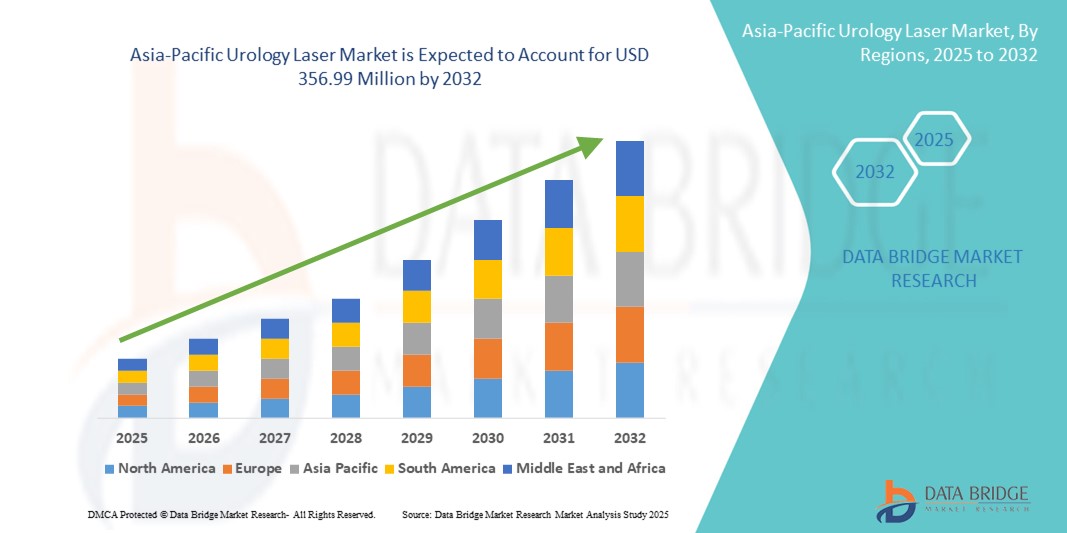
- The Asia-Pacific urology laser market size was valued at USD 241.63 million in 2024 and is expected to reach USD 356.99 million by 2032, at a CAGR of 5.0% during the forecast period
- The market growth is largely fueled by the increasing prevalence of urological disorders such as kidney stones, benign prostatic hyperplasia (BPH), and urinary strictures across Asia-Pacific. Rising adoption of minimally invasive procedures, coupled with advancements in laser technologies, is enabling more accurate, efficient, and patient-friendly treatment options. The region is witnessing significant uptake of urology lasers in rapidly developing countries such as India, China, and Indonesia, driven by growing healthcare access and demand for advanced surgical solutions
- Furthermore, escalating investments in hospital infrastructure, expansion of specialized urology centers in both urban and semi-urban areas, and increasing collaborations between global medical device companies and local healthcare providers are accelerating the adoption of urology lasers. Supportive government healthcare initiatives, growing insurance coverage, and the rising availability of skilled urologists are further strengthening market growth. The presence of international medical device manufacturers alongside emerging domestic players is contributing to enhanced affordability, wider product availability, and continuous innovation in the Asia-Pacific urology laser Market
Asia-Pacific Urology Laser Market Analysis
- The Asia-Pacific Urology Laser market is witnessing strong and sustained growth, supported by the rising prevalence of urological disorders, the growing demand for minimally invasive procedures, and continuous improvements in regional healthcare infrastructure. Countries such as China, India, Japan, South Korea, and Australia are at the forefront of this expansion, further fueled by medical tourism and the adoption of advanced treatment technologies
- One of the key growth drivers for the region is the rapid advancement in laser technologies. Increasing awareness among patients and healthcare providers about the benefits of early diagnosis and minimally invasive treatments, combined with favorable government initiatives and hospital infrastructure upgrades, is accelerating adoption rates across Asia-Pacific
- China dominated the Asia-Pacific urology laser market, accounting for the largest revenue share of 22% in 2023, supported by its large patient pool, advanced healthcare infrastructure, wider adoption of state-of-the-art laser equipment, and favorable regulatory policies promoting the modernization of hospital facilities
- India is anticipated to be the fastest-growing region in the Asia-Pacific urology laser market, projected to expand at a CAGR of around 7.7% during 2024–2031. Growth in India is being driven by factors such as increasing healthcare access in semi-urban and urban areas, rising preference for laser-based urology treatments, significant investments in healthcare infrastructure, and a growing shift towards minimally invasive surgeries
- The standalone systems segment dominated the Asia-Pacific urology laser market with a substantial market share of 62.1% in 2024. This leadership is primarily attributed to their advanced energy output, integrated cooling systems, and suitability for high-volume tertiary care centers that require robust equipment for complex procedures
Report Scope and Asia-Pacific Urology Laser Market Segmentation
|
Attributes |
Asia-Pacific Urology Laser Key Market Insights |
|
Segments Covered |
|
|
Countries Covered |
Asia-Pacific
|
|
Key Market Players |
|
|
Market Opportunities |
|
|
Value Added Data Infosets |
In addition to the insights on market scenarios such as market value, growth rate, segmentation, geographical coverage, and major players, the market reports curated by the Data Bridge Market Research also include in-depth expert analysis, pricing analysis, brand share analysis, consumer survey, demography analysis, supply chain analysis, value chain analysis, raw material/consumables overview, vendor selection criteria, PESTLE Analysis, Porter Analysis, and regulatory framework. |
Asia-Pacific Urology Laser Market Trends
Growing Demand for Advanced Laser-Based Urological Treatments
- A significant and accelerating trend in the Asia-Pacific urology laser market is the increasing adoption of advanced laser technologies for minimally invasive urological surgeries. This shift is driven by the growing need for precision, faster recovery times, reduced hospital stays, and lower post-operative complications
- Major healthcare providers across the region are adopting high-performance laser systems such as Holmium:YAG and Thulium:YAG to deliver next-generation treatment solutions for kidney stones, benign prostatic hyperplasia (BPH), and other complex urological conditions. These innovations are meeting the rising demand for effective, reliable, and patient-friendly treatment options
- Increasing use of laser systems in applications such as lithotripsy, tumor removal, urethral stricture management, and partial kidney resections is further accelerating market growth. Urology lasers are being recognized for their ability to enhance surgical accuracy, reduce procedure times, and minimize patient discomfort
- Academic institutions, research hospitals, and medical centers in countries such as Japan, India, and Australia are actively conducting clinical studies on new laser modalities, energy optimization, and robotic-assisted laser surgeries—leading to advancements supported by scientific validation and tailored to specific patient populations
- As the Asia-Pacific region continues to focus on improving healthcare outcomes, medical innovation, and expanding access to minimally invasive procedures, the Urology Laser market is poised for sustained expansion—driven by regulatory approvals, technological breakthroughs, and growing integration of R&D into clinical practice
Asia-Pacific Urology Laser Market Dynamics
Driver
Growing Demand Driven by Advancements in Healthcare and Minimally Invasive Urological Treatments
- The Asia-Pacific urology laser market is witnessing accelerated growth, driven by rapid advancements in healthcare infrastructure, growing adoption of minimally invasive surgical techniques, and the rising prevalence of urological disorders across key countries such as China, India, Japan, South Korea, and Australia. Increasing cases of kidney stones, benign prostatic hyperplasia (BPH), and urinary tract tumors are fueling the demand for advanced laser-based treatment options that offer high precision, shorter recovery times, and reduced complications
- For instance, in 2024, several leading hospitals in China and India expanded their adoption of Holmium:YAG and Thulium:YAG laser systems, enhancing their surgical capabilities for complex urological conditions. These advancements are supporting a growing patient pool seeking effective, pain-reducing, and faster treatment procedures
- The increasing shift toward minimally invasive surgeries is also encouraging healthcare providers and urology clinics to invest in next-generation laser systems with enhanced energy efficiency, portability, and integration with robotic-assisted surgical platforms. This technological evolution is enabling more personalized and safer treatment outcomes
- Government-backed initiatives promoting medical innovation, alongside growing healthcare expenditure and insurance coverage, are further strengthening market adoption. Countries such as Japan and South Korea are positioning themselves as regional leaders in urology laser adoption by combining strong R&D capabilities, high patient awareness, and favorable reimbursement policies
- In addition, the growing expansion of hospital networks and ambulatory surgical centers across Asia-Pacific is increasing access to advanced laser treatments, making these procedures more affordable and accessible to wider populations
Restraint/Challenge
Limited Penetration in Rural Healthcare Facilities and Price-Sensitive Markets
- Despite rapid urbanization and technological progress, the Asia-Pacific Urology Laser market faces barriers in penetrating rural and semi-urban regions, particularly in Southeast Asia and South Asia. High equipment costs, limited awareness of advanced laser-based treatments, and inadequate healthcare infrastructure continue to restrict widespread adoption
- Infrastructure limitations such as underdeveloped surgical facilities, shortage of trained urologists, and inadequate maintenance support for advanced equipment further hinder accessibility in non-metropolitan regions
- Many small-scale healthcare providers and rural hospitals still rely on conventional surgical methods due to budget constraints, leading to a gap between urban centers equipped with advanced laser technology and underserved regions with basic facilities
- Additionally, uneven distribution of modern healthcare infrastructure across the region increases patient dependency on large urban hospitals, thereby extending waiting times and treatment costs
- To address these challenges, leading market players are exploring cost-effective portable laser systems, leasing models, and partnerships with regional hospitals to increase penetration. Furthermore, training programs for urologists and government initiatives to expand healthcare access are expected to gradually overcome these barriers, ensuring broader adoption of urology laser solutions
Asia-Pacific Urology Laser Market Scope
The market is segmented on the basis of laser type, modality, application, end user and distribution channel.
- By Laser Type
On the basis of laser type, the Asia-Pacific urology laser market is segmented into Holmium Yttrium Aluminum Garnet (Ho:YAG), Thulium Yttrium Aluminum Garnet (Thu:YAG), Neodymium-Doped Yttrium Aluminum Garnet (Nd:YAG), Potassium Titanyl Phosphate Yttrium Aluminum Garnet (KTP:YAG), Diode Laser, Erbium:Yttrium Aluminum Garnet (Er:YAG) Laser, Lithium Borate, and Others. The Holmium Yttrium Aluminum Garnet (Ho:YAG) segment dominated with the largest share of 36.4% in 2024, as it is considered the gold standard in urology for lithotripsy due to its precision, safety profile, and ability to fragment stones of varying compositions and sizes. Its versatility in treating urethral strictures and tumors further strengthens its adoption across hospitals and clinics.
The Thu:YAG segment is projected to register the fastest CAGR of 10.7% from 2025 to 2032, driven by its superior cutting efficiency, precise energy delivery, and ability to minimize tissue damage during procedures. Its expanding adoption in the management of benign prostatic hyperplasia (BPH) is a key factor, as it allows surgeons to perform minimally invasive treatments with reduced bleeding, shorter hospital stays, and faster patient recovery. The combination of clinical efficacy, safety, and growing awareness among urologists and patients is expected to further accelerate the uptake of Thu:YAG lasers across the Asia-Pacific region.
- By Modality
On the basis of modality, the Asia-Pacific urology laser market is segmented into portable and standalone systems. The standalone systems segment accounted for the largest share of 62.1% in 2024, supported by their advanced energy output, integrated cooling systems, and suitability for high-volume tertiary care centers that require robust equipment for complex procedures. These systems are typically preferred in large hospitals due to their durability and ability to support a wide range of applications from lithotripsy to tumor ablation.
• The portable systems segment is expected to witness the fastest CAGR of 9.8% from 2025 to 2032, as demand rises in smaller healthcare facilities, ambulatory surgical centers, and outpatient clinics where cost-effectiveness, mobility, and operational flexibility are critical. These systems allow healthcare providers to perform procedures in settings with limited infrastructure while maintaining precision and safety standards. The ongoing trend toward decentralization of healthcare services, coupled with rising adoption of minimally invasive treatments, is further driving the uptake of portable urology laser units across the Asia-Pacific region.
- By Application
On the basis of application, the Asia-Pacific urology laser market is segmented into urolithiasis, benign prostatic hyperplasia (BPH), partial kidney resection, removal of kidney stones, urethral strictures, tumors, and others. The urolithiasis segment led the market with the largest share of 33.2% in 2024, driven by the rising prevalence of kidney stone disease due to factors such as dietary habits, inadequate hydration, and sedentary lifestyles. Laser lithotripsy using Ho:YAG lasers has become the preferred treatment for kidney stones due to its minimal invasiveness, reduced post-operative complications, and faster patient recovery, making it highly favored among both patients and healthcare providers.
The BPH segment is projected to grow at the fastest CAGR of 10.4% from 2025 to 2032, fueled by an increasing aging male population and heightened awareness of minimally invasive laser procedures like laser enucleation of the prostate (HoLEP and ThuLEP). These procedures are gaining traction as they significantly reduce bleeding risks, shorten hospital stays, improve patient comfort, and enhance surgical outcomes. The combination of improved safety profiles, clinical efficacy, and patient preference for shorter recovery times is accelerating the adoption of laser-based BPH treatments across the region.
- By End User
On the basis of end user, the Asia-Pacific urology laser market is segmented into hospitals, urological clinics, ambulatory surgical centers, and others. The hospitals segment dominated the market with a 47.6% share in 2024, reflecting hospitals’ role as the primary centers for advanced urological surgeries. Equipped with high-power standalone laser systems, skilled urologists, and multidisciplinary teams, hospitals are able to manage complex cases, perform high volumes of procedures, and integrate advanced technologies into patient care. These capabilities reinforce hospitals’ position as the leading adopters of urology laser systems across Asia-Pacific.
The urological clinics segment is projected to grow at the fastest CAGR of 9.5% from 2025 to 2032, driven by the increasing trend toward specialized outpatient care and rising demand for minimally invasive procedures. Clinics are rapidly adopting portable laser systems to broaden service offerings, enhance patient convenience, reduce surgical wait times, and improve overall patient satisfaction. The flexibility, affordability, and ease of implementation of portable systems are supporting this segment’s growth across emerging and established healthcare markets in the region.
- By Distribution Channel
On the basis of distribution channel, the Asia-Pacific urology laser market is segmented into direct tender, retail sales, online sales, and others. The direct tender segment held the largest revenue share of 54.8% in 2024, due to bulk procurement practices by large hospitals, government healthcare institutions, and group purchasing organizations (GPOs). This channel remains dominant as it allows for cost efficiencies, standardized procurement, and timely supply of high-value laser systems and accessories. Structured procurement processes in both public and private healthcare sectors further reinforce the prominence of this distribution channel.
The online sales segment is anticipated to record the fastest CAGR of 9.9% from 2025 to 2032, supported by the growing digitalization of procurement, rising comfort with e-commerce platforms, and the convenience of purchasing consumables, spare parts, and even smaller laser systems online. Manufacturers and distributors are increasingly leveraging online sales channels to offer competitive pricing, faster delivery, and enhanced customer support, thereby expanding their reach to smaller clinics, remote hospitals, and emerging healthcare markets throughout the Asia-Pacific region.
Asia-Pacific Urology Laser Market Regional Analysis
- Asia-Pacific accounted for significant revenue share of the global urology laser market in 2024, underscoring its leadership position driven by a vast patient population, rapid healthcare expansion, and rising adoption of minimally invasive surgical procedures. Growing prevalence of urological disorders such as kidney stones, benign prostatic hyperplasia (BPH), and urinary tract cancers is fueling demand for laser-based interventions across the region
- The market is further supported by increasing government investments in hospital modernization, rising healthcare expenditures, and technological adoption in countries such as China, India, Japan, South Korea, and Australia. The growing preference for Holmium:YAG, Thulium fiber, and diode laser systems is transforming urology practices by enabling safer, faster, and more effective treatments
- In addition, expanding health insurance coverage, a growing middle-class population, and rising awareness of advanced treatment options are accelerating adoption. Strategic collaborations between global device manufacturers and local healthcare providers are also strengthening the region’s market position by improving accessibility to next-generation urology laser systems
China Asia-Pacific Urology Laser Market Insight
The China urology laser market emerged as the leading market in Asia-Pacific, accounting for 22% of the regional revenue share in 2023. This dominance is driven by its large patient pool, advanced healthcare infrastructure, and strong adoption of cutting-edge laser technologies for urological procedures. Supportive regulatory policies that encourage modernization of hospitals and higher government spending on medical technology upgrades have positioned China as the regional leader. The country is also witnessing greater penetration of robotic-assisted surgeries integrated with laser systems, further improving surgical precision and patient outcomes.
Growing demand for minimally invasive treatments among China’s aging population, combined with the expansion of tertiary care hospitals and medical tourism, continues to reinforce its stronghold in the regional market.
India Asia-Pacific Urology Laser Market Insight
The India urology laser market is anticipated to be the fastest-growing market in Asia-Pacific, projected to expand at a CAGR of around 7.7% during 2024–2031. This growth is supported by rising healthcare accessibility across semi-urban and urban areas, increasing prevalence of kidney stone cases, and growing preference for laser-based urological procedures. Major government initiatives such as Ayushman Bharat and large-scale investments in hospital and diagnostic infrastructure are accelerating the adoption of advanced urology treatment technologies. Furthermore, rising disposable incomes and increasing patient awareness are driving demand for minimally invasive surgeries that offer reduced pain and faster recovery. The entry of global device manufacturers, coupled with local production and partnerships, is making advanced laser systems more affordable and widely available. As a result, India is rapidly emerging as a key growth engine within the Asia-Pacific Urology Laser market.
Asia-Pacific Urology Laser Market Share
The Asia-Pacific Urology Laser industry is primarily led by well-established companies, including:
- BD (U.S.)
- Richard Wolf GmbH (Germany)
- Olympus Corporation (Japan)
- Coherent, Inc. (U.S.)
- Rocamed (Monaco)
- Dornier MedTech (Germany)
- Limmer Laser GmbH (Germany)
- Gigaalaser (China)
- Boston Scientific Corporation (U.S.)
- Cook (U.S.)
- OmniGuide Holdings, Inc. (U.S.)
- Allengers (India)
Latest Developments in Asia-Pacific Urology Laser market
- In March 2021, Boston Scientific announced an agreement to acquire the global surgical business of Lumenis Ltd. — the deal (announced March 3, 2021) expanded Boston Scientific’s urology & laser portfolio (including MOSES laser technology) and strengthened its position in Asia-Pacific stone management and surgical lasers
- In December 2022, Olympus launched the “Olympus Asia Pacific Innovation Program” (OAIP) — a regional initiative intended to accelerate product development, collaboration, and uptake of Olympus medical technologies (including urology imaging and laser solutions) across the Asia-Pacific region
- In May 2023, Dornier MedTech showcased updated urology laser and stone-management solutions (including a compact ~100 W laser offering) and broader stone-care portfolio at AUA/industry meetings in 2023, reinforcing Dornier’s product presence and marketing push in the Asia-Pacific urology market
- In November 2023, Rhein Laser Technologies publicly debuted the UroFiber “SuperPulsed Thulium Fiber Laser (TFL)” system (1940 nm, 150 W) at MEDICA 2023, positioning TFL technology as a new high-power option for both stone lithotripsy and prostate enucleation — an innovation with clear implications for Asia-Pacific adoption trends
- In February 2024, OmniGuide Holdings announced a strategic partnership with UROTECH (part of the Medi-Globe Group) to expand global urology patient therapies and distribution reach — a move that affects channel and product availability in global and Asia-Pacific markets

- Interactive Data Analysis Dashboard
- Company Analysis Dashboard for high growth potential opportunities
- Research Analyst Access for customization & queries
- Competitor Analysis with Interactive dashboard
- Latest News, Updates & Trend analysis
- Harness the Power of Benchmark Analysis for Comprehensive Competitor Tracking
Data collection and base year analysis are done using data collection modules with large sample sizes. The stage includes obtaining market information or related data through various sources and strategies. It includes examining and planning all the data acquired from the past in advance. It likewise envelops the examination of information inconsistencies seen across different information sources. The market data is analysed and estimated using market statistical and coherent models. Also, market share analysis and key trend analysis are the major success factors in the market report. To know more, please request an analyst call or drop down your inquiry.
The key research methodology used by DBMR research team is data triangulation which involves data mining, analysis of the impact of data variables on the market and primary (industry expert) validation. Data models include Vendor Positioning Grid, Market Time Line Analysis, Market Overview and Guide, Company Positioning Grid, Patent Analysis, Pricing Analysis, Company Market Share Analysis, Standards of Measurement, Global versus Regional and Vendor Share Analysis. To know more about the research methodology, drop in an inquiry to speak to our industry experts.
Data Bridge Market Research is a leader in advanced formative research. We take pride in servicing our existing and new customers with data and analysis that match and suits their goal. The report can be customized to include price trend analysis of target brands understanding the market for additional countries (ask for the list of countries), clinical trial results data, literature review, refurbished market and product base analysis. Market analysis of target competitors can be analyzed from technology-based analysis to market portfolio strategies. We can add as many competitors that you require data about in the format and data style you are looking for. Our team of analysts can also provide you data in crude raw excel files pivot tables (Fact book) or can assist you in creating presentations from the data sets available in the report.













