Asia-Pacific Wine Market Size
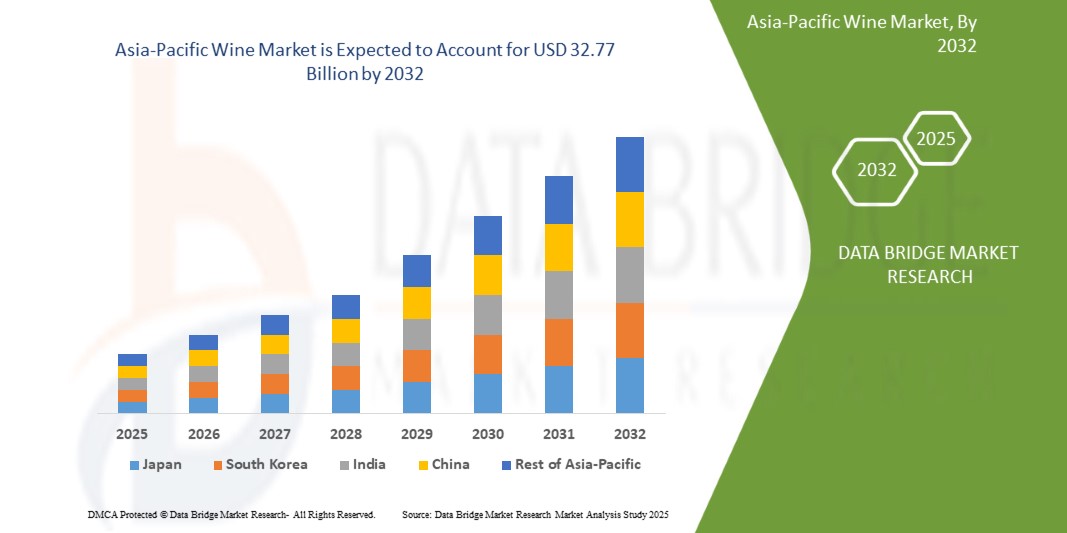
- The Asia-Pacific Wine Market size was valued at USD 14.9 billion in 2024 and is expected to reach USD 32.77 billion by 2032, at a CAGR of 12.7% during the forecast period
- The growth of the Wine Market is driven by several key factors, including the rising consumer preference for premium and craft wines, increasing awareness of the health benefits associated with moderate wine consumption, and the growing demand for organic, biodynamic, and sustainably produced wines
Asia-Pacific Wine Market Analysis
- The Wine Market in Asia-Pacific is experiencing rapid and consistent growth, driven by shifting consumer preferences toward premium, organic, and sustainably produced wines. As health-consciousness increases, there is a noticeable trend toward moderate wine consumption, particularly red wines, which are perceived to have health benefits due to antioxidants like resveratrol. Additionally, wines with low sulfite content are becoming more popular among consumers who are increasingly concerned with the health implications of excessive alcohol consumption
- Major wine producers in Europe, such as those from France, Italy, and Spain, are responding to the growing demand in Asia-Pacific by focusing on quality, sustainability, and innovation. European wine exporters are exploring new ways to cater to the unique tastes and preferences of Asian consumers by offering wines that fit into the wellness trends. Organic, vegan-certified, and low-intervention wines are becoming more common and resonate with the growing demand for clean, ethical products. New winemaking techniques and sustainable practices are further enhancing the region's wine offerings
- Australia and New Zealand are emerging as key players in the Asia-Pacific Wine Market, with their well-established wine industries gaining traction due to their close proximity to key Asian markets. Australia, known for its diverse wine regions and quality wines, is particularly focused on offering premium wines that cater to the increasing demand for wine among affluent consumers in China, Japan, and other parts of Asia. New Zealand's Sauvignon Blanc and Pinot Noir wines have also carved a niche in the region
- The Asian markets, particularly China, Japan, and India, are seeing increasing wine consumption as their middle-class populations grow, and their demand for premium products rises. In China, wine consumption has steadily increased over the years as the middle class seeks high-quality alcoholic beverages for social and celebratory occasions. In Japan, there is growing interest in Western lifestyles, with wine becoming more prevalent at both social and dining events. India, with its growing urban population, is showing an increasing appetite for wine, especially in metro cities
- Southeast Asia is also showing promise, with countries like Vietnam, Thailand, and Indonesia emerging as new growth markets for wine. These regions are seeing rising affluence, urbanization, and the desire for more sophisticated beverage choices. As the demand for international wines increases, many global wine producers are capitalizing on the region’s evolving consumer base by establishing stronger distribution networks and brand presence
- The increasing focus on sustainability and ethical production practices in the wine industry is a major factor influencing the market. Wine producers in Asia-Pacific are adopting eco-friendly practices to align with global sustainability trends, including organic farming, sustainable packaging, and reduced carbon footprints. As environmental awareness grows, consumers are seeking products with authentic and transparent production processes
Report Scope and Asia-Pacific Wine Market Segmentation
|
Attributes |
Wine Key Market Insights |
|
Segments Covered |
|
|
Countries Covered |
Asia-Pacific
|
|
Key Market Players |
|
|
Market Opportunities |
|
|
Value Added Data Infosets |
In addition to the insights on market scenarios such as market value, growth rate, segmentation, geographical coverage, and major players, the market reports curated by the Data Bridge Market Research also include import export analysis, production capacity overview, production consumption analysis, price trend analysis, climate change scenario, supply chain analysis, value chain analysis, raw material/consumables overview, vendor selection criteria, PESTLE Analysis, Porter Analysis, and regulatory framework. |
Asia-Pacific Wine Market Trends
Increasing Popularity of Low-Alcohol and Functional Wines
- A notable trend in the Wine Market is the rising demand for low-alcohol and functional wines that cater to health-conscious consumers seeking moderation without compromising on taste or experience
- Consumers are increasingly looking for wine options that align with wellness-focused lifestyles, including wines with reduced alcohol content, lower calories, and added functional benefits such as antioxidants and natural botanicals.
For instance,
- Many wine brands are now offering low-alcohol or alcohol-removed wines infused with ingredients like adaptogens, resveratrol, and herbal extracts to appeal to a new generation of mindful drinkers
- This trend is encouraging winemakers to innovate and develop functional wine products that support modern health and wellness goals while maintaining the social and cultural appeal of wine consumption
Asia-Pacific Wine Market Dynamics
Driver
Rising Popularity of Health-Conscious Lifestyles and Mindful Drinking
- As more consumers adopt health-conscious lifestyles, the Wine Market is experiencing notable growth. Increased awareness about the effects of alcohol on health, combined with a desire for balance and moderation, is leading individuals to explore lighter and lower-alcohol wine options
- Functional and low-calorie wines are becoming increasingly popular among health-aware consumers who seek the enjoyment of wine without the excess calories or stronger alcohol content. These products appeal to those following wellness trends such as “mindful drinking,” “sober curiosity,” and “low-and-no” alcohol consumption
- With this growing demand, wine producers are innovating to offer health-forward alternatives that retain the flavor and complexity of traditional wines while aligning with modern lifestyle choices
For instance:
- Manufacturers are launching low- and no-alcohol wines enhanced with added antioxidants, lower sugar content, and clean-label ingredients to appeal to fitness-focused and wellness-oriented consumers
- This shift toward moderation and wellness, along with increasing interest in transparent labeling and natural production methods, is a key driver behind the evolving Wine Market landscape
Opportunity
Increasing Demand for Sustainable and Eco-Friendly Wine Products
- The growing consumer awareness of environmental issues, such as climate change, carbon emissions, and resource conservation, is driving a shift toward more sustainable and eco-friendly wine choices
- Wines produced using organic, biodynamic, and sustainable viticulture methods are gaining popularity, as they are perceived to have a lower environmental footprint and a more ethical production process. This includes reduced use of pesticides, responsible water management, and minimal intervention winemaking practices
- As consumers prioritize sustainability, wine producers are responding by adopting greener practices throughout the supply chain—from vineyard management to packaging and distribution.
For instance:
- Many wineries are using lightweight glass bottles, eco-friendly labels, and alternative packaging like boxed wine or cans to reduce carbon emissions and packaging waste
- The demand for sustainably produced wines presents a major opportunity for market growth, particularly among younger consumers and environmentally conscious buyers who view wine not just as a beverage, but as a reflection of their values and lifestyle choices
Restraint/Challenge
High Cost of Production and Raw Materials in Sustainable Wine Production
- One of the key restraints in the Wine Market is the high cost associated with sustainable wine production and the raw materials required for organic and eco-friendly viticulture
- Producing organic and biodynamic wines often involves labor-intensive farming practices, strict regulatory compliance, and lower yields, all of which contribute to higher production costs compared to conventional wine
- The use of certified organic inputs, manual harvesting, natural fertilizers, and eco-friendly packaging further increases operational expenses for winemakers striving to meet sustainability standards
- High production costs can make sustainably produced wines less competitive in price-sensitive markets or among consumers who are not yet willing to pay a premium for environmental benefits
For instance:
- Smaller wineries adopting sustainable practices may struggle to scale efficiently due to limited access to funding or higher per-unit costs, making it challenging to compete with large-scale producers offering more affordable options
- This economic barrier poses a restraint to market growth, especially in regions with lower disposable incomes or limited awareness of sustainable wine alternatives
Asia-Pacific Wine Market Scope
The market is segmented on the basis product type, type, colour, packaging, body type, distribution channel.
|
Segmentation |
Sub-Segmentation |
|
By Type |
|
|
By Colour |
|
|
By Product Type |
|
|
By Packaging |
|
|
By Body Type |
|
|
By Distribution Channel |
|
In 2025, the still wines is projected to dominate the market with a largest share in type segment
In 2025, still wines are projected to dominate the Asia-Pacific Wine Market with the largest share in the product type segment, accounting for 45%. This dominance is attributed to the continued consumer preference for traditional, unfortified wines, driven by their versatility, wide availability, and strong cultural appeal across European countries
The Unflavoured is expected to account for the largest share during the forecast period in product type segment
In 2025, the unflavoured wine segment is expected to account for the largest share in the Asia-Pacific Wine Market, with a projected market share of 58.7%. This dominance is driven by the continued consumer preference for classic, traditional wine varieties, which offer pure, unaltered flavors
Asia-Pacific Wine Market Regional Analysis
Australia is Projected to Register the Highest Growth in the Asia-Pacific Wine Market
- Australia is expected to register the highest growth rate in the Asia-Pacific Wine Market, driven by the increasing consumer demand for premium, sustainable, and locally produced wines. The country’s long-standing wine culture, coupled with a rising awareness of environmental impact and wellness, is fueling the market’s expansion
- Australian consumers are increasingly focused on sustainability and eco-friendly practices, which is pushing the popularity of wines produced using organic, biodynamic, and low-intervention methods. These wines, often associated with clean-label characteristics, align with the growing consumer desire for transparency and authenticity in production
- There is a rising interest in natural and organic products, with many wine drinkers seeking wines that are minimally processed and free from synthetic additives. As a result, demand for organic and biodynamic wines, which emphasize environmental stewardship, is on the rise in Australia
- Australian wine producers are embracing innovation, especially in sustainable packaging, including the shift toward lightweight glass bottles, eco-friendly labels, and alternative packaging formats like cans and boxes. This innovation in packaging is helping to reduce the environmental footprint of wine consumption, contributing to the region's sustainability initiatives
- The strong retail support in Australia, particularly from supermarkets, organic stores, and specialized wine shops, is increasing the availability of sustainable wines. Consumer awareness and education about the benefits of sustainable wine production practices are also playing a critical role in enhancing the visibility and availability of these products
- With investments pouring in from both domestic and international wine producers, as well as Australia’s established reputation for producing high-quality wines, the country is expected to continue leading the charge in the Asia-Pacific Wine Market. This growth is further driven by Australia’s proactive adoption of eco-friendly viticulture practices, which sets a significant trend for the rest of the region
- Overall, Australia's commitment to sustainability, coupled with its innovative approach to both production and packaging, positions the country as a key driver in the Asia-Pacific Wine Market, ensuring its role as a leader in shaping regional wine consumption patterns
Australia is Projected to Dominate the Asia-Pacific Wine Market
- Australia is expected to dominate the Asia-Pacific Wine Market, driven by strong consumer demand for high-quality, sustainable, and locally produced wines. The country’s well-established wine culture and increasing focus on eco-friendly production practices are accelerating the growth of sustainable wine consumption
- With a mature wine industry and a well-developed retail infrastructure, Australia leads in the adoption of wines produced using organic, biodynamic, and low-intervention methods, especially in urban centers where consumers are more inclined toward clean-label and environmentally conscious products
- The rising preference for wines with minimal additives, combined with growing concerns about the environmental impact of traditional viticulture practices, is prompting Australian consumers to favor wines that emphasize sustainability, ethical production, and transparency
- The shift toward natural and organic wines, particularly among younger, health-conscious demographics, is creating strong momentum for premium wine products across mainstream supermarkets, organic wine shops, and the foodservice industry. This growing interest in sustainability is further supported by an increasing number of Australian wineries incorporating eco-friendly practices in their vineyards and production processes
- Major wineries in Australia, along with innovative producers, are making significant investments in research and development, packaging innovation, and sustainability initiatives. The country is also embracing alternative packaging formats, such as lightweight glass bottles, cans, and eco-friendly labels, to reduce the environmental impact of wine consumption
- Australia’s commitment to quality, sustainability, and eco-friendly practices strengthens its position as the leading market for wine in the Asia-Pacific region. As the demand for premium, organic, and biodynamic wines continues to rise, Australia’s progressive approach to winemaking and sustainability sets the stage for continued growth, influencing both regional and global wine trends
- As a result, Australia is not only expected to dominate the Asia-Pacific Wine Market but also continue to influence consumer behavior and wine production trends, establishing itself as a key player in the global wine industry
Asia-Pacific Wine Market Share
The market competitive landscape provides details by competitor. Details included are company overview, company financials, revenue generated, market potential, investment in research and development, new market initiatives, global presence, production sites and facilities, production capacities, company strengths and weaknesses, product launch, product width and breadth, application dominance. The above data points provided are only related to the companies' focus related to market.
The Major Market Leaders Operating in the Market Are:
- Castel Group (France)
- Pernod Ricard (France)
- Peter Mertes KG (Germany)
- Symington Family Estates (Portugal)
- Törley (Hungary)
- KEO plc (Cyprus)
- Treasury Wine Estates (Australia)
- Constellation Brands, Inc. (U.S.)
- E. & J. Gallo Winery (U.S.)
- Accolade Wines (Australia/UK)
- The Wine Group (U.S.)
- LVMH Moët Hennessy Louis Vuitton (France)
- Grupo Peñaflor (Argentina)
Latest Developments in Asia-Pacific Wine Market
- In March 2025, Australia's largest wine producer, Treasury Wine Estates, announced the launch of a new sustainability initiative focused on carbon-neutral production. The company plans to implement solar energy systems across its vineyards and wineries, significantly reducing its reliance on fossil fuels. This move aligns with the growing consumer preference for environmentally responsible products and positions Treasury Wine Estates as a leader in sustainable wine production in the Asia-Pacific region
- In April 2025, China’s Great Wall Wine Company unveiled a new line of organic wines under the brand "Green Vine." These wines, made from organically farmed grapes, are designed to cater to the increasing demand for natural and clean-label products in the growing Chinese wine market. The launch is part of the company's strategy to position itself at the forefront of China’s rising interest in sustainable and organic wine options
- In May 2025, the Wine Association of Japan announced a new certification program for "Sustainable Japanese Wine," which will recognize wineries that adhere to environmentally friendly and socially responsible practices. This certification is expected to attract eco-conscious consumers in Japan, who are increasingly interested in wines that prioritize sustainability in production and packaging
- In June 2025, New Zealand’s leading wine producer, Villa Maria, revealed its plans to become the world’s first carbon-negative wine company. The company is investing in large-scale carbon offset projects, such as reforestation and regenerative agriculture initiatives, to reduce its overall environmental impact. This commitment to sustainability aligns with the growing demand for wines produced using eco-friendly methods and is expected to strengthen Villa Maria's position as a market leader in the Asia-Pacific region
- In April 2025, India’s Sula Vineyards introduced a new range of wines made from organically grown grapes, as part of its commitment to sustainable viticulture. The company also announced that it would be transitioning all of its vineyards to organic farming practices within the next five years. This move comes in response to increasing consumer interest in health-conscious and eco-friendly products within the Indian wine market
- In May 2025, the Indian government introduced new guidelines for sustainable wine production, encouraging wineries to adopt practices that reduce water usage, promote biodiversity, and minimize chemical pesticide use. These guidelines are expected to help local wine producers meet the increasing demand for wines produced using environmentally friendly methods, while also boosting India’s position as a growing wine market in the Asia-Pacific region
- In June 2025, South Korea’s leading wine retailer, The Wine People, launched a new online platform focused on promoting sustainable wines from across the Asia-Pacific region. The platform features wines produced using organic and biodynamic methods, as well as those with eco-friendly packaging. This digital initiative reflects the growing consumer interest in sustainable wine choices and aims to create a more accessible marketplace for eco-conscious wine buyers in South Korea.

- Interactive Data Analysis Dashboard
- Company Analysis Dashboard for high growth potential opportunities
- Research Analyst Access for customization & queries
- Competitor Analysis with Interactive dashboard
- Latest News, Updates & Trend analysis
- Harness the Power of Benchmark Analysis for Comprehensive Competitor Tracking
Asia Pacific Wine Market, Supply Chain Analysis and Ecosystem Framework
To support market growth and help clients navigate the impact of geopolitical shifts, DBMR has integrated in-depth supply chain analysis into its Asia Pacific Wine Market research reports. This addition empowers clients to respond effectively to global changes affecting their industries. The supply chain analysis section includes detailed insights such as Asia Pacific Wine Market consumption and production by country, price trend analysis, the impact of tariffs and geopolitical developments, and import and export trends by country and HSN code. It also highlights major suppliers with data on production capacity and company profiles, as well as key importers and exporters. In addition to research, DBMR offers specialized supply chain consulting services backed by over a decade of experience, providing solutions like supplier discovery, supplier risk assessment, price trend analysis, impact evaluation of inflation and trade route changes, and comprehensive market trend analysis.
Data collection and base year analysis are done using data collection modules with large sample sizes. The stage includes obtaining market information or related data through various sources and strategies. It includes examining and planning all the data acquired from the past in advance. It likewise envelops the examination of information inconsistencies seen across different information sources. The market data is analysed and estimated using market statistical and coherent models. Also, market share analysis and key trend analysis are the major success factors in the market report. To know more, please request an analyst call or drop down your inquiry.
The key research methodology used by DBMR research team is data triangulation which involves data mining, analysis of the impact of data variables on the market and primary (industry expert) validation. Data models include Vendor Positioning Grid, Market Time Line Analysis, Market Overview and Guide, Company Positioning Grid, Patent Analysis, Pricing Analysis, Company Market Share Analysis, Standards of Measurement, Global versus Regional and Vendor Share Analysis. To know more about the research methodology, drop in an inquiry to speak to our industry experts.
Data Bridge Market Research is a leader in advanced formative research. We take pride in servicing our existing and new customers with data and analysis that match and suits their goal. The report can be customized to include price trend analysis of target brands understanding the market for additional countries (ask for the list of countries), clinical trial results data, literature review, refurbished market and product base analysis. Market analysis of target competitors can be analyzed from technology-based analysis to market portfolio strategies. We can add as many competitors that you require data about in the format and data style you are looking for. Our team of analysts can also provide you data in crude raw excel files pivot tables (Fact book) or can assist you in creating presentations from the data sets available in the report.