


What is the Asia-Pacific Extreme Lateral Interbody Fusion (XLIF) Surgery Market Size and Growth Rate?
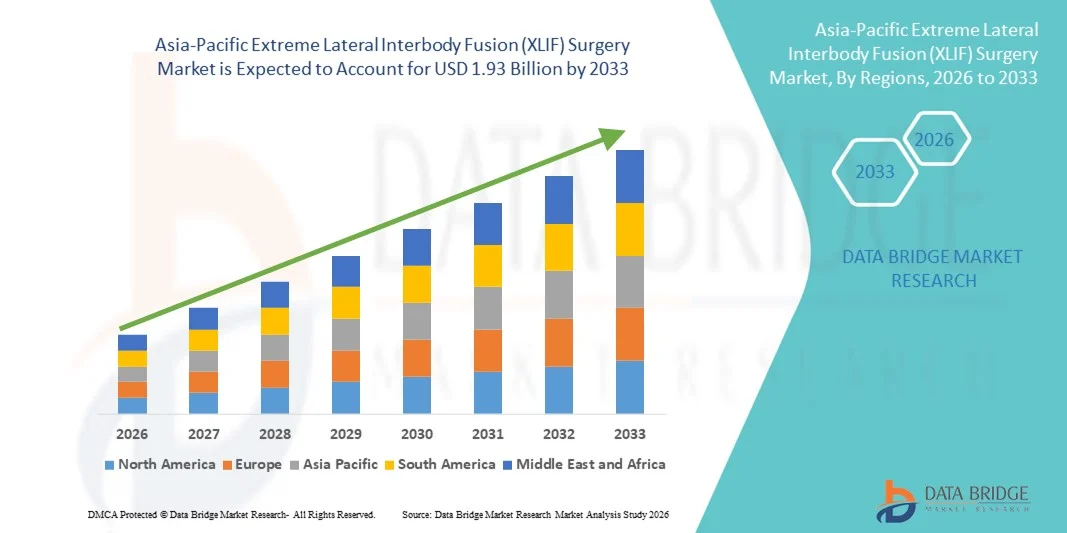
- As per Data Bridge Market Research Analysis the Asia-Pacific extreme lateral interbody fusion (XLIF) surgery market size was valued at USD 1.17 Billion in 2025 and is expected to reach USD 1.93 Billion by 2033, at a CAGR of 6.50% during the forecast period
- The market growth is largely fueled by the increasing prevalence of spinal disorders and continuous technological advancements in minimally invasive spine surgery techniques, leading to improved surgical precision and patient outcomes across hospitals and specialized spine care centers
- Furthermore, rising demand for minimally invasive procedures, shorter hospital stays, and faster patient recovery is establishing Extreme Lateral Interbody Fusion (XLIF) surgery as a preferred spinal fusion technique among surgeons. These converging factors are accelerating the uptake of Extreme Lateral Interbody Fusion (XLIF) Surgery solutions, thereby significantly boosting the industry's growth
Market Size & Forecast
- Global Market Value (2025): USD 1.17 Billion
- Expected Market Value (2033):USD 1.93 Billion
- Forecast CAGR (2026–2033): 6.50%
What are the Major Takeaways of Asia-Pacific Extreme Lateral Interbody Fusion (XLIF) Surgery Market?
- Extreme Lateral Interbody Fusion (XLIF) surgery, a minimally invasive spinal fusion technique used to treat various spinal disorders, is increasingly becoming an essential procedure in modern spine surgery due to its ability to reduce muscle disruption, minimize blood loss, and support faster patient recovery compared to traditional open spinal procedures
- The escalating demand for XLIF surgery is primarily fueled by the rising prevalence of degenerative spinal conditions, an increasing aging population, and the growing preference among surgeons and patients for minimally invasive spine surgery techniques that offer shorter hospital stays and improved clinical outcomes
- China dominated the extreme lateral interbody fusion (XLIF) surgery market with the largest revenue share of 33.7% in 2025, characterized by expanding healthcare infrastructure, increasing number of spinal surgeries, and growing adoption of minimally invasive spine surgery technologies across major hospitals and specialized spine treatment centers
- India is expected to be the fastest growing region in the extreme lateral interbody fusion (XLIF) surgery market during the forecast period with a projected CAGR of 10.1%, due to rising healthcare expenditure, improving hospital infrastructure, increasing awareness of minimally invasive spinal procedures, and the growing number of specialized spine care centers across the country
- The XLIF interbody cages segment dominated the largest market revenue share of 57.8% in 2025, driven by their essential role in spinal stabilization and vertebral alignment during minimally invasive spine surgeries
Report Scope and Extreme Lateral Interbody Fusion (XLIF) Surgery Market Segmentation
|
Attributes |
Extreme Lateral Interbody Fusion (XLIF) Surgery Key Market Insights |
|
Segments Covered |
|
|
Countries Covered |
Asia-Pacific
|
|
Key Market Players |
|
|
Market Opportunities |
|
|
Value Added Data Infosets |
In addition to the insights on market scenarios such as market value, growth rate, segmentation, geographical coverage, and major players, the market reports curated by the Data Bridge Market Research also include in-depth expert analysis, patient epidemiology, pipeline analysis, pricing analysis, and regulatory framework. |
What is the Key Trend in the Asia-Pacific Extreme Lateral Interbody Fusion (XLIF) Surgery Market?
Growing Adoption of Minimally Invasive Spine Surgery Techniques
- A significant and accelerating trend in the global extreme lateral interbody fusion (XLIF) surgery market is the increasing adoption of minimally invasive surgical techniques for the treatment of spinal disorders. Surgeons and healthcare providers are increasingly favoring procedures that minimize tissue disruption, reduce blood loss, and enable faster patient recovery compared to traditional open spinal surgeries. XLIF procedures allow surgeons to access the spine from the patient’s side, avoiding major back muscles and enabling more precise spinal fusion with reduced surgical trauma
- For instance, NuVasive, Inc., a pioneer of the XLIF technique, has developed specialized surgical systems such as the XLIF Procedure Platform that allows surgeons to perform minimally invasive lateral spine surgeries with improved visualization and neuromonitoring capabilities. Similarly, Medtronic offers advanced lateral access spine systems designed to support minimally invasive spinal fusion procedures, helping surgeons improve procedural accuracy and patient outcomes
- The growing preference for minimally invasive spine surgeries is driven by the clinical benefits they provide, including shorter hospital stays, reduced post-operative pain, and quicker return to daily activities. These advantages are particularly valuable for elderly patients and individuals suffering from degenerative spinal conditions
- In addition, continuous technological advancements in surgical instruments, spinal implants, and intraoperative imaging systems are enabling surgeons to perform XLIF procedures with greater precision and safety. These developments are improving surgical outcomes and expanding the adoption of lateral spine fusion techniques across hospitals and specialty spine centers
- The increasing prevalence of spinal disorders such as degenerative disc disease, spinal stenosis, and scoliosis is further encouraging healthcare providers to adopt advanced surgical solutions such as XLIF procedures. As awareness of minimally invasive spine surgery continues to grow among both surgeons and patients, the demand for XLIF procedures is expected to increase steadily worldwide
- Overall, the shift toward less invasive surgical approaches, combined with continuous innovation in spine surgery technologies, is expected to remain a key trend shaping the growth of the global Extreme Lateral Interbody Fusion (XLIF) Surgery market
Asia-Pacific Extreme Lateral Interbody Fusion (XLIF) Surgery Market Dynamics
Driver
Rising Prevalence of Degenerative Spine Disorders and Increasing Surgical Demand
- The increasing prevalence of degenerative spinal conditions, including degenerative disc disease, spinal deformities, and spinal stenosis, is a major factor driving the growth of the global Extreme Lateral Interbody Fusion (XLIF) Surgery market
- As populations age and lifestyle-related factors such as sedentary habits and obesity increase, the incidence of chronic back pain and spinal disorders requiring surgical intervention is also rising significantly
- For instance, leading medical technology companies such as NuVasive and Medtronic have expanded their minimally invasive spine surgery portfolios to address the growing demand for advanced spinal fusion procedures. These companies continue to introduce improved surgical systems and implants that support safer and more efficient XLIF procedures in hospitals and specialized spine centers
- The growing number of spinal surgeries performed globally is also contributing to market expansion. Surgeons are increasingly adopting XLIF procedures because they allow for effective spinal stabilization while minimizing muscle disruption and surgical complications compared to traditional approaches
- Furthermore, advancements in surgical navigation systems, neuromonitoring technologies, and specialized spinal implants are enhancing the precision and safety of lateral spine surgery procedures. These innovations are encouraging healthcare providers to integrate XLIF techniques into their surgical practice
- In addition, increasing healthcare investments, improved access to specialized spine care, and the expansion of ambulatory surgical centers are further supporting the growing demand for minimally invasive spinal procedures across developed and emerging markets
Restraint/Challenge
High Procedure Costs and Surgical Complexity
- One of the major challenges affecting the global Extreme Lateral Interbody Fusion (XLIF) Surgery market is the relatively high cost associated with advanced spinal fusion procedures. The requirement for specialized surgical instruments, implants, and intraoperative monitoring systems can significantly increase the overall cost of the procedure, which may limit accessibility in certain healthcare settings
- For instance, the adoption of advanced XLIF surgical platforms developed by companies such as NuVasive often requires hospitals to invest in dedicated surgical equipment and specialized surgeon training programs. These requirements can create financial and operational barriers for smaller hospitals and healthcare facilities with limited resources
- In addition, XLIF procedures require highly skilled surgeons who are trained in minimally invasive lateral access techniques. The learning curve associated with these procedures can slow adoption, particularly in regions where specialized spine surgery training programs are limited
- Potential complications associated with spinal fusion procedures, including nerve injury, implant displacement, or incomplete fusion, may also influence the decision-making process for surgeons and patients when selecting the most appropriate treatment option
- Furthermore, reimbursement challenges in certain healthcare systems and variations in regulatory approval processes across different countries may affect the widespread adoption of XLIF procedures. Addressing these challenges through cost optimization, improved surgical training programs, and continued technological innovation will be essential for sustaining long-term growth in the global XLIF surgery market
How is the Asia-Pacific Extreme Lateral Interbody Fusion (XLIF) Surgery Market Segmented?
The market is segmented on the basis of product type and end user.
- By Product Type
On the basis of product type, the Extreme Lateral Interbody Fusion (XLIF) Surgery market is segmented into XLIF interbody cages and XLIF interbody fusion systems. The XLIF interbody cages segment dominated the largest market revenue share of 57.8% in 2025, driven by their essential role in spinal stabilization and vertebral alignment during minimally invasive spine surgeries. XLIF interbody cages are widely used to maintain disc height and promote bone fusion between vertebrae in patients suffering from degenerative disc disease and spinal deformities. The increasing prevalence of spinal disorders and back pain among aging populations significantly contributes to the demand for these cages. Surgeons prefer interbody cages due to their ability to provide structural support while facilitating bone growth and fusion. Technological advancements in cage materials such as titanium and polyetheretherketone (PEEK) have improved strength, durability, and biocompatibility. In addition, the development of 3D-printed cages with porous structures enhances osseointegration and long-term surgical outcomes. Hospitals and spine surgery centers increasingly adopt these devices due to their compatibility with minimally invasive surgical techniques. Rising awareness of spinal health and improved access to advanced spine surgeries further supports segment growth. The growing number of spinal fusion procedures across developed healthcare systems continues to drive demand. Continuous innovation by medical device manufacturers also strengthens the adoption of advanced interbody cages. As a result, XLIF interbody cages remain the dominant product segment in the XLIF surgery market.
The XLIF interbody fusion systems segment is expected to witness the fastest CAGR of 9.6% from 2026 to 2033, fueled by the growing adoption of comprehensive spinal fusion systems designed for minimally invasive surgical procedures. These systems include specialized instruments, retractors, implants, and guidance technologies used to perform XLIF procedures with greater precision and safety. Surgeons increasingly prefer integrated fusion systems that allow improved surgical access to the spine through lateral approaches. The demand for minimally invasive spine surgeries is rising due to reduced hospital stays, minimal tissue damage, and faster patient recovery. Technological innovations such as advanced surgical navigation and intraoperative imaging are enhancing the effectiveness of XLIF fusion systems. Hospitals and specialty spine centers are investing in these systems to improve surgical outcomes and operational efficiency. The rising incidence of spinal degenerative diseases and scoliosis further drives demand for advanced fusion technologies. In addition, increasing healthcare expenditure and favorable reimbursement policies support the adoption of these systems. Medical device companies continue to introduce innovative surgical platforms designed specifically for lateral spinal procedures. Training programs and surgeon education initiatives also contribute to wider adoption. As spinal surgery techniques continue to evolve, the XLIF interbody fusion systems segment is expected to grow rapidly during the forecast period.
- By End User
On the basis of end user, the market is segmented into hospitals, spinal surgery centers, and others. The hospitals segment held the largest market revenue share of 64.3% in 2025, driven by the availability of advanced surgical infrastructure and specialized spine surgery departments. Hospitals perform a high volume of complex spinal procedures, including XLIF surgeries, due to the presence of experienced surgeons and multidisciplinary healthcare teams. The availability of advanced imaging technologies, operating rooms, and post-operative care units supports the successful performance of these procedures. Hospitals also benefit from strong reimbursement frameworks and healthcare funding, enabling them to adopt advanced surgical technologies. Increasing patient admissions for spinal disorders such as herniated discs, spinal stenosis, and degenerative disc disease contribute to the growing number of XLIF surgeries performed in hospital settings. In addition, hospitals often serve as training centers for spine surgeons, promoting the adoption of advanced surgical techniques. Government investments in healthcare infrastructure further strengthen hospital dominance in the market. Hospitals also have the financial capability to invest in sophisticated spinal implants and surgical equipment. The presence of specialized orthopedic and neurosurgical departments supports higher procedure volumes. Growing aging populations suffering from spinal conditions continue to drive hospital demand for XLIF surgeries. As a result, hospitals remain the leading end-user segment in the XLIF surgery market.
The spinal surgery centers segment is expected to witness the fastest CAGR of 10.4% from 2026 to 2033, driven by the increasing shift toward specialized and minimally invasive spine care facilities. Spinal surgery centers focus exclusively on diagnosing and treating spinal disorders, offering advanced surgical procedures such as XLIF with greater efficiency. Patients increasingly prefer specialized centers due to shorter waiting times, personalized care, and faster recovery processes. These centers are equipped with modern surgical technologies and experienced spine specialists who perform minimally invasive procedures. The rise in outpatient spinal surgeries and improvements in surgical techniques have made specialized centers more attractive to patients. In addition, spinal surgery centers often provide cost-effective alternatives to traditional hospital settings. Growing awareness of advanced spinal treatments and minimally invasive surgery options supports the expansion of these centers. Healthcare providers are investing in dedicated spine care facilities to meet rising patient demand. The increasing prevalence of chronic back pain and spinal disorders globally further drives patient visits to specialized centers. Technological advancements in spinal implants and surgical navigation also support the growth of these facilities. As demand for targeted spine care continues to increase, spinal surgery centers are expected to experience the fastest growth in the XLIF surgery market.
Which Region Holds the Largest Share of the Asia-Pacific Extreme Lateral Interbody Fusion (XLIF) Surgery Market?
- Asia-Pacific dominated the extreme lateral interbody fusion (XLIF) surgery market with the largest revenue share in 2025, supported by the region’s expanding healthcare infrastructure, increasing adoption of minimally invasive spine surgery techniques, and the growing presence of medical device manufacturers specializing in spinal implants and surgical technologies. The region benefits from a large patient population, improving hospital networks, skilled spine surgeons, and continuous advancements in surgical technologies that enable the effective treatment of complex spinal disorders through minimally invasive procedures such as XLIF surgery
- Healthcare providers in the region highly value the clinical benefits offered by Extreme Lateral Interbody Fusion (XLIF) Surgery, including reduced tissue damage, shorter hospital stays, and faster patient recovery compared to traditional open spine surgeries. The availability of advanced surgical navigation systems, specialized implants, and intraoperative monitoring technologies further enhances surgical precision and improves patient outcomes, encouraging hospitals and spine care centers to increasingly adopt XLIF procedures
- This widespread adoption is further supported by rising healthcare expenditure, improving access to specialized spine care, and the increasing prevalence of spinal disorders such as degenerative disc disease, spinal stenosis, and scoliosis. In addition, the growing aging population and increasing number of spinal surgeries performed annually across hospitals and ambulatory surgical centers continue to drive the demand for advanced spinal fusion procedures throughout the Asia-Pacific region
China Extreme Lateral Interbody Fusion (XLIF) Surgery Market Insight
The China extreme lateral interbody fusion (XLIF) surgery market dominated the Extreme Lateral Interbody Fusion (XLIF) Surgery market with the largest revenue share of 33.7% in 2025, characterized by expanding healthcare infrastructure, an increasing number of spinal surgeries, and the growing adoption of minimally invasive spine surgery technologies across major hospitals and specialized spine treatment centers. Hospitals and spine care facilities across the country perform a substantial number of spinal procedures annually, supported by improved surgical technologies and a growing number of trained spine surgeons. In addition, continuous investments in healthcare infrastructure and the introduction of advanced spinal implants and surgical systems are further supporting the adoption of XLIF procedures across China.
India Extreme Lateral Interbody Fusion (XLIF) Surgery Market Insight
The India extreme lateral interbody fusion (XLIF) surgery market is expected to be the fastest growing country in the Extreme Lateral Interbody Fusion (XLIF) Surgery market during the forecast period, with a projected CAGR of 10.1%. This growth is driven by rising healthcare expenditure, improving hospital infrastructure, increasing awareness of minimally invasive spinal procedures, and the growing number of specialized spine care centers across the country. India is witnessing significant investments in healthcare facilities and the expansion of private hospitals and advanced surgical centers. In addition, the rising incidence of spinal disorders and the increasing demand for minimally invasive surgical treatments are further supporting the growth of the XLIF surgery market in India during the forecast period.
Which are the Top Companies in Asia-Pacific Extreme Lateral Interbody Fusion (XLIF) Surgery Market?
The Extreme Lateral Interbody Fusion (XLIF) Surgery industry is primarily led by well-established companies, including:
- Medtronic (Ireland)
- NuVasive, Inc. (U.S.)
- Stryker (U.S.)
- Globus Medical, Inc. (U.S.)
- Zimmer Biomet (U.S.)
- Orthofix Medical Inc. (U.S.)
- RTI Surgical Holdings, Inc. (U.S.)
- SeaSpine Holdings Corporation (U.S.)
- Alphatec Holdings, Inc. (U.S.)
- Johnson & Johnson – DePuy Synthes (U.S.)
- B. Braun Melsungen AG (Germany)
- Xtant Medical Holdings, Inc. (U.S.)
- Life Spine, Inc. (U.S.)
- Spine Wave, Inc. (U.S.)
- Aurora Spine Corporation (Canada)
- CoreLink, LLC (U.S.)
- K2M Group Holdings, Inc. (U.S.)
- Exactech, Inc. (U.S.)
- Captiva Spine, Inc. (U.S.)
- Surgalign Holdings, Inc. (U.S.)
What are Latest Developments in Asia-Pacific Extreme Lateral Interbody Fusion (XLIF) Surgery Market?
- In March 2023, NuVasive, Inc., a global spine technology company, announced the 20-year milestone of the Extreme Lateral Interbody Fusion (XLIF) procedure, highlighting the widespread adoption of this minimally invasive lateral spine surgery technique. The company reported that more than 300,000 XLIF procedures had been performed worldwide and supported by over 500 peer-reviewed publications, demonstrating strong clinical validation and increasing global adoption of the procedure for treating spinal disorders
- In October 2023, Globus Medical celebrated the 20-year legacy of the XLIF procedure during the Society for Minimally Invasive Spine Surgery (SMISS) Annual Forum, emphasizing the extensive clinical evidence supporting the safety and reproducibility of the technique. The milestone highlighted two decades of innovation and ongoing development of lateral spine surgery technologies and implants used in XLIF procedure
- In September 2023, Globus Medical completed its merger with NuVasive, forming one of the largest musculoskeletal technology companies globally. The merger expanded the combined company’s spinal surgery portfolio, including technologies supporting lateral lumbar interbody fusion procedures such as XLIF, and strengthened research, product development, and global distribution capabilities
- In June 2024, Medtronic introduced an advanced lateral access spine surgery system integrated with neuromonitoring technologies, designed to enhance surgeon visualization and nerve protection during minimally invasive lateral lumbar interbody fusion procedures, including XLIF. The development reflects the increasing integration of real-time monitoring technologies to improve surgical accuracy and patient safety in spine surgery
- In April 2025, several medical technology companies expanded robotic-assisted and navigation-enabled spinal surgery platforms to support minimally invasive lateral fusion procedures. These systems incorporate real-time imaging, surgical planning software, and robotic guidance to improve implant positioning and procedural accuracy during XLIF surgeries, reflecting the growing shift toward technology-assisted spine surgery
- In July 2025, spine surgery device manufacturers introduced next-generation expandable interbody cages and 3D-printed spinal implants designed for minimally invasive lateral lumbar fusion procedures. These implants enhance spinal alignment correction, promote bone growth through porous structures, and support improved clinical outcomes in XLIF-based surgical approaches

- Interactive Data Analysis Dashboard
- Company Analysis Dashboard for high growth potential opportunities
- Research Analyst Access for customization & queries
- Competitor Analysis with Interactive dashboard
- Latest News, Updates & Trend analysis
- Harness the Power of Benchmark Analysis for Comprehensive Competitor Tracking
Data collection and base year analysis are done using data collection modules with large sample sizes. The stage includes obtaining market information or related data through various sources and strategies. It includes examining and planning all the data acquired from the past in advance. It likewise envelops the examination of information inconsistencies seen across different information sources. The market data is analysed and estimated using market statistical and coherent models. Also, market share analysis and key trend analysis are the major success factors in the market report. To know more, please request an analyst call or drop down your inquiry.
The key research methodology used by DBMR research team is data triangulation which involves data mining, analysis of the impact of data variables on the market and primary (industry expert) validation. Data models include Vendor Positioning Grid, Market Time Line Analysis, Market Overview and Guide, Company Positioning Grid, Patent Analysis, Pricing Analysis, Company Market Share Analysis, Standards of Measurement, Global versus Regional and Vendor Share Analysis. To know more about the research methodology, drop in an inquiry to speak to our industry experts.
Data Bridge Market Research is a leader in advanced formative research. We take pride in servicing our existing and new customers with data and analysis that match and suits their goal. The report can be customized to include price trend analysis of target brands understanding the market for additional countries (ask for the list of countries), clinical trial results data, literature review, refurbished market and product base analysis. Market analysis of target competitors can be analyzed from technology-based analysis to market portfolio strategies. We can add as many competitors that you require data about in the format and data style you are looking for. Our team of analysts can also provide you data in crude raw excel files pivot tables (Fact book) or can assist you in creating presentations from the data sets available in the report.













