


What is the Europe Acute Respiratory Distress Syndrome (ARDS) Market Size and Growth Rate ?
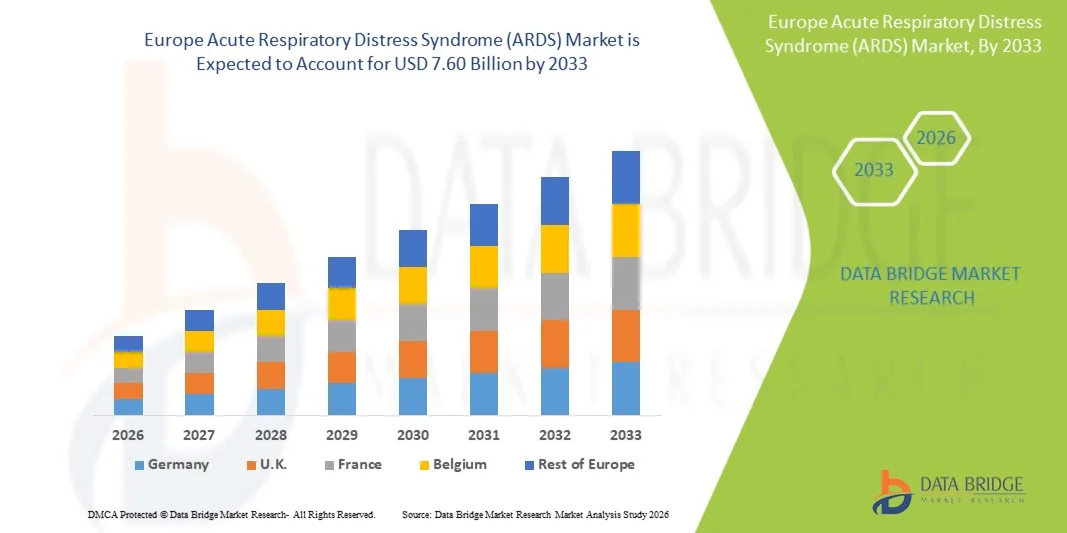
- As per Data Bridge Market Research Analysis the Europe Acute Respiratory Distress Syndrome (ARDS) market size was valued at USD 3.68 billion in 2025and is expected to reach USD 7.60 billion by 2033, at a CAGR of 9.5% during the forecast period
- The market growth is primarily driven by the rising prevalence of severe respiratory disorders, increasing incidence of pneumonia and sepsis, and the growing burden of critical care admissions across hospitals in Europe, leading to greater demand for advanced ARDS treatment and respiratory support solutions
- Furthermore, ongoing advancements in mechanical ventilation technologies, increasing adoption of extracorporeal membrane oxygenation (ECMO), and growing investments in intensive care infrastructure are positioning ARDS therapies and critical care management systems as essential components of modern healthcare. These combined factors are significantly accelerating the growth of the Europe ARDS market during the forecast period
Market Size & Forecast
- Global Market Value (2025): USD 3.68 billion
- Expected Market Value (2033): USD 7.60 billion
- Forecast CAGR (2026–2033): 9.5%
What are the Major Takeaways of Europe Acute Respiratory Distress Syndrome (ARDS) Market?
- Acute Respiratory Distress Syndrome (ARDS) market, focused on the diagnosis, treatment, and management of severe respiratory failure and lung inflammation, is becoming an increasingly critical component of the region’s healthcare and intensive care ecosystem due to the rising prevalence of severe pulmonary disorders and growing demand for advanced respiratory support solutions
- The increasing demand in the Europe Acute Respiratory Distress Syndrome (ARDS) market is primarily driven by the rising incidence of pneumonia, sepsis, chronic respiratory diseases, and viral infections, along with the growing geriatric population and increasing admissions to intensive care units across European countries
- Germany dominated the Europe Acute Respiratory Distress Syndrome (ARDS) market with the largest revenue share of 31.4% in 2025, supported by its advanced healthcare infrastructure, strong presence of intensive care facilities, high adoption of mechanical ventilation and ECMO technologies, and increasing investments in critical care management systems
- The U.K. is expected to be the fastest growing country in the Europe Acute Respiratory Distress Syndrome (ARDS) market during the forecast period due to rising healthcare expenditure, increasing awareness regarding early respiratory disease treatment, and growing adoption of technologically advanced respiratory monitoring and critical care solutions
- Treatment segment dominated the Europe Acute Respiratory Distress Syndrome (ARDS) market with a market share of 58.7% in 2025, driven by the widespread utilization of mechanical ventilation systems, extracorporeal membrane oxygenation (ECMO), corticosteroids, and supportive intensive care therapies aimed at improving respiratory function and patient survival outcomes
Report Scope and Europe Acute Respiratory Distress Syndrome (ARDS) Market Segmentation
|
Attributes |
Europe Acute Respiratory Distress Syndrome (ARDS) Key Market Insights |
|
Segments Covered |
|
|
Countries Covered |
Europe · Germany · France · U.K. · Netherlands · Switzerland · Belgium · Russia · Italy · Spain · Turkey · Rest of Europe |
|
Key Market Players |
|
|
Market Opportunities |
· The increasing adoption of extracorporeal membrane oxygenation (ECMO) systems · Rising investments by regional governments in expanding intensive care infrastructure and emergency preparedness following the COVID-19 pandemic |
|
Value Added Data Infosets |
In addition to the insights on market scenarios such as market value, growth rate, segmentation, geographical coverage, and major players, the market reports curated by the Data Bridge Market Research also include in-depth expert analysis, patient epidemiology, pipeline analysis, pricing analysis, and regulatory framework |
What is the Key Trend in the Europe Acute Respiratory Distress Syndrome (ARDS) Market?
“Growing Adoption of Advanced Ventilation and Critical Care Technologies”
- A significant and accelerating trend in the Europe Acute Respiratory Distress Syndrome (ARDS) market is the increasing integration of advanced mechanical ventilation systems, extracorporeal membrane oxygenation (ECMO), and AI-assisted patient monitoring technologies across intensive care units. This combination of technologies is significantly improving respiratory care management and patient survival outcomes
- For instance, Getinge’s Cardiohelp ECMO platform is increasingly utilized across European hospitals for severe ARDS management, while Dräger’s advanced ventilation systems offer intelligent monitoring capabilities to optimize respiratory support in critically ill patients. Similarly, Hamilton Medical ventilators integrate adaptive ventilation modes to support personalized respiratory therapy
- AI integration in ARDS treatment solutions enables features such as predictive patient monitoring, automated ventilation adjustments, and enhanced detection of respiratory deterioration. For instance, some advanced ICU monitoring platforms utilize AI algorithms to analyze oxygenation patterns and provide early alerts regarding worsening pulmonary function. Furthermore, integrated respiratory support systems offer clinicians improved decision-making capabilities, allowing more efficient management of critically ill patients
- The seamless integration of ARDS treatment technologies with hospital information systems and intensive care infrastructure facilitates centralized patient monitoring and coordinated respiratory management. Through unified critical care platforms, healthcare professionals can manage ventilation systems, patient vitals, and therapeutic interventions simultaneously, creating a more connected and efficient intensive care environment
- This trend toward more intelligent, responsive, and integrated respiratory care systems is fundamentally reshaping critical care treatment standards across Europe. Consequently, companies such as Medtronic are developing advanced respiratory support and patient monitoring solutions with features such as automated ventilation optimization and AI-supported critical care analytics
- The demand for ARDS treatment solutions that offer advanced monitoring, intelligent ventilation management, and integrated critical care capabilities is growing rapidly across hospitals and intensive care facilities, as healthcare providers increasingly prioritize improved patient outcomes and operational efficiency
- The growing focus on personalized respiratory care and data-driven treatment protocols is encouraging manufacturers to develop next-generation ARDS management systems with enhanced analytics, automation, and interoperability features. This ongoing technological evolution is expected to strengthen the efficiency and responsiveness of intensive care services throughout the region
Europe Acute Respiratory Distress Syndrome (ARDS) Market Dynamics
Driver
“Growing Need Due to Rising Incidence of Severe Respiratory Diseases and Expanding Critical Care Infrastructure”
- The increasing prevalence of severe respiratory disorders, sepsis, pneumonia, and viral infections, coupled with the expansion of intensive care infrastructure across European countries, is a significant driver for the heightened demand for ARDS treatment and respiratory support solutions
- For instance, in March 2025, Getinge AB announced advancements in ECMO and intensive care support technologies aimed at improving respiratory failure management in European hospitals. Such strategies by key companies are expected to drive the Europe Acute Respiratory Distress Syndrome (ARDS) industry growth during the forecast period
- As healthcare systems become more focused on reducing mortality associated with critical respiratory conditions, ARDS treatment solutions provide advanced capabilities such as real-time respiratory monitoring, adaptive ventilation, and extracorporeal oxygenation support, offering substantial improvements over conventional respiratory management approaches
- Furthermore, the increasing adoption of technologically advanced intensive care systems and the growing demand for integrated hospital infrastructure are making ARDS treatment technologies an essential component of modern critical care management, offering seamless coordination between respiratory support devices and patient monitoring platforms
- The availability of advanced mechanical ventilation systems, improved ICU access, and increasing adoption of minimally invasive respiratory support therapies are key factors propelling the adoption of ARDS treatment solutions across hospitals and specialty care centers. The trend toward modernization of healthcare facilities and increasing investments in critical care capabilities further contribute to market growth
- Government initiatives aimed at strengthening emergency preparedness and expanding critical care capacity are also contributing to increased adoption of ARDS treatment technologies throughout Europe. Public healthcare authorities are investing in advanced respiratory support infrastructure to improve preparedness for future respiratory disease outbreaks and medical emergencies
- The growing number of clinical research activities focused on respiratory disease management and innovative ARDS therapies is further accelerating market development. Increasing collaboration between healthcare institutions, medical device manufacturers, and research organizations is supporting the introduction of advanced treatment approaches and next-generation respiratory support systems
Restraint/Challenge
“High Treatment Costs and Limited Availability of Specialized Intensive Care Resources”
- Concerns surrounding the high cost of advanced respiratory support technologies and the limited availability of specialized intensive care resources pose a significant challenge to broader market expansion. As ARDS treatment often requires sophisticated ventilation systems, ECMO devices, and highly trained healthcare professionals, many healthcare facilities face operational and financial constraints in adopting advanced critical care solutions
- For instance, shortages of ICU beds and skilled respiratory care professionals in certain European countries have created challenges in providing timely and effective ARDS management, particularly during periods of high hospitalization rates caused by severe respiratory outbreaks
- Addressing these healthcare infrastructure challenges through increased investment in intensive care capacity, workforce training, and modernization of respiratory support systems is crucial for improving patient access to ARDS therapies. Companies such as Dräger and Hamilton Medical are focusing on developing more efficient and user-friendly ventilation technologies to support healthcare providers. In addition, the substantial operational costs associated with ECMO therapy and long-term intensive care management can create barriers for smaller hospitals and resource-constrained healthcare facilities. While standard ventilation systems are more widely accessible, advanced respiratory support technologies often require considerable financial investment and specialized expertise
- While healthcare investments are gradually increasing across Europe, the high costs associated with advanced ARDS treatment and intensive care management can still limit widespread adoption, particularly in regions with constrained healthcare budgets or limited access to specialized critical care services
- Overcoming these challenges through expanded healthcare funding, improved critical care training programs, and the development of cost-effective respiratory support technologies will be vital for sustaining long-term growth in the Europe Acute Respiratory Distress Syndrome (ARDS) market
- In addition, stringent regulatory requirements and lengthy approval processes for advanced respiratory care devices can delay the commercialization and widespread adoption of innovative ARDS treatment solutions. Compliance with evolving healthcare standards and clinical safety regulations may increase operational complexity for manufacturers operating within the European market
How is the Europe Acute Respiratory Distress Syndrome (ARDS) Market Segmented ?
The market is segmented on the basis of cause, type, route of administration, end user, and distribution channel.
- By Cause
On the basis of cause, the Europe Acute Respiratory Distress Syndrome (ARDS) market is segmented into Coronavirus Disease 2019 (COVID-19), sepsis, inhalation of harmful substances, severe pneumonia, and others. The severe pneumonia segment dominated the market with the largest market revenue share in 2025, driven by the high prevalence of bacterial and viral pneumonia cases across Europe and the strong association between severe pulmonary infections and ARDS development. Severe pneumonia remains one of the leading causes of hospitalization in intensive care units, significantly increasing the requirement for advanced respiratory support and ventilation therapies. The growing geriatric population and rising incidence of chronic respiratory disorders further contribute to the dominance of this segment. In addition, increasing healthcare investments in respiratory disease management and critical care infrastructure are supporting the adoption of advanced ARDS treatment solutions for pneumonia-related complications. Continuous advancements in diagnostic imaging and respiratory monitoring technologies are also improving early detection and management outcomes in severe pneumonia-associated ARDS cases.
The Coronavirus Disease 2019 (COVID-19) segment is anticipated to witness the fastest growth rate from 2026 to 2033, fueled by the long-term respiratory complications associated with post-COVID pulmonary damage and the continued monitoring of critically ill patients with respiratory distress conditions. Healthcare systems across Europe are increasingly strengthening intensive care preparedness and respiratory disease management capabilities following the pandemic experience. The growing focus on advanced ventilation systems, ECMO technologies, and AI-assisted patient monitoring solutions is further accelerating the adoption of ARDS therapies related to COVID-19 complications. In addition, ongoing research regarding post-viral respiratory disorders and inflammatory lung conditions is contributing to rising awareness and treatment demand within this segment. Increased government funding for respiratory healthcare preparedness and investments in critical care infrastructure are also expected to support future segment growth.
- By Type
On the basis of type, the Europe Acute Respiratory Distress Syndrome (ARDS) market is segmented into diagnosis and treatment. The treatment segment dominated the market with the largest market revenue share of 58.7% in 2025, driven by the widespread use of mechanical ventilation systems, extracorporeal membrane oxygenation (ECMO), corticosteroids, and supportive respiratory therapies for critically ill patients. Treatment solutions remain essential for managing severe respiratory failure and improving oxygenation levels in ARDS patients admitted to intensive care units. The increasing number of severe respiratory infections and rising ICU admissions across European hospitals are further supporting demand for advanced treatment technologies. In addition, continuous technological advancements in respiratory support devices and ventilation systems are improving patient outcomes and strengthening treatment adoption. Growing healthcare expenditure and increasing investments in critical care modernization are also contributing significantly to segment dominance.
The diagnosis segment is expected to witness the fastest CAGR from 2026 to 2033, driven by the increasing emphasis on early disease detection and rapid assessment of respiratory complications in critical care settings. Advanced imaging technologies, blood gas analysis systems, and AI-enabled monitoring platforms are increasingly being utilized to support accurate and timely ARDS diagnosis. The growing awareness regarding the importance of early intervention in improving survival outcomes is encouraging healthcare providers to adopt advanced diagnostic solutions. In addition, rising investments in hospital digitalization and patient monitoring infrastructure are supporting the implementation of integrated diagnostic systems across intensive care facilities. Increasing research activities focused on predictive respiratory monitoring and biomarker-based diagnostic approaches are also expected to contribute to rapid segment growth during the forecast period.
- By Route of Administration
On the basis of route of administration, the Europe Acute Respiratory Distress Syndrome (ARDS) market is segmented into oral, parenteral, and others. The parenteral segment dominated the market with the largest market revenue share in 2025, driven by the widespread administration of emergency medications, sedatives, corticosteroids, and supportive therapies through intravenous routes in intensive care settings. ARDS patients often require rapid drug delivery and immediate therapeutic intervention, making parenteral administration the preferred option across hospitals and critical care units. The increasing prevalence of severe respiratory conditions and rising ICU admissions are further contributing to the high utilization of injectable therapies. In addition, advancements in infusion technologies and critical care medication management systems are improving treatment efficiency and patient monitoring capabilities. The growing focus on effective respiratory stabilization and rapid symptom management also supports the continued dominance of the parenteral segment.
The oral segment is anticipated to witness the fastest growth rate from 2026 to 2033, fueled by the increasing use of supportive medications and long-term recovery therapies for post-ARDS management and respiratory rehabilitation. Oral medications are increasingly being prescribed during recovery stages due to their convenience, ease of administration, and suitability for outpatient care settings. The growing emphasis on reducing hospital stays and improving patient comfort is encouraging healthcare providers to adopt oral therapeutic approaches whenever clinically appropriate. In addition, rising awareness regarding long-term pulmonary rehabilitation and respiratory health management is supporting segment growth across Europe. Increasing pharmaceutical research focused on effective oral anti-inflammatory and supportive respiratory medications is also expected to drive future demand within this segment.
- By End User
On the basis of end user, the Europe Acute Respiratory Distress Syndrome (ARDS) market is segmented into hospitals, specialty clinics, home healthcare, and others. The hospitals segment dominated the market with the largest market revenue share in 2025, driven by the high volume of ARDS patient admissions requiring intensive care support, advanced ventilation systems, and continuous respiratory monitoring. Hospitals remain the primary treatment centers for severe respiratory distress conditions due to the availability of multidisciplinary healthcare professionals and specialized critical care infrastructure. Increasing investments in ICU expansion and modernization across European healthcare systems are further supporting segment dominance. In addition, hospitals are increasingly adopting advanced ECMO technologies, AI-enabled monitoring systems, and integrated respiratory management platforms to improve treatment outcomes. The growing burden of severe respiratory infections and emergency hospitalizations also continues to strengthen demand within this segment.
The home healthcare segment is expected to witness the fastest CAGR from 2026 to 2033, driven by the growing preference for post-intensive care recovery management and long-term respiratory rehabilitation in home settings. Advancements in portable respiratory monitoring devices, home ventilation systems, and telemedicine technologies are enabling healthcare providers to extend respiratory support services beyond hospitals. The increasing focus on reducing healthcare costs and minimizing prolonged hospital stays is further encouraging adoption of home healthcare solutions for recovering ARDS patients. In addition, rising awareness regarding patient-centered care and improved accessibility to remote healthcare services are contributing to rapid segment growth. Government support for digital healthcare expansion and remote patient monitoring programs is also expected to accelerate adoption across Europe.
- By Distribution Channel
On the basis of distribution channel, the Europe Acute Respiratory Distress Syndrome (ARDS) market is segmented into direct tender, hospital pharmacy, retail pharmacy, online pharmacy, and others. The hospital pharmacy segment dominated the market with the largest market revenue share in 2025, driven by the high dependence on hospital-based medication distribution and respiratory therapy management for critically ill ARDS patients. Hospital pharmacies play a central role in supplying emergency medications, sedatives, corticosteroids, and supportive care drugs required for intensive care treatment. The increasing number of ICU admissions and expansion of hospital critical care services across Europe are further supporting segment dominance. In addition, hospital pharmacies ensure rapid access to specialized medications and coordinated treatment protocols within intensive care environments. The growing focus on integrated hospital care and efficient medication management systems is also strengthening demand for hospital pharmacy services.
The online pharmacy segment is anticipated to witness the fastest growth rate from 2026 to 2033, fueled by the increasing adoption of digital healthcare platforms and growing preference for convenient medication access during post-discharge respiratory care and rehabilitation. Online pharmacies are gaining popularity due to their ability to provide home delivery services, digital prescription management, and improved accessibility for patients recovering from severe respiratory illnesses. The expansion of telemedicine and remote healthcare services across Europe is further accelerating the use of online pharmaceutical distribution channels. In addition, increasing smartphone penetration and growing consumer familiarity with digital health solutions are supporting rapid market growth within this segment. Continuous improvements in e-commerce healthcare infrastructure and regulatory support for online pharmaceutical services are also expected to contribute significantly to future segment expansion
Which Region Holds the Largest Share of the Europe Acute Respiratory Distress Syndrome (ARDS) Market?
- Germany dominated the Europe Acute Respiratory Distress Syndrome (ARDS) market with the largest revenue share of 31.4% in 2025, supported by its advanced healthcare infrastructure, strong presence of intensive care facilities, high adoption of mechanical ventilation and ECMO technologies, and increasing investments in critical care management systems
- Healthcare providers in the country highly prioritize advanced ventilation systems, extracorporeal membrane oxygenation (ECMO), and integrated critical care monitoring solutions to improve patient survival outcomes and respiratory disease management
- This widespread adoption is further supported by strong healthcare infrastructure, high healthcare expenditure, a well-established network of intensive care facilities, and the growing focus on modernization of critical care services, establishing advanced ARDS treatment solutions as an essential component of hospital and emergency respiratory care management
The Germany Acute Respiratory Distress Syndrome (ARDS) Market Insight
The Germany Acute Respiratory Distress Syndrome (ARDS) market captured the largest revenue share in 2025 within Europe, fueled by the increasing prevalence of severe respiratory diseases and the strong presence of advanced intensive care infrastructure. Healthcare providers are increasingly prioritizing advanced ventilation systems, extracorporeal membrane oxygenation (ECMO), and integrated respiratory monitoring technologies to improve patient survival outcomes. The growing focus on critical care modernization, combined with rising investments in hospital infrastructure and emergency preparedness programs, further propels the Europe Acute Respiratory Distress Syndrome (ARDS) industry. Moreover, the increasing adoption of AI-enabled respiratory support systems and technologically advanced intensive care solutions is significantly contributing to the market’s expansion.
U.K. Acute Respiratory Distress Syndrome (ARDS) Market Insight
The U.K. Acute Respiratory Distress Syndrome (ARDS) market is anticipated to grow at a noteworthy CAGR during the forecast period, driven by the increasing incidence of severe respiratory infections and growing investments in intensive care infrastructure. In addition, rising awareness regarding early respiratory disease management and critical care preparedness is encouraging healthcare providers to adopt advanced respiratory support and monitoring technologies. The U.K.’s expanding healthcare digitalization initiatives, alongside strong government support for hospital modernization and emergency preparedness programs, are expected to continue stimulating market growth.
France Acute Respiratory Distress Syndrome (ARDS) Market Insight
The France Acute Respiratory Distress Syndrome (ARDS) market is gaining momentum due to the country’s growing investments in respiratory healthcare infrastructure, rising ICU admissions, and increasing focus on advanced patient monitoring technologies. The French healthcare system places significant emphasis on critical care preparedness, and the adoption of ARDS treatment solutions is driven by the increasing need for effective respiratory support systems across hospitals and specialty clinics. The integration of advanced ventilation technologies with digital healthcare platforms and AI-assisted monitoring systems is fueling growth. Moreover, France’s aging population is likely to spur demand for efficient respiratory disease management and long-term critical care support solutions across healthcare facilities.
Italy Acute Respiratory Distress Syndrome (ARDS) Market Insight
The Italy Acute Respiratory Distress Syndrome (ARDS) market accounted for a significant market revenue share in Europe in 2025, attributed to the country’s rising burden of respiratory diseases, increasing healthcare modernization efforts, and strong adoption of advanced critical care technologies. Italy stands as one of the major European markets for intensive care and respiratory management systems, and ARDS treatment solutions are becoming increasingly utilized across hospitals, specialty clinics, and emergency care facilities. The growing focus on improving ICU capacity and the availability of advanced ventilation and respiratory monitoring systems, alongside increasing healthcare investments, are key factors propelling the market in Italy.
Which are the Top Companies in Europe Acute Respiratory Distress Syndrome (ARDS) Market?
The Europe Acute Respiratory Distress Syndrome (ARDS) industry is primarily led by well-established companies, including:
- Merck & Co., Inc. (U.S.)
- Baxter (U.S.)
- Medtronic (Ireland)
- Drägerwerk AG & Co. KGaA (Germany)
- Getinge AB (Sweden)
- Fisher & Paykel Healthcare Limited (New Zealand)
- NIHON KOHDEN CORPORATION (Japan)
- Koninklijke Philips N.V. (Netherlands)
- ResMed (U.S.)
- Hamilton Medical AG (Switzerland)
- Aerogen (Ireland)
- Smiths Group plc (U.K.)
- Air Liquide Healthcare (France)
- Vyaire Medical, Inc. (U.S.)
- GE HealthCare (U.S.)
- Mindray DS USA, Inc. (U.S.)
- Noccarc (India)
- Zuventus Healthcare Ltd. (India)
- InflaRx N.V. (Germany)
- Healios K.K. (Japan)
What are the Recent Developments in Europe Acute Respiratory Distress Syndrome (ARDS) Market?
- In May 2026, Medtronic announced that it received CE Mark approval in Europe for the VitalFlow™ Transport Frame Air and Ground (AG) accessory designed for the VitalFlow Extracorporeal Membrane Oxygenation (ECMO) System. The development enhances inter-hospital transport capabilities for critically ill ARDS and respiratory failure patients, supporting seamless critical care management across healthcare facilities. The approval further strengthens Medtronic’s respiratory and intensive care portfolio in Europe and highlights the growing focus on advanced ECMO technologies for ARDS treatment
- In April 2025, Lifemotion announced the European launch of the Lifemotion® ECMO System following CE mark approval, with the first clinical cases successfully completed in Germany and Spain. The system was designed to support extracorporeal life support and ARDS management with enhanced portability, battery-powered operation, and simplified usability for intensive care environments. This launch demonstrates the increasing adoption of innovative ECMO technologies across European hospitals for severe respiratory distress management
- In January 2025, InflaRx announced that the European Commission granted marketing authorization for GOHIBIC® (vilobelimab) for the treatment of SARS-CoV-2-induced Acute Respiratory Distress Syndrome (ARDS) in adult patients receiving invasive mechanical ventilation with or without ECMO. The approval marked the first authorized treatment in the European Union specifically indicated for COVID-19-induced ARDS, highlighting ongoing advancements in targeted ARDS therapeutics across Europe
- In June 2024, InflaRx announced that GOHIBIC® (vilobelimab) was selected for a BARDA-sponsored Phase 2 clinical platform study evaluating novel host-directed therapeutics for Acute Respiratory Distress Syndrome (ARDS). The study aims to assess innovative anti-inflammatory therapeutic approaches for severe respiratory failure and ARDS management. This development reflects increasing clinical research activity and investment in advanced ARDS therapies and respiratory disease treatment solutions
- In December 2024, Beyond Air announced that it received CE Mark approval in Europe for the LungFit® PH system, designed to deliver nitric oxide therapy for patients with severe respiratory complications and pulmonary hypertension. The technology supports respiratory care management and critical care treatment by providing advanced nitric oxide delivery solutions without the need for traditional gas cylinders. The approval highlights the growing emphasis on innovative respiratory support technologies within Europe’s critical care and ARDS treatment landscape

- Interactive Data Analysis Dashboard
- Company Analysis Dashboard for high growth potential opportunities
- Research Analyst Access for customization & queries
- Competitor Analysis with Interactive dashboard
- Latest News, Updates & Trend analysis
- Harness the Power of Benchmark Analysis for Comprehensive Competitor Tracking
Data collection and base year analysis are done using data collection modules with large sample sizes. The stage includes obtaining market information or related data through various sources and strategies. It includes examining and planning all the data acquired from the past in advance. It likewise envelops the examination of information inconsistencies seen across different information sources. The market data is analysed and estimated using market statistical and coherent models. Also, market share analysis and key trend analysis are the major success factors in the market report. To know more, please request an analyst call or drop down your inquiry.
The key research methodology used by DBMR research team is data triangulation which involves data mining, analysis of the impact of data variables on the market and primary (industry expert) validation. Data models include Vendor Positioning Grid, Market Time Line Analysis, Market Overview and Guide, Company Positioning Grid, Patent Analysis, Pricing Analysis, Company Market Share Analysis, Standards of Measurement, Global versus Regional and Vendor Share Analysis. To know more about the research methodology, drop in an inquiry to speak to our industry experts.
Data Bridge Market Research is a leader in advanced formative research. We take pride in servicing our existing and new customers with data and analysis that match and suits their goal. The report can be customized to include price trend analysis of target brands understanding the market for additional countries (ask for the list of countries), clinical trial results data, literature review, refurbished market and product base analysis. Market analysis of target competitors can be analyzed from technology-based analysis to market portfolio strategies. We can add as many competitors that you require data about in the format and data style you are looking for. Our team of analysts can also provide you data in crude raw excel files pivot tables (Fact book) or can assist you in creating presentations from the data sets available in the report.












