Biosimilars Market Overview
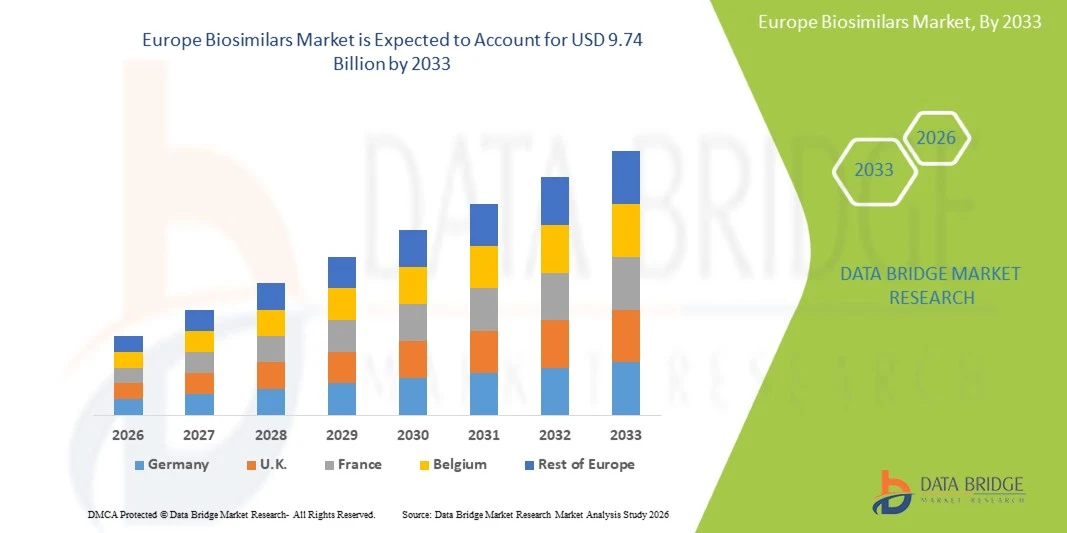
The Europe Biosimilars Market was valued at USD 3.93 billion in 2025 and is projected to reach USD 9.74 billion by 2033, growing at a CAGR of 12.00% from 2026 to 2033. Market growth is driven by increasing demand for cost-effective alternatives to biologic medicines, rising prevalence of chronic diseases, and expanding applications in oncology, immunology, inflammatory disorders, and diabetes. Growing pressure to reduce healthcare expenditure and improve patient access to advanced therapies is encouraging the adoption of biosimilars. Additionally, the expiration of patents for major biologic drugs, advancements in biopharmaceutical manufacturing, and supportive regulatory frameworks are creating opportunities for biosimilar manufacturers. Asia-Pacific offers significant growth opportunities due to expanding healthcare infrastructure, increasing biotechnology investments, and rising demand for affordable biologic treatments.
Market Size & Forecast
- Europe Market Value (2025): USD 3.93 billion
- Expected Market Value (2033): USD 9.74 billion
- Forecast CAGR (2026–2033): 12.00%
- Leading Region in 2025: France
- Fastest Growing Region: Germany
Key Market Trends & Insights
- France dominated the Europe biosimilars market, accounting for the largest revenue share of 27.97% in 2025, supported by its well-established healthcare infrastructure, strong adoption of biosimilar medicines, and emphasis on controlling healthcare expenditure. Government initiatives promoting the use of cost-effective biological therapies, established reimbursement mechanisms, and competitive procurement practices have supported market penetration.
- The trastuzumab segment dominated the Europe biosimilars market, accounting for a revenue share of 18.03% in 2025, driven by the increasing prevalence of HER2-positive breast and gastric cancers and the growing demand for cost-effective targeted cancer therapies. The availability of trastuzumab biosimilars provides affordable alternatives to the reference biologic Herceptin, helping improve patient access to essential oncology treatments.
- Germany is expected to be the fastest-growing country in the Europe biosimilars market, registering a CAGR of 12.00% during 2026–2033, driven by increasing demand for cost-effective biologic therapies, rising healthcare expenditure, and the growing prevalence of cancer and autoimmune diseases. The country’s well-established healthcare infrastructure, supportive regulatory environment, and emphasis on pharmaceutical cost containment are encouraging biosimilar adoption.
- The immunology and inflammation segment dominated the Europe biosimilars market, accounting for a revenue share of 44.13% in 2025, driven by the widespread use of biologic medicines for autoimmune and chronic inflammatory conditions. Increasing demand for treatments for rheumatoid arthritis, psoriasis, Crohn’s disease, and ulcerative colitis is supporting biosimilar adoption.
- The marketed segment dominated the Europe biosimilars market, accounting for a revenue share of 99.52% in 2025, reflecting the established commercial availability of approved biosimilar products across multiple therapeutic areas. Increasing adoption by hospitals, specialty clinics, and healthcare providers is supporting demand for marketed products.
- The hospital segment dominated the Europe biosimilars market, accounting for a revenue share of 55.00% in 2025, driven by the widespread administration of biologic medicines in hospital settings, particularly for oncology, immunology, and inflammatory diseases. Hospitals benefit from specialized healthcare professionals, appropriate drug administration infrastructure, and centralized procurement systems
- The public tender segment is expected to be the fastest-growing distribution channel in the Europe biosimilars market, registering a CAGR of 15.47% during 2026–2033. Growth is driven by government efforts to improve access to affordable biologic medicines and control public healthcare expenditure. Competitive bidding, centralized procurement, and large-volume purchasing by public hospitals and healthcare institutions are encouraging biosimilar adoption.
Report Scope and Biosimilars Market Segmentation
|
Attributes |
Biosimilars Key Market Insights |
|
Segments Covered |
|
|
Countries Covered |
Europe
|
|
Key Market Players |
|
|
Market Opportunities |
|
|
Value Added Data Infosets |
In addition to the insights on market scenarios such as market value, growth rate, segmentation, geographical coverage, and major players, the market reports curated by the Data Bridge Market Research also include in-depth expert analysis, patient epidemiology, pipeline analysis, pricing analysis, and regulatory framework. |
Biosimilars Market Trends
Trend: Expanding Biosimilar Portfolios and Advancements in Biomanufacturing
The Europe biosimilars market is increasingly focusing on expanding product portfolios, improving manufacturing efficiency, and developing cost-effective alternatives to reference biologic medicines. Manufacturers are introducing biosimilars across therapeutic areas such as oncology, immunology, inflammatory diseases, and diabetes to improve patient access to biologic treatments. Patent expirations of major biologic medicines are creating opportunities for new market entrants, while advances in cell-line development, process optimization, analytical characterization, and manufacturing technologies are supporting product development. Additionally, growing emphasis on healthcare cost containment, increasing regulatory approvals, and wider acceptance among healthcare professionals are encouraging biosimilar adoption. Strategic collaborations, manufacturing investments, and expanded commercialization capabilities are further shaping competition in the Europe biosimilars market.
For instance,
- In October 2025, the U.S. Food and Drug Administration (FDA) announced proposed measures to simplify biosimilar development, including reducing unnecessary clinical testing requirements and making interchangeability development more efficient. These regulatory initiatives were intended to lower development costs and support broader patient access to affordable biologic medicines.
- In November 2025, the FDA approved Poherdy (pertuzumab-dpzb), developed by Shanghai Henlius Biologics, as an interchangeable biosimilar to Perjeta. This marked the first biosimilar approval for Perjeta and expanded treatment options for patients with HER2-positive breast cancer.
- In April 2026, Biocon Biologics announced the U.S. commercial launch of Bosaya and Aukelso, denosumab biosimilars referencing Prolia and Xgeva. The launch expanded the availability of biosimilar treatment options in bone health and oncology-related indications, demonstrating the growing commercial opportunities associated with biosimilars for established biologic medicines.
Overall, these developments highlight the growing importance of regulatory innovation, product approvals, and commercial expansion in the Europe biosimilars market. Increasing patent expirations, efforts to reduce healthcare expenditure, and demand for affordable biologic therapies are encouraging manufacturers to expand their portfolios and strengthen production and distribution capabilities. Continued investment in biomanufacturing, strategic partnerships, and regulatory development is expected to support biosimilar innovation and market growth during the forecast period.
Europe Biosimilars Market Dynamics
Key Market Driver: Rising Demand for Cost-Effective Biologic Therapies and Expanding Biosimilar Adoption
The Europe biosimilars market is experiencing growth due to increasing demand for affordable alternatives to reference biologic medicines and the need to reduce healthcare expenditure. Biosimilars are increasingly being adopted across therapeutic areas such as oncology, immunology, inflammatory diseases, and diabetes, where biologic treatments are widely used. The expiration of patents and market exclusivity for major biologic drugs is creating opportunities for manufacturers to introduce biosimilar products and increase competition. In addition, growing pressure on healthcare systems to improve patient access to advanced treatments is encouraging hospitals, healthcare providers, and payers to consider biosimilars. Improvements in biomanufacturing technologies, evolving regulatory pathways, and increasing acceptance among physicians are further supporting market development. These factors are creating opportunities for biosimilar manufacturers to expand their product portfolios and strengthen their presence across Europe pharmaceutical markets.
For instance,
- In October 2025, the U.S. Food and Drug Administration (FDA) proposed changes to simplify biosimilar development studies and reduce unnecessary clinical testing. The initiative aimed to streamline regulatory requirements and facilitate the development of more affordable biosimilar medicines.
- In March 2026, the FDA issued draft guidance recommending that unnecessary pharmacokinetic (PK) testing could be streamlined when scientifically justified. The proposed approach was intended to reduce development costs and support more efficient biosimilar development.
- In May 2026, the FDA approved Immgolis and Immgolis Intri, the first interchangeable biosimilars to Simponi and Simponi Aria, respectively. The products expanded biosimilar treatment options for rheumatoid arthritis and ulcerative colitis, supporting competition in the immunology and inflammation segment.
Overall, these developments highlight the growing importance of cost-effective treatment options, streamlined regulatory pathways, and expanding therapeutic applications in the Europe biosimilars market. Increasing demand for affordable biologic medicines, patent expirations, and advancements in biosimilar development are encouraging manufacturers to expand their product pipelines and commercial portfolios. Continued regulatory support and growing healthcare system adoption are expected to create further opportunities for biosimilar manufacturers during the forecast period.
Key Restraint/Challenge: Regulatory Complexity, High Development Costs, and Market Access Barriers
The Europe biosimilars market faces challenges associated with complex regulatory requirements, high development costs, and difficulties in achieving widespread market adoption. Unlike conventional generic medicines, biosimilars require extensive analytical characterization, comparative studies, and evidence demonstrating similarity to reference biologic products in terms of quality, safety, and efficacy. These requirements increase development timelines and financial investment for manufacturers. In addition, differences in regulatory pathways across countries can complicate product approvals and international commercialization. Pricing pressure, reimbursement restrictions, and competition among multiple biosimilar manufacturers can also affect profitability. Limited physician familiarity, patient concerns regarding switching from reference biologics, and differences in prescribing and substitution policies may further slow adoption. Consequently, manufacturers must balance competitive pricing with the investment required to maintain manufacturing quality, meet regulatory standards, and establish confidence among healthcare professionals and patients.
For instance,
- In October 2025, the U.S. Food and Drug Administration (FDA) announced proposed changes to biosimilar development guidance, including measures to reduce unnecessary comparative efficacy studies and streamline development requirements. These changes were intended to reduce development costs and accelerate access to biosimilar medicines.
- In August 2025, the U.S. Department of Health and Human Services published an analysis of biosimilar market entry challenges, highlighting how development costs, uncertain commercial returns, and low adoption can discourage manufacturers from entering the market. The findings underscored the importance of improving market access and creating sustainable incentives for biosimilar development.
- In July 2025, the U.S. Department of Health and Human Services published an analysis of competition in the U.S. therapeutic biologics market, reporting that biosimilar competition remained limited for many biologic medicines despite patent protection ending. The findings highlighted the challenges associated with pricing, market penetration, and the transition from reference biologics to biosimilars.
Overall, these developments highlight the importance of efficient regulatory pathways, sustainable pricing strategies, and stronger market adoption in addressing challenges within the Europe biosimilars market. High development costs, patent disputes, varying regulatory requirements, and limited physician or patient confidence can delay commercialization and restrict market penetration. Continued regulatory improvements, greater stakeholder education, and more predictable reimbursement and procurement policies will be important for supporting competition and improving access to biosimilar medicines during the forecast period.
Key Market Opportunity: Expanding Patent Expirations and Growing Demand for Cost-Effective Biologic Therapies
The Europe biosimilars market is presenting significant opportunities as patents and market exclusivity periods for major biologic medicines expire, allowing manufacturers to introduce biosimilar alternatives across multiple therapeutic areas. Increasing demand for affordable treatments for cancer, autoimmune disorders, inflammatory diseases, and diabetes is encouraging pharmaceutical companies to expand their biosimilar portfolios. Manufacturers are investing in advanced bioprocessing technologies, manufacturing capacity, analytical characterization, and regulatory capabilities to support the development and commercialization of biosimilars. In addition, growing pressure on healthcare systems to control treatment costs and improve access to biologic medicines is supporting adoption across hospitals, specialty clinics, and public healthcare programs. Public procurement initiatives, competitive tendering, and collaborations between biotechnology companies are creating further opportunities for biosimilar manufacturers to strengthen market access and expand their geographic presence.
For instance,
- In October 2025, the U.S. Food and Drug Administration (FDA) announced proposed measures to accelerate biosimilar development and reduce development costs, including simplifying certain biosimilarity studies and facilitating the development of interchangeable biosimilars. These measures were intended to support competition and improve patient access to lower-cost biologic treatments.
- In April 2026, Biocon announced the U.S. commercial launch of Bosaya and Aukelso, its denosumab biosimilars referencing Prolia and Xgeva, respectively. The launch expanded the availability of biosimilar treatment options for osteoporosis and the prevention of skeletal-related complications associated with cancer, creating opportunities in bone health and oncology-related therapies.
- In October 2026, Samsung Bioepis and Teva expanded their strategic partnership to develop and commercialize up to six potential biosimilar candidates, including candidates referencing Fasenra (benralizumab) and Ilaris (canakinumab). The collaboration combined Samsung Bioepis' development and manufacturing capabilities with Teva's commercial reach, supporting the advancement of potential treatment options for inflammatory and immune-mediated diseases.
Overall, these developments highlight the growing importance of regulatory advancements, commercial product launches, and strategic collaborations in the Europe biosimilars market. Increasing demand for affordable biologic therapies, combined with upcoming patent expirations and efforts to streamline development processes, is encouraging manufacturers to expand their product pipelines and commercial capabilities. Continued investment in biotechnology, manufacturing infrastructure, and partnerships is expected to create further opportunities for biosimilar manufacturers during the forecast period.
Europe Biosimilars Market Scope
The Europe biosimilar market is segmented into five notable segments based on molecule, therapeutic group, market status, channel, and distribution channel.
- By molecule
On the basis of molecule, the Europe biosimilar market is segmented into denosumab, aflibercept, ustekinumab, adalimumab, pegfilgrastim, bevacizumab, ranibizumab, trastuzumab, filgrastim, rituximab, teriparatide, etanercept, tocilizumab, epoetin alfa, infliximab, insulin aspart, insulin glargine, eculizumab, epoetin zeta, follitropin alfa, golimumab, insulin lispro, enoxaparin sodium, natalizumab, omalizumab, pertuzumab, and somatropi. In 2025, the adalimumab segment is expected to dominate the Europe biosimilars market with a market share of 18.03%, due to its extensive use in treating autoimmune and inflammatory conditions, including rheumatoid arthritis, psoriasis, Crohn’s disease, ulcerative colitis, and ankylosing spondylitis. The expiration of exclusivity for Humira, the reference biologic, has enabled the entry of multiple adalimumab biosimilars, increasing competition and expanding treatment options.
The tocilizumab segment is projected to register the fastest CAGR of 18.66% from 2026 to 2033, owing to increasing demand for cost-effective biologic treatments for autoimmune and inflammatory conditions, particularly rheumatoid arthritis and giant cell arteritis. Tocilizumab biosimilars offer lower-cost alternatives to the reference biologic, Actemra, supporting efforts to reduce healthcare expenditure and improve patient access.
- By therapeutic group
On the basis of therapeutic group, the Europe biosimilar market is segmented into immunology and inflammation, oncology, ophthalmology, haematology and supportive care, bone and metabolic, diabetes, endocrinology and fertility, and respiratory and allergy. In 2025, the Immunology and Inflammation segment is expected to dominate the Europe biosimilars market with a market share of 44.13%, due to the rising prevalence of autoimmune and chronic inflammatory diseases, including rheumatoid arthritis, psoriasis, Crohn’s disease, and ulcerative colitis. The widespread use of biologic medicines such as adalimumab, infliximab, and etanercept, along with the availability of biosimilar alternatives, is supporting segment growth.
The immunology and inflammation segment is projected to register the fastest CAGR of 13.40% from 2026 to 2033, owing to the rising prevalence of autoimmune and chronic inflammatory diseases, increasing demand for long-term biologic therapies, and growing availability of cost-effective biosimilar alternatives. The expiration of patents for established biologics, including adalimumab, infliximab, and etanercept, is creating opportunities for manufacturers to introduce competing products and expand treatment access.
- By market status
On the basis of market status, the Europe biosimilar market is segmented into marketed, approved not launched, filed, not present, and not known. In 2025, the marketed segment is expected to dominate the Europe biosimilars market with a market share of 99.52%, due to the established commercial availability of approved biosimilar products across multiple therapeutic areas, including immunology, oncology, haematology, and diabetes. These products have completed the required regulatory review and are available for use in eligible markets, supporting adoption among healthcare providers, hospitals, and patients.
The marketed segment is projected to register the fastest CAGR of 12.00% from 2026 to 2033, owing to the increasing commercial availability and adoption of approved biosimilar products across therapeutic areas, including immunology, oncology, haematology, and diabetes. Growing demand for cost-effective alternatives to reference biologics, combined with the expiration of patents for major biologic medicines, is creating opportunities for marketed biosimilars to expand their market presence.
- By channel
On the basis of channel, the Europe biosimilar market is segmented into public tender, hospital, retail pharmacy, and private market. In 2025, the public tender segment is expected to dominate the Europe biosimilars market with a market share of 55.00%, due to the increasing procurement of biologic medicines through government healthcare programs, public hospitals, and centralized purchasing agencies. Public tenders enable healthcare systems to negotiate competitive prices by inviting bids from multiple biosimilar manufacturers, helping reduce treatment costs and improve access to essential biologic therapies.
The public tender segment is projected to register the fastest CAGR of 15.47% from 2026 to 2033, owing to the increasing focus of governments and public healthcare systems on reducing biologic treatment costs and improving access to affordable medicines. Competitive bidding enables healthcare authorities to negotiate favorable prices from multiple biosimilar manufacturers, encouraging wider adoption across public hospitals and national healthcare programs.
Europe Biosimilars Market Regional Analysis
France dominated the Europe biosimilars market, accounting for the largest revenue share of 27.97% in 2025, supported by its well-established healthcare infrastructure, strong adoption of biosimilar medicines, and emphasis on controlling healthcare expenditure. Government initiatives promoting the use of cost-effective biological therapies, established reimbursement mechanisms, and competitive procurement practices have supported market penetration.
Germany is expected to be the fastest-growing country in the Europe biosimilars market, registering a CAGR of 12.00% during 2026–2033, driven by increasing demand for cost-effective biologic therapies, rising healthcare expenditure, and the growing prevalence of cancer and autoimmune diseases. The country’s well-established healthcare infrastructure, supportive regulatory environment, and emphasis on pharmaceutical cost containment are encouraging biosimilar adoption.
France Biosimilars Market Insight
The France biosimilars market is driven by increasing demand for affordable biologic medicines, government efforts to control healthcare expenditure, and the rising prevalence of chronic diseases. The country’s established healthcare infrastructure and regulatory alignment with the European Medicines Agency support the approval and adoption of biosimilar products. Growing use of biosimilars in oncology, immunology, and inflammatory diseases is creating opportunities for manufacturers. In addition, reimbursement policies, hospital procurement practices, and initiatives promoting biosimilar prescribing are supporting market penetration and improving patient access to cost-effective biological treatments across France.
Germany Biosimilars Market Insight
The Germany biosimilars market is supported by a well-developed healthcare system, increasing emphasis on cost-efficient treatment, and strong adoption of biosimilar medicines. The country’s established pharmaceutical industry and regulatory framework aligned with European Medicines Agency guidelines facilitate market entry and product availability. Rising demand for biologic therapies for cancer, autoimmune disorders, and inflammatory conditions is encouraging biosimilar uptake. Furthermore, prescribing recommendations, competitive pricing, and procurement initiatives are strengthening market development. Growing awareness among healthcare professionals and efforts to optimize healthcare spending are expected to support the adoption of biosimilars across hospitals and outpatient care settings in Germany.
Italy Biosimilars Market Insight
The Italy biosimilars market is expanding due to increasing demand for cost-effective biologic therapies and efforts to improve access to advanced treatments. The country’s public healthcare system and national policies promoting appropriate biosimilar use support adoption across several therapeutic areas, including oncology, immunology, and haematology. Patent expirations for established biologic medicines are creating opportunities for biosimilar manufacturers to introduce competitive alternatives. In addition, hospital-based procurement, regional healthcare initiatives, and growing awareness among physicians are contributing to market development. Continued efforts to manage pharmaceutical expenditure are expected to strengthen biosimilar uptake across Italy during the forecast period.
Europe Biosimilars Market Share
The Europe biosimilars industry is primarily led by well-established companies, including:
- Sandoz (Switzerland)
- Celltrion (South Korea)
- Biocon Biologics (India)
- Amgen (U.S.)
- Teva Pharmaceutical Industries (Israel)
- Organon (U.S.)
- Samsung Bioepis (South Korea)
- Fresenius Kabi (Germany)
- STADA Arzneimittel AG (Germany)
- Accord Healthcare (U.K.)
- Viatris (U.S.)
- Pfizer (U.S.)
- Coherus BioSciences (U.S.)
- Gan & Lee Pharmaceuticals (China)
Latest Developments in Europe Biosimilars Market
- In October 2026, Samsung Bioepis and Teva expanded their partnership to develop and commercialize up to six biosimilar candidates, including candidates referencing Fasenra and Ilaris. Strengthens the development pipeline and commercial reach across the U.S., Europe, and Canada.
- In August 2026, Amneal Pharmaceuticals completed its acquisition of Kashiv BioSciences. Combines biosimilar research, development, manufacturing, and commercialization capabilities to support future product launches.
- In July 2026, Formycon partnered with OneSource Specialty Pharma for biosimilar manufacturing. Expands drug-substance and drug-product manufacturing capabilities to support Europe biosimilar programs.
- In May 2026, Formycon and Klinge Biopharma launched the aflibercept biosimilar products Ahzantive and Baiama in the EU, with initial rollouts in Germany, France, and Italy. Expands competition in ophthalmology and provides additional treatment options for retinal diseases.
- In March 2026, Samsung Bioepis partnered with Sandoz to develop and commercialize up to five biosimilar candidates, including a vedolizumab candidate referencing Entyvio. Strengthens the biosimilar pipeline in immunology and supports broader commercialization across Europe markets.
- Interactive Data Analysis Dashboard
- Company Analysis Dashboard for high growth potential opportunities
- Research Analyst Access for customization & queries
- Competitor Analysis with Interactive dashboard
- Latest News, Updates & Trend analysis
- Harness the Power of Benchmark Analysis for Comprehensive Competitor Tracking
Data collection and base year analysis are done using data collection modules with large sample sizes. The stage includes obtaining market information or related data through various sources and strategies. It includes examining and planning all the data acquired from the past in advance. It likewise envelops the examination of information inconsistencies seen across different information sources. The market data is analysed and estimated using market statistical and coherent models. Also, market share analysis and key trend analysis are the major success factors in the market report. To know more, please request an analyst call or drop down your inquiry.
The key research methodology used by DBMR research team is data triangulation which involves data mining, analysis of the impact of data variables on the market and primary (industry expert) validation. Data models include Vendor Positioning Grid, Market Time Line Analysis, Market Overview and Guide, Company Positioning Grid, Patent Analysis, Pricing Analysis, Company Market Share Analysis, Standards of Measurement, Global versus Regional and Vendor Share Analysis. To know more about the research methodology, drop in an inquiry to speak to our industry experts.
Data Bridge Market Research is a leader in advanced formative research. We take pride in servicing our existing and new customers with data and analysis that match and suits their goal. The report can be customized to include price trend analysis of target brands understanding the market for additional countries (ask for the list of countries), clinical trial results data, literature review, refurbished market and product base analysis. Market analysis of target competitors can be analyzed from technology-based analysis to market portfolio strategies. We can add as many competitors that you require data about in the format and data style you are looking for. Our team of analysts can also provide you data in crude raw excel files pivot tables (Fact book) or can assist you in creating presentations from the data sets available in the report.