Denim Jeans Market Size
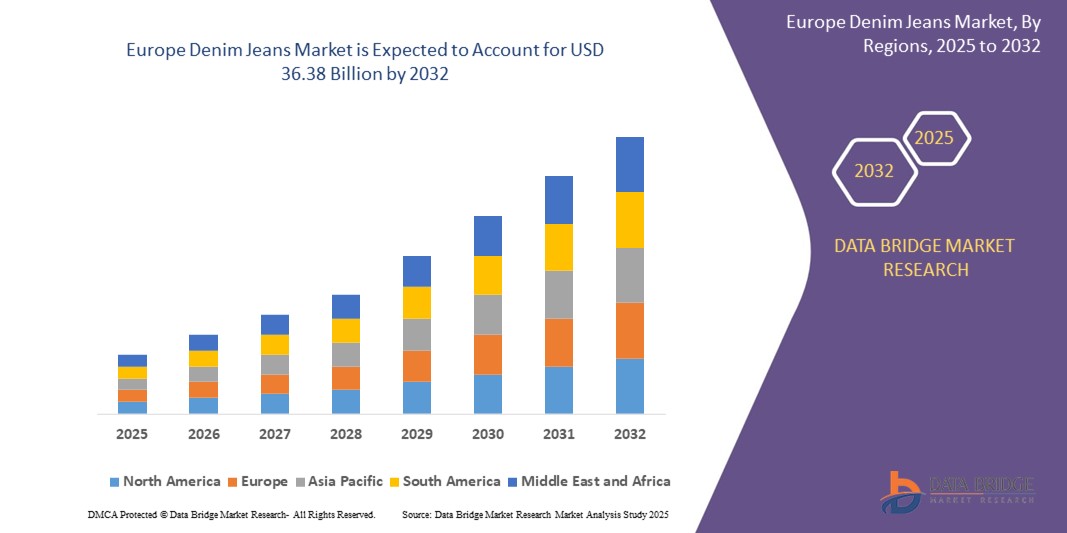
- The Europe denim jeans market size was valued at USD 22.65 billion in 2024 and is expected to reach USD 36.38 billion by 2032, at a CAGR of 6.1% during the forecast period
- The market growth is primarily driven by evolving fashion trends, increasing demand for sustainable and premium denim products, and the growing popularity of casual wear across various consumer segments
- Rising consumer preference for versatile, durable, and stylish clothing, coupled with the expansion of e-commerce platforms, is positioning denim jeans as a staple in modern wardrobes, significantly boosting market growth
Denim Jeans Market Analysis
- Denim jeans, a timeless fashion staple, are integral to casual and semi-formal wardrobes across Europe, offering durability, comfort, and style for men, women, and kids
- The surge in demand for denim jeans is fueled by the growing influence of fast fashion, increasing adoption of sustainable and eco-friendly denim production, and the rising popularity of premium and customized denim products
- Germany dominated the Europe denim jeans market with the largest revenue share of 35.6% in 2024, driven by a strong fashion-conscious consumer base, high purchasing power, and the presence of major denim brands and retailers
- France is expected to be the fastest-growing region in the Europe denim jeans market during the forecast period, attributed to rising fashion trends, increasing demand for sustainable denim, and growing e-commerce penetration
- The Cotton Denim/100% Cotton Denim segment dominated the largest market revenue share of 38.2% in 2024, driven by its cost-effectiveness, durability, and widespread acceptance across consumer preferences for versatile and long-lasting apparel
Report Scope and Denim Jeans Market Segmentation
|
Attributes |
Denim Jeans Key Market Insights |
|
Segments Covered |
|
|
Countries Covered |
Europe
|
|
Key Market Players |
|
|
Market Opportunities |
|
|
Value Added Data Infosets |
In addition to the insights on market scenarios such as market value, growth rate, segmentation, geographical coverage, and major players, the market reports curated by the Data Bridge Market Research also include in-depth expert analysis, pricing analysis, brand share analysis, consumer survey, demography analysis, supply chain analysis, value chain analysis, raw material/consumables overview, vendor selection criteria, PESTLE Analysis, Porter Analysis, and regulatory framework. |
Denim Jeans Market Trends
“Increasing Adoption of Sustainable and Innovative Fabrics”
- The Europe Denim Jeans Market is experiencing a significant trend toward the integration of sustainable production methods and innovative fabrics, such as stretch denim, eco-friendly selvedge denim, and moisture-wicking denim
- Advanced technologies such as laser finishing and AI-driven design are being utilized to create unique denim textures and sustainable production processes, reducing water and energy consumption
- For instances, companies such as Candiani Denim in Italy are pioneering biodegradable stretch denim fabrics, such as Coreva, to meet growing consumer demand for environmentally friendly products
- These innovations enhance the appeal of denim jeans by offering personalized fits, unique fading patterns, and sustainable options that align with consumer preferences for eco-conscious fashion
- Sustainable denim solutions, including the use of recycled cotton and organic materials, are becoming more prevalent, driven by initiatives such as The Jeans Redesign and the Denim Deal, which promote circular fashion and recycled post-consumer cotton usage
- This trend is making denim jeans more attractive to environmentally conscious consumers and supporting market growth in premium and mid-range segments
Denim Jeans Market Dynamics
Driver
“Rising Demand for Sustainable Fashion and Customization”
- Increasing consumer demand for sustainable and stylish clothing, particularly in urbanized areas of Europe, is a major driver for the Europe Denim Jeans Market
- Denim jeans, especially selvedge, raw, and stretch denim, are favored for their durability, versatility, and ability to be customized through unique fades, embroidery, or patchwork, appealing to consumers seeking individuality
- Government and industry initiatives, such as the EU’s focus on sustainable textile production and circular economy policies, are promoting the adoption of eco-friendly denim manufacturing practices
- The proliferation of e-commerce platforms has made denim jeans more accessible, enabling brands to offer personalized services and a wider variety of styles, such as vintage and colored denim, to meet diverse consumer preferences
- Major brands such as Levi Strauss & Co. and H&M are increasingly incorporating sustainable materials and offering factory-fitted customization options to enhance the value proposition of denim jeans
Restraint/Challenge
“High Production Costs and Environmental Concerns”
- The high cost of implementing sustainable production processes, such as water-saving laser finishing or organic cotton sourcing, can be a significant barrier, particularly for smaller manufacturers in the economy price range
- Integrating innovative fabrics such as stretch denim or biodegradable materials into production lines requires substantial investment in technology and supply chain restructuring, which can deter adoption in cost-sensitive markets
- Environmental concerns related to traditional denim production, such as high water and chemical usage, pose challenges, particularly as consumers and regulators demand greater transparency and eco-friendly practices
- The fragmented regulatory landscape across European countries regarding sustainable production standards and waste management complicates compliance for international denim manufacturers and retailers
- These factors can limit market expansion, especially in regions with high cost sensitivity or where awareness of environmental impacts is driving demand for greener alternatives
Denim Jeans market Scope
The market is segmented on the basis of product type, consumer type, distribution channel, and price range.
- By Product Type
On the basis of product type, the Europe denim jeans market is segmented into Cotton Denim/100% Cotton Denim, Stretch Denim, Raw Denim/Dry Denim, Crushed Denim, Cotton Serge Denim, Waxed Reverse Denim, Printed Denim, Washed Denim/Acid Wash Denim, Colored Denim, Selvedge Denim, ECRU Denim, Sanforized Denim, Bubblegum Denim, Poly Denim, Bull Denim, Thermo Denim, Ramie Cotton Denim, Slub Denim, Vintage Denim, Fox Fiber Denim, Marble Denim, Reverse Denim, Ring Spun Denim/Dual Ring Spun Denim, and Others. The Cotton Denim/100% Cotton Denim segment dominated the largest market revenue share of 38.2% in 2024, driven by its cost-effectiveness, durability, and widespread acceptance across consumer preferences for versatile and long-lasting apparel. Its robust nature makes it ideal for everyday wear, contributing to its dominance in the market.
The Stretch Denim segment is expected to witness the fastest growth rate from 2025 to 2032, driven by increasing consumer demand for comfortable, form-fitting jeans. The incorporation of elastane or spandex enhances stretchability, catering to diverse body types and active lifestyles, with brands such as Levi’s introducing fits such as "Athletic Fit" to meet this demand.
- By Consumer Type
On the basis of consumer type, the Europe denim jeans market is segmented into Men, Women, and Kids. The Men’s segment dominated the market with a revenue share of 52.3% in 2024, attributed to the widespread preference for jeans among men for their versatility, comfort, and stylish appearance suitable for various environments. The durability and timeless appeal of denim jeans make them a staple in men’s wardrobes across Europe.
The Women’s segment is anticipated to experience the fastest growth rate from 2025 to 2032, fueled by rising demand for fashionable, customizable, and sustainable denim options. Innovations such as laser finishing and AI-driven design, along with trends such as high-waisted and curvy fits, are driving adoption among female consumers seeking individuality and comfort.
- By Distribution Channel
On the basis of distribution channel, the Europe denim jeans market is segmented into Direct Sales/B2B/Wholesale, E-Commerce, Specialty Store, Supermarket/Hypermarket, Convenience Stores, and Others. The E-Commerce segment held the largest market revenue share of 40.1% in 2024, driven by the convenience and accessibility of online shopping, which has transformed the retail landscape. The surge in digital platforms and optimized online shopping experiences has significantly boosted denim sales across Europe.
The Specialty Store segment is expected to witness the fastest growth rate from 2025 to 2032, driven by consumer preference for curated shopping experiences and premium denim brands. Specialty stores offer personalized services, such as bespoke fittings and exclusive collections, enhancing consumer engagement and brand loyalty.
- By Price Range
On the basis of price range, the Europe denim jeans market is segmented into Mid, Economy, and Premium. The Mid segment dominated the market with a revenue share of 48.7% in 2024, driven by its balance of affordability and quality, appealing to a broad consumer base seeking durable and stylish jeans without premium pricing. Brands such as H&M and Zara cater to this segment with innovative designs and sustainable practices.
The Premium segment is anticipated to witness the fastest growth rate from 2025 to 2032, fueled by increasing demand for high-quality, sustainable, and exclusive denim products. Consumers are gravitating toward premium brands such as Selvedge and Nudie Jeans, which emphasize craftsmanship, eco-friendly materials, and unique designs, supported by initiatives such as The Jeans Redesign and Denim Deal.
Denim Jeans Market Regional Analysis
- Germany dominated the Europe denim jeans market with the largest revenue share of 35.6% in 2024, driven by a strong fashion-conscious consumer base, high purchasing power, and the presence of major denim brands and retailers
- The trend towards sustainable and customizable denim, including selvedge and raw denim, boosts demand in both direct sales and e-commerce channels. Germany’s advanced retail infrastructure and consumer focus on eco-friendly materials further enhance market growth.
France Denim Jeans Market Insight
France is expected to witness the fastest growth rate in the Europe denim jeans market, driven by increasing demand for premium and fashion-forward denim products, such as stretch denim and vintage denim. Rising consumer awareness of sustainable fashion and the popularity of specialty stores and e-commerce platforms accelerate adoption. Evolving fashion trends and a focus on comfort and style in urban settings support market expansion.
Denim Jeans Market Share
The denim jeans industry is primarily led by well-established companies, including:
- Gap Inc. (U.S.)
- FAST RETAILING CO., LTD. (Japan)
- H&M Group (Sweden)
- VF Corporation (U.S.)
- Levi Strauss & Co. (U.S.)
- BESTSELLER A/S (Denmark)
- Carhartt, Inc. (U.S.)
- dawsondenim (U.K.)
- EDWIN Europe GmbH (Japan)
- Everlane (U.S.)
- Hiut Denim Co. (U.K.)
- Kontoor Brands, Inc. (U.S.)
- Nudie Jeans Co. (Sweden)
- OTB SPA (Italy)
- Pepe Jeans (U.K.)
- PVH Corp. (U.S.)
- RALPH LAUREN MEDIA LLC (U.S.)
- U.S. Polo Assn. (U.S.)
What are the Recent Developments in Europe Denim Jeans Market?
- In June 2025, Levi Strauss & Co. partnered with legendary Britpop band Oasis to launch an exclusive apparel collection celebrating the group’s long-awaited reunion tour. The Levi’s® x Oasis line features ’90s-inspired graphic tees and vintage-style denim tops, including Liam Gallagher’s signature parka and a reissued Type II Trucker jacket with Oasis branding. Designed with archival graphics, Manchester City colors, and era-authentic labels, the collection captures the band’s iconic style and musical legacy. Timed with the tour kickoff, the release reflects a growing trend of music-fashion collaborations that blend nostalgia with cultural relevance
- In May 2025, Levi Strauss & Co. joined forces with Japanese fashion house sacai to unveil a bold new collection that reinterprets Levi’s® iconic denim silhouettes through sacai’s signature hybridization and experimental design. The Levi’s® x sacai SS25 collection features standout pieces such as reversible blousons, ultra-wide denim pants, and matelassé twill jackets, blending classic craftsmanship with avant-garde tailoring. This collaboration highlights the fusion of heritage and high fashion, offering unisex styles that reflect sacai’s deconstructive aesthetic and Levi’s timeless appeal—just in time for its global launch on May 28
- In April 2025, Dressmann, a leading men’s clothing retailer owned by Varner Gruppen, expanded its online operations to Denmark, Austria, and Germany, signaling the start of its European market strategy. This move builds on its existing e-commerce presence in Norway, Sweden, and Finland, extending its reach to over 230 million consumers across six countries. The expansion reflects Dressmann’s commitment to digital transformation, aiming to increase its online sales share from 18% to 35% within three years. It also highlights the growing importance of e-commerce and cross-border accessibility for denim and menswear brands in Europe
- In March 2025, Levi Strauss & Co. and Denim Tears reunited for their fourth collaborative collection, continuing their tribute to the Black American experience through fashion. Shot in New Orleans with members of the Young Seminole Hunters, the collection draws inspiration from the Black Masking Indian tradition, blending heritage storytelling with contemporary streetwear. Standout pieces include photo-printed denim, fleur-de-lis adorned trackwear, and accessories featuring intentional imperfections, symbolizing the handcrafted nature of Mardi Gras regalia. This collaboration reflects a broader industry shift toward celebrating cultural narratives, diversity, and community-driven design
- In February 2025, Levi Strauss & Co. partnered with FC St. Pauli, Hamburg’s iconic football club, to launch a bold capsule collection rooted in shared values of equality, individuality, and fearless self-expression. The collaboration features vintage-fit graphic tees, including designs with slogans such as “Football Has No Gender”, and a black hoodie blending Levi’s® branding with St. Pauli’s rebellious spirit. Designed for both stadium and streetwear, the collection reflects a growing trend of fashion brands teaming up with cultural institutions to champion social causes and inclusive style

- Interactive Data Analysis Dashboard
- Company Analysis Dashboard for high growth potential opportunities
- Research Analyst Access for customization & queries
- Competitor Analysis with Interactive dashboard
- Latest News, Updates & Trend analysis
- Harness the Power of Benchmark Analysis for Comprehensive Competitor Tracking
Data collection and base year analysis are done using data collection modules with large sample sizes. The stage includes obtaining market information or related data through various sources and strategies. It includes examining and planning all the data acquired from the past in advance. It likewise envelops the examination of information inconsistencies seen across different information sources. The market data is analysed and estimated using market statistical and coherent models. Also, market share analysis and key trend analysis are the major success factors in the market report. To know more, please request an analyst call or drop down your inquiry.
The key research methodology used by DBMR research team is data triangulation which involves data mining, analysis of the impact of data variables on the market and primary (industry expert) validation. Data models include Vendor Positioning Grid, Market Time Line Analysis, Market Overview and Guide, Company Positioning Grid, Patent Analysis, Pricing Analysis, Company Market Share Analysis, Standards of Measurement, Global versus Regional and Vendor Share Analysis. To know more about the research methodology, drop in an inquiry to speak to our industry experts.
Data Bridge Market Research is a leader in advanced formative research. We take pride in servicing our existing and new customers with data and analysis that match and suits their goal. The report can be customized to include price trend analysis of target brands understanding the market for additional countries (ask for the list of countries), clinical trial results data, literature review, refurbished market and product base analysis. Market analysis of target competitors can be analyzed from technology-based analysis to market portfolio strategies. We can add as many competitors that you require data about in the format and data style you are looking for. Our team of analysts can also provide you data in crude raw excel files pivot tables (Fact book) or can assist you in creating presentations from the data sets available in the report.