


Dermatology Treatment Devices Market Size
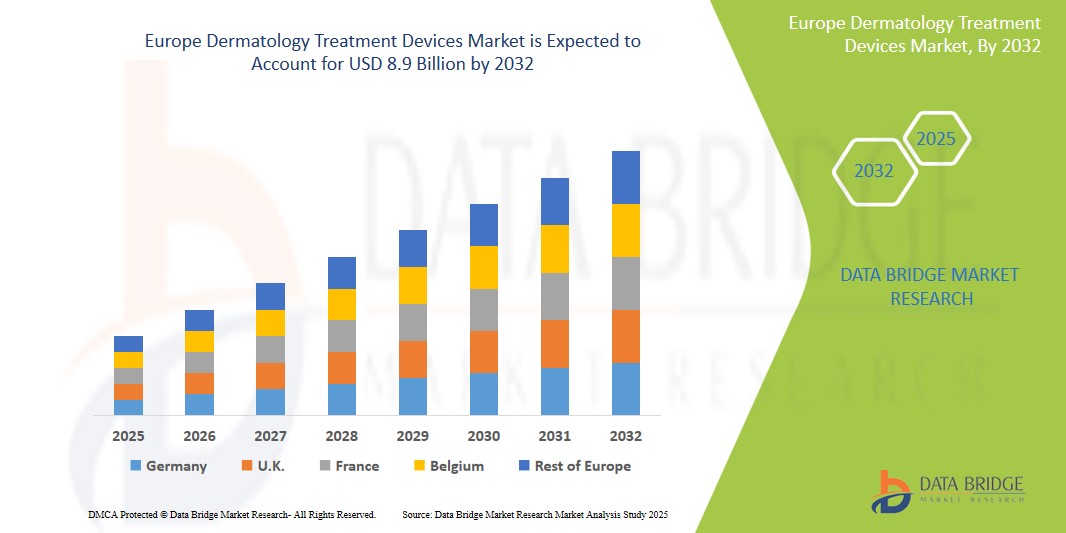
- The Europe Dermatology Treatment Devices Market was valued at USD 4.3 billion in 2024 and is expected to reach USD 8.9 billion by 2032, at a CAGR of 10.7% during the forecast period.
- The growth of the Europe Dermatology Treatment Devices Market is driven by several key factors. One of the primary drivers is the rising prevalence of skin disorders such as acne, eczema, psoriasis, and skin cancer, which has significantly increased the demand for advanced dermatological interventions. Additionally, the growing popularity of aesthetic and cosmetic procedures—such as laser skin resurfacing, wrinkle reduction, tattoo removal, and hair removal—is fueling adoption of dermatology treatment devices across clinics and med-spas. The aging population in Europe further contributes to market expansion, as older individuals increasingly seek solutions for age-related skin conditions like pigmentation, laxity, and wrinkles.
Europe Dermatology Treatment Devices Market Analysis
- Dermatology treatment devices are critical tools used in the management and treatment of a wide range of skin conditions, including acne, psoriasis, eczema, skin cancer, and cosmetic concerns such as wrinkles, pigmentation, and unwanted hair. These devices, which include laser systems, light therapy devices, cryotherapy units, and microdermabrasion tools, are used extensively across hospitals, dermatology clinics, and aesthetic centers to deliver both medical and cosmetic skin care solutions.
- The demand for dermatology treatment devices in Europe is primarily fueled by the rising prevalence of skin disorders and the growing aging population, which is increasingly seeking anti-aging and skin rejuvenation treatments. Additionally, the surge in awareness around personal aesthetics and the expanding influence of social media are driving demand for non-invasive cosmetic procedures. An increase in disposable income and medical tourism, especially for aesthetic procedures, is further supporting market expansion.
- Europe represents a significant share of the global dermatology treatment devices market due to its robust healthcare infrastructure, strong regulatory framework, and high adoption of technologically advanced equipment. Countries such as Germany, France, the United Kingdom, and Italy are key contributors to market growth, benefiting from a strong network of dermatology clinics, a skilled workforce, and continuous innovation in laser and energy-based treatment modalities. Supportive reimbursement policies for certain dermatological treatments and increasing partnerships between public institutions and private players are also enhancing access and driving growth across the region.
Report Scope Dermatology Treatment Devices Market Segmentation
|
Attributes |
Dermatology Treatment Devices Key Market Insights |
|
Segments Covered |
|
|
Countries Covered |
Europe
|
|
Key Market Players |
|
|
Market Opportunities |
|
|
Value Added Data Infosets |
In addition to the insights on market scenarios such as market value, growth rate, segmentation, geographical coverage, and major players, the market reports curated by the Data Bridge Market Research also include import export analysis, production capacity overview, production consumption analysis, price trend analysis, climate change scenario, supply chain analysis, value chain analysis, raw material/consumables overview, vendor selection criteria, PESTLE Analysis, Porter Analysis, and regulatory framework. |
Dermatology Treatment Devices Market Trends
“Technological Advancements and Growing Demand for Non-invasive Aesthetic Treatments”
- The European dermatology treatment devices market is witnessing significant growth due to continuous advancements in technology. Devices such as laser systems, radiofrequency devices, and intense pulsed light (IPL) systems are now more effective, providing improved treatment outcomes for a wide range of skin conditions including acne, hyperpigmentation, and aging signs.
- There is a notable shift towards non-invasive treatments, particularly for aesthetic dermatology. Patients are increasingly opting for non-surgical procedures such as Botox, dermal fillers, and laser skin resurfacing, driving the demand for devices that offer minimal downtime and faster recovery times.
- For instance, the latest fractional CO2 laser systems are being widely adopted in Europe for advanced skin resurfacing treatments, improving skin texture and tone, and offering a more effective solution for acne scars and age spots.
- The increasing trend toward personalized medicine is also influencing the dermatology treatment devices market. Devices are now being developed with more customization options, such as tailored treatment settings based on individual skin types and conditions, offering patients more targeted and effective solutions.
- The strong regulatory framework in Europe, alongside increasing healthcare investments, is facilitating the adoption of advanced dermatology treatment devices. Many European countries have been proactive in ensuring the availability of cutting-edge dermatology devices in medical practices.
Dermatology Treatment Devices Market Dynamics
Driver
“Technological Advancements and Growing Demand for Aesthetic and Therapeutic Solutions”
- The Europe dermatology treatment devices market is primarily driven by the increasing demand for non-invasive aesthetic treatments such as skin rejuvenation, acne, and anti-aging procedures, which are becoming more popular among the growing number of individuals seeking to improve their appearance without the need for surgery.
- The rising incidence of skin conditions such as acne, psoriasis, eczema, and other dermatological disorders in the aging population is contributing to a higher demand for effective treatment devices. Countries like Germany, the UK, and France are experiencing a surge in demand for devices that treat both aesthetic and therapeutic skin conditions.
- There is a growing shift towards minimally invasive and non-surgical procedures, driven by the increasing popularity of aesthetic dermatology treatments like Botox, dermal fillers, and laser treatments. Patients prefer treatments with minimal downtime and faster recovery, further boosting the demand for advanced dermatology devices.
- Technological innovations in dermatology devices, including advancements in laser technology, radiofrequency, and intense pulsed light (IPL), are improving treatment efficacy, offering superior results for conditions like hyperpigmentation, acne scars, and skin resurfacing.
- For instance, In 2023, Cynosure (USA) launched a new Sublative RF device that combines radiofrequency with fractional technology to treat skin resurfacing and acne scars with less downtime and minimal discomfort, gaining popularity in European markets such as the UK and France.
- The increasing focus on personalized skincare treatments and devices that cater to individual skin types is driving the market as consumers seek more tailored solutions for their skin concerns. Customized skincare solutions are gaining traction in European dermatology clinics, offering enhanced results for conditions like pigmentation, acne, and wrinkle.
- This combination of growing demand for non-invasive treatments, technological advancements, and supportive regulatory frameworks is driving the growth of the dermatology treatment devices market in Europe, positioning it as a key region for innovation and market expansion.
Opportunity
“Advancement of Personalized Dermatology Solutions and Growth in Outpatient Aesthetic Treatments”
- The growing shift towards outpatient and ambulatory care in Europe presents significant opportunities for dermatology treatment devices designed to support faster recovery, minimal downtime, and reduced complications. Non-invasive and minimally invasive procedures are becoming increasingly popular in outpatient settings, with devices tailored for quicker, more efficient treatments.
- The rising demand for same-day aesthetic and therapeutic procedures, along with enhanced recovery protocols, is driving the adoption of patient-specific and customized dermatology devices. These devices offer greater precision, reducing treatment times and improving patient outcomes in decentralized clinical settings.
- The integration of advanced technologies like virtual dermatology consultations, 3D imaging, and artificial intelligence in outpatient clinics is revolutionizing the way dermatologists plan and execute procedures. These technologies allow for more accurate diagnosis, better treatment planning, and improved aesthetic results.
- For instance, In 2023, Lumenis (Israel) launched a 3D skin analysis system designed for use in outpatient dermatology clinics. The system helps practitioners create personalized treatment plans for patients with skin concerns such as acne, wrinkles, and hyperpigmentation, enhancing the precision and effectiveness of treatments delivered in non-hospital settings.
- This opportunity is further driven by Europe’s increasing healthcare digitization, growing demand for personalized skincare treatments, and a rising focus on reducing hospital stays and healthcare expenditures. There is also an expanding market for at-home treatment devices and teledermatology, where patients can access dermatology care remotely, empowering individuals with more control over their treatment regimens.
- This shift toward personalized, outpatient care, along with advancements in technology and a growing focus on efficient, non-invasive treatments, is creating significant opportunities for growth in the European dermatology treatment devices market.
Restraint/Challenge
“High Costs and Stringent EU MDR Compliance Hindering Market Accessibility and Innovation”
- he high cost of advanced dermatology treatment devices—especially those utilizing cutting-edge technologies like laser systems, radiofrequency, and AI-driven diagnostic tools—poses a significant barrier to their widespread adoption in budget-constrained healthcare systems across Europe. This is particularly true for non-invasive aesthetic devices, which often require substantial investment in both the equipment and training of medical staff.
- Strict regulatory requirements under the EU Medical Device Regulation (MDR) mandate comprehensive clinical data, post-market surveillance, and rigorous documentation, increasing both the time and cost required to bring new dermatology devices to market. These regulations can slow down the development and approval of innovative devices, delaying their availability to patients.
- Small and medium-sized enterprises (SMEs) in the dermatology segment often face significant resource constraints, making it particularly challenging for them to meet the stringent MDR compliance requirements. This results in delays in product launches, reduced investment in research and development (R&D), or even market withdrawal, limiting the variety of innovative solutions available in Europe.
- For instance, A 2023 report from MedTech Europe highlighted that approximately 50% of SMEs in the dermatology devices sector faced delays in product launches or scaled-back innovation efforts due to the financial and regulatory challenges associated with MDR compliance.
- These challenges are further compounded in rural and decentralized healthcare settings, where limited budgets, fewer specialized dermatology clinics, and logistical barriers restrict access to advanced treatment devices. As a result, market growth is slower in these regions, limiting the availability of the latest dermatology treatments to underserved populations and reducing overall patient outcomes.
- The combination of high device costs, complex regulatory requirements, and challenges faced by SMEs in navigating the EU MDR is slowing the expansion of the dermatology treatment devices market across Europe and hindering the introduction of innovative solutions.
Dermatology Treatment Devices Market Scope
The market is segmented on the basis, product type, application, and end user
|
Segmentation |
Sub-Segmentation |
|
By Product Type |
|
|
By Application |
|
|
By End User |
|
In 2025, Lasers is projected to dominate the market with a largest share in product type segment
The laser-based devices segment is expected to lead the Europe Dermatology Treatment Devices Market with the largest share of 36.72% in 2025, driven by their wide application across aesthetic and therapeutic dermatology procedures such as hair removal, acne scar treatment, skin resurfacing, pigmentation correction, and vascular lesion removal. The rising consumer preference for non-invasive and painless aesthetic procedures, along with growing awareness of laser efficacy and safety, is significantly fueling this segment’s growth. Advancements in laser technology—including fractional lasers, Q-switched lasers, and diode lasers—are improving treatment outcomes, reducing downtime, and enhancing precision in targeting specific skin concerns. These innovations have made laser devices a preferred choice among dermatologists and cosmetic professionals across Europe. Furthermore, the increasing popularity of combination therapies that integrate laser treatments with radiofrequency or IPL (intense pulsed light) is further boosting demand.
The Skin Rejuvenation is expected to account for the largest share during the forecast period in Application market
In 2025, the skin rejuvenation segment is projected to dominate the Europe Dermatology Treatment Devices Market with the largest share, accounting for 38.25%, owing to the rising demand for non-invasive aesthetic procedures aimed at improving skin texture, tone, and overall appearance. Skin rejuvenation treatments—such as laser therapy, radiofrequency, and intense pulsed light (IPL)—are widely utilized for reducing wrinkles, sun damage, age spots, and acne scars, making them one of the most sought-after dermatological applications across the region. The aging population in countries like Germany, Italy, and France, combined with growing aesthetic awareness among younger demographics, is significantly contributing to the rising uptake of skin rejuvenation treatments. The segment is also driven by the increasing adoption of combination therapies that target multiple skin concerns simultaneously, delivering more effective and long-lasting results.
Dermatology Treatment Devices Market Regional Analysis
“Germany is the Dominant Country in the Dermatology Treatment Devices Market”
- Germany leads the Europe Dermatology Treatment Devices Market, holding the largest share in 2025 due to its robust healthcare infrastructure, high demand for aesthetic procedures, and strong presence of dermatology clinics and med-spas offering advanced skin treatments.
- The country has witnessed a growing emphasis on non-invasive and minimally invasive cosmetic procedures such as laser resurfacing, acne treatment, hair removal, and skin tightening, driving the widespread adoption of dermatology treatment devices.
- • Germany’s favorable reimbursement policies for certain dermatological procedures and its increasing aging population with skin-related concerns contribute significantly to market growth. In addition, younger populations are increasingly investing in preventive skincare and aesthetic enhancements, expanding the market's demographic reach.
- The presence of leading device manufacturers and technology innovators, such as Alma Lasers, Asclepion Laser Technologies, and BTL Aesthetics, positions Germany as a hub for dermatology device development and deployment in Europe.
- Furthermore, Germany's strong clinical research landscape, emphasis on safety and efficacy, and early adoption of next-generation devices—such as AI-enabled diagnostic tools and multifunctional energy-based platforms—reinforce its leadership in the regional dermatology treatment devices market.
“U.K. is Projected to Register the Highest Growth Rate”
- The U.K. is anticipated to register the fastest growth in the Europe Dermatology Treatment Devices Market during the forecast period, driven by rising demand for non-invasive aesthetic procedures, increasing incidence of skin conditions such as acne, eczema, and rosacea, and growing awareness of skin health and cosmetic treatments.
- The country’s expanding med-spa and dermatology clinic landscape, particularly in urban areas like London and Manchester, is fueling the adoption of advanced treatment devices such as laser systems, radiofrequency devices, and intense pulsed light (IPL) technologies.
- The U.K. government’s focus on digital health transformation, along with supportive regulations for cosmetic and dermatological device innovation, is accelerating market penetration and consumer access to cutting-edge treatments.
- Additionally, the rise in disposable income and growing influence of social media and beauty standards have significantly increased demand for anti-aging and skin rejuvenation procedures, particularly among millennials and Gen Z populations.
- Collaborations between the NHS, private dermatology centers, and technology providers are further promoting the integration of advanced diagnostic and therapeutic devices, positioning the U.K. as a key growth hub for dermatology treatment solutions in Europe.
Dermatology Treatment Devices Market Share
The market competitive landscape provides details by competitor. Details included are company overview, company financials, revenue generated, market potential, investment in research and development, new market initiatives, global presence, production sites and facilities, production capacities, company strengths and weaknesses, product launch, product width and breadth, application dominance. The above data points provided are only related to the companies' focus related to market.
The Major Market Leaders Operating in the Market Are:
- Lumenis Ltd. (Israel)
- Candela Corporation (U.S.)
- AbbVie Inc. (U.S.)
- Johnson & Johnson (U.S.)
- Syneron Medical Ltd. (Israel)
- Revance Therapeutics, Inc. (U.S.
- Medtronic plc (Ireland)
- Zimmer MedizinSysteme GmbH (Germany)
- Bausch Health Companies Inc. (Canada)
- Fotona d.o.o. (Slovenia)
Latest Developments in Global Dermatology Treatment Devices Market
- In March 2024, Lumenis Ltd., a global leader in energy-based aesthetic devices, announced the launch of Stellar M22in key European markets, including Germany and France. The upgraded platform integrates IPL and ResurFX technologies for enhanced skin rejuvenation, acne treatment, and pigmentation correction, offering improved treatment versatility and user-friendly interface for dermatology clinics across Europe.
- In February 2024, Candela Corporation expanded its Nordlyssystem availability in the U.K. and Nordic countries, featuring narrowband IPL and Nd:YAG technology to treat over 21 skin conditions and hair removal. The expansion supports rising demand for multifunctional devices in outpatient dermatology and aesthetic centers.
- In January 2024, Fotona d.o.o. launched its new StarWalker® MaQX Pro laser system in European aesthetic markets. Designed for pigment correction, scar revision, and skin resurfacing, the system combines ultra-short pulses and adaptive energy output, enabling safer and more effective skin treatments with reduced downtime.
- In October 2023, Sisram Medical (parent company of Alma Lasers) announced its strategic acquisition of PhotonMed International GmbH, a German distributor of aesthetic and dermatology devices. This acquisition enhances Alma’s direct sales and service capabilities in Germany and neighboring markets, expanding its footprint in the high-demand European dermatology device sector.
- In September 2023, BTL Aesthetics launched an upgraded version of Exion, an advanced RF microneedling device across European dermatology clinics. The new model integrates AI-assisted depth control and thermal imaging to enhance precision in skin tightening and collagen stimulation treatments, aligning with the growing trend toward personalized, non-invasive aesthetic care.

- Interactive Data Analysis Dashboard
- Company Analysis Dashboard for high growth potential opportunities
- Research Analyst Access for customization & queries
- Competitor Analysis with Interactive dashboard
- Latest News, Updates & Trend analysis
- Harness the Power of Benchmark Analysis for Comprehensive Competitor Tracking
Data collection and base year analysis are done using data collection modules with large sample sizes. The stage includes obtaining market information or related data through various sources and strategies. It includes examining and planning all the data acquired from the past in advance. It likewise envelops the examination of information inconsistencies seen across different information sources. The market data is analysed and estimated using market statistical and coherent models. Also, market share analysis and key trend analysis are the major success factors in the market report. To know more, please request an analyst call or drop down your inquiry.
The key research methodology used by DBMR research team is data triangulation which involves data mining, analysis of the impact of data variables on the market and primary (industry expert) validation. Data models include Vendor Positioning Grid, Market Time Line Analysis, Market Overview and Guide, Company Positioning Grid, Patent Analysis, Pricing Analysis, Company Market Share Analysis, Standards of Measurement, Global versus Regional and Vendor Share Analysis. To know more about the research methodology, drop in an inquiry to speak to our industry experts.
Data Bridge Market Research is a leader in advanced formative research. We take pride in servicing our existing and new customers with data and analysis that match and suits their goal. The report can be customized to include price trend analysis of target brands understanding the market for additional countries (ask for the list of countries), clinical trial results data, literature review, refurbished market and product base analysis. Market analysis of target competitors can be analyzed from technology-based analysis to market portfolio strategies. We can add as many competitors that you require data about in the format and data style you are looking for. Our team of analysts can also provide you data in crude raw excel files pivot tables (Fact book) or can assist you in creating presentations from the data sets available in the report.













