


Europe Elderly Care Market Size
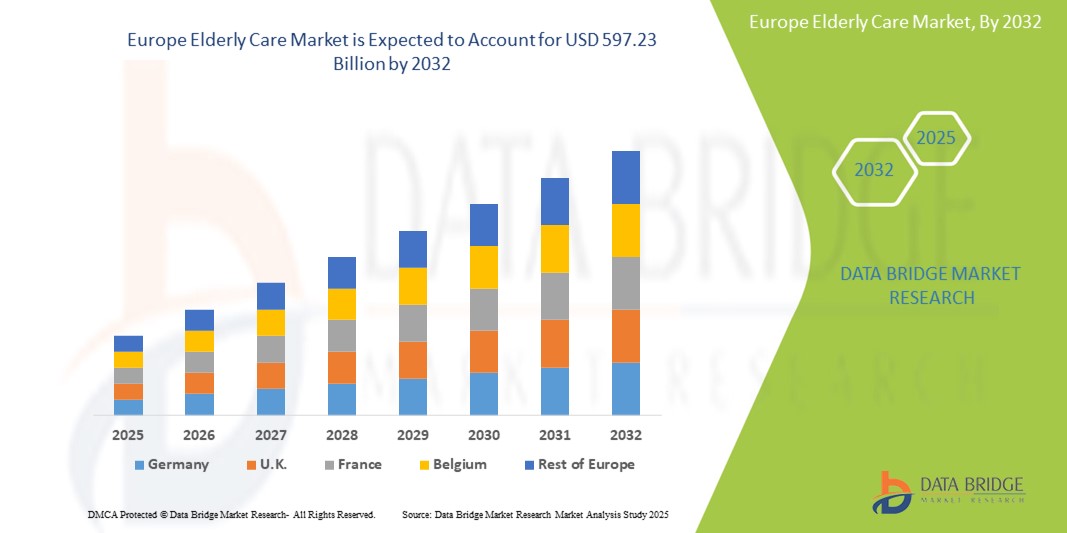
- The Europe elderly care market size was valued at USD 352.83 billion in 2024 and is expected to reach USD 597.23 billion by 2032, at a CAGR of 6.80% during the forecast period
- The market's expansion in Europe is primarily driven by the continent's rapidly aging population, leading to a significant surge in the number of elderly individuals requiring specialized care and support services. This demographic shift has generated substantial demand for a range of elderly care services, encompassing home care, institutional care, and adult day care
- Furthermore, the increasing incidence of chronic diseases among the elderly, such as diabetes, cardiovascular diseases, and neurological disorders, is fueling the need for specialized care services. The growing preference for home-based care solutions, coupled with advancements in healthcare technology such as telehealth and remote monitoring, and supportive government initiatives aimed at enhancing the quality and accessibility of elderly care, are further propelling the market's growth
Europe Elderly Care Market Analysis
- The Europe elderly care market is experiencing significant growth, propelled by shifting demographics and increasing healthcare needs, establishing it as a vital sector within the European economic landscape
- The rising demand for elderly care services is primarily driven by the rapidly aging population across Europe, leading to a substantial increase in the number of individuals requiring long-term care and support. This demographic trend is further intensified by rising life expectancy and declining birth rates, placing considerable pressure on existing care systems and familial support networks
- Germany dominates the Europe elderly care market, estimated at 28.5% in 2025. This dominance is attributed to its substantial elderly population, well-developed healthcare infrastructure, and significant governmental investment in elderly care provisions. A strong presence of care facilities and a focus on high-quality care contribute to Germany's leading position
- Germany is expected to be the fastest growing region in the Europe elderly care market with a CAGR of 10.23%, due to its substantial elderly population, well-developed healthcare infrastructure, and significant governmental investment in elderly care provisions
- Institutional care, encompassing nursing homes and assisted living facilities, held the largest market share, estimated at 45.8% in 2025. This is due to the established nature of these facilities in providing comprehensive care for individuals with complex medical needs and the historical reliance on institutional settings for long-term care
Report Scope and Europe Elderly Care Market Segmentation
|
Attributes |
Europe Elderly Care Key Market Insights |
|
Segments Covered |
|
|
Countries Covered |
North America
Europe
Asia-Pacific
Middle East and Africa
South America
|
|
Key Market Players |
|
|
Market Opportunities |
|
|
Value Added Data Infosets |
In addition to the insights on market scenarios such as market value, growth rate, segmentation, geographical coverage, and major players, the market reports curated by the Data Bridge Market Research also include in-depth expert analysis, pricing analysis, brand share analysis, consumer survey, demography analysis, supply chain analysis, value chain analysis, raw material/consumables overview, vendor selection criteria, PESTLE Analysis, Porter Analysis, and regulatory framework. |
Europe Elderly Care Market Trends
“Enhanced Independence and Personalized Care Through Technology Integration”
- A significant and accelerating trend in the Europe elderly care market is the increasing integration of technology to enhance independence and deliver more personalized care. This evolution is driven by the need to support a growing elderly population while addressing staffing shortages and the desire for seniors to age in place
- For instance, telehealth solutions are becoming increasingly common, allowing remote consultations and monitoring of vital signs, as seen in projects such as SI4CARE in Italy. Wearable sensors and smart devices, such as those utilized in the PROCAREFUL project, enable continuous health monitoring and early detection of potential issues
- AI integration is also emerging, with platforms that can analyze patient data to create personalized care plans and predict potential health risks. Smart home technologies are being adopted to assist with daily tasks, improve safety through fall detection systems such as the Nobi smart lamp, and enhance overall well-being
- The seamless integration of these technologies aims to create a connected care ecosystem, allowing caregivers and healthcare professionals to monitor and support elderly individuals more effectively. This centralized approach enables proactive interventions, improved communication, and a more holistic and tailored care experience
- This trend towards leveraging technology for enhanced independence and personalized care is fundamentally reshaping the delivery of elderly care services in Europe. Consequently, numerous startups and established companies are developing innovative solutions, including AI-powered platforms, robotic care assistants for mobility and companionship, and smart home systems designed specifically for the needs of the elderly, such as those highlighted by the European Ageing Network
- This trend towards more intelligent, intuitive, and interconnected locking systems is fundamentally reshaping user expectations for home security. Consequently, companies such as WELOCK are developing AI-enabled Europe Elderly Cares with features such as automatic locking/unlocking based on authorized access and voice control compatibility with Google Assistant and Amazon Alexa
- The demand for elderly cares that offer seamless AI and voice control integration is growing rapidly across both residential and commercial sectors, as consumers increasingly prioritize convenience and comprehensive smart home functionality
Europe Elderly Care Market Dynamics
Driver
“Growing Need Due to Rising Elderly Population and Complex Care Demands”
- The increasing prevalence of a rapidly aging population across Europe, coupled with the rising incidence of complex health conditions among seniors, is a significant driver for the heightened demand for elderly care services
- For instance, demographic projections from Eurostat consistently indicate a growing proportion of individuals aged 65 and over, leading to increased pressure on healthcare and social care systems. This trend necessitates innovative solutions and greater investment in the elderly care sector
- As the number of older adults rises, so does the need for specialized care to manage chronic diseases, mobility limitations, and cognitive impairments. Smart technologies and advanced care models offer enhanced monitoring, personalized support, and improved quality of life for the elderly, providing a compelling upgrade over traditional care approaches
- Furthermore, the growing preference for independent living and the desire to remain in familiar home environments are making technology-enabled home care solutions an integral component of the care ecosystem, offering seamless integration with remote monitoring and support services
- The convenience of receiving care in one's own home, remote health monitoring for early intervention, and the ability to manage care through digital platforms are key factors propelling the adoption of technology and innovative services in both residential and institutional elderly care sectors. The trend towards personalized care plans and the increasing availability of user-friendly assistive technologies further contribute to market growth
Restraint/Challenge
“Concerns Regarding Cybersecurity and High Initial Costs”
- Concerns surrounding the security and privacy of sensitive patient data, along with the high costs associated with delivering quality care, pose significant challenges to broader market development in the Europe Elderly Care sector. As the adoption of digital health records, remote monitoring systems, and AI-driven care platforms increases, the risk of data breaches and unauthorized access raises anxieties among patients and healthcare providers about the confidentiality and integrity of personal health information
- For instance, reported incidents of cyberattacks on healthcare institutions across Europe have made stakeholders hesitant to fully embrace interconnected digital solutions without robust security protocols and data protection measures
- Addressing these data security concerns through stringent data encryption, secure authentication protocols compliant with GDPR, and regular system audits is crucial for building trust and ensuring the ethical use of technology in elderly care. Organizations such as the European Union Agency for Cybersecurity (ENISA) provide guidelines and best practices for securing digital health services. In addition, the relatively high operational costs associated with providing comprehensive and quality elderly care, including staffing, training, and specialized equipment, can be a barrier to accessibility and affordability, particularly for individuals with limited financial resources or in regions with less developed healthcare infrastructure. While home care and community-based services can offer more cost-effective alternatives to institutional care, ensuring quality and adequate support remains a financial challenge
- While technological advancements and innovative care models aim to improve efficiency, the perceived high cost of specialized care and advanced technologies can still hinder widespread adoption, especially for publicly funded healthcare systems and budget-conscious individuals
- Overcoming these challenges through the implementation of robust data security frameworks, promoting digital literacy among users and providers, optimizing resource allocation, and exploring sustainable funding models will be vital for the sustained and equitable growth of the Europe elderly care market
Europe Elderly Care Market Scope
The market is segmented on the basis of Product type, services, and application
- By Product Type
On the basis of product type, the Europe elderly care market is segmented into housing and assistive devices and pharmaceuticals. The housing and assistive devices segment held the largest market revenue share in 2025, driven by the increasing need for specialized living arrangements and assistive technologies that support independence and safety for the elderly. This is further supported by the established infrastructure of care facilities and the growing adoption of home modifications and assistive aids
The pharmaceuticals segment is anticipated to witness a significant growth rate, fueled by the rising prevalence of chronic diseases among the elderly and the increasing demand for medications to manage these conditions. Advancements in geriatric pharmacology and the development of new drugs tailored to the elderly population also contribute to this growth
- By Services
On the basis of service, the Europe elderly care market is segmented into home care, institutional care, and adult day care. Institutional care held the largest market revenue share of 45.8% in 2025, driven by the established infrastructure of nursing homes and assisted living facilities providing comprehensive care for individuals with complex needs.
The home care segment is anticipated to witness the fastest growth rate, fueled by the increasing preference of the elderly to age in place, advancements in remote monitoring and telehealth technologies enabling in-home care delivery, and the desire for personalized care solutions. The adult day care segment is also expected to experience substantial growth, offering a cost-effective and socially engaging option for seniors needing daytime care and support.
- By Application
On the basis of application, the Europe elderly care market is segmented into heart diseases, respiratory, diabetes, osteoporosis, neurological, cancer, kidney diseases, arthritis, and others. Heart diseases accounted for the largest market revenue share in 2025, driven by the high prevalence of cardiovascular conditions among the elderly population.
Neurological conditions are anticipated to witness the fastest growth rate, fueled by the increasing incidence of dementia and other neurodegenerative disorders requiring specialized and long-term care. Other significant application areas include diabetes, arthritis, and cancer, reflecting the common health challenges faced by the aging population in Europe
Europe Elderly Care Market Regional Analysis
- Germany dominates the Europe elderly care market with the most significant revenue share, approximated at 28.5% in 2025, fueled by its considerable elderly demographic, sophisticated healthcare framework, and robust governmental backing for elderly care services. The nation's dedication to thorough and superior care services has positioned it as a preeminent market within the region
- The escalating demand for diverse and high-quality elderly care options is highly valued by the aging population and their families across Europe. Factors such as the increasing prevalence of chronic conditions, the desire for personalized care, and the need for supportive living environments are driving market growth
- This widespread demand is further supported by increasing healthcare expenditures, a growing awareness of the importance of specialized elderly care, and a preference for both in-home and institutional care settings that offer comprehensive and compassionate support. This establishes elderly care as a vital and expanding sector throughout European nations
U.K. Europe Elderly Care Market Insight
The U.K. elderly care market is anticipated to grow at a noteworthy CAGR during the forecast period, driven by the escalating trend of aging in place and a desire for heightened security and convenience in care delivery. In addition, concerns regarding the well-being and safety of elderly individuals are encouraging both families and the government to choose comprehensive and monitored care solutions. The UK’s embrace of technology in healthcare, alongside its robust healthcare infrastructure, is expected to continue to stimulate market growth
Germany Europe Elderly Care Market Insight
The German elderly care market is expected to expand at a considerable CAGR during the forecast period, fueled by increasing awareness of the needs of the elderly and the demand for technologically advanced, person-centered solutions. Germany’s well-developed infrastructure, combined with its emphasis on innovation and quality of life for its senior citizens, promotes the adoption of diverse elderly care services, particularly in residential and assisted living buildings. The integration of technology with elderly care services, such as remote monitoring and telehealth, is also becoming increasingly prevalent, with a strong preference for secure, privacy-focused solutions aligning with local consumer expectations
Europe Elderly Care Market Share
The Europe Elderly Care industry is primarily led by well-established companies, including:
- Clariane (France)
- DomusVi SAS (France)
- Attendo Group AB (Sweden)
- HC-One (U.K.)
- Victor's Group GmbH (Germany)
- Maisons de Famille SAS (France)
- Bupa (United Kingdom) (operates Bupa Care Homes)
- Deutsche Wohnen SE (Germany)
- Kursana Residenzen GmbH (Germany)
- KOS Group S.p.A. (Italy)
- LNA Santé (France)
- Care UK Limited (U.K.)
- Vitalia Home SLU (Spain)
- Azurit Hansa GmbH (Germany)
- EMVIA Living GmbH (Germany)
- Emera SAS (France)
- Ambea AB (Sweden
Latest Developments in Europe Elderly Care Market
- In April 2024, Korian Group (France) announced a significant expansion of its telecare services across Europe, aiming to provide enhanced remote monitoring and support for elderly individuals living at home. This initiative leverages digital technologies to offer personalized care and timely interventions, addressing the growing demand for at-home care solutions and enhancing the safety and well-being of seniors. This strategic move underscores Korian's commitment to innovation and its position in the evolving European elderly care landscape
- In March 2024, Lottie (UK), a care home marketplace, secured substantial funding to further develop its platform and expand its reach across the UK and into other European markets. The funding will be used to enhance the user experience for families searching for care homes and to provide better support for care providers in filling vacancies. This investment highlights the increasing focus on digital solutions to improve access to and efficiency within the elderly care sector
- In March 2024, the European Commission launched a new initiative focused on promoting digital literacy and skills among elderly individuals to enhance their access to online health services and social connections. This program aims to reduce digital exclusion and empower seniors to utilize technology for managing their health and well-being, recognizing the increasing role of digital tools in modern elderly care
- In February 2024, a collaboration between several German research institutions and care providers announced the successful pilot of AI-powered fall detection systems in residential care facilities. This technology utilizes sensors and artificial intelligence to automatically detect falls and alert caregivers, leading to faster response times and improved safety for residents. This development showcases the growing integration of AI to enhance safety and monitoring in institutional care settings
- In January 2024, the Swedish government announced increased funding for home care services, aiming to support a greater number of elderly individuals who prefer to age in place. This policy shift reflects a growing trend across Europe towards prioritizing community-based care and providing the necessary resources to enable seniors to live independently for longer

- Interactive Data Analysis Dashboard
- Company Analysis Dashboard for high growth potential opportunities
- Research Analyst Access for customization & queries
- Competitor Analysis with Interactive dashboard
- Latest News, Updates & Trend analysis
- Harness the Power of Benchmark Analysis for Comprehensive Competitor Tracking
Data collection and base year analysis are done using data collection modules with large sample sizes. The stage includes obtaining market information or related data through various sources and strategies. It includes examining and planning all the data acquired from the past in advance. It likewise envelops the examination of information inconsistencies seen across different information sources. The market data is analysed and estimated using market statistical and coherent models. Also, market share analysis and key trend analysis are the major success factors in the market report. To know more, please request an analyst call or drop down your inquiry.
The key research methodology used by DBMR research team is data triangulation which involves data mining, analysis of the impact of data variables on the market and primary (industry expert) validation. Data models include Vendor Positioning Grid, Market Time Line Analysis, Market Overview and Guide, Company Positioning Grid, Patent Analysis, Pricing Analysis, Company Market Share Analysis, Standards of Measurement, Global versus Regional and Vendor Share Analysis. To know more about the research methodology, drop in an inquiry to speak to our industry experts.
Data Bridge Market Research is a leader in advanced formative research. We take pride in servicing our existing and new customers with data and analysis that match and suits their goal. The report can be customized to include price trend analysis of target brands understanding the market for additional countries (ask for the list of countries), clinical trial results data, literature review, refurbished market and product base analysis. Market analysis of target competitors can be analyzed from technology-based analysis to market portfolio strategies. We can add as many competitors that you require data about in the format and data style you are looking for. Our team of analysts can also provide you data in crude raw excel files pivot tables (Fact book) or can assist you in creating presentations from the data sets available in the report.













