


Europe Induced Pluripotent Stem Cells (iPSCs) Market Size
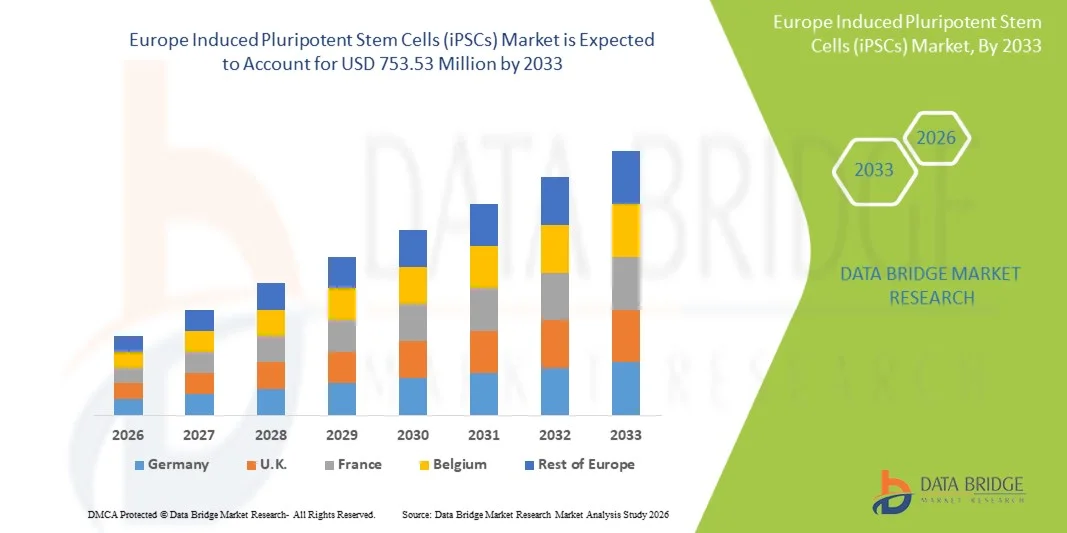
- The Europe Induced Pluripotent Stem Cells (iPSCs) market size was valued at USD 380.96 million in 2025and is expected to reach USD 753.53 million by 2033, at a CAGR of 8.9% during the forecast period
- The market growth is largely driven by the increasing focus on regenerative medicine, stem cell research, and personalized therapies across European healthcare and biotechnology sectors, leading to greater adoption of iPSC-based disease modeling and drug discovery applications
- Furthermore, rising investments in advanced cell therapy research, supportive government funding for biomedical innovation, and growing collaborations between academic institutes and biotechnology companies are establishing iPSCs as a key platform for translational research and next-generation therapeutic development. These converging factors are accelerating the adoption of iPSC technologies, thereby significantly boosting the industry's growth
Europe Induced Pluripotent Stem Cells (iPSCs) Market Analysis
- Induced pluripotent stem cells (iPSCs), which are generated by reprogramming adult cells into pluripotent stem cells for applications in regenerative medicine, disease modeling, and drug discovery, are increasingly important across Europe’s biotechnology and healthcare sectors due to their strong potential in personalized medicine and advanced therapeutic development
- The growing demand for induced pluripotent stem cells (iPSCs) is primarily driven by increasing investments in stem cell research, rising focus on regenerative medicine, and expanding applications in drug discovery, toxicity testing, and cell-based therapies
- Germany dominated the Europe induced pluripotent stem cells (iPSCs) market with the largest revenue share of 32.8% in 2025, supported by strong government funding for biomedical research, advanced healthcare and research infrastructure, and the presence of leading biotechnology and pharmaceutical companies, with the country witnessing substantial growth in iPSC-based clinical research and regenerative medicine initiatives driven by advancements in precision medicine and cell therapy innovation
- The U.K. is expected to be the fastest growing country in the Europe induced pluripotent stem cells (iPSCs) market during the forecast period due to increasing biotechnology investments, expanding stem cell research programs, and growing collaborations between academic institutions and pharmaceutical companies
- Drug discovery and development segment dominated the induced pluripotent stem cells (iPSCs) market with a market share of 41.6% in 2025, driven by the increasing utilization of iPSC-derived cell models in disease research, predictive toxicology studies, and high-throughput drug screening applications
Report Scope and Europe Induced Pluripotent Stem Cells (iPSCs) Market Segmentation
|
Attributes |
Europe Induced Pluripotent Stem Cells (iPSCs) Key Market Insights |
|
Segments Covered |
|
|
Countries Covered |
Europe · Germany · France · U.K. · Netherlands · Switzerland · Belgium · Russia · Italy · Spain · Turkey · Rest of Europe |
|
Key Market Players |
|
|
Market Opportunities |
· Expanding integration of iPSC-derived models in personalized drug discovery and precision medicine · Rising commercialization of iPSC-based regenerative therapies for neurological, cardiovascular, and rare diseases |
|
Value Added Data Infosets |
In addition to the insights on market scenarios such as market value, growth rate, segmentation, geographical coverage, and major players, the market reports curated by the Data Bridge Market Research also include in-depth expert analysis, patient epidemiology, pipeline analysis, pricing analysis, and regulatory framework |
Europe Induced Pluripotent Stem Cells (iPSCs) Market Trends
“Rising Integration of iPSC Technology in Personalized Medicine and Regenerative Therapies”
- A significant and accelerating trend in the Europe induced pluripotent stem cells (iPSCs) market is the increasing integration of iPSC technology into personalized medicine, regenerative therapies, and advanced drug discovery programs across biotechnology and pharmaceutical industries. This convergence of technologies is significantly enhancing the development of patient-specific treatment approaches and precision therapeutics
- For instance, Fujifilm Cellular Dynamics and Evotec SE have expanded collaborations focused on utilizing iPSC-derived cells for disease modeling and drug screening applications across European research programs. Similarly, Takeda Pharmaceutical has strengthened iPSC-based regenerative medicine research initiatives for neurological and rare disease treatment development
- The integration of iPSC technology enables applications such as patient-specific disease modeling, toxicity testing, and regenerative cell therapy development, improving the efficiency of therapeutic research and precision medicine approaches. For instance, several European research institutes utilize iPSC-derived cardiomyocytes and neurons to accelerate drug screening studies and evaluate disease progression mechanisms. Furthermore, advanced automation technologies allow researchers to streamline cell reprogramming and differentiation workflows for large-scale therapeutic applications
- The seamless integration of iPSC platforms with genomic sequencing, artificial intelligence, and bioprocessing technologies facilitates more efficient development of personalized therapeutics and regenerative treatment solutions. Through integrated research frameworks, organizations can manage stem cell production alongside biomarker analysis, drug screening, and translational research activities, creating a unified innovation ecosystem
- This trend toward more advanced, scalable, and clinically relevant iPSC solutions is fundamentally reshaping expectations for regenerative medicine and precision healthcare development. Consequently, companies such as Ncardia are developing advanced iPSC-derived cellular models with enhanced scalability and compatibility for pharmaceutical research and personalized therapy applications
- The demand for iPSC technologies that offer improved scalability, reproducibility, and integration with precision medicine platforms is growing rapidly across pharmaceutical, biotechnology, and academic sectors, as organizations increasingly prioritize advanced regenerative medicine and next-generation therapeutic development
Europe Induced Pluripotent Stem Cells (iPSCs) Market Dynamics
Driver
“Growing Need Due to Rising Investments in Regenerative Medicine and Drug Discovery Research”
- The increasing investments in regenerative medicine research and the expanding focus on advanced drug discovery applications are significant drivers for the heightened demand for induced pluripotent stem cells (iPSCs) across Europe
- For instance, in June 2024, Evotec SE announced the expansion of its stem cell research collaboration programs focused on iPSC-based drug discovery and precision medicine development. Such strategies by key companies are expected to drive the induced pluripotent stem cells (iPSCs) industry growth in the forecast period
- As pharmaceutical and biotechnology companies continue to focus on developing personalized therapies and regenerative treatment solutions, iPSC technologies provide advanced capabilities for disease modeling, toxicity screening, and cell-based therapeutic research, offering substantial advantages over conventional research models
- Furthermore, the increasing adoption of precision medicine programs and the growing demand for patient-specific treatment development are making iPSC platforms an essential component of modern biomedical research, offering integration with genomic analysis, artificial intelligence, and translational medicine technologies
- The ability to generate patient-specific stem cells, improve drug screening efficiency, and accelerate regenerative therapy development are key factors propelling the adoption of iPSC technologies across pharmaceutical, biotechnology, and academic sectors
- The growing number of collaborative stem cell research initiatives and the expanding availability of advanced cell culture technologies further contribute to market growth
Restraint/Challenge
“High Development Costs and Regulatory Compliance Challenges”
- Concerns surrounding the high cost of stem cell production, complex manufacturing requirements, and stringent regulatory frameworks pose significant challenges to broader market expansion. As iPSC technologies require specialized infrastructure, highly controlled laboratory environments, and advanced technical expertise, they involve substantial operational and commercialization expenses, raising concerns among smaller biotechnology firms and research institutions
- For instance, regulatory approval requirements for stem cell-derived therapies and clinical applications across European healthcare authorities have increased the complexity and duration of product development timelines for several biotechnology companies
- Addressing these manufacturing and regulatory challenges through standardized production protocols, scalable bioprocessing technologies, and harmonized compliance frameworks is crucial for accelerating commercial adoption. Companies such as BlueRock Therapeutics and Ncardia emphasize advanced quality control systems and scalable stem cell manufacturing capabilities to support clinical and research applications. In addition, the relatively high cost associated with iPSC-derived therapeutic development compared to traditional research methods can limit accessibility for budget-constrained organizations and emerging biotechnology startups. While technological advancements are gradually improving efficiency, advanced applications such as regenerative cell therapies and personalized medicine development still require substantial financial investment
- While production technologies are steadily advancing, the perceived complexity and high commercialization costs associated with iPSC-based therapies can still hinder widespread adoption, particularly among smaller research organizations and early-stage biotechnology companies that face limited funding resources
- Overcoming these challenges through improved manufacturing scalability, regulatory harmonization, strategic research collaborations, and the development of cost-effective stem cell production technologies will be vital for sustained market growth
Europe Induced Pluripotent Stem Cells (iPSCs) Market Scope
The market is segmented on the basis of cell source, type, product, applications, end user, and distribution channel.
- By Cell Source
On the basis of cell source, the Europe induced pluripotent stem cells (iPSCs) market is segmented into skin cells and blood cells. The skin cells segment dominated the market with the largest market revenue share in 2025, driven by the widespread use of fibroblast-derived cells in iPSC generation and regenerative medicine research. Skin cells are highly preferred due to their accessibility, well-established reprogramming protocols, and high efficiency in generating pluripotent stem cells for disease modeling and drug discovery applications. Research institutions and biotechnology companies extensively utilize skin-derived iPSCs because of their compatibility with personalized medicine and translational research studies. In addition, the growing focus on neurological and cardiovascular disease research further supports demand for skin cell-derived iPSC technologies across Europe. The availability of advanced cell culture techniques and increasing investment in regenerative medicine research continue to strengthen the dominance of this segment.
The blood cells segment is anticipated to witness the fastest growth rate from 2026 to 2033, fueled by increasing adoption in precision medicine and minimally invasive sample collection procedures. Blood-derived iPSCs provide advantages such as easier sample acquisition, reduced patient discomfort, and improved suitability for large-scale clinical studies and stem cell banking applications. Biotechnology companies and research organizations are increasingly utilizing peripheral blood mononuclear cells for reprogramming due to their scalability and growing application in immunotherapy research. The expanding use of blood-derived stem cells in hematological disease modeling and personalized therapeutic development is also contributing to segment growth. Furthermore, technological advancements in cell reprogramming efficiency and automation are expected to accelerate the adoption of blood cell-derived iPSC platforms across Europe.
- By Type
On the basis of type, the Europe induced pluripotent stem cells (iPSCs) market is segmented into human iPSCs and mouse iPSCs. The human iPSCs segment dominated the market with the largest market revenue share in 2025, driven by increasing utilization in regenerative medicine, disease modeling, and drug development applications. Human iPSCs are extensively used due to their ability to closely replicate human disease conditions and support personalized therapeutic research. Pharmaceutical and biotechnology companies are increasingly relying on human iPSC-derived cellular models for toxicity testing, predictive screening, and precision medicine initiatives. The segment also benefits from rising investments in stem cell-based clinical research and translational medicine programs across Europe. In addition, the growing emphasis on reducing animal testing and improving human-relevant research models continues to strengthen demand for human iPSC technologies.
The mouse iPSCs segment is expected to witness the fastest growth rate from 2026 to 2033, driven by increasing preclinical research activities and advancements in genetic engineering technologies. Mouse iPSCs are widely used in experimental biology and disease mechanism studies due to their compatibility with animal-based research models and established laboratory protocols. Academic institutions and biomedical research organizations continue to utilize mouse iPSCs for understanding developmental biology, genetic disorders, and regenerative processes. The growing integration of CRISPR and gene-editing technologies with mouse stem cell research is also accelerating segment expansion. Furthermore, rising funding for preclinical regenerative medicine studies and translational research programs is expected to support the long-term growth of this segment.
- By Product
On the basis of product, the Europe induced pluripotent stem cells (iPSCs) market is segmented into instruments, consumables & kits, and services. The consumables & kits segment dominated the market with the largest market revenue share in 2025, driven by the recurring demand for reagents, media, culture systems, and reprogramming kits used in stem cell research activities. Research laboratories and biotechnology companies require a continuous supply of specialized consumables to support iPSC generation, expansion, and differentiation workflows. The increasing number of stem cell research projects and drug discovery programs across Europe is significantly boosting demand for high-quality consumables and laboratory kits. In addition, advancements in cell culture media formulations and automation-compatible reagents are improving research efficiency and reproducibility. The growing adoption of standardized research protocols and expanding regenerative medicine initiatives further contribute to the segment’s dominance.
The services segment is anticipated to witness the fastest growth rate from 2026 to 2033, fueled by the increasing outsourcing of stem cell research, contract development, and cell characterization activities. Pharmaceutical companies and academic organizations are increasingly collaborating with specialized service providers for iPSC generation, cell banking, and disease modeling applications. Outsourcing allows organizations to reduce operational complexity and gain access to advanced technical expertise and high-end laboratory infrastructure. The rising demand for personalized medicine and patient-specific stem cell analysis is also accelerating the adoption of iPSC-related research services. Furthermore, growing partnerships between biotechnology companies and contract research organizations are expected to strengthen the expansion of this segment across Europe.
- By Applications
On the basis of applications, the Europe induced pluripotent stem cells (iPSCs) market is segmented into academic research, regenerative medicine, cellular therapy, toxicology screening, drug discovery and development, disease modelling, stem cell banking, 3D bioprinting, and others. The drug discovery and development segment dominated the market with the largest market revenue share of 41.6% in 2025, driven by the increasing use of iPSC-derived cellular models in predictive toxicology, disease research, and high-throughput drug screening applications. Pharmaceutical companies are increasingly adopting iPSC technologies to improve drug efficacy evaluation and reduce late-stage clinical trial failures. The segment benefits from the growing need for human-relevant disease models that support precision medicine and personalized therapeutic development. In addition, iPSC-based drug screening platforms enable researchers to accelerate therapeutic discovery while minimizing reliance on conventional animal testing methods. The expanding collaboration between biotechnology firms and pharmaceutical companies further strengthens the growth of this segment across Europe.
The regenerative medicine segment is expected to witness the fastest growth rate from 2026 to 2033, fueled by increasing investments in stem cell therapy development and tissue regeneration research. iPSC technologies are gaining significant attention for their potential in treating neurological disorders, cardiovascular diseases, and degenerative conditions through patient-specific therapeutic approaches. Research institutes and biotechnology companies are actively developing advanced regenerative therapies using iPSC-derived tissues and cellular products. The rising number of clinical studies focused on stem cell-based treatments is also contributing to segment expansion. Furthermore, supportive government initiatives and advancements in cell engineering technologies are expected to accelerate the commercialization of regenerative medicine applications across Europe.
- By End User
On the basis of end user, the Europe induced pluripotent stem cells (iPSCs) market is segmented into biotechnology & pharmaceutical companies, research laboratories, diagnostic laboratories, and others. The biotechnology & pharmaceutical companies segment dominated the market with the largest market revenue share in 2025, driven by increasing investments in drug discovery, regenerative medicine, and personalized therapeutic development. These companies extensively utilize iPSC technologies for disease modeling, toxicity testing, and precision medicine research programs. The growing focus on developing patient-specific treatment solutions and advanced cell therapies is further increasing the adoption of iPSC-based research platforms. In addition, strategic collaborations between pharmaceutical companies and academic institutions are supporting innovation in stem cell technologies and translational medicine. The rising number of stem cell-based clinical trials and commercialization activities continues to strengthen the dominance of this segment across Europe.
The research laboratories segment is anticipated to witness the fastest growth rate from 2026 to 2033, fueled by expanding biomedical research activities and increasing government funding for stem cell studies. Academic and independent research institutes are actively utilizing iPSC technologies for understanding disease mechanisms, regenerative biology, and therapeutic development. The growing availability of advanced cell culture systems and automated laboratory technologies is improving research productivity and scalability. In addition, increasing collaborations between universities and biotechnology companies are accelerating translational stem cell research initiatives. Furthermore, the expansion of precision medicine programs and disease-specific research projects is expected to support significant growth in this segment during the forecast period.
- By Distribution Channel
On the basis of distribution channel, the Europe induced pluripotent stem cells (iPSCs) market is segmented into direct tender and retail sales. The direct tender segment dominated the market with the largest market revenue share in 2025, driven by large-scale procurement agreements between biotechnology companies, research institutes, and stem cell product manufacturers. Direct tender channels enable organizations to secure bulk quantities of specialized reagents, cell culture products, and research instruments with long-term supply agreements and cost advantages. Pharmaceutical companies and academic institutions often prefer direct procurement models to ensure consistent product quality and regulatory compliance for research activities. The increasing number of collaborative research projects and government-funded biomedical programs is also contributing to the dominance of this segment. In addition, strong relationships between manufacturers and institutional buyers continue to support stable product distribution across Europe.
The retail sales segment is expected to witness the fastest growth rate from 2026 to 2033, fueled by increasing accessibility of stem cell research products through online scientific marketplaces and laboratory distributors. Small biotechnology firms, independent laboratories, and academic researchers are increasingly utilizing retail channels for flexible purchasing and rapid product availability. The growing expansion of e-commerce platforms for life science products is improving accessibility to specialized reagents, consumables, and research kits across Europe. In addition, advancements in digital procurement systems and product catalog integration are enhancing purchasing efficiency for research organizations. Furthermore, the increasing number of emerging biotechnology startups and decentralized research initiatives is expected to accelerate the growth of retail distribution channels during the forecast period.
Europe Induced Pluripotent Stem Cells (iPSCs) Market Regional Analysis
- Germany dominated the Europe induced pluripotent stem cells (iPSCs) market with the largest revenue share of 32.8% in 2025, supported by strong government funding for biomedical research, advanced healthcare and research infrastructure, and the presence of leading biotechnology and pharmaceutical companies
- Research institutions and biotechnology companies in the country highly value the advanced research capabilities, personalized medicine potential, and translational applications offered by iPSC technologies in therapeutic development and precision healthcare initiatives
- This widespread adoption is further supported by strong government funding for biomedical research, advanced healthcare and laboratory infrastructure, and the growing presence of biotechnology and pharmaceutical companies, establishing iPSC technologies as a preferred platform for regenerative medicine, toxicology screening, and advanced cellular research in Germany
The Germany Induced Pluripotent Stem Cells (iPSCs) Market Insight
The Germany induced pluripotent stem cells (iPSCs) market captured the largest revenue share in 2025 within Europe, fueled by the growing investments in regenerative medicine research and the expanding focus on personalized therapeutic development. Research institutions and biotechnology companies are increasingly prioritizing the use of iPSC technologies for disease modeling, toxicity screening, and drug discovery applications. The growing preference for advanced stem cell-based research platforms, combined with strong collaborations between academic institutes and pharmaceutical companies, further propels the induced pluripotent stem cells (iPSCs) industry. Moreover, the increasing integration of precision medicine technologies, artificial intelligence, and genomic research is significantly contributing to the market's expansion.
U.K. Induced Pluripotent Stem Cells (iPSCs) Market Insight
The U.K. induced pluripotent stem cells (iPSCs) market is anticipated to grow at a noteworthy CAGR during the forecast period, driven by the increasing focus on precision medicine and a growing demand for advanced regenerative therapy research. In addition, rising investments in biotechnology innovation and stem cell-based clinical studies are encouraging research institutions and pharmaceutical companies to adopt iPSC technologies for disease modeling and therapeutic development. The U.K.’s strong biomedical research ecosystem, alongside its expanding biotechnology sector and supportive government initiatives, is expected to continue to stimulate market growth.
France Induced Pluripotent Stem Cells (iPSCs) Market Insight
The France induced pluripotent stem cells (iPSCs) market is expected to expand at a substantial CAGR during the forecast period, fueled by increasing investments in biomedical research and the growing adoption of regenerative medicine technologies. France’s advanced healthcare infrastructure and strong presence of academic and pharmaceutical research institutions are promoting the utilization of iPSC platforms in disease modeling and therapeutic development. The increasing collaboration between biotechnology companies and public research organizations is also accelerating innovation in stem cell applications. Furthermore, supportive government initiatives and rising interest in personalized medicine are contributing significantly to the growth of the iPSC market in France.
Italy Induced Pluripotent Stem Cells (iPSCs) Market Insight
The Italy induced pluripotent stem cells (iPSCs) market is witnessing steady growth due to the increasing focus on stem cell research and expanding applications in regenerative medicine and translational healthcare. Italian research institutes and biotechnology companies are actively utilizing iPSC technologies for neurological disease studies, drug screening, and precision medicine initiatives. The country’s improving biotechnology ecosystem and rising investments in healthcare innovation are further supporting market expansion. In addition, growing participation in collaborative European stem cell research projects is strengthening the adoption of iPSC-based technologies across Italy.
Europe Induced Pluripotent Stem Cells (iPSCs) Market Share
The Europe Induced Pluripotent Stem Cells (iPSCs) industry is primarily led by well-established companies, including:
- Axol Bioscience Ltd (U.K.)
- Evotec SE (Germany)
- Ncardia (Belgium)
- ReproCELL Europe Ltd (U.K.)
- Bit Bio Ltd (U.K.)
- Censo Biotechnologies Ltd (U.K.)
- AMS Biotechnology Ltd (U.K.)
- DefiniGEN Ltd (U.K.)
- Cellular Engineering Technologies (U.K.)
- CellGenix GmbH (Germany)
- Miltenyi Biotec B.V. & Co. KG (Germany)
- Sartorius AG (Germany)
- Merck KGaA (Germany)
- Bayer AG (Germany)
- Lonza Group AG (Switzerland)
- Fujifilm Cellular Dynamics, Inc. (Germany)
- BlueRock Therapeutics (Germany)
- Takara Bio Europe (France)
- Thermo Fisher Scientific (U.K.)
- Charles (France)
What are the Recent Developments in Europe Induced Pluripotent Stem Cells (iPSCs) Market?
- In November 2025, Evotec SE, a Germany-based life science company, reported continued progress in its iPSC-based neuroscience programs in collaboration with major pharmaceutical partners, focusing on patient-derived disease models for neurodegenerative disorders. The development is centered on leveraging scalable iPSC platforms to accelerate drug discovery and improve translational accuracy in preclinical studies. The initiative strengthens Europe’s leadership in industrialized stem cell research and highlights growing commercial adoption of iPSC technologies in neurological drug development
- In September 2024, Evotec SE (Germany) and Novo Nordisk (Denmark) expanded their strategic collaboration to advance iPSC-based cell therapy programs targeting chronic and metabolic diseases. The partnership focuses on developing scalable manufacturing processes for iPSC-derived therapeutic cells suitable for clinical applications. This development supports the transition of stem cell research from laboratory settings to industrial-scale regenerative medicine production
- In September 2024, Just – Evotec Biologics, a France-based subsidiary of Evotec SE, inaugurated its J.POD® biologics manufacturing facility in Toulouse, France, to support advanced biologics and cell therapy production. The facility is designed for continuous manufacturing of complex biological products, including next-generation regenerative medicine applications linked to iPSC technologies. This expansion enhances Europe’s biomanufacturing capacity for advanced therapeutic development and improves scalability of stem cell-derived treatments
- In July 2023, Sartorius AG, Germany, advanced its collaboration with Evotec SE to support scalable iPSC-based manufacturing technologies for cell and gene therapy applications. The initiative focuses on improving bioprocessing systems and enabling industrial-scale production of stem cell-derived therapeutic products. This development enhances efficiency in iPSC expansion, differentiation, and quality control processes for clinical applications
- In March 2021, Bayer AG (Germany) through its subsidiary BlueRock Therapeutics expanded its collaboration with Fujifilm Cellular Dynamics to advance iPSC-derived retinal cell therapies for degenerative eye diseases. The program focuses on developing photoreceptor cell replacement therapies aimed at restoring vision in patients with retinal disorders. This development marks one of the early clinical-stage iPSC therapy initiatives in Europe-linked research ecosystems

- Interactive Data Analysis Dashboard
- Company Analysis Dashboard for high growth potential opportunities
- Research Analyst Access for customization & queries
- Competitor Analysis with Interactive dashboard
- Latest News, Updates & Trend analysis
- Harness the Power of Benchmark Analysis for Comprehensive Competitor Tracking
Data collection and base year analysis are done using data collection modules with large sample sizes. The stage includes obtaining market information or related data through various sources and strategies. It includes examining and planning all the data acquired from the past in advance. It likewise envelops the examination of information inconsistencies seen across different information sources. The market data is analysed and estimated using market statistical and coherent models. Also, market share analysis and key trend analysis are the major success factors in the market report. To know more, please request an analyst call or drop down your inquiry.
The key research methodology used by DBMR research team is data triangulation which involves data mining, analysis of the impact of data variables on the market and primary (industry expert) validation. Data models include Vendor Positioning Grid, Market Time Line Analysis, Market Overview and Guide, Company Positioning Grid, Patent Analysis, Pricing Analysis, Company Market Share Analysis, Standards of Measurement, Global versus Regional and Vendor Share Analysis. To know more about the research methodology, drop in an inquiry to speak to our industry experts.
Data Bridge Market Research is a leader in advanced formative research. We take pride in servicing our existing and new customers with data and analysis that match and suits their goal. The report can be customized to include price trend analysis of target brands understanding the market for additional countries (ask for the list of countries), clinical trial results data, literature review, refurbished market and product base analysis. Market analysis of target competitors can be analyzed from technology-based analysis to market portfolio strategies. We can add as many competitors that you require data about in the format and data style you are looking for. Our team of analysts can also provide you data in crude raw excel files pivot tables (Fact book) or can assist you in creating presentations from the data sets available in the report.












