


Europe Marine Ingredients Market Size
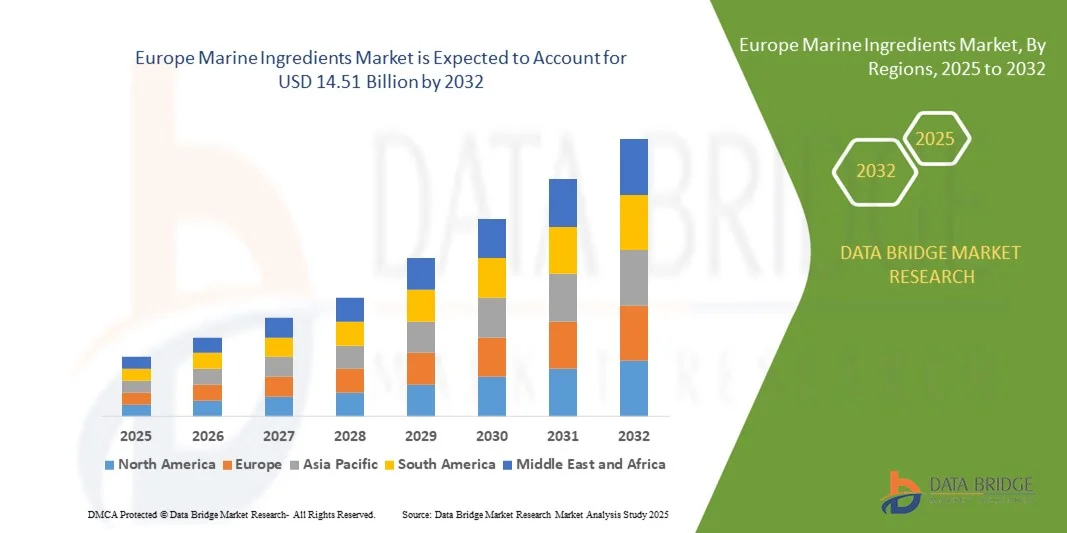
- The Europe Marine Ingredients Market size was valued at USD 8.20 billion in 2024 and is projected to reach USD 14.51 billion by 2032, growing at a CAGR of 7.40% during the forecast period.
- The market growth is primarily driven by increasing demand for sustainable and natural ingredients in the food, pharmaceutical, and cosmetic industries, alongside advancements in extraction technologies.
- Additionally, growing consumer awareness about health benefits linked to marine-derived products and the expansion of aquaculture practices are fueling market adoption. These factors collectively propel the Europe Marine Ingredients Market forward, supporting robust industry growth.
Europe Marine Ingredients Market Analysis
- Marine ingredients, derived from marine sources such as fish, algae, and crustaceans, are increasingly important across food, nutraceutical, pharmaceutical, and cosmetic industries due to their nutritional benefits, sustainability, and versatility in formulation.
- The growing demand for natural, functional, and health-promoting ingredients is primarily driven by rising consumer awareness of marine-based products' benefits and increasing investments in sustainable aquaculture and extraction technologies.
- Germany dominated the Marine Ingredients Market with the largest revenue share of 32.1% in 2024, supported by well-established seafood industries, stringent regulatory frameworks favoring sustainable sourcing, and strong research and innovation activities focusing on high-value marine bioactives.
- U.K. is expected to be the fastest-growing region in the Marine Ingredients Market during the forecast period, fueled by expanding aquaculture production, increasing health-conscious populations, and rising disposable incomes.
- The fish meal segment dominated the market with the largest market revenue share of 41.5% in 2024, driven by its high protein content and continued demand in aquaculture and animal feed industries.
Report Scope and Europe Marine Ingredients Market Segmentation
|
Attributes |
Marine Ingredients Key Market Insights |
|
Segments Covered |
|
|
Countries Covered |
Europe
|
|
Key Market Players |
|
|
Market Opportunities |
|
|
Value Added Data Infosets |
In addition to the insights on market scenarios such as market value, growth rate, segmentation, geographical coverage, and major players, the market reports curated by the Data Bridge Market Research also include in-depth expert analysis, pricing analysis, brand share analysis, consumer survey, demography analysis, supply chain analysis, value chain analysis, raw material/consumables overview, vendor selection criteria, PESTLE Analysis, Porter Analysis, and regulatory framework. |
Europe Marine Ingredients Market Trends
Enhanced Convenience Through AI and Voice Integration in the Europe Marine Ingredients Market
- A significant and accelerating trend in the Europe Marine Ingredients Market is the increasing incorporation of advanced AI technologies and digital integration to optimize production processes and supply chain management. This integration is driving greater efficiency, traceability, and sustainability within the industry.
- For Instance, companies are deploying AI-powered monitoring systems that track real-time quality parameters such as protein content, freshness, and contaminant levels in marine raw materials, enabling more precise control and consistency of marine-derived ingredients. Similarly, blockchain and IoT solutions are being adopted to ensure transparent sourcing and compliance with regulatory standards.
- AI algorithms help predict fluctuations in raw material availability due to seasonal and environmental factors, allowing manufacturers to better plan procurement and reduce waste. Moreover, intelligent data analytics can identify optimal extraction methods to maximize yield and bioactive compound retention.
- Integration with digital platforms enables seamless coordination between suppliers, processors, and distributors, facilitating real-time communication and automated inventory management. This interconnected ecosystem enhances responsiveness to market demand while maintaining stringent quality assurance across the supply chain.
- This movement towards smart, data-driven operations is redefining industry benchmarks for efficiency and sustainability. Leading players such as Ocean Harvest Technology are leveraging AI-enabled predictive models and digital traceability tools to enhance product quality and environmental compliance.
- The growing adoption of AI and digital integration in the Europe Marine Ingredients Market reflects rising demand from food, pharmaceutical, and nutraceutical sectors for high-quality, sustainably sourced marine ingredients with verified provenance and consistent functionality.
Europe Marine Ingredients Market Dynamics
Driver
Growing Need Due to Rising Demand for Sustainable and Functional Ingredients
-
The increasing consumer focus on health and wellness, along with rising awareness of sustainability in food production, is a significant driver of growth in the Europe Marine Ingredients Market. As consumers and manufacturers alike seek high-quality, functional ingredients with proven health benefits, marine-derived proteins, peptides, and omega-3 fatty acids are gaining considerable traction across food, pharmaceutical, and nutraceutical applications.
- For instance, in March 2024, Norwegian biotech firm Biomega Group expanded its production capacity of salmon peptides in response to heightened demand from European health food manufacturers. These peptides are valued for their bioavailability and clean-label appeal, aligning with market preferences for natural and traceable ingredients.
- Major food and supplement brands are increasingly incorporating marine collagen, fish oil, and marine-based antioxidants due to their scientifically backed health benefits, such as improved cardiovascular health, joint support, and skin vitality. This trend is being further reinforced by aging populations in Europe and the growing popularity of preventive health strategies.
- Additionally, the European Union’s regulatory support for sustainable fisheries and responsible marine resource management is encouraging industry players to invest in certified and eco-friendly sourcing practices, thereby enhancing their brand value and market competitiveness.
- The integration of marine ingredients into plant-based and alternative protein products is also creating new opportunities, as flexitarian consumers seek diverse, nutrient-rich sources of protein that align with ethical and environmental values. This demand is driving innovation and product development across sectors, expanding the footprint of marine ingredients in both mainstream and specialty markets.
Restraint/Challenge
Supply Chain Complexity and Environmental Concerns
- Despite the growing demand, the Europe Marine Ingredients Market faces notable challenges, particularly related to the complexity of the supply chain and environmental sustainability. The industry’s heavy reliance on marine ecosystems makes it vulnerable to overfishing, biodiversity loss, and climate change impacts, which can disrupt the availability and cost of raw materials.
- For Instance, fluctuations in fish populations due to changing ocean temperatures or regulatory fishing quotas can lead to supply inconsistencies, affecting production timelines and pricing structures. These environmental pressures are also increasing scrutiny from regulators and advocacy groups, pushing companies to adopt more transparent and sustainable sourcing practices.
- Furthermore, the marine ingredients supply chain often involves multiple intermediaries—from fisheries to processors to distributors—making traceability and quality assurance more challenging. Ensuring consistent product quality, especially for high-value applications like pharmaceuticals or functional foods, requires substantial investment in testing, monitoring, and certification systems.
- In addition, some marine ingredients, such as fish oil or krill-derived extracts, are subject to consumer skepticism regarding their ecological impact, particularly in regions with strong environmental activism. This has led to increased demand for third-party sustainability certifications (e.g., MSC, Friend of the Sea), which, while valuable, can be costly and time-consuming to maintain.
- Overcoming these challenges will require greater adoption of traceability technologies, investment in sustainable aquaculture alternatives, and continued collaboration between industry stakeholders, regulators, and environmental organizations to ensure long-term viability and market trust.
Europe Marine Ingredients Market Scope
The marine ingredients market is segmented on the basis of product type, ingredients, form, raw material, source and application.
- By Product Type
On the basis of product type, the Europe Marine Ingredients Market is segmented into fish meal, fish oil, marine proteins, marine peptides, marine collagen, fish bone, and others. The fish meal segment dominated the market with the largest market revenue share of 41.5% in 2024, driven by its high protein content and continued demand in aquaculture and animal feed industries. Fish meal is valued for its digestibility, amino acid profile, and efficiency in feed formulations, especially in regions where aquaculture is expanding.
The fish oil segment is anticipated to witness the fastest growth rate of 9.4% from 2025 to 2032, fueled by rising consumer interest in omega-3 fatty acids and their benefits for heart, brain, and joint health. Fish oil’s growing usage in dietary supplements, functional foods, and pet nutrition further accelerates its demand across European markets with strong regulatory support for health claims and clean-label nutrition.
- By Ingredients
On the basis of Ingredients, The Europe Marine Ingredients Market is segmented by ingredients into protein, ash, fatty acids, vitamins, fat, enzymes, and others. The protein segment held the largest market revenue share in 2024, driven by strong demand from aquafeed producers, nutraceutical companies, and sports nutrition markets. Marine proteins are known for their bioavailability and sustainability, making them increasingly popular as functional and nutritional ingredients.
The fatty acids segment is projected to witness the fastest CAGR of 8.7% from 2025 to 2032, owing to growing awareness about the health benefits of EPA and DHA omega-3 fatty acids, especially for cardiovascular and cognitive health. This segment benefits from rising demand in dietary supplements and fortified foods across Europe, along with the growing popularity of marine-derived oils in personal care and pharmaceutical applications.
- By Form
On the basis of form, the Europe Marine Ingredients Market is segmented into liquid and powder. The powder segment dominated the market in 2024 with the largest revenue share of 63.2%, supported by its widespread application in animal feed, pet food, and dietary supplements. Powders are preferred due to their long shelf life, ease of storage and transportation, and compatibility with dry-blend formulations.
The liquid segment is anticipated to register the fastest CAGR of 7.9% from 2025 to 2032, primarily due to its expanding role in dietary supplements, functional beverages, and cosmetic products. Liquid marine ingredients, such as fish oil concentrates and marine collagen, are gaining traction in high-end health and wellness applications. Additionally, the growth of encapsulation and liquid-dose delivery systems in pharmaceuticals further supports this segment’s upward trend.
- By Raw Material
On the basis of Raw Material, The Europe Marine Ingredients Market is segmented by raw material into whole fish and by-product. In 2024, the whole fish segment accounted for the largest revenue share of 55.6%, driven by its consistent nutrient profile and high yields of protein and oil. Whole fish are predominantly used in premium-grade marine ingredients and ensure stable production quality, especially for pharmaceutical and nutraceutical applications.
However, the by-product segment is expected to exhibit the fastest growth at a CAGR of 8.1% from 2025 to 2032, supported by the industry’s shift toward sustainability and full-resource utilization. By-products such as heads, bones, and skins are now efficiently processed into valuable compounds like collagen, peptides, and calcium. This circular economy approach reduces waste, aligns with EU environmental goals, and helps manufacturers reduce input costs while tapping into new value streams.
- By Source
On the basis of source, the market is segmented into krill, algae, fish, squid, and others. The fish segment led the market in 2024 with the largest revenue share of 66.3%, as fish remains the most accessible and cost-effective source for producing marine proteins, oils, and other ingredients. Fish-derived inputs dominate feed, supplement, and food ingredient applications due to their nutritional completeness and scalability.
The algae segment is projected to register the fastest growth rate of 10.5% from 2025 to 2032, driven by increasing demand for plant-based, vegan-friendly, and sustainable marine ingredients. Algae-based omega-3s, in particular, are gaining favor in dietary supplements and infant nutrition. Algae cultivation is less resource-intensive and offers high yields of bioactives, making it an attractive source for environmentally conscious consumers and manufacturers.
- By Application
On the basis of application, the Europe Marine Ingredients Market is segmented into animal and aquaculture feed, pet food, dietary supplements, food and beverages, pharmaceutical, personal care and cosmetics, and others. The animal and aquaculture feed segment dominated the market with the highest revenue share of 48.7% in 2024, fueled by the growing aquaculture industry in Northern and Western Europe and the need for high-performance feed ingredients.
The pet food segment is expected to experience the fastest growth rate of 9.8% from 2025 to 2032, supported by rising pet ownership, premiumization trends in pet nutrition, and demand for marine-sourced ingredients like fish oil and marine collagen. Pet food brands are increasingly incorporating marine ingredients for their functional benefits, including coat health, joint support, and digestibility, particularly in senior pet formulations and therapeutic diets.
Europe Marine Ingredients Market Regional Analysis
- Germany dominated the Europe Marine Ingredients Market with the largest revenue share of 32.1% in 2024, driven by strong demand for sustainable, high-quality marine-based ingredients across the food, pharmaceutical, and aquafeed sectors. Countries such as Norway, Denmark, and Iceland play a central role due to their well-established fishing industries and advanced processing technologies.
- Consumers and manufacturers in the region place high importance on traceability, environmental responsibility, and nutritional functionality, favoring marine ingredients like fish oil, marine collagen, and peptides for their health benefits and clean-label appeal.
- The region’s leadership is further supported by strict EU regulations promoting responsible sourcing and sustainable fisheries, along with active investment in biotechnology and circular economy initiatives. This foundation strengthens Europe’s position as both a producer and consumer of premium marine ingredients, fueling steady growth across applications such as dietary supplements, pet food, personal care, and functional nutrition.
U.K. Marine Ingredients Market Insight
The U.K. marine ingredients market is anticipated to grow at a moderate but consistent CAGR, driven by demand in dietary supplements, pet nutrition, and functional foods. As post-Brexit trade policies evolve, the U.K. is focusing on developing domestic marine ingredient capabilities, particularly from underutilized species and by-products. The market is also benefitting from increased consumer interest in sustainable nutrition and marine-based omega-3 supplements. Innovation in marine-derived ingredients from algae and alternative sources is also picking up pace in the U.K.
Germany Marine Ingredients Market Insight
Germany’s marine ingredients market is growing steadily, propelled by its strong functional food, nutraceutical, and cosmetics industries. German consumers highly value quality, traceability, and scientific validation, which aligns well with marine-derived bioactive ingredients. While Germany does not have a large domestic fishery industry, it remains a major importer and processor of marine ingredients. The market is particularly focused on marine collagen, omega-3 oils, and protein powders for health and beauty applications.
France Marine Ingredients Market Insight
The France marine ingredients market is expanding due to increased utilization of marine extracts in food, cosmetics, and pharmaceutical sectors. France’s coastal regions, particularly Brittany, host a number of marine biotech companies developing algae- and fish-derived ingredients. Marine peptides, antioxidants, and omega-3s are increasingly incorporated into skin care, anti-aging, and dietary formulations. The country’s strong cosmetic industry (home to global brands) provides significant opportunities for high-end marine ingredient applications.
Europe Marine Ingredients Market Share
The Marine Ingredients industry is primarily led by well-established companies, including:
• Aker BioMarine (Norway)
• CP Kelco (U.S.)
• Croda International Plc (U.K.)
• Enzymotec Ltd. (Israel)
• FMC Corporation (U.S.)
• GC Rieber Oils AS (Norway)
• Polaris Materials Corporation (Canada)
• Seawin Biotech Group Co., Ltd. (China)
• Qingdao Yunzhou Biotechnology Co., Ltd. (China)
• Shanghai Zhenrong Biotechnology Co., Ltd. (China)
• Neptune Marine Ingredients (Canada)
• BioMarine Ingredients (Denmark)
• Inve Aquaculture (Belgium)
• Ocean Nutrition Canada (Canada)
• Kerry Group Plc (Ireland)
• Zhejiang Tianyuan Marine Bio-Technology Co., Ltd. (China)
• Qingdao Tongze Marine Biotechnology Co., Ltd. (China)
• Sino-Agri (China)
What are the Recent Developments in Europe Marine Ingredients Market?
- In April 2023, BioMarine Ingredients Ireland, a key player in marine biotechnology, initiated an expansion of its production facilities in Monaghan to scale up the output of high-grade fish protein hydrolysates and marine collagen. This strategic move aims to cater to the rising demand from European and international nutraceutical, sports nutrition, and functional food markets. The initiative highlights the company’s dedication to sustainable marine resource utilization and positions it as a leader in producing clean-label, traceable marine ingredients for health-focused applications.
- In March 2023, Aker BioMarine, a global biotech innovator headquartered in Norway, introduced a next-generation krill oil supplement enriched with postbiotics, designed for advanced digestive and metabolic health support. The launch targets the growing functional nutrition market in Europe and underscores Aker BioMarine’s commitment to product innovation backed by scientific research. By combining omega-3 phospholipids with gut health benefits, the company is reinforcing its leadership in marine-based wellness solutions.
- In March 2023, Sopropeche S.A., a leading French marine ingredients manufacturer, unveiled a new line of marine peptides tailored for use in cosmetic formulations and anti-aging supplements. The product is derived from sustainably sourced fish and processed using enzymatic hydrolysis to retain bioactivity. This development demonstrates the company’s continued investment in high-value, science-backed marine extracts and its growing influence in the personal care and wellness markets across Europe.
- In February 2023, Scanbio Marine Group signed a strategic agreement with a major European aquaculture company to supply sustainable fish protein concentrate and fish silage derived from seafood processing by-products. The collaboration supports zero-waste objectives and aligns with the EU’s Blue Bioeconomy strategy. This initiative showcases Scanbio’s role in advancing circular economy principles within the marine ingredients industry, emphasizing both environmental stewardship and feed industry innovation.
- In January 2023, Hofseth BioCare ASA, based in Norway, received EU Novel Food approval for its ProGo® marine protein hydrolysate, enabling broader market access within the European Union. Designed for use in clinical nutrition, sports recovery, and functional food products, ProGo® is derived from sustainably sourced Norwegian salmon. The approval marks a key milestone in Hofseth BioCare’s mission to deliver bioactive marine compounds for human health and enhances its position in the regulated nutraceuticals and medical food sectors.

- Interactive Data Analysis Dashboard
- Company Analysis Dashboard for high growth potential opportunities
- Research Analyst Access for customization & queries
- Competitor Analysis with Interactive dashboard
- Latest News, Updates & Trend analysis
- Harness the Power of Benchmark Analysis for Comprehensive Competitor Tracking
Europe Marine Ingredients Market, Supply Chain Analysis and Ecosystem Framework
To support market growth and help clients navigate the impact of geopolitical shifts, DBMR has integrated in-depth supply chain analysis into its Europe Marine Ingredients Market research reports. This addition empowers clients to respond effectively to global changes affecting their industries. The supply chain analysis section includes detailed insights such as Europe Marine Ingredients Market consumption and production by country, price trend analysis, the impact of tariffs and geopolitical developments, and import and export trends by country and HSN code. It also highlights major suppliers with data on production capacity and company profiles, as well as key importers and exporters. In addition to research, DBMR offers specialized supply chain consulting services backed by over a decade of experience, providing solutions like supplier discovery, supplier risk assessment, price trend analysis, impact evaluation of inflation and trade route changes, and comprehensive market trend analysis.
Data collection and base year analysis are done using data collection modules with large sample sizes. The stage includes obtaining market information or related data through various sources and strategies. It includes examining and planning all the data acquired from the past in advance. It likewise envelops the examination of information inconsistencies seen across different information sources. The market data is analysed and estimated using market statistical and coherent models. Also, market share analysis and key trend analysis are the major success factors in the market report. To know more, please request an analyst call or drop down your inquiry.
The key research methodology used by DBMR research team is data triangulation which involves data mining, analysis of the impact of data variables on the market and primary (industry expert) validation. Data models include Vendor Positioning Grid, Market Time Line Analysis, Market Overview and Guide, Company Positioning Grid, Patent Analysis, Pricing Analysis, Company Market Share Analysis, Standards of Measurement, Global versus Regional and Vendor Share Analysis. To know more about the research methodology, drop in an inquiry to speak to our industry experts.
Data Bridge Market Research is a leader in advanced formative research. We take pride in servicing our existing and new customers with data and analysis that match and suits their goal. The report can be customized to include price trend analysis of target brands understanding the market for additional countries (ask for the list of countries), clinical trial results data, literature review, refurbished market and product base analysis. Market analysis of target competitors can be analyzed from technology-based analysis to market portfolio strategies. We can add as many competitors that you require data about in the format and data style you are looking for. Our team of analysts can also provide you data in crude raw excel files pivot tables (Fact book) or can assist you in creating presentations from the data sets available in the report.













