


Menstrual Cups Market Size
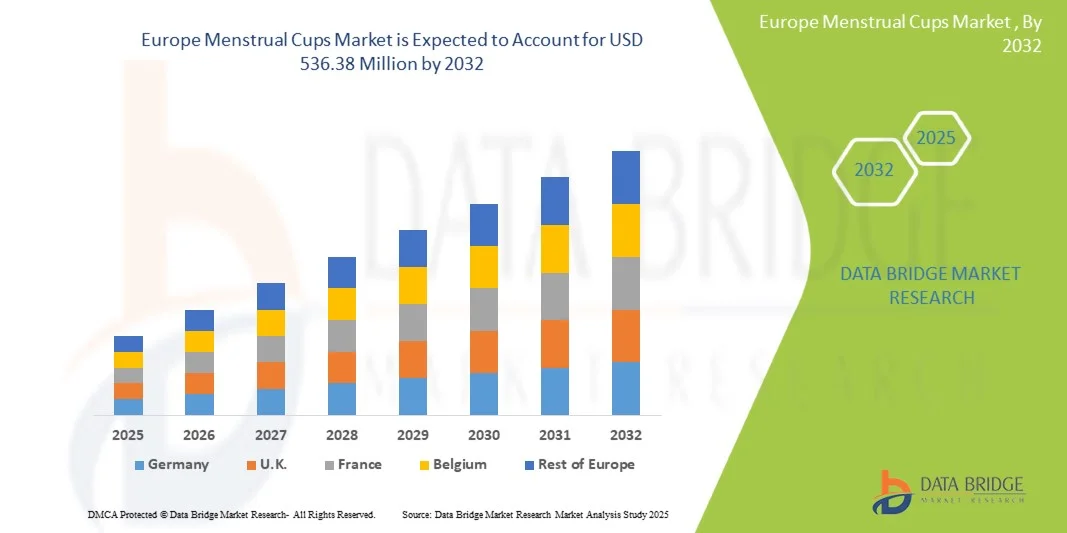
- The Europe menstrual cups market size was valued at USD 360.29 million in 2024 and is expected to reach USD 536.38 million by 2032, at a CAGR of 5.10% during the forecast period
- The market growth is largely fueled by the growing awareness of sustainable feminine hygiene products and the increasing adoption of eco-friendly alternatives to disposable sanitary products
- Furthermore, rising consumer demand for cost-effective, safe, and comfortable menstrual hygiene solutions is establishing menstrual cups as a preferred choice. These converging factors are accelerating the uptake of menstrual cup solutions, thereby significantly boosting the industry’s growth
Menstrual Cups Market Analysis
- Menstrual cups, offering reusable and non-invasive menstrual hygiene solutions, are increasingly vital components of modern menstrual health practices in both personal and institutional settings due to their sustainability, cost-effectiveness, and convenience
- The escalating demand for menstrual cups is primarily fueled by growing environmental awareness, rising women’s health education, broader product availability through e-commerce and retail channels, and a shift toward reusable sanitary solutions
- U.K. dominated the Europe menstrual cups market with the largest revenue share of 17.8% in 2024, driven by high awareness of sustainable feminine hygiene practices, widespread availability through e-commerce platforms, and growing consumer preference for reusable and eco-friendly menstrual products
- Germany is expected to be the fastest-growing region in the Europe menstrual cups market during the forecast period, projected to register a CAGR of 10.5%, fueled by increasing awareness of environmentally sustainable products, rising focus on women’s health and hygiene, and the integration of menstrual cups into daily personal care routines
- The Reusable segment dominated the Europe menstrual cups market with a revenue share of 82.5% in 2024. Reusable cups offer long-term cost savings, sustainability, and environmental benefits
Report Scope and Menstrual Cups Market Segmentation
|
Attributes |
Menstrual Cups Key Market Insights |
|
Segments Covered |
|
|
Countries Covered |
Europe
|
|
Key Market Players |
|
|
Market Opportunities |
|
|
Value Added Data Infosets |
In addition to the insights on market scenarios such as market value, growth rate, segmentation, geographical coverage, and major players, the market reports curated by the Data Bridge Market Research also include in-depth expert analysis, pricing analysis, brand share analysis, consumer survey, demography analysis, supply chain analysis, value chain analysis, raw material/consumables overview, vendor selection criteria, PESTLE Analysis, Porter Analysis, and regulatory framework. |
Menstrual Cups Market Trends
“Growing Adoption of Smart and Personalized Menstrual Health Solutions”
- A significant and accelerating trend in the Europe menstrual cups market is the increasing adoption of digital health and wellness technologies to improve menstrual hygiene management, product personalization, and user convenience. Integration with mobile apps and data tracking features allows consumers to monitor cycle patterns, receive personalized reminders, and optimize product usage
- For instance, in March 2023, FemTech startup Lunette introduced a smart menstrual cup subscription paired with a mobile app that tracks cycle health and provides tailored care tips, enabling users to make informed decisions about product replacement and hygiene routines
- AI-enabled features in certain advanced menstrual cups can analyze usage patterns and provide health insights, such as detecting irregular cycles or offering recommendations for alleviating discomfort. For instance, some models now integrate with wearable devices to provide cycle predictions and personalized reminders, improving overall user experience and compliance
- The seamless integration of menstrual cups with digital platforms is also fostering better user education and community engagement, allowing consumers to share experiences and access expert guidance through mobile interfaces
- This trend towards more intelligent, personalized, and connected menstrual health solutions is reshaping consumer expectations, encouraging manufacturers to innovate in materials, comfort, and usability. Consequently, companies such as DivaCup and Intimina are launching app-linked menstrual cup solutions with tracking and predictive features
- The demand for smart, personalized menstrual health solutions is growing rapidly across Europe, as consumers increasingly prioritize convenience, health awareness, and sustainable product options
Menstrual Cups Market Dynamics
Driver
“Growing Need Due to Rising Awareness and Health Consciousness”
- Rising awareness of menstrual hygiene, sustainability, and health monitoring is driving the increased adoption of menstrual cups in Europe. Consumers are seeking eco-friendly, cost-effective alternatives to disposable sanitary products while also prioritizing health tracking
- For instance, in June 2022, OrganiCup launched an educational campaign across Germany and France promoting the benefits of menstrual cups over traditional disposable products, highlighting reduced environmental impact and improved menstrual comfort
- The convenience of long-lasting products, combined with growing e-commerce availability and widespread educational campaigns, further propels the adoption of menstrual cups
- Subscription-based delivery services such as Mooncup Club in the U.K. have made it easier for users to access menstrual cups regularly while receiving guidance on correct usage and hygiene
- Government and NGO initiatives promoting menstrual hygiene in schools and workplaces are also key drivers, raising awareness and normalizing the use of menstrual cups in everyday life
- Increasing social media campaigns and influencer endorsements emphasizing eco-friendly menstrual products are further encouraging younger consumers to switch from disposable alternatives
- Advancements in materials and designs that improve comfort, fit, and ease of use, such as softer silicone cups and foldable options, are also driving adoption across a wider demographic
- Rising interest in personalized health tracking tools integrated with menstrual cups, including apps that monitor cycle patterns and offer insights on reproductive health, is expanding the market, particularly among tech-savvy consumers
Restraint/Challenge
“Concerns Regarding Health Safety, Cultural Acceptance, and Initial Costs”
- Concerns about health safety, potential discomfort, and lack of familiarity with menstrual cups continue to hinder broader adoption in some regions. Reports of improper cleaning or allergic reactions have made some consumers hesitant to switch from traditional sanitary products
- The relatively higher initial cost of premium menstrual cups compared to disposable alternatives can also be a barrier for price-sensitive consumers.
- For instance, in February 2023, a survey in Eastern Europe revealed that many first-time users delayed purchase due to cost concerns despite long-term savings
- Cultural and social barriers, such as taboos around menstrual products or discomfort discussing menstrual hygiene, can further restrict market penetration
- Limited availability and awareness in rural or underserved areas can also slow adoption, as consumers may not have easy access to quality menstrual cup products or guidance on proper usage
- Skepticism regarding efficacy and hygiene, especially among first-time users, may delay adoption; addressing myths and providing clear instructions is crucial
- Concerns regarding regulatory standards and the quality of imported menstrual cups can hinder trust in newer brands entering the market
- Overcoming these challenges through public awareness campaigns, educational initiatives, and affordable product options is critical for sustained market growth. For instance, companies like Intimina have partnered with health organizations to provide workshops and demonstrations on menstrual cup use, hygiene, and comfort
- Collaboration with schools, workplaces, and NGOs to provide subsidized products and educational programs can further reduce barriers and expand market reach.
Menstrual Cups Market Scope
The market is segmented on the basis of type, material, size, usability, shape, and distribution channel.
• By Type
On the basis of type, the Europe menstrual cups market is segmented into vaginal cup and cervical cup. The Vaginal Cup segment dominated the market with the largest revenue share of 66% in 2024. Vaginal cups are widely preferred due to their ease of use, comfort, and suitability for different body types. They offer a flexible design that adapts to various anatomical needs while providing effective menstrual protection. The segment benefits from strong awareness campaigns, educational programs, and growing acceptance in both urban and semi-urban regions. Social media and online platforms have also helped in educating consumers about their advantages. Reusability and long-term cost-effectiveness make them highly attractive. Increased product availability through pharmacies and e-commerce channels further strengthens adoption. The eco-friendly aspect aligns with rising environmental consciousness among consumers. Healthcare providers recommend them for sustainable menstrual hygiene practices. The segment has maintained stability due to repeat purchases and strong consumer trust. Marketing by both startups and established brands continues to fuel demand.
The Cervical Cup segment is expected to witness the fastest CAGR of 10.8% from 2025 to 2032. This growth is driven by rising awareness of specialized menstrual products, increasing focus on women’s health, and innovative designs offering higher comfort and capacity. Cervical cups are particularly appealing to experienced users seeking longer wear times and better leakage protection. Emerging regions are witnessing growing adoption as educational campaigns highlight their benefits. Targeted marketing and availability through online channels are expanding reach. Continuous product innovation, including softer materials and ergonomic designs, enhances user experience. Rising disposable incomes in key markets further support affordability. Healthcare endorsements promote usage for optimal menstrual health. Cultural acceptance is gradually increasing in regions where menstrual hygiene awareness is rising. Consumer preference for hygienic, non-invasive solutions is strengthening the segment. E-commerce platforms allow discreet purchasing, encouraging first-time users. Brand collaborations and influencer campaigns amplify product visibility and credibility.
• By Material
On the basis of material, the Europe menstrual cups market is segmented into silicone, thermoplastic isomer, rubber, and latex. The Silicone segment dominated with a revenue share of 72% in 2024. Silicone cups are hypoallergenic, flexible, and durable, ensuring safe and comfortable use over extended periods. They are easy to clean and maintain, enhancing user satisfaction. The material is widely accepted for its non-reactive properties and long-term sustainability. Awareness programs and healthcare recommendations strengthen trust in silicone cups. Social influence and positive user reviews drive adoption among first-time and repeat buyers. Silicone’s versatility allows multiple shapes and sizes, catering to diverse preferences. The segment benefits from widespread availability in retail and online channels. Eco-conscious consumers favor silicone due to its reusability and reduced waste. The material’s durability supports repeat use for several years. Leading brands focus on silicone-based innovations to maintain market dominance. High consumer satisfaction ensures consistent demand. Promotional campaigns highlight safety, comfort, and environmental benefits.
The Thermoplastic Isomer segment is expected to witness the fastest CAGR of 11% from 2025 to 2032. This growth is fueled by advancements in softer, skin-friendly materials that enhance comfort and usability. Innovative designs make cups more adaptable to various anatomies. Marketing campaigns emphasize improved hygiene and better user experience. Rising awareness about alternative materials contributes to adoption. New product launches in online and retail channels are expanding consumer choice. Research and development focus on non-toxic, flexible, and durable formulations. The segment appeals to younger consumers and first-time users. E-commerce accessibility allows discreet purchasing, encouraging experimentation. Promotional collaborations with influencers boost visibility. Increasing acceptance in emerging markets is a key driver. Sustainability messaging strengthens consumer trust. Improved affordability compared to premium silicone products also fuels growth.
• By Size
On the basis of size, the Europe menstrual cups market is segmented into small and large. The Small segment dominated with a revenue share of 58% in 2024. Small cups are ideal for first-time users, younger women, and individuals with lighter menstrual flow. They are easier to insert, remove, and clean, providing a comfortable experience. The segment benefits from strong educational initiatives and online tutorials that simplify usage. Small cups are widely promoted through e-commerce and retail channels. They are reusable and cost-effective, appealing to eco-conscious consumers. Marketing emphasizes convenience, portability, and discretion. Healthcare professionals recommend smaller sizes for safety and comfort. User reviews and positive feedback reinforce confidence in the product. Social campaigns highlight suitability for active lifestyles and travel. The segment has consistent repeat purchases due to durability. Packaging and design improvements increase aesthetic appeal. Availability across multiple price ranges enhances accessibility.
The Large segment is expected to witness the fastest CAGR of 10.5% from 2025 to 2032. Large cups cater to women with heavier menstrual flow, experienced users, and those seeking longer wear times. Rising awareness of menstrual health and hygiene in emerging markets contributes to growth. Product innovation focuses on improved comfort, fit, and leak protection. Marketing targets established users familiar with reusable products. Affordability and accessibility through online stores accelerate adoption. Educational campaigns emphasize suitability for high-flow days. Healthcare endorsements support usage. Expanding product portfolios increase choice and customization. Growing e-commerce penetration ensures wider reach. Social influence promotes confidence in using larger sizes. Reusable, durable materials strengthen long-term adoption. Consumer trust and repeat purchase behavior drive market expansion.
• By Usability
On the basis of usability, the Europe menstrual cups market is segmented into reusable and disposable. The Reusable segment dominated with a revenue share of 82.5% in 2024. Reusable cups offer long-term cost savings, sustainability, and environmental benefits. They appeal to eco-conscious consumers, reducing plastic waste. Reusability encourages repeat usage over several years, ensuring market stability. Educational campaigns and influencer promotions highlight hygiene and ease of use. Healthcare recommendations reinforce safety and efficacy. Reusable cups are available in diverse materials, sizes, and shapes. Online platforms facilitate discreet purchasing and global distribution. Growing awareness of menstrual health and sustainable living drives adoption. Repeat purchases contribute to market retention. Consumer satisfaction and comfort maintain loyalty. Brand innovations improve flexibility and design. Awareness in emerging regions is gradually expanding.
The Disposable segment is expected to witness the fastest CAGR of 12% from 2025 to 2032. Disposable cups cater to first-time users and travel convenience. Rising awareness in emerging markets fuels adoption. Marketing campaigns emphasize hygiene and single-use benefits. Availability in pharmacies, online stores, and retail outlets increases accessibility. Trial adoption by new consumers encourages market penetration. Disposable cups provide lower upfront costs, appealing to budget-conscious buyers. Packaging innovations enhance convenience and appeal. Integration of lightweight, flexible materials improves comfort. Awareness campaigns highlight ease of disposal and reduced cleaning effort. Social influence and product reviews promote acceptance. Expansion of retail networks strengthens reach. Emerging economies see rapid growth due to increasing menstrual health education.
• By Shape
On the basis of shape, the Europe menstrual cups market is segmented into round, hollow, pointy, and flat. The Round segment dominated with a revenue share of 47% in 2024, widely preferred for comfort, ergonomic design, and ease of insertion. Round cups accommodate various body types and menstrual flow levels. Educational campaigns and online tutorials promote usage confidence. Reusability and durability enhance adoption. Strong online and retail presence ensures accessibility. Marketing emphasizes convenience, hygiene, and environmental benefits. Positive word-of-mouth and social media influence further adoption. Healthcare endorsements reinforce safety and suitability. Variety in sizes complements round shapes for better fit. Repeat purchases strengthen segment stability. Brand innovations maintain consumer interest. Consumer preference for simple, reliable designs drives growth.
The Pointy segment is expected to witness the fastest CAGR of 10.7% from 2025 to 2032. Pointy cups provide improved anatomical fit, targeted comfort, and enhanced leak protection. Rising product awareness in urban and semi-urban regions supports adoption. Marketing highlights ergonomic benefits and user customization. Online and retail distribution channels facilitate trial and purchase. Product innovation focuses on softer materials and adaptable designs. Healthcare endorsements encourage usage for enhanced comfort. Growing consumer preference for specialized solutions drives uptake. E-commerce platforms enable discreet and convenient purchase. Positive social media campaigns enhance trust. Educational content guides proper usage. Repeat purchases sustain market growth. Expansion in emerging economies contributes to higher CAGR.
• By Distribution Channel
On the basis of distribution channel, the Europe menstrual cups market is segmented into online stores, retail pharmacies, department stores, supermarkets, and others. The Online Stores segment dominated with a revenue share of 51% in 2024, driven by convenience, discreet delivery, and product variety. Online availability allows consumers to explore different brands and sizes safely. E-commerce platforms enable promotions, reviews, and educational content. Subscription models encourage repeat purchases. Targeted digital marketing campaigns enhance consumer awareness. Delivery reliability and easy returns boost confidence. Social media campaigns promote brand visibility. Emerging economies are witnessing increased online adoption. Repeat purchases maintain segment stability. Wide reach across regions supports growth. Convenience for younger demographics strengthens preference. Price comparisons and discounts attract first-time buyers.
The retail pharmacies segment is expected to witness the fastest CAGR of 11.5% from 2025 to 2032. In-store availability provides product trial opportunities, personal consultation, and awareness for new consumers. Marketing campaigns educate users about sustainable menstrual hygiene. Retail expansion in urban and semi-urban regions increases reach. Collaboration with healthcare professionals strengthens credibility. Packaging innovations attract attention and encourage trial purchases. Repeat purchases are driven by trust and convenience. Consumer’s value immediate access without waiting for delivery. Retail presence complements online channels to maximize coverage. Promotions and discounts increase affordability. Local awareness campaigns highlight hygiene and health benefits. Continuous product introduction ensures variety. Emerging markets drive rapid adoption and market penetration.
Menstrual Cups Market Regional Analysis
- U.K. dominated the Europe menstrual cups market with the largest revenue share of 17.8% in 2024, driven by high awareness of sustainable feminine hygiene practices, widespread availability through e-commerce platforms, and growing consumer preference for reusable and eco-friendly menstrual products
- Germany is expected to be the fastest-growing region in the Europe menstrual cups market during the forecast period, projected to register a CAGR of 10.5%, fueled by increasing awareness of environmentally sustainable products, rising focus on women’s health and hygiene, and the integration of menstrual cups into daily personal care routines
- The region is witnessing strong growth across both online and offline retail channels, with consumers increasingly opting for convenient, cost-effective, and safe menstrual cup products
U.K. Menstrual Cups Market Insight
The U.K. menstrual cups market is expected to dominate Europe with a market share of 17.8% in 2024, driven by high awareness of sustainable feminine hygiene practices, widespread availability through e-commerce platforms, and growing consumer preference for reusable and eco-friendly menstrual products. Strong retail and distribution infrastructure, coupled with health-conscious and environmentally aware consumers, is supporting steady adoption in both urban and semi-urban areas.
Germany Menstrual Cups Market Insight
The Germany menstrual cups market is anticipated to be the fastest-growing in Europe, registering a CAGR of 10.5% during the forecast period. Growth is fueled by increasing awareness of environmentally sustainable products, a rising focus on women’s health and hygiene, and the integration of menstrual cups into daily personal care routines. Germany’s well-developed infrastructure and preference for high-quality, eco-conscious products further support the rapid adoption of menstrual cups in both retail and online channels.
Menstrual Cups Market Share
The Menstrual Cups industry is primarily led by well-established companies, including:
- Mooncup (U.K.)
- Lunette (Finland)
- Me Luna CUP (Germany)
- Fleurcup (France)
- Intimina (Sweden)
- AllMatters (Denmark)
- Diva International Inc. (Canada)
- Saalt (U.S.)
- Ruby Cup (U.K.)
- YUUKI Company s.r.o. (Czech republic)
- Blossom Cup (U.S.)
Latest Developments in Europe Menstrual Cups Market
- In February 2021, Essity launched the Libresse V-Cup across Denmark, Finland, Norway, and Sweden. This launch marked a major step in expanding the availability of menstrual cups in the Nordic region. The V-Cup, made from 100% soft medical-grade silicone, offers protection for up to 12 hours and is fully reusable, providing consumers with a sustainable alternative to disposable sanitary products. This initiative also emphasized environmental responsibility by reducing menstrual waste while catering to the growing demand for safe, convenient, and eco-friendly period care solutions
- In September 2023, Sunny, a period care brand that gained popularity through social media platforms like TikTok, officially launched the Sunny Cup along with its applicator. The product was specifically designed to facilitate a smooth transition for tampon users toward a more sustainable menstrual care option. With its reusable design and ease of insertion, the Sunny Cup combines convenience, comfort, and sustainability, making it accessible to a younger demographic familiar with digital engagement and social trends
- In March 2024, Catalonia, Spain, rolled out the “My Period, My Rules” program, distributing free reusable menstrual products to nearly 2.5 million women, girls, transgender, and nonbinary individuals. The program included menstrual cups, period underwear, and cloth pads, aiming to combat period poverty while promoting environmental sustainability. By providing these reusable options at local pharmacies and educational institutions, the initiative encouraged wider acceptance of menstrual cups and other eco-friendly period products, highlighting the region’s commitment to health equity and sustainable menstrual care practices
- In July 2024, Best, Periodt, a brand known for its innovative menstrual products, launched its menstrual cups in CVS stores nationwide. These cups are designed for higher capacity and longer wear, offering users convenience and reliability while minimizing the need for frequent changes. The launch reflects a broader trend of mainstream retail adoption of reusable menstrual products, addressing both environmental concerns and consumer demand for practical, cost-effective, and sustainable period care solutions
- In September 2024, an innovative menstrual cup received FDA clearance, representing a significant milestone in the advancement of menstrual care technology. The clearance validated the product’s safety, efficacy, and suitability for widespread use, reinforcing consumer confidence in menstrual cups as a clinically approved alternative to traditional disposable sanitary products. This development also signals ongoing innovation in material technology, design, and hygiene standards, further driving the global adoption of menstrual cups

- Interactive Data Analysis Dashboard
- Company Analysis Dashboard for high growth potential opportunities
- Research Analyst Access for customization & queries
- Competitor Analysis with Interactive dashboard
- Latest News, Updates & Trend analysis
- Harness the Power of Benchmark Analysis for Comprehensive Competitor Tracking
Data collection and base year analysis are done using data collection modules with large sample sizes. The stage includes obtaining market information or related data through various sources and strategies. It includes examining and planning all the data acquired from the past in advance. It likewise envelops the examination of information inconsistencies seen across different information sources. The market data is analysed and estimated using market statistical and coherent models. Also, market share analysis and key trend analysis are the major success factors in the market report. To know more, please request an analyst call or drop down your inquiry.
The key research methodology used by DBMR research team is data triangulation which involves data mining, analysis of the impact of data variables on the market and primary (industry expert) validation. Data models include Vendor Positioning Grid, Market Time Line Analysis, Market Overview and Guide, Company Positioning Grid, Patent Analysis, Pricing Analysis, Company Market Share Analysis, Standards of Measurement, Global versus Regional and Vendor Share Analysis. To know more about the research methodology, drop in an inquiry to speak to our industry experts.
Data Bridge Market Research is a leader in advanced formative research. We take pride in servicing our existing and new customers with data and analysis that match and suits their goal. The report can be customized to include price trend analysis of target brands understanding the market for additional countries (ask for the list of countries), clinical trial results data, literature review, refurbished market and product base analysis. Market analysis of target competitors can be analyzed from technology-based analysis to market portfolio strategies. We can add as many competitors that you require data about in the format and data style you are looking for. Our team of analysts can also provide you data in crude raw excel files pivot tables (Fact book) or can assist you in creating presentations from the data sets available in the report.












