


Respiratory Care Devices Market Size
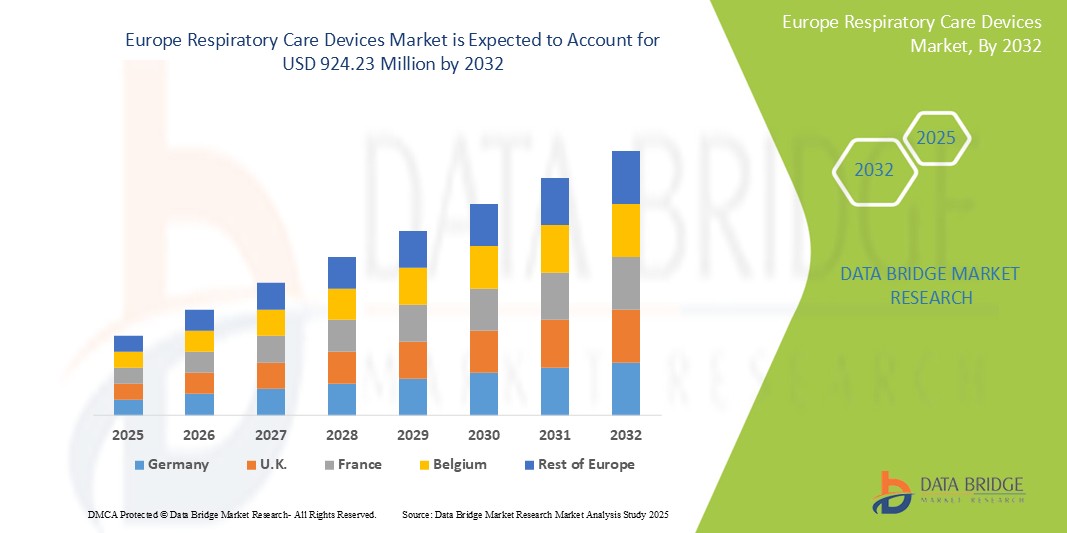
- The Europe Respiratory Care Devices Market size was valued at USD 492 million in 2024 and is expected to reach USD 924.23 million by 2032, at a CAGR of 8.2% during the forecast period
- The market growth is largely fueled by the increasing prevalence of chronic respiratory diseases such as COPD and asthma, alongside rising adoption of non-invasive ventilation and portable respiratory devices across homecare and clinical settings.
- Furthermore, advancements in connected respiratory technologies and rising demand for user-friendly, remote-monitoring-enabled solutions are positioning respiratory care devices as essential tools in modern pulmonary management. These converging factors are accelerating the uptake of respiratory care solutions, significantly boosting the industry's growth across Europe.
Respiratory Care Devices Market Analysis
- Respiratory care devices, including ventilators, CPAP machines, nebulizers, and oxygen concentrators, are becoming increasingly vital in managing chronic respiratory conditions both in clinical and homecare settings due to their effectiveness, portability, and integration with digital health platforms.
- The growing demand for respiratory care devices is primarily driven by the rising global burden of respiratory diseases, increasing elderly population, and technological advancements enabling remote monitoring and patient-centered care.
- Germany dominates the Respiratory Care Devices market with the largest revenue share of 23.45% in 2025, supported by early adoption of advanced medical technologies, high healthcare expenditure, and a strong presence of leading medical device manufacturers, with the Germany seeing significant uptake in home-use respiratory solutions.
- UK is expected to be the fastest-growing region in the Respiratory Care Devices market during the forecast period, fueled by increasing urbanization, rising pollution levels, expanding healthcare access, and growing disposable incomes.
- The Chronic Obstructive Pulmonary Disease (COPD)segment is expected to dominate the Respiratory Care Devices market with the highest market share with 26.78% in 2025, driven by rising use of oxygen therapy and non-invasive ventilation in both acute and chronic respiratory care management.
Report Scope and Respiratory Care Devices Market Segmentation
By Indication (Chronic Obstructive Pulmonary Disease (COPD), Sleep Apnea, Asthma, Infectious Diseases, Other Indications), Product (Therapeutic Devices, Monitoring Devices, Diagnostic Devices, Consumables and Accessories), End User (Hospitals, Home Care Settings, Ambulatory Care Centers)
|
Attributes |
Respiratory Care Devices Key Market Insights |
|
Segments Covered |
|
|
Countries Covered |
Europe
|
|
Key Market Players |
Philips Healthcare (Netherlands) ResMed (Ireland) Drägerwerk AG & Co. KGaA (Germany) Smiths Group plc (United Kingdom) Getinge AB (Sweden) Löwenstein Medical GmbH & Co. KG (Germany) Vyaire Medical (France) Fisher & Paykel Healthcare (United Kingdom - European operations, HQ New Zealand but significant European presence) Maquet (part of Getinge, Sweden) Air Liquide Healthcare (France) |
|
Market Opportunities |
|
|
Value Added Data Infosets |
In addition to the insights on market scenarios such as market value, growth rate, segmentation, geographical coverage, and major players, the market reports curated by the Data Bridge Market Research also include in-depth expert analysis, pricing analysis, brand share analysis, consumer survey, demography analysis, supply chain analysis, value chain analysis, raw material/consumables overview, vendor selection criteria, PESTLE Analysis, Porter Analysis, and regulatory framework. |
Respiratory Care Devices Market Trends
“Enhanced Convenience Through AI and Remote Monitoring Integration”
- A significant and accelerating trend in the Europe Respiratory Care Devices Market is the integration of artificial intelligence (AI) and connected digital platforms to improve remote monitoring, device automation, and personalized respiratory care. This shift is enhancing both patient experience and clinical outcomes.
- For instance, AI-enabled ventilators and CPAP devices can automatically adjust settings based on real-time patient data, optimizing therapy and reducing the burden on healthcare providers. These smart devices also connect with mobile apps and cloud platforms, allowing users and clinicians to track therapy progress remotely.
- AI integration allows predictive analytics that can detect early signs of patient deterioration, enabling timely intervention and reducing hospital readmissions. Additionally, voice-assisted controls and mobile connectivity are becoming key features in home-use devices, offering hands-free operation and increased accessibility for elderly or mobility-impaired users.
- Seamless connectivity with telehealth systems and electronic health records (EHRs) facilitates centralized control and data sharing across care teams, promoting coordinated and efficient patient management.
- This growing trend toward intelligent, user-friendly, and interconnected respiratory care systems is reshaping expectations across both hospital and homecare environments. As a result, companies such as Philips, ResMed, and Fisher & Paykel Healthcare are investing in AI-driven innovation to meet the demand for more advanced, adaptive, and integrated respiratory care solutions.
- The demand for respiratory devices with AI and remote connectivity features is expanding rapidly across Europe, as healthcare systems increasingly prioritize preventive care, home-based treatment, and chronic disease management.
Respiratory Care Devices Market Dynamics
Driver
“Growing Demand Due to Rising Respiratory Diseases and Advancements in Homecare Technology”
- The rising prevalence of chronic respiratory conditions such as COPD, asthma, and sleep apnea, particularly among the aging population in Europe, is a key driver accelerating demand for respiratory care devices.
- For example, in March 2024, ResMed introduced enhanced digital features in its AirSense™ line, allowing patients to remotely track and optimize therapy, highlighting the industry’s shift toward home-based, connected respiratory care solutions.
- As healthcare systems emphasize reducing hospital readmissions and improving patient outcomes, the adoption of portable oxygen concentrators, CPAP devices, and smart ventilators is gaining momentum. These devices offer remote monitoring, data integration, and ease of use in homecare environments.
- The ability to monitor patients remotely, adjust therapy settings via apps, and integrate devices into broader digital health ecosystems provides healthcare professionals with better control and patients with greater comfort and autonomy in managing chronic respiratory conditions.
Restraint/Challenge
“Data Privacy Concerns and High Costs of Advanced Devices”
- The increasing reliance on connected respiratory devices raises concerns around data security and patient privacy, particularly regarding the storage and transmission of sensitive health information via cloud-based platforms.
- Incidents of data breaches and cyber threats in the healthcare sector have led to growing scrutiny over the use of AI and IoT-enabled medical devices, creating hesitation among some healthcare providers and patients.
- To address these concerns, manufacturers must invest in stringent cybersecurity frameworks, including data encryption, secure user authentication, and compliance with regulations such as the EU’s GDPR for medical data protection.
- In addition, the high initial cost of advanced respiratory care devices, such as smart ventilators and automated CPAP machines, remains a barrier for widespread adoption, particularly in cost-sensitive healthcare systems or lower-income populations.
- While reimbursement frameworks are improving across many European countries, the affordability gap still limits access to cutting-edge respiratory technologies for some patients. Overcoming these challenges will require industry-wide collaboration to enhance security, lower production costs, and expand patient access through public and private healthcare partnerships.
Respiratory Care Devices Market Scope
The market is segmented on the basis of Indication, product, end user.
By Indication (Chronic Obstructive Pulmonary Disease (COPD), Sleep Apnea, Asthma, Infectious Diseases, Other Indications), Product (Therapeutic Devices, Monitoring Devices, Diagnostic Devices, Consumables and Accessories), End User (Hospitals, Home Care Settings, Ambulatory Care Centers)
- By Indication
On the basis of Indication, the Respiratory Care Devices market is segmented into Chronic Obstructive Pulmonary Disease (COPD), Sleep Apnea, Asthma, Infectious Diseases, Other Indications. The Chronic Obstructive Pulmonary Disease (COPD)segment dominates the largest market revenue share of 26.78% in 2025, driven by its high global prevalence, increasing aging population, and growing demand for long-term respiratory support and home-based care solutions.
The Sleep Apnea segment is anticipated to witness the fastest growth rate of 6.7% from 2025 to 2032, fueled by rising awareness of sleep-related disorders, increased diagnosis rates, and growing adoption of CPAP and BiPAP devices for effective home-based therapy.
- By Product
On the basis of Product, the Respiratory Care Devices market is segmented into Therapeutic Devices, Monitoring Devices, Diagnostic Devices, Consumables and Accessories. The Therapeutic Devices held the largest market revenue share in 2025 of, driven by the increasing prevalence of chronic respiratory diseases, growing demand for oxygen therapy and non-invasive ventilation, and widespread use of devices such as nebulizers, CPAPs, and oxygen concentrators in both clinical and homecare settings.
The Consumables segment is expected to witness the fastest CAGR from 2025 to 2032, driven by rising adoption of respiratory care devices, increasing need for regular replacement of components such as masks, filters, and tubing, and the growing emphasis on infection control and hygiene in both home and hospital settings.
- By end user
On the basis of end user, the Respiratory Care Devices market is segmented into Hospitals, Home Care Settings, Ambulatory Care Centers. The Hospitals unlocking held the largest market revenue share in 2025, driven by the high volume of respiratory care procedures, advanced infrastructure for critical care, and increased adoption of ventilators, oxygen therapy, and monitoring devices to manage acute and chronic respiratory conditions.
The Ambulatory Care Centers is expected to witness the fastest CAGR from 2025 to 2032, favored for its cost-effective, convenient outpatient services and the growing shift towards decentralized respiratory care and home-based treatment models.
Respiratory Care Devices Market Regional Analysis
- Germany dominates the Respiratory Care Devices market with the largest revenue share of 40.01% in 2024, driven by a rising prevalence of chronic respiratory diseases, advanced healthcare infrastructure, and increased adoption of home-based respiratory care technologies.
- Consumers and healthcare providers in the region highly value the convenience, accuracy, and connectivity features offered by modern respiratory devices, including ventilators, CPAP machines, and oxygen concentrators.
- This widespread adoption is further supported by high healthcare spending, well-established reimbursement systems, and growing awareness of early diagnosis and long-term management of respiratory conditions, positioning North America as a key market for both residential and clinical respiratory care solutions.
Germany, U.K., France, Italy, Spain, Switzerland, Netherlands, Belgium, Russia, Turkey Ukraine and Rest of Europe
Germany Respiratory Care Devices Market Insight
The German Respiratory Care Devices market is expected to expand at a considerable CAGR during the forecast period, fueled by increasing awareness of digital security and demand for technologically advanced, eco-conscious solutions. Germany’s well-developed infrastructure, strong emphasis on innovation and sustainability, and stringent regulatory environment promote the adoption of smart respiratory care devices, particularly in residential and commercial buildings. The integration of Respiratory Care Devices with home automation systems is also becoming increasingly prevalent, with consumers showing a strong preference for secure, privacy-focused, and energy-efficient technologies aligned with local expectations.
UK Respiratory Care Devices Market Insight
The U.K. Respiratory Care Devices market is anticipated to grow at a noteworthy CAGR during the forecast period, driven by the escalating trend of home automation and a growing demand for heightened security and convenience. Increasing concerns regarding burglary and safety are encouraging homeowners and businesses to adopt advanced respiratory care solutions integrated with smart home systems. The U.K.’s robust e-commerce infrastructure and high consumer awareness are further stimulating market expansion.
France Respiratory Care Devices Market Insight
The French Respiratory Care Devices market is projected to experience substantial growth, supported by rising healthcare expenditure and the increasing prevalence of chronic respiratory diseases. A growing focus on patient-centric care and technological innovations such as connected respiratory devices are enhancing adoption rates. France’s strong regulatory framework and increasing urbanization contribute to the expansion of the market across residential and clinical settings.
Italy Respiratory Care Devices Market Insight
The Italian Respiratory Care Devices market is expected to grow steadily, driven by rising awareness of respiratory health, growing demand for non-invasive ventilation, and expanding homecare services. Italy’s aging population and increased government support for chronic disease management are boosting demand for advanced respiratory care solutions. The integration of these devices with smart home and telemedicine platforms is also gaining traction.
Spain Respiratory Care Devices Market Insight
The Spanish Respiratory Care Devices market is poised for significant growth due to increasing respiratory disorder prevalence and rising adoption of technologically advanced devices. Growing investments in healthcare infrastructure and government initiatives to promote digital health solutions are driving market expansion. The rising consumer preference for home-based respiratory care and monitoring further supports the market’s growth trajectory.
Switzerland Respiratory Care Devices Market Insight
The Swiss Respiratory Care Devices market is experiencing steady growth, fueled by high healthcare standards, strong innovation capabilities, and increasing patient preference for connected respiratory solutions. Switzerland’s well-established healthcare system and focus on personalized medicine are encouraging adoption of smart respiratory devices in both home and clinical environments. The country’s emphasis on data security and privacy also shapes market dynamics.
Netherlands Respiratory Care Devices Market Insight
The Netherlands Respiratory Care Devices market is expected to grow significantly, driven by increasing government support for chronic disease management and rising consumer adoption of smart health technologies. The country’s progressive healthcare policies, high digital literacy, and widespread use of telehealth services facilitate the integration of respiratory devices with smart home systems. Growing awareness about respiratory health and preventive care further boosts market demand.
Respiratory Care Devices Market Share
The Respiratory Care Devices industry is primarily led by well-established companies, including:
- Philips Healthcare (Netherlands)
- ResMed (Ireland)
- Drägerwerk AG & Co. KGaA (Germany)
- Smiths Group plc (United Kingdom)
- Getinge AB (Sweden)
- Löwenstein Medical GmbH & Co. KG (Germany)
- Vyaire Medical (France)
- Fisher & Paykel Healthcare (United Kingdom - European operations, HQ New Zealand but significant European presence)
- Maquet (part of Getinge, Sweden)
- Air Liquide Healthcare (France)
Latest Developments in Europe Respiratory Care Devices Market
- In March 2023, Honeywell International Inc. successfully deployed the Bengaluru Safe City Project, aimed at enhancing urban safety through its advanced Respiratory Care Devices and security technologies. This initiative harnesses state-of-the-art solutions to create a more secure and resilient city environment, underscoring Honeywell's dedication to utilizing its expertise in innovative security systems. The project highlights the increasing significance of smart technology in urban safety, contributing to the development of safer, smarter communities.
- In February 2023, Sentrilock, LLC, a leading provider of electronic lockbox solutions for the real estate industry, announced a strategic partnership with the Chesapeake Bay and Rivers Association of REALTORS (CBRAR) to create a smart electronic lockbox marketplace for REALTOR members. This collaboration is designed to enhance security and streamline accessibility for real estate professionals, facilitating more efficient and secure property transactions. The initiative underscores Sentrilock's commitment to driving innovation and improving operational effectiveness within the real estate sector.

- Interactive Data Analysis Dashboard
- Company Analysis Dashboard for high growth potential opportunities
- Research Analyst Access for customization & queries
- Competitor Analysis with Interactive dashboard
- Latest News, Updates & Trend analysis
- Harness the Power of Benchmark Analysis for Comprehensive Competitor Tracking
Data collection and base year analysis are done using data collection modules with large sample sizes. The stage includes obtaining market information or related data through various sources and strategies. It includes examining and planning all the data acquired from the past in advance. It likewise envelops the examination of information inconsistencies seen across different information sources. The market data is analysed and estimated using market statistical and coherent models. Also, market share analysis and key trend analysis are the major success factors in the market report. To know more, please request an analyst call or drop down your inquiry.
The key research methodology used by DBMR research team is data triangulation which involves data mining, analysis of the impact of data variables on the market and primary (industry expert) validation. Data models include Vendor Positioning Grid, Market Time Line Analysis, Market Overview and Guide, Company Positioning Grid, Patent Analysis, Pricing Analysis, Company Market Share Analysis, Standards of Measurement, Global versus Regional and Vendor Share Analysis. To know more about the research methodology, drop in an inquiry to speak to our industry experts.
Data Bridge Market Research is a leader in advanced formative research. We take pride in servicing our existing and new customers with data and analysis that match and suits their goal. The report can be customized to include price trend analysis of target brands understanding the market for additional countries (ask for the list of countries), clinical trial results data, literature review, refurbished market and product base analysis. Market analysis of target competitors can be analyzed from technology-based analysis to market portfolio strategies. We can add as many competitors that you require data about in the format and data style you are looking for. Our team of analysts can also provide you data in crude raw excel files pivot tables (Fact book) or can assist you in creating presentations from the data sets available in the report.













