


Europe Topical Corticosteroids Market Size
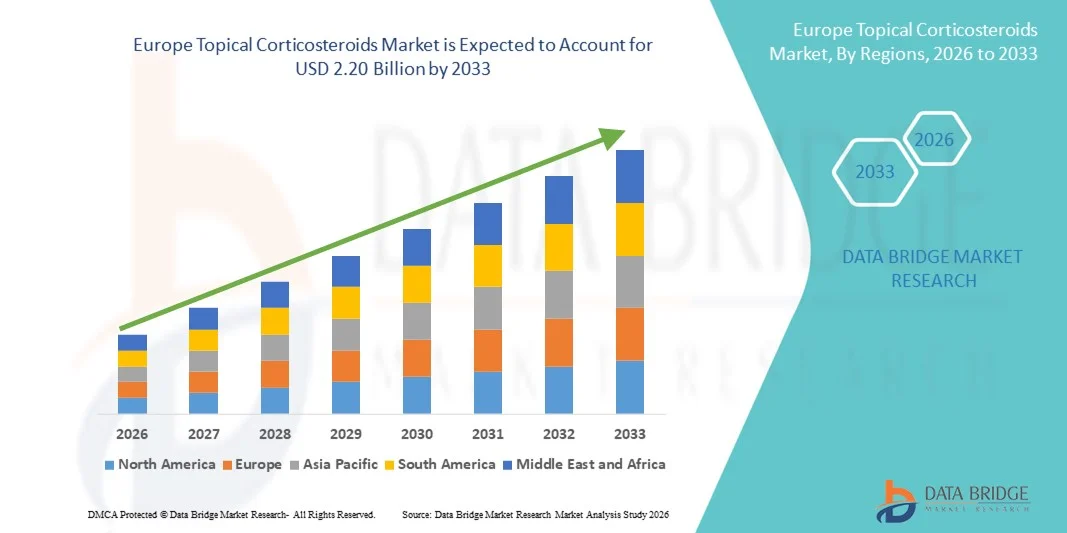
- The Europe topical corticosteroids market size was valued at USD 1.35 billion in 2025 and is expected to reach USD 2.20billion by 2033, at a CAGR of6.30% during the forecast period
- The market growth is largely fueled by the rising prevalence of dermatological conditions such as eczema, psoriasis, dermatitis, and allergic skin reactions, leading to increasing demand for effective topical treatments across hospitals, dermatology clinics, and homecare settings
- Furthermore, growing patient awareness regarding skin health, expanding access to dermatological care, and continuous advancements in pharmaceutical formulations are establishing topical corticosteroids as one of the most widely used treatments for inflammatory skin disorders. These converging factors are accelerating the uptake of Topical Corticosteroids solutions, thereby significantly boosting the industry's growth
Europe Topical Corticosteroids Market Analysis
- Topical corticosteroids, widely used anti-inflammatory medications applied directly to the skin, are increasingly vital in dermatological treatment for managing conditions such as eczema, psoriasis, dermatitis, and allergic skin reactions across hospitals, dermatology clinics, and homecare settings due to their effectiveness in reducing inflammation, itching, and redness
- The escalating demand for topical corticosteroids is primarily fueled by the rising prevalence of skin disorders, growing awareness regarding dermatological treatments, and increasing access to over-the-counter and prescription skin care medications across healthcare systems
- The U.K. dominated the topical corticosteroids market with the largest revenue share of 29.6% in 2025, characterized by a well-established healthcare system, increasing prevalence of dermatological conditions, and the strong presence of pharmaceutical companies supplying advanced dermatology medications across hospitals and specialty clinics.
- Germany is expected to be the fastest growing region in the topical corticosteroids market during the forecast period with a projected CAGR of 9.1%, due to rising healthcare expenditure, increasing awareness of skin health, and growing demand for effective dermatological treatments across hospitals, dermatology clinics, and retail pharmacies
- The high potency segment held the largest market revenue share of 39.8% in 2025, driven by its extensive use in treating moderate to severe inflammatory skin conditions
Report Scope and Topical Corticosteroids Market Segmentation
|
Attributes |
Topical Corticosteroids Key Market Insights |
|
Segments Covered |
|
|
Countries Covered |
Europe
|
|
Key Market Players |
|
|
Market Opportunities |
|
|
Value Added Data Infosets |
In addition to the insights on market scenarios such as market value, growth rate, segmentation, geographical coverage, and major players, the market reports curated by the Data Bridge Market Research also include in-depth expert analysis, patient epidemiology, pipeline analysis, pricing analysis, and regulatory framework. |
Europe Topical Corticosteroids Market Trends
Increasing Demand for Dermatological Treatments and Advanced Topical Formulations
- A significant and accelerating trend in the global Topical Corticosteroids market is the growing demand for effective dermatological treatments and the development of advanced topical formulations designed to improve therapeutic outcomes. Pharmaceutical companies are increasingly focusing on developing corticosteroid creams, ointments, lotions, and gels that provide targeted anti-inflammatory effects while minimizing potential side effects associated with prolonged steroid use
- For instance, Galderma and Pfizer Inc. have expanded their dermatology product portfolios with topical corticosteroid formulations used for treating conditions such as eczema, psoriasis, and dermatitis. Similarly, LEO Pharma has introduced innovative dermatological therapies designed to enhance skin penetration and improve the efficacy of corticosteroid-based treatments for chronic inflammatory skin diseases
- The increasing prevalence of dermatological disorders worldwide, including atopic dermatitis, psoriasis, allergic skin reactions, and contact dermatitis, is encouraging healthcare providers to prescribe topical corticosteroids as a first-line treatment option. These medications help reduce inflammation, redness, itching, and swelling associated with a wide range of skin conditions
- In addition, pharmaceutical companies are investing in research and development to create improved formulations with enhanced absorption, reduced irritation, and better patient compliance. These innovations include combination therapies that integrate corticosteroids with antifungal or antibacterial agents to address complex dermatological conditions
- The rising awareness of skin health, increasing access to dermatology care, and expanding availability of prescription and over-the-counter topical corticosteroid products are further contributing to market expansion across hospitals, dermatology clinics, and retail pharmacies worldwide
- As dermatological disorders continue to affect a significant portion of the global population, the demand for safe, effective, and convenient topical corticosteroid treatments is expected to grow steadily across both developed and emerging healthcare markets
Europe Topical Corticosteroids Market Dynamics
Driver
Rising Prevalence of Skin Disorders and Growing Dermatology Treatments
- The increasing prevalence of inflammatory and allergic skin disorders worldwide is a major factor driving the growth of the global Topical Corticosteroids market. Conditions such as eczema, psoriasis, dermatitis, and allergic skin reactions are becoming more common due to environmental factors, lifestyle changes, and rising levels of pollution, increasing the demand for effective dermatological treatments
- For instance, companies such as GlaxoSmithKline and Sanofi have introduced dermatology-focused treatment solutions that include topical corticosteroids for managing inflammatory skin conditions. These treatments are widely prescribed by dermatologists and healthcare providers due to their proven ability to reduce inflammation and relieve symptoms associated with chronic skin diseases
- The growing number of dermatology consultations and increasing awareness regarding early treatment of skin conditions are encouraging patients to seek medical care, thereby increasing the demand for topical corticosteroid products
- Furthermore, the expansion of healthcare infrastructure and improved access to dermatological services in emerging economies are enabling more patients to receive timely diagnosis and treatment for various skin disorder
- In addition, the increasing availability of both prescription-based and over-the-counter topical corticosteroid formulations through pharmacies, hospitals, and online distribution channels is supporting broader market penetration globally
Restraint/Challenge
Potential Side Effects and Strict Regulatory Guidelines
- One of the major challenges affecting the global Topical Corticosteroids market is the potential side effects associated with prolonged or improper use of corticosteroid-based treatments. Long-term use of topical steroids may lead to skin thinning, irritation, hormonal imbalance, or other dermatological complications, which can limit their continuous use
- For instance, healthcare authorities such as the U.S. Food and Drug Administration (FDA) and the European Medicines Agency (EMA) emphasize strict labeling guidelines and dosage recommendations for topical corticosteroid products to ensure safe usage and minimize adverse effects among patients
- Increasing patient awareness regarding potential side effects may also encourage individuals to explore alternative dermatological treatments, including non-steroidal topical therapies and biologic medications for severe skin conditions
- In addition, regulatory agencies across various regions impose stringent approval processes and safety monitoring requirements for corticosteroid formulations, which can increase development timelines and costs for pharmaceutical manufacturers
- Furthermore, misuse or over-the-counter self-medication in certain regions may lead to complications, prompting governments and healthcare organizations to implement stricter prescription controls and awareness campaigns regarding the appropriate use of corticosteroids
- Addressing these challenges through patient education, improved product formulations, and responsible prescribing practices will be essential for ensuring the sustainable growth of the global topical corticosteroids market
Europe Topical Corticosteroids Market Scope
The market is segmented on the basis of molecule name, potency class, medication type, application, distribution channel, and end user.
- By Molecule Name
On the basis of molecule name, the Topical Corticosteroids market is segmented into Fludroxycortide, Triamcinolone Acetonide, Fluocinolone Acetonide, Antiseptics, Betamethasone, Clobetasone Propionate, Clobetasone Butyrate, Halobetasone, Mometasone, and Others. The Betamethasone segment dominated the largest market revenue share of 24.6% in 2025, driven by its widespread use in the treatment of inflammatory skin disorders such as eczema, dermatitis, and psoriasis. Betamethasone is commonly prescribed due to its strong anti-inflammatory and immunosuppressive properties that effectively reduce redness, swelling, and itching. Dermatologists widely recommend this corticosteroid because it provides rapid symptom relief and is available in multiple topical formulations including creams, ointments, and lotions. The growing prevalence of dermatological conditions worldwide has significantly increased the demand for betamethasone-based medications. In addition, increasing awareness regarding skin health and improved access to dermatological treatments support the expansion of this segment. Pharmaceutical companies are continuously introducing improved formulations with enhanced absorption and fewer side effects. Hospitals and dermatology clinics frequently use betamethasone as a first-line therapy for various skin conditions. The availability of both prescription and generic formulations also contributes to its widespread use. Rising healthcare expenditure and better diagnostic capabilities further support market growth. Increasing patient demand for effective topical therapies continues to strengthen the dominance of this segment.
The Mometasone segment is expected to witness the fastest CAGR of 8.7% from 2026 to 2033, driven by its strong anti-inflammatory effects combined with a favorable safety profile. Mometasone is widely used for the treatment of eczema, psoriasis, and allergic skin reactions due to its high potency and reduced systemic absorption. Dermatologists increasingly prescribe mometasone because it provides effective relief while minimizing the risk of side effects associated with long-term corticosteroid use. The increasing prevalence of chronic skin diseases and allergic dermatological conditions is boosting demand for mometasone-based medications. Technological advancements in topical drug formulations are also improving drug delivery and therapeutic outcomes. The growing awareness about advanced dermatology treatments supports adoption across hospitals and dermatology clinics. Pharmaceutical companies are expanding product portfolios with new mometasone formulations for different skin conditions. The rising demand for safe and effective corticosteroid therapies further strengthens this segment. In addition, the increasing availability of generic versions improves affordability and accessibility. Expansion of dermatology services in emerging healthcare markets also contributes to growth. As dermatological disorders continue to rise globally, the mometasone segment is expected to experience rapid expansion.
- By Potency Class
On the basis of potency class, the market is segmented into ultra-high, high, moderate, and low potency corticosteroids. The high potency segment held the largest market revenue share of 39.8% in 2025, driven by its extensive use in treating moderate to severe inflammatory skin conditions. High potency corticosteroids are frequently prescribed for psoriasis, eczema, and severe dermatitis where stronger anti-inflammatory effects are required. These medications provide rapid symptom relief, making them highly preferred by dermatologists for acute flare-ups. Increasing prevalence of chronic dermatological conditions worldwide significantly contributes to the growth of this segment. High potency formulations are widely available in creams, ointments, and lotions, providing flexible treatment options. Hospitals and dermatology clinics commonly use these medications for patients requiring immediate therapeutic intervention. Continuous advancements in drug formulations have improved efficacy while minimizing adverse effects. Increasing patient awareness regarding dermatological treatments further supports demand. Pharmaceutical manufacturers are developing improved high potency corticosteroids with enhanced safety profiles. Rising healthcare expenditure and expanding dermatology clinics also strengthen the segment’s market share. As skin disorders continue to increase globally, high potency corticosteroids remain widely used in clinical practice.
The moderate potency segment is expected to witness the fastest CAGR of 7.9% from 2026 to 2033, driven by its balanced combination of effectiveness and safety for long-term treatment. Moderate potency corticosteroids are commonly prescribed for mild to moderate skin conditions such as eczema, allergic dermatitis, and skin inflammation. Physicians often prefer moderate potency medications for patients requiring extended treatment periods due to their reduced risk of side effects. The increasing prevalence of chronic skin conditions that require ongoing management supports segment growth. Moderate potency corticosteroids are widely available in various topical formulations, making them suitable for different patient needs. Dermatologists recommend these medications for sensitive skin areas where stronger corticosteroids may not be appropriate. Increasing patient awareness regarding safe dermatological treatments further boosts demand. Pharmaceutical companies continue to innovate with improved formulations that enhance therapeutic outcomes. Growing healthcare access in emerging economies also contributes to increased adoption. In addition, the expansion of dermatology clinics and teledermatology services supports wider usage. As the demand for safer long-term treatment options rises, moderate potency corticosteroids are expected to grow rapidly.
- By Medication Type
On the basis of medication type, the market is segmented into ointments, creams, liquid and solutions, lotions, gel, oils, pastes, sprays, and others. The creams segment accounted for the largest market revenue share of 33.7% in 2025, driven by their widespread use due to ease of application, good absorption, and patient comfort. Cream formulations are widely prescribed for a variety of dermatological conditions including dermatitis, eczema, and psoriasis. Patients prefer creams because they spread easily on the skin and do not leave a greasy residue. Dermatologists often recommend creams for moist or inflamed skin areas where quick absorption is beneficial. The availability of numerous corticosteroid creams with varying potency levels further supports their widespread adoption. Pharmaceutical companies continue to introduce improved cream formulations that enhance drug delivery and patient compliance. Increasing consumer awareness regarding topical dermatological treatments also contributes to segment growth. Retail pharmacies and dermatology clinics widely distribute corticosteroid creams due to strong demand. Technological innovations in topical drug formulation further improve product effectiveness. The rising incidence of skin diseases globally continues to drive demand for cream-based medications. As a result, creams remain the most widely used medication type in the topical corticosteroids market.
The gel segment is expected to witness the fastest CAGR of 8.3% from 2026 to 2033, fueled by increasing patient preference for lightweight and non-greasy formulations. Gel-based corticosteroids provide rapid absorption and are particularly suitable for hairy or oily skin areas such as the scalp. Dermatologists increasingly prescribe gel formulations for conditions like scalp psoriasis and acne-related inflammation. The growing demand for cosmetically appealing dermatological products also contributes to the rising popularity of gel medications. Pharmaceutical companies are investing in advanced gel technologies to improve drug stability and penetration. Patients often prefer gels due to their cooling effect and ease of application. The expansion of dermatology clinics and specialized skin treatment centers further supports the growth of gel formulations. Increasing awareness of modern dermatological therapies encourages adoption of advanced medication types. Online pharmacies and digital healthcare platforms also promote gel-based treatments through easy accessibility. In addition, the demand for targeted treatments for scalp and oily skin conditions continues to increase. As innovation in dermatology products continues, gel formulations are expected to grow rapidly in the market.
- By Application
On the basis of application, the market is segmented into acne, dermatitis, psoriasis, skin infection, hyperpigmentation, melasma, and others. The dermatitis segment dominated the largest market revenue share of 31.5% in 2025, driven by the high global prevalence of atopic dermatitis and contact dermatitis. Topical corticosteroids are widely prescribed as the primary treatment for dermatitis due to their strong anti-inflammatory and immunosuppressive effects. Dermatologists frequently recommend corticosteroid creams and ointments to reduce itching, redness, and swelling associated with dermatitis. Increasing environmental pollution, allergens, and lifestyle factors contribute to the rising incidence of dermatitis worldwide. Hospitals and dermatology clinics report growing patient visits related to eczema and allergic skin conditions. Pharmaceutical companies are focusing on developing improved corticosteroid formulations to enhance treatment outcomes. Awareness campaigns and educational initiatives regarding skin diseases further increase diagnosis and treatment rates. Increasing healthcare access in developing regions also supports demand for dermatitis treatments. The availability of over-the-counter and prescription corticosteroids contributes to market expansion. Rising healthcare spending and improved dermatology services further strengthen the dominance of this segment.
The psoriasis segment is expected to witness the fastest CAGR of 8.5% from 2026 to 2033, driven by the increasing prevalence of chronic autoimmune skin disorders worldwide. Psoriasis requires long-term treatment strategies, making topical corticosteroids an essential component of disease management. Dermatologists frequently prescribe corticosteroids to reduce inflammation and control flare-ups associated with psoriasis. Growing awareness about psoriasis and improved diagnosis rates support market growth. Pharmaceutical companies are introducing advanced combination therapies incorporating corticosteroids for improved effectiveness. Increasing patient awareness regarding available treatment options encourages early treatment. Healthcare providers are expanding dermatology services to address the growing burden of psoriasis. Technological advancements in drug delivery systems further enhance treatment outcomes. The rising adoption of teledermatology services also improves patient access to treatment. Increasing research activities focused on dermatological disorders contribute to the development of innovative therapies. As the number of psoriasis cases continues to grow globally, this segment is expected to experience significant expansion.
- By Distribution Channel
On the basis of distribution channel, the market is segmented into hospital pharmacies, pharmacy stores, online pharmacies, and others. The pharmacy stores segment held the largest market revenue share of 42.4% in 2025, driven by the easy accessibility of topical corticosteroid medications through retail pharmacies. Patients frequently purchase dermatological medications from local pharmacy stores due to convenience and immediate availability. Pharmacists also play a key role in recommending appropriate over-the-counter corticosteroid products. The widespread presence of retail pharmacies across urban and rural areas further strengthens this distribution channel. Pharmaceutical companies actively collaborate with pharmacy chains to improve product availability. Increasing consumer awareness about dermatological health contributes to higher demand at retail pharmacies. Many patients prefer purchasing topical medications directly from pharmacies following dermatologist prescriptions. Promotional campaigns and pharmacist guidance also encourage product adoption. Expanding pharmacy networks in developing markets further support segment growth. In addition, retail pharmacies often offer affordable generic corticosteroid products. As dermatological treatments continue to rise, pharmacy stores remain the primary distribution channel.
The online pharmacies segment is expected to witness the fastest CAGR of 10.1% from 2026 to 2033, driven by the rapid expansion of digital healthcare platforms and e-commerce in the pharmaceutical industry. Consumers increasingly prefer online pharmacies due to convenience, home delivery, and competitive pricing. The rising adoption of telemedicine and digital prescriptions also contributes to increased online medication purchases. Online platforms offer a wide variety of dermatological products, enabling patients to easily compare brands and prices. Increasing internet penetration and smartphone usage support the growth of digital healthcare services. Pharmaceutical companies are partnering with e-commerce platforms to expand their distribution reach. Online pharmacies also provide educational content that helps patients understand medication usage. The COVID-19 pandemic further accelerated the shift toward online healthcare services. Regulatory support for digital pharmacies in several countries also boosts adoption. As digital healthcare infrastructure continues to expand, online pharmacies are expected to experience rapid growth.
- By End User
On the basis of end user, the market is segmented into hospital, dermatology clinics, homecare, and others. The dermatology clinics segment accounted for the largest market revenue share of 37.9% in 2025, driven by the increasing number of patients seeking specialized treatment for skin conditions. Dermatology clinics provide expert diagnosis and treatment for various dermatological disorders including eczema, psoriasis, and allergic skin reactions. Patients often prefer visiting dermatology clinics due to the availability of specialized physicians and advanced treatment technologies. Clinics frequently prescribe topical corticosteroids as first-line therapy for many inflammatory skin conditions. Increasing awareness regarding skin health and cosmetic dermatology contributes to the rising number of clinic visits. Many dermatology clinics also offer personalized treatment plans for chronic skin disorders. Technological advancements in dermatological diagnostics further support accurate treatment decisions. The expansion of private dermatology clinics across urban regions also strengthens this segment. Rising healthcare expenditure and improved access to specialized care contribute to market growth. As the demand for professional dermatological treatment increases, dermatology clinics remain the leading end-user segment.
The homecare segment is expected to witness the fastest CAGR of 9.3% from 2026 to 2033, fueled by the increasing preference for self-care and home-based treatment for mild to moderate skin conditions. Patients frequently use topical corticosteroids at home to manage conditions such as eczema, dermatitis, and skin allergies. The availability of over-the-counter corticosteroid medications further supports homecare adoption. Growing awareness about skincare and dermatological health encourages individuals to manage minor conditions independently. Digital health platforms and teledermatology services also support remote consultations and home-based treatment plans. Pharmaceutical companies are developing user-friendly topical formulations suitable for home use. Increasing internet access and online pharmacies make medications easily available for home delivery. Rising healthcare costs also motivate patients to manage minor skin conditions outside hospital settings. In addition, the increasing influence of skincare education through online platforms promotes homecare treatments. As patient preference for convenient healthcare solutions grows, the homecare segment is expected to expand rapidly in the topical corticosteroids market.
Europe Topical Corticosteroids Market Regional Analysis
- Europe dominated the topical corticosteroids market with the largest revenue share in 2025, supported by the region’s well-established healthcare infrastructure, high prevalence of dermatological conditions, and the strong presence of major pharmaceutical companies actively developing and distributing dermatology treatments. The region benefits from advanced medical facilities, a high level of patient awareness regarding skin health, and easy access to dermatology specialists, which collectively contribute to the widespread use of topical corticosteroid medications for the treatment of inflammatory skin disorders
- Healthcare providers in the region highly value the therapeutic effectiveness and versatility of Topical Corticosteroids in managing a wide range of dermatological conditions such as eczema, psoriasis, dermatitis, and allergic skin reactions. These medications are widely prescribed due to their strong anti-inflammatory properties and their ability to provide rapid relief from symptoms such as redness, swelling, and itching, making them an essential component of dermatological treatment protocols across hospitals, dermatology clinics, and outpatient care settings
- This widespread adoption is further supported by high healthcare spending, strong pharmaceutical distribution networks, and the increasing number of dermatology consultations across Europe. In addition, growing awareness regarding early diagnosis and treatment of skin conditions, combined with the availability of both prescription and over-the-counter corticosteroid products, continues to strengthen the demand for topical corticosteroids throughout the region
U.K. Topical Corticosteroids Market Insight
The U.K. topical corticosteroids market dominated the topical corticosteroids market with the largest revenue share of 29.6% in 2025, characterized by a well-established healthcare system, increasing prevalence of dermatological conditions, and the strong presence of pharmaceutical companies supplying advanced dermatology medications across hospitals and specialty clinics. Dermatology clinics, hospitals, and healthcare providers across the country widely prescribe topical corticosteroids for the management of various skin diseases including eczema, psoriasis, contact dermatitis, and allergic reactions. In addition, increasing patient awareness regarding skin health, strong healthcare infrastructure, and the availability of advanced dermatological treatments are further supporting the widespread adoption of topical corticosteroids in the U.K.
Germany Topical Corticosteroids Market Insight
The Germany topical corticosteroids market is expected to be the fastest growing country in the topical corticosteroids market during the forecast period with a projected CAGR of 9.1%. This growth is driven by rising healthcare expenditure, increasing awareness of skin health, and growing demand for effective dermatological treatments across hospitals, dermatology clinics, and retail pharmacies. Germany has a well-developed healthcare system with strong pharmaceutical distribution networks that enable easy access to dermatology medications. Additionally, the increasing prevalence of chronic skin disorders and the growing number of dermatology consultations are further supporting the adoption of topical corticosteroid therapies across the country.
Europe Topical Corticosteroids Market Share
The Topical Corticosteroids industry is primarily led by well-established companies, including:
- Pfizer Inc. (U.S.)
- Johnson & Johnson (U.S.)
- GlaxoSmithKline plc (U.K.)
- Sanofi S.A. (France)
- Novartis AG (Switzerland)
- Bayer AG (Germany)
- Bristol Myers Squibb (U.S.)
- AbbVie Inc. (U.S.)
- Bausch Health Companies Inc. (Canada)
- Sun Pharmaceutical Industries Ltd. (India)
- Cipla Limited (India)
- Dr. Reddy’s Laboratories Ltd. (India)
- Glenmark Pharmaceuticals Ltd. (India)
- Almirall S.A. (Spain)
- LEO Pharma A/S (Denmark)
- Mylan N.V. (U.S.)
- Teva Pharmaceutical Industries Ltd. (Israel)
- Taro Pharmaceutical Industries Ltd. (Israel)
- Perrigo Company plc (Ireland)
- Hikma Pharmaceuticals plc (U.K.)
Latest Developments in Europe Topical Corticosteroids Market
- In November 2021, Saptalis Pharmaceuticals announced that the U.S. Food and Drug Administration (FDA) approved its supplemental Abbreviated New Drug Application (sANDA) for Triamcinolone Acetonide Topical Cream 0.1%, a corticosteroid indicated for the treatment of inflammatory and pruritic manifestations of corticosteroid-responsive dermatoses. The approval enabled the company to commercialize the product in collaboration with its distribution partner TruPharma, strengthening competition in the topical corticosteroid segment
- In July 2022, the U.S. FDA approved ruxolitinib cream (Opzelura) for the treatment of non-segmental vitiligo in adults and adolescents, marking the first topical Janus kinase (JAK) inhibitor approved for this condition. The approval expanded the range of advanced topical anti-inflammatory treatments used alongside traditional corticosteroid therapies in dermatology
- In February 2023, the European Medicines Agency’s Committee for Medicinal Products for Human Use (CHMP) issued a positive opinion recommending marketing authorization for Opzelura (ruxolitinib) cream in the European Union for the treatment of non-segmental vitiligo, supporting the growing adoption of advanced topical dermatology therapies across global markets
- In March 2024, Formosa Pharmaceuticals and AimMax Therapeutics received U.S. FDA approval for clobetasol propionate ophthalmic suspension 0.05%, a reformulated corticosteroid product developed using nanoparticle technology to treat inflammation and pain following ocular surgery. The approval introduced a novel delivery platform designed to improve drug absorption and dosing convenience for corticosteroid therapies
- In January 2024, Technavio published a market analysis reporting that the global topical corticosteroids market is expected to grow by approximately USD 1.08 billion between 2023 and 2027, driven by increasing prevalence of dermatological disorders such as eczema, psoriasis, and dermatitis, as well as rising demand for topical anti-inflammatory therapies
- In July 2025, LEO Pharma announced that the U.S. FDA approved ANZUPGO (delgocitinib) cream for adults with moderate-to-severe chronic hand eczema who have inadequate response to topical corticosteroids. The approval introduced a new topical dermatology therapy targeting inflammatory pathways, reflecting ongoing innovation and competition in the topical skin treatment landscape

- Interactive Data Analysis Dashboard
- Company Analysis Dashboard for high growth potential opportunities
- Research Analyst Access for customization & queries
- Competitor Analysis with Interactive dashboard
- Latest News, Updates & Trend analysis
- Harness the Power of Benchmark Analysis for Comprehensive Competitor Tracking
Data collection and base year analysis are done using data collection modules with large sample sizes. The stage includes obtaining market information or related data through various sources and strategies. It includes examining and planning all the data acquired from the past in advance. It likewise envelops the examination of information inconsistencies seen across different information sources. The market data is analysed and estimated using market statistical and coherent models. Also, market share analysis and key trend analysis are the major success factors in the market report. To know more, please request an analyst call or drop down your inquiry.
The key research methodology used by DBMR research team is data triangulation which involves data mining, analysis of the impact of data variables on the market and primary (industry expert) validation. Data models include Vendor Positioning Grid, Market Time Line Analysis, Market Overview and Guide, Company Positioning Grid, Patent Analysis, Pricing Analysis, Company Market Share Analysis, Standards of Measurement, Global versus Regional and Vendor Share Analysis. To know more about the research methodology, drop in an inquiry to speak to our industry experts.
Data Bridge Market Research is a leader in advanced formative research. We take pride in servicing our existing and new customers with data and analysis that match and suits their goal. The report can be customized to include price trend analysis of target brands understanding the market for additional countries (ask for the list of countries), clinical trial results data, literature review, refurbished market and product base analysis. Market analysis of target competitors can be analyzed from technology-based analysis to market portfolio strategies. We can add as many competitors that you require data about in the format and data style you are looking for. Our team of analysts can also provide you data in crude raw excel files pivot tables (Fact book) or can assist you in creating presentations from the data sets available in the report.












