


Abdominal Surgical Robots Market Size
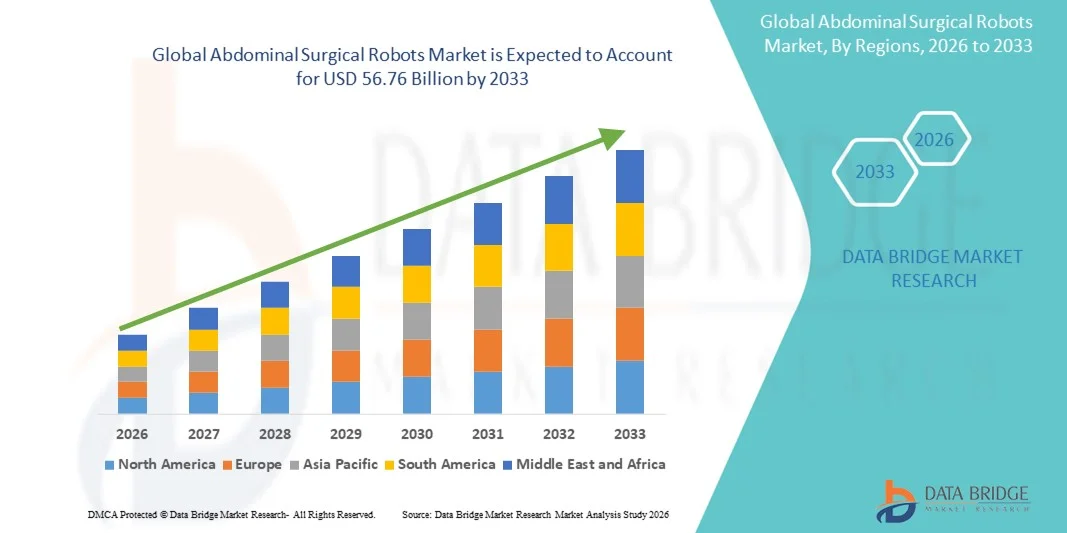
- The global abdominal surgical robots market size was valued at USD 12.71 billion in 2025 and is expected to reach USD 56.76 billion by 2033, at a CAGR of 20.57% during the forecast period
- The market growth is largely fueled by the increasing adoption of minimally invasive surgeries, rising prevalence of abdominal disorders, and growing demand for precision surgical interventions in hospitals and specialty surgical centers
- Furthermore, technological advancements in robotic-assisted surgical systems, including enhanced visualization, improved dexterity, and integration with AI-driven surgical planning tools, are accelerating the uptake of abdominal surgical robots, thereby significantly boosting the overall growth of the Abdominal Surgical Robots market
Abdominal Surgical Robots Market Analysis
- Abdominal surgical robots, advanced robotic-assisted systems used in minimally invasive abdominal procedures such as colorectal, bariatric, and gastrointestinal surgeries, are increasingly critical in hospitals and specialty surgical centers due to their precision, enhanced dexterity, and improved patient outcomes
- The rising demand for abdominal surgical robots is primarily driven by the growing prevalence of abdominal disorders, increasing surgical volumes, and the adoption of minimally invasive and robotic-assisted techniques that reduce complications and recovery times
- North America dominated the Abdominal Surgical Robots market, accounting for approximately 43.2% of the global revenue share in 2025, supported by high adoption of advanced surgical technologies, well-established healthcare infrastructure, significant investments in robotic surgery, and the presence of key industry players, particularly in the U.S.
- Asia-Pacific is expected to be the fastest-growing region in the Abdominal Surgical Robots market during the forecast period, with an estimated CAGR of 9.3%, driven by increasing healthcare investments, rising awareness of robotic-assisted surgeries, expanding hospital infrastructure, and growing surgical volumes in emerging economies
- The general surgery segment dominated the largest market revenue share of 42.8% in 2025, owing to the high prevalence of abdominal and gastrointestinal disorders requiring surgical intervention
Report Scope and Abdominal Surgical Robots Market Segmentation
|
Attributes |
Abdominal Surgical Robots Key Market Insights |
|
Segments Covered |
|
|
Countries Covered |
North America
Europe
Asia-Pacific
Middle East and Africa
South America
|
|
Key Market Players |
• Intuitive Surgical, Inc. (U.S.) |
|
Market Opportunities |
|
|
Value Added Data Infosets |
In addition to the insights on market scenarios such as market value, growth rate, segmentation, geographical coverage, and major players, the market reports curated by the Data Bridge Market Research also include in-depth expert analysis, patient epidemiology, pipeline analysis, pricing analysis, and regulatory framework. |
Abdominal Surgical Robots Market Trends
Growing Adoption of Minimally Invasive Robotic Surgeries
- A significant and accelerating trend in the global Abdominal Surgical Robots market is the increasing adoption of robotic-assisted minimally invasive surgeries for abdominal procedures. These systems are enhancing precision, reducing post-operative complications, and improving patient recovery times
- For instance, in 2024, Intuitive Surgical expanded its da Vinci Surgical System portfolio with specialized instruments for abdominal surgeries, allowing surgeons better control in complex procedures
- Robotic-assisted surgeries provide enhanced 3D visualization, tremor reduction, and improved access to challenging anatomical areas compared to conventional laparoscopic techniques
- Integration with real-time imaging and navigation technologies is enabling more accurate intraoperative decisions
- Hospitals and surgical centers are increasingly investing in robotic systems to improve surgical outcomes and efficiency. Surgeons benefit from ergonomic instruments that reduce fatigue during long procedures
- Patient preference for minimally invasive procedures is driving adoption, particularly in developed regions
- Government and private hospital initiatives promoting advanced surgical technologies further accelerate growth
- Training programs and workshops for surgeons are increasing awareness and confidence in robotic abdominal surgeries
- Technological advancements, including improved robotic arms and instrumentation, are continuously enhancing procedural accuracy and safety
- The market is also witnessing an expansion of multi-disciplinary applications for gastrointestinal, bariatric, and hepatobiliary surgeries
- Overall, these factors are propelling the adoption of abdominal surgical robots globally, positioning them as a key trend in modern surgery
Abdominal Surgical Robots Market Dynamics
Driver
Rising Demand for Precision and Safety in Abdominal Surgeries
- The increasing prevalence of gastrointestinal disorders, obesity-related complications, and complex abdominal conditions is a primary driver of market growth
- For instance, in March 2025, Medtronic launched its Hugo™ robotic-assisted surgery system designed for gastrointestinal and bariatric procedures, expanding clinical adoption
- Hospitals and surgical centers are investing in robotic platforms to enhance surgical precision and reduce intraoperative errors
- Expansion of advanced surgical infrastructure in hospitals and ambulatory surgery centers is supporting market growth
- Collaborations between medical device manufacturers and hospitals promote wider adoption of robotic systems. Favorable reimbursement policies and government initiatives supporting minimally invasive surgeries further boost market growth
- Patient awareness and preference for less invasive procedures are influencing healthcare providers to integrate robotic solutions. Ongoing research and clinical trials demonstrate improved outcomes with robotic-assisted abdominal surgeries, increasing confidence among surgeons
- The demand for advanced surgical solutions in emerging regions is also rising, contributing to market expansion. Increased investments in surgical robotics R&D are driving innovations in instruments and imaging integration
- The combination of patient demand, clinical benefits, and healthcare infrastructure growth ensures strong adoption momentum. These factors collectively position robotic-assisted abdominal surgeries as a critical component of modern surgical care
Restraint/Challenge
High Cost and Limited Skilled Workforce
- The high capital investment required for abdominal surgical robots remains a key challenge, limiting adoption in smaller hospitals and clinics
- For instance, acquiring a full robotic surgery setup can cost several million dollars, including instruments, maintenance, and training
- Limited availability of trained and experienced surgeons creates barriers to broader adoption. Integration of robotic systems into existing surgical workflows can be complex and time-consuming
- Initial learning curves for surgeons may impact operational efficiency in the early stages of adoption
- Maintenance and recurring instrument replacement costs add to operational expenses, particularly in emerging markets
- Hospitals may hesitate to adopt robotic systems despite long-term clinical benefits due to upfront costs
- Regulatory challenges and approval processes in some countries may slow market penetration
- While technology is advancing, high costs and training requirements remain critical obstacles
- Cost-effective financing, surgeon training programs, and gradual adoption strategies are essential to overcome these challenges
- Increased focus on scalable robotic platforms and reusable instruments could mitigate cost concerns
- Addressing these barriers is vital for sustained growth and broader acceptance of abdominal surgical robots worldwide
Abdominal Surgical Robots Market Scope
The market is segmented on the basis of application and end user.
- By Application
On the basis of application, the Abdominal Surgical Robots market is segmented into general surgery, gynaecology, urology, and others. The general surgery segment dominated the largest market revenue share of 42.8% in 2025, owing to the high prevalence of abdominal and gastrointestinal disorders requiring surgical intervention. The segment’s growth is supported by increasing adoption of minimally invasive robotic-assisted procedures in hospitals and specialty surgical centers. Surgeons prefer robotic systems for procedures such as colorectal resections, bariatric surgeries, and complex hernia repairs due to enhanced precision, reduced blood loss, and shorter patient recovery times. Technological advancements in multi-arm robotic platforms, integration with AI-assisted surgical planning, and improvements in surgical instruments further strengthen adoption. The segment also benefits from strong reimbursement policies in North America and Europe, large procedure volumes, and rising patient awareness about minimally invasive options. Moreover, increasing collaborations between hospitals and surgical robotics manufacturers are driving the deployment of advanced robotic systems for general surgery.
The gynaecology segment is expected to witness the fastest CAGR of 9.6% from 2026 to 2033, driven by rising demand for robotic-assisted hysterectomies, myomectomies, and endometriosis procedures. Growing awareness among gynecologists regarding robotic precision and minimally invasive approaches is fueling adoption. Hospitals are investing in robotic systems to reduce surgical complications and enhance patient outcomes. Emerging economies are witnessing a surge in robotic gynecological procedures due to increasing hospital infrastructure and government healthcare initiatives. Patients’ preference for minimally invasive surgery with faster recovery, reduced pain, and fewer complications further propels demand. Continuous innovations in robotic instrumentation and image-guided surgery techniques improve the versatility of robotic systems in gynecology, encouraging wider adoption. The segment also benefits from training programs for gynecologic surgeons, collaborations between robotic manufacturers and medical institutes, and rising healthcare expenditure globally.
- By End User
On the basis of end user, the Abdominal Surgical Robots market is segmented into hospitals, research centres, and others. The hospitals segment dominated the market with a revenue share of 45.3% in 2025, driven by the large volume of abdominal surgeries and advanced infrastructure in hospitals across North America and Europe. Hospitals adopt robotic-assisted systems to improve surgical outcomes, enhance precision, reduce operative times, and minimize postoperative complications. High patient inflow for abdominal procedures, availability of trained robotic surgeons, and government incentives for robotic technology adoption contribute to dominance. The segment also benefits from widespread reimbursement coverage for robotic-assisted surgeries and partnerships between hospitals and leading robotic technology manufacturers. Hospitals continue to invest in upgrading surgical infrastructure with next-generation robotic systems, supporting continuous market expansion. Rising awareness about minimally invasive procedures and improved patient safety further solidifies hospitals as the primary end-user segment.
The research centres segment is expected to witness the fastest CAGR of 10.2% from 2026 to 2033, driven by growing investments in surgical robotics R&D, preclinical trials, and development of next-generation robotic platforms. Increasing collaborations between universities, research institutions, and medical device companies are accelerating innovation in robotic-assisted abdominal surgeries. Research centres are adopting advanced robotic systems for testing novel surgical techniques, optimizing workflows, and training surgeons, which fuels demand. Additionally, rising funding for robotics research, government grants for surgical innovation, and expansion of specialized research facilities in emerging markets contribute to the segment’s rapid growth. The growing focus on AI integration, simulation-based training, and development of more compact and versatile robotic systems further supports adoption in research centres. Increasing emphasis on clinical validation studies and translational research in minimally invasive surgery also drives demand.
Abdominal Surgical Robots Market Regional Analysis
- North America dominated the abdominal surgical robots market, accounting for approximately 43.2% of the global revenue share in 2025
- Supported by high adoption of advanced surgical technologies, well-established healthcare infrastructure, significant investments in robotic surgery, and the presence of key industry players, particularly in the U.S.
- The region benefits from a growing number of hospitals and specialty centers integrating robotic systems for abdominal and minimally invasive surgeries
U.S. Abdominal Surgical Robots Market Insight
The U.S. abdominal surgical robots market captured the largest share within North America in 2025, driven by increased demand for robotic-assisted surgeries, rising prevalence of gastrointestinal and bariatric procedures, and strong reimbursement frameworks. Leading medical device manufacturers continue to innovate, providing advanced robotic platforms that enhance surgical precision and reduce recovery times.
Europe Abdominal Surgical Robots Market Insight
The Europe abdominal surgical robots market is projected to grow at a substantial CAGR during the forecast period, driven by increasing adoption of minimally invasive surgical techniques, rising awareness of robotic-assisted procedures, and supportive government healthcare initiatives. Countries such as Germany, France, and the U.K. are investing in modern surgical infrastructure, contributing to market expansion.
U.K. Abdominal Surgical Robots Market Insight
The U.K. abdominal surgical robots market is anticipated to witness significant growth, supported by high investments in hospital modernization, increasing elective surgical volumes, and adoption of robotic platforms for complex abdominal surgeries. Ongoing clinical studies and collaborations with robotics manufacturers further accelerate market uptake.
Germany Abdominal Surgical Robots Market Insight
The Germany abdominal surgical robots market is expected to expand at a strong CAGR, fueled by well-established healthcare infrastructure, increasing number of robotic-assisted surgery centers, and technological advancements in surgical robotics. German hospitals are actively investing in training programs and robotic systems to enhance surgical outcomes.
Asia-Pacific Abdominal Surgical Robots Market Insight
The Asia-Pacific abdominal surgical robots market is expected to be the fastest-growing region, registering an estimated CAGR of 9.3% during the forecast period. Growth is driven by increasing healthcare investments, rising awareness of robotic-assisted surgeries, expanding hospital infrastructure, and growing surgical volumes in emerging economies such as China, India, and Japan.
Japan Abdominal Surgical Robots Market Insight
The Japan abdominal surgical robots market is gaining momentum due to high adoption of advanced healthcare technologies, aging population requiring complex abdominal procedures, and rising acceptance of robotic-assisted surgeries in both private and public hospitals.
China Abdominal Surgical Robots Market Insight
China abdominal surgical robots market accounted for the largest market revenue share in Asia-Pacific in 2025, driven by expanding hospital infrastructure, increasing middle-class population, rising prevalence of surgical conditions, and government initiatives promoting advanced surgical technologies. The presence of domestic and international robotic system manufacturers supports affordability and accessibility.
Abdominal Surgical Robots Market Share
The Abdominal Surgical Robots industry is primarily led by well-established companies, including:
• Intuitive Surgical, Inc. (U.S.)
• Medtronic (Ireland)
• Stryker Corporation (U.S.)
• Zimmer Biomet Holdings, Inc. (U.S.)
• Johnson & Johnson (Ethicon) (U.S.)
• TransEnterix, Inc. (U.S.)
• CMR Surgical Ltd. (U.K.)
• Verb Surgical Inc. (U.S.)
• THINK Surgical, Inc. (U.S.)
• Titan Medical Inc. (Canada)
• Renishaw plc (U.K.)
• Asensus Surgical, Inc. (U.S.)
• Hansen Medical, Inc. (U.S.)
• Auris Health, Inc. (U.S.)
• Medrobotics Corporation (U.S.)
• Verb Surgical Inc. (U.S.)
Latest Developments in Global Abdominal Surgical Robots Market
- In September 2024, Intuitive Surgical announced the launch of its da Vinci 5 surgical system, featuring enhanced 3D visualization, improved instrument articulation, and integrated artificial intelligence capabilities for real‑time surgical guidance — marking a significant advancement in robotic surgery technology
- In April 2025, CMR Surgical completed a $200 million financing round to commercialize and expand its Versius soft‑tissue robotic surgical system, aimed at increasing global deployment and accelerating adoption particularly in abdominal and general surgery
- In March 2025, Intuitive Surgical announced a collaboration with a major U.S. health system to expand abdominal robotic surgery programs across multiple sites, strengthening clinical integration and broader use of robotic platforms for complex abdominal procedures
- In April 2025, Medtronic secured a strategic contract with a national health service to deploy its Hugo robotic‑assisted surgery platform for abdominal surgery applications, underscoring expansion of competing robotic platforms in major healthcare systems
- In February 2025, SS Innovations International introduced the SSI MantraM Tele Sync Mobile Unit at a global robotic surgery conference in India, a novel mobile surgical platform integrating robotic systems with high‑speed connectivity to enable remote guidance of procedures — advancing access in emerging markets

- Interactive Data Analysis Dashboard
- Company Analysis Dashboard for high growth potential opportunities
- Research Analyst Access for customization & queries
- Competitor Analysis with Interactive dashboard
- Latest News, Updates & Trend analysis
- Harness the Power of Benchmark Analysis for Comprehensive Competitor Tracking
Data collection and base year analysis are done using data collection modules with large sample sizes. The stage includes obtaining market information or related data through various sources and strategies. It includes examining and planning all the data acquired from the past in advance. It likewise envelops the examination of information inconsistencies seen across different information sources. The market data is analysed and estimated using market statistical and coherent models. Also, market share analysis and key trend analysis are the major success factors in the market report. To know more, please request an analyst call or drop down your inquiry.
The key research methodology used by DBMR research team is data triangulation which involves data mining, analysis of the impact of data variables on the market and primary (industry expert) validation. Data models include Vendor Positioning Grid, Market Time Line Analysis, Market Overview and Guide, Company Positioning Grid, Patent Analysis, Pricing Analysis, Company Market Share Analysis, Standards of Measurement, Global versus Regional and Vendor Share Analysis. To know more about the research methodology, drop in an inquiry to speak to our industry experts.
Data Bridge Market Research is a leader in advanced formative research. We take pride in servicing our existing and new customers with data and analysis that match and suits their goal. The report can be customized to include price trend analysis of target brands understanding the market for additional countries (ask for the list of countries), clinical trial results data, literature review, refurbished market and product base analysis. Market analysis of target competitors can be analyzed from technology-based analysis to market portfolio strategies. We can add as many competitors that you require data about in the format and data style you are looking for. Our team of analysts can also provide you data in crude raw excel files pivot tables (Fact book) or can assist you in creating presentations from the data sets available in the report.













