


Abetalipoproteinemia Treatment Market Size
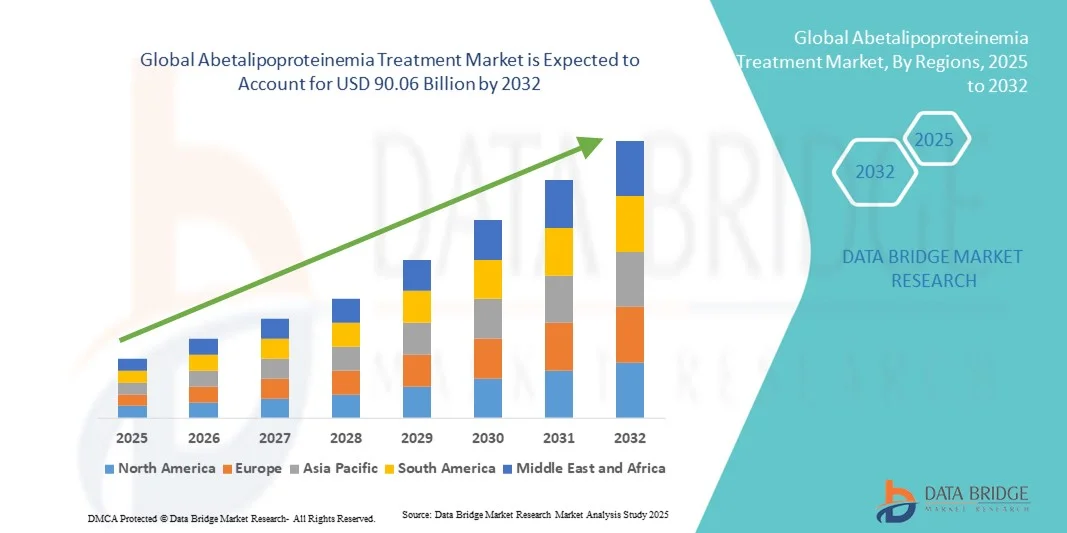
- The global abetalipoproteinemia treatment market size was valued at USD 50.5 billion in 2024 and is expected to reach USD 90.06 billion by 2032, at a CAGR of 7.50% during the forecast period
- The market growth is largely fueled by the rising prevalence of rare genetic disorders, advancements in genomic research, and increasing awareness about lipid metabolism disorders, which are driving the demand for effective diagnosis and treatment of Abetalipoproteinemia
- Furthermore, growing investments in rare disease research, development of novel therapeutic approaches such as gene therapy and lipid supplementation, and supportive government initiatives for orphan drug development are accelerating the adoption of Abetalipoproteinemia Treatment solutions, thereby significantly boosting the industry's growth
Abetalipoproteinemia Treatment Market Analysis
- Abetalipoproteinemia Treatment, addressing a rare inherited lipid metabolism disorder, is becoming increasingly vital in the healthcare sector due to the rising need for early diagnosis, nutritional management, and advanced therapeutic interventions. The condition requires lifelong management, making treatment solutions essential for improving patient outcomes and quality of life
- The escalating demand for abetalipoproteinemia treatment is primarily fueled by growing awareness of rare metabolic diseases, advancements in genetic testing, and the increasing availability of targeted therapies and dietary supplements
- North America dominated the abetalipoproteinemia treatment market with the largest revenue share of 38.9% in 2024, driven by high healthcare expenditure, a strong presence of key biopharmaceutical players, and increasing adoption of innovative treatment modalities such as gene therapy and precision nutrition. The U.S. experienced substantial growth in Abetalipoproteinemia Treatment, supported by advanced healthcare infrastructure, ongoing clinical research, and favorable reimbursement policies for rare disease treatments
- Asia-Pacific is expected to be the fastest-growing region in the abetalipoproteinemia treatment market during the forecast period, projected to expand at a CAGR of 9.8%, owing to growing healthcare awareness, improvements in diagnostic capabilities, and increasing investment in rare disease research across countries such as China, Japan, and India
- The fat-soluble vitamins supplementation segment dominated the largest market revenue share of 71.4% in 2024, driven by the established clinical effectiveness of high-dose vitamin therapy, particularly vitamins A, D, E, and K, in managing neurological and ophthalmic symptoms associated with the condition
Report Scope and Abetalipoproteinemia Treatment Market Segmentation
|
Attributes |
Abetalipoproteinemia Treatment Key Market Insights |
|
Segments Covered |
• By Diagnosis: Molecular Genetic Testing and Blood Testing |
|
Countries Covered |
North America
Europe
Asia-Pacific
Middle East and Africa
South America
|
|
Key Market Players |
|
|
Market Opportunities |
|
|
Value Added Data Infosets |
In addition to the insights on market scenarios such as market value, growth rate, segmentation, geographical coverage, and major players, the market reports curated by the Data Bridge Market Research also include in-depth expert analysis, patient epidemiology, pipeline analysis, pricing analysis, and regulatory framework. |
Abetalipoproteinemia Treatment Market Trends
Rising Diagnosis Rates and Genetic Testing Awareness
- A key factor driving growth in the global abetalipoproteinemia treatment market is the increasing awareness and early diagnosis of rare lipid metabolism disorders through advanced genetic screening and newborn testing programs. The growing inclusion of lipid transport abnormalities in genetic panels has improved detection rates, enabling earlier clinical intervention and patient management
- For instance, in May 2024, the National Institutes of Health (NIH) in the U.S. supported a collaborative study emphasizing next-generation sequencing (NGS) panels for identifying microsomal triglyceride transfer protein (MTP) gene mutations responsible for abetalipoproteinemia, marking a major step toward improved diagnostic precision
- Simultaneously, patient advocacy organizations have intensified campaigns to educate clinicians and families about early neurological and gastrointestinal symptoms linked to abetalipoproteinemia, contributing to more frequent referrals for specialist evaluation
- The expansion of specialized lipid and metabolic disease clinics across North America and Europe has facilitated multidisciplinary management, leading to increased prescription of vitamin replacement therapies and dietary lipid formulations
- Enhanced awareness of the neurological and ophthalmological complications associated with untreated disease has prompted earlier nutritional intervention and continuous monitoring, thereby boosting market demand for supportive treatments and diagnostic testing services
- The convergence of enhanced genetic testing, awareness initiatives, and improved clinical management is creating a sustainable rise in patient identification rates, driving consistent growth within the abetalipoproteinemia treatment market
Abetalipoproteinemia Treatment Market Dynamics
Driver
Technological Advancements in Nutritional and Gene-Based Therapies
- A major driver accelerating the abetalipoproteinemia treatment market is the advancement in therapeutic strategies, particularly high-dose fat-soluble vitamin formulations, specialized lipid emulsions, and gene therapy research targeting the MTP gene
- Biopharmaceutical firms are developing next-generation nutritional supplements and lipid formulations designed to enhance absorption and reduce gastrointestinal intolerance commonly associated with conventional therapy
- For instance, in February 2024, Ultragenyx Pharmaceutical announced progress in preclinical studies for an adeno-associated viral (AAV) vector-based gene therapy candidate aimed at restoring functional MTP expression in abetalipoproteinemia models, signaling a potential disease-modifying breakthrough
- Meanwhile, nutrition-focused companies are investing in novel formulations of vitamins A, E, and K to optimize bioavailability, reduce dosing frequency, and minimize toxicity risk for long-term management
- Medical device firms are also innovating enteral nutrition systems tailored to the fat absorption limitations of these patients, facilitating more consistent nutritional delivery and patient adherence
- Together, these advancements are reshaping the therapeutic landscape—transitioning from symptomatic management toward precision-based and potentially curative strategies that enhance both survival and quality of life for affected individuals
Restraint/Challenge
Limited Treatment Accessibility, High Costs, and Lack of Disease Awareness
- Despite notable progress, the abetalipoproteinemia treatment market faces critical challenges, including the limited availability of specialized care centers and high costs associated with chronic management. The disease’s rarity often leads to misdiagnosis or delayed recognition, particularly in developing regions with limited access to advanced genetic testing and lipid diagnostics
- Treatment requires lifelong supplementation with high-dose vitamins and strict dietary regimens, which can impose substantial financial and adherence burdens on patients and caregivers. The cost of genetic testing, nutritional formulations, and ongoing clinical monitoring further limits widespread access
- Moreover, the lack of targeted pharmacological therapies beyond nutritional supplementation restricts treatment diversity, and the small patient population discourages large-scale R&D investment from major pharmaceutical firms
- In many countries, reimbursement for orphan diseases remains inconsistent, making essential therapies unaffordable for several families and limiting adoption rates of innovative interventions
- These combined factors—low disease awareness, economic barriers, and limited therapeutic diversity—create a challenging environment that restrains the full market potential, underscoring the need for expanded research funding, equitable access programs, and stronger global awareness efforts for abetalipoproteinemia
Abetalipoproteinemia Treatment Market Scope
The market is segmented on the basis of diagnosis, treatment, and end-user.
- By Diagnosis
On the basis of diagnosis, the Abetalipoproteinemia Treatment market is segmented into molecular genetic testing and blood testing. The molecular genetic testing segment dominated the market in 2024, accounting for a revenue share of 63.5%, owing to its accuracy in confirming mutations in the MTTP gene, which is the primary cause of Abetalipoproteinemia. The growing adoption of next-generation sequencing (NGS) and polymerase chain reaction (PCR)-based tests in genetic laboratories has accelerated diagnostic precision and early intervention rates. Moreover, government-backed initiatives promoting rare disease registries and genetic counseling programs have strengthened the demand for molecular-level testing. Advancements in genomic analysis platforms and increased access to specialized testing centers are further reinforcing the market’s dominance in this segment, allowing for better disease characterization and family risk assessment in hereditary lipid disorders.
The blood testing segment is anticipated to witness the fastest growth rate of 19.2% CAGR from 2025 to 2032. This growth is driven by the rising accessibility of lipid profiling and vitamin E deficiency testing as preliminary screening tools in both developed and emerging economies. Many clinicians prefer blood testing as a cost-effective, first-line diagnostic approach to identify abnormal lipid absorption patterns before referring for genetic confirmation. The increasing integration of point-of-care analyzers and improved awareness among healthcare providers regarding rare lipid metabolism disorders further support the segment’s expansion. In addition, advances in diagnostic automation and the inclusion of blood tests in newborn screening programs across several countries are expected to enhance early detection rates, fueling this segment’s rapid growth trajectory.
- By Treatment
On the basis of treatment, the Abetalipoproteinemia Treatment market is segmented into fat-soluble vitamins supplementation and others. The fat-soluble vitamins supplementation segment dominated the largest market revenue share of 71.4% in 2024, driven by the established clinical effectiveness of high-dose vitamin therapy, particularly vitamins A, D, E, and K, in managing neurological and ophthalmic symptoms associated with the condition. The increasing availability of specialized formulations and improved patient adherence programs offered by hospitals and pharmaceutical providers have also contributed to this dominance. Moreover, ongoing clinical trials exploring the synergistic use of antioxidants and fatty acid supplements are expanding the therapeutic landscape, thereby enhancing long-term patient outcomes and reducing complication risks.
The others segment, which includes experimental therapies such as gene therapy and lipid replacement strategies, is expected to witness the fastest growth rate of 23.5% CAGR from 2025 to 2032. The strong growth is primarily attributed to the increasing research focus on molecular-level interventions aimed at correcting MTTP gene mutations and restoring normal lipid transport mechanisms. Several biotechnology firms and academic institutions are investing in preclinical models to evaluate novel small molecules and gene-editing approaches for sustainable treatment outcomes. In addition, collaborations between rare disease research organizations and biopharmaceutical companies are expected to accelerate innovation, making this segment a critical driver of future market expansion.
- By End User
On the basis of end-user, the Abetalipoproteinemia Treatment market is segmented into hospitals & clinics, diagnostic labs, and others. The hospitals & clinics segment accounted for the largest market revenue share of 58.9% in 2024, owing to their role as primary centers for diagnosis, long-term treatment management, and multidisciplinary care for rare metabolic disorders. The presence of specialized gastroenterology and genetic counseling departments within hospitals ensures comprehensive care for Abetalipoproteinemia patients. Furthermore, the growing number of hospital-based genetic testing programs, integration of electronic health records for tracking vitamin therapy progress, and availability of in-house laboratories for monitoring blood lipid parameters collectively reinforce the segment’s leading position.
The diagnostic labs segment is expected to witness the fastest growth rate of 20.6% CAGR from 2025 to 2032, driven by rising demand for early and accurate diagnosis of rare diseases. Increasing collaborations between diagnostic laboratories and pharmaceutical companies are fostering test standardization and wider accessibility to genetic screening for Abetalipoproteinemia. The rise of standalone molecular laboratories equipped with advanced bioinformatics tools and automation technologies has reduced turnaround time and improved precision, encouraging more physicians to refer patients directly to such facilities. In addition, the expansion of private diagnostic networks in Asia-Pacific and the Middle East is expected to further contribute to this segment’s rapid growth over the forecast period.
Abetalipoproteinemia Treatment Market Regional Analysis
- North America dominated the abetalipoproteinemia treatment market with the largest revenue share of 38.9% in 2024
- Driven by high healthcare expenditure, a strong presence of key biopharmaceutical players, and the growing adoption of innovative treatment modalities such as gene therapy and precision nutrition
- The market continues to lead regional growth, supported by advanced healthcare infrastructure, ongoing clinical research, and favorable reimbursement frameworks for rare disease therapies
U.S. Abetalipoproteinemia Treatment Market Insight
The U.S. abetalipoproteinemia treatment market captured the largest revenue share in 2024 within North America, fueled by increased awareness of rare genetic disorders, growing access to molecular diagnostic testing, and continuous advancements in treatment options. Robust research and development initiatives, along with strong support from the U.S. Food and Drug Administration (FDA) for orphan drug designations, are driving innovation in this space. Furthermore, the presence of leading pharmaceutical companies and active clinical trials exploring new vitamin supplementation strategies and gene therapies contribute significantly to the U.S. market’s dominance.
Europe Abetalipoproteinemia Treatment Market Insight
The Europe abetalipoproteinemia treatment market is projected to expand at a notable CAGR throughout the forecast period, primarily driven by advancements in rare disease management, increasing patient screening initiatives, and supportive healthcare reimbursement systems. Countries such as Germany, the U.K., and France are making notable progress in improving access to specialized treatments through national rare disease frameworks and expanded diagnostic capabilities.
U.K. Abetalipoproteinemia Treatment Market Insight
The U.K. abetalipoproteinemia treatment market is expected to grow steadily during the forecast period, supported by increasing public health initiatives focused on early diagnosis of inherited metabolic disorders and expanding access to clinical nutrition therapies. The presence of well-established rare disease networks and collaboration between the National Health Service (NHS) and research institutions is further enhancing treatment accessibility and patient outcomes.
Germany Abetalipoproteinemia Treatment Market Insight
The Germany abetalipoproteinemia treatment market is anticipated to grow at a considerable CAGR during the forecast period due to its advanced biotechnology ecosystem, strong clinical research base, and high awareness among healthcare professionals. Ongoing developments in molecular diagnostics and partnerships between pharmaceutical companies and academic institutions are accelerating the discovery of novel therapeutic pathways for lipid metabolism disorders.
Asia-Pacific Abetalipoproteinemia Treatment Market Insight
The Asia-Pacific region abetalipoproteinemia treatment market is expected to witness the fastest growth, projected at a CAGR of 9.8% from 2025 to 2032. This growth is driven by rising healthcare awareness, improving diagnostic infrastructure, and increased government funding for rare disease research. Countries such as China, Japan, and India are making substantial progress through initiatives supporting genetic testing and access to essential vitamin supplements, making treatments more affordable and accessible to a broader patient base.
Japan Abetalipoproteinemia Treatment Market Insight
The Japan abetalipoproteinemia treatment market is gaining traction owing to advanced research in genetic and metabolic disorders, strong government support for orphan drug development, and high adoption of precision medicine. The integration of next-generation sequencing technologies in diagnostic centers is further strengthening Japan’s role as a key player in rare disease management.
China Abetalipoproteinemia Treatment Market Insight
The China abetalipoproteinemia treatment market accounted for the largest revenue share within Asia-Pacific in 2024, driven by an expanding patient pool, rapid advancements in diagnostic technologies, and increasing healthcare investment. China’s growing focus on genomics and personalized medicine, along with collaborations between domestic biotech firms and global pharmaceutical companies, is enhancing the country’s capacity for early detection and treatment of abetalipoproteinemia.
Abetalipoproteinemia Treatment Market Share
The Abetalipoproteinemia Treatment industry is primarily led by well-established companies, including:
- Pfizer Inc. (U.S.)
- Merck & Co., Inc. (U.S.)
- BASF SE (Germany)
- F. Hoffmann-La Roche Ltd (Switzerland)
- Takeda Pharmaceutical Company Limited (Japan)
- Abbott (U.S.)
- Novartis AG (Switzerland)
- Sanofi (France)
- AstraZeneca plc (U.K.)
- Johnson & Johnson and its affiliates (U.S.)
Latest Developments in Global Abetalipoproteinemia Treatment Market
- In July 2021, Takahashi et al. published a comprehensive review titled “Current Diagnosis and Management of Abetalipoproteinemia”, which provided updated diagnostic standards emphasizing the critical role of MTTP gene testing and high-dose fat-soluble vitamin supplementation. This work unified global clinical guidance, improving diagnostic accuracy and influencing treatment approaches across hospitals and laboratories
- In October 2023, the APHL/ISNS Newborn Screening Symposium presented findings on incorporating genomic sequencing into expanded newborn screening programs. These discussions highlighted the feasibility of early detection for metabolic and lipid disorders, including abetalipoproteinemia, supporting the concept of initiating vitamin therapy during infancy for better outcomes
- In October 2024, the U.S. Food and Drug Administration (FDA) expanded its Orphan Products Grants Program to encourage the development of therapies for ultra-rare diseases such as abetalipoproteinemia. This initiative provided new funding opportunities for academic and biotech researchers focused on gene-targeted and nutritional therapeutic innovations, potentially accelerating translational progress
- In June 2024, Sasaki and colleagues identified a novel compound heterozygous MTTP mutation that broadened the known genetic spectrum of the disease. The discovery underscored the importance of next-generation sequencing (NGS) panels for rare lipid disorders and has influenced testing protocols for atypical or late-onset cases worldwide

- Interactive Data Analysis Dashboard
- Company Analysis Dashboard for high growth potential opportunities
- Research Analyst Access for customization & queries
- Competitor Analysis with Interactive dashboard
- Latest News, Updates & Trend analysis
- Harness the Power of Benchmark Analysis for Comprehensive Competitor Tracking
Data collection and base year analysis are done using data collection modules with large sample sizes. The stage includes obtaining market information or related data through various sources and strategies. It includes examining and planning all the data acquired from the past in advance. It likewise envelops the examination of information inconsistencies seen across different information sources. The market data is analysed and estimated using market statistical and coherent models. Also, market share analysis and key trend analysis are the major success factors in the market report. To know more, please request an analyst call or drop down your inquiry.
The key research methodology used by DBMR research team is data triangulation which involves data mining, analysis of the impact of data variables on the market and primary (industry expert) validation. Data models include Vendor Positioning Grid, Market Time Line Analysis, Market Overview and Guide, Company Positioning Grid, Patent Analysis, Pricing Analysis, Company Market Share Analysis, Standards of Measurement, Global versus Regional and Vendor Share Analysis. To know more about the research methodology, drop in an inquiry to speak to our industry experts.
Data Bridge Market Research is a leader in advanced formative research. We take pride in servicing our existing and new customers with data and analysis that match and suits their goal. The report can be customized to include price trend analysis of target brands understanding the market for additional countries (ask for the list of countries), clinical trial results data, literature review, refurbished market and product base analysis. Market analysis of target competitors can be analyzed from technology-based analysis to market portfolio strategies. We can add as many competitors that you require data about in the format and data style you are looking for. Our team of analysts can also provide you data in crude raw excel files pivot tables (Fact book) or can assist you in creating presentations from the data sets available in the report.












