


Acanthamoeba Keratitis Treatment Market Size
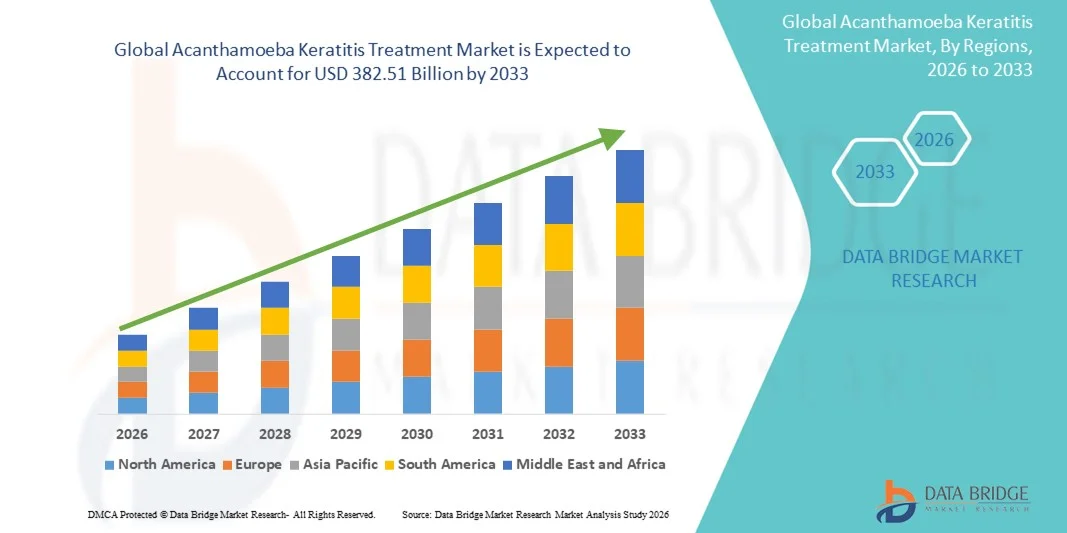
- The global acanthamoeba keratitis treatment market size was valued at USD 245.50 billion in 2025 and is expected to reach USD 382.51 billion by 2033, at a CAGR of 5.70% during the forecast period
- The market growth is largely fueled by increasing awareness of rare but serious corneal infections, along with advancements in diagnostic capabilities and treatment protocols for Acanthamoeba keratitis in both developed and developing healthcare systems
- Furthermore, rising incidences linked to improper contact lens hygiene, growing use of contact lenses globally, and improved access to specialized ophthalmic care are establishing advanced therapeutic interventions as the preferred standard of care. These converging factors are accelerating the uptake of Acanthamoeba Keratitis Treatment solutions, thereby significantly boosting the industry’s overall growth
Acanthamoeba Keratitis Treatment Market Analysis
- Acanthamoeba Keratitis Treatment, which includes anti-amoebic eye drops, combination drug therapy, and supportive care, is becoming an increasingly important segment in ophthalmology due to the rising incidence of severe corneal infections linked to contact lens misuse and exposure to contaminated water
- The escalating demand for acanthamoeba keratitis treatment is primarily driven by increasing contact-lens usage worldwide, growing awareness among ophthalmologists about early diagnosis, and continuous improvements in laboratory testing and imaging technologies such as confocal microscopy
- North America dominated the acanthamoeba keratitis treatment market with the largest revenue share of approximately 44.45% in 2025, characterized by strong healthcare infrastructure, high awareness of rare corneal infections, and the presence of leading pharmaceutical and ophthalmic device companies, with the U.S. contributing the majority of this share due to better access to advanced therapies and proactive treatment approaches
- Asia-Pacific is expected to be the fastest-growing region in the acanthamoeba keratitis treatment market during the forecast period (2026–2033), registering a CAGR of around 23–25%, driven by increasing prevalence of eye infections, rising healthcare spending, expanding access to ophthalmic care, and improved awareness regarding proper contact lens hygiene in densely populated countries such as India, China, and Japan
- The Topical segment held the largest revenue share of 52.4% in 2025, due to its targeted delivery, reduced systemic side effects, and high patient compliance
Report Scope and Acanthamoeba Keratitis Treatment Market Segmentation
|
Attributes |
Acanthamoeba Keratitis Treatment Key Market Insights |
|
Segments Covered |
|
|
Countries Covered |
North America
Europe
Asia-Pacific
Middle East and Africa
South America
|
|
Key Market Players |
|
|
Market Opportunities |
|
|
Value Added Data Infosets |
In addition to the insights on market scenarios such as market value, growth rate, segmentation, geographical coverage, and major players, the market reports curated by the Data Bridge Market Research also include in-depth expert analysis, patient epidemiology, pipeline analysis, pricing analysis, and regulatory framework. |
Acanthamoeba Keratitis Treatment Market Trends
Advancements in Diagnostic Precision and Targeted Therapeutic Approaches
- A significant and accelerating trend in the global Acanthamoeba Keratitis Treatment market is the increasing focus on early, accurate diagnosis combined with enhanced, targeted therapeutic regimens. Continuous improvements in ophthalmic diagnostic tools, including confocal microscopy and advanced PCR techniques, are enabling faster identification of Acanthamoeba infections, which is critical for improving treatment outcomes and preventing vision-threatening complications
- For instance, specialized ophthalmology centers are increasingly using high-resolution corneal imaging and rapid molecular testing methods to detect Acanthamoeba in its early stages, reducing the likelihood of misdiagnosis as fungal or bacterial keratitis. This improved diagnostic accuracy supports more effective and timely initiation of anti-amoebic treatment protocols
- The integration of combination drug therapies, including antiseptic agents such as polyhexamethylene biguanide (PHMB) and chlorhexidine, along with adjunct antifungal medications, is significantly improving patient recovery rates. These combination regimens are being optimized based on clinical research to maximize efficacy while reducing toxicity to corneal tissues
- The development of newer formulations, improved drug delivery systems such as sustained-release ocular inserts, and enhanced penetration capabilities are strengthening treatment effectiveness. These advancements support better drug absorption in the corneal stroma, where Acanthamoeba cysts often reside, resulting in improved eradication outcomes
- Growing collaboration between ophthalmologists, research institutions, and pharmaceutical companies is accelerating clinical studies focused on innovative therapies. These joint efforts are encouraging the development of advanced treatment protocols, including photodynamic therapy and advanced antimicrobial combinations
- This trend towards more precise, effective, and patient-centric treatment strategies is reshaping the care pathway for Acanthamoeba Keratitis. Consequently, companies and research institutions are investing heavily in product development, clinical trials, and improved accessibility of specialized treatments through hospitals and ophthalmology clinics
- The demand for faster, more reliable, and less invasive treatment options is steadily increasing across both developed and developing regions, particularly as awareness regarding contact lens hygiene and corneal infections continues to rise globally
Acanthamoeba Keratitis Treatment Market Dynamics
Driver
Increasing Incidence of Corneal Infections and Rising Contact Lens Usage
- The increasing prevalence of corneal infections, particularly among contact lens users, is a major driver contributing to the heightened demand for effective Acanthamoeba Keratitis treatments. Poor lens hygiene, extended wear, and exposure to contaminated water sources are among the key contributory factors accelerating infection cases globally
- For instance, rising urbanization, lifestyle changes, and higher adoption of cosmetic and corrective contact lenses have significantly expanded the risk pool, especially among younger populations and working professionals. This has led to a greater number of diagnosed cases and increased reliance on specialized anti-amoebic therapies
- As awareness about the severe consequences of untreated Acanthamoeba Keratitis grows, patients are more likely to seek early medical intervention. This has resulted in increased visits to ophthalmology clinics and eye care centers, fueling demand for diagnostic services and treatment products
- In addition, the growing availability of specialized ophthalmic centers and advanced treatment facilities worldwide is making appropriate therapies more accessible. Government and private healthcare initiatives aimed at preventing vision impairment are also contributing to improved treatment adoption
- Advancements in pharmacological research and increasing approval of improved antiseptic and antimicrobial formulations are further strengthening the market. These innovations provide clinicians with more reliable and standardized treatment options, promoting confidence in therapeutic outcomes
- The rising focus on eye health education, hygiene practices, and early symptom recognition among contact lens users is also playing a vital role in driving sustained market growth
Restraint/Challenge
Delayed Diagnosis, Treatment Complexity, and High Cost of Advanced Therapies
- One of the primary challenges in the Acanthamoeba Keratitis Treatment market is delayed or inaccurate diagnosis, as its early symptoms closely resemble those of viral or fungal keratitis. This often leads to improper treatment initiation, allowing the infection to advance and become more difficult to manage
- The complex life cycle of Acanthamoeba, including its highly resistant cyst form, poses another significant hurdle. These cysts are extremely difficult to eliminate, requiring prolonged and intensive treatment regimens that can extend for several months, leading to reduced patient adherence
- For instance, documented clinical cases have shown that Acanthamoeba cysts can survive standard antimicrobial treatment and environmental stressors, requiring extended high-dose therapy to achieve full eradication
- The high cost of advanced diagnostic tools and long-duration therapy presents a barrier for many patients, particularly in low- and middle-income regions. Repeated clinical visits, specialized medications, and potential surgical interventions further increase the financial burden
- In severe or mismanaged cases, patients may require corneal transplantation, significantly increasing overall treatment costs and healthcare system strain. This discourages timely treatment, especially among uninsured or underinsured populations
- Limited awareness among general healthcare providers and patients in certain regions also contributes to delayed treatment and underreporting, negatively impacting market penetration and patient outcomes
- Overcoming these barriers will require wider education programs, improved access to affordable diagnostics, faster referral systems to ophthalmology specialists, and ongoing research focused on developing more effective and cost-efficient treatment solutions. Strengthening early-detection efforts and patient awareness will be essential for sustained market expansion
Acanthamoeba Keratitis Treatment Market Scope
The market is segmented on the basis of treatment, diagnosis, dosage, route of administration, end-users, and distribution channel.
- By Treatment
On the basis of treatment, the Global Acanthamoeba Keratitis Treatment market is segmented into Antibiotic, Antifungal, Antiprotozoal, Topical Steroids, Surgery, Combination Drug Therapy, and Others. The Antiprotozoal segment dominated, accounting for an estimated 41.6% of the market revenue share in 2025, as it directly targets Acanthamoeba organisms and remains the first-line therapy in most clinical protocols. Drugs such as PHMB and chlorhexidine are widely prescribed and form the backbone of treatment regimens. Increasing clinical awareness and improved availability of antiprotozoal eye drops have supported this segment’s dominance. Furthermore, rising numbers of contact lens–related infections globally continue to drive the demand for antiprotozoal agents. Strong physician preference, proven clinical efficacy, and inclusion in standard treatment guidelines have reinforced their widespread adoption. Hospitals and specialty eye clinics particularly rely on this category for early-stage management. Government support for infectious eye disease control and expanding distribution networks in developing regions also contribute to this segment’s leadership.
The Combination Drug Therapy segment is expected to witness the fastest growth, registering a projected CAGR of 14.8% from 2026 to 2033, as severe and resistant cases increasingly require multi-drug approaches. Combination therapy improves treatment outcomes by targeting both trophozoite and cyst forms of the organism. Clinical evidence supporting improved success rates and reduced recurrence risks is encouraging adoption. Ophthalmologists are increasingly opting for dual or triple-drug regimens for advanced infections. The rising focus on personalized treatment protocols and integrated care approaches also contributes to growth. In addition, ongoing research into synergistic drug formulations is expanding therapeutic possibilities. Increased patient survival rates and improved vision retention further boost demand for this segment.
- By Diagnosis
On the basis of diagnosis, the market is segmented into Corneal Scrapping, Confocal Microscopy, Polymerase Chain Reaction (PCR), and Others. The Corneal Scrapping segment dominated the market in 2025 with a 38.9% share, driven by its widespread use as a first-line and accessible diagnostic method. It allows direct sampling of infected tissue and facilitates microscopic examination and culturing. This method is cost-effective and commonly available in ophthalmology centers across both developed and developing regions. Its reliability in confirming parasitic presence makes it a preferred option in routine clinical practice. In addition, its ability to support early-stage detection enhances treatment success. Hospitals favor corneal scraping due to its simplicity and compatibility with other confirmatory techniques. Increased installation of eye care units in emerging markets continues to drive this segment.
The Polymerase Chain Reaction (PCR) segment is anticipated to grow at the fastest CAGR of 15.3% from 2026 to 2033, due to its high sensitivity and rapid detection capability. PCR enables early identification even at low organism counts, significantly improving treatment timelines. Technological advancements in molecular diagnostics are making PCR more affordable and accessible. Increased funding for laboratory infrastructure and growing adoption in tertiary hospitals support strong market expansion. Physicians increasingly prefer PCR in complex or misdiagnosed cases. Rising demand for accurate and fast diagnostic outcomes further boosts this segment’s growth potential.
- By Dosage
On the basis of dosage, the market is segmented into Tablet, Injection, Solution, and Others. The Solution segment dominated with approximately 46.2% market share in 2025, as topical solutions remain the primary and most effective dosage form for treating ocular infections. Eye drop solutions deliver medication directly to the infected area, ensuring rapid absorption and increased efficacy. The availability of multiple solution-based formulations for antiprotozoal and antifungal drugs strengthens this dominance. Moreover, patients find topical solutions convenient and relatively easy to administer, supporting better compliance. Hospitals and home-care settings both rely heavily on this form of treatment. The increased prevalence of outpatient treatment models further strengthens the segment’s position.
The Injection segment is projected to register the fastest CAGR of 13.9% from 2026 to 2033, driven by its application in severe, deep corneal, or advanced-stage infections. Injections offer higher drug concentration in affected tissues, improving treatment effectiveness. They are increasingly used in hospital and surgical settings when topical therapy is insufficient. Rising adoption of aggressive treatment protocols by ophthalmologists is a key growth factor. Technological improvements in ocular injection procedures are also reducing associated risks, enhancing acceptance.
- By Route of Administration
On the basis of route of administration, the market is segmented into Oral, Intravenous, Topical, and Others. The Topical segment held the largest revenue share of 52.4% in 2025, due to its targeted delivery, reduced systemic side effects, and high patient compliance. Eye drops and ointments form the standard mode of therapy for Acanthamoeba Keratitis. The ability to administer the drug directly to the cornea supports faster symptom relief and better outcomes. Widespread clinical preference and frequent prescription strengthen this segment’s leadership. Rising demand for non-invasive treatment options further contributes. Continued innovation in topical drug formulations ensures sustained dominance.
The Intravenous segment is expected to grow at the fastest CAGR of 12.6% from 2026 to 2033, particularly for critically severe or spreading infections. It is increasingly used when topical and oral therapies show insufficient response. Hospitals are expanding their use of IV treatment in complex cases. Improved access to advanced care units and increasing case severity are expected to drive this segment’s growth. The rising prevalence of drug-resistant infections is further pushing the demand for stronger intravenous therapies. In addition, ongoing investments in hospital infrastructure and intensive care facilities are supporting the accelerated adoption of IV treatments.
- By End-Users
On the basis of end-users, the market is segmented into Clinic, Hospital, and Others. The Hospital segment dominated the market, holding nearly 48.7% revenue share in 2025, due to the high volume of diagnosed cases and access to advanced diagnostic and treatment facilities. Hospitals handle severe and complicated cases requiring prolonged care, surgical intervention, and advanced monitoring. The presence of specialized ophthalmology departments further strengthens their role. Rising investments in hospital infrastructure and increasing patient trust in institutional care continue to support dominance.
The Clinic segment is projected to grow at the fastest CAGR of 13.4% between 2026 and 2033, driven by the increasing number of specialized eye care clinics in urban and semi-urban regions. Clinics are offering faster diagnosis, early intervention, and affordable outpatient services. The convenience and growing popularity of private eye care centers are boosting this trend. Clinics also play a key role in follow-up treatment and long-term care management. The availability of skilled specialists and advanced diagnostic tools is further strengthening the reliability of clinic-based care. Increasing patient awareness and preference for localized treatment options are also supporting the steady expansion of this segment.
- By Distribution Channel
On the basis of distribution channel, the market is segmented into Hospital Pharmacy, Retail Pharmacy, and Online Pharmacy. The Hospital Pharmacy segment dominated in 2025 with a 45.1% market share, as most prescribed medications for this condition are dispensed directly during hospital treatment. Strict handling requirements and prescription controls drive reliance on hospital-based pharmacies. The strong integration of pharmacies within hospitals ensures immediate drug availability. Rising hospital admissions for severe keratitis cases also support this channel.
The Online Pharmacy segment is expected to witness the fastest CAGR of 16.2% from 2026 to 2033, driven by increased digital adoption, telemedicine services, and home-based treatment models. Patients increasingly prefer doorstep delivery for long-duration therapies. Growth of e-commerce healthcare platforms and improved regulatory frameworks are further boosting this segment. The expanding use of smartphones and internet penetration in developing regions will significantly contribute to its rapid expansion. In addition, subscription-based medicine delivery services and digital prescription management are further enhancing patient adherence and repeat purchases.
Acanthamoeba Keratitis Treatment Market Regional Analysis
- North America dominated the acanthamoeba keratitis treatment market with the largest revenue share of approximately 44.45% in 2025, characterized by strong healthcare infrastructure, high awareness of rare corneal infections, and the presence of leading pharmaceutical and ophthalmic device companies. The region benefits from early diagnosis, better access to advanced therapies, and strong adoption of specialized ophthalmic treatments
- Consumers and healthcare providers in the region place high importance on early detection, effective antiprotozoal therapies, and advanced diagnostic techniques such as PCR and confocal microscopy, which support better treatment outcomes
- This widespread adoption is further supported by high healthcare spending, strong insurance coverage, a technologically advanced medical ecosystem, and a proactive approach toward eye care and vision preservation, establishing advanced treatment solutions as a preferred option for both hospitals and specialty eye clinics
U.S. Acanthamoeba Keratitis Treatment Market Insight
The U.S. acanthamoeba keratitis treatment market captured the largest revenue share within North America in 2025, contributing the majority of the 44.45% regional share, driven by better access to advanced therapies, early diagnosis, and proactive treatment approaches. Increasing awareness among ophthalmologists, growing collaborations between research institutes and pharmaceutical companies, and the availability of specialized eye care centers are significantly supporting market expansion. The rising use of advanced diagnostic technologies and improved patient compliance with treatment regimens are further contributing to sustained market growth in the country.
Europe Acanthamoeba Keratitis Treatment Market Insight
The Europe acanthamoeba keratitis treatment market is projected to expand at a steady CAGR throughout the forecast period, primarily driven by rising awareness of rare corneal infections and increased focus on early diagnosis and effective management. The presence of well-established healthcare infrastructure, growing investment in ophthalmology research, and the expanding network of specialty eye hospitals are supporting the adoption of advanced treatment options across the region.
U.K. Acanthamoeba Keratitis Treatment Market Insight
The U.K. acanthamoeba keratitis treatment market is anticipated to grow at a noteworthy CAGR during the forecast period, supported by increased awareness among contact lens users, improved access to advanced diagnostic facilities, and growing emphasis on eye health. Public health campaigns promoting proper contact lens hygiene, coupled with strong research activities in ophthalmology, are expected to continue stimulating market growth in the country.
Germany Acanthamoeba Keratitis Treatment Market Insight
The Germany acanthamoeba keratitis treatment market is expected to expand at a considerable CAGR during the forecast period, fueled by strong healthcare infrastructure, high standards of clinical care, and a growing focus on innovation in ophthalmic treatments. The demand for technologically advanced, accurate diagnostic tools and effective combination drug therapies is increasing, supporting steady market development in both hospital and clinical settings.
Asia-Pacific Acanthamoeba Keratitis Treatment Market Insight
The Asia-Pacific acanthamoeba keratitis treatment market is expected to be the fastest-growing region during the forecast period (2026–2033), registering a CAGR of around 23–25%, driven by increasing prevalence of eye infections, rising healthcare expenditure, expanding access to ophthalmic care, and improved awareness regarding proper contact lens hygiene. Rapid urbanization, growing middle-class population, and increased availability of specialized eye care services are significantly boosting demand for effective treatment solutions across the region.
Japan Acanthamoeba Keratitis Treatment Market Insight
The Japan acanthamoeba keratitis treatment market is gaining steady momentum due to the country’s advanced medical infrastructure, strong focus on eye health, and growing demand for early and accurate diagnosis of rare corneal conditions. The increasing use of advanced imaging technologies, along with a high level of awareness regarding vision care, is driving the adoption of innovative treatment therapies in both hospitals and specialty clinics.
China Acanthamoeba Keratitis Treatment Market Insight
The China acanthamoeba keratitis treatment market accounted for the largest revenue share in Asia-Pacific in 2025, attributed to its large population base, rising prevalence of eye infections, increasing healthcare investments, and rapid expansion of ophthalmic care facilities. Improved access to diagnostic techniques, growing government support for healthcare development, and the presence of domestic and international pharmaceutical companies are the key factors propelling market growth in the country.
Acanthamoeba Keratitis Treatment Market Share
The Acanthamoeba Keratitis Treatment industry is primarily led by well-established companies, including:
• Pfizer Inc. (U.S.)
• Sun Pharmaceutical Industries Ltd. (India)
• F. Hoffmann-La Roche Ltd. (Switzerland)
• Novartis AG (Switzerland)
• Sanofi S.A. (France)
• Merck & Co., Inc. (U.S.)
• Astellas Pharma Inc. (Japan)
• Bausch + Lomb (Canada)
• Cipla Ltd. (India
• Johnson & Johnson Vision (U.S.)
• Santen Pharmaceutical Co., Ltd. (Japan)
• Dr. Reddy’s Laboratories (India)
• AbbVie Inc. (U.S.)
• Glenmark Pharmaceuticals (India)
• Ocular Therapeutix, Inc. (U.S.)
• Akorn Pharmaceuticals, LLC (U.S.)
Latest Developments in Global Acanthamoeba Keratitis Treatment Market
- In September 2022, researchers from University College London and Moorfields Eye Hospital published a case-control study showing that reusable contact-lens use (and water exposure) raised the odds of developing Acanthamoeba keratitis by roughly 3.8–4× compared with daily disposables, prompting renewed public-health messaging on lens hygiene and encouraging clinicians to advise at-risk patients to switch to daily disposables where possible
- In October 2023 (reported / published 2024), the multicenter ODAK (Orphan Drug for Acanthamoeba Keratitis) Phase 3 trial results were released showing that polihexanide (PHMB) 0.08% monotherapy produced high medical cure rates (≈86%) and may be comparable to commonly used dual therapies, marking a potential shift toward standardized, licensed topical regimens for AK. This trial has driven discussion among clinicians and health technology assessors about formal licensing and standardized protocols
- In March 2025, the U.S. CDC updated/republished clinical guidance and overview material emphasising risk reduction (contact-lens hygiene, avoid water while wearing lenses), early recognition, and the role of specialized diagnostics and treatment referral, reinforcing public-health and clinician awareness campaigns that affect diagnosis/treatment volumes

- Interactive Data Analysis Dashboard
- Company Analysis Dashboard for high growth potential opportunities
- Research Analyst Access for customization & queries
- Competitor Analysis with Interactive dashboard
- Latest News, Updates & Trend analysis
- Harness the Power of Benchmark Analysis for Comprehensive Competitor Tracking
Data collection and base year analysis are done using data collection modules with large sample sizes. The stage includes obtaining market information or related data through various sources and strategies. It includes examining and planning all the data acquired from the past in advance. It likewise envelops the examination of information inconsistencies seen across different information sources. The market data is analysed and estimated using market statistical and coherent models. Also, market share analysis and key trend analysis are the major success factors in the market report. To know more, please request an analyst call or drop down your inquiry.
The key research methodology used by DBMR research team is data triangulation which involves data mining, analysis of the impact of data variables on the market and primary (industry expert) validation. Data models include Vendor Positioning Grid, Market Time Line Analysis, Market Overview and Guide, Company Positioning Grid, Patent Analysis, Pricing Analysis, Company Market Share Analysis, Standards of Measurement, Global versus Regional and Vendor Share Analysis. To know more about the research methodology, drop in an inquiry to speak to our industry experts.
Data Bridge Market Research is a leader in advanced formative research. We take pride in servicing our existing and new customers with data and analysis that match and suits their goal. The report can be customized to include price trend analysis of target brands understanding the market for additional countries (ask for the list of countries), clinical trial results data, literature review, refurbished market and product base analysis. Market analysis of target competitors can be analyzed from technology-based analysis to market portfolio strategies. We can add as many competitors that you require data about in the format and data style you are looking for. Our team of analysts can also provide you data in crude raw excel files pivot tables (Fact book) or can assist you in creating presentations from the data sets available in the report.












