What is the Acerola Extract Market Size and Growth Rate?
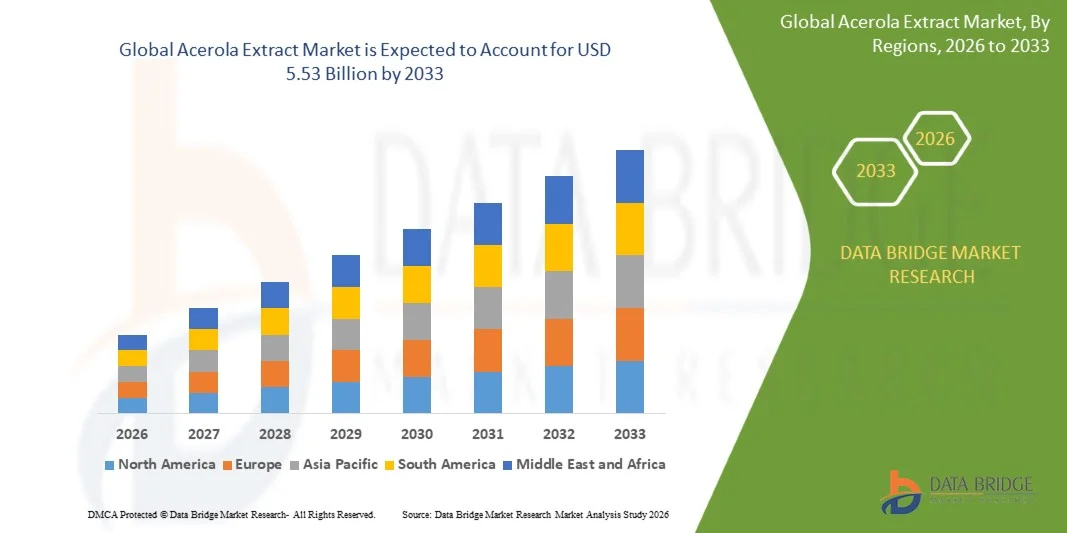
- As per Data Bridge Market Research analysis, the acerola extract market was valued at USD 3.52 billion in 2025 and is projected to reach USD 5.53 billion by 2033, growing at a CAGR of 5.8% from 2026 to 2033.
- The market is experiencing consistent growth driven by rising consumer preference for natural vitamin C, growing demand for clean-label and plant-based ingredients, and expanding use of acerola extract in dietary supplements, beverages, bakery, meat preservation, and personal care products.
- The increasing shift toward preventive health, immune support, and clean-label formulations, combined with growing replacement of synthetic ascorbic acid in food and supplements, is supporting market adoption. Acerola extract is being applied as a source of natural vitamin C, a plant-based source of natural antioxidants, and an ingredient in functional antioxidant vitamin formulations across supplements, beverages, and processed foods, offering manufacturers a recognizable fruit-based ingredient for nutrition claims.
Market Size & Forecast
- Global Market Value (2025): USD 3.52 Billion
- Expected Market Value (2033): USD 5.53 Billion
- Forecast CAGR (2026–2033): 5.8%
- Leading Region in 2025: North America
- Fastest Growing Region: Europe
What are the Major Takeaways of the Acerola Extract Market?
- North America dominated the acerola extract market with the largest revenue share of 38.5% in 2025, supported by a well-established dietary supplement industry, high consumer demand for health and wellness products, and the presence of major ingredient suppliers.
- Europe is expected to be the fastest-growing region at a CAGR of 7.45% from 2026 to 2033, fueled by consumer preference for organic and natural ingredients, stringent regulations on synthetic additives, and rising demand for clean-label products.
- The dry/powder segment led the market with a 62.5% share in 2025, driven by its stability, extended shelf life, and ease of incorporation into supplements, beverages, and cosmetics.
- Liquid/paste is the fastest-growing form, projected to register a CAGR of 9.2%, reflecting rising demand for high-bioavailability ingredients suited to functional beverages and liquid supplements.
- The conventional segment dominated the type category with a 58.7% revenue share in 2025, supported by affordability and widespread availability from established supply chains.
- Dietary supplements accounted for 38.4% of the market share in 2025, driven by the high vitamin C content and antioxidant properties of acerola extract.
- The beverages segment is the fastest-growing application category, with a CAGR of 9.8%, driven by the rising popularity of vitamin-enriched juices, energy drinks, and smoothies.
Report Scope and Acerola Extract Market Segmentation
|
Attributes |
Acerola Extract Key Market Insights |
|
Segments Covered |
|
|
Countries Covered |
North America
Europe
Asia-Pacific
Middle East and Africa
South America
|
|
Key Market Players |
|
|
Market Opportunities |
|
|
Value Added Data Infosets |
In addition to the insights on market scenarios such as market value, growth rate, segmentation, geographical coverage, and major players, the market reports curated by the Data Bridge Market Research also include in-depth expert analysis, pricing analysis, brand share analysis, consumer survey, demography analysis, supply chain analysis, value chain analysis, raw material/consumables overview, vendor selection criteria, PESTLE Analysis, Porter Analysis, and regulatory framework. |
What is the Key Trend in the Acerola Extract Market?
- Acerola extract is increasingly moving from a niche supplement ingredient to a mainstream natural vitamin C and antioxidant solution, supported by standardized high-potency powders, organic certification, and use as a clean-label replacement for synthetic ascorbic acid.
- For instance, in August 2020, according to the Journal of Nutritional Science and Vitaminology, researchers reported that ascorbic acid in acerola juice produced significantly higher intracellular uptake in human intestinal Caco-2 cells than ascorbic acid alone, with acerola polyphenols enhancing expression of the SVCT1 vitamin C transporter, supporting the whole-food vitamin C positioning of acerola
- Food manufacturers, particularly in meat and fruit products, are using acerola extract as a natural antioxidant to protect color and extend shelf life without relying on synthetic additives.
- Beverage and functional food brands are adopting acerola for front-of-pack natural vitamin C claims, encouraging suppliers to develop higher-potency, water-soluble formats suited to instant drinks, gummies, and fortified products.
- For instance, in February 2021, according to Nexira, the company launched a natural and organic acerola extract solution to help delay meat discoloration by stabilizing myoglobin and color through its antioxidant properties, illustrating the expanding role of acerola extract in clean-label food preservation
- As consumers continue to prefer recognizable ingredients and suppliers expand organic and high-potency offerings, acerola extract is expected to broaden beyond supplements into foods, beverages, and personal care.
What are the Key Drivers of the Acerola Extract Market?
- Rising consumer focus on immune health and preventive nutrition has significantly increased demand for natural vitamin C ingredients that can be marketed with clean-label and plant-based claims.
- For instance, in October 2022, according to the Council for Responsible Nutrition (CRN), about three-quarters of Americans reported using dietary supplements, and use of immunity-boosting supplements, including vitamin C, remained steady compared with the previous year, supporting demand for natural vitamin C ingredients such as acerola extract
- Supplement brands, beverage manufacturers, and food processors are increasingly replacing synthetic ascorbic acid with fruit-derived alternatives to meet consumer expectations for natural ingredient lists and simpler labels.
- For instance, in September 2020, according to the CRN 2020 Consumer Survey on Dietary Supplements, vitamin C was the most commonly used ingredient to support immune health at 61%, ahead of multivitamins at 57% and vitamin D at 47%, highlighting the consumer base for natural vitamin C sources
- With immune support, clean-label formulation, and plant-based nutrition continuing to grow in importance, acerola extract is positioned as a versatile natural ingredient across supplements, foods, and beverages.
What Factors Are Challenging the Growth of the Acerola Extract Market?
- Acerola is a highly perishable fruit that must be harvested, processed, or frozen quickly, and the concentration of production in specific tropical regions makes the supply chain vulnerable to weather and logistics disruption.
- For instance, in December 2023, according to a postharvest study from the Federal Institute of Mato Grosso (IFMT), Brazil, acerola is a highly perishable fruit prone to large post-harvest losses, with researchers evaluating edible coatings to extend storage life, highlighting the challenge of securing consistent raw material
- Cultivating, harvesting, and processing acerola, particularly for organic and high-potency extracts, involves higher costs than synthetic ascorbic acid, which can limit adoption among cost-sensitive buyers.
- Maintaining vitamin C content through processing, spray drying, and storage is technically demanding, and degradation can reduce potency and shelf life, particularly in liquid and paste formats.
- For instance, in September 2024, according to the Vietnam Journal of Science, Technology and Engineering, researchers reported that acerola, rich in polyphenols and vitamin C, is highly susceptible to degradation during processing and storage, and examined how pasteurisation conditions affect vitamin C and polyphenol retention in acerola jelly, highlighting stability challenges for acerola-based products
- The combination of perishability, supply concentration, higher costs, and stability requirements can constrain adoption, particularly where low-cost synthetic vitamin C already satisfies functional requirements.
How is the Acerola Extract Market Segmented?
The acerola extract market is segmented on the basis of form, type, application, and distribution channel.
- By Form
On the basis of form, the acerola extract market is segmented into dry/powder and liquid/paste. The dry/powder segment dominated the market with 62.5% share in 2025, supported by its stability, extended shelf life, and ease of incorporation into dietary supplements, beverages, and cosmetic products. Powders are easier to store, transport, and standardize for vitamin C content than liquid alternatives. Their compatibility with capsules, tablets, sachets, and instant drink mixes supports broad use. Lower logistics costs and longer shelf life make powders the preferred format for global ingredient trade.
The liquid/paste segment is projected to register the fastest growth at a CAGR of 9.2% from 2026 to 2033, driven by high bioavailability and ease of integration into beverages and liquid-based formulations. Rising demand for functional beverages and liquid dietary supplements is increasing interest in concentrates and pastes. These formats can retain more of the fruit’s natural character and blend readily into juices and shots. Improvements in cold-chain handling and preservation methods are reducing stability concerns. Growing consumer preference for ready-to-drink nutrition is creating additional demand.
- By Type
On the basis of type, the acerola extract market is segmented into conventional and organic. The conventional segment dominated the market with 58.7% share in 2025, supported by affordability and widespread availability from established supply chains and higher yields from conventional farming. Conventional extracts are widely used in mass-market supplements, beverages, and processed foods where cost is an important purchasing criterion. Large producers in Brazil supply consistent volumes at competitive prices. Familiar specifications and long-standing customer relationships further reinforce demand for conventional grades.
The organic segment is projected to register the fastest growth at a CAGR of 10.2% from 2026 to 2033, driven by increasing consumer preference for natural and sustainable products. Growing awareness of environmental and health concerns, along with supportive policies for organic farming, is boosting demand for certified organic extracts. Organic acerola is increasingly used in premium supplements, organic meat preservation, and clean-label beverages. Suppliers are expanding certified plantations and sourcing programs to secure supply. Retailer and brand commitments to organic ranges are creating additional opportunities.
- By Application
On the basis of application, the acerola extract market is segmented into dietary supplements, bakery products, beverages, sports nutrition, convenience and processed products, cosmetics and personal care, dairy products, confectionery products, meat and poultry products, and granola and breakfast cereals. The dietary supplements segment dominated the application category with 38.4% share in 2025, driven by the high vitamin C content and antioxidant properties of acerola extract. Consumers seeking immune support and natural nutrition are increasingly choosing fruit-based vitamin C. Capsules, powders, gummies, and multivitamins incorporate acerola for ingredient transparency. Strong supplement retail and e-commerce channels support continued growth.
The beverages segment is projected to register the fastest growth at a CAGR of 9.8% from 2026 to 2033, propelled by the rising popularity of functional beverages such as vitamin-enriched juices, energy drinks, and smoothies. Acerola extract enhances nutritional profile while delivering a tart fruit flavor that suits many formulations. Water-soluble, high-potency grades are enabling use in instant drinks and ready-to-drink products. Beverage brands are using acerola to support natural vitamin C and immunity claims. Growing demand for clean-label hydration and wellness drinks is creating additional opportunities.
- By Distribution Channel
On the basis of distribution channel, the acerola extract market is segmented into direct and indirect. The indirect segment accounted for the largest market share of 64.2% in 2025, driven by the extensive reach of wholesalers, distributors, supermarkets, pharmacies, and e-commerce platforms that provide convenient access to acerola products. Intermediaries help small and mid-sized manufacturers source standardized ingredients without managing complex import logistics. Established distribution networks also support consistent availability across regions. These channels remain important for consumer-facing products and smaller-volume ingredient purchases.
The direct segment is projected to register the fastest growth at a CAGR of 8.7% from 2026 to 2033, driven by the rise of direct-to-consumer models and online platforms operated by manufacturers. Direct sales give brands greater control over pricing, branding, and customer engagement. Large food and supplement manufacturers are also contracting directly with producers to secure traceable, high-potency supply. Demand for transparency, traceability, and sustainable sourcing is encouraging closer buyer-supplier relationships. Digital ordering and subscription models are further supporting direct channel growth.
Which Region Holds the Largest Share of the Acerola Extract Market?
- North America dominated the acerola extract market with the largest revenue share of 38.5% in 2025, supported by a well-established dietary supplement industry, high consumer demand for health and wellness products, and the presence of major ingredient suppliers.
- The region also benefits from strong consumer awareness of vitamin C and antioxidants, advanced extraction and microencapsulation technologies, and rising adoption in both dietary supplements and food and beverage applications. Increasing use of acerola extract for natural preservation in meat and bakery products continues to strengthen North America’s position in the global market.
U.S. Acerola Extract Market Insight
The U.S. acerola extract market is witnessing strong growth, capturing the largest share of North America at 75.4% in 2025, fueled by strong demand for dietary supplements and functional foods. Increasing consumer awareness of clean-label products and the antioxidant benefits of acerola extract is driving market expansion. The trend toward natural preservatives in meat and bakery products, coupled with growing use in cosmetics, is further supporting demand across the country.
Europe Acerola Extract Market Insight
The Europe acerola extract market is expected to witness the fastest growth, supported by regulatory emphasis on natural and organic ingredients and consumer demand for transparent labels. Consumers seek acerola extract for its role in dietary supplements and functional foods, offering immune support and skin health benefits. Growth is prominent in both nutraceutical and cosmetic applications, with established ingredient manufacturers expanding organic and traceable acerola offerings across the region.
Germany Acerola Extract Market Insight
The Germany acerola extract market is expected to witness rapid growth, attributed to its advanced food and beverage sector and a high consumer focus on health and wellness. German consumers prefer acerola extract for its natural vitamin C content and antioxidant properties, supporting immune and food preservation uses. The integration of acerola extract in dietary supplements, organic products, and premium functional foods supports sustained market growth in the country.
U.K. Acerola Extract Market Insight
The U.K. acerola extract market is expected to witness significant growth, driven by demand for natural health supplements and functional beverages. Increased interest in clean-label and organic products, along with rising awareness of acerola’s antioxidant properties, encourages adoption across retail and online channels. Evolving regulations on food additives influence consumer choices, as manufacturers balance nutritional benefits, ingredient transparency, and compliance requirements.
Japan Acerola Extract Market Insight
The Japan acerola extract market is expected to witness rapid growth due to strong consumer preference for high-quality, natural ingredients that enhance health and wellness. The presence of major food and beverage manufacturers and long-standing use of acerola in supplements, drinks, and cosmetics accelerate market penetration. Rising interest in clean-label and organic products, supported by Japanese companies with acerola operations in Brazil, also contributes to growth.
China Acerola Extract Market Insight
China holds the largest share of the Asia-Pacific acerola extract market, propelled by rapid urbanization, rising health consciousness, and increasing demand for natural antioxidants. The country’s growing middle class and focus on functional foods and beverages support the adoption of acerola extract. Strong domestic manufacturing capabilities and competitive pricing improve market accessibility, while expanding e-commerce channels are widening consumer access to vitamin C supplements.
Which are the Top Companies in Acerola Extract Market?
The acerola extract industry is primarily led by well-established companies, including:
- Florida Food Products (U.S.)
- Niagro Nichirei do Brasil Agricola Ltda. (Brazil)
- NATUREX SA (France)
- Handary s.a. (Belgium)
- KINGHERBS LIMITED (China)
- Vita Forte Inc. (U.S.)
- The Green Labs LLC. (U.S.)
- DuPont (U.S.)
- Foodchem International Corporation (China)
- iTi Tropicals (U.S.)
- Duas Rodas (Brazil)
- tropextrakt GmbH (Germany)
What are Latest Developments in Acerola Extract Market?
- In June 2025, Amway India launched Nutrilite Triple Protect, a plant-based blend of acerola cherry, turmeric, and licorice extracts designed to support immunity, skin health, and gut balance. The acerola cherry extract is sustainably sourced from certified organic farms in Ubajara, Brazil, reflecting the growing use of acerola in premium supplement formulations.
- In December 2024, Nature’s Way introduced a new line of acerola-infused multivitamins enriched with acerola cherry extract as a natural source of vitamin C and antioxidants, targeting immune health, energy, and overall wellness and reflecting demand for plant-based and clean-label supplements.
- In October 2024, Symrise AG launched a new organic acerola extract powder targeting the European nutraceuticals market, designed to meet rising demand for plant-based, clean-label vitamin C ingredients with traceable sourcing and minimal processing for dietary supplements and functional foods.
- In September 2020, Diana Food launched a new acerola powder with organic certification, developed at the request of a customer, as part of its range of acerola powders standardized for vitamin C content. The company reported that more than 10% of its acerola purchases were already coming from organic agriculture, with a strong upward trend.
- In June 2020, CAIF (Concentrated Active Ingredients & Flavors, Inc.) introduced an acerola extract powder containing a minimum of 32% native vitamin C with no added content, produced through a concentration process that uses the fruit biomass as the carrier, targeting natural vitamin C demand in supplements and foods.

- Interactive Data Analysis Dashboard
- Company Analysis Dashboard for high growth potential opportunities
- Research Analyst Access for customization & queries
- Competitor Analysis with Interactive dashboard
- Latest News, Updates & Trend analysis
- Harness the Power of Benchmark Analysis for Comprehensive Competitor Tracking
Global Acerola Extract In Food Supplements Market, Supply Chain Analysis and Ecosystem Framework
To support market growth and help clients navigate the impact of geopolitical shifts, DBMR has integrated in-depth supply chain analysis into its Global Acerola Extract In Food Supplements Market research reports. This addition empowers clients to respond effectively to global changes affecting their industries. The supply chain analysis section includes detailed insights such as Global Acerola Extract In Food Supplements Market consumption and production by country, price trend analysis, the impact of tariffs and geopolitical developments, and import and export trends by country and HSN code. It also highlights major suppliers with data on production capacity and company profiles, as well as key importers and exporters. In addition to research, DBMR offers specialized supply chain consulting services backed by over a decade of experience, providing solutions like supplier discovery, supplier risk assessment, price trend analysis, impact evaluation of inflation and trade route changes, and comprehensive market trend analysis.
Data collection and base year analysis are done using data collection modules with large sample sizes. The stage includes obtaining market information or related data through various sources and strategies. It includes examining and planning all the data acquired from the past in advance. It likewise envelops the examination of information inconsistencies seen across different information sources. The market data is analysed and estimated using market statistical and coherent models. Also, market share analysis and key trend analysis are the major success factors in the market report. To know more, please request an analyst call or drop down your inquiry.
The key research methodology used by DBMR research team is data triangulation which involves data mining, analysis of the impact of data variables on the market and primary (industry expert) validation. Data models include Vendor Positioning Grid, Market Time Line Analysis, Market Overview and Guide, Company Positioning Grid, Patent Analysis, Pricing Analysis, Company Market Share Analysis, Standards of Measurement, Global versus Regional and Vendor Share Analysis. To know more about the research methodology, drop in an inquiry to speak to our industry experts.
Data Bridge Market Research is a leader in advanced formative research. We take pride in servicing our existing and new customers with data and analysis that match and suits their goal. The report can be customized to include price trend analysis of target brands understanding the market for additional countries (ask for the list of countries), clinical trial results data, literature review, refurbished market and product base analysis. Market analysis of target competitors can be analyzed from technology-based analysis to market portfolio strategies. We can add as many competitors that you require data about in the format and data style you are looking for. Our team of analysts can also provide you data in crude raw excel files pivot tables (Fact book) or can assist you in creating presentations from the data sets available in the report.