


What is the Acid-Related Disorder Molecules Market Size and Growth Rate?
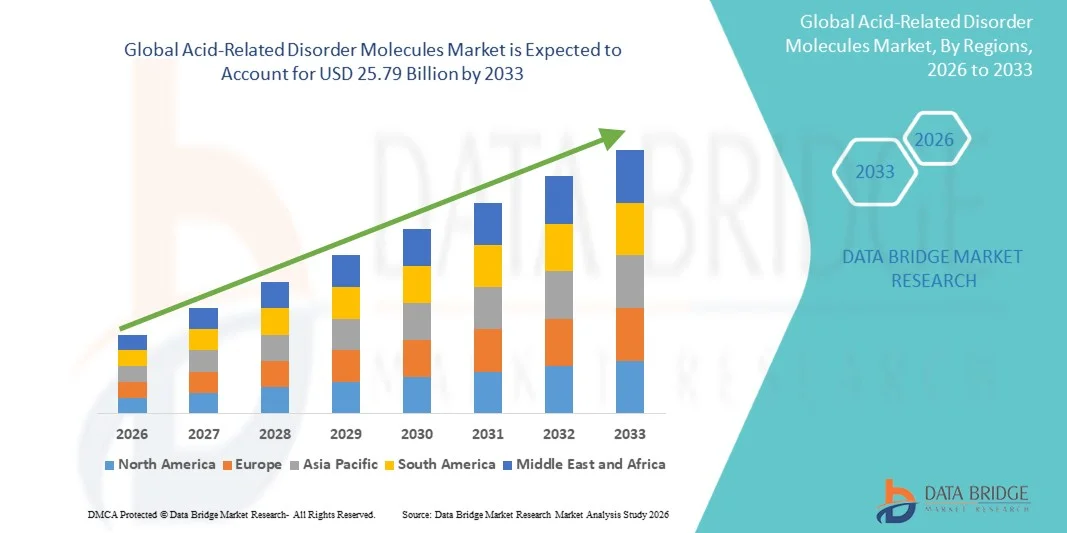
- As per Data Bridge Market Research analysis the acid-related disorder molecules market was valued at USD 18.42 billion in 2025 and is projected to reach USD 25.79 billion by 2033, growing at a CAGR of 4.30% from 2026 to 2033.
- The market is experiencing steady growth driven by the rising prevalence of acid-related gastrointestinal disorders, increasing demand for effective acid-suppressing therapies, and growing awareness of gastroesophageal reflux disease (GERD) and peptic ulcer disease.
- The increasing geriatric population, changing dietary habits, rising incidence of gastrointestinal disorders, and continued development of advanced proton pump inhibitors and potassium-competitive acid blockers are supporting the adoption of acid-related disorder molecules globally.
Market Size & Forecast
- Market Value (2025): USD 18.42 Billion
- Expected Market Value (2033): USD 25.79 Billion
- Forecast CAGR (2026–2033): 4.30%
- Leading Region in 2025: North America
- Fastest Growing Region: Asia-Pacific
What are the Major Takeaways of the Acid-Related Disorder Molecules Market?
- North America dominated the acid-related disorder molecules market with the largest revenue share in 2025, supported by the high prevalence of gastroesophageal reflux disease (GERD), increasing diagnosis of gastrointestinal disorders, and strong healthcare infrastructure.
- Asia-Pacific acid-related disorder molecules market is expected to witness the fastest growth rate from 2026 to 2033, supported by rising healthcare expenditure, increasing awareness of gastrointestinal disorders, and expanding access to pharmaceutical treatments in countries such as China, Japan, and India.
- The Proton Pump Inhibitors (PPIs) segment held the largest market revenue share in 2025, driven by their widespread use for gastroesophageal reflux disease, peptic ulcer disease, erosive esophagitis, and other acid-related disorders. PPIs are widely preferred due to their established efficacy, broad availability, and ability to provide sustained gastric acid suppression across various gastrointestinal conditions.
- The Potassium-Competitive Acid Blockers (P-CABs) segment is projected to register the fastest growth during the forecast period from 2026 to 2033, driven by increasing demand for rapid and sustained acid suppression and growing adoption of newer therapies for GERD and other acid-related disorders. Rising clinical acceptance of P-CABs as an alternative to conventional PPIs is accelerating segment expansion.
- The Gastroesophageal Reflux Disease (GERD) segment held the largest market revenue share in 2025, driven by the high prevalence of acid reflux, increasing diagnosis rates, and growing demand for effective long-term symptom management. The availability of multiple acid-suppressing therapies and increasing awareness of GERD treatment are supporting segment growth.
- The Erosive Esophagitis segment is projected to register the fastest growth during the forecast period from 2026 to 2033, driven by increasing diagnosis of severe acid-related esophageal conditions and growing demand for therapies providing rapid and sustained acid control. Advancements in acid-suppressing molecules and increasing clinical use of P-CAB therapies are further supporting segment expansion.
Report Scope and Acid-Related Disorder Molecules Market Segmentation
Attributes |
Acid-Related Disorder Molecules Key Market Insights |
|
Segments Covered |
|
|
Countries Covered |
North America
Europe
Asia-Pacific
Middle East and Africa
South America
|
|
Key Market Players |
|
|
Market Opportunities |
|
|
Value Added Data Infosets |
In addition to the insights on market scenarios such as market value, growth rate, segmentation, geographical coverage, and major players, the market reports curated by the Data Bridge Market Research also include depth expert analysis, patient epidemiology, pipeline analysis, pricing analysis, and regulatory framework. |
What is the Key Trend in the Acid-Related Disorder Molecules Market?
- The development and adoption of potassium-competitive acid blockers (P-CABs) are emerging as a key trend, offering rapid and sustained acid suppression and expanding treatment options beyond traditional proton pump inhibitors (PPIs).
- For instance, in October 2025, Phathom Pharmaceuticals announced published Phase 3 data showing that VOQUEZNA (vonoprazan) provided rapid and sustained relief of nighttime GERD symptoms, with clinically meaningful increases in heartburn-free nights maintained through 24 weeks of treatment.
- Real-world evidence and clinical research are increasingly being used to evaluate treatment patterns, symptom control, and outcomes among patients receiving newer acid-suppressing molecules.
- For instance, in April 2025, Phathom Pharmaceuticals announced that it would present real-world analyses of U.S. patients with GERD treated with VOQUEZNA at Digestive Disease Week 2025, supporting broader evaluation of vonoprazan in clinical practice.
- As pharmaceutical companies continue developing faster-acting and longer-lasting acid-suppressing molecules, the shift toward differentiated therapies such as P-CABs is expected to accelerate, strengthening innovation and competition in the acid-related disorder molecules market.
What are the Key Drivers of the Acid-Related Disorder Molecules Market?
- The high prevalence of gastroesophageal reflux disease (GERD), combined with increasing awareness and demand for effective treatment of persistent heartburn and acid-related gastrointestinal disorders, is driving the adoption of acid-suppressing molecules.
- For instance, the National Institute of Diabetes and Digestive and Kidney Diseases (NIDDK) estimates that about 20% of people in the U.S. have GERD, highlighting the substantial patient population requiring diagnosis and treatment.
- Pharmaceutical companies are expanding treatment options through newer molecules that address unmet needs in GERD and other acid-related conditions, including patients who require rapid symptom relief or have inadequate response to conventional therapies.
- For instance, in July 2024, Phathom Pharmaceuticals announced FDA approval of VOQUEZNA (vonoprazan) for the relief of heartburn associated with non-erosive GERD in adults, expanding the availability of a P-CAB treatment for the largest category of GERD.
- With the growing burden of GERD and continued innovation in acid-suppressing therapies, demand for advanced molecules is expected to remain strong, supporting market expansion across major gastrointestinal treatment categories.
Which Factors are Challenging the Growth of the Acid-Related Disorder Molecules Market?
- Safety considerations associated with prolonged acid suppression and the need for appropriate long-term management can challenge the growth of the acid-related disorder molecules market, particularly among patients requiring chronic therapy.
- These concerns encourage healthcare providers to evaluate treatment duration, dosage, drug interactions, and the suitability of long-term acid-suppressing therapy for individual patients.
- For instance, in March 2023, the U.S. Food and Drug Administration issued guidance highlighting that acid-reducing agents, including antacids, histamine H2-receptor antagonists, and PPIs, can alter gastric pH and potentially affect the absorption, efficacy, or toxicity of other medicines.
- The FDA also states that over-the-counter PPIs are intended for a 14-day course and advises consumers not to use them for longer or more frequently than directed without consulting a healthcare professional.
- The need for careful long-term use, potential drug interactions, and increasing emphasis on appropriate prescribing and treatment duration can restrict unnecessary molecule use, creating a challenge for market growth despite the continuing need for effective acid-related disorder therapies.
How is the Acid-Related Disorder Molecules Market Segmented?
The market is segmented on the basis of molecule type, indication, route of administration, dosage form, distribution channel, and end user.
- By Molecule Type
On the basis of molecule type, the acid-related disorder molecules market is segmented into Proton Pump Inhibitors (PPIs), Histamine H2-Receptor Antagonists, Potassium-Competitive Acid Blockers (P-CABs), Antacids, and Other Acid-Suppressing Molecules. The Proton Pump Inhibitors (PPIs) segment held the largest market revenue share in 2025, driven by their widespread use for gastroesophageal reflux disease, peptic ulcer disease, erosive esophagitis, and other acid-related disorders. PPIs are widely preferred due to their established efficacy, broad availability, and ability to provide sustained gastric acid suppression across various gastrointestinal conditions.
The Potassium-Competitive Acid Blockers (P-CABs) segment is projected to register the fastest growth during the forecast period from 2026 to 2033, driven by increasing demand for rapid and sustained acid suppression and growing adoption of newer therapies for GERD and other acid-related disorders. Rising clinical acceptance of P-CABs as an alternative to conventional PPIs is accelerating segment expansion.
- By Indication
On the basis of indication, the acid-related disorder molecules market is segmented into Gastroesophageal Reflux Disease (GERD), Peptic Ulcer Disease, Erosive Esophagitis, Gastritis, Zollinger-Ellison Syndrome, and Other Acid-Related Disorders. The Gastroesophageal Reflux Disease (GERD) segment held the largest market revenue share in 2025, driven by the high prevalence of acid reflux, increasing diagnosis rates, and growing demand for effective long-term symptom management. The availability of multiple acid-suppressing therapies and increasing awareness of GERD treatment are supporting segment growth.
The Erosive Esophagitis segment is projected to register the fastest growth during the forecast period from 2026 to 2033, driven by increasing diagnosis of severe acid-related esophageal conditions and growing demand for therapies providing rapid and sustained acid control. Advancements in acid-suppressing molecules and increasing clinical use of P-CAB therapies are further supporting segment expansion.
- By Route of Administration
On the basis of route of administration, the acid-related disorder molecules market is segmented into Oral and Parenteral. The oral segment held the largest market revenue share in 2025, driven by the widespread use of tablets, capsules, and oral suspensions for the treatment of GERD, peptic ulcer disease, and other acid-related conditions. Oral administration is preferred due to its convenience, ease of use, patient compliance, and suitability for long-term treatment.
The parenteral segment is projected to register the fastest growth during the forecast period from 2026 to 2033, driven by increasing demand for rapid acid suppression among hospitalized patients and individuals unable to tolerate oral medications. Rising use of injectable therapies in severe gastrointestinal conditions and hospital-based treatment is accelerating segment expansion.
- By Dosage Form
On the basis of dosage form, the acid-related disorder molecules market is segmented into Tablets, Capsules, Oral Suspensions, Granules, and Injections. The tablets segment held the largest market revenue share in 2025, driven by their widespread availability, convenient administration, stable formulation, and extensive use in the treatment of acid-related gastrointestinal disorders. Tablets are preferred due to their ease of storage, portability, and suitability for routine outpatient treatment.
The injections segment is projected to register the fastest growth during the forecast period from 2026 to 2033, driven by increasing demand for rapid therapeutic action in hospitalized patients and severe acid-related conditions. Growing utilization of injectable acid-suppressing therapies in acute care settings is supporting segment expansion.
- By Distribution Channel
On the basis of distribution channel, the acid-related disorder molecules market is segmented into Hospital Pharmacies, Retail Pharmacies, Online Pharmacies, and Others. The retail pharmacies segment held the largest market revenue share in 2025, driven by the widespread availability of prescription and over-the-counter acid-reducing medicines and increasing demand for convenient access to gastrointestinal treatments. The extensive retail pharmacy network and growing consumer awareness of acid-related disorders are supporting segment growth.
The online pharmacies segment is projected to register the fastest growth during the forecast period from 2026 to 2033, driven by increasing digital healthcare adoption, convenient home delivery, and expanding access to prescription and over-the-counter gastrointestinal medicines. Growing consumer preference for online purchasing and the expansion of digital pharmacy platforms are accelerating segment expansion.
- By End User
On the basis of end user, the acid-related disorder molecules market is segmented into Hospitals, Specialty Clinics, Ambulatory Care Centers, and Homecare Settings. The hospitals segment held the largest market revenue share in 2025, driven by the high volume of patients requiring diagnosis and treatment for severe gastrointestinal disorders and the availability of specialized medical care. Hospitals extensively use acid-suppressing molecules for inpatient treatment, post-procedure care, and management of complex acid-related conditions.
The homecare settings segment is projected to register the fastest growth during the forecast period from 2026 to 2033, driven by increasing prevalence of chronic GERD, growing preference for outpatient treatment, and rising availability of convenient oral acid-suppressing therapies. The shift toward home-based management and increasing patient preference for convenient long-term treatment are accelerating segment expansion.
Which Region Holds the Largest Share of the Acid-Related Disorder Molecules Market?
- North America dominated the acid-related disorder molecules market with the largest revenue share in 2025, supported by the high prevalence of gastroesophageal reflux disease (GERD), increasing diagnosis of gastrointestinal disorders, and strong healthcare infrastructure.
- Consumers in the region have broad access to advanced acid-suppressing therapies, supported by high healthcare expenditure and widespread availability of prescription and over-the-counter medicines. Growing awareness of GERD, peptic ulcer disease, and other acid-related conditions, combined with continued pharmaceutical innovation, is further strengthening the adoption of acid-related disorder molecules across the region.
U.S. Acid-Related Disorder Molecules Market Insight
U.S. acid-related disorder molecules market captured the largest revenue share in 2025 within North America, fueled by the high prevalence of GERD and increasing demand for effective acid-suppressing therapies. The widespread availability of proton pump inhibitors (PPIs), histamine H2-receptor antagonists, and newer potassium-competitive acid blockers (P-CABs) is supporting market expansion. Moreover, strong pharmaceutical research, high healthcare spending, and increasing awareness of gastrointestinal health are contributing significantly to the growth of the U.S. market.
Europe Acid-Related Disorder Molecules Market Insight
Europe acid-related disorder molecules market is expected to witness steady growth from 2026 to 2033, primarily driven by the rising prevalence of gastrointestinal disorders, increasing geriatric population, and growing demand for effective acid-suppressing treatments. The region's established healthcare systems and widespread access to prescription medicines are supporting treatment adoption. Increasing awareness regarding GERD and peptic ulcer disease, together with the growing availability of advanced acid-suppressing molecules, is further fostering market growth across residential and clinical care settings.
U.K. Acid-Related Disorder Molecules Market Insight
U.K. acid-related disorder molecules market is expected to witness significant growth from 2026 to 2033, driven by increasing diagnosis of GERD, rising demand for gastrointestinal treatments, and growing awareness of digestive health. The availability of prescription and over-the-counter acid-reducing medicines through pharmacies and healthcare providers supports widespread treatment access. Additionally, increasing adoption of newer acid-suppressing therapies and the country's developed healthcare infrastructure are expected to continue stimulating market expansion.
Germany Acid-Related Disorder Molecules Market Insight
Germany acid-related disorder molecules market is expected to witness steady growth from 2026 to 2033, fueled by the increasing burden of gastrointestinal disorders, aging population, and strong demand for effective pharmaceutical treatments. Germany's well-developed healthcare infrastructure and established pharmaceutical industry promote access to advanced acid-suppressing molecules. The increasing focus on early diagnosis and management of GERD, peptic ulcer disease, and other gastrointestinal conditions is also supporting market development.
Asia-Pacific Acid-Related Disorder Molecules Market Insight
The Asia-Pacific acid-related disorder molecules market is expected to witness the fastest growth rate from 2026 to 2033, supported by rising healthcare expenditure, increasing awareness of gastrointestinal disorders, and expanding access to pharmaceutical treatments in countries such as China, Japan, and India. Rapid urbanization, changing dietary habits, and growing adoption of Western lifestyles are contributing to the increasing prevalence of acid-related conditions. Furthermore, improving healthcare infrastructure and expanding pharmaceutical manufacturing capabilities are making acid-suppressing therapies more accessible across the region.
Japan Acid-Related Disorder Molecules Market Insight
Japan acid-related disorder molecules market is expected to witness significant growth from 2026 to 2033 due to the country's aging population, high healthcare awareness, and increasing demand for effective gastrointestinal treatments. The Japanese market places strong emphasis on pharmaceutical innovation and preventive healthcare, supporting the adoption of advanced acid-suppressing molecules. Moreover, the growing prevalence of GERD and other gastrointestinal conditions among the aging population is expected to increase demand for convenient and effective treatment options.
China Acid-Related Disorder Molecules Market Insight
The China acid-related disorder molecules market accounted for the largest market revenue share in Asia Pacific in 2025, attributed to the country's large population, increasing healthcare expenditure, and expanding access to pharmaceutical treatments. Rising awareness of GERD and other acid-related gastrointestinal disorders, combined with urbanization and changing dietary patterns, is increasing demand for acid-suppressing therapies. Furthermore, China's expanding pharmaceutical manufacturing sector and improving healthcare infrastructure are supporting wider availability and adoption of acid-related disorder molecules
Which are the Top Companies in Acid-Related Disorder Molecules Market?
The acid-related disorder molecules industry is primarily led by well-established companies, including:
- AstraZeneca PLC (U.K.)
- Takeda Pharmaceutical Company Limited (Japan)
- Pfizer Inc. (U.S.)
- Eisai Co., Ltd. (Japan)
- Teva Pharmaceutical Industries Ltd. (Israel)
- Viatris Inc. (U.S.)
- Sun Pharmaceutical Industries Ltd. (India)
- Dr. Reddy's Laboratories Ltd. (India)
- Cipla Limited (India)
- Sandoz Group AG (Switzerland)
- Sanofi (France)
- Bayer AG (Germany)
- Lupin Limited (India)
- Zydus Lifesciences Limited (India)
- Phathom Pharmaceuticals, Inc. (U.S.)

- Interactive Data Analysis Dashboard
- Company Analysis Dashboard for high growth potential opportunities
- Research Analyst Access for customization & queries
- Competitor Analysis with Interactive dashboard
- Latest News, Updates & Trend analysis
- Harness the Power of Benchmark Analysis for Comprehensive Competitor Tracking
Data collection and base year analysis are done using data collection modules with large sample sizes. The stage includes obtaining market information or related data through various sources and strategies. It includes examining and planning all the data acquired from the past in advance. It likewise envelops the examination of information inconsistencies seen across different information sources. The market data is analysed and estimated using market statistical and coherent models. Also, market share analysis and key trend analysis are the major success factors in the market report. To know more, please request an analyst call or drop down your inquiry.
The key research methodology used by DBMR research team is data triangulation which involves data mining, analysis of the impact of data variables on the market and primary (industry expert) validation. Data models include Vendor Positioning Grid, Market Time Line Analysis, Market Overview and Guide, Company Positioning Grid, Patent Analysis, Pricing Analysis, Company Market Share Analysis, Standards of Measurement, Global versus Regional and Vendor Share Analysis. To know more about the research methodology, drop in an inquiry to speak to our industry experts.
Data Bridge Market Research is a leader in advanced formative research. We take pride in servicing our existing and new customers with data and analysis that match and suits their goal. The report can be customized to include price trend analysis of target brands understanding the market for additional countries (ask for the list of countries), clinical trial results data, literature review, refurbished market and product base analysis. Market analysis of target competitors can be analyzed from technology-based analysis to market portfolio strategies. We can add as many competitors that you require data about in the format and data style you are looking for. Our team of analysts can also provide you data in crude raw excel files pivot tables (Fact book) or can assist you in creating presentations from the data sets available in the report.












