


Acute Respiratory Distress Syndrome (ARDS) Treatment Market Size
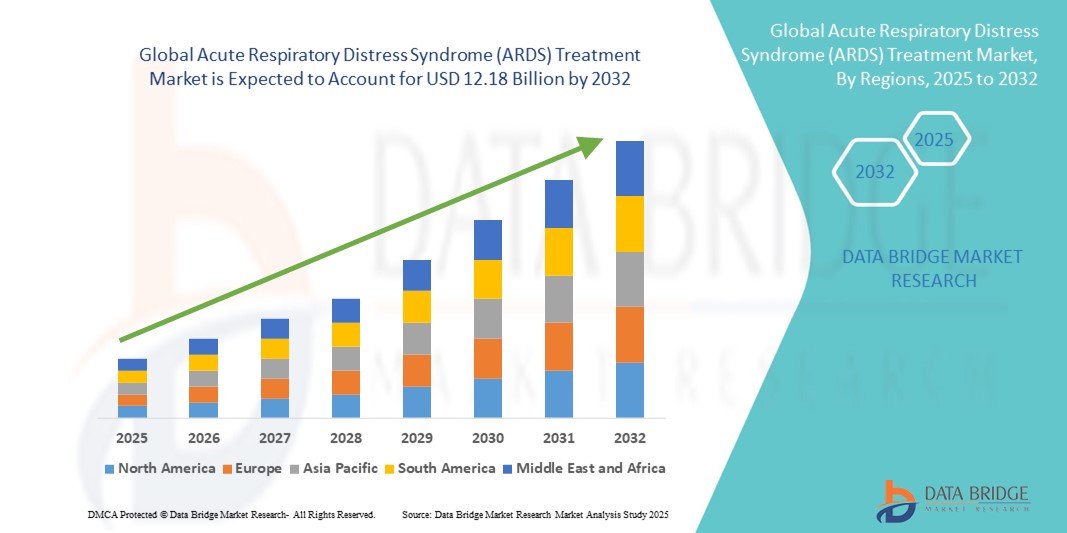
- The global acute respiratory distress syndrome (ARDS) Treatment market size was valued at USD 5.44 billion in 2024 and is expected to reach USD 12.18 billion by 2032, at a CAGR of 10.6% during the forecast period
- The market growth is largely fueled by the increasing prevalence of acute respiratory distress syndrome worldwide, driven by rising incidences of severe pneumonia, sepsis, trauma, and other critical illnesses. Advancements in medical technology, particularly in mechanical ventilation systems, extracorporeal membrane oxygenation (ECMO), and novel pharmacological therapies, are enhancing patient survival rates and shaping the future of ARDS treatment
- Furthermore, the growing focus on early diagnosis, personalized treatment approaches, and the development of targeted therapies is creating significant opportunities for innovation. The increasing investments in healthcare infrastructure, coupled with supportive government initiatives and research funding, are further accelerating the adoption of advanced ARDS treatment solutions, thereby significantly boosting the industry’s growth
Acute Respiratory Distress Syndrome (ARDS) Treatment Market Analysis
- Acute Respiratory Distress Syndrome (ARDS) treatments, encompassing advanced ventilation strategies, pharmacological interventions, and supportive care solutions, are increasingly critical in managing severe respiratory failure cases across both developed and developing healthcare systems, driven by the rising incidence of sepsis, pneumonia, and COVID-19-related complications
- The growing demand for ARDS treatment solutions is primarily fueled by increasing awareness among healthcare providers, rising critical care infrastructure investments, and the development of novel therapeutics and devices that improve patient survival rates
- North America dominated the acute respiratory distress syndrome (ARDS) treatment market with the largest revenue share of 38.7% in 2024, supported by advanced healthcare infrastructure, high adoption of innovative treatment modalities, and strong research funding, with the U.S. leading in ARDS clinical trials and adoption of extracorporeal membrane oxygenation (ECMO) technology
- Asia-Pacific is expected to be the fastest-growing region in the acute respiratory distress syndrome (ARDS) treatment market during the forecast period, with a projected CAGR of 8.9%, driven by increasing ICU capacity expansion, rising prevalence of respiratory diseases, and government healthcare modernization programs in countries such as China and India
- The parenteral segment dominated the acute respiratory distress syndrome (ARDS) treatment market with a market share of 46.3% in 2024, attributed to the rapid onset of action and higher bioavailability of intravenously administered drugs such as corticosteroids, antivirals, and immunomodulators in critical care settings
Report Scope and Acute Respiratory Distress Syndrome (ARDS) Treatment Market Segmentation
|
Attributes |
Acute Respiratory Distress Syndrome (ARDS) Treatment Key Market Insights |
|
Segments Covered |
|
|
Countries Covered |
North America
Europe
Asia-Pacific
Middle East and Africa
South America
|
|
Key Market Players |
|
|
Market Opportunities |
|
|
Value Added Data Infosets |
In addition to the insights on market scenarios such as market value, growth rate, segmentation, geographical coverage, and major players, the market reports curated by the Data Bridge Market Research also include in-depth expert analysis, pricing analysis, brand share analysis, consumer survey, demography analysis, supply chain analysis, value chain analysis, raw material/consumables overview, vendor selection criteria, PESTLE Analysis, Porter Analysis, and regulatory framework. |
Acute Respiratory Distress Syndrome (ARDS) Treatment Market Trends
Advancements in Ventilation and Adjunctive Therapies Driving ARDS Treatment Market Growth
- A key and accelerating trend in the global acute respiratory distress syndrome (ARDS) treatment market is the increasing adoption of advanced ventilation strategies and adjunctive pharmacological therapies to improve patient survival rates and reduce complications
- For instance, the use of lung-protective ventilation with low tidal volumes and optimized PEEP settings has become a gold standard in ARDS management, significantly reducing ventilator-induced lung injury and improving patient outcomes
- There is also a growing focus on adjunctive therapies such as prone positioning, neuromuscular blockade in early severe ARDS, and corticosteroids, which have been shown in clinical studies to improve oxygenation and survival in selected patients
- Recent advancements in extracorporeal membrane oxygenation (ECMO) technology are also reshaping the treatment landscape. Portable ECMO systems and improved patient selection criteria have expanded access to life-saving support for patients with refractory hypoxemia
- Pharmaceutical companies are actively developing novel anti-inflammatory and endothelial-protective agents, targeting the underlying pathophysiology of ARDS to reduce pulmonary damage and accelerate recovery
- The combination of improved ventilation strategies, evidence-based adjunctive treatments, and innovation in rescue therapies is setting new benchmarks for ARDS care globally, driving strong demand for both medical devices and pharmaceuticals in hospital settings
Acute Respiratory Distress Syndrome (ARDS) Treatment Market Dynamics
Driver
Growing Need Due to Rising Incidence of ARDS and Advancements in Critical Care
- The increasing global prevalence of acute respiratory distress syndrome (ARDS), driven by factors such as severe pneumonia, sepsis, trauma, and post-COVID-19 complications, is a significant driver for the heightened demand for advanced ARDS treatments
- For instance, in April 2024, Medtronic announced the expansion of its next-generation mechanical ventilation portfolio with enhanced AI-driven monitoring capabilities to improve patient outcomes in intensive care units (ICUs). Such innovations are expected to drive the ARDS treatment industry growth during the forecast period
- As healthcare providers become more aware of the severe mortality risks associated with ARDS, there is a growing demand for innovative treatment options, including advanced ventilatory support systems, targeted drug therapies, and extracorporeal membrane oxygenation (ECMO)
- Furthermore, the increasing focus on early diagnosis and timely intervention in critical care units is making integrated ARDS management protocols an essential part of hospital respiratory care
- The development of more effective pharmaceutical interventions, combined with precision medicine approaches, is expected to significantly improve recovery rates and reduce complications, thereby accelerating the adoption of ARDS treatment solutions across hospitals, specialty clinics, and home healthcare settings
Restraint/Challenge
High Treatment Costs and Limited Accessibility in Low-Resource Settings
- The high cost of ARDS treatment, especially advanced interventions such as ECMO, targeted biologics, and prolonged ICU stays, poses a significant challenge to broader adoption, particularly in low- and middle-income countries
- For instance, reports from healthcare systems in developing regions indicate that the average cost of ECMO treatment can exceed USD 20,000 per patient, creating financial barriers for both hospitals and patients
- Limited availability of specialized equipment, trained healthcare personnel, and advanced critical care infrastructure further hampers timely and effective ARDS treatment in resource-limited settings
- Addressing these barriers will require strategic collaborations between governments, healthcare providers, and medical device manufacturers to improve affordability and accessibility
- In addition, while advancements in portable and cost-effective ventilators have been made, ensuring equitable access to these solutions remains a challenge
- Overcoming these hurdles through subsidies, training programs, and the development of more affordable treatment devices will be essential for expanding the reach of ARDS therapies and reducing mortality rates globally
Acute Respiratory Distress Syndrome (ARDS) Treatment Market Scope
The market is segmented on the basis of type, cause, route of administration, end user and distribution channel.
- By Type
On the basis of type, the acute respiratory distress syndrome (ARDS) treatment market is segmented into mechanical ventilation, corticosteroids, antiviral medication, extracorporeal membrane oxygenation (ECMO), tocilizumab, and others. The mechanical ventilation segment dominated the largest market revenue share of 41.6% in 2024, driven by its role as the primary life-support intervention for ARDS patients, ensuring adequate oxygenation and carbon dioxide removal. The adoption of advanced ventilators with lung-protective strategies, AI-based monitoring, and improved patient–ventilator synchrony is further enhancing clinical outcomes. High utilization rates in intensive care units (ICUs) worldwide underscore its dominant market position.
The extracorporeal membrane oxygenation (ECMO) segment is projected to witness the fastest growth rate of 19.4% from 2025 to 2032, fueled by increasing use in severe ARDS cases unresponsive to conventional ventilation. Technological advancements, such as portable ECMO devices and improved circuit designs, are making the therapy more accessible in tertiary care centers. Additionally, rising clinical evidence supporting ECMO’s role in reducing mortality rates is expected to boost adoption.
- By Cause
On basis of cause, the acute respiratory distress syndrome (ARDS) treatment market is segmented into sepsis, inhalation of harmful substances, severe pneumonia, and others. The sepsis segment dominated the market with a 38.9% share in 2024 due to the high incidence of sepsis-related ARDS, particularly in critically ill patients. Sepsis-induced ARDS often presents with severe inflammatory responses, driving the need for aggressive respiratory support and adjunct therapies. Increasing hospital admissions for septic shock and systemic infections continue to expand this segment’s growth.
The severe pneumonia segment is anticipated to record the highest CAGR of 17.8% from 2025 to 2032, supported by the global burden of community-acquired and hospital-acquired pneumonia, including cases linked to influenza and post-COVID-19 complications. Improved diagnostic capabilities and growing awareness of early ARDS management in pneumonia patients are key growth drivers.
- By Route of Administration
On basis of route of administration acute respiratory distress syndrome (ARDS) treatment market is segmented by route of administration into oral, parenteral, and others. The parenteral segment accounted for the largest market share of 46.3% in 2024, attributed to the rapid onset of action and higher bioavailability of intravenously administered drugs such as corticosteroids, antivirals, and immunomodulators in critical care settings. Parenteral administration is preferred in hospitalized patients who are unable to take oral medications due to severity of illness or sedation requirements.
The oral segment is projected to grow at the fastest CAGR of 15.9% from 2025 to 2032, driven by the increasing use of oral corticosteroids and supportive therapies in less severe ARDS cases and during recovery phases. This route offers convenience for extended treatment and post-discharge care.
- By End User
On the basis of end user, the market is segmented into hospitals, specialty clinics, home healthcare, and others. The hospitals segment held the largest revenue share of 52.7% in 2024, reflecting the fact that ARDS requires advanced ICU infrastructure, continuous monitoring, and multidisciplinary care teams available primarily in hospital settings. The increasing establishment of specialized respiratory care units is also contributing to this segment’s dominance.
The home healthcare segment is anticipated to witness the fastest CAGR of 20.3% from 2025 to 2032, driven by the adoption of portable ventilators, telemedicine, and remote patient monitoring solutions that enable continued respiratory support and rehabilitation outside hospital environments. The shift toward reducing ICU stays and overall healthcare costs further supports this trend.
- By Distribution Channel
On the basis of distribution channel, the acute respiratory distress syndrome (ARDS) treatment is segmented into direct tender, hospital pharmacy, retail pharmacy, and online pharmacy. The hospital pharmacy segment dominated the market with a 44.8% share in 2024, supported by the centralized procurement and distribution of critical ARDS treatment medications and devices within hospitals. Hospital pharmacies ensure timely availability of life-saving drugs and ventilatory equipment for ICU patients.
The online pharmacy segment is forecast to grow at the fastest CAGR of 18.6% from 2025 to 2032, driven by the expanding role of e-commerce in healthcare supply chains, increased patient preference for doorstep delivery, and rising demand for maintenance medications during post-ARDS recovery phases.
Acute Respiratory Distress Syndrome (ARDS) Treatment Market Regional Analysis
- North America dominated the acute respiratory distress syndrome (ARDS) treatment market with the largest revenue share of 38.7 % in 2024, driven by the high prevalence of respiratory diseases, well-established healthcare infrastructure, and increased awareness of early diagnosis and treatment
- The region benefits from strong government support for critical care advancements, high per capita healthcare spending, and the rapid adoption of advanced ventilatory support and extracorporeal membrane oxygenation (ECMO) systems
- Rising incidences of ARDS due to pneumonia, sepsis, and COVID-19–related complications, combined with the availability of specialized intensive care units (ICUs), have reinforced the dominance of North America in the market
U.S. Acute Respiratory Distress Syndrome (ARDS) Treatment Market Insight
The U.S. acute respiratory distress syndrome (ARDS) treatment market captured the largest revenue share of 82.30% in 2024 within North America, fueled by the country’s advanced hospital infrastructure, availability of cutting-edge critical care technologies, and high adoption of novel pharmacological therapies. The rising geriatric population, along with higher incidences of chronic lung diseases such as COPD and interstitial lung disease, significantly increases ARDS risk.
Moreover, the U.S. is at the forefront of clinical research, with ongoing trials evaluating new ARDS drugs, regenerative therapies, and personalized ventilation strategies, which is expected to further propel market growth.
Europe Acute Respiratory Distress Syndrome (ARDS) Treatment Market Insight
The Europe acute respiratory distress syndrome (ARDS) treatment market is projected to expand at a substantial CAGR throughout the forecast period, driven by growing ICU admission rates, increasing focus on sepsis management, and the rising adoption of lung-protective ventilation strategies.
The implementation of clinical guidelines such as the European Society of Intensive Care Medicine (ESICM) protocols is improving patient outcomes. In addition, public healthcare systems across countries are investing in advanced respiratory monitoring devices and ECMO systems, expanding the ARDS treatment capacity.
U.K. Acute Respiratory Distress Syndrome (ARDS) Treatment Market Insight
The U.K. acute respiratory distress syndrome (ARDS) treatment market is anticipated to grow at a noteworthy CAGR during the forecast period, supported by the country’s centralized critical care services and increasing focus on early intervention in acute lung injury cases.
The National Health Service (NHS) is investing in ICU expansion and incorporating evidence-based ARDS management guidelines, while ongoing academic research in respiratory medicine is fostering innovations in treatment approaches.
Germany Acute Respiratory Distress Syndrome (ARDS) Treatment Market Insight
The Germany acute respiratory distress syndrome (ARDS) treatment market is expected to expand at a considerable CAGR during the forecast period, driven by the country’s strong emphasis on medical technology adoption and critical care training. Germany’s hospitals are well-equipped with ECMO centers and advanced ventilatory support systems, and the country is actively engaged in multicenter ARDS research, supporting clinical adoption of novel therapeutic modalities.
Asia-Pacific Acute Respiratory Distress Syndrome (ARDS) Treatment Market Insight
The Asia-Pacific acute respiratory distress syndrome (ARDS) treatment market is poised to grow at the fastest CAGR of 8.9 % during 2025–2032, fueled by rising ICU capacity, improving healthcare infrastructure, and increasing recognition of ARDS as a critical condition requiring specialized care.
Government-led healthcare modernization programs in China, Japan, and India are enabling wider access to advanced respiratory care technologies. The region is also witnessing growth in medical tourism for critical care services, enhancing demand for ARDS treatment solutions.
Japan Acute Respiratory Distress Syndrome (ARDS) Treatment Market Insight
The Japan acute respiratory distress syndrome (ARDS) treatment market is gaining momentum due to its advanced healthcare system, rapid aging population, and high burden of respiratory illnesses.
Hospitals in Japan are early adopters of lung-protective ventilation, prone positioning, and ECMO for severe ARDS cases. In addition, Japan’s strong medical device manufacturing sector supports the domestic availability of innovative respiratory care solutions.
China Acute Respiratory Distress Syndrome (ARDS) Treatment Market Insight
The China acute respiratory distress syndrome (ARDS) treatment market accounted for the largest revenue share in Asia-Pacific in 2024, supported by its large patient base, growing ICU infrastructure, and government investment in advanced critical care facilities. China is rapidly expanding ECMO capacity and adopting advanced diagnostic imaging for early ARDS detection. The presence of domestic manufacturers offering cost-effective ventilation and monitoring systems is further boosting treatment accessibility.
Acute Respiratory Distress Syndrome (ARDS) Treatment Market Share
The acute respiratory distress syndrome (ARDS) treatment industry is primarily led by well-established companies, including:
- United Therapeutics Corporation (U.S.)
- HEALIOS K.K. (Japan)
- Athersys, Inc. (U.S.)
- Getinge (Sweden)
- Edesa Biotech, Inc. (Canada)
- Relief Therapeutics (Switzerland)
- LivaNova PLC (U.K.)
- Medtronic (Ireland)
- Faron Pharmaceuticals Ltd. (Finland)
- ResMed (U.S.)
- Fisher & Paykel Healthcare Limited (New Zealand)
- Drägerwerk AG & Co. KGaA (Germany)
- Hamilton Medical (Switzerland)
- Pfizer Inc. (U.S.)
Latest Developments in Global Acute Respiratory Distress Syndrome (ARDS) Treatment Market
- In June 2025, BioAegis Therapeutics received FDA Fast Track designation for its novel immune modulator rhu-pGSN (recombinant human plasma gelsolin), aimed at treating moderate to severe ARDS, enabling expedited regulatory review and accelerating its pathway to patients
- In March 2025, Healios K.K. announced positive findings from clinical studies of MultiStem cell therapy (invimestrocel; HLCM-051) for ARDS treatment—demonstrating reductions in ventilator usage duration and improved survival outcomes
- In February 2025, Bonus Biogroup obtained FDA clearance of an IND application for its allogeneic mesenchymal stromal cell therapy, MesenCure, launching a Phase III clinical trial to evaluate efficacy and safety in treating ARDS patients with pneumonia-induced respiratory distress
- In July 2025, a Duke University–based startup, VQ Biomedical, raised USD 5 million in seed funding to develop a minimally invasive device targeting severe lung injuries, including ARDS—planning to advance prototypes and begin clinical trials
- In July 2025, a News-Medical report highlighted the increasing integration of artificial intelligence (AI) into ARDS care—enabling risk prediction, optimized ventilator management, and personalized treatment protocols to improve patient outcomes
- In July 2023, ResMed announced the acquisition of privately held Somnoware, a U.S. leader in sleep and respiratory care diagnostics software. This acquisition helps the organization develop more revenue
- In October 2022, NIPRO announced that one of its consolidated subsidiaries, Nipro Asia Pte. Ltd., had established a medical device sales subsidiary—Nipro Medical Philippines Corp., in the Republic of the Philippines. This helped the organization develop more revenue
- In November 2021, Fisher & Paykel Healthcare Limited announced the launch of F&P Visairo Hospital under-nose mask for noninvasive ventilation. F&P Visairo is a new high-performance under-nose hospital mask with dynamic support technology. This allows for bridge-free, noninvasive ventilation, which eliminates pressure from the bridge of the nose and clears the way for an open field of vision without compromising on stability and performance. This helped the company to expand its product portfolio
- In April 2021, Hamilton Medical announced that they had launched new HAMILTON-C1/T1/MR1 ventilators with various features, including CPR ventilation, upgraded high-flow oxygen therapy, volume Support mode, and digital solutions for respiratory care. This helped the company to increase its global presence in the market and raise their revenues
- In February 2021, Pfizer CentreOne announced the new campaign of API & Intermediates. This campaign focused on a comprehensive range of complex API compounds and intermediates for drug product developers and manufacturers. This campaign launch helped the company to reach the market

- Interactive Data Analysis Dashboard
- Company Analysis Dashboard for high growth potential opportunities
- Research Analyst Access for customization & queries
- Competitor Analysis with Interactive dashboard
- Latest News, Updates & Trend analysis
- Harness the Power of Benchmark Analysis for Comprehensive Competitor Tracking
Data collection and base year analysis are done using data collection modules with large sample sizes. The stage includes obtaining market information or related data through various sources and strategies. It includes examining and planning all the data acquired from the past in advance. It likewise envelops the examination of information inconsistencies seen across different information sources. The market data is analysed and estimated using market statistical and coherent models. Also, market share analysis and key trend analysis are the major success factors in the market report. To know more, please request an analyst call or drop down your inquiry.
The key research methodology used by DBMR research team is data triangulation which involves data mining, analysis of the impact of data variables on the market and primary (industry expert) validation. Data models include Vendor Positioning Grid, Market Time Line Analysis, Market Overview and Guide, Company Positioning Grid, Patent Analysis, Pricing Analysis, Company Market Share Analysis, Standards of Measurement, Global versus Regional and Vendor Share Analysis. To know more about the research methodology, drop in an inquiry to speak to our industry experts.
Data Bridge Market Research is a leader in advanced formative research. We take pride in servicing our existing and new customers with data and analysis that match and suits their goal. The report can be customized to include price trend analysis of target brands understanding the market for additional countries (ask for the list of countries), clinical trial results data, literature review, refurbished market and product base analysis. Market analysis of target competitors can be analyzed from technology-based analysis to market portfolio strategies. We can add as many competitors that you require data about in the format and data style you are looking for. Our team of analysts can also provide you data in crude raw excel files pivot tables (Fact book) or can assist you in creating presentations from the data sets available in the report.












