


Adipose Tissue Derived Stem Cells (ADSCS) Market Overview
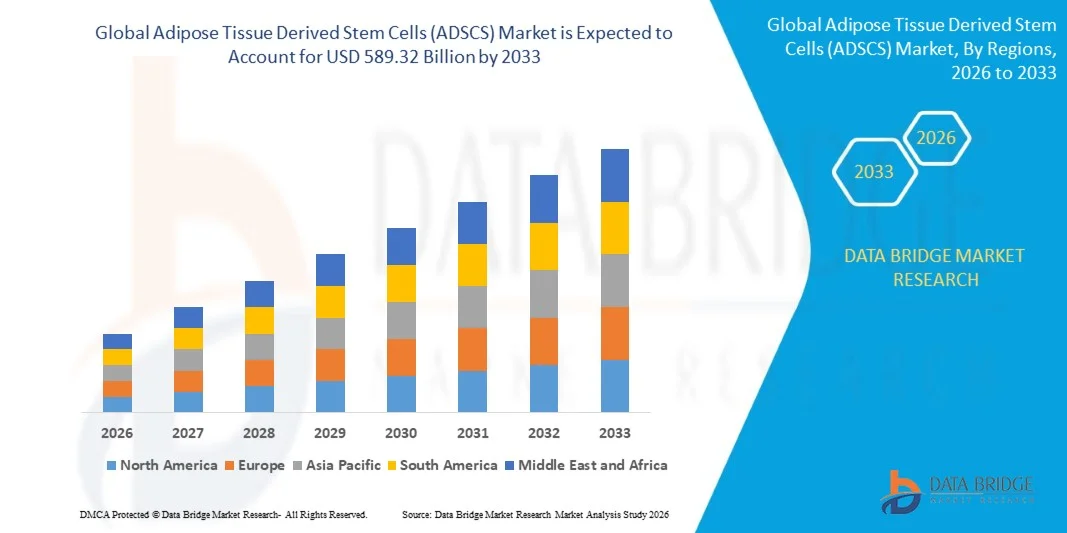
The Adipose Tissue Derived Stem Cells (ADSCS) Market was valued at USD 192.65 billion in 2025 and is projected to reach USD 589.32 billion by 2033, growing at a CAGR of 15.00% from 2026 to 2033. The Adipose Tissue Derived Stem Cells (ADSCS) Market is experiencing steady growth driven by increasing adoption of regenerative medicine therapies, rising prevalence of chronic and degenerative diseases, and expanding research activities focused on stem cell-based treatments. Growing advancements in cell isolation, processing technologies, and personalized medicine approaches are further accelerating market development. The increasing application of ADSCs across orthopedics, wound healing, cardiovascular disorders, autoimmune diseases, and cosmetic procedures is creating significant demand for adipose-derived stem cell therapies worldwide.
The growing burden of musculoskeletal disorders, osteoarthritis, diabetes-related complications, and chronic wounds, combined with increasing investments in regenerative medicine research, is encouraging healthcare providers, biotechnology companies, and research institutions to adopt adipose tissue-derived stem cell technologies. ADSCs offer advantages such as minimally invasive harvesting procedures, high cell yield, strong regenerative potential, and immunomodulatory properties, making them an attractive alternative to other stem cell sources. Furthermore, expanding clinical trials, supportive government funding for stem cell research, and ongoing advancements in cell-based therapeutics are contributing to broader adoption of ADSCs in both clinical and research settings.
Key Market Trends & Insights
- North America dominated the Adipose Tissue Derived Stem Cells (ADSCS) Market with the largest revenue share of 39.42% in 2025, supported by strong regenerative medicine research activities, a high concentration of biotechnology companies, favorable funding for stem cell research, and increasing adoption of cell-based therapies for chronic and degenerative diseases.
- The Human Adipose Tissue-Derived Stem Cells segment dominated the market with a share of 68.42% in 2025 due to its extensive utilization in regenerative medicine, stem cell therapy development, tissue repair studies, and translational research programs.
- Asia-Pacific is expected to be the fastest-growing region at a CAGR of 8.3% from 2026 to 2033, fueled by increasing investments in stem cell research, expanding biotechnology sectors, growing healthcare expenditure, and rising adoption of regenerative medicine across China, India, Japan, and South Korea.
- The Rat Adipose Tissue-Derived Stem Cells segment is projected to register the fastest CAGR of 8.0% from 2026 to 2033, reflecting growing utilization in preclinical studies, drug discovery programs, toxicology testing, and translational regenerative medicine research.
- The Media segment dominates the reagents category with a 46.18% revenue share in 2025, supported by its essential role in stem cell isolation, expansion, maintenance, and differentiation processes across research laboratories and commercial manufacturing facilities.
- The Regenerative Medicine segment accounted for 42.76% of the market in 2025, driven by increasing clinical applications of ADSCs in musculoskeletal disorders, cardiovascular diseases, chronic wound healing, autoimmune disorders, and reconstructive procedures.
- The Cell Therapy segment is the fastest-growing application category, with a CAGR of 8.5% from 2026 to 2033, fueled by growing clinical trial activity, increasing commercialization of stem cell therapies, and rising demand for personalized regenerative treatment approaches.
- Biotechnology Companies dominated the end-user category with a 47.23% market share in 2025, owing to substantial investments in stem cell product development, regenerative medicine platforms, clinical research programs, and commercialization of advanced cell-based therapeutics.
- Academic and Research Institutes are expected to witness the fastest growth at a CAGR of 8.2% from 2026 to 2033, supported by increasing government grants, expanding stem cell research initiatives, rising collaboration with biotechnology firms, and growing focus on translational regenerative medicine studies.
Market Size & Forecast
- Global Market Value (2025): USD 192.65 Billion
- Expected Market Value (2033): USD 589.32 Billion
- Forecast CAGR (2026–2033): 15.00%
- Leading Region in 2025: North America
- Fastest Growing Region: Asia-Pacific
Report Scope and Adipose Tissue Derived Stem Cells (ADSCS) Market Segmentation
|
Attributes |
Adipose Tissue Derived Stem Cells (ADSCS) Key Market Insights |
|
Segments Covered |
|
|
Countries Covered |
North America · U.S. · Canada · Mexico Europe · Germany · France · U.K. · Netherlands · Switzerland · Belgium · Russia · Italy · Spain · Turkey · Rest of Europe Asia-Pacific · China · Japan · India · South Korea · Singapore · Malaysia · Australia · Thailand · Indonesia · Philippines · Rest of Asia-Pacific Middle East and Africa · Saudi Arabia · U.A.E. · South Africa · Egypt · Israel · Rest of Middle East and Africa South America · Brazil · Argentina · Rest of South America |
|
Key Market Players |
• Thermo Fisher Scientific Inc. (U.S.) |
|
Market Opportunities |
· Expansion of Regenerative Medicine and Personalized Cell Therapies · Rising Clinical Trial Activity and Stem Cell Research Investments · Growing Adoption of Tissue Engineering and Advanced Biomaterials |
|
Value Added Data Infosets |
In addition to the insights on market scenarios such as market value, growth rate, segmentation, geographical coverage, and major players, the market reports curated by the Data Bridge Market Research also include in-depth expert analysis, geographically represented company-wise production and capacity, network layouts of distributors and partners, detailed and updated price trend analysis and deficit analysis of supply chain and demand. |
Adipose Tissue Derived Stem Cells (ADSCS) Market Trends
Trend: Growing Adoption of Regenerative Medicine and Personalized Cell Therapies
The Adipose Tissue Derived Stem Cells (ADSCS) Market is witnessing strong momentum due to the growing adoption of regenerative medicine and personalized treatment approaches. ADSCs are increasingly being utilized in orthopedic repair, chronic wound management, cardiovascular regeneration, aesthetic medicine, and autoimmune disease research because of their high proliferative capacity and immunomodulatory properties. Unlike bone marrow-derived stem cells, adipose tissue provides a significantly higher stem cell yield, making it an attractive source for clinical applications. Advances in cell isolation technologies, biobanking, and tissue engineering are further supporting market growth. For instance, multiple ongoing clinical studies are evaluating ADSCs for osteoarthritis, diabetic foot ulcers, and cartilage regeneration, highlighting the expanding therapeutic potential of adipose-derived stem cell therapies worldwide.
Adipose Tissue Derived Stem Cells (ADSCS) Market Dynamics
Key Market Driver: Rising Investment in Regenerative Medicine and Stem Cell Research
The increasing investment in regenerative medicine research is a major driver of the global ADSCs market. Governments, biotechnology companies, and academic institutions are allocating substantial resources toward developing stem cell-based therapies for chronic and degenerative diseases. According to the Alliance for Regenerative Medicine, global financing in regenerative medicine and advanced therapies continues to attract billions of dollars annually, reflecting growing confidence in cell-based treatment platforms. ADSCs are increasingly being investigated for musculoskeletal disorders, cardiovascular diseases, neurological conditions, and tissue repair applications. In addition, the rising prevalence of osteoarthritis, which affects hundreds of millions of individuals worldwide, is driving demand for innovative regenerative treatment options. Biotechnology companies are also expanding clinical trial pipelines focused on adipose-derived stem cell therapies, accelerating commercialization opportunities and market growth.
Key Restraint/Challenge: Regulatory Complexity and High Development Costs
A significant challenge in the global ADSCs market is the stringent regulatory environment governing stem cell therapies and the high costs associated with clinical development. Stem cell-based products require extensive preclinical studies, clinical trials, manufacturing validation, and long-term safety monitoring before obtaining regulatory approval. Variations in regulatory frameworks across North America, Europe, and Asia-Pacific further complicate product development and commercialization strategies. In addition, establishing GMP-compliant cell processing facilities, maintaining quality control standards, and ensuring product consistency require substantial capital investment. Smaller biotechnology companies and research organizations often face difficulties securing funding for large-scale clinical programs, which can delay market entry and limit broader adoption of ADSC-based therapies.
Key Market Opportunity: Expansion of Tissue Engineering and Next-Generation Cell Therapies
The rapid advancement of tissue engineering, 3D bioprinting, and personalized regenerative medicine presents a significant opportunity for the ADSCs market. Researchers are increasingly combining adipose-derived stem cells with biomaterials, scaffolds, and bioengineered matrices to develop next-generation regenerative solutions for tissue repair and organ reconstruction. The growing use of ADSCs in cartilage regeneration, wound healing products, reconstructive surgery, and cardiovascular tissue engineering is creating new commercial opportunities. Furthermore, advancements in gene editing technologies, artificial intelligence-assisted cell analysis, and automated cell manufacturing platforms are improving treatment precision and scalability. As healthcare systems increasingly focus on regenerative and personalized therapies, ADSCs are expected to play a central role in the future development of advanced cell-based therapeutics across North America, Europe, Asia-Pacific, and emerging healthcare markets.
Adipose Tissue Derived Stem Cells (ADSCS) Market Scope
The Adipose Tissue Derived Stem Cells (ADSCS) market is segmented on the basis of cell line, reagents, application, and end user.
- By Cell Line
On the basis of cell line, the Adipose Tissue Derived Stem Cells (ADSCS) Market is segmented into Human Adipose Tissue-Derived Stem Cells and Rat Adipose Tissue-Derived Stem Cells. The Human Adipose Tissue-Derived Stem Cells segment dominated the market with a share of 68.42% in 2025 due to its extensive utilization in regenerative medicine, stem cell therapy development, tissue repair studies, and translational research programs. Human ADSCs possess strong self-renewal capacity, multilineage differentiation potential, and immunomodulatory properties, making them highly suitable for clinical and preclinical applications. Increasing investments in cell-based therapies for orthopedic disorders, cardiovascular diseases, wound healing, and autoimmune conditions continue to support segment growth. The growing number of clinical trials evaluating human ADSCs for regenerative medicine applications is further accelerating demand. Additionally, the availability of standardized isolation protocols, biobanking infrastructure, and favorable research funding has strengthened adoption among biotechnology companies and academic institutes. Rising interest in personalized medicine and cell therapy commercialization also contributes to the segment’s market leadership across North America and Europe.
The Human Adipose Tissue-Derived Stem Cells segment is also expected to witness the fastest CAGR of 9.1% from 2026 to 2033, driven by expanding clinical applications and increasing regulatory support for regenerative medicine research. Growing demand for advanced stem cell therapies in musculoskeletal, neurological, and cardiovascular indications is creating significant opportunities for human ADSC utilization. Pharmaceutical and biotechnology companies are increasingly incorporating human-derived stem cells into drug discovery and toxicity screening programs. Advancements in cell expansion technologies, cryopreservation methods, and GMP-compliant manufacturing processes are improving scalability and commercial viability. Furthermore, rising investments in personalized regenerative therapies and increasing collaborations between research institutes and biopharmaceutical firms are expected to accelerate segment growth throughout the forecast period.
- By Reagents
On the basis of reagents, the Adipose Tissue Derived Stem Cells (ADSCS) Market is segmented into Media, Sera, and Kits. The Media segment dominated the market with a share of 44.76% in 2025 owing to its critical role in ADSC isolation, expansion, maintenance, and differentiation processes. Cell culture media are essential for preserving stem cell viability, proliferation rates, and therapeutic functionality throughout research and manufacturing workflows. The increasing number of stem cell research projects and clinical development programs has significantly boosted demand for specialized ADSC culture media. Biotechnology companies and research institutes rely on advanced serum-free and chemically defined media formulations to improve reproducibility and regulatory compliance. Additionally, ongoing innovations in culture media designed to enhance stem cell growth and differentiation efficiency continue to support widespread adoption. The segment also benefits from increasing commercialization of regenerative medicine products and growing investment in cell manufacturing infrastructure globally.
The Kits segment is anticipated to register the fastest CAGR of 9.4% from 2026 to 2033, driven by increasing demand for standardized and user-friendly stem cell isolation and characterization solutions. Researchers are increasingly adopting ready-to-use kits to reduce processing time and improve experimental consistency. Growing emphasis on reproducible research outcomes and quality-controlled laboratory workflows is supporting market expansion. Advancements in stem cell isolation technologies and rising adoption of automated laboratory systems are further accelerating demand. In addition, increasing stem cell research activities across emerging economies and expanding academic collaborations are expected to strengthen the growth trajectory of the kits segment during the forecast period.
- By Application
On the basis of application, the Adipose Tissue Derived Stem Cells (ADSCS) Market is segmented into Regenerative Medicine, Tissue Engineering, Cell Therapy, and Others. The Regenerative Medicine segment dominated the market with a share of 39.85% in 2025 due to the growing utilization of ADSCs for tissue repair, wound healing, orthopedic regeneration, and cardiovascular disease treatment. The ability of adipose-derived stem cells to differentiate into multiple cell types and secrete regenerative growth factors has positioned them as a key component of regenerative medicine programs worldwide. Increasing prevalence of chronic diseases, musculoskeletal disorders, and age-related degenerative conditions is driving demand for innovative regenerative therapies. Furthermore, rising investments in stem cell research, supportive government funding, and expanding clinical trial activity continue to fuel segment growth. The strong presence of biotechnology firms focused on regenerative medicine development has also contributed significantly to market dominance.
The Cell Therapy segment is projected to witness the fastest CAGR of 9.8% from 2026 to 2033, driven by increasing development of personalized and allogeneic stem cell-based therapeutic products. Growing clinical evidence supporting the therapeutic efficacy of ADSCs in inflammatory, autoimmune, and degenerative disorders is accelerating adoption. Pharmaceutical companies are actively investing in advanced cell therapy pipelines to address unmet medical needs across multiple therapeutic areas. Improvements in cell manufacturing technologies, regulatory frameworks, and commercialization pathways are enhancing market opportunities. Additionally, rising demand for minimally invasive regenerative treatments and expanding healthcare expenditure are expected to support rapid segment growth throughout the forecast period.
- By End User
On the basis of end user, the Adipose Tissue Derived Stem Cells (ADSCS) Market is segmented into Biotechnology Companies and Academic & Research Institutes. The Biotechnology Companies segment dominated the market with a share of 57.63% in 2025 owing to extensive investments in stem cell research, regenerative medicine development, and cell therapy commercialization. Biotechnology firms play a central role in advancing ADSC-based therapeutics through clinical trials, product development, and manufacturing scale-up activities. Increasing strategic collaborations, licensing agreements, and funding initiatives are supporting innovation across the sector. The growing number of companies focused on regenerative medicine and advanced biologics has further strengthened demand for ADSC products and services. Additionally, rising venture capital investment and favorable regulatory pathways for cell-based therapies continue to reinforce the segment’s leading position in the global market.
The Biotechnology Companies segment is also expected to witness the fastest CAGR of 9.6% from 2026 to 2033, driven by increasing commercialization of stem cell therapies and growing investment in precision regenerative medicine. Companies are expanding research pipelines focused on orthopedic regeneration, autoimmune disorders, dermatology, and cardiovascular applications. Advancements in GMP manufacturing facilities, cell banking capabilities, and large-scale stem cell production technologies are supporting market expansion. Furthermore, rising partnerships between biotechnology firms, healthcare providers, and academic institutions are accelerating clinical translation and product development activities. The continued expansion of regenerative medicine markets globally is expected to create substantial growth opportunities for biotechnology companies over the forecast period.
Adipose Tissue Derived Stem Cells (ADSCS) Market Regional Analysis
North America dominated the Adipose Tissue Derived Stem Cells (ADSCs) market and accounted for the largest revenue share of 39.42% in 2025, supported by robust regenerative medicine research activities, a strong presence of biotechnology and cell therapy companies, and substantial public and private funding for stem cell-based innovations. The region benefits from advanced healthcare infrastructure, favorable regulatory support for clinical research, and increasing adoption of adipose-derived stem cell therapies for orthopedic disorders, wound healing, cardiovascular diseases, and autoimmune conditions. Growing investments in personalized medicine, expanding clinical trial activity, and strong collaborations between academic institutions and biotechnology firms continue to strengthen North America's leadership position in the global market.
U.S. Adipose Tissue Derived Stem Cells (ADSCS) Market Insight
The U.S. Adipose Tissue Derived Stem Cells (ADSCs) market is witnessing strong growth due to increasing investments in regenerative medicine, stem cell therapy development, and advanced biomedical research. The country hosts a large number of biotechnology companies, research organizations, and clinical trial centers actively engaged in ADSC-based therapeutic development. Growing prevalence of chronic diseases, rising demand for minimally invasive regenerative treatments, and expanding applications of stem cells in tissue repair and personalized medicine are driving market expansion. Additionally, strong research funding from government agencies and private investors continues to accelerate innovation and commercialization activities across the U.S. market.
Europe Adipose Tissue Derived Stem Cells (ADSCS) Market Insight
The Europe Adipose Tissue Derived Stem Cells (ADSCs) market remains a major contributor to global revenue, driven by increasing investments in regenerative medicine research, supportive government initiatives, and expanding clinical applications of stem cell therapies. The region benefits from strong academic research networks, advanced healthcare systems, and growing collaborations between biotechnology companies and research institutions. Rising demand for cell-based therapies in orthopedics, dermatology, cardiovascular diseases, and tissue engineering applications is supporting market growth. Furthermore, ongoing advancements in stem cell processing technologies and increasing participation in international regenerative medicine programs continue to enhance market development across Europe.
U.K. Adipose Tissue Derived Stem Cells (ADSCS) Market Insight
The U.K. Adipose Tissue Derived Stem Cells (ADSCs) market is experiencing steady growth, supported by strong biomedical research capabilities, increasing stem cell research funding, and expanding adoption of regenerative medicine technologies. Academic institutions and biotechnology companies are actively exploring ADSC applications in tissue repair, wound healing, and immune-related disorders. Growing government support for advanced therapies and personalized medicine initiatives is encouraging innovation within the sector. Furthermore, increasing clinical research activities and partnerships between healthcare providers and biotechnology firms are contributing to market expansion across the United Kingdom.
Germany Adipose Tissue Derived Stem Cells (ADSCS) Market Insight
The Germany Adipose Tissue Derived Stem Cells (ADSCs) market is expanding steadily due to the country's strong biotechnology industry, advanced life sciences research infrastructure, and increasing focus on regenerative medicine innovation. Research institutes, universities, and biotechnology companies are actively investing in ADSC-based therapies targeting musculoskeletal disorders, cardiovascular diseases, and tissue regeneration applications. The availability of advanced laboratory facilities, favorable research grants, and growing demand for cell-based treatment approaches are supporting market growth. Continuous advancements in stem cell manufacturing, processing technologies, and translational research activities are further strengthening Germany’s position within the European ADSCs market.
Asia-Pacific Adipose Tissue Derived Stem Cells (ADSCS) Market Insight
The Asia-Pacific Adipose Tissue Derived Stem Cells (ADSCs) market is expected to witness the fastest growth, registering a CAGR of 8.3% from 2026 to 2033, driven by expanding biotechnology sectors, increasing healthcare expenditure, and rising investments in stem cell research across China, India, Japan, and South Korea. Growing awareness regarding regenerative medicine, improving healthcare infrastructure, and increasing prevalence of chronic and degenerative diseases are supporting market expansion. Additionally, favorable government initiatives promoting biotechnology innovation and the growing number of clinical studies evaluating stem cell therapies are accelerating ADSC adoption throughout the region.
Japan Adipose Tissue Derived Stem Cells (ADSCS) Market Insight
The Japan Adipose Tissue Derived Stem Cells (ADSCs) market is witnessing consistent growth due to strong government support for regenerative medicine, advanced stem cell research capabilities, and increasing adoption of innovative cell-based therapies. Japanese biotechnology companies and research institutes are actively developing ADSC-based treatments for orthopedic conditions, cardiovascular disorders, and tissue regeneration applications. The country's favorable regulatory framework for regenerative medicine products and growing investments in precision healthcare solutions are further contributing to market growth. Moreover, increasing collaboration between academia and industry is accelerating the commercialization of stem cell technologies in Japan.
China Adipose Tissue Derived Stem Cells (ADSCS) Market Insight
The China Adipose Tissue Derived Stem Cells (ADSCs) market is growing rapidly, driven by substantial investments in biotechnology research, expanding regenerative medicine programs, and increasing government support for advanced healthcare innovation. Growing prevalence of chronic diseases, rising healthcare spending, and expanding clinical research infrastructure are significantly boosting demand for ADSC-based therapies. In addition, increasing participation of Chinese biotechnology companies in stem cell research, rising collaborations with international research organizations, and rapid advancements in cell therapy manufacturing technologies are positioning China as one of the fastest-growing markets for Adipose Tissue Derived Stem Cells (ADSCs) globally.
Adipose Tissue Derived Stem Cells (ADSCS) Market Share
The Adipose Tissue Derived Stem Cells (ADSCS) industry is primarily led by well-established companies, including:
- Thermo Fisher Scientific Inc. (U.S.)
- Merck KGaA (Germany)
- Lonza Group AG (Switzerland)
- STEMCELL Technologies Inc. (Canada)
- PromoCell GmbH (Germany)
- Bio-Techne Corporation (U.S.)
- Axol Bioscience Ltd. (U.K.)
- Celprogen Inc. (U.S.)
- ZenBio, Inc. (U.S.)
- American CryoStem Corporation (U.S.)
- Cytori Therapeutics, Inc. (U.S.)
- Pluri Inc. (Israel)
- Mesoblast Limited (Australia)
- Takara Bio Inc. (Japan)
- FUJIFILM Cellular Dynamics, Inc. (U.S.)
- Miltenyi Biotec B.V. & Co. KG (Germany)
- AllCells LLC (U.S.)
- Creative Bioarray (U.S.)
- ScienCell Research Laboratories, Inc. (U.S.)
- ATCC (American Type Culture Collection) (U.S.)
- RoosterBio, Inc. (U.S.)
- Cellular Engineering Technologies Inc. (U.S.)
- BioIVT LLC (U.S.)
- Sartorius AG (Germany)
- Corning Incorporated (U.S.)
- Cyagen Biosciences Inc. (U.S.)
- REPROCELL Inc. (Japan)
- Cook MyoSite, Inc. (U.S.)
- Tissue Genesis, LLC (U.S.)
- Celularity Inc. (U.S.)
- Anterogen Co., Ltd. (South Korea)
- MEDIPOST Co., Ltd. (South Korea)
- RichSource Stem Cells (U.S.)
- Human Longevity Cell Corporation (U.S.)
- Stempeutics Research Pvt. Ltd. (India)
Latest Developments in Adipose Tissue Derived Stem Cells (ADSCS) Market
- In November 2023, researchers at Penn State University reported successful intraoperative bioprinting of human adipose-derived stem cells combined with extracellular matrix materials for full-thickness skin reconstruction. The study demonstrated the ability of ADSCs to promote hair follicle-like structures and adipose tissue formation, highlighting their potential in advanced tissue engineering and reconstructive medicine applications
- In May 2023, researchers published a comprehensive study on highly pluripotent adipose-derived stem cell-enriched nanofat as a novel translational platform for regenerative medicine and stem cell therapy. The development highlighted the growing use of ADSC-enriched nanofat technologies in reconstructive surgery, wound healing, aesthetic medicine, and tissue regeneration applications
- In April 2023, researchers from the University Hospital Miguel Servet and collaborating institutions published new findings on gene therapy approaches utilizing adipose tissue-derived mesenchymal stem cells for obesity and metabolic disorder treatment. The research emphasized the expanding therapeutic potential of ADSCs beyond regenerative medicine into metabolic disease management and advanced cell-based therapeutics
- In December 2024, Mesoblast Ltd. received U.S. FDA approval for Ryoncil (remestemcel-L), becoming the first mesenchymal stromal cell (MSC)-based therapy approved in the United States for steroid-refractory acute graft-versus-host disease (SR-aGVHD) in pediatric patients. While Ryoncil utilizes bone marrow-derived MSCs, the approval represented a landmark regulatory milestone for the broader mesenchymal stem cell industry, including adipose-derived stem cell developers, by strengthening confidence in commercial stem cell therapeutics and regulatory pathways for regenerative medicine products
- In May 2024, Hope Biosciences Research Foundation announced topline results from its Phase II clinical trial evaluating HB-adMSCs (adipose-derived mesenchymal stem cells) for Post-COVID-19 Syndrome (Long COVID). The randomized, placebo-controlled study enrolled 79 participants and assessed the safety and efficacy of adipose-derived stem cell therapy for persistent post-viral symptoms. The trial highlighted the growing clinical exploration of ADSC-based therapies across inflammatory and immune-mediated disorders
- In May 2024, researchers published findings in Scientific Reports demonstrating that expression of the tardigrade-derived mitochondrial abundant heat soluble (MAHS) protein significantly improved adipose-derived stem cell survival under metabolic, mitochondrial, and injection-related stress conditions. The development represents an important advancement in enhancing ADSC viability and therapeutic effectiveness for regenerative medicine applications, potentially improving cell persistence after transplantation
- In May 2024, a study published in the Journal of Nanobiotechnology reported that adipose-derived stem cell migrasomes enriched with CXCL12 could enhance stem cell recruitment and soft tissue regeneration through CXCR4/RhoA signaling pathways. This research provided new insights into the regenerative mechanisms of ADSCs and may support the future development of next-generation regenerative medicine and tissue repair therapies
- In March 2025, Hope Biosciences announced FDA authorization for the first pediatric clinical trial evaluating HB-adMSCs (adipose-derived mesenchymal stem cells) in Juvenile Idiopathic Arthritis (JIA). The trial is designed to assess whether intravenous administration of adipose-derived stem cells can improve symptoms and quality of life in children with autoimmune arthritis, expanding the clinical scope of ADSC therapies into pediatric immunology
- In May 2025, Regeneration Biomedical announced updated Phase I clinical data for its autologous adipose-derived stem cell therapy (RB-ADSCs) for Alzheimer’s disease. Interim findings demonstrated favorable safety outcomes and encouraging cognitive improvement signals, highlighting growing interest in ADSC-based therapies for neurodegenerative disorders and central nervous system regeneration

- Interactive Data Analysis Dashboard
- Company Analysis Dashboard for high growth potential opportunities
- Research Analyst Access for customization & queries
- Competitor Analysis with Interactive dashboard
- Latest News, Updates & Trend analysis
- Harness the Power of Benchmark Analysis for Comprehensive Competitor Tracking
Data collection and base year analysis are done using data collection modules with large sample sizes. The stage includes obtaining market information or related data through various sources and strategies. It includes examining and planning all the data acquired from the past in advance. It likewise envelops the examination of information inconsistencies seen across different information sources. The market data is analysed and estimated using market statistical and coherent models. Also, market share analysis and key trend analysis are the major success factors in the market report. To know more, please request an analyst call or drop down your inquiry.
The key research methodology used by DBMR research team is data triangulation which involves data mining, analysis of the impact of data variables on the market and primary (industry expert) validation. Data models include Vendor Positioning Grid, Market Time Line Analysis, Market Overview and Guide, Company Positioning Grid, Patent Analysis, Pricing Analysis, Company Market Share Analysis, Standards of Measurement, Global versus Regional and Vendor Share Analysis. To know more about the research methodology, drop in an inquiry to speak to our industry experts.
Data Bridge Market Research is a leader in advanced formative research. We take pride in servicing our existing and new customers with data and analysis that match and suits their goal. The report can be customized to include price trend analysis of target brands understanding the market for additional countries (ask for the list of countries), clinical trial results data, literature review, refurbished market and product base analysis. Market analysis of target competitors can be analyzed from technology-based analysis to market portfolio strategies. We can add as many competitors that you require data about in the format and data style you are looking for. Our team of analysts can also provide you data in crude raw excel files pivot tables (Fact book) or can assist you in creating presentations from the data sets available in the report.













