


What is the Aesthetic Dermatology Market Size and Growth Rate?
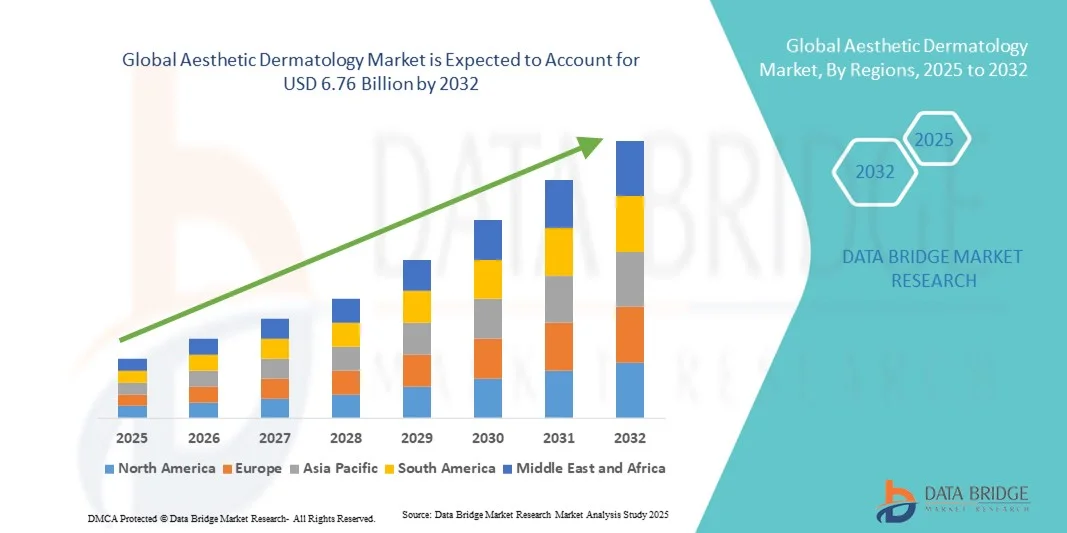
- As per Data Bridge Market Research Analysis the global aesthetic dermatology market size was valued at USD 4.31 billion in 2024 and is expected to reach USD 6.76 billion by 2032, at a CAGR of 5.10% during the forecast period
- The market growth is largely fueled by the increasing focus on personal appearance, rising disposable incomes, and growing awareness of cosmetic procedures. Technological advancements in minimally invasive treatments, laser therapies, and injectable products are further driving adoption across diverse patient demographics
- Furthermore, the demand for safe, effective, and quick aesthetic solutions—ranging from skin rejuvenation to body contouring—is encouraging clinics and dermatology centers to expand their service offerings. These converging factors are accelerating the uptake of Aesthetic Dermatology solutions, thereby significantly boosting the industry's growth
Market Size and Forecast:
- Global Market Value (2024): USD 4.31 billion
- Expected Market Value (2032): USD 6.76 billion
- Forecast CAGR (2025–2032): 5.10%
What are the Major Takeaways ofAesthetic Dermatology Market?
- Aesthetic dermatology treatments, including minimally invasive procedures, cosmetic injectables, and laser therapies, are increasingly vital components of modern healthcare and wellness systems in both residential and commercial settings due to their enhanced convenience, improved safety profiles, and ability to deliver personalized cosmetic outcomes
- The escalating demand for aesthetic dermatology services is primarily fueled by the widespread adoption of non-surgical cosmetic treatments, growing awareness about personal appearance, and a rising preference for minimally invasive procedures over traditional surgical interventions
- North America dominated the aesthetic dermatology market with the largest revenue share of 40.6% in 2024, characterized by high healthcare expenditure, strong presence of leading dermatology clinics, and a growing trend of personalized cosmetic treatments. The U.S. experienced substantial growth in aesthetic dermatology procedures, driven by technological advancements, increasing acceptance of injectables such as botulinum toxins and dermal fillers, and innovations from both established medical device manufacturers and startups focused on AI-guided cosmetic solutions
- Asia-Pacific is expected to be the fastest-growing region in the aesthetic dermatology market during the forecast period, with a projected CAGR of 10.3% from 2025 to 2032. Growth is driven by rising urbanization, increasing disposable incomes, expansion of dermatology clinics in countries such as India, China, and South Korea, and heightened awareness of advanced aesthetic procedures. The growing medical tourism sector and the adoption of minimally invasive treatments also support market expansion
- The face treatment segment dominated the aesthetic dermatology market with a 47.1% share in 2024, driven by demand for wrinkle reduction, facial contouring, and skin rejuvenation. Awareness campaigns, social media influence, and availability of advanced injectables contribute to growth
Report Scope and Aesthetic Dermatology Market Segmentation
|
Attributes |
Aesthetic Dermatology Key Market Insights |
|
Segments Covered |
|
|
Countries Covered |
North America
Europe
Asia-Pacific
Middle East and Africa
South America
|
|
Key Market Players |
|
|
Market Opportunities |
|
|
Value Added Data Infosets |
In addition to the insights on market scenarios such as market value, growth rate, segmentation, geographical coverage, and major players, the market reports curated by the Data Bridge Market Research also include in-depth expert analysis, pricing analysis, brand share analysis, consumer survey, demography analysis, supply chain analysis, value chain analysis, raw material/consumables overview, vendor selection criteria, PESTLE Analysis, Porter Analysis, and regulatory framework. |
What are the Aesthetic Dermatology Market Trends?
Rising Adoption of Minimally Invasive Procedures and Advanced Skin Therapies
- A significant and accelerating trend in the global aesthetic dermatology market is the increasing adoption of minimally invasive procedures such as laser treatments, injectables, and energy-based devices for facial and body rejuvenation
- For instance, the demand for botulinum toxin injections, dermal fillers, and microneedling treatments has surged in both developed and emerging markets, driven by consumer preference for quick, effective, and low-downtime procedures
- There is also growing integration of combination therapies, where practitioners combine multiple modalities—such as laser resurfacing with platelet-rich plasma (PRP) or hyaluronic acid-based treatments—to achieve enhanced clinical outcomes
- Medical professionals are increasingly leveraging technological advancements in imaging, diagnostic tools, and patient-specific treatment planning to offer personalized aesthetic solutions, further driving adoption
- The trend toward natural-looking, customized aesthetic results, coupled with increased patient awareness of advanced dermatological treatments, is shaping the growth trajectory of the market
- Expanding availability of outpatient clinics, medispas, and aesthetic centers, along with rising social media influence and increasing consumer focus on appearance and wellness, is further fueling the adoption of advanced dermatology solutions globally
Aesthetic Dermatology Market Dynamics
Driver
Increasing Demand for Non-Surgical and Cosmetic Treatments
- The rising demand for non-surgical cosmetic procedures is a primary driver for the growth of the Aesthetic Dermatology market. Patients increasingly prefer less invasive treatments with reduced recovery times and lower procedural risks
- For instance, the adoption of laser-based skin rejuvenation, chemical peels, and injectable therapies has witnessed robust growth across North America, Europe, and Asia-Pacific
- An aging global population with increased focus on anti-aging treatments is contributing to higher patient inflow in aesthetic clinics and dermatology centers
- Healthcare providers are expanding their offerings of personalized and advanced treatment options, including PRP therapy, fat grafting, and skin tightening procedures, to meet evolving patient expectations
- Rising disposable incomes, improved healthcare infrastructure, and increased awareness of cosmetic procedures among millennials and Gen Z populations are further stimulating market growth
- Government initiatives and regulatory approvals for novel dermatology devices and biologic-based therapies are encouraging innovation, which drives greater adoption of new treatments and technologies
Restraint/Challenge
High Cost of Procedures and Regulatory Compliance
- The relatively high cost of advanced aesthetic dermatology treatments remains a key challenge for wider market penetration, particularly in price-sensitive regions or for middle-income populations. Procedures such as laser resurfacing, dermal fillers, and advanced energy-based therapies may not be affordable for all consumers, limiting adoption in certain demographics
- Stringent regulatory frameworks and compliance requirements for the approval of dermatology devices, biologics, and injectable therapies can slow down market entry for new products and increase the time-to-market for innovations
- Concerns regarding procedural safety, potential side effects, and variability in treatment outcomes may cause hesitation among prospective patients, particularly for newer or combination therapies
- Limited access to trained dermatologists and aesthetic practitioners in certain regions can restrict the availability of high-quality care, impacting market growth
- To overcome these challenges, stakeholders are focusing on patient education, cost-effective treatment packages, improved procedural safety, and training programs for clinicians to ensure standardized and high-quality outcomes in aesthetic dermatology
Aesthetic Dermatology Market Scope
The market is segmented on the basis of product type, surgery type, treatment type, application, gender, end user, and distribution channel.
- By Product Type
On the basis of product type, the aesthetic dermatology market is segmented into medicines and devices. The medicines segment dominated the largest market revenue share of 44.5% in 2024, driven by the growing adoption of botulinum toxins, dermal fillers, and other injectables for facial rejuvenation, wrinkle reduction, and scar treatment. This segment benefits from repeat procedures, high patient satisfaction, and the development of novel formulations offering longer-lasting results. Clinics and dermatology centers prefer medicines due to their minimally invasive nature, shorter recovery times, and high treatment precision. Rising awareness of cosmetic procedures, expansion of aesthetic clinics, and medical tourism in North America, Europe, and Asia-Pacific further strengthen the segment. The availability of combination therapies, robust marketing campaigns, and regulatory approvals for new treatments also support adoption. Patient willingness to invest in anti-aging and cosmetic improvements drives continued revenue growth. Dermatologists’ recommendations and social media influence contribute to increasing procedure volumes. Continuous R&D and the launch of advanced formulations enhance patient outcomes and stimulate demand. High repeatability, strong brand recognition, and accessibility across clinics consolidate the segment’s dominance.
The devices segment is expected to witness the fastest CAGR of 10.8% from 2025 to 2032, fueled by increasing use of lasers, radiofrequency, and ultrasound-based technologies for hair removal, body contouring, and skin resurfacing. Devices provide high precision, multi-treatment versatility, and longer-lasting results, which drive adoption among clinics. Technological advancements, including AI-assisted operation, combined multi-functional devices, and portable systems, enhance safety and patient convenience. Expansion of high-end dermatology clinics, rising awareness of non-invasive aesthetic treatments, and strong demand in emerging economies further accelerate growth. The segment benefits from government approvals, regulatory clearances, and partnerships between hospitals and device manufacturers. Patient preference for safe, effective, and minimally invasive procedures supports rising adoption rates. Increased investments in clinic infrastructure, marketing, and training programs for device operation also drive growth. Advanced devices for specialized procedures, such as scar management and tattoo removal, offer differentiation and boost revenue. The trend of multi-procedure treatment sessions contributes to high utilization. Clinics prioritize device integration for better treatment outcomes, fueling CAGR expansion. Rising consumer interest in precision aesthetic treatments and technological innovations underpins rapid growth.
- By Surgery Type
On the basis of surgery type, the aesthetic dermatology market is segmented into minimally invasive and non-invasive procedures. The minimally invasive segment dominated with a 46.2% market share in 2024 due to patient preference for reduced downtime, lower complication risk, and minimally painful procedures. Popular treatments include fillers, injectables, and thread lifts. Repeat procedures, high patient satisfaction, and availability in clinics and dermatology centers drive adoption. Awareness campaigns, influencer promotion, and celebrity endorsements increase acceptance. Insurance coverage for certain treatments, combined with clinical endorsements, fosters trust. Growth is driven by urbanization, rising disposable incomes, and increasing geriatric populations seeking anti-aging solutions. Clinics invest in training, marketing, and advanced equipment to attract repeat patients. Minimally invasive procedures offer combination therapy options, enhancing treatment efficacy. Technological advancements in imaging, AI-assisted planning, and safer injection techniques further strengthen market dominance. Regulatory approvals for new minimally invasive methods ensure clinical safety and efficacy. Consumer preference for non-surgical rejuvenation reinforces demand. Minimally invasive procedures are preferred for face and body treatments, contributing to high market penetration.
The non-invasive segment is expected to witness the fastest CAGR of 11.5% from 2025 to 2032, driven by the rising popularity of laser therapy, chemical peels, microdermabrasion, and ultrasound-based treatments. Patients prefer non-invasive options due to minimal discomfort, no downtime, and suitability for sensitive areas. Adoption is growing in urban centers and high-income countries due to disposable income, lifestyle focus, and technological advancement. Clinics expand their offerings to include non-invasive treatments for scar removal, pigmentation correction, and hair removal. Increased investments in high-tech devices, patient education, and marketing enhance adoption. Rising awareness in emerging markets, coupled with availability of multi-functional devices, contributes to CAGR growth. Non-invasive procedures are increasingly combined with injectables for improved outcomes. Partnerships between device manufacturers and aesthetic clinics provide training and technology support. Improved treatment precision, faster recovery, and enhanced patient convenience drive rising demand. Technological advancements, including AI and real-time monitoring, improve safety and outcomes. Consumer preference for less painful, minimally disruptive procedures fuels adoption. Non-invasive treatments also attract male patients, expanding the customer base.
- By Treatment Type
On the basis of treatment type, the aesthetic dermatology market is segmented into face treatments and body treatments. The face treatment segment dominated the market with a 47.1% share in 2024, driven by demand for wrinkle reduction, facial contouring, and skin rejuvenation. Awareness campaigns, social media influence, and availability of advanced injectables contribute to growth. Clinics prefer face treatments due to repeat visits, high satisfaction, and multiple treatment combinations. Technological innovations such as AI-assisted imaging and minimally invasive techniques enhance precision and outcomes. Aging populations, rising disposable incomes, and increased focus on aesthetics drive adoption. The segment also benefits from celebrity endorsements, marketing campaigns, and medical tourism. Regulatory approvals for injectables and fillers expand procedural options. Clinics combine face treatments with skin resurfacing or laser therapy for enhanced results. Repeatability and high profit margins further solidify market share. Consumer willingness to invest in cosmetic improvement strengthens dominance. Dermatologists’ expertise and clinical training programs enhance treatment quality.
The body treatment segment is expected to witness the fastest CAGR of 10.9% from 2025 to 2032, fueled by rising demand for fat reduction, body contouring, and hair removal treatments. Growing obesity rates, urban lifestyle focus, and interest in aesthetic body improvements contribute to adoption. Clinics increasingly offer multi-treatment packages targeting body areas. Advanced devices, minimally invasive procedures, and combination therapies attract new and repeat patients. Awareness campaigns and increasing medical tourism for body treatments enhance growth. Technological innovations, such as AI-assisted and multi-functional devices, improve efficacy and safety. Rising disposable incomes, especially in urban regions, support patient uptake. Clinics invest in staff training and high-end equipment to deliver better outcomes. Consumer interest in long-term aesthetic improvements fuels adoption. Marketing initiatives highlight non-invasive options, driving patient engagement. Expansion of wellness clinics and aesthetic centers strengthens CAGR.
- By Application
On the basis of application, the aesthetic dermatology market is segmented into skin rejuvenation, skin resurfacing, skin tightening, hair removal, pigmented & vascular lesions, tattoo removal, scar, acne, dyschromia, skin tags, psoriasis, warts, hyperhidrosis, moles & freckles, and others. The skin rejuvenation segment dominated the market with a 45.8% share in 2024 due to high adoption of anti-aging treatments, facial rejuvenation procedures, and minimally invasive injectables. Social media influence, medical tourism, and celebrity endorsements enhance awareness. Clinics adopt multi-treatment protocols combining injectables with non-invasive procedures. Regulatory approvals, repeat procedures, and patient satisfaction strengthen market leadership. High profitability, easy adoption in dermatology clinics, and increasing demand in developed and emerging regions support dominance. Clinics focus on educational campaigns, personalized treatment plans, and combination therapy packages. Patient repeat visits for maintenance of aesthetic outcomes contribute to strong revenue generation. Aging population, high disposable income, and increasing cosmetic awareness drive growth. Technological integration, including AI and imaging, enhances precision. Non-invasive procedures such as lasers are often combined to improve rejuvenation outcomes. The rise of male patient adoption adds incremental growth.
The hair removal segment is expected to witness the fastest CAGR of 11.3% from 2025 to 2032, driven by growing awareness of permanent hair removal options, technological advancement in laser and IPL systems, and increased disposable incomes. Male and female patients adopt treatments for grooming and cosmetic purposes. Clinics expand offerings to meet rising demand, particularly in urban regions. Multi-treatment devices, AI-assisted operation, and reduced downtime enhance patient convenience. Marketing campaigns and social media influence drive patient interest. Clinics prioritize adoption of advanced technologies for better efficacy. Technological innovations improve safety, treatment time, and outcomes. Non-invasive nature attracts more patients. Regulatory approvals for devices ensure safety. Patient convenience, faster recovery, and comfort encourage repeat treatments.
- By Gender
On the basis of gender, the aesthetic dermatology market is segmented into female and male. The female segment dominated the market with a 60.2% share in 2024 due to higher adoption of cosmetic procedures, strong social influence, and preference for anti-aging treatments. Clinics offer female-centric packages and repeat sessions. Education campaigns, celebrity endorsements, and marketing enhance adoption. High disposable income, urban lifestyle, and awareness campaigns further strengthen dominance. Female patients drive repeat business and referrals. Clinics customize procedures for individual needs. Regulatory approvals and repeatable treatments encourage higher revenue. Combination therapies increase efficacy. Global expansion of dermatology centers boosts reach. Social media influence accelerates awareness. Aging population and cosmetic trends favor female-focused treatments.
The male segment is expected to witness the fastest CAGR of 10.7% from 2025 to 2032, fueled by increasing interest in aesthetic procedures, male grooming, and hair restoration treatments. Rising awareness, social media campaigns targeting men, and availability of male-specific treatments contribute to growth. Clinics offer male-centric packages, including body contouring, hair treatments, and scar management. Emerging markets show rapid adoption among male patients. Technological innovations and combination treatments increase convenience. Marketing campaigns focus on male aesthetic trends. Minimal downtime procedures attract working professionals. Non-invasive devices enhance adoption. Male patients contribute to clinic repeat visits. Awareness of anti-aging benefits drives uptake. Clinics leverage digital campaigns and influencer marketing to attract male patients.
- By End User
On the basis of end user, the aesthetic dermatology market is segmented into hospitals, dermatology clinics, surgical centers, spa clinics, and others. Dermatology clinics dominated the market with a 50.1% share in 2024 due to specialization in cosmetic procedures, skilled dermatologists, and advanced treatment infrastructure. Clinics offer combination treatments, repeat procedures, and personalized plans. High patient satisfaction, medical tourism, and social media influence enhance adoption. Expansion of dermatology chains, infrastructure investments, and advanced devices strengthen market share. Repeat visits, loyalty programs, and treatment packages contribute to revenue. Clinics cater to both male and female patients with tailored offerings. Advanced device adoption and skilled professionals increase efficacy. Urban centers show higher penetration due to disposable incomes. Combination therapy adoption further strengthens clinic dominance.
Surgical centers are expected to witness the fastest CAGR of 11.0% from 2025 to 2032, driven by adoption of advanced devices, minimally invasive procedures, and specialized aesthetic surgeries. High-end clinics and surgical centers benefit from technological innovations, patient demand for precision procedures, and increased disposable income. Clinics offer multi-treatment sessions, combination therapies, and personalized plans. Training programs for staff enhance treatment quality. Advanced imaging and AI-assisted procedures improve outcomes. Surgical centers attract high-income patients and medical tourists. Marketing campaigns and social media promotions drive awareness. Investment in high-tech infrastructure supports faster adoption. Repeat treatments and high patient satisfaction strengthen CAGR. Urbanization and lifestyle focus boost adoption in top cities.
- By Distribution Channel
On the basis of distribution channel, the aesthetic dermatology market is segmented into direct tender and retail sales. Direct tender dominated with a 52.3% share in 2024 due to bulk procurement by hospitals, dermatology clinics, and surgical centers. Long-term contracts, service support, and partnerships with suppliers strengthen dominance. Clinics and hospitals prefer direct procurement for consistency, training, and device support. Repeat orders for medicines and devices further drive revenue. Strategic agreements and bulk purchasing optimize cost and supply. Clinics expand adoption via trusted suppliers. High-value devices and injectables are procured directly. Strong market presence of key suppliers supports revenue growth. Bulk procurement ensures reliability, compliance, and technical assistance. Multi-year agreements with manufacturers facilitate upgrades and maintenance.
Retail sales are expected to witness the fastest CAGR of 10.5% from 2025 to 2032, driven by e-commerce growth, direct-to-consumer sales of aesthetic devices and products, and rising awareness. Consumer preference for convenience, home-use products, and smaller-scale devices contributes to adoption. Increasing marketing campaigns, influencer-led promotions, and subscription-based services enhance sales. Emerging markets show significant retail growth due to rising disposable income. Digital platforms, online consultation integration, and home-use kits expand reach. Retail channels support patient education, awareness, and convenience. Strong logistics, availability of replacement products, and bundled offers stimulate demand.
Aesthetic Dermatology Market Regional Analysis
- North America dominated the aesthetic dermatology market with the largest revenue share of 40.6% in 2024, characterized by high healthcare expenditure, strong presence of leading dermatology clinics, and a growing trend of personalized cosmetic treatments
- The market experienced substantial growth in aesthetic dermatology procedures, driven by technological advancements, increasing acceptance of injectables such as botulinum toxins and dermal fillers, and innovations from both established medical device manufacturers and startups focusing on minimally invasive cosmetic solutions
- Consumers in the region are increasingly seeking advanced skin therapies, non-invasive procedures, and combination treatments to achieve natural-looking results. The region also benefits from a robust healthcare infrastructure, widespread insurance coverage for certain procedures, and a well-trained network of dermatologists and aesthetic practitioners, further fueling adoption
U.S. Aesthetic Dermatology Market Insight
The U.S. aesthetic dermatology market captured the largest revenue share in 2024 within North America, fueled by increasing patient demand for non-surgical cosmetic procedures and a growing number of specialized aesthetic clinics. Technological innovations in injectables, lasers, and energy-based devices, combined with greater patient awareness of advanced treatments, continue to drive market expansion. Moreover, the adoption of combination therapies and personalized skin treatments is contributing to higher procedure volumes and revenue growth.
Europe Aesthetic Dermatology Market Insight
The Europe aesthetic dermatology market is projected to expand at a substantial CAGR throughout the forecast period, driven by rising patient preference for minimally invasive treatments, increasing disposable incomes, and strong healthcare infrastructure. Urbanization, a growing beauty and wellness culture, and increased awareness of advanced aesthetic procedures are fostering market adoption across countries such as Germany, France, and the U.K. The region is witnessing notable growth in both outpatient clinics and specialized dermatology centers.
U.K. Aesthetic Dermatology Market Insight
The U.K. aesthetic dermatology market is anticipated to grow at a noteworthy CAGR during the forecast period, fueled by increasing investments in aesthetic clinics, rising prevalence of non-invasive cosmetic treatments, and growing consumer awareness of anti-aging therapies. The expansion of outpatient services and the adoption of minimally invasive procedures such as injectables, chemical peels, and laser treatments are driving the market. Supportive healthcare regulations and increasing medical tourism in aesthetic services further accelerate growth.
Germany Aesthetic Dermatology Market Insight
The Germany aesthetic dermatology market is expected to expand at a considerable CAGR during the forecast period, driven by technological advancements in dermatology devices, rising patient awareness, and high demand for personalized aesthetic treatments. Germany’s well-developed healthcare infrastructure, strong research and development initiatives, and widespread clinician expertise are promoting the adoption of advanced skin therapies, non-invasive cosmetic procedures, and combination treatments in both residential and clinical settings.
Asia-Pacific Aesthetic Dermatology Market Insight
The Asia-Pacific aesthetic dermatology market is poised to grow at the fastest CAGR of 10.3% during the forecast period of 2025 to 2032, driven by rising urbanization, increasing disposable incomes, and rapid expansion of dermatology clinics in countries such as India, China, and South Korea. The region is witnessing a growing preference for minimally invasive procedures, injectables, laser treatments, and energy-based therapies. Increasing medical tourism, awareness of advanced aesthetic procedures, and availability of cost-effective treatments are further fueling market adoption.
Japan Aesthetic Dermatology Market Insight
The Japan aesthetic dermatology market is gaining momentum due to high technological adoption, rising demand for non-invasive cosmetic procedures, and increasing focus on anti-aging treatments. The country’s aging population is contributing to higher demand for wrinkle reduction, skin rejuvenation, and other minimally invasive therapies. Well-established dermatology centers and clinics offering specialized aesthetic services are further supporting market growth.
China Aesthetic Dermatology Market Insight
The China aesthetic dermatology market accounted for the largest market revenue share within Asia-Pacific in 2024, driven by rapid urbanization, rising disposable incomes, and increasing patient awareness of advanced skin therapies. The growing number of dermatology clinics, expansion of outpatient aesthetic centers, and heightened interest in minimally invasive procedures such as injectables, laser treatments, and combination therapies are key factors propelling market growth.
Which are the Top companies in Aesthetic Dermatology Market?
The Aesthetic Dermatology industry is primarily led by well-established companies, including:
- Revance Therapeutics, Inc. (U.S.)
- Galderma S.A. (Switzerland)
- Hugel, Inc. (South Korea)
- Medytox (South Korea)
- CynoSure, Inc. (U.S.)
- Lumenis Ltd. (Israel)
- Cutera, Inc. (U.S.)
- Alma Lasers (Israel)
- Syneron Medical Ltd. (Israel)
- Ipsen Pharma (France)
- Daewoong Pharmaceutical Co., Ltd. (South Korea)
- Evolus, Inc. (U.S.)
- Teoxane (Switzerland)
What are the Latest Developments in Global Aesthetic Dermatology Market?
- In September 2021, Galderma expanded its Restylane product portfolio in Asia-Pacific with the launch of Restylane Kysse, targeting lip augmentation and smoothing perioral lines, enhancing access to advanced dermal fillers in emerging markets
- In May 2022, Hugel, Inc. launched its Hugel Juvederm Volite hyaluronic acid injectable in South Korea, focused on skin hydration and fine line reduction, supporting rising demand for preventive and minimally invasive aesthetic procedures
- In March 2022, Allergan Aesthetics, a subsidiary of AbbVie, announced the launch of its Juvederm Volux filler in select European markets, designed to enhance facial contouring and jawline definition. The product features an optimized hyaluronic acid formula for longer-lasting results and supports minimally invasive aesthetic treatments
- In July 2023, Revance Therapeutics received FDA approval for its Daxxify injectable for the treatment of glabellar lines in adults, marking a significant expansion in long-lasting neurotoxin options for non-surgical facial aesthetics
- In January 2024, Cynosure, Inc. introduced its PicoSure Pro laser system globally, offering a faster and more efficient tattoo and pigmentation removal solution with minimized downtime, targeting both aesthetic clinics and dermatology centers

- Interactive Data Analysis Dashboard
- Company Analysis Dashboard for high growth potential opportunities
- Research Analyst Access for customization & queries
- Competitor Analysis with Interactive dashboard
- Latest News, Updates & Trend analysis
- Harness the Power of Benchmark Analysis for Comprehensive Competitor Tracking
Data collection and base year analysis are done using data collection modules with large sample sizes. The stage includes obtaining market information or related data through various sources and strategies. It includes examining and planning all the data acquired from the past in advance. It likewise envelops the examination of information inconsistencies seen across different information sources. The market data is analysed and estimated using market statistical and coherent models. Also, market share analysis and key trend analysis are the major success factors in the market report. To know more, please request an analyst call or drop down your inquiry.
The key research methodology used by DBMR research team is data triangulation which involves data mining, analysis of the impact of data variables on the market and primary (industry expert) validation. Data models include Vendor Positioning Grid, Market Time Line Analysis, Market Overview and Guide, Company Positioning Grid, Patent Analysis, Pricing Analysis, Company Market Share Analysis, Standards of Measurement, Global versus Regional and Vendor Share Analysis. To know more about the research methodology, drop in an inquiry to speak to our industry experts.
Data Bridge Market Research is a leader in advanced formative research. We take pride in servicing our existing and new customers with data and analysis that match and suits their goal. The report can be customized to include price trend analysis of target brands understanding the market for additional countries (ask for the list of countries), clinical trial results data, literature review, refurbished market and product base analysis. Market analysis of target competitors can be analyzed from technology-based analysis to market portfolio strategies. We can add as many competitors that you require data about in the format and data style you are looking for. Our team of analysts can also provide you data in crude raw excel files pivot tables (Fact book) or can assist you in creating presentations from the data sets available in the report.













