


What is the Aesthetic Energy-Based Device Market Size and Growth Rate?
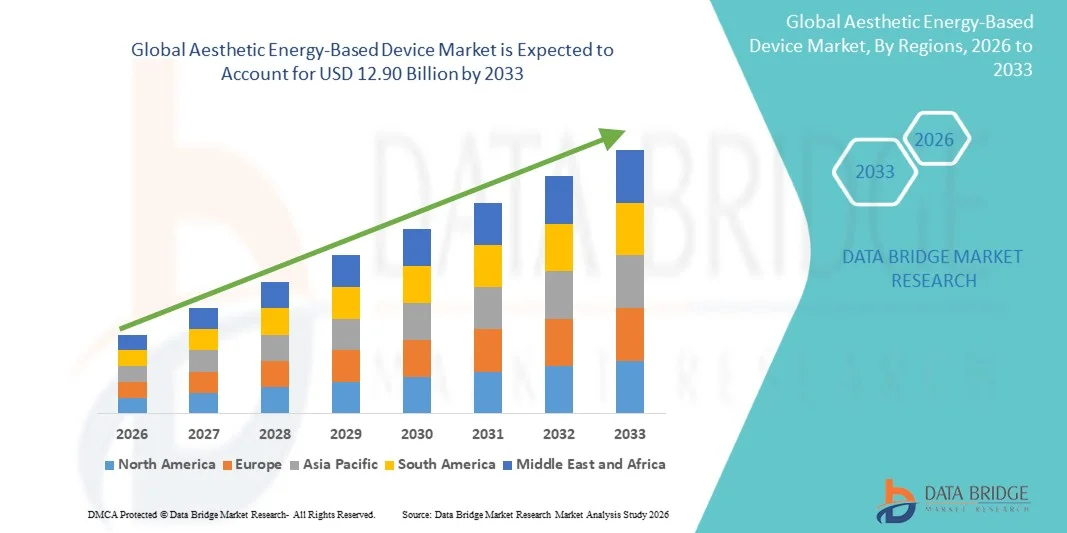
- As per Data Bridge Market Research Analysis the global aesthetic energy-based device market size was valued at USD 5.50 billion in 2025 and is expected to reach USD 12.90 billion by 2033, at a CAGR of 11.25% during the forecast period
- The market growth is largely fueled by the increasing adoption of advanced cosmetic treatment technologies, continuous technological progress in laser, radiofrequency, ultrasound, and light-based systems, and growing digitalization across dermatology clinics, hospitals, and aesthetic centers
- Furthermore, rising consumer demand for safe, non-invasive, user-friendly, and result-oriented beauty enhancement solutions is establishing Aesthetic Energy-Based Devices as the modern treatment system of choice. These converging factors are accelerating the uptake of Aesthetic Energy-Based Device solutions, thereby significantly boosting the industry's growth
Market Size & Forecast
Global Market Value (2025): USD 5.50 billion
Expected Market Value (2033): USD 12.90 billion
Forecast CAGR (2026–2033): 11.25%
What are the Major Takeaways of Aesthetic Energy-Based Device Market?
- Aesthetic Energy-Based Devices, offering advanced laser, radiofrequency, ultrasound, intense pulsed light, and body contouring technologies, are increasingly vital components of modern cosmetic dermatology and aesthetic medicine across clinics, hospitals, and medical spas due to their effectiveness, minimal downtime, and non-invasive treatment capabilities
- The escalating demand for Aesthetic Energy-Based Devices is primarily fueled by rising consumer preference for minimally invasive cosmetic procedures, growing beauty consciousness, increasing disposable incomes, and continuous technological innovation in skin rejuvenation and body sculpting solutions
- North America dominated the aesthetic energy-based device market with the largest revenue share of approximately 38.7% in 2025, characterized by advanced healthcare infrastructure, high consumer spending on cosmetic procedures, strong presence of leading industry players, and increasing adoption of innovative non-invasive aesthetic treatments, with the U.S. experiencing substantial growth in aesthetic device procedures across dermatology clinics and medical spas
- Asia-Pacific is expected to be the fastest-growing region in the Aesthetic Energy-Based Device market during the forecast period, projected to register a CAGR of approximately 11.6%, due to increasing urbanization, rising disposable incomes, growing medical tourism, expanding beauty-conscious population, and improving access to advanced cosmetic technologies
- The laser-based segment dominated the largest market revenue share of 38.7% in 2025, driven by its extensive use in hair removal, skin resurfacing, scar reduction, and pigmentation treatments
Report Scope and Aesthetic Energy-Based Device Market Segmentation
|
Attributes |
Aesthetic Energy-Based Device Key Market Insights |
|
Segments Covered |
|
|
Countries Covered |
North America
Europe
Asia-Pacific
Middle East and Africa
South America
|
|
Key Market Players |
|
|
Market Opportunities |
|
|
Value Added Data Infosets |
In addition to the insights on market scenarios such as market value, growth rate, segmentation, geographical coverage, and major players, the market reports curated by the Data Bridge Market Research also include in-depth expert analysis, patient epidemiology, pipeline analysis, pricing analysis, and regulatory framework. |
What is the Key Trend in the Aesthetic Energy-Based Device Market?
“Increasing Adoption of Non-Invasive Treatments and Advanced Multi-Technology Platforms”
- A significant and accelerating trend in the global aesthetic energy-based device market is the growing adoption of non-invasive cosmetic treatments and advanced multi-technology platforms that combine laser, radiofrequency, ultrasound, intense pulsed light (IPL), and body contouring technologies. These innovations are significantly improving treatment outcomes, patient comfort, and procedural efficiency
- For instance, leading aesthetic clinics are increasingly using devices such as Cynosure’s laser systems, Candela’s IPL platforms, and Solta Medical’s radiofrequency devices for skin rejuvenation, hair removal, wrinkle reduction, acne scar treatment, and body sculpting procedures. Multi-application systems allow clinics to offer several treatments using one platform
- Advanced energy-based devices enable practitioners to deliver more precise and customizable treatments based on skin type, age, and aesthetic goals. For example, fractional laser systems stimulate collagen production for skin resurfacing, while radiofrequency platforms tighten skin and reduce cellulite with minimal downtime
- The integration of digital interfaces, smart handpieces, and treatment planning software is enhancing workflow management in aesthetic centers. Clinics can track patient treatment history, customize settings, and improve consistency through connected software systems
- This trend toward safer, faster, and minimally invasive cosmetic procedures is reshaping consumer expectations worldwide. Consequently, companies such as Cutera, Lumenis, Alma Lasers, Candela, and Venus Concept are expanding product portfolios and launching next-generation platforms
- Demand for aesthetic energy-based devices is rising across dermatology clinics, medical spas, hospitals, and cosmetic surgery centers as consumers increasingly prioritize appearance enhancement with reduced recovery time
Aesthetic Energy-Based Device Market Dynamics
Driver
“Growing Need Due to Rising Beauty Awareness and Preference for Minimally Invasive Procedures”
- Increasing consumer awareness regarding physical appearance, skin health, and anti-aging treatments, coupled with the growing preference for minimally invasive cosmetic procedures, is a major driver for the aesthetic energy-based device market. Consumers increasingly seek treatments that provide visible results without surgery or long recovery periods
- For instance, in April 2025, several dermatology chains and aesthetic clinics expanded investments in laser hair removal, skin tightening, and body contouring systems to meet rising patient demand. Such strategic developments are expected to support market growth during the forecast period
- As social media influence and beauty consciousness continue to rise, more consumers are opting for professional treatments to improve skin texture, reduce pigmentation, remove unwanted hair, and contour the body
- Furthermore, the aging global population is increasing demand for wrinkle reduction, skin rejuvenation, and scar revision procedures, supporting wider adoption of advanced devices
- The convenience of outpatient procedures, lower complication risks, and faster return to daily activities are key factors propelling adoption across both women and men. Growing disposable income and expanding medical spa networks further contribute to market growth
Restraint/Challenge
“High Treatment Costs and Risk of Side Effects”
- The relatively high cost of aesthetic energy-based devices and associated treatment procedures remains a significant challenge to broader market adoption. Premium systems require substantial investment by clinics, which often leads to higher treatment prices for consumers
- For instance, advanced laser resurfacing or body contouring sessions can be expensive in many markets, limiting accessibility among price-sensitive consumers and patients in developing regions
- In addition to cost barriers, concerns regarding side effects such as burns, pigmentation changes, redness, swelling, or scarring may discourage some potential users, especially when treatments are performed by inadequately trained personnel
- Regulatory compliance and certification requirements for aesthetic devices can also increase time-to-market and operational costs for manufacturers. Clinics must invest in staff training and maintenance to ensure safe device operation
- While technology continues to improve, the perception that cosmetic procedures are discretionary expenses can still limit demand during periods of economic uncertainty
- Overcoming these challenges through safer technologies, practitioner training, flexible pricing models, and development of cost-effective device platforms will be vital for sustained market growth
How is the Aesthetic Energy-Based Device Market Segmented?
The market is segmented on the basis of technology, application, distribution channel, and end user.
• By Technology
On the basis of technology, the Aesthetic Energy-Based Device market is segmented into laser-based, light-based, electromagnetic energy-based, ultrasound-based, cryolipolysis, suction-based, and plasma energy-based. The laser-based segment dominated the largest market revenue share of 38.7% in 2025, driven by its extensive use in hair removal, skin resurfacing, scar reduction, and pigmentation treatments. Laser systems are widely preferred for their precision, predictable outcomes, and ability to treat multiple skin concerns. Increasing consumer demand for minimally invasive cosmetic procedures supports segment growth. Dermatology clinics continue to invest in advanced fractional and picosecond laser platforms. Technological innovations with reduced downtime further strengthen adoption. Rising disposable income and awareness of aesthetic treatments boost procedure volumes globally. Physicians favor laser devices because of established clinical evidence and strong patient satisfaction. Growth in medical tourism also contributes to revenue expansion. Expanding use of combination therapies with laser platforms supports market leadership. Continuous product launches by key manufacturers sustain the segment’s dominance.
The ultrasound-based segment is anticipated to witness the fastest CAGR of 14.2% from 2026 to 2033, fueled by increasing demand for non-surgical skin tightening and facial lifting procedures. Ultrasound devices stimulate collagen production in deeper tissue layers without damaging the skin surface. Growing preference for painless and low-downtime treatments drives patient adoption. Expansion of anti-aging procedures among middle-aged populations supports market growth. Clinics are increasingly adding focused ultrasound systems to diversify service offerings. Improved portability and user-friendly interfaces accelerate commercial uptake. Rising awareness through social media marketing enhances treatment demand. The technology is gaining traction in body contouring and jawline sculpting applications. Increased acceptance in emerging markets further boosts revenues. Regulatory approvals for next-generation ultrasound systems strengthen confidence. Cost-effective treatment packages also contribute to rapid CAGR growth.
• By Application
On the basis of application, the Aesthetic Energy-Based Device market is segmented into hair removal, facial and skin resurfacing/photo rejuvenation, fat reduction and body contouring, skin tightening, and cellulite reduction. The hair removal segment held the largest market revenue share of 34.9% in 2025, driven by growing preference for long-term hair reduction solutions over conventional waxing and shaving methods. Laser and light-based systems are widely adopted in clinics and med-spas for this purpose. Rising beauty consciousness among both men and women supports demand. Increasing urbanization and disposable income encourage spending on grooming procedures. Multiple treatment sessions generate recurring revenues for service providers. Home-use hair removal devices also expand consumer reach. Improved safety features for different skin tones strengthen adoption. Social media influence and celebrity endorsements accelerate procedure popularity. Expanding youth population in developing countries supports treatment volumes. Convenient and fast procedure times maintain segment leadership. Continuous innovation in painless systems further boosts market share.
The fat reduction and body contouring segment is expected to witness the fastest CAGR of 15.1% from 2026 to 2033, driven by rising obesity concerns and increasing preference for non-invasive body shaping procedures. Consumers are seeking alternatives to liposuction with minimal recovery time. Cryolipolysis, radiofrequency, and ultrasound platforms are gaining rapid acceptance. Growing fitness awareness combined with aesthetic goals supports treatment demand. Clinics are promoting customized body sculpting packages to attract clients. Technological improvements delivering faster visible results enhance adoption. Expansion of wellness chains and cosmetic centers boosts accessibility. Higher demand among postpartum and aging populations contributes to growth. Emerging economies are witnessing increasing acceptance of body contouring services. Strong marketing campaigns and financing options encourage uptake. Rising demand for personalized appearance enhancement sustains segment expansion.
• By Distribution Channel
On the basis of distribution channel, the Aesthetic Energy-Based Device market is segmented into direct and indirect. The direct segment accounted for the largest market revenue share of 61.3% in 2025, driven by strong manufacturer preference for direct sales to hospitals, clinics, and aesthetic centers. Direct channels enable better customer relationships, customized pricing, and technical support services. Major companies rely on dedicated sales teams for high-value capital equipment transactions. Faster installation, maintenance, and training services support customer retention. Direct distribution also improves brand visibility and after-sales service quality. Clinics prefer buying directly for warranty assurance and financing options. Growing demand for technologically advanced systems boosts direct procurement. Manufacturers benefit from higher margins through direct engagement. Expansion of company-owned regional offices strengthens global presence. Strategic partnerships with large clinic chains support recurring revenues. These advantages continue to maintain segment dominance.
The indirect segment is projected to grow at the fastest CAGR of 12.8% from 2026 to 2033, owing to rapid expansion of third-party distributors in emerging markets. Indirect channels help manufacturers penetrate smaller cities and untapped regions efficiently. Local distributors provide market knowledge and established customer networks. Rising demand from independent clinics supports channel expansion. Lower upfront operating costs for manufacturers encourage distributor partnerships. Distributors often bundle financing, servicing, and consumables for customers. Growing e-commerce adoption for portable aesthetic devices boosts sales. Increased product availability across multiple regions enhances market reach. Smaller manufacturers increasingly depend on indirect routes for scale. Strategic alliances with regional healthcare suppliers support growth. Faster expansion into price-sensitive markets drives segment CAGR.
• By End User
On the basis of end user, the Aesthetic Energy-Based Device market is segmented into dermatology and cosmetic clinics, hospitals, and home-use. The dermatology and cosmetic clinics segment accounted for the largest market revenue share of 52.6% in 2025, driven by the high concentration of elective aesthetic procedures performed in specialized clinics. These centers offer skilled practitioners, advanced devices, and customized treatment plans. Consumers prefer clinics for privacy, convenience, and premium service experiences. Growing number of med-spas and cosmetic chains boosts treatment accessibility. Clinics frequently upgrade to next-generation devices to stay competitive. Strong demand for skin rejuvenation, hair removal, and contouring treatments supports revenue growth. Flexible appointment scheduling attracts working professionals. Expansion of urban aesthetic centers strengthens segment leadership. Social media marketing by clinics increases consumer awareness. Attractive treatment packages and memberships drive repeat visits. Continuous innovation in clinic-based procedures sustains dominance.
The home-use segment is expected to witness the fastest CAGR of 16.4% from 2026 to 2033, fueled by rising consumer preference for convenient and cost-effective at-home aesthetic treatments. Portable laser, IPL, and skin rejuvenation devices are gaining popularity globally. Consumers value privacy and flexibility of self-administered treatments. Increasing e-commerce penetration improves product accessibility. Technological advancements have enhanced safety and ease of use. Younger consumers are adopting beauty-tech devices for routine skincare. Subscription-based consumables and app-connected devices support repeat purchases. Growing awareness through influencers and online reviews boosts demand. Higher clinic treatment costs encourage shift toward home-use options. Expansion of premium personal care markets further accelerates adoption. Continuous launches of multifunctional devices sustain rapid CAGR growth.
Which Region Holds the Largest Share of the Aesthetic Energy-Based Device Market?
- North America dominated the aesthetic energy-based device market with the largest revenue share of approximately 38.7% in 2025, characterized by advanced healthcare infrastructure, high consumer spending on cosmetic procedures, strong presence of leading industry players, and increasing adoption of innovative non-invasive aesthetic treatments, with the U.S. experiencing substantial growth in aesthetic device procedures across dermatology clinics and medical spas
- Consumers in the region highly value minimally invasive procedures such as skin tightening, body contouring, hair removal, and scar reduction, supported by growing awareness of aesthetic wellness and demand for shorter recovery time
- This widespread adoption is further supported by favorable reimbursement in select treatments, a technologically aware population, and strong availability of premium dermatology clinics and medical spas, establishing aesthetic energy-based devices as a preferred solution across cosmetic and therapeutic applications
U.S. Aesthetic Energy-Based Device Market Insight
The U.S. aesthetic energy-based device market captured the largest revenue share in North America in 2025, fueled by rising demand for cosmetic enhancement procedures, rapid adoption of laser, radiofrequency, ultrasound, and IPL technologies, and strong presence of major market participants. Consumers are increasingly prioritizing non-surgical facial rejuvenation, tattoo removal, skin resurfacing, and fat reduction treatments. Moreover, the increasing expansion of dermatology clinics, plastic surgery centers, and medical spas is significantly contributing to market growth.
Europe Aesthetic Energy-Based Device Market Insight
The Europe aesthetic energy-based device market is projected to expand at a substantial CAGR throughout the forecast period, primarily driven by increasing preference for minimally invasive cosmetic procedures, growing aging population, and rising awareness regarding skin health and anti-aging treatments. Strong regulatory standards and technological innovation are supporting the adoption of advanced aesthetic platforms across hospitals, specialty clinics, and wellness centers.
U.K. Aesthetic Energy-Based Device Market Insight
The U.K. aesthetic energy-based device market is anticipated to grow at a noteworthy CAGR during the forecast period, driven by rising beauty consciousness, increasing demand for facial rejuvenation treatments, and strong presence of private cosmetic clinics. Growing consumer preference for non-invasive procedures with limited downtime is expected to continue stimulating market growth.
Germany Aesthetic Energy-Based Device Market Insight
The Germany aesthetic energy-based device market is expected to expand at a considerable CAGR during the forecast period, fueled by increasing awareness of advanced skincare treatments, demand for high-quality medical technologies, and rising adoption of laser-assisted dermatology solutions. Germany’s strong healthcare infrastructure and focus on innovation are accelerating adoption across both clinical and cosmetic settings.
Asia-Pacific Aesthetic Energy-Based Device Market Insight
The Asia-Pacific aesthetic energy-based device market is poised to grow at the fastest CAGR of approximately 11.6% during the forecast period, driven by increasing urbanization, rising disposable incomes, growing medical tourism, expanding beauty-conscious population, and improving access to advanced cosmetic technologies. Rapidly growing demand for skin rejuvenation, pigmentation treatment, and body contouring procedures is accelerating regional market expansion.
Japan Aesthetic Energy-Based Device Market Insight
The Japan aesthetic energy-based device market is gaining momentum due to high consumer interest in premium skincare solutions, technological sophistication, and increasing demand for anti-aging procedures. The integration of advanced laser and radiofrequency systems in specialty clinics is fueling growth, while the aging population is further supporting demand for skin tightening and rejuvenation treatments.
China Aesthetic Energy-Based Device Market Insight
The China aesthetic energy-based device market accounted for the largest market revenue share in Asia Pacific in 2025, attributed to the country’s expanding middle class, rapid urbanization, rising disposable incomes, and strong demand for cosmetic enhancement services. China remains one of the largest markets for aesthetic procedures, supported by growing medical aesthetics chains, digital marketing influence, and increasing availability of affordable advanced treatment options.
Which are the Top Companies in Aesthetic Energy-Based Device Market?
The Aesthetic Energy-Based Device industry is primarily led by well-established companies, including:
- Candela Corporation (U.S.)
- Cynosure, LLC (U.S.)
- Cutera, Inc. (U.S.)
- Lumenis Be Ltd. (Israel)
- Alma Lasers Ltd. (Israel)
- Bausch Health Companies Inc. (Canada)
- Venus Concept Inc. (Canada)
- InMode Ltd. (Israel)
- Fotona d.o.o. (Slovenia)
- Sciton, Inc. (U.S.)
- Lutronic Corporation (South Korea)
- Jeisys Medical Inc. (South Korea)
- Sisram Medical Ltd. (Israel)
- Solta Medical, Inc. (U.S.)
- Merz Pharma GmbH & Co. KGaA (Germany)
- EndyMed Medical Ltd. (Israel)
- Aerolase Corporation (U.S.)
- SharpLight Technologies Ltd. (Canada)
- BTL Industries (Czech Republic)
- El.En. S.p.A. (Italy)
What are Latest Developments in Aesthetic Energy-Based Device Market?
- In March 2021, Solta Medical, a division of Bausch Health Companies, announced the U.S. launch of Clear + Brilliant Touch, a next-generation fractional laser platform designed for gentle skin resurfacing, tone improvement, and preventative anti-aging treatments. The launch strengthened Solta’s presence in the non-invasive skin rejuvenation segment
- In April 2021, Alma Lasers, a Sisram Medical company, launched the Alma PrimeX platform, combining ultrasound and radiofrequency technologies for skin tightening and circumference reduction in the abdomen, thighs, waist, and buttocks. This launch highlighted growing demand for multifunctional body contouring devices
- In April 2021, Sinclair Pharma, a wholly owned subsidiary of Huadong Medicine, announced the acquisition of Cocoon Medical, a Spain-based aesthetics company offering non-invasive laser and cryolipolysis devices. The acquisition expanded Sinclair’s global footprint in energy-based medical aesthetics
- In December 2021, Allergan Aesthetics, an AbbVie company, completed the acquisition of Soliton, Inc., developer of the RESONIC Rapid Acoustic Pulse device used for cellulite reduction and body contouring. The deal broadened Allergan’s energy-based aesthetics portfolio beyond injectables
- In March 2022, Lumenis launched triLift, a facial stimulation device designed to address texture, contour, and facial structure by treating epidermal, dermal, and muscular layers. The launch strengthened Lumenis’ non-invasive facial rejuvenation offerings
- In June 2022, Cynosure launched PicoSure Pro, a 755nm picosecond laser device for skin revitalization, pigmentation treatment, acne scars, and tattoo removal across multiple skin types. The launch marked a significant advancement in picosecond laser aesthetics technology
- In February 2023, industry reports highlighted rapid adoption of IPL, cryolipolysis, LED, and Nd:YAG laser technologies across aesthetic clinics globally, reflecting accelerated innovation and broader procedure demand in minimally invasive cosmetic treatments

- Interactive Data Analysis Dashboard
- Company Analysis Dashboard for high growth potential opportunities
- Research Analyst Access for customization & queries
- Competitor Analysis with Interactive dashboard
- Latest News, Updates & Trend analysis
- Harness the Power of Benchmark Analysis for Comprehensive Competitor Tracking
Data collection and base year analysis are done using data collection modules with large sample sizes. The stage includes obtaining market information or related data through various sources and strategies. It includes examining and planning all the data acquired from the past in advance. It likewise envelops the examination of information inconsistencies seen across different information sources. The market data is analysed and estimated using market statistical and coherent models. Also, market share analysis and key trend analysis are the major success factors in the market report. To know more, please request an analyst call or drop down your inquiry.
The key research methodology used by DBMR research team is data triangulation which involves data mining, analysis of the impact of data variables on the market and primary (industry expert) validation. Data models include Vendor Positioning Grid, Market Time Line Analysis, Market Overview and Guide, Company Positioning Grid, Patent Analysis, Pricing Analysis, Company Market Share Analysis, Standards of Measurement, Global versus Regional and Vendor Share Analysis. To know more about the research methodology, drop in an inquiry to speak to our industry experts.
Data Bridge Market Research is a leader in advanced formative research. We take pride in servicing our existing and new customers with data and analysis that match and suits their goal. The report can be customized to include price trend analysis of target brands understanding the market for additional countries (ask for the list of countries), clinical trial results data, literature review, refurbished market and product base analysis. Market analysis of target competitors can be analyzed from technology-based analysis to market portfolio strategies. We can add as many competitors that you require data about in the format and data style you are looking for. Our team of analysts can also provide you data in crude raw excel files pivot tables (Fact book) or can assist you in creating presentations from the data sets available in the report.













