


Agitation in Delirium Management Market Size
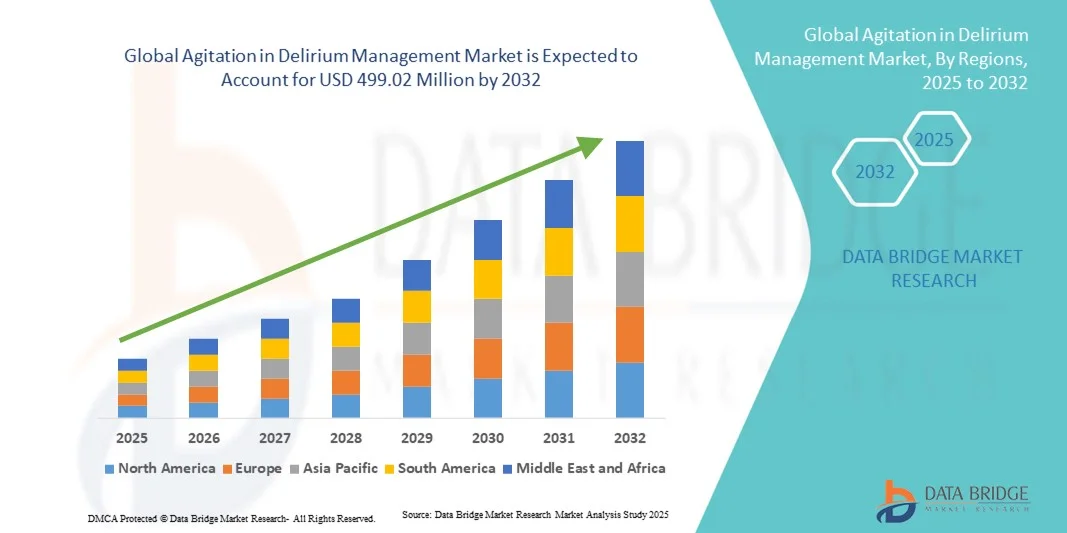
- The global agitation in delirium management market size was valued at USD 335.20 million in 2024 and is expected to reach USD 499.02 million by 2032, at a CAGR of 5.1% during the forecast period
- The market growth is largely fueled by the increasing prevalence of delirium across intensive care units, post-surgical settings, and elderly patient populations, leading to a rising need for effective management of agitation. Advancements in pharmacological and non-pharmacological interventions are also playing a pivotal role in addressing patient safety concerns and improving treatment outcomes. Growing awareness among healthcare providers about the importance of early diagnosis and intervention in delirium is further strengthening demand for specialized therapies and monitoring systems
- Furthermore, rising consumer and healthcare system demand for safe, evidence-based, and patient-centered treatment approaches is establishing agitation management solutions as a critical component of delirium care protocols. The growing adoption of antipsychotics, sedatives, behavioral therapies, and digital monitoring platforms is accelerating the uptake of agitation in delirium management solutions. Together, these factors are significantly boosting industry growth and fostering innovation in clinical practices worldwide
Agitation in Delirium Management Market Analysis
- Agitation in Delirium Management, involving pharmacological and non-pharmacological interventions to control hyperactivity, restlessness, and aggression in patients, is becoming increasingly vital in hospitals, ICUs, and elderly care facilities due to its direct impact on patient safety and recovery outcomes
- The escalating demand for agitation in delirium management therapies is primarily fueled by the rising prevalence of delirium among elderly patients, increased ICU admissions, and growing awareness about the importance of timely intervention to reduce complications and improve patient quality of life
- North America dominated the agitation in delirium management market with the largest revenue share of 41.36% in 2024, characterized by advanced healthcare infrastructure, high healthcare spending, and strong presence of leading pharmaceutical companies, with the U.S. experiencing substantial growth in adoption of innovative treatment protocols, supported by clinical research and favorable reimbursement policies
- Asia-Pacific is expected to be the fastest-growing region in the agitation in delirium management market during the forecast period, driven by rising geriatric population, growing hospital infrastructure, and increasing focus on neuropsychiatric care in countries such as China, Japan, and India
- The oral segment dominated the agitation in delirium management market with the largest revenue share of 55.1% in 2024, driven by its ease of administration, patient compliance, and widespread availability
Report Scope and Agitation in Delirium Management Market Segmentation
|
Attributes |
Agitation in Delirium Management Key Market Insights |
|
Segments Covered |
|
|
Countries Covered |
North America
Europe
Asia-Pacific
Middle East and Africa
South America
|
|
Key Market Players |
|
|
Market Opportunities |
|
|
Value Added Data Infosets |
In addition to the insights on market scenarios such as market value, growth rate, segmentation, geographical coverage, and major players, the market reports curated by the Data Bridge Market Research also include in-depth expert analysis, pricing analysis, brand share analysis, consumer survey, demography analysis, supply chain analysis, value chain analysis, raw material/consumables overview, vendor selection criteria, PESTLE Analysis, Porter Analysis, and regulatory framework. |
Agitation in Delirium Management Market Trends
Advancements in Patient-Centered Care and Personalized Therapies
- A significant and accelerating trend in the global agitation in delirium management market is the increasing emphasis on personalized and patient-centered treatment approaches. Healthcare providers are integrating pharmacological and non-pharmacological therapies to improve patient outcomes while minimizing side effects. This approach is particularly important for elderly patients and those with critical illnesses in intensive care units (ICUs)
- For instance, in April 2024, several hospitals across the U.S. implemented multidisciplinary care protocols combining low-dose antipsychotics with behavioral therapies, leading to reduced hospitalization times and better recovery outcomes for delirium patients. Such initiatives highlight the shift towards comprehensive and balanced management strategies
- Pharmacological interventions, such as antipsychotics and sedatives, are being complemented with non-drug-based measures, including reorientation techniques, sleep hygiene programs, and environmental modifications. Clinical studies are demonstrating that integrating these therapies not only reduces patient distress but also improves long-term neurological outcomes
- The growing adoption of electronic health records (EHRs) and digital monitoring systems further supports personalized management by allowing clinicians to track patient responses in real-time and adjust treatment protocols accordingly. Hospitals are increasingly investing in these technologies to improve patient safety, reduce agitation episodes, and streamline decision-making in critical care settings
- This trend towards holistic, individualized, and technology-assisted management is fundamentally reshaping the expectations of healthcare providers and patients alike. Consequently, companies and healthcare institutions are prioritizing the development of advanced therapies and integrated care protocols to address the complex challenges of delirium-related agitation
- The demand for personalized and effective agitation management solutions is growing rapidly across both developed and emerging markets, as healthcare systems increasingly focus on improving patient quality of life, reducing complications, and lowering overall treatment costs
Agitation in Delirium Management Market Dynamics
Driver
Growing Need Due to Rising Prevalence of Delirium and Demand for Effective Management
- The rising incidence of delirium, particularly among elderly patients, critically ill individuals, and post-surgical populations, is a significant driver for the growing demand for effective agitation in delirium management solutions. The increasing burden of neurological and psychiatric complications associated with delirium highlights the urgent need for targeted therapies and integrated care strategies
- For instance, in April 2024, several healthcare institutions in North America and Europe adopted new delirium management protocols incorporating both pharmacological treatments and non-pharmacological interventions such as sleep regulation and environmental reorientation. Such strategies by leading hospitals and research centers are expected to propel the growth of the Agitation in Delirium Management industry over the forecast period
- As awareness among healthcare providers and caregivers grows, there is a greater emphasis on reducing complications such as prolonged hospital stays, cognitive decline, and higher mortality rates linked to unmanaged delirium. This shift is creating a compelling case for the adoption of advanced treatment protocols and supportive care solutions across intensive care units and general hospital settings
- Furthermore, the growing recognition of the importance of holistic care approaches, combining medication with non-drug therapies such as behavioral support, cognitive engagement, and environmental modifications, is making agitation management an integral component of modern clinical practice
- The convenience and improved outcomes associated with early diagnosis, real-time monitoring, and multidisciplinary interventions are key factors propelling the adoption of advanced agitation in delirium management strategies. In addition, the growing availability of evidence-based guidelines and training programs for clinicians further supports market expansion, ensuring that more patients receive consistent, effective, and timely care
Restraint/Challenge
Concerns Regarding Drug Side Effects and High Treatment Costs
- Concerns surrounding the potential side effects of pharmacological interventions, such as antipsychotics and sedatives, remain a major challenge to the broader adoption of agitation in delirium management therapies. Many of these drugs can lead to complications, including cardiovascular risks, excessive sedation, and cognitive impairment, making clinicians cautious in prescribing them, particularly for elderly or vulnerable patients
- For instance, high-profile clinical studies have highlighted the risks of prolonged antipsychotic use in ICU patients, leading to hesitancy in their routine application for delirium-related agitation. Such concerns continue to limit the use of drug-based management strategies despite their effectiveness in controlling acute symptoms
- In addition, the relatively high treatment costs associated with advanced management protocols, including specialized monitoring systems, multidisciplinary care teams, and newer pharmacological therapies, pose a barrier to adoption, particularly in developing regions and underfunded healthcare systems. While basic approaches remain available, premium treatments often carry higher expenses, making them less accessible to resource-constrained settings
- While healthcare providers are working towards cost-effective models and value-based care approaches, the perceived financial burden and clinical risks associated with agitation in delirium management can hinder widespread adoption
- Overcoming these challenges through the development of safer medications, cost-effective protocols, and greater awareness of non-pharmacological interventions will be essential for ensuring sustained market growth and improved patient outcomes
Agitation in Delirium Management Market Scope
The market is segmented on the basis of drug, route of administration, end-users, and distribution channel.
- By Drug
On the basis of drug, the agitation in delirium management market is segmented into first-generation antipsychotics, second-generation antipsychotics, benzodiazepines, and others. The second-generation antipsychotics segment dominated with the largest revenue share of 46.5% in 2024, attributed to their improved safety profile and lower risk of extrapyramidal side effects compared to older agents. These drugs, such as risperidone and olanzapine, are increasingly prescribed due to better tolerability in elderly patients and ICU populations, where agitation is more prevalent. The availability of both oral and injectable formulations enhances their clinical flexibility, supporting broader adoption in hospitals and clinics. Favorable clinical outcomes, growing physician preference, and inclusion in treatment guidelines reinforce the dominance of this segment. Additionally, ongoing research and pipeline developments for newer atypical antipsychotics further support long-term market strength.
The benzodiazepines segment is expected to witness the fastest CAGR of 22.3% from 2025 to 2032, driven by their rapid onset of action and effectiveness in acute agitation episodes. Benzodiazepines are often used in emergency and critical care settings where immediate sedation is required, especially for patients with alcohol withdrawal-related delirium. The segment’s growth is supported by increasing hospital admissions of elderly patients prone to delirium and the availability of generic, cost-effective options. Clinical reliance on benzodiazepines in ICU protocols, despite concerns of dependency, contributes to their steady use. Furthermore, innovations in shorter-acting formulations and growing use in developing regions strengthen the market outlook. Educational programs and evolving guidelines focusing on appropriate use are also enhancing adoption.
- By Route of Administration
On the basis of route of administration, the agitation in delirium management market is segmented into oral, intramuscular, and others. The oral segment dominated with the largest revenue share of 55.1% in 2024, driven by its ease of administration, patient compliance, and widespread availability. Oral medications, especially second-generation antipsychotics, are frequently prescribed for mild-to-moderate agitation management in both hospital and home care settings. The segment benefits from established supply chains and availability of generic formulations, ensuring cost-effectiveness. Physicians prefer oral therapy for long-term management due to safety and reduced invasiveness. Strong presence across retail and hospital pharmacies further strengthens this segment’s position. Continuous innovation in orally disintegrating tablets (ODTs) enhances patient compliance, particularly in elderly and non-cooperative patients.
The intramuscular (IM) segment is expected to witness the fastest CAGR of 20.7% from 2025 to 2032, supported by its effectiveness in managing severe or acute agitation cases. IM injections provide rapid symptom control in emergency rooms, ICUs, and psychiatric wards, making them essential in crisis interventions. The demand for IM formulations is increasing as hospitals adopt protocols that prioritize fast-acting treatment for delirium-associated agitation. Recent approvals and launches of long-acting injectable antipsychotics are also expanding the adoption of IM therapies. Furthermore, their growing role in managing agitation among patients unable to take oral medications drives segment growth. Rising investment in injectable drug development pipelines enhances future expansion prospects.
- By End-Users
On the basis of end-users, the agitation in delirium management market is segmented into clinics, hospitals, and others. The hospital segment dominated with the largest revenue share of 61.4% in 2024, supported by the higher prevalence of delirium cases in ICU and post-surgical patients. Hospitals remain the primary treatment centers due to availability of specialized staff, emergency care units, and access to both oral and injectable therapies. Established reimbursement structures and government initiatives to improve delirium management further reinforce the hospital segment’s dominance. Strong reliance on hospitals for both acute and chronic management of agitation ensures steady demand. In addition, training programs for healthcare professionals and integration of electronic health records (EHRs) with treatment guidelines enhance efficiency, boosting this segment’s strength.
The clinic segment is projected to witness the fastest CAGR of 21.5% from 2025 to 2032, driven by the increasing establishment of outpatient psychiatric and geriatric clinics worldwide. Clinics provide accessible, cost-effective treatment for non-emergency agitation cases, supporting patient monitoring and follow-up. Rising awareness of early delirium diagnosis and expanding access to psychiatric specialists in urban and semi-urban areas are fueling growth. Collaboration between clinics and hospitals ensures continuity of care, strengthening clinical adoption. Additionally, clinics are increasingly adopting evidence-based protocols and novel therapies, including newer atypical antipsychotics. Government initiatives encouraging outpatient care and reduction of hospital burden further enhance growth opportunities.
- By Distribution Channel
On the basis of distribution channel, the agitation in delirium management market is segmented into hospital pharmacy, retail pharmacy, and online pharmacy. The hospital pharmacy segment dominated with the largest revenue share of 63.2% in 2024, owing to their role as the primary distribution points for medications used in acute and emergency agitation cases. Hospital pharmacies ensure timely availability of both oral and injectable formulations, particularly for ICU and surgical patients. Integration with centralized procurement systems, robust supply chains, and government reimbursement policies strengthen this channel’s dominance. Hospital pharmacists also play a key role in guiding appropriate drug use, minimizing adverse effects, and optimizing treatment outcomes. Their established presence across healthcare facilities globally ensures consistent revenue contribution.
The online pharmacy segment is expected to witness the fastest CAGR of 23.4% from 2025 to 2032, supported by the rising adoption of e-commerce platforms and telemedicine services. Online channels provide convenient access to both branded and generic medications for long-term management of agitation in delirium. Growing penetration of digital health platforms, expanding smartphone usage, and increasing internet accessibility are fueling demand. Patients and caregivers benefit from home delivery, price transparency, and subscription-based medicine refills. Governments in emerging markets are also supporting online channels to expand access in remote areas. The COVID-19 pandemic accelerated adoption of online pharmacies, a trend expected to continue over the forecast period.
Agitation in Delirium Management Market Regional Analysis
- North America dominated the agitation in delirium management market with the largest revenue share of 41.36% in 2024, characterized by advanced healthcare infrastructure, high healthcare spending, and the strong presence of leading pharmaceutical companies
- The region benefits from the early adoption of innovative treatment protocols, robust clinical research, and favorable reimbursement policies that encourage the uptake of both pharmacological and non-pharmacological therapies
- Growing awareness of delirium as a critical condition requiring timely intervention is further driving the demand for effective management solutions
U.S. Agitation in Delirium Management Market Insight
The U.S. agitation in delirium management market accounted for the largest revenue share of 81% within North America in 2024, fueled by the swift uptake of novel antipsychotics, sedatives, and multimodal treatment approaches for managing agitation in delirium patients. The increasing emphasis on patient safety in intensive care units (ICUs) and emergency departments, coupled with the expansion of clinical trials investigating new therapies, is propelling market growth. Moreover, supportive government programs and well-established reimbursement frameworks significantly enhance access to advanced treatment options, consolidating the U.S. as a leading market.
Europe Agitation in Delirium Management Market Insight
The Europe agitation in delirium management market is projected to expand at a substantial CAGR over the forecast period, driven by stringent clinical guidelines, increased focus on geriatric patient care, and growing investments in hospital infrastructure. Rising prevalence of neuropsychiatric disorders and the adoption of evidence-based delirium management strategies are strengthening the market. Moreover, European healthcare systems emphasize integrated care models that combine pharmacological interventions with behavioral approaches, fostering steady growth across hospitals and long-term care facilities.
U.K. Agitation in Delirium Management Market Insight
The U.K. agitation in delirium management market is anticipated to grow at a noteworthy CAGR, supported by increasing recognition of delirium as a serious medical complication in elderly and critically ill patients. National initiatives to improve early detection and management of delirium in hospitals, combined with investment in clinical training programs, are driving demand. Moreover, the growing adoption of novel sedatives and antipsychotics for safe and effective management is boosting the market’s outlook.
Germany Agitation in Delirium Management Market Insight
The Germany agitation in delirium management market is expected to expand at a considerable CAGR, fueled by its well-developed healthcare infrastructure, emphasis on innovation, and strong focus on geriatric care. The country has seen a rise in clinical studies aimed at optimizing delirium management strategies, including multimodal approaches and the use of digital monitoring tools. Government initiatives supporting mental health awareness and hospital-based delirium prevention programs further enhance growth prospects.
Asia-Pacific Agitation in Delirium Management Market Insight
The Asia-Pacific agitation in delirium management market is expected to record the fastest CAGR during 2025–2032, driven by the rising geriatric population, expansion of hospital infrastructure, and increasing focus on neuropsychiatric care in countries such as China, Japan, and India. Growing awareness of delirium-related complications, coupled with government-backed initiatives for mental health and critical care, is accelerating adoption. The region’s evolving pharmaceutical landscape and entry of affordable treatment options are making therapies more accessible to a larger patient pool.
Japan Agitation in Delirium Management Market Insight
The Japan agitation in delirium management market is gaining momentum due to its rapidly aging population and high prevalence of delirium in hospitalized elderly patients. The market is supported by the country’s advanced healthcare systems, adoption of non-pharmacological strategies alongside medications, and integration of innovative monitoring solutions. National health initiatives emphasizing patient safety and quality of care are further bolstering demand.
China Agitation in Delirium Management Market Insight
The China agitation in delirium management market accounted for the largest revenue share in the Asia-Pacific region in 2024, attributed to rapid urbanization, rising healthcare investments, and increasing prevalence of neuropsychiatric conditions. Expanding hospital networks, availability of advanced ICU facilities, and strong domestic pharmaceutical manufacturing capabilities are key growth drivers. Government policies supporting mental health and delirium awareness programs are further propelling the market.
Agitation in Delirium Management Market Share
The agitation in delirium management industry is primarily led by well-established companies, including:
- Teva Pharmaceutical Industries Ltd. (Israel)
- Sun Pharmaceutical Industries Ltd. (India)
- Glenmark Pharmaceuticals Limited (India)
- Pfizer Inc. (U.S.)
- Fresenius Kabi AG (Germany)
- Zydus Cadila (India)
- BioXcel Therapeutics, Inc. (U.S.)
- Otsuka Holdings Co., Ltd. (Japan)
- Axsome Therapeutics, Inc. (U.S.)
- H. Lundbeck A/S (Denmark)
Latest Developments in Global Agitation in Delirium Management Market
- In April 2022, BioXcel Therapeutics announced the FDA approval of IGALMI (dexmedetomidine) sublingual film, the first and only FDA-approved orally dissolving film for the acute treatment of agitation associated with schizophrenia or bipolar I or II disorder in adults. This approval provided clinicians with a non-injectable option for managing severe agitation in psychiatric settings
- In February 2022, the Korean Society of Critical Care Medicine published the 2021 clinical practice guidelines for pain, agitation/sedation, delirium, immobility, and sleep disturbance in the intensive care unit. These guidelines offered evidence-based recommendations to improve the prevention and management of agitation and delirium in critically ill ICU patients
- In September 2025, the American Psychiatric Association published its updated comprehensive "Practice Guideline for the Prevention and Treatment of Delirium." This guideline aimed to enhance the detection, prevention, and treatment of delirium, providing clinicians with evidence-based recommendations to improve patient care and outcomes in clinical settings
- In March 2023, a prospective, cross-sectional survey was completed on World Delirium Awareness Day, 15 March 2023. The survey aimed to report on the global prevalence of clinically documented delirium and delirium-related clinical practices in wards caring for pediatric and adult patients in healthcare facilities, highlighting the need for improved awareness and management strategies
- In December 2024, Johns Hopkins researchers initiated a pilot study to explore whether an AI-equipped headset could help reduce the duration of delirium and delay post-delirium cognitive decline. The headset tracks eye movements and can send automated audio messages, aiming to provide a non-pharmacological intervention for delirium management in ICU settings

- Interactive Data Analysis Dashboard
- Company Analysis Dashboard for high growth potential opportunities
- Research Analyst Access for customization & queries
- Competitor Analysis with Interactive dashboard
- Latest News, Updates & Trend analysis
- Harness the Power of Benchmark Analysis for Comprehensive Competitor Tracking
Data collection and base year analysis are done using data collection modules with large sample sizes. The stage includes obtaining market information or related data through various sources and strategies. It includes examining and planning all the data acquired from the past in advance. It likewise envelops the examination of information inconsistencies seen across different information sources. The market data is analysed and estimated using market statistical and coherent models. Also, market share analysis and key trend analysis are the major success factors in the market report. To know more, please request an analyst call or drop down your inquiry.
The key research methodology used by DBMR research team is data triangulation which involves data mining, analysis of the impact of data variables on the market and primary (industry expert) validation. Data models include Vendor Positioning Grid, Market Time Line Analysis, Market Overview and Guide, Company Positioning Grid, Patent Analysis, Pricing Analysis, Company Market Share Analysis, Standards of Measurement, Global versus Regional and Vendor Share Analysis. To know more about the research methodology, drop in an inquiry to speak to our industry experts.
Data Bridge Market Research is a leader in advanced formative research. We take pride in servicing our existing and new customers with data and analysis that match and suits their goal. The report can be customized to include price trend analysis of target brands understanding the market for additional countries (ask for the list of countries), clinical trial results data, literature review, refurbished market and product base analysis. Market analysis of target competitors can be analyzed from technology-based analysis to market portfolio strategies. We can add as many competitors that you require data about in the format and data style you are looking for. Our team of analysts can also provide you data in crude raw excel files pivot tables (Fact book) or can assist you in creating presentations from the data sets available in the report.












