


What is the AI-Powered Behavioral Therapy Market Size and Growth Rate?
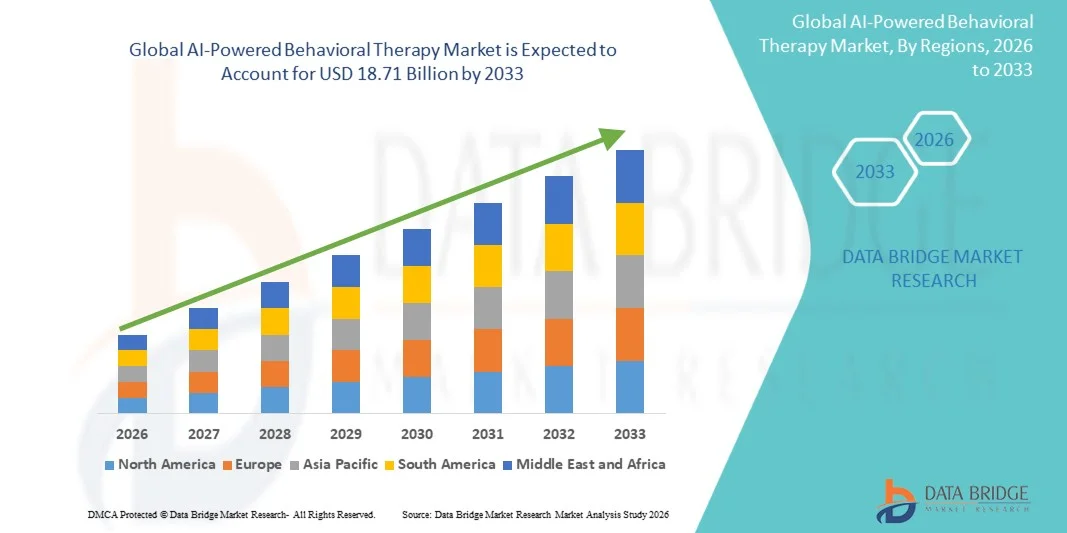
- As per Data Bridge Market Research analysis, the AI-powered behavioral therapy market was valued at USD 1.79 billion in 2025 and is projected to reach USD 18.71 billion by 2033, growing at a CAGR of 34.10% from 2026 to 2033.
- The market is experiencing consistent growth driven by increasing demand for accessible mental healthcare solutions, rising adoption of artificial intelligence in behavioral health management, and growing integration of digital therapeutics, conversational AI platforms, and personalized therapy solutions.
- The growing prevalence of mental health disorders, shortage of mental healthcare professionals, and increasing acceptance of AI-enabled cognitive behavioral therapy platforms are encouraging healthcare providers, digital health companies, and individuals to adopt AI-powered behavioral therapy solutions. AI-based chatbots, virtual therapy assistants, and machine learning-driven interventions are improving personalized care delivery by enabling continuous monitoring, real-time support, and scalable behavioral health management
Market Size & Forecast
- Global Market Value (2025): USD 1.79 Billion
- Expected Market Value (2033): USD 18.71 Billion
- Forecast CAGR (2026–2033): 34.10%
- Leading Region in 2025: North America
- Fastest Growing Region: Asia Pacific
What are the Major Takeaways of the AI-Powered Behavioral Therapy Market?
- North America dominated the AI-powered behavioral therapy market with the largest revenue share of 51.55% in 2025, supported by strong digital healthcare infrastructure, increasing adoption of artificial intelligence-based mental health platforms, and growing demand for accessible behavioral care solutions.
- Asia-Pacific is expected to be the fastest-growing region at a CAGR of 14.27% from 2026 to 2033, fueled by increasing mental health awareness, expanding digital health infrastructure, and growing adoption of AI-powered therapy solutions across emerging economies.
- The AI therapy chatbots & virtual companions segment led the market with a 45.50% share in 2025, driven by increasing adoption of conversational AI platforms for providing accessible, personalized, and continuous mental health support.
- Cognitive behavioral therapy apps are the fastest-growing product type, projected to register a CAGR of 12.5%, reflecting the surge in acceptance of digital therapeutics and evidence-based behavioral interventions.
- The cloud segment dominated the deployment mode category with a 60.65% revenue share in 2025, led by increasing adoption of digital healthcare platforms, telehealth solutions, and scalable AI infrastructure.
- Anxiety & depression accounted for 40.45% of the market share in 2025, preferred by the high global prevalence of these disorders and increasing adoption of AI-enabled mental health interventions.
- The natural language processing (NLP) segment is the fastest-growing technology category, with a CAGR of 15.8%, driven by the increasing adoption of conversational AI therapists and virtual mental health assistants.
Report Scope and AI-Powered Behavioral Therapy Market Segmentation
|
Attributes |
AI-Powered Behavioral Therapy Key Market Insights |
|
Segments Covered |
|
|
Countries Covered |
North America
Europe
Asia-Pacific
Middle East and Africa
South America
|
|
Key Market Players |
|
|
Market Opportunities |
|
|
Value Added Data Infosets |
In addition to the insights on market scenarios such as market value, growth rate, segmentation, geographical coverage, and major players, the market reports curated by the Data Bridge Market Research also include in-depth expert analysis, patient epidemiology, pipeline analysis, pricing analysis, and regulatory framework. |
What is the Key Trend in the AI-Powered Behavioral Therapy Market?
- AI-powered behavioral therapy platforms are increasingly integrating generative AI, natural language processing (NLP), and conversational intelligence to deliver personalized mental health support, improve patient engagement, and provide scalable digital therapy experiences.
- For instance, in November 2024, Wysa launched Wysa Copilot, a hybrid AI and human support platform designed to enhance mental health services by integrating AI-guided digital tools, personalized support, secure messaging, and automated patient tracking to improve therapy continuity and patient engagement.
- Advanced AI models enable real-time analysis of user conversations, emotional patterns, behavioral responses, and therapy progress to support adaptive and data-driven mental healthcare delivery.
- Mental health applications and digital therapeutics companies are increasingly adopting AI-based behavioral therapy solutions to provide continuous self-guided interventions, symptom tracking, and personalized cognitive behavioral therapy programs.
- For instance, in February 2025, Woebot Health highlighted AI integration in mental health workflows, discussing how conversational AI and digital behavioral health platforms can support clinicians, improve patient engagement, and expand access to mental healthcare through technology-enabled care models.
- As healthcare systems and digital health providers continue prioritizing accessible and personalized mental healthcare solutions, the adoption of AI-powered behavioral therapy platforms is expected to accelerate, reinforcing artificial intelligence as a key component of future behavioral health delivery.
What are the Key Drivers of the AI-Powered Behavioral Therapy Market?
- The rising prevalence of mental health disorders and growing shortage of mental healthcare professionals are significantly increasing demand for AI-powered behavioral therapy solutions capable of providing accessible and scalable psychological support.
- For instance, in October 2024, the World Health Organization reported that nearly 1 in 7 adolescents globally experience mental health conditions, emphasizing the need for innovative digital approaches and scalable healthcare solutions to expand access to mental healthcare services.
- Healthcare providers, employers, and digital health companies are integrating AI behavioral therapy platforms to reduce treatment barriers, improve early intervention, and enhance continuous monitoring of behavioral health conditions.
- For instance, in April 2025, Spring Health announced its responsible AI framework, describing how AI is embedded across its mental health platform, including its member app, electronic health record system, and employer analytics tools to deliver personalized and connected behavioral healthcare experiences.
- With increasing demand for affordable, remote, and personalized mental healthcare services, AI-powered behavioral therapy will remain essential for expanding behavioral health access and improving treatment scalability worldwide.
Which Factors are Challenging the Growth of the AI-Powered Behavioral Therapy Market?
- Concerns regarding data privacy, patient confidentiality, regulatory compliance, and ethical challenges associated with AI-driven mental healthcare solutions create significant barriers to widespread adoption.
- These challenges limit acceptance among healthcare organizations, clinicians, and patients due to concerns regarding sensitive mental health data protection and reliability of AI-generated therapeutic recommendations.
- For instance, in January 2025, the U.S. Food and Drug Administration (FDA) issued draft guidance on artificial intelligence-enabled device software functions, emphasizing lifecycle management, transparency, risk assessment, documentation, and safety considerations for AI-enabled healthcare technologies.
- The requirement for robust clinical validation, secure data management systems, and regulatory approvals increases development complexity and operational costs for AI-powered behavioral therapy providers.
- For instance, in February 2025, the European Union began applying initial provisions of the AI Act, including AI literacy obligations and prohibited AI practices, establishing a risk-based regulatory framework focused on transparency, risk management, human oversight, and responsible deployment of artificial intelligence systems.
- As regulatory scrutiny and privacy concerns continue to influence AI adoption in healthcare, compliance requirements and trust-related challenges may slow the deployment of AI-powered behavioral therapy solutions across clinical and consumer markets.
How is the AI-Powered Behavioral Therapy Market Segmented?
The AI-powered behavioral therapy market is segmented on the basis of product type, deployment mode, application, technology, and end-user.
- By Product Type
On the basis of product type, the AI-powered behavioral therapy market is segmented into AI therapy chatbots & virtual companions, cognitive behavioral therapy apps, ai-driven biofeedback devices, AI-powered sleep & stress management tools, emotion recognition & monitoring systems, and others. The AI therapy chatbots & virtual companions segment dominated the market with an estimated 45.50% share in 2025, owing to increasing adoption of conversational AI platforms for providing accessible, personalized, and continuous mental health support. These solutions enable real-time interaction, emotional assistance, symptom monitoring, and cognitive behavioral therapy-based interventions through digital platforms. Growing shortage of mental health professionals and increasing demand for affordable behavioral healthcare solutions are accelerating chatbot adoption. AI-powered virtual companions provide 24/7 availability and can support users with anxiety, depression, stress, and emotional wellness management. Integration of natural language processing (NLP), machine learning, and generative AI is improving conversational accuracy and personalization. Increasing adoption by individuals, employers, and digital health providers continues to strengthen the dominance of this segment.
The cognitive behavioral therapy apps segment is expected to be the fastest-growing product category, expanding at an estimated CAGR of 12.5% during the forecast period, driven by increasing acceptance of digital therapeutics and evidence-based behavioral interventions. These applications provide structured CBT-based programs for anxiety, depression, stress management, and behavioral modification. Rising smartphone penetration and growing preference for self-guided mental healthcare solutions are supporting market expansion. AI integration enables personalized therapy recommendations based on user behavior, engagement patterns, and treatment progress. Healthcare providers are increasingly using CBT applications as complementary tools to improve patient adherence and therapy outcomes. Growing demand for scalable and cost-effective mental healthcare delivery models is expected to accelerate segment growth.
- By Deployment Mode
On the basis of deployment mode, the AI-powered behavioral therapy market is segmented into cloud and on-premises. The cloud segment dominated the market with an estimated 60.65% share in 2025, supported by increasing adoption of digital healthcare platforms, telehealth solutions, and scalable AI infrastructure. Cloud-based behavioral therapy platforms allow remote access through mobile applications and web-based systems, improving availability of mental healthcare services. These solutions require lower infrastructure investment compared with on-premises systems and enable continuous software improvements. Increasing adoption among digital health companies and corporate wellness providers is strengthening cloud deployment. Cloud platforms also support integration with electronic health records, wearable devices, and connected healthcare ecosystems. The flexibility, scalability, and accessibility of cloud-based solutions continue to make them the preferred deployment model.
The on-premises segment is projected to register the fastest growth at an estimated CAGR of 15.7% during the forecast period, driven by increasing emphasis on healthcare data security, regulatory compliance, and institutional control over sensitive behavioral health information. Hospitals, mental health clinics, and research organizations are increasingly adopting on-premises AI solutions to manage confidential patient data within their own infrastructure. Growing cybersecurity concerns and the need for customized AI models are further supporting adoption. These systems provide enhanced control over data governance, system configuration, and integration with existing healthcare IT environments. Increasing demand for secure and compliant AI healthcare solutions is expected to accelerate growth of the on-premises segment
- By Application
On the basis of application, the AI-powered behavioral therapy market is segmented into anxiety & depression, ADHD & cognitive disorders, sleep disorders, substance abuse & addiction, post-traumatic stress disorder (PTSD), and others. The anxiety & depression segment dominated the market with an estimated 40.45% share in 2025, due to the high global prevalence of these disorders and increasing adoption of AI-enabled mental health interventions. AI-powered behavioral therapy platforms are widely used for cognitive behavioral therapy, mood monitoring, emotional support, and personalized treatment recommendations. Growing awareness regarding mental health and reduced stigma associated with seeking psychological support are increasing adoption. These platforms provide convenient access to therapy, especially for individuals facing limitations in traditional healthcare access. AI-based systems help analyze behavioral patterns and provide timely interventions. The increasing global burden of anxiety and depressive disorders continues to support segment leadership.
The sleep disorders segment is projected to be one of the fastest-growing application areas, with an estimated CAGR of 13.6% during the forecast period, driven by rising demand for AI-powered sleep improvement and stress management solutions. Increasing awareness regarding the relationship between sleep health and mental well-being is encouraging adoption of digital therapy tools. AI-based platforms analyze sleep patterns, behavioral habits, and lifestyle factors to provide personalized recommendations. Growing integration of wearable devices with AI mental health platforms is expanding application opportunities. Healthcare providers are increasingly exploring digital behavioral interventions for sleep-related conditions. Rising focus on preventive healthcare and wellness management is expected to accelerate segment growth.
- By Technology
On the basis of technology, the AI-powered behavioral therapy market is segmented into machine learning, natural language processing, deep learning, emotion AI/affective computing, and others. The machine learning segment dominated the market with an estimated 35.40% share in 2025, driven by its ability to analyze behavioral data, identify patterns, personalize therapy recommendations, and support predictive mental healthcare. Machine learning algorithms enable AI platforms to continuously improve based on user interactions and therapy outcomes. These technologies support behavioral assessment, risk prediction, and personalized intervention planning. Increasing adoption of AI-driven mental health analytics is strengthening demand for machine learning capabilities. Healthcare providers are increasingly integrating machine learning tools into digital behavioral healthcare platforms. Continuous advancements in data processing and algorithm performance continue to support segment dominance.
The natural language processing (NLP) segment is expected to register the fastest growth with an estimated CAGR of 15.8% during the forecast period, driven by increasing adoption of conversational AI therapists and virtual mental health assistants. NLP enables AI systems to understand human language, analyze emotions, and generate personalized responses. Advances in large language models (LLMs) and generative AI are significantly improving conversational therapy experiences. Increasing demand for human-such as digital interactions is accelerating NLP adoption. These technologies allow continuous engagement and personalized communication between users and AI platforms. Growing integration of NLP into behavioral therapy applications is expected to create significant market opportunities.
- By End-User
On the basis of end-user, the AI-powered behavioral therapy market is segmented into individuals, mental health clinics/hospitals, corporate wellness providers, payers & insurers, academic/research institutes, and others. The individuals segment dominated the market with an estimated 45.50% share in 2025, supported by increasing consumer adoption of AI-powered mental health applications and self-guided behavioral therapy platforms. Individuals are increasingly using digital solutions for stress management, emotional support, anxiety management, and behavioral wellness. AI platforms provide affordable, accessible, and immediate mental health assistance without geographical limitations. Growing smartphone adoption and increasing awareness regarding mental wellness are strengthening consumer adoption. These solutions allow users to monitor progress and receive personalized recommendations. Increasing preference for convenient and confidential mental healthcare solutions continues to support segment dominance.
The corporate wellness providers segment is expected to be the fastest-growing end-user category, expanding at an estimated CAGR of 14.7% during the forecast period, driven by rising employer focus on workplace mental health and employee well-being programs. Organizations are increasingly adopting AI-powered behavioral therapy platforms to support stress management, burnout prevention, and employee engagement. Growing workplace mental health concerns are encouraging companies to integrate digital wellness solutions into employee benefits programs. AI platforms enable confidential access to behavioral support and personalized wellness resources. Employers are using these solutions to improve workforce productivity and reduce healthcare costs. Increasing corporate investment in employee mental health initiatives is expected to accelerate segment growth.
Which Region Holds the Largest Share of the AI-Powered Behavioral Therapy Market?
- North America dominated the AI-powered behavioral therapy market with the largest revenue share of 51.55% in 2025, supported by strong digital healthcare infrastructure, increasing adoption of artificial intelligence-based mental health platforms, and growing demand for accessible behavioral care solutions.
- The region also benefits from rising prevalence of mental health disorders, increasing acceptance of virtual behavioral healthcare solutions, favorable adoption of telehealth platforms, and growing integration of AI technologies across mental health services. Increasing demand for personalized therapy solutions, shortage of mental health professionals, and expanding use of AI-powered chatbots and digital therapeutics continue to strengthen North America’s leadership position in the global market
U.S. AI-Powered Behavioral Therapy Market Insight
The U.S. AI-powered behavioral therapy market is witnessing strong growth due to increasing adoption of digital mental health platforms, rising prevalence of mental health disorders, and growing investments in artificial intelligence-based healthcare solutions. The country’s advanced healthcare infrastructure, strong presence of digital health companies, and expanding telehealth ecosystem are driving demand for AI-enabled behavioral therapy solutions across individuals, healthcare providers, and employers. In addition, increasing focus on improving access to mental healthcare and addressing shortages of behavioral health professionals is accelerating adoption of AI-powered therapy platforms. The U.S. National Institute of Mental Health (NIMH) reported that approximately 1 in 5 U.S. adults experience mental illness each year, emphasizing the growing need for scalable digital mental health solutions, including AI-powered behavioral therapy platforms.
Asia-Pacific AI-Powered Behavioral Therapy Market Insight
The Asia-Pacific AI-powered behavioral therapy market is expected to witness rapid growth, driven by increasing mental health awareness, expanding digital healthcare infrastructure, rising smartphone penetration, and growing adoption of artificial intelligence technologies across emerging economies such as China, India, and Japan. Growing demand for accessible and affordable mental healthcare solutions, combined with increasing investments in digital health platforms, is supporting regional market expansion. In addition, the rising burden of mental health conditions and limited availability of mental healthcare professionals are accelerating adoption of AI-based behavioral therapy solutions. The World Health Organization highlighted that the Asia-Pacific region faces significant mental health service gaps, increasing the need for innovative digital approaches to expand mental healthcare access
Japan AI-Powered Behavioral Therapy Market Insight
The Japan AI-powered behavioral therapy market is witnessing consistent growth due to rising investments in digital healthcare technologies, increasing focus on mental wellness, and growing adoption of artificial intelligence solutions in healthcare delivery. Healthcare providers and technology companies are increasingly developing AI-based platforms for mental health monitoring, personalized interventions, and remote behavioral support. Moreover, Japan’s aging population, increasing awareness regarding psychological well-being, and government initiatives supporting healthcare digitalization are further contributing to market growth. Japan’s Ministry of Health, Labour and Welfare continued promoting digital transformation initiatives in healthcare, supporting the adoption of digital technologies for improving healthcare accessibility and efficiency.
China AI-Powered Behavioral Therapy Market Insight
The China AI-powered behavioral therapy market is growing rapidly, driven by increasing mental health awareness, expanding digital healthcare infrastructure, and rising adoption of artificial intelligence-based healthcare applications. Growing demand for accessible psychological support, increasing internet connectivity, and government emphasis on healthcare innovation are boosting AI behavioral therapy adoption across consumer, clinical, and corporate wellness applications. In addition, China’s strong artificial intelligence ecosystem and investments in healthcare technology are positioning the country as a significant growth market for AI-enabled mental healthcare solutions. China’s National Health Commission emphasized strengthening mental health services and improving psychological healthcare systems as part of national healthcare development priorities
U.K. AI-Powered Behavioral Therapy Market Insight
The U.K. AI-powered behavioral therapy market is experiencing steady growth, supported by increasing adoption of digital mental health solutions, government focus on improving mental healthcare access, and rising integration of artificial intelligence into healthcare services. The country’s established National Health Service (NHS) digital health ecosystem and growing acceptance of remote behavioral healthcare platforms are contributing to market expansion. Furthermore, increasing demand for scalable solutions to address mental health service pressures is encouraging adoption of AI-enabled therapy tools. NHS England expanded its digital mental health initiatives to improve access to psychological therapies and support technology-enabled healthcare delivery.
Germany AI-Powered Behavioral Therapy Market Insight
The Germany AI-powered behavioral therapy market is expanding steadily due to increasing digitalization of healthcare, rising adoption of artificial intelligence solutions, and growing demand for innovative mental health treatment approaches. Healthcare providers, digital therapeutics companies, and research institutions are increasingly exploring AI-based behavioral therapy platforms to improve accessibility, personalization, and efficiency of mental healthcare delivery. Continuous advancements in healthcare data infrastructure, regulatory support for digital health applications, and increasing investment in medical AI technologies are further driving market growth in Germany. In March 2024, Germany implemented the Digital Act (Digital-Gesetz, DigiG), accelerating healthcare digitalization through expansion of electronic patient records, improved health data exchange, and broader adoption of digital health applications, supporting the growth of AI-enabled behavioral therapy and digital mental healthcare solutions.
Which are the Top Companies in AI-Powered Behavioral Therapy Market?
The AI-powered behavioral therapy industry is primarily led by well-established companies, including:
- Woebot Health (U.S.)
- Wysa Ltd. (U.K.)
- Spring Care, Inc. (U.S.)
- Headspace Inc. (U.S.)
- Calm.com, Inc. (U.S.)
- BetterHelp (U.S.)
- Talkspace (U.S.)
- DarioHealth Corp (U.S.)
- Limbix Health, Inc. (U.S.)
- Youper, Inc. (U.S.)
- Ginger.io, Inc. (U.S.)
- Modern Health, Inc. (U.S.)
- Lyra Health, Inc. (U.S.)
- Eleos Health, Inc (U.S.)
- Kintsugi Mindful Wellness, Inc. (U.S.)
- Unmind Ltd. (U.K.)
- SilverCloud Health (U.S.)
- Mindstrong Health, Inc. (U.S.)
- BioBeats Ltd. (U.K.)
- Limbic (U.K.)
What are Latest Developments in AI-Powered Behavioral Therapy Market?
- In April 2025, Spring Health launched its responsible artificial intelligence (AI) framework for mental healthcare, highlighting the integration of AI capabilities across its mental health platform, including its personalized member application, electronic health record system, and employer analytics solutions. The AI-enabled platform approach focuses on improving personalization, supporting care delivery, and enhancing behavioral healthcare experiences while maintaining transparency and human-centered clinical support. This launch reflects the increasing adoption of AI technologies to improve scalability and personalization in behavioral therapy services.
- In August 2024, Otsuka Precision Health and Click Therapeutics launched Rejoyn, the first prescription digital therapeutic cleared by the U.S. Food and Drug Administration (FDA) for the adjunctive treatment of major depressive disorder (MDD) symptoms. The smartphone-based digital therapeutic combines cognitive emotional training exercises and therapeutic lessons designed to support emotional control in adults receiving clinician-managed care. The launch represented a major advancement in technology-enabled behavioral healthcare by expanding clinically validated digital treatment options for depression management.
- In April 2024, Wysa launched the Hindi version of its AI-powered mental health app to expand access to conversational artificial intelligence-based behavioral support for underserved communities in India. The platform provides AI-guided emotional support, self-management tools, and evidence-based mental health interventions through digital conversations. The launch aimed to improve accessibility of mental healthcare services by enabling users to receive behavioral support in a regional language, supporting broader adoption of AI-based therapy solutions.
- In February 2024, Cedars-Sinai launched Xaia, an artificial intelligence-powered behavioral health application designed for Apple Vision Pro, combining generative AI and spatial computing technologies to provide mental health support. The application was developed by Cedars-Sinai clinicians and AI experts to explore immersive digital approaches for behavioral healthcare delivery. This launch demonstrated the expanding role of AI, extended reality, and virtual environments in creating new models of mental health support and patient engagement.
- In May 2022, Wysa received FDA Breakthrough Device Designation for its AI-led mental health conversational agent designed to support adults experiencing chronic musculoskeletal pain along with depression and anxiety symptoms. The AI-based digital therapeutic delivers cognitive behavioral therapy (CBT)-based interventions through a smartphone conversational agent to help reduce depression and anxiety symptoms, improve pain management, and support behavioral health outcomes. This regulatory milestone represented an important advancement for AI-powered behavioral therapy solutions by demonstrating growing acceptance of clinically evaluated conversational AI platforms in digital mental healthcare.

- Interactive Data Analysis Dashboard
- Company Analysis Dashboard for high growth potential opportunities
- Research Analyst Access for customization & queries
- Competitor Analysis with Interactive dashboard
- Latest News, Updates & Trend analysis
- Harness the Power of Benchmark Analysis for Comprehensive Competitor Tracking
Data collection and base year analysis are done using data collection modules with large sample sizes. The stage includes obtaining market information or related data through various sources and strategies. It includes examining and planning all the data acquired from the past in advance. It likewise envelops the examination of information inconsistencies seen across different information sources. The market data is analysed and estimated using market statistical and coherent models. Also, market share analysis and key trend analysis are the major success factors in the market report. To know more, please request an analyst call or drop down your inquiry.
The key research methodology used by DBMR research team is data triangulation which involves data mining, analysis of the impact of data variables on the market and primary (industry expert) validation. Data models include Vendor Positioning Grid, Market Time Line Analysis, Market Overview and Guide, Company Positioning Grid, Patent Analysis, Pricing Analysis, Company Market Share Analysis, Standards of Measurement, Global versus Regional and Vendor Share Analysis. To know more about the research methodology, drop in an inquiry to speak to our industry experts.
Data Bridge Market Research is a leader in advanced formative research. We take pride in servicing our existing and new customers with data and analysis that match and suits their goal. The report can be customized to include price trend analysis of target brands understanding the market for additional countries (ask for the list of countries), clinical trial results data, literature review, refurbished market and product base analysis. Market analysis of target competitors can be analyzed from technology-based analysis to market portfolio strategies. We can add as many competitors that you require data about in the format and data style you are looking for. Our team of analysts can also provide you data in crude raw excel files pivot tables (Fact book) or can assist you in creating presentations from the data sets available in the report.













