


Aircraft Health Monitoring System Market Analysis
The aircraft health monitoring system (AHMS) market is expanding rapidly, driven by the growing demand for real-time aircraft diagnostics and predictive maintenance. AHMS provides real-time monitoring of key components, enabling airlines to detect faults before they lead to critical failures, improving safety, reducing downtime, and cutting maintenance costs. The market is witnessing advancements in sensor technology, AI, and machine learning, allowing for more accurate prognostics and condition-based maintenance. Recent developments include the integration of advanced data analytics, IoT, and the shift toward autonomous systems in aircraft health management. Increasing regulatory pressure for safety, along with the adoption of next-gen aircraft, is boosting market growth. Airlines and defense organizations are increasingly investing in AHMS to enhance operational efficiency and sustainability. The rise of digital transformation and the push for greener aviation technologies are expected to further drive demand for these systems in the coming years.
Aircraft Health Monitoring System Market Size
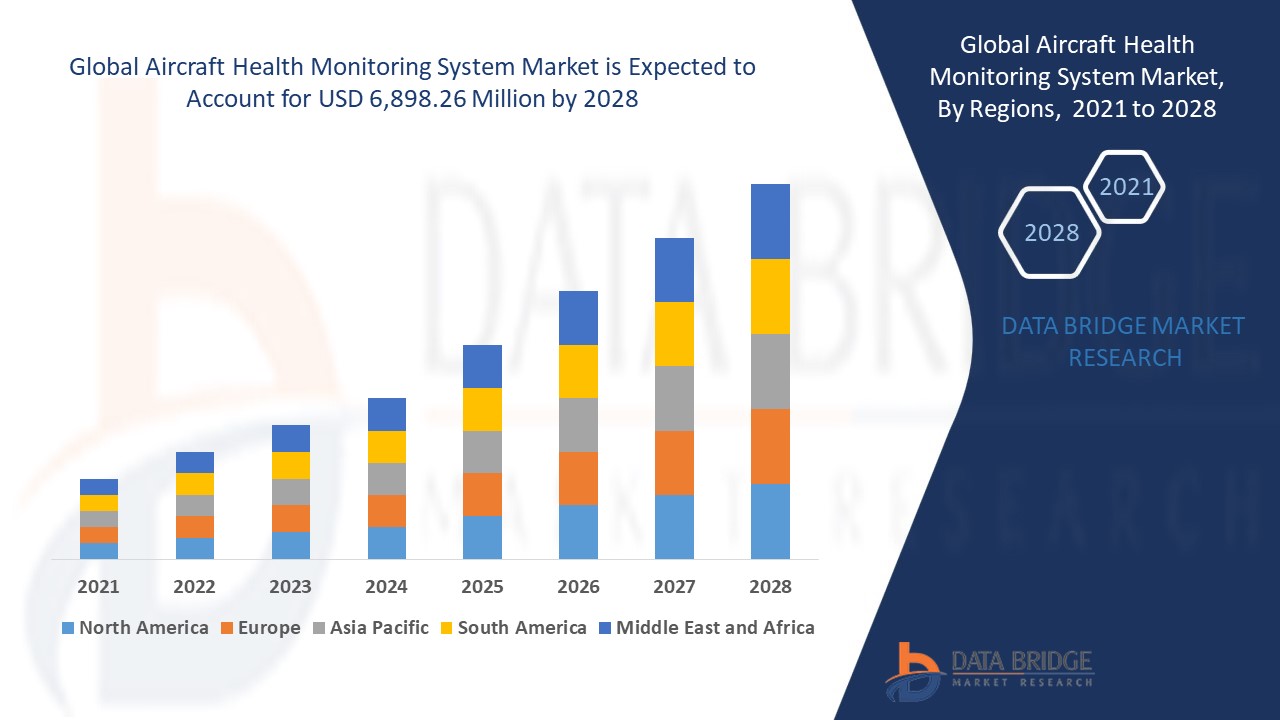
The global aircraft health monitoring system market size was valued at USD 5.40 billion in 2024 and is projected to reach USD 8.80 billion by 2032, with a CAGR of 6.30% during the forecast period of 2025 to 2032. In addition to the market insights such as market value, growth rate, market segments, geographical coverage, market players, and market scenario, the market report curated by the Data Bridge Market Research team includes in-depth expert analysis, import/export analysis, pricing analysis, production consumption analysis, and pestle analysis.
Aircraft Health Monitoring System Market Trends
“Integration with AI and Machine Learning”
A key trend in the aircraft health monitoring system market is the growing use of artificial intelligence (AI) and machine learning (ML) algorithms for predictive analytics. These technologies allow for real-time monitoring of aircraft systems, enabling the early detection of potential issues before they lead to failures. By analyzing vast amounts of data from sensors and aircraft components, AI and ML can predict maintenance needs, optimize repair schedules, and reduce unplanned downtime. This proactive approach enhances safety and operational efficiency and minimizes maintenance costs. As airlines and defense organizations continue to embrace digital transformation, AI and ML are becoming integral to the future of aircraft health management, driving innovation and improving overall fleet reliability.
Report Scope and Aircraft Health Monitoring System Market Segmentation
|
Attributes |
Aircraft Health Monitoring System Key Market Insights |
|
Segments Covered |
|
|
Countries Covered |
U.S., Canada and Mexico in North America, Germany, France, U.K., Netherlands, Switzerland, Belgium, Russia, Italy, Spain, Turkey, Rest of Europe in Europe, China, Japan, India, South Korea, Singapore, Malaysia, Australia, Thailand, Indonesia, Philippines, Rest of Asia-Pacific (APAC) in the Asia-Pacific (APAC), Saudi Arabia, U.A.E., South Africa, Egypt, Israel, Rest of Middle East and Africa (MEA) as a part of Middle East and Africa (MEA), Brazil, Argentina and Rest of South America as part of South America |
|
Key Market Players |
AIRBUS (Netherlands), Boeing (U.S.), RTX (U.S.), General Electric Company (U.S.), Honeywell International Inc. (U.S.), Meggitt PLC (U.K.), Rolls-Royce Motor Cars Limited (U.K.), FLYHT Aerospace Solutions Ltd. (Canada), Curtiss-Wright Corporation (U.S.), Safran (France), AFI KLM E&M (France), Lufthansa Technik (Germany), Embraer (Brazil) |
|
Market Opportunities |
|
|
Value Added Data Infosets |
In addition to the market insights such as market value, growth rate, market segments, geographical coverage, market players, and market scenario, the market report curated by the Data Bridge Market Research team includes in-depth expert analysis, import/export analysis, pricing analysis, production consumption analysis, and pestle analysis. |
Aircraft Health Monitoring System Market Definition
Aircraft health monitoring system refers to an integrated system that continuously tracks and assesses the condition of an aircraft’s critical components and systems. It utilizes sensors, data analytics, and diagnostic tools to collect real-time data from various parts of the aircraft, such as engines, flight controls, and avionics. The system analyzes this data to identify potential issues, predict failures, and provide maintenance recommendations. By enabling proactive maintenance, the system helps ensure aircraft safety, reduce operational downtime, extend component life, and lower maintenance costs. Aircraft health monitoring systems are increasingly incorporating artificial intelligence and machine learning to enhance predictive capabilities and optimize maintenance schedules.
Aircraft Health Monitoring System Market Dynamics
Drivers
- Increased Focus on Safety and Reliability
A growing demand for improved safety standards in the aviation industry is a key driver for the adoption of advanced aircraft health monitoring systems. Airlines and defense organizations are prioritizing the detection of potential issues before they result in catastrophic failures. These monitoring systems provide real-time data on aircraft components, allowing for early identification of mechanical or electrical malfunctions. By enabling proactive maintenance, these systems enhance the overall safety of flight operations, minimize the risk of in-flight incidents, and improve regulatory compliance. This shift towards enhanced safety measures is accelerating the market growth for health monitoring systems in aviation.
- Rising Fuel and Maintenance Costs
Aircraft health monitoring systems are becoming a vital market driver as they help airlines reduce unplanned maintenance and optimize fuel consumption, resulting in substantial cost savings. By continuously monitoring the health of critical aircraft components, these systems provide early warnings of potential issues, enabling airlines to perform maintenance when necessary rather than reacting to unexpected failures. This proactive approach minimizes costly delays, emergency repairs, and unplanned downtimes. In addition, optimized performance data helps enhance fuel efficiency, reduce operational costs, and extend the lifespan of aircraft. These factors are driving increased investments in aircraft health monitoring systems across the aviation industry.
Opportunities
- Increased Use of Autonomous Aircraft
The increasing prevalence of unmanned and autonomous aircraft presents a significant market opportunity for robust aircraft health monitoring systems. As these aircraft take on more complex operational and mission-critical tasks, ensuring their optimal performance becomes even more crucial. Health monitoring systems are essential for real-time diagnostics, fault detection, and predictive maintenance in autonomous aircraft, where human intervention is minimal. These systems help maintain operational integrity, prevent failures, and ensure mission success. With the rise of autonomous aircraft across various industries, including military, logistics, and commercial sectors, the demand for advanced health monitoring systems is expected to grow, driving market expansion.
- Fleet Expansion and Modernization
The rise in new aircraft deliveries and fleet modernization initiatives is creating a substantial market opportunity for advanced aircraft health monitoring systems. As airlines and operators expand and upgrade their fleets with the latest aircraft models, the need for efficient fleet management and maintenance grows. Advanced monitoring systems enable real-time tracking of critical components, ensuring proactive maintenance, reducing downtime, and improving overall fleet performance. These systems help airlines optimize maintenance schedules, extend the lifespan of aircraft, and enhance safety standards. With the continued growth in fleet sizes and modernization efforts, the demand for robust monitoring solutions is set to increase, fueling market growth.
Restraints/Challenges
- Cybersecurity Concerns
As more aircraft systems become digitally connected, ensuring the security of sensitive data and preventing cyber threats has become a critical challenge for the aircraft health monitoring system market. With increased reliance on real-time data transmission and cloud-based platforms, the risk of cyberattacks targeting aircraft systems, maintenance data, or operational information grows. These threats could lead to compromised safety, privacy breaches, or disruption of flight operations. Consequently, the need for robust cybersecurity measures, including encryption, secure communication protocols, and real-time threat detection, is crucial. Addressing these concerns will be a key factor in the widespread adoption of monitoring systems in aviation.
- High Initial Investment
The cost of implementing advanced aircraft health monitoring systems presents a significant market restraint, especially for smaller airlines or operators with limited budgets. These systems require substantial upfront investments in sensors, data analytics platforms, and integration with existing infrastructure. In addition, the ongoing costs associated with system maintenance, software updates, and training can add to the financial burden. While larger carriers may have the resources to adopt these technologies, the high capital expenditure can be a deterrent for smaller operators looking to modernize their fleet. This financial barrier limits the widespread adoption of advanced monitoring systems, slowing overall market growth.
This market report provides details of new recent developments, trade regulations, import-export analysis, production analysis, value chain optimization, market share, impact of domestic and localized market players, analyses opportunities in terms of emerging revenue pockets, changes in market regulations, strategic market growth analysis, market size, category market growths, application niches and dominance, product approvals, product launches, geographic expansions, technological innovations in the market. To gain more info on the market contact Data Bridge Market Research for an Analyst Brief, our team will help you take an informed market decision to achieve market growth.
Aircraft Health Monitoring System Market Scope
The market is segmented on the basis of type, IVHM system, fit, operation, and platform. The growth amongst these segments will help you analyse meagre growth segments in the industries and provide the users with a valuable market overview and market insights to help them make strategic decisions for identifying core market applications.
Type
- Commercial
- Defense
IVHM System
- Diagnostics
- Prognostics
- Condition-Based Maintenance
- Adaptive Control
Fit
- Line-fit
- Retro-fit
Operation
- Real-Time Operation
- No Real-Time Operation
Platform
- Narrow Body Aircraft
- Wide Body Aircraft
- Regional Aircraft
- Business Jet
- Helicopter
- Fighter Jet
Aircraft Health Monitoring System Market Regional Analysis
The market is analysed and market size insights and trends are provided by country, type, IVHM system, fit, operation, and platform as referenced above.
The countries covered in the market report are U.S., Canada and Mexico in North America, Germany, France, U.K., Netherlands, Switzerland, Belgium, Russia, Italy, Spain, Turkey, Rest of Europe in Europe, China, Japan, India, South Korea, Singapore, Malaysia, Australia, Thailand, Indonesia, Philippines, Rest of Asia-Pacific (APAC) in the Asia-Pacific (APAC), Saudi Arabia, U.A.E, South Africa, Egypt, Israel, Rest of Middle East and Africa (MEA) as a part of Middle East and Africa (MEA), Brazil, Argentina and Rest of South America as part of South America.
Europe dominates the aircraft health monitoring system market, driven by the implementation of stricter government regulations aimed at enhancing airworthiness standards. In addition, the region is witnessing a surge in greenfield and brownfield investments in the aviation sector, fueling demand for advanced monitoring solutions. These factors, combined with a strong focus on safety and sustainability, make Europe a key market for health monitoring systems.
The Asia Pacific region is the fastest-growing market for aircraft health monitoring systems, driven by rising per capita spending and a significant increase in passenger traffic. The region has seen robust growth in the aviation industry, contributing to a healthy CAGR in recent years. The growing demand for next-generation aircraft, fueled by ongoing infrastructure development, is expected to dominate the regional market share during the forecast period. Furthermore, market players are actively investing in airline companies, which will further accelerate the demand for advanced health monitoring systems in the coming years.
The country section of the report also provides individual market impacting factors and changes in regulation in the market domestically that impacts the current and future trends of the market. Data points such as down-stream and upstream value chain analysis, technical trends and porter's five forces analysis, case studies are some of the pointers used to forecast the market scenario for individual countries. Also, the presence and availability of global brands and their challenges faced due to large or scarce competition from local and domestic brands, impact of domestic tariffs and trade routes are considered while providing forecast analysis of the country data.
Aircraft Health Monitoring System Market Share
The market competitive landscape provides details by competitor. Details included are company overview, company financials, revenue generated, market potential, investment in research and development, new market initiatives, global presence, production sites and facilities, production capacities, company strengths and weaknesses, product launch, product width and breadth, application dominance. The above data points provided are only related to the companies' focus related to market.
Aircraft Health Monitoring System Market Leaders Operating in the Market Are:
- AIRBUS (Netherlands)
- Boeing (U.S.)
- RTX (U.S.)
- General Electric Company (U.S.)
- Honeywell International Inc. (U.S.)
- Meggitt PLC (U.K.)
- Rolls-Royce Motor Cars Limited (U.K.)
- FLYHT Aerospace Solutions Ltd. (Canada)
- Curtiss-Wright Corporation (U.S.)
- Safran (France)
- AFI KLM E&M (France)
- Lufthansa Technik (Germany)
- Embraer (Brazil)
Latest Developments in Aircraft Health Monitoring System Market
- In July 2021, GE Digital formed a strategic alliance with Airbus and Delta TechOps to enhance fleet health monitoring and diagnostics solutions. The collaboration aims to combine their expertise in digital analytics, aircraft systems, and airline maintenance operations, providing cost savings and operational efficiencies to 140 commercial aviation operators. This partnership focuses on improving the health and performance of aircraft fleets through advanced data-driven solutions, enabling more effective and efficient maintenance processes across the aviation industry
- In May 2021, Bombardier revealed that its authorized service centers are set to begin offering free modifications for in-service Challenger 300 and 350 aircraft. The modifications involve the installation of a health monitoring unit that will facilitate a more streamlined process for acquiring and sharing flight data between aircraft systems and maintenance technicians. This upgrade will enhance operational efficiency and ensure timely maintenance interventions, ultimately reducing downtime and improving fleet reliability
- In February 2021, the Tennessee Valley Authority selected GPMS’ Foresight MX helicopter health and usage monitoring system for its fleet, starting with the Bell 407GXi. The system will also be implemented across planned fleet additions, including the MD530 and Bell 429 helicopters. This decision is aimed at improving fleet management by providing real-time data on aircraft health, ensuring early detection of potential issues, and enhancing overall fleet safety and performance across the organization
- In February 2021, Sichuan Airlines entered into a five-year partnership with Lufthansa Technik to optimize its digital fleet solutions, focusing on fleet management, predictive maintenance, and system health monitoring. The collaboration will cover the airline’s A350, A330, and A320 aircraft, utilizing advanced data analytics to improve maintenance schedules, reduce costs, and enhance operational efficiency. This agreement reflects the airline's commitment to leveraging cutting-edge technologies to ensure the reliability and safety of its fleet for the long term

- Interactive Data Analysis Dashboard
- Company Analysis Dashboard for high growth potential opportunities
- Research Analyst Access for customization & queries
- Competitor Analysis with Interactive dashboard
- Latest News, Updates & Trend analysis
- Harness the Power of Benchmark Analysis for Comprehensive Competitor Tracking
Data collection and base year analysis are done using data collection modules with large sample sizes. The stage includes obtaining market information or related data through various sources and strategies. It includes examining and planning all the data acquired from the past in advance. It likewise envelops the examination of information inconsistencies seen across different information sources. The market data is analysed and estimated using market statistical and coherent models. Also, market share analysis and key trend analysis are the major success factors in the market report. To know more, please request an analyst call or drop down your inquiry.
The key research methodology used by DBMR research team is data triangulation which involves data mining, analysis of the impact of data variables on the market and primary (industry expert) validation. Data models include Vendor Positioning Grid, Market Time Line Analysis, Market Overview and Guide, Company Positioning Grid, Patent Analysis, Pricing Analysis, Company Market Share Analysis, Standards of Measurement, Global versus Regional and Vendor Share Analysis. To know more about the research methodology, drop in an inquiry to speak to our industry experts.
Data Bridge Market Research is a leader in advanced formative research. We take pride in servicing our existing and new customers with data and analysis that match and suits their goal. The report can be customized to include price trend analysis of target brands understanding the market for additional countries (ask for the list of countries), clinical trial results data, literature review, refurbished market and product base analysis. Market analysis of target competitors can be analyzed from technology-based analysis to market portfolio strategies. We can add as many competitors that you require data about in the format and data style you are looking for. Our team of analysts can also provide you data in crude raw excel files pivot tables (Fact book) or can assist you in creating presentations from the data sets available in the report.













