


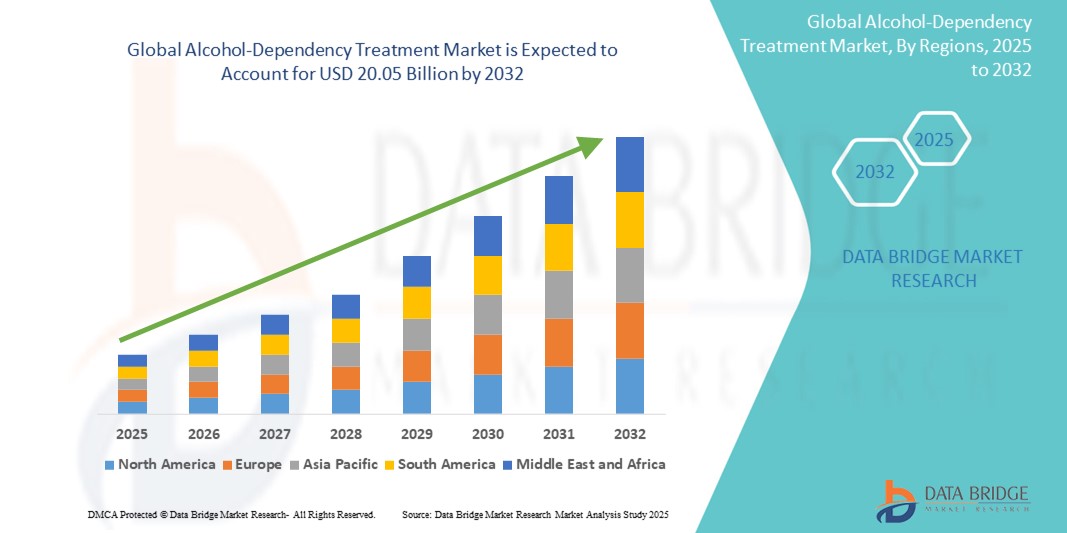
Alcohol-Dependency Treatment Market Size
- The global alcohol-dependency treatment market size was valued at USD 13.17 billion in 2024 and is expected to reach USD 20.05 billion by 2032, at a CAGR of 5.4% during the forecast period
- Market growth is primarily driven by the increasing global prevalence of alcohol use disorder (AUD), growing awareness regarding the adverse health and societal impacts of alcohol dependency, and advancements in pharmacotherapies and behavioral interventions
- Rising efforts from governments and non-profit organizations to support recovery programs and reduce stigma are establishing accessible and effective alcohol-dependency treatment as a critical public health priority. These converging factors are accelerating the demand for and uptake of alcohol-dependency treatment solutions, thereby significantly boosting the industry's growth
Alcohol-Dependency Treatment Market Analysis
- Alcohol dependency, or alcohol use disorder (AUD), is a chronic relapsing brain disease characterized by an impaired ability to stop or control alcohol use despite adverse social, occupational, or health consequences. Treatment often involves a combination of medication, behavioral therapies, and support groups. The escalating demand for Alcohol-Dependency Treatment is primarily fueled by improved diagnostic tools leading to earlier identification, increased public health campaigns promoting treatment seeking, and the development of new, more effective medications and integrated care models
- North America dominates the alcohol-dependency treatment market with the largest revenue share of 40.01% in 2024, characterized by a high prevalence of AUD, robust healthcare infrastructure, and significant government funding for addiction treatment and research
- Asia-Pacific is expected to be the fastest-growing region in the Alcohol-Dependency Treatment Market during the forecast period due to increasing alcohol consumption, rising awareness of treatment options, and improving healthcare access in countries such as China and India
- The psychotherapy segment dominates the Alcohol-Dependency Treatment Market with a market share of 43.2% in 2024, driven by the growing clinical acceptance of medications like naltrexone, acamprosate, and disulfiram as effective tools to reduce cravings and prevent relapse
Report Scope and Alcohol-Dependency Treatment Market Segmentation
|
Attributes |
Alcohol-Dependency Treatment Market Insights |
|
Segments Covered |
|
|
Countries Covered |
North America
Europe
Asia-Pacific
Middle East and Africa
South America
|
|
Key Market Players |
|
|
Market Opportunities |
|
|
Value Added Data Infosets |
In addition to the insights on market scenarios such as market value, growth rate, segmentation, geographical coverage, and major players, the market reports curated by the Data Bridge Market Research also include depth expert analysis, patient epidemiology, pipeline analysis, pricing analysis, and regulatory framework. |
Alcohol-Dependency Treatment Market Trends
“Integration of Digital Health Solutions and Telemedicine”
- A significant and accelerating trend in the global alcohol-dependency treatment market is the increasing integration of digital health solutions and telemedicine platforms for delivering addiction care. This shift has been particularly accelerated by the COVID-19 pandemic, which necessitated remote access to healthcare services, but its benefits extend far beyond immediate crisis response
- For instance, in April 2024, a major addiction treatment network reported a 40% increase in patient engagement and retention rates for individuals utilizing their telemedicine-based therapy programs compared to traditional in-person models. Such widespread adoption is expected to propel the Alcohol-Dependency Treatment industry growth in the forecast period
- Digital health solutions offer features such as improved accessibility, increased privacy, personalized treatment plans, and continuous support through mobile apps, virtual group sessions, and remote monitoring, providing a compelling upgrade over geographical or logistical barriers to traditional care
- Furthermore, the growing popularity of mental health apps and the desire for flexible treatment options are making digital health an integral component of comprehensive addiction management, offering seamless integration with pharmacotherapy regimens and behavioral interventions
- The convenience of scheduling, the ability to receive support from any location, and the potential for real-time tracking of progress are key factors propelling the adoption of telemedicine. The trend towards preventative health and the increasing availability of sophisticated digital platforms further contribute to market growth.
Alcohol-Dependency Treatment Market Dynamics
Driver:
“Rising Global Burden of Alcohol Use Disorder (AUD)”
- The increasing global burden of Alcohol Use Disorder (AUD), characterized by a rising number of individuals suffering from alcohol dependency, is a significant driver for the heightened demand for Alcohol-Dependency Treatment
- For instance, in April 2024, the World Health Organization (WHO) published an updated report on alcohol consumption and health, highlighting the growing global health burden attributable to alcohol, including higher rates of AUD diagnoses. Such reports by key international health organizations are expected to drive the Alcohol-Dependency Treatment industry growth in the forecast period
- As healthcare systems become more aware of the public health impact of widespread AUD and seek enhanced management for their patients, advanced treatment solutions offer features such as effective craving reduction, relapse prevention, and comprehensive support systems, providing a compelling upgrade over older, less integrated approaches
- Furthermore, the growing emphasis on early intervention and the desire for improved quality of life for individuals and their families are making Alcohol-Dependency Treatment an integral component of public health strategies, offering seamless integration with mental health services and community support programs. The convenience of evidence-based pharmacotherapies, the availability of diverse behavioral therapies, and the increasing accessibility of specialized treatment centers are key factors propelling the adoption of Alcohol-Dependency Treatment. The trend towards de-stigmatization of addiction and the increasing support from government and non-profit organizations further contribute to market growth.
Restraint/Challenge:
“Stigma Associated with Addiction and Limited Access to Care”
- Concerns regarding the pervasive social stigma associated with alcohol dependency, coupled with significant limitations in access to comprehensive and affordable treatment, pose a significant challenge to broader market penetration and effective public health management
- For instance, a recent survey highlighted that fear of judgment and social isolation prevents a substantial portion of individuals with AUD from seeking help, raising anxieties among patients and their families about disclosing their condition. Addressing these stigma concerns through widespread public education campaigns, promoting empathy, and emphasizing addiction as a treatable disease is crucial for encouraging treatment seeking
- Treatment providers are emphasizing patient confidentiality and integrated care models in their marketing to reassure potential patients. Additionally, the shortage of specialized addiction treatment professionals, particularly in rural or underserved areas, and the high cost of long-term care without adequate insurance coverage can be a barrier to treatment initiation and retention
- While the potential for recovery exists, the perceived social stigma and real barriers to access can still hinder widespread adoption. Overcoming these challenges through increased funding for public awareness, expanding the workforce of addiction specialists, and advocating for comprehensive insurance coverage will be vital for sustained market growth.
Alcohol-Dependency Treatment Market Scope
The market is segmented on the basis of type, therapy, drugs, route of administration, end-users, and distribution channel.
- By Type
On the basis of type, the market is segmented into mild, moderate, and severe. The moderate segment accounts for the largest market revenue share in 2024, driven by the significant prevalence of individuals experiencing moderate symptoms, which often prompt intervention and treatment. This segment typically encompasses a broader patient demographic seeking professional help.
The severe segment is anticipated to witness the fastest growth rate from 2025 to 2032, fueled by increased awareness, improved diagnostic capabilities, and a greater focus on addressing severe conditions due to their significant impact on quality of life and healthcare burden.
- By Therapy
On the basis of therapy, the market is segmented into cognitive behavioral therapy, psychotherapy, and others. The psychotherapy segment held the largest market revenue share in 2024, driven by its long-standing efficacy in addressing a wide range of conditions through various therapeutic approaches and its adaptability to individual patient needs.
The cognitive behavioral therapy segment is expected to witness the fastest CAGR from 2025 to 2032, driven by its structured, evidence-based approach and growing recognition for its effectiveness in treating specific conditions with measurable outcomes, making it a preferred choice for many practitioners and patients.
- By Drugs
On the basis of drugs, the market is segmented into naltrexone, antabuse, acamprosate, and others. The naltrexone segment held the largest market revenue share in 2024, driven by its established use and effectiveness in treating certain conditions, particularly in managing cravings and preventing relapse.
The acamprosate segment is expected to witness the fastest CAGR from 2025 to 2032, fueled by its distinct mechanism of action and growing acceptance as an effective medication in managing specific aspects of conditions, offering a valuable alternative or complementary treatment option.
- By Route of Administration
On the basis of route of administration, the market is segmented into oral and injectable. The oral segment held the largest market revenue share in 2024, driven by its convenience, ease of self-administration, and patient preference, making it the most common and accessible method for drug delivery.
The injectable segment is expected to witness the fastest CAGR from 2025 to 2032, driven by the increasing development of long-acting injectable formulations, which improve patient adherence, provide sustained therapeutic effects, and reduce the frequency of dosing, particularly beneficial for chronic conditions.
- By End-Users
On the basis of end-users, the market is segmented into hospitals, rehabilitation centers, and others. The hospitals segment accounted for the largest market revenue share in 2024, driven by their comprehensive range of services, including diagnosis, acute care, and specialized treatments, making them primary points of contact for patients.
The rehabilitation centers segment is expected to witness the fastest CAGR from 2025 to 2032, driven by the increasing emphasis on specialized, long-term recovery programs and integrated care, catering to specific patient needs for sustained improvement and support.
- By Distribution Channel
On the basis of distribution channel, the market is segmented into hospital pharmacy, retail pharmacy, and online pharmacy. The retail pharmacy segment accounted for the largest market revenue share in 2024, driven by its widespread accessibility, convenience for patients to obtain medications, and broad geographical reach.
The online pharmacy segment is expected to witness the fastest CAGR from 2025 to 2032, fueled by the growing trend of e-commerce, increasing digital literacy, and the convenience of home delivery, offering a discreet and efficient option for patients to access medications and related products.
Alcohol-Dependency Treatment Market Regional Analysis
- North America dominates the Alcohol-Dependency Treatment Market with the largest revenue share of 40.01% in 2024, driven by a high prevalence of alcohol use disorder, strong public health initiatives to combat addiction, and comprehensive healthcare infrastructure supporting various treatment modalities
- The region benefits from significant investments in addiction research, widespread availability of evidence-based therapies, and expanding insurance coverage for substance use disorders
- This widespread adoption is further supported by proactive government policies and strong patient advocacy groups
U.S. Alcohol-Dependency Treatment Market Insight
The U.S. Alcohol-Dependency Treatment Market captured the largest revenue share of 81% within North America in 2024, fueled by the largest population affected by AUD, significant federal and state funding for addiction services, and a robust network of specialized treatment centers. The country has been at the forefront of integrating pharmacotherapies with behavioral interventions and expanding access through telemedicine.
Europe Alcohol-Dependency Treatment Market Insight
The European Alcohol-Dependency Treatment Market is projected to expand at a substantial CAGR throughout the forecast period, primarily driven by increasing awareness campaigns for responsible alcohol consumption, improving access to treatment services, and a rising prevalence of alcohol-related health issues across various European countries. European governments are actively implementing strategies to reduce alcohol-related harm and expand treatment capacities.
U.K. Alcohol-Dependency Treatment Market Insight
The U.K. Alcohol-Dependency Treatment Market is anticipated to grow at a noteworthy CAGR during the forecast period, driven by increasing government investment in addiction services, a focus on integrated care models, and a growing recognition of AUD as a public health priority. The National Health Service (NHS) plays a crucial role in providing and commissioning treatment services.
Germany Alcohol-Dependency Treatment Market Insight
The German Alcohol-Dependency Treatment Market is expected to expand at a considerable CAGR during the forecast period, fueled by its robust healthcare system, comprehensive social support programs, and a growing emphasis on evidence-based treatment for addiction. Germany's commitment to patient well-being and integrated care models contributes to the adoption of effective therapies.
Asia-Pacific Alcohol-Dependency Treatment Market Insight
The Asia-Pacific Alcohol-Dependency Treatment Market is poised to grow at the fastest CAGR of over 24% in 2024, driven by increasing alcohol consumption rates, rising awareness of alcohol-related health issues, improving healthcare infrastructure, and government initiatives to address substance abuse in countries such as China, Japan, and India. The expansion of mental health services and addiction support contributes to regional growth.
Japan Alcohol-Dependency Treatment Market Insight
The Japan Alcohol-Dependency Treatment Market is gaining momentum due to increasing public awareness campaigns, sophisticated healthcare infrastructure, and a growing emphasis on mental health and addiction recovery. The Japanese market benefits from a proactive approach to addressing societal health challenges and improving access to specialized care.
China Alcohol-Dependency Treatment Market Insight
The China Alcohol-Dependency Treatment Market accounted for the largest market revenue share in Asia Pacific in 2024, attributed to its vast population, increasing alcohol consumption, and expanding investments in public health and addiction treatment facilities. Government efforts to address alcohol-related harm and a growing middle class seeking professional help are key factors propelling the market in China.
Alcohol-Dependency Treatment Market Share
The Alcohol-Dependency Treatment industry is primarily led by well-established companies, including:
- Alkermes plc (Ireland)
- Indivior PLC (U.K.)
- Merck & Co., Inc. (U.S.)
- Pfizer Inc. (U.S.)
- AstraZeneca (U.K.)
- Sanofi (France),
- Aimmune Therapeutics, Inc. (U.S.)
- DBV Technologies (France), Sanofi (France),
- Regeneron Pharmaceuticals, Inc. (U.S.)
- Pfizer Inc. (U.S.)
- Johnson & Johnson (U.S.)
- Teva Pharmaceutical Industries Ltd. (Israel)
- Bayer AG (Germany),
- Mylan N.V. (U.S.)
- Kaléo, Inc. (U.S.)
- Camallergy (U.K.)
- Astellas Pharma Inc. (Japan)
- Novartis AG (Switzerland)
- Allergy Therapeutics plc (U.K.)
- Genentech, Inc. (U.S.)
- Merck & Co., Inc. (U.S.)
- Viatris Inc. (U.S.),
- ALK-Abelló A/S (Denmark)
- Leti Pharma (Spain)
- Stallergenes Greer (U.K.)
Latest Developments in Global Alcohol-Dependency Treatment Market
- In April 2023, Alkermes plc, a leading pharmaceutical company focused on neuroscience, announced positive results from a real-world study of its long-acting injectable medication for alcohol dependence, demonstrating improved adherence and reduced relapse rates in a broader patient population. This data supports the long-term effectiveness of their therapy
- In March 2023, Indivior PLC, a global pharmaceutical company, initiated a new Phase 3 clinical trial for an investigational opioid-free medication designed to reduce heavy drinking in individuals with alcohol use disorder, signaling potential for a novel non-opioid treatment option. This advancement aims to provide an alternative for patients seeking non-addictive treatments
- In March 2023, Merck & Co., Inc., a global healthcare leader, announced a strategic collaboration with a digital health company to develop an integrated digital platform that combines pharmacotherapy with virtual behavioral support for alcohol dependency. This partnership aims to enhance patient engagement and treatment outcomes
- In February 2023, Pfizer Inc., a major pharmaceutical company, introduced a new patient assistance program aimed at increasing access to its medications for alcohol dependence for underserved populations, demonstrating a commitment to addressing health disparities. This initiative seeks to improve affordability and accessibility
- In January 2023, Sanofi, a global pharmaceutical company, presented preclinical data for a novel compound targeting specific brain pathways involved in alcohol cravings, showing promising results in animal models and suggesting a potential new class of medication for AUD. This development could lead to more targeted and effective treatments

- Interactive Data Analysis Dashboard
- Company Analysis Dashboard for high growth potential opportunities
- Research Analyst Access for customization & queries
- Competitor Analysis with Interactive dashboard
- Latest News, Updates & Trend analysis
- Harness the Power of Benchmark Analysis for Comprehensive Competitor Tracking
Data collection and base year analysis are done using data collection modules with large sample sizes. The stage includes obtaining market information or related data through various sources and strategies. It includes examining and planning all the data acquired from the past in advance. It likewise envelops the examination of information inconsistencies seen across different information sources. The market data is analysed and estimated using market statistical and coherent models. Also, market share analysis and key trend analysis are the major success factors in the market report. To know more, please request an analyst call or drop down your inquiry.
The key research methodology used by DBMR research team is data triangulation which involves data mining, analysis of the impact of data variables on the market and primary (industry expert) validation. Data models include Vendor Positioning Grid, Market Time Line Analysis, Market Overview and Guide, Company Positioning Grid, Patent Analysis, Pricing Analysis, Company Market Share Analysis, Standards of Measurement, Global versus Regional and Vendor Share Analysis. To know more about the research methodology, drop in an inquiry to speak to our industry experts.
Data Bridge Market Research is a leader in advanced formative research. We take pride in servicing our existing and new customers with data and analysis that match and suits their goal. The report can be customized to include price trend analysis of target brands understanding the market for additional countries (ask for the list of countries), clinical trial results data, literature review, refurbished market and product base analysis. Market analysis of target competitors can be analyzed from technology-based analysis to market portfolio strategies. We can add as many competitors that you require data about in the format and data style you are looking for. Our team of analysts can also provide you data in crude raw excel files pivot tables (Fact book) or can assist you in creating presentations from the data sets available in the report.













