


What is the Global Alcoholic Psychosis Treatment Market Size and Growth Rate?
- As per Data Bridge Market Research analysis that the global alcoholic psychosis treatment market size was valued at USD 1.36 billion in 2025 and is expected to reach USD 1.86 billion by 2033, at a CAGR of 4.00% during the forecast period
- The market growth is primarily driven by the rising prevalence of alcohol-related disorders, increasing awareness about mental health, and expanding access to specialized psychiatric and rehabilitation services worldwide
- Moreover, growing investments in therapeutic drugs, counseling programs, and integrated treatment approaches for alcohol-induced psychosis are fueling demand, supporting the adoption of advanced treatment solutions, and thereby propelling market expansion
What are the Major Takeaways of Alcoholic Psychosis Treatment Market?
- Alcoholic psychosis treatment, including pharmacological therapies such as neuroleptics, benzodiazepines, and antipsychotics, alongside supportive care, is increasingly vital for managing alcohol-induced psychotic disorders and mitigating severe withdrawal symptoms
- The rising demand for treatment is primarily fueled by the growing prevalence of alcohol-related disorders, increased awareness of mental health, and expanding availability of specialized healthcare facilities
- North America dominated the alcoholic psychosis treatment market with the largest revenue share of 38.9% in 2025, supported by advanced healthcare infrastructure, high healthcare expenditure, and widespread adoption of hospital and clinic-based treatment programs, with the U.S. showing substantial uptake of integrated therapies combining medication and symptom management
- Asia-Pacific is expected to be the fastest-growing region during the forecast period due to rising alcohol consumption, increasing healthcare accessibility, and expanding investments in psychiatric care facilities
- Delirium Tremens Psychosis segment dominated the market with a share of 42.8% in 2025, driven by the urgent need for specialized pharmacological intervention, monitoring of severe withdrawal symptoms, and effective management in clinical and hospital settings
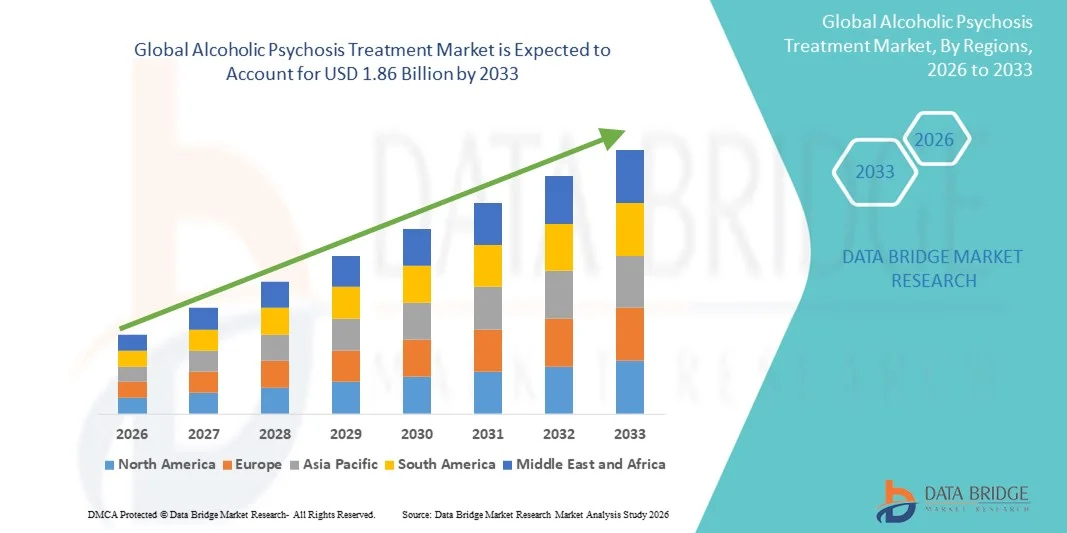
Report Scope and Alcoholic Psychosis Treatment Market Segmentation
|
Attributes |
Alcoholic Psychosis Treatment Key Market Insights |
|
Segments Covered |
|
|
Countries Covered |
North America
Europe
Asia-Pacific
Middle East and Africa
South America
|
|
Key Market Players |
|
|
Market Opportunities |
|
|
Value Added Data Infosets |
In addition to the insights on market scenarios such as market value, growth rate, segmentation, geographical coverage, and major players, the market reports curated by the Data Bridge Market Research also include in-depth expert analysis, patient epidemiology, pipeline analysis, pricing analysis, and regulatory framework |
Alcoholic Psychosis Treatment Market Trends
Integration of Telepsychiatry and Digital Therapeutics
- A significant and accelerating trend in the global alcoholic psychosis treatment market is the adoption of telepsychiatry platforms and digital therapeutics, enabling remote monitoring, counseling, and medication management for patients with alcohol-induced psychotic disorders
- For instance, telemedicine platforms such as Mindstrong and Talkspace provide remote consultations and behavioral therapy programs that allow patients to receive care without visiting a clinic or hospital, improving accessibility and adherence
- Digital therapeutics integration enables features such as real-time symptom tracking, personalized intervention prompts, and predictive alerts for relapse risks, helping clinicians optimize treatment plans. For instance, some mobile apps monitor tremors, hallucinations, and mood fluctuations and can alert caregivers or clinicians if abnormal patterns are detected
- The seamless integration of digital health solutions with clinical workflows facilitates centralized management of patient treatment, combining pharmacological therapies with counseling, symptom tracking, and follow-up care through a single platform
- This trend toward more accessible, data-driven, and patient-centric treatment is reshaping expectations for mental healthcare delivery. Consequently, companies such as Pear Therapeutics are developing AI-enabled digital therapies that complement traditional medications and provide personalized support
- The demand for telepsychiatry and digital therapeutics is growing rapidly across both outpatient clinics and hospital settings, as patients and caregivers increasingly prioritize convenience, continuous monitoring, and comprehensive care
- Increasing research on pharmacogenomics and personalized medicine is enabling more tailored treatment strategies for alcoholic psychosis patients, improving efficacy and reducing side effects
- Integration of wearable health devices to monitor physiological symptoms such as tremors, heart rate, and sleep patterns is enhancing early detection of relapse risks and treatment adjustments
Alcoholic Psychosis Treatment Market Dynamics
Driver
Rising Prevalence of Alcohol-Related Disorders and Mental Health Awareness
- The increasing prevalence of alcohol-induced psychotic disorders, combined with rising awareness of mental health issues, is a significant driver for the heightened demand for alcoholic psychosis treatment
- For instance, in March 2025, the U.S. National Institute on Alcohol Abuse and Alcoholism reported a surge in hospital admissions for severe alcohol withdrawal syndromes, emphasizing the need for structured treatment programs
- As healthcare providers recognize the long-term consequences of untreated alcoholic psychosis, integrated interventions combining pharmacological therapies with counseling and behavioral programs are being increasingly adopted
- Furthermore, government initiatives and NGO programs promoting mental health awareness are driving patients to seek early intervention, reducing complications and improving recovery outcomes
- The growing accessibility of psychiatric care, improved reimbursement policies, and expansion of hospital and clinic-based treatment programs are key factors propelling adoption in both urban and rural regions
- Increasing collaboration between pharmaceutical companies and mental health organizations is driving the development of innovative treatment protocols and outreach programs
- Rising public and private funding for alcohol rehabilitation and psychiatric research is enabling wider access to effective treatments and advancing clinical best practices
Restraint/Challenge
Limited Access to Specialized Care and High Treatment Costs
- Limited availability of specialized psychiatric facilities, particularly in developing regions, poses a significant challenge to broader market penetration, restricting timely access to alcoholic psychosis treatment
- For instance, rural areas in Asia-Pacific and Africa often lack trained psychiatrists and structured treatment programs, leading to delayed diagnosis and inadequate management
- Addressing these access issues through telemedicine, mobile health units, and capacity-building initiatives is crucial for improving patient outcomes. In addition, the relatively high cost of specialized medications and inpatient treatment can be a barrier for price-sensitive patients
- While some low-cost generic drugs are available, premium therapies combining multiple pharmacological agents with intensive monitoring remain expensive, limiting adoption among patients without insurance coverage
- Overcoming these challenges through government support, subsidized treatment programs, and expansion of affordable healthcare solutions will be vital for sustained market growth
- Social stigma associated with alcohol-induced mental disorders continues to discourage patients from seeking timely treatment, limiting early intervention opportunities
- Regulatory variations across countries regarding psychiatric medications and treatment protocols create challenges for global market standardization and accessibility
How is the Alcoholic Psychosis Treatment Market Segmented?
The market is segmented on the basis of type, treatment, symptoms, dosage, route of administration, end-users, and distribution channel.
- By Type
On the basis of type, the alcoholic psychosis treatment market is segmented into delirium tremens psychosis, chronic alcoholic hallucinosis, and alcohol poisoning psychosis. The Delirium Tremens Psychosis segment dominated the market with the largest revenue share of 42.8% in 2025, driven by the urgent need for specialized pharmacological intervention and clinical monitoring. Patients experiencing severe withdrawal symptoms often require immediate inpatient care, making this type critical for hospitals and rehabilitation centers. The high prevalence of withdrawal cases in North America and Europe supports segment dominance, alongside well-established treatment protocols combining neuroleptics and benzodiazepines. Healthcare providers prioritize early intervention to reduce mortality and prevent complications, ensuring sustained demand. In addition, awareness programs and government initiatives for mental health management further reinforce adoption. Hospitals also focus on monitoring comorbid conditions such as liver dysfunction and cardiovascular risks during treatment.
The Chronic Alcoholic Hallucinosis segment is anticipated to witness the fastest growth rate of 6.1% from 2026 to 2033, fueled by increasing awareness of long-term mental health complications due to alcohol abuse. This type often requires ongoing pharmacological therapy and psychological support, driving demand for integrated treatment programs. Rising alcohol consumption in emerging regions such as Asia-Pacific and Latin America is boosting market growth. Hospitals and outpatient clinics are increasingly focusing on early diagnosis and continuous care, enabling better management of hallucinations and psychotic episodes. Research on novel antipsychotics and combination therapy models also contributes to rapid adoption. Telepsychiatry integration supports faster access to treatment and remote symptom monitoring.
- By Treatment
On the basis of treatment, the market is segmented into neuroleptics, benzodiazepines, antipsychotics, and others. The Antipsychotics segment dominated the market in 2025 with the largest share of 45.6%, driven by their proven efficacy in managing hallucinations, agitation, and mood disorders associated with alcoholic psychosis. Hospitals and clinics prefer antipsychotics due to their ability to stabilize patients and reduce relapse risk. Newer, safer antipsychotics with minimal side effects enhance clinical adoption. Treatment protocols increasingly combine antipsychotics with supportive counseling for comprehensive care. Insurance coverage expansion for mental health treatments in developed countries further supports adoption. Continuous monitoring and follow-up programs in hospitals ensure adherence and better outcomes.
The Benzodiazepines segment is expected to witness the fastest CAGR of 6.5% from 2026 to 2033, driven by their effectiveness in managing severe withdrawal symptoms such as tremors and delirium. Hospitals widely use benzodiazepines in acute care settings and emergency interventions. Combination therapy with antipsychotics improves patient outcomes, increasing prescription rates. Rising awareness among clinicians about optimized dosing and safety protocols fuels growth. Expansion of psychiatric care infrastructure in Asia-Pacific and Latin America further supports adoption. Telemedicine platforms are increasingly facilitating access to benzodiazepine therapy for outpatient cases.
- By Symptoms
On the basis of symptoms, the market is segmented into body tremors, hallucinations, rapid mood changes, agitation, delirium, stupor, sensitivity to light, touch or sound, and others. The Hallucinations segment dominated the market with a share of 38.9% in 2025, driven by the need for specialized antipsychotic therapy and continuous clinical monitoring. Hallucinations significantly impact patient safety and recovery outcomes, prompting hospitals and clinics to prioritize effective treatment plans. Early intervention and continuous observation in inpatient settings support segment growth. Rising awareness of symptom management among healthcare professionals further boosts adoption. Integration of digital therapeutics and remote monitoring systems aids real-time tracking and alerts. Research on improved antipsychotic formulations contributes to better treatment outcomes.
The Body Tremors segment is projected to witness the fastest growth rate of 6.2% from 2026 to 2033, fueled by rising prevalence of severe alcohol withdrawal cases and increasing hospital admissions for acute symptom management. Tremors require prompt pharmacological treatment, increasing hospital utilization. Clinical protocols often combine benzodiazepines with supportive care for effective management. Awareness campaigns on alcohol withdrawal and early treatment interventions further drive demand. Telepsychiatry and wearable devices monitoring tremors remotely enable faster clinical response. Expansion of outpatient treatment programs supports early symptom management and patient adherence.
- By Dosage
On the basis of dosage, the market is segmented into tablet, injection, and others. The Tablet segment dominated the market with a share of 52.4% in 2025, driven by patient preference for oral administration and ease of outpatient treatment. Tablets allow flexible dosing, long-term therapy, and self-administration, supporting adherence. Hospitals and clinics widely prescribe tablets for both acute and chronic cases. Pharmaceutical companies continue to develop formulations with improved bioavailability and reduced side effects. The segment benefits from expanding retail and online pharmacy distribution channels. Tablets also provide cost-effective treatment options for patients in developing regions.
The Injection segment is expected to witness the fastest CAGR of 6.0% from 2026 to 2033, fueled by the demand for rapid-onset treatment in severe withdrawal and acute psychosis cases. Inpatient hospital settings prefer injections for immediate symptom control. Advancements in long-acting injectable formulations increase convenience and reduce relapse risks. Rising adoption in emergency care and psychiatric wards further supports growth. Hospitals increasingly rely on injections for high-risk patients. Awareness of dosage safety protocols improves clinician confidence in injectable therapies.
- By Route of Administration
On the basis of route of administration, the market is segmented into oral, intravenous, intramuscular, and others. The Oral segment dominated with a market share of 51.8% in 2025, driven by convenience, ease of self-administration, and suitability for long-term outpatient care. Oral administration is preferred for chronic management and maintenance therapy. Tablets and capsules are widely prescribed across clinics and hospitals. Continuous patient monitoring and adherence programs support consistent usage. The segment benefits from the development of combination therapies and controlled-release formulations. Patient preference for non-invasive treatment also sustains growth.
The Intravenous segment is projected to witness the fastest CAGR of 6.3% from 2026 to 2033, fueled by its critical role in emergency management of severe withdrawal symptoms and acute psychosis. Hospitals increasingly use IV therapy for rapid symptom stabilization. Rising ICU and inpatient psychiatric care capacity further supports adoption. IV administration allows precise dosage control and quick onset of action. Growing awareness among clinicians about emergency treatment protocols strengthens adoption. Technological improvements in IV delivery systems enhance safety and efficiency.
- By End-Users
On the basis of end-users, the market is segmented into clinic, hospital, and others. The Hospital segment dominated the market with 55.7% share in 2025, driven by the need for intensive monitoring, inpatient care, and availability of specialized psychiatric wards. Hospitals are equipped to handle severe withdrawal symptoms, acute psychosis, and continuous supervision. The presence of trained staff and advanced pharmacological treatments ensures better outcomes. Increasing hospital admissions for alcohol-related mental disorders further supports dominance. Integration with telepsychiatry platforms enhances patient management. Hospitals also provide comprehensive care including therapy, monitoring, and rehabilitation services.
The Clinic segment is expected to witness the fastest CAGR of 6.4% from 2026 to 2033, fueled by the rise of outpatient treatment programs, telepsychiatry integration, and preventive care initiatives. Clinics provide accessible care for mild-to-moderate cases and follow-up therapy, supporting early intervention. Expansion of community mental health centers enhances growth. Clinics increasingly adopt digital therapeutics for monitoring and counseling. Awareness campaigns drive patient engagement and early diagnosis. Clinics are also expanding partnerships with online pharmacies to improve medicine access.
- By Distribution Channel
On the basis of distribution channel, the market is segmented into hospital pharmacy, retail pharmacy, and online pharmacy. The Hospital Pharmacy segment dominated with 49.3% market share in 2025, driven by direct supply of specialized medications for inpatient and emergency care. Hospital pharmacies ensure availability of critical drugs for withdrawal and psychosis management. They also support adherence to treatment protocols and regulatory standards. Growing hospital networks and mental health facilities sustain dominance. Hospitals can provide real-time monitoring and dosage adjustments for patients. Integration with clinical workflows improves treatment efficiency and outcomes.
The Online Pharmacy segment is expected to witness the fastest CAGR of 7.0% from 2026 to 2033, fueled by rising e-pharmacy adoption, home delivery convenience, and telemedicine prescriptions. Patients increasingly prefer online ordering for privacy, accessibility, and affordability. The segment is supported by digital health platforms offering integrated counseling and medicine delivery. Online pharmacies enhance treatment adherence for outpatients. Expansion in emerging markets drives rapid adoption. Partnerships with telepsychiatry providers facilitate seamless medicine supply and follow-up.
Alcoholic Psychosis Treatment Market Regional Analysis
- North America dominated the alcoholic psychosis treatment market with the largest revenue share of 38.9% in 2025, supported by advanced healthcare infrastructure, high healthcare expenditure, and widespread adoption of hospital and clinic-based treatment programs, with the U.S. showing substantial uptake of integrated therapies combining medication and symptom management
- Patients and healthcare providers in the region highly value access to advanced pharmacological therapies, integrated treatment programs, and specialized psychiatric care facilities
- This widespread adoption is further supported by well-established healthcare infrastructure, high healthcare expenditure, and government initiatives promoting early intervention and rehabilitation programs, establishing North America as a key market for alcoholic psychosis treatment
U.S. Alcoholic Psychosis Treatment Market Insight
The U.S. alcoholic psychosis treatment market captured the largest revenue share of 80% in 2025 within North America, fueled by the high prevalence of alcohol-related disorders and increasing awareness of mental health. Patients and healthcare providers are prioritizing access to specialized psychiatric care, integrated pharmacological therapies, and rehabilitation programs. The growing adoption of telepsychiatry and digital therapeutics, combined with strong insurance coverage and government mental health initiatives, further propels market growth. Moreover, U.S. hospitals and clinics are increasingly implementing comprehensive treatment protocols combining medication and behavioral therapy, driving adoption across both inpatient and outpatient settings.
Europe Alcoholic Psychosis Treatment Market Insight
The Europe alcoholic psychosis treatment market is projected to expand at a substantial CAGR throughout the forecast period, primarily driven by rising alcohol consumption, growing awareness of mental health disorders, and robust healthcare infrastructure. Stringent clinical standards and increasing focus on early diagnosis are fostering the adoption of integrated treatment programs. European patients are drawn to comprehensive care combining pharmacological treatment with counseling and therapy. The market is experiencing significant growth across hospitals, clinics, and rehabilitation centers, with treatment solutions being incorporated into both acute care and long-term management programs.
U.K. Alcoholic Psychosis Treatment Market Insight
The U.K. alcoholic psychosis treatment market is anticipated to grow at a noteworthy CAGR during the forecast period, driven by rising alcohol-related health issues and the increasing adoption of structured treatment programs. Concerns regarding withdrawal complications and relapse are encouraging hospitals and clinics to offer early intervention and personalized care. The U.K.’s emphasis on mental health awareness, coupled with its robust healthcare system and e-health platforms, is expected to continue stimulating market growth. Integration of telepsychiatry services and outpatient treatment programs is further enhancing accessibility and patient engagement.
Germany Alcoholic Psychosis Treatment Market Insight
The Germany alcoholic psychosis treatment market is expected to expand at a considerable CAGR during the forecast period, fueled by increasing awareness of alcohol-induced psychotic disorders and growing demand for evidence-based treatment. Germany’s well-developed healthcare infrastructure and focus on innovation promote adoption of advanced pharmacological therapies and integrated care models. Hospitals and psychiatric clinics are increasingly incorporating comprehensive treatment protocols that combine medication, counseling, and monitoring. Patients’ preference for high-quality, privacy-focused care aligns with local healthcare expectations, supporting sustained market growth.
Asia-Pacific Alcoholic Psychosis Treatment Market Insight
The Asia-Pacific alcoholic psychosis treatment market is poised to grow at the fastest CAGR of 7% during the forecast period of 2026 to 2033, driven by rising alcohol consumption, expanding healthcare access, and increasing awareness of mental health disorders in countries such as China, Japan, and India. Government initiatives promoting psychiatric care and rehabilitation programs are supporting treatment adoption. The region’s growing urbanization and technological advancement are facilitating telepsychiatry and mobile health interventions, improving access to therapy. Furthermore, APAC’s increasing investments in hospital infrastructure and community mental health services are expanding treatment coverage to a wider patient base.
Japan Alcoholic Psychosis Treatment Market Insight
The Japan alcoholic psychosis treatment market is gaining momentum due to the country’s high prevalence of alcohol-induced disorders, strong healthcare system, and increasing adoption of outpatient treatment programs. Japanese patients and healthcare providers emphasize early intervention, continuous monitoring, and integration of pharmacological therapy with counseling services. The rise in telepsychiatry platforms and digital health solutions is enhancing access and adherence. Moreover, Japan’s aging population is likely to drive demand for personalized, easy-to-manage treatment solutions across both residential and clinical care settings.
India Alcoholic Psychosis Treatment Market Insight
The India alcoholic psychosis treatment market accounted for the largest market revenue share in Asia-Pacific in 2025, attributed to rising alcohol consumption, rapid urbanization, and increasing awareness of mental health. India represents one of the largest emerging markets for psychiatric care, and alcoholic psychosis treatment is becoming increasingly accessible in hospitals, clinics, and community health programs. Expansion of telemedicine platforms and digital therapeutics, alongside government mental health initiatives, are key factors propelling market growth. The availability of affordable treatment options and growing healthcare infrastructure further support market adoption across both urban and semi-urban regions.
Which are the Top Companies in Alcoholic Psychosis Treatment Market?
The Alcoholic Psychosis Treatment industry is primarily led by well-established companies, including:
- Alkermes plc (Ireland)
- Indivior PLC (U.K.)
- Merck & Co., Inc. (U.S.)
- Pfizer Inc. (U.S.)
- AstraZeneca (U.K.)
- Sanofi (France)
- Regeneron Pharmaceuticals Inc. (U.S.)
- Johnson & Johnson Services, Inc. (U.S.)
- Teva Pharmaceutical Industries Ltd. (Israel)
- Bayer AG (Germany)
- Viatris Inc. (U.S.)
- Astellas Pharma Inc. (Japan)
- Novartis AG (Switzerland)
- Allergy Therapeutics plc (U.K.)
- ALK‑Abelló A/S (Denmark)
- Leti Pharma (Spain)
- Camallergy (U.K.)
- H. Lundbeck A/S (Denmark)
- American Addiction Centers, Inc. (U.S.)
What are the Recent Developments in Global Alcoholic Psychosis Treatment Market?
- In November 2025, Clearmind revealed positive top-line results from the first cohort of its Phase I/IIa trial for CMND-100: the treatment was generally well tolerated, with no serious adverse events, and the cohort showed high adherence supporting further development. This is an encouraging early sign, because safety and tolerability are major hurdles for new AUD therapies and a favorable profile improves the chances for advancement to larger trials
- In August 2025, Altimmune announced that pemvidutide received a “Fast Track” designation from U.S. Food and Drug Administration (FDA) for AUD. Fast Track status indicates the FDA considers AUD a serious condition with unmet medical needs and recognizes pemvidutide’s potential to address those needs
- In June 2025, Clearmind announced the first patient was dosed with CMND-100 in the Phase I/IIa trial a concrete operational milestone signaling that the drug is now being tested for safety and tolerability in humans. The trial includes multiple leading institutions and also planned sites in Israel, indicating a broad, international clinical program
- In May 2025, Altimmune, Inc. initiated the first subject enrollment in its Phase 2 trial (RECLAIM) testing Pemvidutide for AUD. This is significant because pemvidutide is a novel GLP‑1/glucagon dual receptor agonist being developed not just for AUD, but also for metabolic and liver‑related disorders
- In March 2025, Clearmind Medicine, Inc. announced that its novel oral drug candidate CMND-100 had arrived in the U.S. and was cleared for a Phase I/IIa clinical trial under FDA IND approval marking the start of first‑in-human testing for AUD. CMND-100 is described as a “psychedelic‑derived / neuroplastogen-based” therapy, reflecting a growing interest in innovative mechanisms beyond traditional AUD treatments

- Interactive Data Analysis Dashboard
- Company Analysis Dashboard for high growth potential opportunities
- Research Analyst Access for customization & queries
- Competitor Analysis with Interactive dashboard
- Latest News, Updates & Trend analysis
- Harness the Power of Benchmark Analysis for Comprehensive Competitor Tracking
Data collection and base year analysis are done using data collection modules with large sample sizes. The stage includes obtaining market information or related data through various sources and strategies. It includes examining and planning all the data acquired from the past in advance. It likewise envelops the examination of information inconsistencies seen across different information sources. The market data is analysed and estimated using market statistical and coherent models. Also, market share analysis and key trend analysis are the major success factors in the market report. To know more, please request an analyst call or drop down your inquiry.
The key research methodology used by DBMR research team is data triangulation which involves data mining, analysis of the impact of data variables on the market and primary (industry expert) validation. Data models include Vendor Positioning Grid, Market Time Line Analysis, Market Overview and Guide, Company Positioning Grid, Patent Analysis, Pricing Analysis, Company Market Share Analysis, Standards of Measurement, Global versus Regional and Vendor Share Analysis. To know more about the research methodology, drop in an inquiry to speak to our industry experts.
Data Bridge Market Research is a leader in advanced formative research. We take pride in servicing our existing and new customers with data and analysis that match and suits their goal. The report can be customized to include price trend analysis of target brands understanding the market for additional countries (ask for the list of countries), clinical trial results data, literature review, refurbished market and product base analysis. Market analysis of target competitors can be analyzed from technology-based analysis to market portfolio strategies. We can add as many competitors that you require data about in the format and data style you are looking for. Our team of analysts can also provide you data in crude raw excel files pivot tables (Fact book) or can assist you in creating presentations from the data sets available in the report.












