Almond Powder Market Size
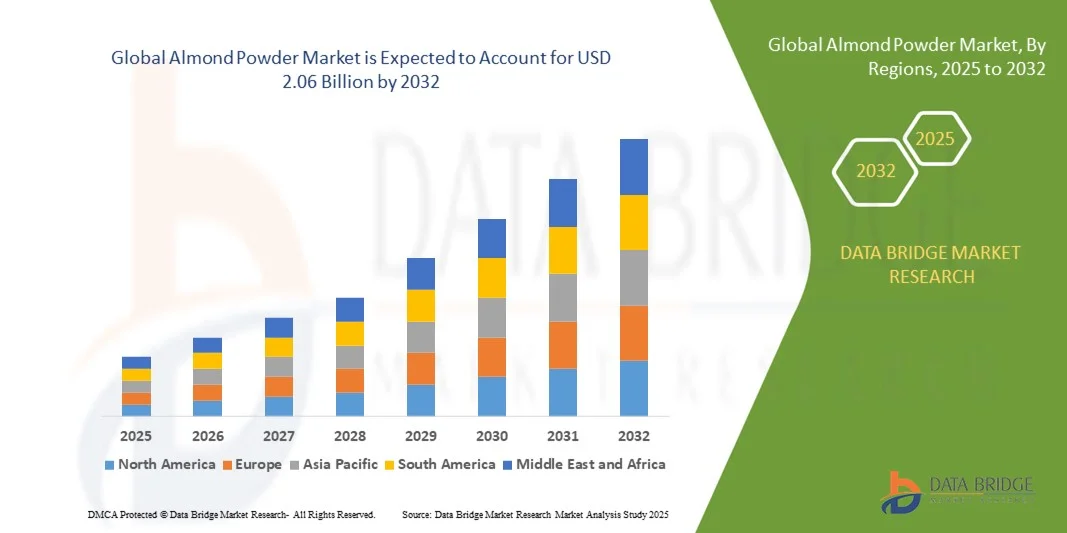
- The global almond powder market size was valued at USD 1.50 billion in 2024 and is expected to reach USD 2.06 billion by 2032, at a CAGR of 4.00% during the forecast period
- The market growth is largely fueled by the rising consumer shift toward plant-based, gluten-free, and nutrient-rich food products, supported by increasing awareness of health and wellness. The widespread use of almond powder in bakery, confectionery, and functional beverages, along with its role as a clean-label ingredient, is driving adoption across both household and commercial applications
- Furthermore, the growing demand for organic and natural food ingredients, coupled with the expanding popularity of vegan and lactose-free diets, is establishing almond powder as a preferred substitute for traditional flour and dairy-based products. These converging factors are accelerating its integration into mainstream and specialty food categories, thereby significantly boosting the industry’s growth
Almond Powder Market Analysis
- Almond powder is a finely ground product derived from almonds, widely utilized in bakery, confectionery, beverages, dietary supplements, and personal care applications. It is valued for its rich nutrient profile, gluten-free properties, and versatility across food and non-food industries. Its increasing use in functional foods and cosmetics underscores its broad market appeal
- The escalating demand for almond powder is primarily fueled by rising health consciousness, strong growth in plant-based diets, and the increasing popularity of organic and clean-label products. With expanding retail and e-commerce distribution channels, along with innovations in product formulations, the market continues to gain momentum across global consumer segments
- North America dominated the almond powder market with a share of 37.7% in 2024, due to the region’s strong consumer demand for plant-based, gluten-free, and nutritional food products
- Asia-Pacific is expected to be the fastest growing region in the almond powder market during the forecast period due to rapid urbanization, rising disposable incomes, and growing awareness of nutritional food alternatives
- Blanched almond powder segment dominated the market with a market share of 59.1% in 2024, due to its widespread usage in bakery and confectionery applications where smooth texture and light color are preferred. Food manufacturers favor blanched almond powder as it blends seamlessly into recipes without altering appearance, making it suitable for cakes, pastries, and premium desserts. Its strong presence in health-focused packaged foods also contributes to demand, given its nutritional benefits and easy digestibility
Report Scope and Almond Powder Market Segmentation
|
Attributes |
Almond Powder Key Market Insights |
|
Segments Covered |
|
|
Countries Covered |
North America
Europe
Asia-Pacific
Middle East and Africa
South America
|
|
Key Market Players |
|
|
Market Opportunities |
|
|
Value Added Data Infosets |
In addition to the insights on market scenarios such as market value, growth rate, segmentation, geographical coverage, and major players, the market reports curated by the Data Bridge Market Research also include in-depth expert analysis, pricing analysis, brand share analysis, consumer survey, demography analysis, supply chain analysis, value chain analysis, raw material/consumables overview, vendor selection criteria, PESTLE Analysis, Porter Analysis, and regulatory framework. |
Almond Powder Market Trends
Growing Adoption of Plant-Based and Gluten-Free Diets
- The almond powder market is experiencing notable expansion as global consumers increasingly shift toward plant-based and gluten-free dietary preferences. Health-conscious buyers are seeking versatile, nutrient-dense ingredients to substitute traditional flours and dairy, fueling almond powder integration across baking, beverages, confectionery, and nutritional supplements
- For instance, Blue Diamond Growers and Bob’s Red Mill have expanded their almond powder lines, making products widely available in major retail channels to meet demand from vegan and gluten-intolerant consumers. In China, a sharp rise in almond-containing bakery and ready-to-drink products reflects the influence of Western food trends and rising disposable incomes
- Innovative product formulations, including organic, flavored, and functional almond powders fortified with protein or fiber, are gaining traction as brands target consumers seeking premium and value-added offerings. Manufacturers are leveraging sustainability messaging by highlighting eco-friendly processing and responsible sourcing practices, capturing a segment of ethically driven buyers
- The market is also benefitting from a robust functional food movement, as almond powder is linked to benefits such as improved heart health, weight management, and low-glycemic nutrition. The increasing prevalence of ketogenic, paleo, and Whole30 diets is expanding the consumer base for gluten-free and low-carb almond ingredients
- Rising demand in foodservice and packaged food sectors is leading to broader geographic expansion, with North America and Europe dominating, and Asia-Pacific emerging rapidly. Governments’ promotion of healthy eating and rising preference for allergen-free foods continue to drive new use cases across diverse applications
- The convergence of plant-based trends, health and wellness positioning, and new product innovation is set to sustain strong growth for the almond powder market. This shift highlights a long-term consumer commitment to clean-label, natural, and functional food solutions supporting healthier lifestyle choices
Almond Powder Market Dynamics
Driver
Rising Consumer Demand for Nutrient-Rich and Clean-Label Ingredients
- Consumers are increasingly prioritizing foods rich in protein, fiber, and healthy fats, with almond powder recognized for its exceptional nutritional value. Its appeal is amplified by the clean-label movement, as buyers seek straightforward ingredient lists free from additives, artificial flavors, and preservatives
- For instance, Bob’s Red Mill markets its almond flour as gluten-free, non-GMO, and minimally processed, attracting health-focused shoppers across North America and Europe. In Australia, Almondco has capitalized on rising demand for certified-organic almond products, expanding sales in both retail and food manufacturing segments
- The gluten-free movement, combined with increased diagnoses of celiac disease and wheat intolerance, fosters almond powder use as a replacement for wheat flour in a variety of recipes. Functional food and beverage manufacturers are leveraging almond powder’s versatility, introducing new products that emphasize health claims related to weight management and cardiovascular benefits
- Dietary supplement companies and sports nutrition brands increasingly include almond powder as a protein-rich base, targeting fitness enthusiasts and those pursuing low-carb lifestyles. The ingredient’s association with holistic wellness and “real food” attributes amplifies its popularity within clean-label product launches
- The widespread adoption of nutrient-dense and allergen-friendly ingredients is expected to remain a strong growth engine. Almond powder’s synergy with trending dietary habits secures its position as a key staple across global clean-label and health-focused food markets
Restraint/Challenge
High Price of Raw Material
- The high cost of raw almonds, driven by climate variability, supply chain constraints, and water-intensive cultivation requirements, presents a primary challenge for almond powder producers. Price volatility makes it difficult for manufacturers to maintain competitive pricing while preserving product quality and margins
- For instance, California, the world’s leading almond-producing region, has faced intermittent drought and regulatory pressures on water use, leading to higher input costs and periodic disruptions in almond supply. This scenario affects local and also global almond powder availability and pricing
- Fluctuations in commodity costs force brands to balance sourcing quality with affordability, sometimes resulting in product reformulation or reduced promotional activities. Smaller and emerging brands, particularly those catering to organic and specialty segments, are especially vulnerable to rising input expenses and constrained margins
- The entry of alternative nut powders and plant proteins as substitutes may further impact market dynamics, as buyers seek other options when almond prices spike. This competitive pressure underscores the importance of supply chain resilience and transparent sourcing in sustaining growth
- In conclusion, although demand for almond powder remains robust, the high price of raw materials is a significant barrier for broad market expansion. Market participants must invest in responsible sourcing, efficiency improvements, and risk management strategies to maintain consistent product availability and affordability in the face of ongoing supply challenges
Almond Powder Market Scope
The market is segmented on the basis of type, nature, application, end user, and distribution channel.
- By Type
On the basis of type, the almond powder market is segmented into blanched almond powder and natural almond powder. The blanched almond powder segment dominated the largest market revenue share of 59.1% in 2024, driven by its widespread usage in bakery and confectionery applications where smooth texture and light color are preferred. Food manufacturers favor blanched almond powder as it blends seamlessly into recipes without altering appearance, making it suitable for cakes, pastries, and premium desserts. Its strong presence in health-focused packaged foods also contributes to demand, given its nutritional benefits and easy digestibility.
The natural almond powder segment is anticipated to witness the fastest growth from 2025 to 2032, supported by rising consumer interest in minimally processed and nutrient-dense products. Natural almond powder retains the skin of almonds, enhancing fiber and antioxidant content, which appeals to health-conscious consumers. It is increasingly being adopted in functional foods, smoothies, and dietary supplements, catering to the demand for clean-label and wholesome ingredients. Growth is further fueled by its acceptance in vegan and gluten-free food formulations, where nutrient density is highly valued.
- By Nature
On the basis of nature, the almond powder market is segmented into conventional and organic. The conventional segment dominated the market in 2024, as it remains the primary choice for large-scale food production due to affordability and widespread availability. Conventional almond powder is extensively used in commercial baking, confectionery, and food processing industries where cost efficiency and consistent supply are critical. Its established role in mainstream food categories ensures steady demand across both developed and developing economies.
The organic segment is projected to register the fastest growth during 2025–2032, driven by rising global health awareness and preference for chemical-free products. Consumers are increasingly seeking organic-certified ingredients in clean-label and premium food products. Organic almond powder, rich in natural nutrients, is finding growing use in baby food, dietary supplements, and natural skincare products. Expansion of organic retail networks and e-commerce channels further boosts accessibility, making it an attractive choice for health-conscious and eco-aware consumers.
- By Application
On the basis of application, the almond powder market is segmented into confectionery, bakery, cosmetics, and others. The confectionery segment dominated the market in 2024, supported by high incorporation of almond powder in chocolates, candies, and premium sweet goods. Its ability to provide a nutty flavor, smooth texture, and nutritional benefits makes it a preferred ingredient in luxury confectionery and seasonal products. The rising trend of indulgence combined with health benefits ensures confectionery remains the leading application area.
The cosmetics segment is expected to witness the fastest growth from 2025 to 2032, as almond powder gains traction in natural skincare and personal care products. Known for its skin-nourishing and exfoliating properties, almond powder is increasingly used in face masks, scrubs, and herbal formulations. The growing shift toward plant-based and chemical-free beauty solutions accelerates demand, particularly in premium and organic cosmetic brands. Expanding awareness of sustainable beauty practices further strengthens growth in this segment.
- By End User
On the basis of end user, the almond powder market is segmented into household and commercial. The commercial segment accounted for the largest revenue share in 2024, as food and beverage manufacturers, bakeries, and confectioneries drive bulk demand. Almond powder serves as a versatile ingredient in packaged foods and ready-to-eat products, which are witnessing strong global consumption. Its use in large-scale production ensures consistent dominance of the commercial category.
The household segment is projected to grow at the fastest pace during 2025–2032, propelled by rising home baking trends and growing interest in DIY health foods. Consumers are increasingly adopting almond powder for making smoothies, protein shakes, and gluten-free recipes. The availability of almond powder in smaller consumer packs through online and retail channels makes it accessible for daily household use. Rising awareness of nutritional benefits and preference for plant-based proteins further drive household adoption.
- By Distribution Channel
On the basis of distribution channel, the almond powder market is segmented into direct sales, convenience stores, departmental stores, specialty stores, online retailers, and other sales channels. The specialty stores segment dominated the market in 2024, as consumers prefer these outlets for authentic and premium-quality almond-based products. Specialty stores often carry a wider variety of nut-based powders, catering to niche health and gourmet markets. Personalized customer service and the ability to verify product authenticity further reinforce their strong position.
The online retail segment is expected to grow at the fastest rate from 2025 to 2032, driven by increasing digital shopping adoption and the global expansion of e-commerce platforms. Online channels offer consumers the convenience of home delivery, access to international brands, and a wide range of product options. The growing presence of organic, vegan, and clean-label almond powder brands online accelerates consumer shift toward e-commerce. Subscription models and discounts offered on digital platforms further enhance long-term adoption.
Almond Powder Market Regional Analysis
- North America dominated the almond powder market with the largest revenue share of 37.7% in 2024, driven by the region’s strong consumer demand for plant-based, gluten-free, and nutritional food products
- The rising popularity of clean-label diets and the widespread use of almond powder in bakery, confectionery, and functional beverages drive growth
- The presence of established food processing companies and a growing preference for vegan and low-carb lifestyles further strengthen demand. Higher disposable incomes and an increasing inclination toward premium and organic products continue to propel market expansion
U.S. Almond Powder Market Insight
The U.S. almond powder market captured the largest revenue share in 2024 within North America, fueled by the country’s robust consumption of plant-based proteins and functional food ingredients. The growing trend of home baking, coupled with the rising demand for healthier alternatives to wheat flour, boosts adoption. U.S. consumers are increasingly embracing almond powder in smoothies, desserts, and dietary supplements, while the rapid expansion of e-commerce platforms enhances availability. The country’s role as a leading almond producer also ensures steady supply and strengthens domestic market growth.
Europe Almond Powder Market Insight
The Europe almond powder market is projected to expand at a substantial CAGR throughout the forecast period, primarily driven by a surge in demand for healthy bakery and confectionery products. European consumers are highly receptive to natural, organic, and clean-label ingredients, fueling the adoption of almond powder in both household and commercial applications. The growing preference for gluten-free and lactose-free diets also supports the market’s development. Rising investments in premium and specialty food products across the region further contribute to almond powder’s widespread use.
U.K. Almond Powder Market Insight
The U.K. almond powder market is anticipated to grow at a noteworthy CAGR during the forecast period, driven by rising health-consciousness and demand for plant-based alternatives. Almond powder is increasingly used in vegan and gluten-free bakery products, which are gaining popularity across both households and foodservice channels. Strong retail infrastructure and the expanding presence of organic and specialty food stores enhance consumer accessibility. In addition, the preference for convenient, ready-to-use almond-based products further accelerates market adoption.
Germany Almond Powder Market Insight
The Germany almond powder market is expected to expand at a considerable CAGR during the forecast period, supported by the country’s established bakery and confectionery industry. German consumers value high-quality, nutritious ingredients, and almond powder fits well within the trend toward healthier indulgence. The increasing adoption of plant-based diets and interest in sustainable food solutions also drive growth. Moreover, Germany’s strong food processing sector and emphasis on organic certifications enhance the use of almond powder across a wide range of applications.
Asia-Pacific Almond Powder Market Insight
The Asia-Pacific almond powder market is poised to grow at the fastest CAGR of 6.3% from 2025 to 2032, fueled by rapid urbanization, rising disposable incomes, and growing awareness of nutritional food alternatives. Countries such as China, Japan, and India are witnessing a sharp increase in demand for almond powder, driven by its use in bakery, confectionery, and personal care products. Government initiatives promoting healthy diets and the expansion of organized retail further support growth. The region’s role as a major importer of almonds also ensures a strong raw material supply base for almond powder processing.
Japan Almond Powder Market Insight
The Japan almond powder market is gaining traction due to rising health awareness and the demand for convenient, nutrient-rich food ingredients. Japanese consumers are increasingly adopting almond powder in confectionery, bakery, and functional foods, driven by a preference for balanced diets. The aging population also supports demand for easily digestible, plant-based protein sources. Integration of almond powder into beauty and personal care products further broadens its market appeal in Japan.
China Almond Powder Market Insight
The China almond powder market accounted for the largest revenue share in Asia-Pacific in 2024, driven by a rapidly expanding middle class, urbanization, and increasing adoption of healthy eating practices. Almond powder is gaining popularity in bakery and confectionery, as well as in beverages and dietary supplements. The strong presence of domestic food manufacturers and the growing popularity of e-commerce platforms make almond powder more accessible to consumers. In addition, the push toward premium, imported, and organic food products continues to enhance market opportunities in China.
Almond Powder Market Share
The almond powder industry is primarily led by well-established companies, including:
- ADM (U.S.)
- ROYAL NUT COMPANY (Australia)
- Blue Diamond Growers. (U.S.)
- Olam Group (Singapore)
- Bob’s Red Mill Natural Foods. (U.S.)
- Rolling Hills Nut Company (U.S.)
- Alldrin Brothers (U.S.)
- Oleander Bio, SA (Spain)
- Anthonys Goods (U.S.)
- Barney Butter (U.S.)
- ALMONDCO AUSTRALIA LTD (Australia)
- BORGES AGRICULTURAL & INDUSTRIAL NUTS, S.A. (Spain)
Latest Developments in Global Almond Powder Market
- In April 2024, Bob's Red Mill entered into a collaboration with the non-profit Zero Foodprint to promote regenerative farming practices among selected growers. This initiative focuses on improving soil health, enhancing biodiversity, and sequestering carbon, thereby contributing to a more resilient food system. The partnership strengthens Bob’s Red Mill’s sustainability profile and enhances the marketability of its almond-based products, as consumers increasingly prioritize environmentally responsible brands
- In June 2023, Blue Diamond, a leading global marketer of almond flour, partnered with Brightseed to explore the health benefits of bioactive compounds found in California almonds. This collaboration aims to scientifically validate the link between almond flour consumption and specific health outcomes. By strengthening consumer education and highlighting functional benefits, the initiative is expected to drive demand for almond powder in health-conscious segments, including nutraceuticals and functional foods
- In February 2022, Olam Food Ingredients (ofi) announced a major investment in its almond processing facility in California to expand capacity and improve traceability. The integration of advanced digital monitoring systems ensures sustainability and transparency across the almond supply chain. This development enhances ofi’s ability to cater to the growing global demand for responsibly sourced almond powder and consolidates its competitive position in premium markets where sustainable sourcing is a key differentiator
- In January 2021, Harris Woolf California Almonds achieved B Corporation certification after successfully completing B Labs’ rigorous B Impact Assessment. This milestone formally recognized the company’s commitment to inclusive, equitable, and regenerative practices. With over 95% of its growers using advanced water-saving technologies and maintaining the largest Bee Better Certified almond acreage worldwide, Harris Woolf reinforced its image as a sustainability leader, enhancing trust and demand in the premium almond powder segment
- In November 2020, Almondco Australia Ltd. expanded its processing system to meet surging global demand for organic almonds and almond-derived products. This expansion increased production capacity and also positioned the company to effectively serve international markets where organic certifications drive consumer preference. By scaling operations, Almondco strengthened its competitive advantage and supported the rising demand for organic almond powder in bakery, confectionery, and health food industries

- Interactive Data Analysis Dashboard
- Company Analysis Dashboard for high growth potential opportunities
- Research Analyst Access for customization & queries
- Competitor Analysis with Interactive dashboard
- Latest News, Updates & Trend analysis
- Harness the Power of Benchmark Analysis for Comprehensive Competitor Tracking
Global Almond Powder Market, Supply Chain Analysis and Ecosystem Framework
To support market growth and help clients navigate the impact of geopolitical shifts, DBMR has integrated in-depth supply chain analysis into its Global Almond Powder Market research reports. This addition empowers clients to respond effectively to global changes affecting their industries. The supply chain analysis section includes detailed insights such as Global Almond Powder Market consumption and production by country, price trend analysis, the impact of tariffs and geopolitical developments, and import and export trends by country and HSN code. It also highlights major suppliers with data on production capacity and company profiles, as well as key importers and exporters. In addition to research, DBMR offers specialized supply chain consulting services backed by over a decade of experience, providing solutions like supplier discovery, supplier risk assessment, price trend analysis, impact evaluation of inflation and trade route changes, and comprehensive market trend analysis.
Data collection and base year analysis are done using data collection modules with large sample sizes. The stage includes obtaining market information or related data through various sources and strategies. It includes examining and planning all the data acquired from the past in advance. It likewise envelops the examination of information inconsistencies seen across different information sources. The market data is analysed and estimated using market statistical and coherent models. Also, market share analysis and key trend analysis are the major success factors in the market report. To know more, please request an analyst call or drop down your inquiry.
The key research methodology used by DBMR research team is data triangulation which involves data mining, analysis of the impact of data variables on the market and primary (industry expert) validation. Data models include Vendor Positioning Grid, Market Time Line Analysis, Market Overview and Guide, Company Positioning Grid, Patent Analysis, Pricing Analysis, Company Market Share Analysis, Standards of Measurement, Global versus Regional and Vendor Share Analysis. To know more about the research methodology, drop in an inquiry to speak to our industry experts.
Data Bridge Market Research is a leader in advanced formative research. We take pride in servicing our existing and new customers with data and analysis that match and suits their goal. The report can be customized to include price trend analysis of target brands understanding the market for additional countries (ask for the list of countries), clinical trial results data, literature review, refurbished market and product base analysis. Market analysis of target competitors can be analyzed from technology-based analysis to market portfolio strategies. We can add as many competitors that you require data about in the format and data style you are looking for. Our team of analysts can also provide you data in crude raw excel files pivot tables (Fact book) or can assist you in creating presentations from the data sets available in the report.