


Alpha-Synuclein Targeted Drug Market Size
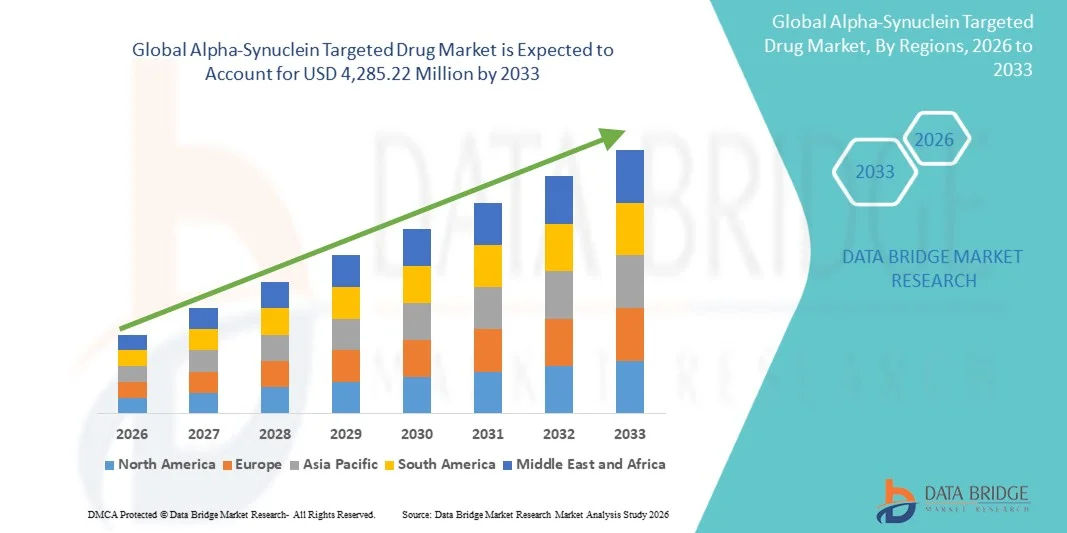
- The global alpha-synuclein targeted drug market size was valued at USD 964.00 million in 2025 and is expected to reach USD 4,285.22 million by 2033, at a CAGR of 20.50% during the forecast period
- The market growth is largely fueled by increasing research focus and technological advancements in neurodegenerative disease therapeutics, particularly in disease-modifying treatments targeting alpha-synuclein pathology, driving innovation across pharmaceutical and biotechnology sectors
- Furthermore, rising prevalence of Parkinson’s disease and related synucleinopathies, along with growing demand for effective and targeted treatment options, is positioning alpha-synuclein therapies as a next-generation approach in neurology. These converging factors are accelerating clinical development and investment activities, thereby significantly boosting the industry's growth
Alpha-Synuclein Targeted Drug Market Analysis
- Alpha-synuclein targeted drugs, designed to address the underlying pathology of neurodegenerative disorders by preventing protein aggregation or enhancing its clearance, are becoming critical components of next-generation therapeutic strategies, particularly in diseases such as Parkinson’s and related synucleinopathies due to their potential disease-modifying capabilities
- The escalating demand for these therapies is primarily fueled by the rising global burden of neurodegenerative diseases, increasing research investments in precision medicine, and a growing focus on developing treatments that go beyond symptomatic relief to target root causes
- North America dominated the alpha-synuclein targeted drug market with the largest revenue share of 40.7% in 2025, characterized by strong clinical research infrastructure, high healthcare expenditure, and the presence of major pharmaceutical and biotechnology companies, with the U.S. leading advancements through extensive clinical trials and pipeline innovations
- Asia-Pacific is expected to be the fastest growing region in the alpha-synuclein targeted drug market during the forecast period due to improving healthcare infrastructure, increasing awareness of neurological disorders, and rising investments in biopharmaceutical research
- Monoclonal antibodies segment dominated the market with a market share of 43.9% in 2025, driven by their targeted mechanism of action, growing clinical success rates, and strong pipeline presence in late-stage development
Report Scope and Alpha-Synuclein Targeted Drug Market Segmentation
|
Attributes |
Alpha-Synuclein Targeted Drug Key Market Insights |
|
Segments Covered |
|
|
Countries Covered |
North America
Europe
Asia-Pacific
Middle East and Africa
South America
|
|
Key Market Players |
|
|
Market Opportunities |
|
|
Value Added Data Infosets |
In addition to the insights on market scenarios such as market value, growth rate, segmentation, geographical coverage, and major players, the market reports curated by the Data Bridge Market Research also include in-depth expert analysis, patient epidemiology, pipeline analysis, pricing analysis, and regulatory framework |
Alpha-Synuclein Targeted Drug Market Trends
“Rising Focus on Disease-Modifying Therapies Through Advanced Biologics and Precision Medicine”
- A significant and accelerating trend in the global alpha-synuclein targeted drug market is the increasing focus on disease-modifying therapies supported by advances in biologics, gene therapies, and precision medicine approaches. This convergence of innovations is enhancing treatment potential and clinical outcomes for neurodegenerative disorders
- For instance, monoclonal antibody-based therapies targeting alpha-synuclein are being actively developed to reduce toxic protein aggregation and slow disease progression, while RNA-based approaches are being explored to suppress alpha-synuclein expression in affected patients
- Advancements in this field enable features such as targeted delivery to the central nervous system, improved specificity in protein binding, and enhanced therapeutic efficacy. For instance, some investigational therapies are designed to cross the blood-brain barrier more efficiently and selectively target pathological protein forms. Furthermore, precision medicine capabilities allow better identification of patient subgroups likely to respond to specific therapies
- The integration of biomarker-driven diagnostics and advanced imaging technologies facilitates early detection and monitoring of disease progression, enabling more personalized and timely therapeutic interventions. Through these innovations, clinicians can better tailor treatment strategies and track therapeutic responses across different stages of disease development
- This trend towards more targeted, effective, and personalized treatment solutions is fundamentally reshaping expectations for neurodegenerative disease management. Consequently, companies are investing heavily in next-generation alpha-synuclein therapies with improved efficacy, safety profiles, and delivery mechanisms
- The demand for therapies that offer disease modification rather than symptomatic relief is growing rapidly across global healthcare systems, as stakeholders increasingly prioritize long-term outcomes and improved quality of life for patients
- Growing regulatory support and orphan drug designations for rare neurodegenerative conditions are encouraging market entry and investment, facilitating faster clinical advancement and commercialization pathways for targeted therapies
Alpha-Synuclein Targeted Drug Market Dynamics
Driver
“Increasing Demand Driven by Rising Neurodegenerative Disease Burden and Innovation in Targeted Therapies”
- The increasing prevalence of neurodegenerative disorders worldwide, coupled with growing advancements in targeted drug development, is a significant driver for the heightened demand for alpha-synuclein targeted therapies
- For instance, in recent years, several pharmaceutical companies have accelerated clinical trials focused on alpha-synuclein targeting approaches, aiming to introduce disease-modifying treatments for Parkinson’s disease and related conditions. Such strategies by key companies are expected to drive market growth in the forecast period
- As awareness of disease progression mechanisms improves and unmet medical needs persist, these therapies offer potential benefits such as slowing neuronal degeneration, reducing protein aggregation, and improving long-term patient outcomes compared to traditional symptomatic treatments
- Furthermore, increasing investments in neuroscience research and the expansion of clinical trial pipelines are supporting the development of innovative therapeutic solutions, positioning alpha-synuclein targeting as a core focus area in neurology
- The shift toward early diagnosis and intervention, along with the adoption of advanced therapeutic platforms, is a key factor propelling the adoption of these drugs across developed healthcare markets and research institutions. The growing collaboration between biotechnology firms and academic organizations further contributes to market growth
- Rising healthcare expenditure and supportive government funding for neurodegenerative disease research are further strengthening market growth, enabling broader access to advanced therapies and accelerating innovation
- Increasing awareness among patients and healthcare providers regarding early-stage intervention and disease management is also contributing to higher adoption rates and improved treatment outcomes
Restraint/Challenge
“Clinical Complexity and High Development Costs Pose Significant Barriers”
- Challenges associated with the complexity of neurodegenerative disease biology, including difficulties in targeting alpha-synuclein effectively and variability in patient response, pose significant barriers to market growth
- For instance, high failure rates in clinical trials due to limited efficacy or safety concerns have made pharmaceutical companies cautious in advancing certain therapeutic candidates, impacting overall development timelines
- Addressing these challenges requires improved understanding of disease mechanisms, enhanced clinical trial design, and the identification of reliable biomarkers. Companies are increasingly focusing on refining therapeutic approaches and optimizing patient selection to improve success rates. In addition, the high cost of research, development, and commercialization of biologics and advanced therapies remains a major constraint, particularly for smaller biotechnology firms
- While technological advancements are gradually improving success probabilities, the long development cycles and stringent regulatory requirements continue to delay product approvals and market entry, especially for first-in-class therapies
- Overcoming these challenges through continued scientific innovation, strategic collaborations, and regulatory support will be essential for unlocking the full potential of the alpha-synuclein targeted drug market
- Limited availability of validated biomarkers for accurate disease diagnosis and progression tracking further complicates clinical development and patient stratification, restricting efficient trial outcomes
- Reimbursement challenges and high treatment costs associated with advanced biologics may limit accessibility in cost-sensitive markets, thereby affecting widespread adoption despite clinical potential
Alpha-Synuclein Targeted Drug Market Scope
The market is segmented on the basis of molecule type, indication, distribution channel, and end user.
- By Molecule Type
On the basis of molecule type, the alpha-synuclein targeted drug market is segmented into small molecules, monoclonal antibodies, peptide-based inhibitors, gene therapies, and immunotherapies. The monoclonal antibodies segment dominated the market with the largest market revenue share of 43.9% in 2025, driven by their high specificity in targeting alpha-synuclein aggregates and strong presence in late-stage clinical pipelines. These therapies are widely preferred due to their ability to selectively bind pathological proteins and potentially slow disease progression. Pharmaceutical companies are heavily investing in monoclonal antibody development due to promising clinical outcomes and regulatory support. In addition, their growing adoption in neurodegenerative disease research further strengthens their dominance. The segment benefits from increasing collaborations and funding aimed at advancing biologic therapies.
The gene therapies segment is anticipated to witness the fastest growth rate from 2026 to 2033, fueled by advancements in genetic engineering and RNA-based technologies. Gene therapies aim to reduce or silence alpha-synuclein expression at the molecular level, offering a potentially long-term or curative approach. Increasing interest in precision medicine and targeted interventions is accelerating research in this segment. Moreover, improvements in delivery systems, such as viral vectors, are enhancing treatment efficacy. The growing number of clinical trials and strategic partnerships is further supporting rapid segment expansion.
- By Indication
On the basis of indication, the market is segmented into Parkinson’s disease, multiple system atrophy, dementia with Lewy bodies, Alzheimer’s disease, and other neurodegenerative disorders. The Parkinson’s disease segment dominated the market with the largest revenue share in 2025, driven by the high global prevalence and strong association of alpha-synuclein pathology with disease progression. Extensive research efforts and clinical trials are primarily focused on Parkinson’s, making it the central therapeutic target. The availability of established diagnostic frameworks and increasing awareness also contribute to segment growth. Furthermore, pharmaceutical companies prioritize Parkinson’s disease due to its large patient pool and unmet medical needs.
The multiple system atrophy segment is expected to witness the fastest growth rate during the forecast period, due to increasing recognition of rare neurodegenerative disorders and rising orphan drug development initiatives. MSA presents a critical need for effective therapies, as current treatment options are limited. Growing regulatory incentives for rare diseases are encouraging investment in this area. In addition, advancements in early diagnosis and biomarker research are improving patient identification. These factors collectively drive rapid development and adoption of therapies targeting this indication.
- By Distribution Channel
On the basis of distribution channel, the market is segmented into hospital pharmacies, specialty clinics, retail pharmacies, and online pharmacies. The hospital pharmacies segment dominated the market with the largest revenue share in 2025, owing to the administration of advanced biologics and investigational therapies within controlled clinical environments. Hospitals play a key role in managing neurodegenerative diseases and facilitating access to specialized treatments. The presence of skilled healthcare professionals and infrastructure for infusion-based therapies further supports this dominance. In addition, ongoing clinical trials are often conducted in hospital settings, reinforcing their central role.
The online pharmacies segment is anticipated to witness the fastest growth rate from 2026 to 2033, driven by increasing digitalization in healthcare and rising patient preference for convenient drug access. Online platforms provide improved accessibility, especially for long-term treatment management. The growth of telemedicine and e-prescriptions is further supporting this trend. In addition, advancements in cold chain logistics are enabling safe delivery of complex therapeutics. These factors are accelerating the expansion of online distribution channels globally.
- By End User
On the basis of end user, the market is segmented into hospitals, neurology specialty centers, research & academic institutes, and ambulatory care centers. The hospitals segment dominated the market with the largest revenue share in 2025, driven by their comprehensive capabilities in diagnosing and managing complex neurodegenerative disorders. Hospitals serve as primary centers for administering advanced therapies and conducting clinical trials. The availability of multidisciplinary expertise and advanced diagnostic tools supports effective treatment delivery. In addition, strong patient inflow and reimbursement frameworks contribute to their leading position.
The research & academic institutes segment is expected to witness the fastest growth rate during the forecast period, fueled by increasing focus on neuroscience research and drug discovery initiatives. These institutions play a critical role in early-stage development and clinical validation of novel therapies. Rising funding from governments and private organizations is accelerating research activities. Furthermore, collaborations with pharmaceutical companies are enhancing innovation and technology transfer. This growing research ecosystem is driving rapid expansion of this segment.
Alpha-Synuclein Targeted Drug Market Regional Analysis
- North America dominated the alpha-synuclein targeted drug market with the largest revenue share of 40.7% in 2025, characterized by strong clinical research infrastructure, high healthcare expenditure, and the presence of major pharmaceutical and biotechnology companies
- Healthcare providers and patients in the region highly value the clinical benefits, targeted mechanisms, and potential disease progression slowing offered by alpha-synuclein therapies compared to conventional symptomatic treatments
- This widespread adoption is further supported by strong clinical trial infrastructure, high healthcare expenditure, and the presence of leading pharmaceutical and biotechnology companies, along with a growing emphasis on early diagnosis and intervention, establishing these therapies as a promising solution for managing neurodegenerative disorders
U.S. Alpha-Synuclein Targeted Drug Market Insight
The United States alpha-synuclein targeted drug market captured the largest revenue share of 81% in 2025 within North America, fueled by the rapid advancement of neuroscience research and the expanding focus on disease-modifying therapies. Healthcare providers are increasingly prioritizing innovative treatment approaches targeting underlying protein pathology rather than symptomatic relief. The growing number of clinical trials, combined with strong funding support from both public and private sectors, further propels the market. Moreover, the increasing integration of precision medicine, biomarker-based diagnostics, and advanced biologics is significantly contributing to the market's expansion.
Europe Alpha-Synuclein Targeted Drug Market Insight
The Europe alpha-synuclein targeted drug market is projected to expand at a substantial CAGR throughout the forecast period, primarily driven by strong regulatory frameworks and the rising demand for advanced neurodegenerative disease treatments. The increase in aging population, coupled with growing awareness of Parkinson’s disease and related disorders, is fostering the adoption of targeted therapies. European healthcare systems are also emphasizing early diagnosis and intervention strategies. The region is experiencing significant growth across clinical research and therapeutic adoption, with alpha-synuclein drugs being incorporated into both hospital treatments and ongoing research initiatives.
U.K. Alpha-Synuclein Targeted Drug Market Insight
The United Kingdom alpha-synuclein targeted drug market is anticipated to grow at a noteworthy CAGR during the forecast period, driven by increasing investment in neurological research and a focus on improving patient outcomes. In addition, rising prevalence of neurodegenerative diseases is encouraging healthcare providers to adopt targeted therapeutic approaches. The UK’s strong clinical trial ecosystem, alongside its advanced healthcare infrastructure, is expected to continue to stimulate market growth.
Germany Alpha-Synuclein Targeted Drug Market Insight
The Germany alpha-synuclein targeted drug market is expected to expand at a considerable CAGR during the forecast period, fueled by increasing focus on innovative biologics and demand for advanced neurological treatments. Germany’s well-established healthcare infrastructure, combined with its emphasis on research and development, promotes the adoption of targeted therapies. The integration of advanced diagnostic technologies is also becoming increasingly prevalent. There is a strong preference for effective, scientifically validated treatment solutions aligning with regional healthcare standards.
Asia-Pacific Alpha-Synuclein Targeted Drug Market Insight
The Asia-Pacific alpha-synuclein targeted drug market is poised to grow at the fastest CAGR during the forecast period of 2026 to 2033, driven by increasing healthcare expenditure, rising awareness of neurological disorders, and expanding pharmaceutical research capabilities in countries such as China, Japan, and India. The region's growing focus on improving healthcare infrastructure and access to advanced treatments is driving adoption. Furthermore, as Asia-Pacific emerges as a key hub for clinical trials and biopharmaceutical manufacturing, accessibility to innovative therapies is expanding to a broader patient population.
Japan Alpha-Synuclein Targeted Drug Market Insight
The Japan alpha-synuclein targeted drug market is gaining momentum due to the country’s advanced healthcare system, aging population, and increasing demand for effective neurodegenerative disease treatments. The Japanese market places a significant emphasis on early diagnosis and precision medicine approaches. The adoption of targeted therapies is driven by rising prevalence of Parkinson’s disease and related conditions. Moreover, Japan's strong focus on research and innovation is likely to spur demand for advanced and effective treatment solutions in both clinical and research settings.
India Alpha-Synuclein Targeted Drug Market Insight
The India alpha-synuclein targeted drug market accounted for the largest market revenue share in Asia Pacific in 2025, attributed to the country's improving healthcare infrastructure, increasing awareness of neurological disorders, and rising investment in pharmaceutical research. India stands as a rapidly growing market for advanced therapeutics, and targeted drugs are gaining traction in hospitals and specialty centers. The push towards strengthening healthcare systems and increasing accessibility to innovative treatments, alongside growing domestic pharmaceutical capabilities, are key factors propelling the market in India.
Alpha-Synuclein Targeted Drug Market Share
The Alpha-Synuclein Targeted Drug industry is primarily led by well-established companies, including:
- Annovis Bio, Inc. (U.S.)
- UCB Biopharma SRL (Belgium)
- Alterity Therapeutics Limited (Australia)
- Denali Therapeutics Inc. (U.S.)
- H. Lundbeck A/S (Denmark)
- AbbVie Inc. (U.S.)
- AstraZeneca PLC (U.K.)
- Nitrome Biosciences, Inc. (U.S.)
- AFFiRiS AG (Austria)
- Prothena Corporation plc (Ireland)
- F. Hoffmann-La Roche Ltd (Switzerland)
- Proclara Biosciences, Inc. (U.S.)
- MODAG GmbH (Germany)
- ProMIS Neurosciences Inc. (Canada)
- AC Immune SA (Switzerland)
- Biogen Inc. (U.S.)
- Takeda Pharmaceutical Company Limited (Japan)
- Eli Lilly and Company (U.S.)
- Genentech, Inc. (U.S.)
What are the Recent Developments in Global Alpha-Synuclein Targeted Drug Market?
- In December 2025, AC Immune announced positive interim Phase 2 results for its alpha-synuclein active immunotherapy ACI-7104.056, demonstrating potential to slow Parkinson’s disease progression. The study showed strong biomarker responses, including stabilization of disease pathology and high immunogenicity with a 100% responder rate. The therapy also exhibited a favorable safety profile with no major concerns reported
- In October 2025, Herantis Pharma reported positive Phase 1 trial results for HER-096, a small molecule targeting alpha-synuclein aggregation and neuronal survival. The drug demonstrated safety, tolerability, and effective brain penetration in Parkinson’s patients. HER-096 mimics neuroprotective growth factors and may reduce toxic protein clumping. This early-stage success supports further clinical development toward disease-modifying therapies
- In September 2025, Novartis entered a licensing agreement worth up to USD 2 billion with Arrowhead Pharmaceuticals for ARO-SNCA, an RNA-based therapy targeting alpha-synuclein. The therapy is designed to reduce production of the alpha-synuclein protein, addressing the root cause of Parkinson’s disease. The deal includes upfront payments and milestone-based incentives, reflecting strong commercial confidence. Both companies plan to rapidly advance the therapy into human clinical trials
- In June 2025, Roche announced the advancement of its anti-alpha-synuclein monoclonal antibody prasinezumab into Phase III clinical trials for Parkinson’s disease. The decision followed promising Phase II data showing reduced motor progression trends and biomarker evidence of disease impact. The therapy aims to bind toxic alpha-synuclein aggregates and slow neuronal damage
- In December 2024, Roche announced that its Phase IIb PADOVA study of the anti-alpha-synuclein antibody prasinezumab did not meet its primary endpoint but showed encouraging signals in slowing motor progression in early Parkinson’s disease. The study demonstrated positive trends across several secondary and exploratory endpoints, particularly in early-stage patients

- Interactive Data Analysis Dashboard
- Company Analysis Dashboard for high growth potential opportunities
- Research Analyst Access for customization & queries
- Competitor Analysis with Interactive dashboard
- Latest News, Updates & Trend analysis
- Harness the Power of Benchmark Analysis for Comprehensive Competitor Tracking
Data collection and base year analysis are done using data collection modules with large sample sizes. The stage includes obtaining market information or related data through various sources and strategies. It includes examining and planning all the data acquired from the past in advance. It likewise envelops the examination of information inconsistencies seen across different information sources. The market data is analysed and estimated using market statistical and coherent models. Also, market share analysis and key trend analysis are the major success factors in the market report. To know more, please request an analyst call or drop down your inquiry.
The key research methodology used by DBMR research team is data triangulation which involves data mining, analysis of the impact of data variables on the market and primary (industry expert) validation. Data models include Vendor Positioning Grid, Market Time Line Analysis, Market Overview and Guide, Company Positioning Grid, Patent Analysis, Pricing Analysis, Company Market Share Analysis, Standards of Measurement, Global versus Regional and Vendor Share Analysis. To know more about the research methodology, drop in an inquiry to speak to our industry experts.
Data Bridge Market Research is a leader in advanced formative research. We take pride in servicing our existing and new customers with data and analysis that match and suits their goal. The report can be customized to include price trend analysis of target brands understanding the market for additional countries (ask for the list of countries), clinical trial results data, literature review, refurbished market and product base analysis. Market analysis of target competitors can be analyzed from technology-based analysis to market portfolio strategies. We can add as many competitors that you require data about in the format and data style you are looking for. Our team of analysts can also provide you data in crude raw excel files pivot tables (Fact book) or can assist you in creating presentations from the data sets available in the report.












