


Alpha1-Antitrypsin Deficiency Treatment Market Overview
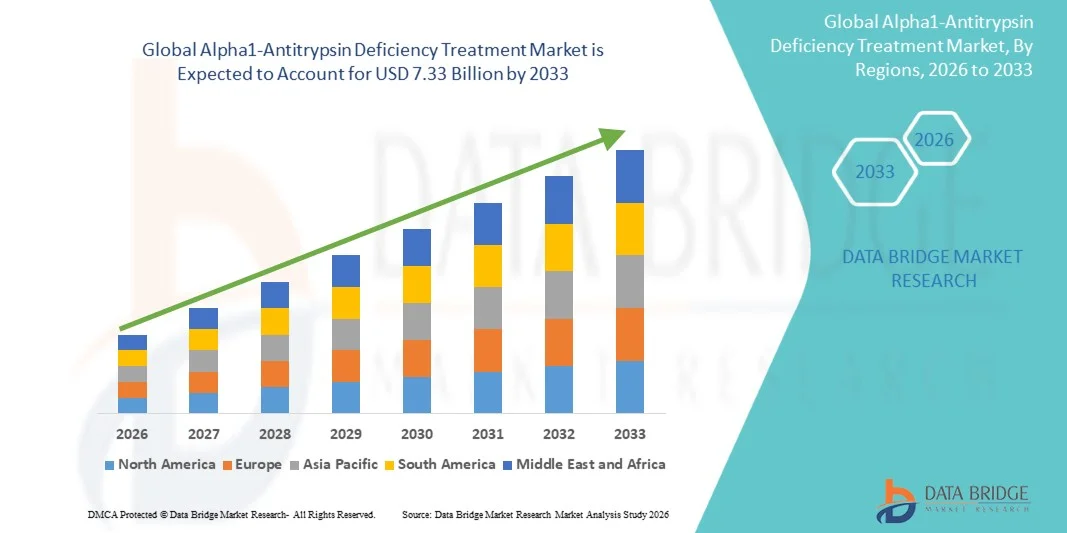
The Alpha1-Antitrypsin Deficiency Treatment Market was valued at USD 4.2 billion in 2025 and is projected to reach USD 7.33 billion by 2033, growing at a CAGR of 7.22% from 2026 to 2033. The market is experiencing consistent growth driven by the rising prevalence of Alpha1-Antitrypsin Deficiency (AATD), increasing awareness regarding rare genetic disorders, and growing adoption of advanced augmentation therapies and targeted treatment approaches. Expanding investments in respiratory disease management, improving diagnostic capabilities, and ongoing advancements in plasma-derived and recombinant therapeutics are further supporting market expansion across developed and emerging healthcare markets.
The increasing incidence of chronic obstructive pulmonary disease (COPD), emphysema, and hereditary liver disorders associated with Alpha1-Antitrypsin Deficiency, combined with growing government support for rare disease treatment programs, is encouraging healthcare providers and pharmaceutical companies to expand access to specialized therapies. Augmentation therapies, inhalation-based treatments, and emerging gene therapies are increasingly being adopted to improve patient outcomes, slow disease progression, and enhance quality of life. In addition, advancements in precision medicine, genetic screening technologies, and home-based infusion services are improving treatment accessibility and supporting the long-term growth of the Alpha1-Antitrypsin Deficiency Treatment Market.
Key Market Trends & Insights
- North America dominated the Alpha1-Antitrypsin Deficiency Treatment Market with the largest revenue share of 39.24% in 2025, supported by increasing diagnosis rates of rare genetic disorders, strong availability of plasma-derived augmentation therapies, advanced healthcare infrastructure, and growing awareness regarding chronic respiratory diseases across the United States and Canada
- The Parenteral segment dominated the market with a 58.37% share in 2025 due to the widespread use of intravenous augmentation therapy for severe alpha1-antitrypsin deficiency patients
- Asia-Pacific is expected to be the fastest-growing region at a CAGR of 7.8% from 2026 to 2033, fueled by improving rare disease diagnosis, expanding healthcare infrastructure, increasing respiratory disease burden, and rising healthcare investments in China, India, and Japan
- The Inhalation route of administration segment is projected to register the fastest CAGR of 7.4% from 2026 to 2033, reflecting growing demand for targeted pulmonary drug delivery systems, improved patient convenience, and advancements in inhaled respiratory therapies
- The Parenteral route of administration segment dominated the market with a 52.63% revenue share in 2025, led by the extensive use of intravenous augmentation therapies administered across hospitals and specialty treatment centers globally
- Hospitals accounted for 48.76% of the global market share in 2025, supported by the high volume of diagnosed AATD patients receiving infusion-based therapies, respiratory disease management, and long-term monitoring services in hospital settings
- The Specialty Clinics segment is expected to witness the fastest CAGR of 7.1% from 2026 to 2033, driven by increasing establishment of specialized respiratory care centers, growing adoption of personalized treatment plans, and rising demand for outpatient rare disease management services
Market Size & Forecast
- Global Market Value (2025): USD 4.2 Billion
- Expected Market Value (2033): USD 7.33 Billion
- Forecast CAGR (2026–2033): 7.22%
- Leading Region in 2025: North America
- Fastest Growing Region: Asia-Pacific
Report Scope and Alpha1-Antitrypsin Deficiency Treatment Market Segmentation
|
Attributes |
Alpha1-Antitrypsin Deficiency Treatment Key Market Insights |
|
Segments Covered |
|
|
Countries Covered |
North America · U.S. · Canada · Mexico Europe · Germany · France · U.K. · Netherlands · Switzerland · Belgium · Russia · Italy · Spain · Turkey · Rest of Europe Asia-Pacific · China · Japan · India · South Korea · Singapore · Malaysia · Australia · Thailand · Indonesia · Philippines · Rest of Asia-Pacific Middle East and Africa · Saudi Arabia · U.A.E. · South Africa · Egypt · Israel · Rest of Middle East and Africa South America · Brazil · Argentina · Rest of South America |
|
Key Market Players |
• CSL Behring LLC (U.S.) |
|
Market Opportunities |
· Expansion of Gene Therapy and RNA-Based Therapeutics for Alpha1-Antitrypsin Deficiency Treatment · Growing Demand for Early Diagnosis and Precision Medicine in Rare Respiratory Disorders · Increasing Adoption of Home-Based Infusion Therapy and Specialty Respiratory Care Services |
|
Value Added Data Infosets |
In addition to the insights on market scenarios such as market value, growth rate, segmentation, geographical coverage, and major players, the market reports curated by the Data Bridge Market Research also include in-depth expert analysis, geographically represented company-wise production and capacity, network layouts of distributors and partners, detailed and updated price trend analysis and deficit analysis of supply chain and demand. |
Alpha1-Antitrypsin Deficiency Treatment Market Trends
Trend: Rising Adoption of Augmentation Therapy and Precision Medicine Approaches
Healthcare providers and respiratory specialists are increasingly adopting advanced augmentation therapies and precision medicine approaches for the management of Alpha1-Antitrypsin Deficiency (AATD), particularly among patients with hereditary emphysema and chronic obstructive pulmonary disease (COPD). Plasma-derived Alpha1-proteinase inhibitor therapies are being widely utilized to slow lung tissue damage and improve long-term respiratory outcomes. Growing awareness regarding rare genetic respiratory disorders and increasing implementation of genetic screening programs are accelerating diagnosis rates globally. According to the Alpha-1 Foundation, nearly 100,000 individuals in the United States are estimated to have severe Alpha1-antitrypsin deficiency, while millions remain undiagnosed worldwide. In addition, ongoing advancements in recombinant therapies, inhalation-based treatments, and RNA-targeted therapeutics are improving treatment accessibility and expanding the clinical pipeline for AATD management.
Alpha1-Antitrypsin Deficiency Treatment Market Dynamics
Key Market Driver: Rising Prevalence of Chronic Respiratory Diseases and Increasing Rare Disease Diagnosis
The growing prevalence of chronic respiratory diseases such as emphysema and COPD associated with Alpha1-Antitrypsin Deficiency is a major driver fueling growth in the global market. Increasing awareness among healthcare professionals regarding genetic testing and early diagnosis is significantly improving patient identification rates. According to the World Health Organization, COPD remains one of the leading causes of death globally, creating substantial demand for advanced respiratory therapies and disease management solutions. In addition, increasing adoption of augmentation therapy across developed healthcare markets, rising investments in rare disease research, and growing government support for orphan drug development are accelerating market expansion. Pharmaceutical companies are also investing heavily in gene therapy research, RNA interference technologies, and next-generation biologics to improve long-term treatment outcomes for AATD patients.
Key Restraint/Challenge: High Cost of Augmentation Therapy and Limited Disease Awareness
A significant restraint in the Alpha1-Antitrypsin Deficiency Treatment Market is the high cost associated with long-term augmentation therapy and specialized respiratory care. Plasma-derived therapies require continuous intravenous administration and complex manufacturing processes, substantially increasing treatment expenses for healthcare providers and patients. In many developing regions, limited awareness regarding rare genetic disorders, inadequate screening infrastructure, and delayed diagnosis continue to restrict treatment adoption. In addition, reimbursement limitations and the shortage of specialized respiratory care centers create barriers for broader market penetration. For instance, annual augmentation therapy costs for severe AATD patients can exceed tens of thousands of dollars, limiting accessibility among uninsured and low-income patient populations.
Key Market Opportunity: Advancements in Gene Therapy and Targeted RNA-Based Treatments
The development of gene therapy, RNA interference therapeutics, and targeted biologics presents a significant growth opportunity for the Alpha1-Antitrypsin Deficiency Treatment Market. Biotechnology companies are increasingly focusing on innovative therapies aimed at correcting underlying genetic mutations and reducing abnormal protein accumulation in the liver and lungs. Several pipeline candidates utilizing CRISPR gene-editing technology, siRNA therapeutics, and recombinant Alpha1-antitrypsin formulations are currently under clinical evaluation. In addition, expanding newborn screening programs, improving access to precision medicine, and increasing adoption of home-based infusion services are expected to create strong growth opportunities across North America, Europe, and emerging Asia-Pacific healthcare markets during the forecast period.
Alpha1-Antitrypsin Deficiency Treatment Market Scope
The Alpha1-Antitrypsin Deficiency Treatment market is segmented on the basis of treatment type, route of administration, and end user.
By Treatment Type
On the basis of treatment type, the Alpha1-Antitrypsin Deficiency Treatment Market is segmented into augmentation therapy, bronchodilators, corticosteroids, oxygen therapy, and others. The Augmentation Therapy segment dominated the market with a 46.82% share in 2025 due to its position as the standard disease-specific treatment for Alpha1-antitrypsin deficiency-related emphysema and chronic obstructive pulmonary disease (COPD). Increasing diagnosis rates of hereditary alpha1-antitrypsin deficiency, growing awareness regarding early intervention, and rising adoption of plasma-derived alpha1-proteinase inhibitor therapies are supporting segment growth. In addition, favorable reimbursement policies in developed markets, growing use of long-term maintenance therapy, and increasing availability of specialty infusion services are further driving adoption. Pharmaceutical companies are also investing heavily in advanced biologics and next-generation augmentation therapies to improve treatment outcomes and patient compliance. The growing burden of respiratory disorders associated with smoking and genetic lung diseases is further accelerating treatment demand globally. Moreover, expanding screening programs for rare genetic disorders and increasing physician awareness regarding alpha1-antitrypsin deficiency management are strengthening the market position of augmentation therapies across hospitals and specialty respiratory care centers.
The Bronchodilators segment is expected to witness the fastest CAGR of 7.4% from 2026 to 2033, driven by increasing use of supportive respiratory therapies for symptom management in patients with alpha1-antitrypsin deficiency-related COPD and chronic lung impairment. Growing prevalence of airflow obstruction disorders, rising geriatric population, and increasing adoption of combination inhalation therapies are accelerating segment expansion. Bronchodilators are widely prescribed to improve airway function, reduce breathlessness, and enhance quality of life among patients with severe pulmonary complications. In addition, advancements in inhaler technologies, long-acting beta agonists, and combination bronchodilator formulations are improving treatment efficiency and patient adherence. Expanding home healthcare services and increasing accessibility to respiratory medications in emerging economies are further contributing to segment growth. The growing integration of personalized respiratory treatment approaches and increasing investments in pulmonary disease management programs are also expected to support strong demand for bronchodilator therapies during the forecast period.
By Route of Administration
On the basis of route of administration, the Alpha1-Antitrypsin Deficiency Treatment Market is segmented into parenteral, inhalation, and oral. The Parenteral segment dominated the market with a 58.37% share in 2025 due to the widespread use of intravenous augmentation therapy for severe alpha1-antitrypsin deficiency patients. Intravenous infusion remains the primary mode of administration for approved alpha1-proteinase inhibitor therapies, ensuring effective delivery of therapeutic proteins directly into systemic circulation. Increasing adoption of weekly infusion therapy protocols, strong clinical efficacy, and growing patient preference for specialized biologic treatments are supporting segment dominance. Additionally, rising healthcare investments, improved access to infusion centers, and expanding home infusion services are enhancing treatment accessibility globally. Pharmaceutical companies are also focusing on developing advanced plasma-derived and recombinant biologics with improved stability and administration efficiency. Moreover, increasing physician recommendations for early initiation of augmentation therapy and rising clinical evidence supporting long-term lung function preservation are further reinforcing growth of the parenteral administration segment across developed healthcare markets.
The Inhalation segment is projected to register the fastest CAGR of 7.1% from 2026 to 2033, driven by increasing development of inhaled alpha1-antitrypsin therapies and growing demand for non-invasive respiratory drug delivery systems. Inhalation therapies provide targeted delivery directly to lung tissues, improving drug concentration at the site of disease while minimizing systemic exposure. Rising prevalence of chronic pulmonary diseases, increasing patient preference for convenient administration methods, and advancements in aerosol drug delivery technologies are accelerating segment growth. In addition, ongoing clinical trials for inhaled augmentation therapies and increasing investments in respiratory biologics are creating new market opportunities. Expanding adoption of portable nebulizers, smart inhalers, and home-based respiratory care solutions is further supporting demand. Growing focus on improving patient compliance, reducing hospital visits, and enhancing long-term disease management outcomes is expected to significantly drive the inhalation administration segment during the forecast period.
By End User
On the basis of end user, the Alpha1-Antitrypsin Deficiency Treatment Market is segmented into hospitals, specialty clinics, and pharmacies. The Hospitals segment dominated the market with a share of 49.64% in 2025 due to the high volume of alpha1-antitrypsin deficiency diagnosis, treatment administration, and respiratory disease management conducted in hospital settings. Hospitals are the primary centers for intravenous augmentation therapy, advanced pulmonary function testing, and management of severe COPD and emphysema complications associated with alpha1-antitrypsin deficiency. Increasing hospitalization rates for chronic respiratory disorders, strong availability of specialized respiratory care units, and growing access to multidisciplinary healthcare professionals are supporting segment growth. In addition, hospitals benefit from advanced diagnostic infrastructure, reimbursement support, and availability of emergency respiratory care services. Rising investments in rare disease treatment programs, increasing adoption of biologic infusion therapies, and expanding healthcare infrastructure across developed and emerging markets are further reinforcing hospital dominance. Moreover, growing collaborations between pharmaceutical companies and hospital networks for rare disease management programs are expected to support long-term market expansion.
The Specialty Clinics segment is anticipated to witness the fastest CAGR of 7.0% from 2026 to 2033, driven by the increasing establishment of specialized pulmonary care and rare disease treatment centers globally. Specialty clinics provide focused management for alpha1-antitrypsin deficiency patients through personalized respiratory care, regular monitoring, and long-term augmentation therapy administration. Rising patient preference for specialized outpatient treatment services, shorter waiting times, and cost-effective chronic disease management solutions are accelerating segment growth. In addition, increasing awareness regarding genetic respiratory disorders and expanding access to pulmonologists and respiratory therapists are supporting demand for specialty clinic services. Advancements in outpatient infusion technologies, remote patient monitoring systems, and integrated respiratory rehabilitation programs are further improving treatment accessibility and patient outcomes. Growing healthcare investments in chronic respiratory disease management and increasing expansion of specialty care networks across emerging economies are expected to significantly contribute to segment growth during the forecast period.
Alpha1-Antitrypsin Deficiency Treatment Market Regional Analysis
North America dominated the Alpha1-Antitrypsin Deficiency Treatment market and accounted for the largest revenue share of 39.24% in 2025, supported by increasing diagnosis rates of rare genetic disorders, strong availability of plasma-derived augmentation therapies, advanced healthcare infrastructure, and growing awareness regarding chronic respiratory diseases across the United States and Canada. The region also benefits from favorable reimbursement policies, widespread adoption of advanced molecular diagnostics, and the strong presence of leading biopharmaceutical companies engaged in rare respiratory disease treatment development. Increasing prevalence of chronic obstructive pulmonary disease (COPD), rising geriatric population, and growing investments in precision medicine and biologic therapies continue to strengthen North America’s leadership position in the global market.
U.S. Alpha1-Antitrypsin Deficiency Treatment Market Insight
The U.S. Alpha1-Antitrypsin Deficiency Treatment market is witnessing strong growth due to increasing prevalence of hereditary respiratory disorders, rising adoption of augmentation therapies, and expanding awareness regarding early diagnosis of alpha1-antitrypsin deficiency. The country’s advanced healthcare infrastructure, strong reimbursement support, and high availability of specialty respiratory care centers are supporting widespread treatment adoption. In addition, increasing investments in rare disease research, biologic drug development, and personalized medicine are accelerating market expansion. Growing focus on improving long-term COPD management and expanding access to home infusion therapies are further contributing to the growth of the U.S. market.
Europe Alpha1-Antitrypsin Deficiency Treatment Market Insight
The Europe Alpha1-Antitrypsin Deficiency Treatment market remains a major contributor to global revenue, driven by strong government healthcare support, increasing awareness regarding genetic respiratory disorders, and growing adoption of advanced biologic therapies. Countries across the region are increasingly implementing rare disease screening programs and improving access to respiratory disease treatment services. In addition, the presence of established pharmaceutical manufacturers, advanced pulmonary care infrastructure, and favorable regulatory frameworks are supporting market growth. Rising prevalence of emphysema and chronic respiratory diseases among aging populations is further strengthening demand for augmentation therapies and supportive respiratory treatments throughout Europe.
U.K. Alpha1-Antitrypsin Deficiency Treatment Market Insight
The U.K. Alpha1-Antitrypsin Deficiency Treatment market is experiencing steady growth, supported by increasing awareness regarding inherited respiratory disorders, rising investments in pulmonary disease management, and growing access to specialized respiratory healthcare services. Expanding adoption of biologic augmentation therapies and increasing implementation of early diagnosis initiatives are contributing to market expansion. Furthermore, the integration of advanced diagnostic technologies, genetic screening programs, and patient support services is improving disease management outcomes across the country. The growing focus on reducing chronic respiratory disease burden and improving quality of life for patients with rare genetic disorders continues to support market growth in the U.K.
Germany Alpha1-Antitrypsin Deficiency Treatment Market Insight
The Germany Alpha1-Antitrypsin Deficiency Treatment market is expanding steadily due to the country’s advanced healthcare infrastructure, strong respiratory disease research capabilities, and increasing adoption of innovative biologic therapies. Hospitals, specialty clinics, and pulmonary care centers are increasingly utilizing advanced diagnostic testing and augmentation treatment protocols for alpha1-antitrypsin deficiency management. Continuous advancements in respiratory medicine, increasing investments in rare disease therapeutics, and strong government support for chronic disease management programs are further driving market growth in Germany. In addition, growing awareness among healthcare professionals regarding early intervention and genetic testing is supporting treatment adoption.
Asia-Pacific Alpha1-Antitrypsin Deficiency Treatment Market Insight
The Asia-Pacific Alpha1-Antitrypsin Deficiency Treatment market is expected to witness rapid growth, driven by improving rare disease diagnosis, expanding healthcare infrastructure, increasing respiratory disease burden, and rising healthcare investments across China, India, and Japan. Growing awareness regarding genetic disorders, increasing adoption of advanced respiratory therapies, and improving access to specialty healthcare services are supporting regional market expansion. In addition, rising prevalence of smoking-related lung diseases, growing geriatric population, and increasing investments in biologics and precision medicine are accelerating demand for alpha1-antitrypsin deficiency treatments. Asia-Pacific is projected to register the fastest CAGR of 7.8% from 2026 to 2033 due to rapid healthcare modernization and increasing focus on rare disease management.
Japan Alpha1-Antitrypsin Deficiency Treatment Market Insight
The Japan Alpha1-Antitrypsin Deficiency Treatment market is witnessing consistent growth due to rising investments in advanced respiratory disease treatment, increasing adoption of biologic therapies, and growing focus on early diagnosis of rare genetic disorders. Healthcare providers and research institutes are increasingly utilizing advanced pulmonary diagnostics and personalized treatment approaches to improve patient outcomes. Moreover, increasing integration of precision medicine technologies, expanding geriatric population, and strong government support for chronic respiratory disease management are further contributing to market growth. The country’s emphasis on healthcare innovation and high-quality patient care continues to support expansion of the market.
China Alpha1-Antitrypsin Deficiency Treatment Market Insight
The China Alpha1-Antitrypsin Deficiency Treatment market is growing rapidly, driven by expanding healthcare infrastructure, increasing awareness regarding rare respiratory diseases, and rising government investments in advanced healthcare services. Growing adoption of biologic therapies, improving access to genetic testing, and increasing prevalence of chronic respiratory disorders are significantly boosting market demand. In addition, rising healthcare expenditures, ongoing healthcare reforms, and rapid advancements in precision medicine and respiratory diagnostics are positioning China as one of the fastest-growing markets for Alpha1-Antitrypsin Deficiency Treatment globally. Expanding pharmaceutical research activities and increasing collaborations between domestic and international healthcare companies are further accelerating market growth.
Alpha1-Antitrypsin Deficiency Treatment Market Share
The Alpha1-Antitrypsin Deficiency Treatment industry is primarily led by well-established companies, including:
- CSL Behring LLC (U.S.)
- Grifols, S.A. (Spain)
- Takeda Pharmaceutical Company Limited (Japan)
- Kamada Ltd. (Israel)
- Boehringer Ingelheim International GmbH (Germany)
- GlaxoSmithKline plc (U.K.)
- AstraZeneca PLC (U.K.)
- F. Hoffmann-La Roche Ltd. (Switzerland)
- Pfizer Inc. (U.S.)
- Sanofi S.A. (France)
- Vertex Pharmaceuticals Incorporated (U.S.)
- Arrowhead Pharmaceuticals, Inc. (U.S.)
- Beam Therapeutics Inc. (U.S.)
- Alnylam Pharmaceuticals, Inc. (U.S.)
- Dicerna Pharmaceuticals, Inc. (U.S.)
- Respivant Sciences GmbH (Germany)
- ProMetic Life Sciences Inc. (Canada)
- United Therapeutics Corporation (U.S.)
- AbbVie Inc. (U.S.)
- Baxter International Inc. (U.S.)
- Amgen Inc. (U.S.)
- Bayer AG (Germany)
- Novartis AG (Switzerland)
- Regeneron Pharmaceuticals, Inc. (U.S.)
- Chiesi Farmaceutici S.p.A. (Italy)
- Mereo BioPharma Group plc (U.K.)
- Genocea Biosciences, Inc. (U.S.)
- Apellis Pharmaceuticals, Inc. (U.S.)
- Aro Biotherapeutics Company (U.S.)
- Inhibrx Biosciences, Inc. (U.S.)
- CSL Limited (Australia)
- Biogen Inc. (U.S.)
- Lung Biotechnology PBC (U.S.)
- Polarean Imaging plc (U.K.)
Latest Developments in Alpha1-Antitrypsin Deficiency Treatment Market
- In January 2022, Kamada Ltd. expanded its commercialization strategy for inhaled Alpha-1 Antitrypsin (AAT) therapy across selected European markets through new licensing and distribution agreements, strengthening its respiratory rare disease portfolio and improving access to non-intravenous treatment alternatives for Alpha-1 Antitrypsin Deficiency patients
- In September 2022, Takeda Pharmaceutical Company Limited continued advancement of fazirsiran (ARO-AAT/TAK-999), an RNAi-based investigational therapy developed with Arrowhead Pharmaceuticals for liver disease associated with Alpha-1 Antitrypsin Deficiency, highlighting growing industry focus on gene-silencing and disease-modifying therapies
- In November 2023, Grifols S.A. completed Cohort 1 of its Alpha-1 15% clinical trial evaluating a subcutaneous formulation for Alpha-1 Antitrypsin Deficiency treatment. The study progression marked a significant step toward more convenient home-based administration and improved patient compliance compared with traditional intravenous augmentation therapies
- In January 2024, Arrowhead Pharmaceuticals and Takeda Pharmaceutical Company Limited reported continued development progress for fazirsiran, while emerging pipeline candidates including Vertex’s VX-864 and Mereo BioPharma/AstraZeneca’s alvelestat gained industry attention for targeting the underlying genetic and inflammatory mechanisms of Alpha-1 Antitrypsin Deficiency
- In May 2024, CSL Behring expanded the market presence of Zemaira in Japan, while manufacturers continued investing in plasma-derived augmentation therapies and advanced formulations to strengthen treatment accessibility and long-term disease management for Alpha-1 Antitrypsin Deficiency patients worldwide
- In May 2025, Takeda Pharmaceutical Company Limited contributed Phase II clinical data to the Critical Path for Alpha-1 consortium (CPA-1), supporting collaborative research efforts aimed at accelerating innovation, biomarker development, and next-generation therapies for Alpha-1 Antitrypsin Deficiency treatment

- Interactive Data Analysis Dashboard
- Company Analysis Dashboard for high growth potential opportunities
- Research Analyst Access for customization & queries
- Competitor Analysis with Interactive dashboard
- Latest News, Updates & Trend analysis
- Harness the Power of Benchmark Analysis for Comprehensive Competitor Tracking
Data collection and base year analysis are done using data collection modules with large sample sizes. The stage includes obtaining market information or related data through various sources and strategies. It includes examining and planning all the data acquired from the past in advance. It likewise envelops the examination of information inconsistencies seen across different information sources. The market data is analysed and estimated using market statistical and coherent models. Also, market share analysis and key trend analysis are the major success factors in the market report. To know more, please request an analyst call or drop down your inquiry.
The key research methodology used by DBMR research team is data triangulation which involves data mining, analysis of the impact of data variables on the market and primary (industry expert) validation. Data models include Vendor Positioning Grid, Market Time Line Analysis, Market Overview and Guide, Company Positioning Grid, Patent Analysis, Pricing Analysis, Company Market Share Analysis, Standards of Measurement, Global versus Regional and Vendor Share Analysis. To know more about the research methodology, drop in an inquiry to speak to our industry experts.
Data Bridge Market Research is a leader in advanced formative research. We take pride in servicing our existing and new customers with data and analysis that match and suits their goal. The report can be customized to include price trend analysis of target brands understanding the market for additional countries (ask for the list of countries), clinical trial results data, literature review, refurbished market and product base analysis. Market analysis of target competitors can be analyzed from technology-based analysis to market portfolio strategies. We can add as many competitors that you require data about in the format and data style you are looking for. Our team of analysts can also provide you data in crude raw excel files pivot tables (Fact book) or can assist you in creating presentations from the data sets available in the report.












