


Alport Syndrome Market Overview
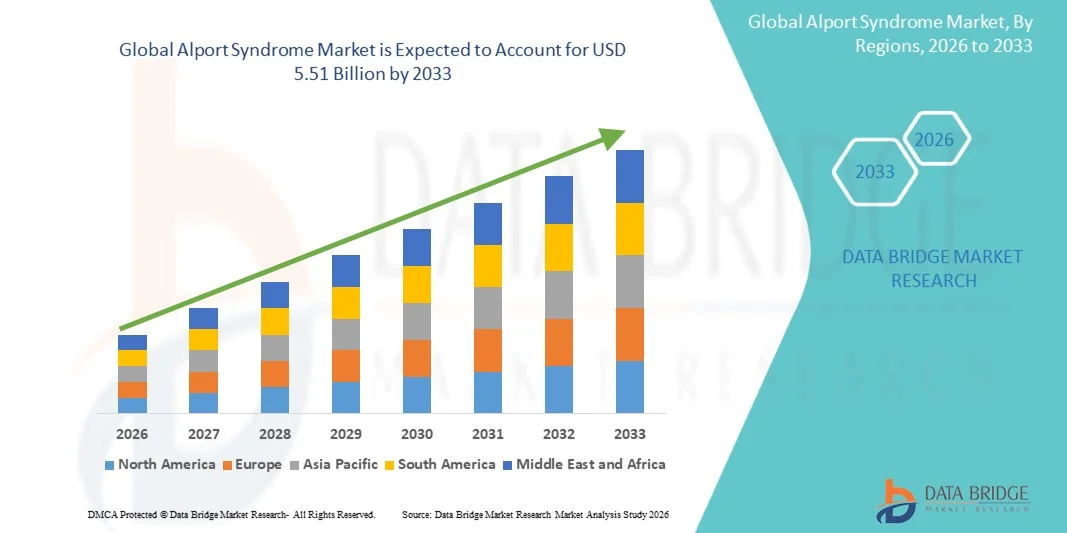
The Alport Syndrome Market was valued at USD 2.50 billion in 2025 and is projected to reach USD 5.51 billion by 2033, growing at a CAGR of 10.4% from 2026 to 2033. The market is experiencing steady growth driven by increasing awareness of rare genetic kidney disorders, advancements in genetic testing and diagnostic technologies, and the development of targeted therapies aimed at slowing disease progression and improving patient outcomes.
The rising prevalence of inherited renal diseases, coupled with growing investments in rare disease research and supportive regulatory incentives for orphan drug development, is encouraging pharmaceutical companies and healthcare providers to focus on Alport syndrome management. Improved access to genetic screening, early diagnosis initiatives, and ongoing clinical research into novel therapeutics are enhancing treatment opportunities across key markets. In addition, increasing collaboration among research institutions, patient advocacy groups, and biotechnology companies is supporting the expansion of precision medicine approaches and accelerating innovation in the Alport syndrome treatment landscape.
Key Market Trends & Insights
- North America dominated the Alport Syndrome Market with the largest revenue share of 39.12% in 2025, supported by advanced healthcare infrastructure, high adoption of genetic testing, strong rare disease research funding, and favorable orphan drug policies.
- The X-linked Alport Syndrome segment led the market with a 63.45% share in 2025, driven by its significantly higher prevalence compared to other genetic variants.
- Asia-Pacific is expected to be the fastest-growing region at a CAGR of 11.2% from 2026 to 2033, fueled by improving access to genetic diagnostics, rising healthcare expenditures, growing awareness of rare diseases, and expanding patient identification programs.
- Autosomal Recessive Alport Syndrome are the fastest-growing genetic type, projected to register a CAGR of 11.8%, reflecting the surge in advancements in genetic testing technologies and expanding access to rare disease diagnostics
- The Genetic Testing segment dominated the vehicle type category with a 46.82% revenue share in 2025, led by its ability to accurately identify disease-causing mutations and confirm diagnosis at an early stage.
- Oral accounted for 68.57% of the market, preferred by the widespread use of oral medications such as ACE inhibitors and angiotensin receptor blockers for disease management
- The Surgery segment is the fastest-growing treatment category, with a CAGR of 10.9%, driven by increasing demand for advanced interventions among patients with progressive kidney failure.
Market Size & Forecast
- Global Market Value (2025): USD 2.50 Billion
- Expected Market Value (2033): USD 5.51 Billion
- Forecast CAGR (2026–2033): 10.4%
- Leading Region in 2025: North America
- Fastest Growing Region: Asia Pacific
Report Scope and Alport Syndrome Market Segmentation
|
Attributes |
Alport Syndrome Key Market Insights |
|
Segments Covered |
|
|
Countries Covered |
North America · U.S. · Canada · Mexico Europe · Germany · France · U.K. · Netherlands · Switzerland · Belgium · Russia · Italy · Spain · Turkey · Rest of Europe Asia-Pacific · China · Japan · India · South Korea · Singapore · Malaysia · Australia · Thailand · Indonesia · Philippines · Rest of Asia-Pacific Middle East and Africa · Saudi Arabia · U.A.E. · South Africa · Egypt · Israel · Rest of Middle East and Africa South America · Brazil · Argentina · Rest of South America |
|
Key Market Players |
· Travere Therapeutics, Inc. (U.S.) · Regulus Therapeutics Inc. (U.S.) · Novartis AG (Switzerland) · F. Hoffmann-La Roche Ltd (Switzerland) · Sanofi (France) · AstraZeneca (U.K.) · Bayer AG (Germany) · Boehringer Ingelheim International GmbH (Germany) · Otsuka Pharmaceutical Co., Ltd. (Japan) · Novo Nordisk A/S (Denmark) · Amgen Inc. (U.S.) · Eli Lilly and Company (U.S.) · AbbVie Inc. (U.S.) · Pfizer Inc. (U.S.) · Vertex Pharmaceuticals Incorporated (U.S.) · Alnylam Pharmaceuticals, Inc. (U.S.) · Ionis Pharmaceuticals, Inc. (U.S.) · Calliditas Therapeutics AB (Sweden) · Chinook Therapeutics, Inc. (U.S.) · Maze Therapeutics, Inc. (U.S.) |
|
Market Opportunities |
· Expansion of gene-editing and RNA-based therapies · Growing adoption of early genetic screening and family cascade testing · Increasing orphan drug incentives and rare disease funding programs |
|
Value Added Data Infosets |
In addition to the insights on market scenarios such as market value, growth rate, segmentation, geographical coverage, and major players, the market reports curated by the Data Bridge Market Research also include in-depth expert analysis, patient epidemiology, pipeline analysis, pricing analysis, and regulatory framework. |
Alport Syndrome Market Trends
Trend: Rising Focus on Precision Medicine and Genetic-Based Therapies
The Alport Syndrome treatment landscape is increasingly shifting toward precision medicine approaches that target the underlying genetic mutations responsible for disease progression rather than solely managing symptoms. Advances in genomic sequencing, biomarker identification, and RNA-based therapeutic platforms are enabling the development of highly targeted interventions designed to preserve kidney function and delay end-stage renal disease. Research institutions, biotechnology firms, and pharmaceutical companies are expanding investments in gene-focused therapies, while improved diagnostic capabilities are supporting personalized treatment strategies and earlier therapeutic intervention across patient populations.
For instance, in March 2025, Chinook Therapeutics continued advancing precision kidney disease research programs focused on rare glomerular disorders, highlighting the industry's growing emphasis on targeted treatment approaches for genetically driven renal conditions.
Alport Syndrome Market Dynamics
Key Market Driver: Increasing Adoption of Genetic Testing and Early Disease Diagnosis
The growing availability of advanced genetic testing technologies and increased awareness of inherited kidney disorders have significantly improved the diagnosis of Alport syndrome across healthcare systems worldwide. Earlier identification of pathogenic mutations allows clinicians to initiate supportive therapies sooner, improving long-term patient outcomes and slowing disease progression. Governments, healthcare organizations, and rare disease advocacy groups are promoting screening initiatives and family-based testing programs, contributing to a larger diagnosed patient population and expanding demand for specialized treatments and disease management solutions.
For instance, in June 2024, National Kidney Foundation continued supporting awareness and education initiatives focused on hereditary kidney diseases, encouraging earlier recognition and genetic evaluation of patients at risk for Alport syndrome.
Key Restraint/Challenge: Limited Patient Population and Complex Clinical Development
A significant restraint in the Alport Syndrome Market is the rarity of the disease, which limits patient recruitment for clinical trials and creates challenges in generating large-scale efficacy data. The genetic complexity and variable disease progression among patients further complicate therapeutic development, increasing research timelines and regulatory requirements. Drug developers must invest substantial resources in specialized studies, long-term outcome monitoring, and global patient identification efforts, making commercialization more difficult compared with therapies targeting larger disease populations.
For instance, in February 2025, Travere Therapeutics highlighted ongoing efforts to expand clinical evidence generation in rare kidney diseases, reflecting the broader challenge of conducting development programs within relatively small patient populations.
Key Market Opportunity: Expansion of Gene Therapy and RNA-Based Treatment Platforms
The advancement of gene therapy, RNA-targeted therapeutics, and other disease-modifying technologies presents a significant market opportunity for Alport syndrome treatment. These innovative approaches aim to address the root genetic causes of the disorder, offering the potential for improved clinical outcomes beyond conventional supportive care. Growing investment in rare disease research, favorable orphan drug incentives, and increasing collaboration between biotechnology companies and academic institutions are accelerating innovation and creating new commercialization opportunities across major healthcare markets.
For instance, in January 2025, Regulus Therapeutics continued progressing RNA-based therapeutic research for kidney diseases, demonstrating the expanding potential of next-generation genetic treatment platforms relevant to Alport syndrome management.
Alport Syndrome Market Scope
The Alport Syndrome market is segmented on the basis of genetic type, diagnosis, route of administration, treatment, end-users, and distribution channel.
- By Genetic Type
On the basis of genetic type, the Alport Syndrome Market is segmented into X-linked Alport Syndrome, Autosomal Recessive Alport Syndrome, Autosomal Dominant Alport Syndrome, and Others. The X-linked Alport Syndrome segment dominated the market with an estimated 63.45% share in 2025, owing to its significantly higher prevalence compared to other genetic variants. This form accounts for the majority of diagnosed Alport syndrome cases worldwide and is often associated with more severe disease progression, particularly among male patients. Growing awareness of hereditary kidney diseases and increasing adoption of genetic screening programs are improving diagnosis rates within this patient population. Pharmaceutical companies are prioritizing clinical research and therapeutic development for X-linked disease due to its larger addressable patient base. Enhanced access to molecular diagnostics is also supporting earlier intervention and long-term disease management. The segment continues to benefit from strong research focus and increasing patient identification initiatives globally.
The Autosomal Recessive Alport Syndrome segment is projected to register the fastest growth at a CAGR of 11.8% from 2026 to 2033, driven by advancements in genetic testing technologies and expanding access to rare disease diagnostics. Improved next-generation sequencing platforms are enabling healthcare providers to identify previously underdiagnosed cases more effectively. Increasing awareness among nephrologists and genetic counselors is supporting earlier diagnosis and treatment planning. Ongoing research into disease-modifying therapies is creating new opportunities for this patient subgroup. Growing investments in orphan disease programs and precision medicine initiatives are further contributing to market expansion. The segment is also benefiting from increasing family-based genetic screening efforts across developed and emerging healthcare markets.
- By Diagnosis
On the basis of diagnosis, the Alport Syndrome Market is segmented into kidney biopsy, genetic testing, ophthalmic testing, and others. The Genetic Testing segment dominated the market with an estimated 46.82% share in 2025 due to its ability to accurately identify disease-causing mutations and confirm diagnosis at an early stage. Genetic testing has become the preferred diagnostic approach because it is less invasive than kidney biopsy and provides valuable information regarding disease inheritance patterns. Growing adoption of molecular diagnostic technologies is improving accessibility and accuracy across healthcare settings. Healthcare providers increasingly rely on genetic testing to guide treatment decisions and family counseling. Expanding reimbursement support and decreasing sequencing costs are further encouraging utilization. The segment remains central to precision medicine strategies in Alport syndrome management.
The Ophthalmic Testing segment is expected to witness the fastest growth at a CAGR of 11.3% from 2026 to 2033, supported by increasing recognition of ocular manifestations associated with Alport syndrome. Eye examinations play an important role in comprehensive disease assessment and monitoring of disease progression. Advances in ophthalmic imaging technologies are improving diagnostic capabilities and patient evaluation. Greater collaboration between nephrologists, geneticists, and ophthalmologists is supporting multidisciplinary care approaches. Rising awareness regarding early detection of systemic complications is further driving demand for ophthalmic assessments. The segment is also benefiting from growing emphasis on holistic patient management and long-term monitoring programs.
- By Route of Administration
On the basis of route of administration, the Alport Syndrome Market is segmented into oral, parenteral, and others. The Oral segment led the market with an estimated 68.57% share in 2025, driven by the widespread use of oral medications such as ACE inhibitors and angiotensin receptor blockers for disease management. Oral therapies offer convenience, improved patient compliance, and suitability for long-term treatment regimens. Physicians commonly prescribe oral medications to delay kidney function decline and reduce proteinuria in Alport syndrome patients. Established clinical evidence supporting their effectiveness continues to strengthen adoption. Easy availability through hospital and retail pharmacy networks further supports segment growth. The segment benefits from its cost-effectiveness and familiarity among healthcare providers and patients.
The Parenteral segment is projected to register the fastest growth at a CAGR of 12.4% from 2026 to 2033 due to increasing development of biologics, gene therapies, and advanced targeted treatment approaches. Many emerging therapies in clinical development require injectable administration to achieve optimal therapeutic outcomes. Growing investment in innovative rare disease treatments is expanding the pipeline of parenteral products. Advances in biotechnology and drug delivery systems are supporting improved efficacy and patient outcomes. Regulatory incentives for orphan drugs are encouraging further development activity. The segment is expected to gain momentum as next-generation therapies move toward commercialization.
- By Treatment
On the basis of treatment, the Alport Syndrome Market is segmented into medication, surgery, and others. The Medication segment dominated the market with an estimated 72.64% share in 2025, supported by its role as the primary treatment approach for slowing disease progression and managing symptoms. ACE inhibitors, ARBs, and supportive medications are widely prescribed to preserve kidney function and delay the onset of end-stage renal disease. Continuous clinical research is improving understanding of therapeutic strategies and treatment outcomes. Growing diagnosis rates are expanding the patient population receiving pharmacological interventions. Increasing availability of novel therapies is further strengthening the segment’s position. Medication remains the cornerstone of Alport syndrome management worldwide.
The Surgery segment is expected to witness the fastest growth at a CAGR of 10.9% from 2026 to 2033, driven by increasing demand for advanced interventions among patients with progressive kidney failure. Procedures such as kidney transplantation continue to represent critical treatment options for individuals reaching end-stage renal disease. Improvements in transplant outcomes and post-operative care are enhancing patient survival and quality of life. Expanding organ transplant infrastructure in several countries is supporting access to surgical treatment. Rising awareness regarding renal replacement therapies is also contributing to demand growth. The segment benefits from ongoing advancements in transplant medicine and patient management practices.
- By End-Users
On the basis of end-users, the Alport Syndrome Market is segmented into hospitals, specialty clinics, and others. The Hospitals segment accounted for the largest market share of 57.84% in 2025 due to their comprehensive diagnostic, treatment, and monitoring capabilities. Hospitals provide access to multidisciplinary teams including nephrologists, geneticists, ophthalmologists, and transplant specialists. Advanced diagnostic infrastructure and availability of specialized laboratory services support accurate disease identification and management. Many patients with moderate to severe disease require ongoing hospital-based care and monitoring. Increasing adoption of precision medicine approaches is further strengthening hospital utilization. The segment remains the primary point of care for complex Alport syndrome cases.
The Specialty Clinics segment is projected to be the fastest-growing end-user category at a CAGR of 11.6% from 2026 to 2033, driven by increasing demand for focused rare disease management services. These clinics offer specialized expertise in nephrology and genetic disorders, enabling personalized treatment planning and follow-up care. Growing patient preference for targeted and coordinated care models is supporting adoption. Advances in diagnostic technologies are enabling specialty clinics to expand their service capabilities. Increasing collaboration with academic research centers is also enhancing access to innovative therapies and clinical trials. The segment is benefiting from the broader trend toward specialized outpatient healthcare delivery.
- By Distribution Channel
On the basis of distribution channel, the Alport Syndrome Market is segmented into hospital pharmacy, retail pharmacy, online pharmacies, and others. The Hospital Pharmacy segment dominated the market with an estimated 49.26% share in 2025 owing to the specialized nature of Alport syndrome treatment and the need for physician-supervised medication management. Hospital pharmacies ensure reliable access to prescription therapies and support coordinated patient care. Many newly diagnosed patients receive treatment through hospital-based healthcare systems. The availability of specialized medications and clinical support services further strengthens this channel. Increasing use of advanced therapies requiring close monitoring is also contributing to growth. Hospital pharmacies remain a critical component of disease management pathways.
The Online Pharmacies segment is anticipated to register the fastest growth at a CAGR of 12.1% from 2026 to 2033, supported by increasing digitalization of healthcare services and expanding adoption of e-pharmacy platforms. Online channels offer convenience, home delivery, and improved access to medications for patients requiring long-term treatment. Rising internet penetration and smartphone usage are accelerating adoption across multiple regions. Enhanced prescription management systems and telehealth integration are further improving patient experiences. Growing acceptance of digital healthcare solutions among patients and providers is supporting market expansion. The segment is expected to benefit from continued innovation in pharmaceutical e-commerce and remote care delivery models.
Alport Syndrome Market Regional Analysis
North America dominated the Alport Syndrome Market with the largest revenue share of 39.12% in 2025, supported by advanced healthcare infrastructure, high adoption of genetic testing, strong rare disease research funding, and favorable orphan drug policies. The region also benefits from favorable orphan drug policies, high awareness among healthcare professionals, and the presence of leading biotechnology and pharmaceutical companies focused on kidney disorders. Growing adoption of precision medicine approaches, increasing patient access to specialized nephrology care, and expanding clinical trial activity continue to support market growth. Rising utilization of molecular diagnostics and ongoing development of targeted therapies further strengthen North America’s leadership position in the global market.
U.S. Alport Syndrome Market Insight
The U.S. Alport syndrome market is witnessing strong growth due to rising adoption of genetic testing, increasing awareness of hereditary kidney disorders, and expanding investments in rare disease research. The country’s advanced healthcare infrastructure, along with a robust biotechnology and pharmaceutical ecosystem, is driving demand for innovative diagnostic and therapeutic solutions. In addition, growing clinical trial activity, favorable orphan drug incentives, and increasing emphasis on early disease detection and precision medicine are accelerating the adoption of Alport syndrome treatment and management approaches across the healthcare system.
Europe Alport Syndrome Market Insight
The Europe Alport syndrome market remains a major contributor to global revenue, driven by strong healthcare systems, supportive rare disease policies, and increasing availability of advanced genetic diagnostics. The widespread adoption of multidisciplinary disease management programs and growing focus on personalized medicine are supporting market expansion across the region. Increasing investments in orphan drug development, coupled with expanding patient awareness initiatives and active clinical research programs, continue to enhance the diagnosis and treatment of Alport syndrome throughout Europe.
U.K. Alport Syndrome Market Insight
The U.K. Alport syndrome market is experiencing steady growth, supported by increasing access to genetic screening services, rising awareness of inherited kidney diseases, and growing participation in rare disease research programs. Expanding investments in precision medicine and specialized nephrology care are contributing to market development. Furthermore, collaboration between healthcare institutions, research organizations, and patient advocacy groups is improving disease identification, treatment accessibility, and long-term patient outcomes, positioning the U.K. as an important market for Alport syndrome management.
Germany Alport Syndrome Market Insight
The Germany Alport syndrome market is expanding steadily due to the country’s advanced healthcare infrastructure, strong research capabilities, and increasing adoption of molecular diagnostic technologies. Healthcare providers and research institutions are increasingly focusing on early disease detection, genetic counseling, and personalized treatment approaches. Continuous advancements in genomic medicine, growing rare disease awareness, and supportive healthcare policies are further driving market growth in Germany. The presence of leading biotechnology and pharmaceutical companies also supports ongoing innovation within the sector.
Asia-Pacific Alport Syndrome Market Insight
The Asia-Pacific Alport syndrome market is expected to witness rapid growth, driven by improving healthcare access, increasing awareness of rare genetic disorders, and expanding investments in diagnostic infrastructure across countries such as China, India, and Japan. Growing adoption of genetic testing technologies and rising healthcare expenditures are supporting regional market expansion. In addition, increasing government initiatives for rare disease management, improving patient identification rates, and growing participation in clinical research activities are accelerating market development across the region.
Japan Alport Syndrome Market Insight
The Japan Alport syndrome market is witnessing consistent growth due to rising investments in genetic research, advanced diagnostic technologies, and rare disease treatment programs. Healthcare providers and research institutions are increasingly utilizing genomic testing and precision medicine approaches for disease diagnosis and management. Moreover, growing awareness of hereditary kidney disorders and the country’s focus on improving long-term patient outcomes are further contributing to market growth. Continued innovation in biotechnology and nephrology research is also supporting the development of new therapeutic opportunities.
China Alport Syndrome Market Insight
The China Alport syndrome market is growing rapidly, driven by expanding healthcare infrastructure, increasing adoption of genetic testing, and rising government focus on rare disease diagnosis and treatment. Growing utilization of molecular diagnostic technologies across hospitals and specialized healthcare centers is significantly improving patient identification rates. In addition, increasing investments in biotechnology research, rising awareness regarding inherited kidney diseases, and continuous advancements in precision medicine are positioning China as one of the fastest-growing markets for Alport syndrome therapies and diagnostics globally.
Alport Syndrome Market Share
The Alport Syndrome industry is primarily led by well-established companies, including:
- Travere Therapeutics, Inc. (U.S.)
- Regulus Therapeutics Inc. (U.S.)
- Novartis AG (Switzerland)
- Hoffmann-La Roche Ltd (Switzerland)
- Sanofi (France)
- AstraZeneca (U.K.)
- Bayer AG (Germany)
- Boehringer Ingelheim International GmbH (Germany)
- Otsuka Pharmaceutical Co., Ltd. (Japan)
- Novo Nordisk A/S (Denmark)
- Amgen Inc. (U.S.)
- Eli Lilly and Company (U.S.)
- AbbVie Inc. (U.S.)
- Pfizer Inc. (U.S.)
- Vertex Pharmaceuticals Incorporated (U.S.)
- Alnylam Pharmaceuticals, Inc. (U.S.)
- Ionis Pharmaceuticals, Inc. (U.S.)
- Calliditas Therapeutics AB (Sweden)
- Chinook Therapeutics, Inc. (U.S.)
- Maze Therapeutics, Inc. (U.S.)
Latest Developments in Alport Syndrome Market
- In January 2025, Regulus Therapeutics announced positive clinical and regulatory updates from its kidney disease pipeline, reinforcing continued industry investment in RNA-based therapies for rare renal disorders. The update highlighted regulatory progress and strengthened confidence in next-generation genetic medicines, supporting broader innovation trends relevant to Alport syndrome treatment development and rare kidney disease research
- In September 2024, Travere Therapeutics announced that the U.S. FDA granted full approval to FILSPARI® (sparsentan), a milestone for rare kidney disease treatment. Although approved for IgA nephropathy, the approval strengthened clinical confidence in sparsentan, which has also been investigated for Alport syndrome-related kidney disease, highlighting continued advancement in targeted nephrology therapies
- In April 2024, Travere Therapeutics and CSL Vifor announced that the European Commission granted conditional marketing authorization for FILSPARI® (sparsentan) in Europe. The decision expanded access to innovative kidney disease therapies and demonstrated growing regulatory support for treatments targeting progressive renal disorders, including those with potential relevance to Alport syndrome patients
- In February 2022, Regulus Therapeutics announced the completion of patient enrollment in the Phase 2 HERA clinical trial evaluating lademirsen (RG-012) for the treatment of Alport syndrome. The study represented one of the most advanced dedicated Alport syndrome clinical programs and underscored the industry's commitment to developing disease-modifying therapies for this rare genetic kidney disorder
- In June 2021, Alport Syndrome Foundation Research Program expanded support for collaborative research initiatives focused on genetic mechanisms, biomarkers, and novel treatment approaches for Alport syndrome. The organization's continued funding and advocacy efforts helped accelerate scientific understanding of the disease and foster partnerships between researchers, clinicians, and biotechnology companies working on innovative therapeutic solutions

- Interactive Data Analysis Dashboard
- Company Analysis Dashboard for high growth potential opportunities
- Research Analyst Access for customization & queries
- Competitor Analysis with Interactive dashboard
- Latest News, Updates & Trend analysis
- Harness the Power of Benchmark Analysis for Comprehensive Competitor Tracking
Data collection and base year analysis are done using data collection modules with large sample sizes. The stage includes obtaining market information or related data through various sources and strategies. It includes examining and planning all the data acquired from the past in advance. It likewise envelops the examination of information inconsistencies seen across different information sources. The market data is analysed and estimated using market statistical and coherent models. Also, market share analysis and key trend analysis are the major success factors in the market report. To know more, please request an analyst call or drop down your inquiry.
The key research methodology used by DBMR research team is data triangulation which involves data mining, analysis of the impact of data variables on the market and primary (industry expert) validation. Data models include Vendor Positioning Grid, Market Time Line Analysis, Market Overview and Guide, Company Positioning Grid, Patent Analysis, Pricing Analysis, Company Market Share Analysis, Standards of Measurement, Global versus Regional and Vendor Share Analysis. To know more about the research methodology, drop in an inquiry to speak to our industry experts.
Data Bridge Market Research is a leader in advanced formative research. We take pride in servicing our existing and new customers with data and analysis that match and suits their goal. The report can be customized to include price trend analysis of target brands understanding the market for additional countries (ask for the list of countries), clinical trial results data, literature review, refurbished market and product base analysis. Market analysis of target competitors can be analyzed from technology-based analysis to market portfolio strategies. We can add as many competitors that you require data about in the format and data style you are looking for. Our team of analysts can also provide you data in crude raw excel files pivot tables (Fact book) or can assist you in creating presentations from the data sets available in the report.












