


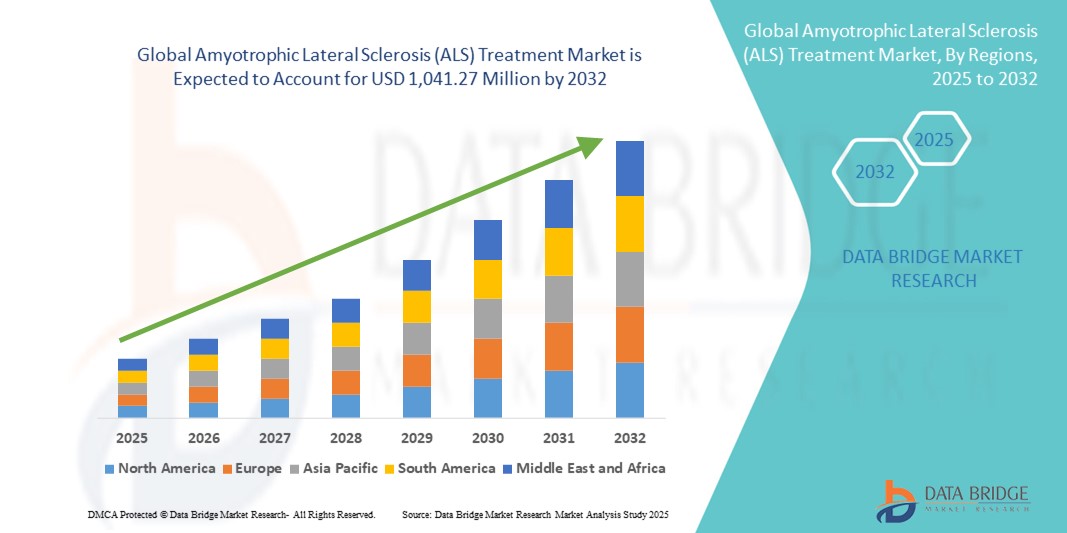
Amyotrophic Lateral Sclerosis (ALS) Treatment Market Size
- The global amyotrophic lateral sclerosis (ALS) treatment market size was valued at USD 726.62 million in 2024 and is expected to reach USD 1,041.27 million by 2032, at a CAGR of 4.60% during the forecast period
- The market growth is largely fueled by the increasing prevalence of neurodegenerative disorders and a rising geriatric population, which is driving demand for effective amyotrophic lateral sclerosis (ALS) treatment solutions in both developed and emerging markets
- Furthermore, advancements in pharmaceutical research, the introduction of novel drug therapies, and the growing availability of disease-modifying treatments are establishing ALS therapies as critical components in patient care. These converging factors are accelerating the adoption of amyotrophic lateral sclerosis (ALS) treatment solutions, thereby significantly boosting the industry's growth
Amyotrophic Lateral Sclerosis (ALS) Treatment Market Analysis
- Amyotrophic Lateral Sclerosis (ALS) treatment solutions, encompassing pharmacological therapies and supportive care interventions, are increasingly vital components of modern neurological healthcare due to their role in slowing disease progression, managing symptoms, and improving patient quality of life in both clinical and home care settings
- The escalating prevalence of neurodegenerative disorders, coupled with an aging global population, is driving robust demand for amyotrophic lateral sclerosis (ALS) treatment solutions, positioning them as critical components of neurological healthcare
- North America dominated the amyotrophic lateral sclerosis (ALS) treatment market with the largest revenue share of 44.2% in 2024, supported by advanced healthcare infrastructure, high healthcare expenditure, favorable reimbursement policies, and early adoption of innovative ALS therapies. The U.S. market, in particular, benefits from strong R&D initiatives, availability of cutting-edge treatments, and widespread clinical adoption
- Asia-Pacific is expected to be the fastest-growing region in the amyotrophic lateral sclerosis (ALS) treatment market during the forecast period, driven by increasing healthcare investments, rising incidence of neurodegenerative diseases, expanding geriatric population, and improving access to diagnostic and treatment facilities in countries such as China, India, and Japan
- Chemotherapy dominated the amyotrophic lateral sclerosis (ALS) treatment market with a a 62.4% revenue share in 2024, primarily due to its established protocols for symptom management, mitigation of disease progression, and widespread clinical adoption
Report Scope and Amyotrophic Lateral Sclerosis (ALS) Treatment Market Segmentation
|
Attributes |
Amyotrophic Lateral Sclerosis (ALS) Treatment Key Market Insights |
|
Segments Covered |
|
|
Countries Covered |
North America
Europe
Asia-Pacific
Middle East and Africa
South America
|
|
Key Market Players |
|
|
Market Opportunities |
|
|
Value Added Data Infosets |
In addition to the insights on market scenarios such as market value, growth rate, segmentation, geographical coverage, and major players, the market reports curated by the Data Bridge Market Research also include in-depth expert analysis, pricing analysis, brand share analysis, consumer survey, demography analysis, supply chain analysis, value chain analysis, raw material/consumables overview, vendor selection criteria, PESTLE Analysis, Porter Analysis, and regulatory framework. |
Amyotrophic Lateral Sclerosis (ALS) Treatment Market Trends
Advancements in Therapeutic Approaches and Patient Care
- A significant and accelerating trend in the global amyotrophic lateral sclerosis (ALS) treatment market is the development of novel pharmacological therapies, including disease-modifying drugs, neuroprotective agents, and symptom-targeted treatments. These innovations are significantly enhancing patient outcomes and quality of life
- For instance, recent approvals and clinical trial progress for therapies such as edaravone and AMX0035 are expanding treatment options for ALS patients, offering hope for slowing disease progression and improving functional independence
- Research integration with precision medicine approaches enables more personalized treatment regimens, allowing clinicians to tailor interventions based on genetic profiles, disease stage, and symptom severity. Moreover, combination therapies and supportive care strategies, including respiratory and nutritional management, are being optimized to address multiple facets of ALS
- The increasing collaboration between pharmaceutical companies, research institutions, and healthcare providers is facilitating faster clinical development, enhanced access to innovative treatments, and improved patient monitoring. This collaborative approach is creating a more comprehensive and coordinated care ecosystem for ALS patients
- These advancements are fundamentally reshaping treatment expectations and patient management in ALS. Consequently, companies are increasingly focusing on pipeline expansion, patient-centric clinical trials, and the development of holistic care solutions that integrate pharmacological, rehabilitative, and supportive therapies
- The demand for effective and accessible ALS treatments is growing rapidly across both developed and emerging markets, driven by rising disease prevalence, increasing awareness, and enhanced healthcare infrastructure
Amyotrophic Lateral Sclerosis (ALS) Treatment Market Dynamics
Driver
Growing Need Due to Rising ALS Awareness and Advanced Therapeutic Adoption
- The increasing prevalence of ALS, coupled with rising awareness about early diagnosis and effective treatment options, is a significant driver for the heightened demand for ALS therapies
- For instance, in April 2024, Biogen announced advancements in its ALS therapy pipeline, focusing on novel gene-silencing approaches and targeted neuroprotective treatments. Such initiatives by key companies are expected to drive the ALS Treatment market growth during the forecast period
- As patients and caregivers become more aware of available therapies, advanced treatment options, including disease-modifying drugs and stem cell therapies, offer potential improvements in quality of life and slower disease progression, making them highly sought after
- Furthermore, the growing emphasis on personalized medicine and multidisciplinary care approaches is making ALS treatment more precise and patient-centric. Hospitals and specialty clinics are increasingly integrating advanced diagnostic tools and therapies to optimize outcomes for ALS patients
- The rising adoption of home-based care solutions, improved clinical infrastructure, and supportive regulatory frameworks for orphan drugs are also key factors propelling market growth. The trend towards more accessible and effective ALS therapies contributes significantly to expanding the patient reach and treatment adoption globally
Restraint/Challenge
Concerns Regarding High Treatment Costs and Limited Accessibility
- The high cost of ALS treatments, particularly advanced therapies such as stem cell interventions and gene-targeted drugs, remains a significant barrier to widespread adoption. These innovative therapies, while highly effective in slowing disease progression and improving patient quality of life, often come with premium pricing. Patients in developing regions or those with limited or no health insurance coverage may encounter substantial financial obstacles, restricting access to these life-altering treatments
- For instance, multiple high-profile ALS drug launches in recent years have brought attention to affordability concerns, highlighting that access is often limited to specialized treatment centers or patients covered by comprehensive insurance plans. This financial hurdle can delay therapy initiation and reduce overall treatment adherence, impacting clinical outcomes
- Addressing these challenges through structured patient assistance programs, enhanced insurance support, and government-backed subsidies is critical for improving accessibility. Such initiatives can provide financial relief to patients, ensuring that a broader segment of the ALS population can benefit from cutting-edge therapies
- In addition , the scarcity of specialized treatment centers and adequately trained healthcare professionals in certain geographic regions may hinder timely diagnosis and initiation of therapy. Expanding clinical infrastructure, offering specialized training programs for healthcare providers, and leveraging telemedicine platforms can help bridge these gaps, enabling more patients to receive prompt and effective care
- Overcoming these cost and accessibility barriers, alongside ongoing research into more effective, scalable, and affordable ALS treatment options, will be essential to sustaining market growth. These efforts will also improve patient outcomes, enhance quality of life, and ensure that innovative therapies reach a wider patient population globally
Amyotrophic Lateral Sclerosis (ALS) Treatment Market Scope
The market is segmented on the basis of disease type, drug type, distribution channel, treatment type, and end user.
- By Disease Type
On the basis of disease type, the Amyotrophic Lateral Sclerosis (ALS) treatment market is segmented into Benign Focal Amyotrophy of ALS, Infantile Spinal Muscular Atrophy, Juvenile Spinal Muscular Atrophy, Kugelberg-Welander Disease, Primary Lateral Sclerosis, Progressive Bulbar Palsy, Spinal Muscular Atrophy, Upper Motor Neuron Disease, Werdnig-Hoffman Disease, and Wohlfart-Disease. The Progressive Bulbar Palsy segment held the largest market revenue share of 21.5% in 2024, driven by its relatively higher prevalence, rapid disease progression, and the urgent need for effective symptom management to enhance patient quality of life. Clinical initiatives focusing on early diagnosis and tailored therapeutic interventions for bulbar-onset ALS have further reinforced demand in this segment.
The Juvenile Spinal Muscular Atrophy segment is anticipated to witness the fastest growth rate of 11.8% CAGR from 2025 to 2032, driven by multiple factors that are reshaping the pediatric therapeutics landscape. The growth is fueled by significant advancements in targeted treatments and gene therapies, which are providing more effective management options for young patients diagnosed with this condition. Increasing awareness among healthcare professionals, parents, and caregivers about early symptoms and the importance of timely diagnosis is further contributing to market expansion.
- By Drug Type
On the basis of drug type, the Amyotrophic Lateral Sclerosis (ALS) treatment market is segmented into Riluzole, Edaravone (Radicava), and Others. The Riluzole segment captured the largest market revenue share of 38.7% in 2024, attributed to its established clinical adoption as a first-line therapy that effectively slows the progression of ALS and moderately extends patient survival. Its extensive use in clinical practice, combined with physician familiarity and well-documented efficacy, continues to make it the preferred choice for many healthcare providers.
The Edaravone segment is expected to witness the fastest CAGR of 12.5% from 2025 to 2032, supported by broader regulatory approvals in multiple regions, growing patient and physician awareness, and ongoing clinical research exploring its use in combination therapies and innovative formulations, which enhance its therapeutic potential and expand market reach.
- By Distribution Channel
On the basis of distribution channel, the Amyotrophic Lateral Sclerosis (ALS) treatment market is segmented into hospital pharmacies, and retail and online pharmacies. The hospital pharmacy segment held the largest market revenue share of 56.2% in 2024, driven by centralized access to specialized ALS therapies, integrated care programs, and consistent patient monitoring. Hospitals serve as primary hubs for the administration of ALS treatments, ensuring adherence to clinical protocols and facilitating access to multidisciplinary care teams.
Retail and online pharmacies are expected to witness the fastest CAGR of 13.1% from 2025 to 2032, fueled by the growing penetration of e-pharmacies, telemedicine services, and home delivery models. These channels improve patient convenience, enhance adherence to prescribed therapies, and increase accessibility, particularly for patients in remote or underserved regions.
- By Treatment Type
On the basis of treatment type, the Amyotrophic Lateral Sclerosis (ALS) treatment market is segmented into chemotherapy and stem cell therapy. Chemotherapy continues to dominate with a 62.4% revenue share in 2024, primarily due to its well-established protocols that effectively manage symptoms, slow disease progression, and benefit from widespread clinical adoption across healthcare facilities. Its extensive use in standard treatment regimens, coupled with proven efficacy and accessibility, reinforces its leading position in the market.
Stem cell therapy, on the other hand, is projected to witness the fastest growth rate of 14.2% CAGR during the forecast period. This growth is driven by its potential to provide regenerative solutions and its increasing relevance in personalized medicine. The rising number of clinical trials, exploration of innovative delivery methods, and growing investments in research and development are further bolstering its adoption as a promising treatment alternative for ALS patients seeking targeted and advanced therapeutic interventions.
- By End User
On the basis of end user, the Amyotrophic Lateral Sclerosis (ALS) treatment market is segmented into hospitals, homecare, specialty clinics, and others. Hospitals accounted for the largest market revenue share of 59.8% in 2024, owing to their comprehensive treatment facilities, access to advanced therapeutic modalities, and specialized care teams capable of managing complex ALS cases. The hospital setting remains central to providing coordinated care, monitoring patient progress, and delivering cutting-edge treatments.
Homecare and specialty clinics are expected to witness the fastest CAGR of 12.7% from 2025 to 2032, reflecting the growing shift toward patient-centric care models. The expansion of remote monitoring solutions, personalized treatment programs, and outpatient services enables ALS patients to receive high-quality care in the comfort of their homes or through specialized clinics, reducing hospitalization needs and improving quality of life.
Amyotrophic Lateral Sclerosis (ALS) Treatment Market Regional Analysis
- North America dominated the amyotrophic lateral sclerosis (ALS) treatment market with the largest revenue share of 44.2% in 2024, driven by the growing prevalence of ALS and increasing awareness about early diagnosis and treatment options
- The region benefits from well-established healthcare infrastructure, advanced research facilities, and strong investment in neurodegenerative disease therapies
- High patient awareness, widespread access to specialty clinics, and robust healthcare funding contribute to the leading market position of North America in ALS treatment
U.S. Amyotrophic Lateral Sclerosis (ALS) Treatment Market Insight
The U.S. amyotrophic lateral sclerosis (ALS) treatment market captured the largest revenue share of 77% in 2024 within North America, fueled by the rapid adoption of innovative ALS therapies, including Riluzole, Edaravone (Radicava), and stem cell-based interventions. Increasing patient awareness about clinical trials, expanding specialty neurology clinics, and government support programs for ALS patients are key drivers. The U.S. market also benefits from early access programs, insurance coverage for high-cost treatments, and ongoing research initiatives targeting disease-modifying therapies.
Europe Amyotrophic Lateral Sclerosis (ALS) Treatment Market Insight
The Europe amyotrophic lateral sclerosis (ALS) treatment market is projected to expand at a substantial CAGR throughout the forecast period, primarily driven by rising incidence rates, improved diagnostic capabilities, and increasing investment in neurodegenerative research. Countries in Europe are witnessing growth in the availability of specialized ALS centers, advanced clinical trials, and reimbursement programs. The market is further supported by government initiatives to provide access to cutting-edge therapies and by growing awareness among patients and caregivers about early intervention benefits.
U.K. Amyotrophic Lateral Sclerosis (ALS) Treatment Market Insight
The U.K. amyotrophic lateral sclerosis (ALS) treatment market is anticipated to grow at a noteworthy CAGR during the forecast period, driven by increasing government and private funding for ALS research and patient support programs. The rising prevalence of ALS, coupled with growing patient awareness and expanding access to specialty neurology clinics, encourages early diagnosis and treatment initiation. Enhanced healthcare infrastructure and streamlined drug approval processes further facilitate market growth.
Germany Amyotrophic Lateral Sclerosis (ALS) Treatment Market Insight
The Germany amyotrophic lateral sclerosis (ALS) treatment market is expected to expand at a considerable CAGR during the forecast period, fueled by strong research and development activity in neurodegenerative diseases and a high standard of healthcare infrastructure. The market benefits from early diagnosis programs, reimbursement support for high-cost treatments, and a growing network of specialized ALS care centers. Increasing patient awareness about treatment options and ongoing clinical trials is also driving adoption of novel therapies in Germany.
Asia-Pacific Amyotrophic Lateral Sclerosis (ALS) Treatment Market Insight
The Asia-Pacific amyotrophic lateral sclerosis (ALS) treatment market is poised to grow at the fastest CAGR of during the forecast period of 2025 to 2032, driven by rising awareness of ALS, improving healthcare infrastructure, and increasing government initiatives supporting rare disease management. Countries such as China, Japan, and India are witnessing enhanced access to treatment, increased patient advocacy, and expanding clinical trial activity. The adoption of advanced therapies, coupled with rising healthcare spending and a growing number of specialized neurology centers, is supporting rapid market growth in the region.
Japan Amyotrophic Lateral Sclerosis (ALS) Treatment Market Insight
The Japan amyotrophic lateral sclerosis (ALS) treatment market is gaining momentum due to the country’s advanced healthcare infrastructure, increasing incidence of ALS, and growing patient awareness. Expansion of specialized ALS treatment centers, integration of innovative therapies such as Edaravone and Riluzole, and government-supported healthcare programs are driving market growth. Additionally, Japan’s aging population is contributing to rising demand for effective ALS management solutions.
China Amyotrophic Lateral Sclerosis (ALS) Treatment Market Insight
The China amyotrophic lateral sclerosis (ALS) treatment market accounted for the largest market revenue share in Asia-Pacific in 2024, attributed to increasing diagnosis rates, expanding specialty neurology centers, and improved access to approved ALS therapies. Strong domestic pharmaceutical manufacturing, rising patient awareness, and increasing investment in rare disease research are supporting market growth. Efforts to enhance healthcare coverage and expand clinical trial availability are further driving the adoption of innovative ALS treatment options across the country.
Amyotrophic Lateral Sclerosis (ALS) Treatment Market Share
The Amyotrophic Lateral Sclerosis (ALS) Treatment industry is primarily led by well-established companies, including:
- Sanofi (U.S.)
- Mitsubishi Tanabe Pharma Corporation (Japan)
- BrainStorm Cell Limited (Israel)
- Viatris Inc. (U.S.)
- Ionis Pharmaceuticals (U.S.)
- Biogen (U.S.)
- Covis Pharma (Switzerland)
- Apotex Inc. (Canada)
- Ascend Laboratories LLC (U.S.)
- ITF Pharma (U.S.)
- Genervon Biopharmaceuticals, LLC (U.S.)
- Bausch Health Companies Inc. (Canada)
- ORPHAZYME A/S (Denmark)
- Orion Corporation (Finland)
- KRINGLE PHARMA, INC. (Japan)
- Amylyx Pharmaceuticals Inc (U.S.)
- Sun Pharmaceutical Industries Ltd. (India)
- Advanz Pharmaceutical (U.K.)
- Otsuka Pharmaceutical Co., Ltd. (Japan)
Latest Developments in Global Amyotrophic Lateral Sclerosis (ALS) Treatment Market
- In June 2022, Mitsubishi Tanabe Pharma America, Inc. a subsidiary of Mitsubishi Chemical Holdings Corporation announced that RADICAVA ORS (edaravone) is now available in the U.S. for the treatment of amyotrophic lateral sclerosis (ALS)
- In September 2022 – The U.S. Food and Drug Administration (FDA) granted approval to AMX0035 (Relyvrio), developed by Amylyx Pharmaceuticals, for the treatment of amyotrophic lateral sclerosis (ALS). This approval provides patients with a new therapeutic option aimed at slowing disease progression and supporting neuronal health, marking a significant advancement in ALS care. Verified by FDA and major news outlets
- In April 2023 – The FDA granted accelerated approval to Qalsody (tofersen), a therapy developed by Biogen in collaboration with Ionis Pharmaceuticals, for patients with SOD1‑linked ALS. This approval offers a targeted treatment option addressing the genetic form of ALS caused by SOD1 mutations, enabling earlier access for patients while confirmatory trials continue. Verified by FDA and Biogen announcements
- In November 2024, Eisai Co., Ltd. announced the commercial launch of ROZEBALAMIN FOR INJECTION 25 MG (mecobalamin) in Japan for the treatment of amyotrophic lateral sclerosis (ALS). The drug is expected to provide improved therapeutic options for patients with ALS by supporting neuronal function and potentially slowing disease progression. This launch highlights Eisai’s commitment to advancing treatment options for neurodegenerative diseases and enhancing patient access to innovative therapies in Japan
- In June 2025, Amylyx Pharmaceuticals announced that its investigational therapy, AMX0114, received Fast Track Designation from the U.S. Food and Drug Administration (FDA) for the treatment of amyotrophic lateral sclerosis (ALS). AMX0114 is an antisense oligonucleotide designed to target calpain-2, a protein implicated in neuronal degeneration. This designation allows for accelerated development and regulatory review, underscoring the drug’s potential to address unmet needs in ALS treatment and support faster patient access to innovative therapeutics
- In May 2025, Zydus Lifesciences announced that the U.S. FDA granted Fast Track Designation to Usnoflast (ZYIL1), a novel oral NLRP3 inhibitor, for the treatment of ALS. Usnoflast aims to modulate neuroinflammatory pathways, offering a potential disease-modifying approach. The designation highlights the FDA’s recognition of its therapeutic promise and enables expedited development and review processes, supporting the company’s strategy to bring advanced ALS treatments to patients more efficiently
- In May 2025, BrainStorm Cell Therapeutics received FDA clearance to initiate a Phase 3b clinical trial for NurOwn, an autologous stem cell therapy, in the treatment of ALS. NurOwn is designed to enhance neurotrophic support and potentially slow disease progression by delivering mesenchymal stem cells engineered to secrete neuroprotective factors. This trial clearance represents a key milestone in advancing regenerative therapy options for ALS patients and supports BrainStorm’s efforts to expand access to innovative cell-based interventions

- Interactive Data Analysis Dashboard
- Company Analysis Dashboard for high growth potential opportunities
- Research Analyst Access for customization & queries
- Competitor Analysis with Interactive dashboard
- Latest News, Updates & Trend analysis
- Harness the Power of Benchmark Analysis for Comprehensive Competitor Tracking
Data collection and base year analysis are done using data collection modules with large sample sizes. The stage includes obtaining market information or related data through various sources and strategies. It includes examining and planning all the data acquired from the past in advance. It likewise envelops the examination of information inconsistencies seen across different information sources. The market data is analysed and estimated using market statistical and coherent models. Also, market share analysis and key trend analysis are the major success factors in the market report. To know more, please request an analyst call or drop down your inquiry.
The key research methodology used by DBMR research team is data triangulation which involves data mining, analysis of the impact of data variables on the market and primary (industry expert) validation. Data models include Vendor Positioning Grid, Market Time Line Analysis, Market Overview and Guide, Company Positioning Grid, Patent Analysis, Pricing Analysis, Company Market Share Analysis, Standards of Measurement, Global versus Regional and Vendor Share Analysis. To know more about the research methodology, drop in an inquiry to speak to our industry experts.
Data Bridge Market Research is a leader in advanced formative research. We take pride in servicing our existing and new customers with data and analysis that match and suits their goal. The report can be customized to include price trend analysis of target brands understanding the market for additional countries (ask for the list of countries), clinical trial results data, literature review, refurbished market and product base analysis. Market analysis of target competitors can be analyzed from technology-based analysis to market portfolio strategies. We can add as many competitors that you require data about in the format and data style you are looking for. Our team of analysts can also provide you data in crude raw excel files pivot tables (Fact book) or can assist you in creating presentations from the data sets available in the report.













