


Amyloid Neuropathy Market Size
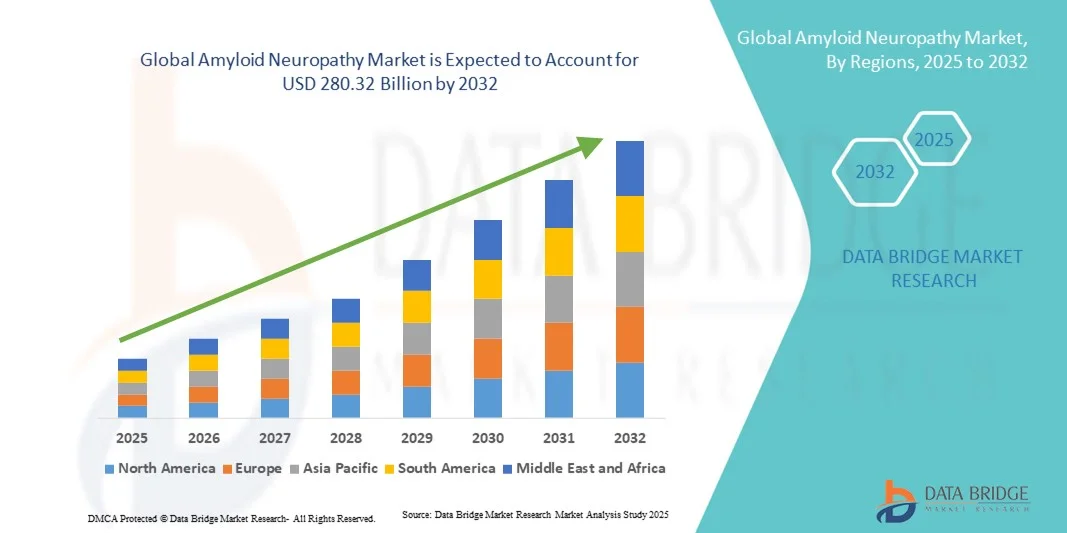
- The global amyloid neuropathy market size was valued at USD 192.65 billion in 2024 and is expected to reach USD 280.32 billion by 2032, at a CAGR of 4.80% during the forecast period
- The market growth is largely fueled by the increasing prevalence of hereditary and systemic amyloidosis, along with rising awareness about early diagnosis and management of Amyloid Neuropathy across clinical settings
- Furthermore, growing investment in innovative therapies, advanced diagnostic techniques, and supportive care options is accelerating the adoption of Amyloid Neuropathy treatments, thereby significantly boosting the industry's growth
Amyloid Neuropathy Market Analysis
- Amyloid Neuropathy, a progressive condition affecting the peripheral nerves, is increasingly gaining attention due to rising awareness, advancements in diagnostics, and the development of novel treatment options across both clinical and research settings
- The escalating demand for effective therapies and early diagnostic solutions is primarily fueled by growing patient awareness, increasing prevalence, and the rising preference for targeted treatment options
- North America dominated the amyloid neuropathy market with the largest revenue share of 40.5% in 2024, characterized by advanced healthcare infrastructure, high patient awareness, and a strong presence of key industry players, with the U.S. experiencing substantial growth in the adoption of new therapeutics and diagnostic solutions
- Asia-Pacific is expected to be the fastest growing region in the amyloid neuropathy market during the forecast period due to increasing healthcare investments, rising disposable incomes, and growing awareness of early diagnosis and treatment interventions
- The Peripheral symptom segment held the largest revenue share of 62.1% in 2024, due to its higher prevalence and easier diagnosis
Report Scope and Amyloid Neuropathy Market Segmentation
|
Attributes |
Amyloid Neuropathy Key Market Insights |
|
Segments Covered |
|
|
Countries Covered |
North America
Europe
Asia-Pacific
Middle East and Africa
South America
|
|
Key Market Players |
|
|
Market Opportunities |
|
|
Value Added Data Infosets |
In addition to the insights on market scenarios such as market value, growth rate, segmentation, geographical coverage, and major players, the market reports curated by the Data Bridge Market Research also include in-depth expert analysis, patient epidemiology, pipeline analysis, pricing analysis, and regulatory framework. |
Amyloid Neuropathy Market Trends
Advancements in Therapeutics and Early Diagnosis
- A significant and accelerating trend in the global amyloid neuropathy market is the increasing focus on novel therapeutics and early diagnostic interventions. This trend is significantly enhancing patient outcomes and broadening treatment accessibility across various patient populations
- For instance, therapies such as tafamidis, patisiran, and inotersen are gaining prominence for their ability to slow disease progression, improve quality of life, and reduce the burden of polyneuropathy. Similarly, combination approaches involving gene-silencing agents and supportive care are being explored to optimize patient management
- Advances in diagnostic techniques, including biomarker identification, genetic testing, and non-invasive imaging modalities, are enabling earlier detection and more precise patient stratification. This allows clinicians to tailor therapeutic strategies and monitor treatment response more effectively
- The development of patient-centric treatment models, including home-based infusion therapies and remote monitoring solutions, is contributing to improved adherence and clinical outcomes
- In addition, ongoing clinical research and collaboration between pharmaceutical companies and research institutes are accelerating the introduction of new therapies and expanding the understanding of disease mechanisms. These initiatives are fostering innovation and enhancing the global Amyloid Neuropathy care landscape
- This trend toward advanced therapeutics, early diagnosis, and patient-centric care is expected to transform disease management and significantly improve prognosis for patients with Amyloid Neuropathy worldwide
Amyloid Neuropathy Market Dynamics
Driver
Growing Need Due to Rising Disease Awareness and Expanding Therapeutic Options
- The increasing prevalence of hereditary and acquired amyloidosis, coupled with greater disease awareness among healthcare professionals and patients, is a significant driver for market growth
- For instance, in April 2024, Alnylam Pharmaceuticals reported expanded adoption of its RNAi-based therapy, patisiran, for transthyretin-mediated amyloidosis, demonstrating improved neurological function in patients. Such strategies by key companies are expected to drive the Amyloid Neuropathy market during the forecast period
- The growing availability of disease-modifying therapies, supportive care, and patient monitoring tools is increasing clinician confidence and encouraging earlier treatment initiation
- Furthermore, the trend toward multidisciplinary care approaches and patient education programs is enhancing treatment adherence and outcomes across both hereditary and acquired forms of the disease
- The combination of increasing therapeutic options, proactive disease management, and global awareness campaigns is expected to continue propelling the Amyloid Neuropathy market in both developed and emerging regions
Restraint/Challenge
High Treatment Costs and Limited Accessibility in Emerging Markets
- Despite significant advancements, high costs of disease-modifying therapies pose a major challenge to widespread adoption, particularly in price-sensitive regions. Advanced therapies such as gene-silencing agents and tafamidis can be prohibitively expensive for patients without comprehensive insurance coverage.
- For instance, in March 2024, a report highlighted that access to tafamidis in several Southeast Asian countries was limited due to high pricing and lack of reimbursement, delaying treatment initiation for many patients
- Limited access to specialized diagnostic and treatment centers in developing regions further hinders early diagnosis and initiation of therapy
- In addition, the rarity of the disease reduces market incentives for pharmaceutical companies to expand treatment programs universally, impacting availability in lower-income regions
- Healthcare infrastructure constraints, including lack of trained neurologists, limited access to genetic testing, and insufficient patient support programs, exacerbate treatment gaps
- Addressing these challenges through patient assistance programs, partnerships with governments and NGOs, and strategic pricing models will be crucial to ensure broader access and sustained market growth globally
Amyloid Neuropathy Market Scope
The market is segmented on the basis of type, symptoms, gender, diagnosis, treatment, end-users, and distribution channels.
- By Type
On the basis of type, the Amyloid Neuropathy market is segmented into Inherited and Acquired. The Inherited segment accounted for the largest market revenue share of 57.6% in 2024, driven by the high prevalence of hereditary forms such as familial amyloid polyneuropathy. Patients are often diagnosed early due to family history, enabling timely intervention and long-term disease management. Healthcare providers emphasize genetic counseling and monitoring, which strengthens adoption. Established treatment protocols and ongoing research targeting gene-specific therapies support revenue growth. Accessibility to specialized healthcare centers and awareness campaigns further fuel adoption. High patient compliance and adoption of disease-modifying therapies contribute to steady market share. Predictable disease progression patterns allow effective resource allocation. Insurance coverage for genetic screening boosts patient uptake. Market penetration is higher in regions with advanced healthcare infrastructure. Regional research collaborations continue to develop innovative therapies. Overall, this segment remains the largest contributor to market revenue.
The Acquired segment is expected to witness the fastest CAGR of 18.2% from 2025 to 2032, driven by growing awareness of secondary amyloidosis caused by chronic conditions such as multiple myeloma or chronic inflammation. Improved diagnostic capabilities allow early detection and timely therapy. Expanding healthcare access in emerging economies enables more patients to seek treatment. Disease-modifying medications encourage adoption among clinicians. Awareness campaigns educate patients about acquired forms. Regional healthcare initiatives targeting rare neurological disorders support growth. Multi-center studies and clinical trials explore novel therapies. Patient-centric treatment approaches facilitate higher adoption rates. Integration of supportive care strengthens the segment. Growing physician expertise boosts confidence. The segment is gaining traction in Asia-Pacific and Latin America.
- By Symptoms
On the basis of symptoms, the Amyloid Neuropathy market is segmented into Peripheral and Autonomic. The Peripheral symptom segment held the largest revenue share of 62.1% in 2024, due to its higher prevalence and easier diagnosis. Manifesting as pain, tingling, numbness, and motor dysfunction, peripheral neuropathy prompts early medical consultation. Healthcare providers focus on identification through nerve conduction studies and symptomatic treatment. Patients are increasingly aware of management options, supporting adoption. Established therapeutic regimens manage chronic pain and improve mobility. Frequent monitoring and long-term management plans are widely adopted in hospitals and clinics. Patient education and awareness campaigns enhance diagnosis rates. Insurance coverage favors treatment of peripheral symptoms. Accessibility to multidisciplinary care improves outcomes and sustains adoption. Longitudinal studies demonstrate consistent patient engagement and therapy adherence. Integration of patient support programs strengthens the market. Overall, peripheral symptoms dominate due to prevalence and well-established treatment pathways.
The Autonomic segment is projected to grow at the fastest CAGR of 19.0% from 2025 to 2032, driven by rising recognition of autonomic dysfunction in amyloidosis patients. Symptoms such as gastrointestinal, cardiovascular, and urinary complications require specialized monitoring. Increasing physician awareness improves diagnosis rates. Targeted therapies address autonomic manifestations. Hospitals and specialty clinics expand multidisciplinary care teams. Technological advancements in monitoring enhance outcomes. Patient education raises awareness about subtle autonomic symptoms. Early intervention improves treatment success. Insurance and reimbursement increasingly cover autonomic symptom management. Clinical trials focus on novel therapeutic approaches. Advocacy groups boost patient engagement. Rapid adoption in emerging regions contributes to segment growth.
- By Gender
On the basis of gender, the Amyloid Neuropathy market is segmented into Male and Female. The Male segment held the largest market revenue share of 54.3% in 2024, largely due to higher prevalence of certain hereditary and acquired amyloidosis conditions in men. Males are more likely to seek early intervention for familial amyloid polyneuropathy and related neuropathic disorders. Clinical management protocols are well-established, supporting consistent adoption. Male patients exhibit higher engagement with long-term monitoring and treatment adherence. Regional epidemiological studies reinforce awareness and diagnosis. Hospitals and specialty clinics focus on male patient-centric care. Treatment centers and research initiatives contribute to steady market growth. Insurance coverage facilitates access to therapies. Public awareness campaigns target high-risk male populations. Genetic counseling adoption is higher among male patients. Overall, male patients remain the primary contributor to market revenue.
The Female segment is projected to witness the fastest CAGR of 17.5% from 2025 to 2032, driven by increasing recognition of amyloid neuropathy in women and growing awareness of gender-specific symptom manifestations. Female patients are increasingly seeking diagnosis for both hereditary and acquired forms. Healthcare providers are focusing on education and early intervention. Improved diagnostic tools detect early-stage neuropathy in women. Treatment accessibility is expanding through hospitals and specialty clinics. Female-focused awareness campaigns drive adoption. Multidisciplinary care supports management of comorbidities. Regional initiatives in Asia-Pacific and Europe enhance patient reach. Insurance reimbursement improves treatment affordability. Support groups encourage adherence. Clinical studies increasingly include female cohorts. Rapid adoption of treatment protocols strengthens segment growth.
- By Diagnosis
On the basis of diagnosis, the Amyloid Neuropathy market is segmented into Tissue Biopsy, Genetic Testing, and Others. The Tissue Biopsy segment held the largest market revenue share of 48.7% in 2024, as it is the gold standard for confirming amyloid deposits and neuropathic involvement. Healthcare providers rely on biopsy results for precise diagnosis and treatment planning. Patients often undergo nerve or organ biopsy for accurate evaluation. Clinical guidelines recommend biopsy-based confirmation before initiating therapy. Established lab networks and specialized pathology centers support adoption. Histopathological evaluation ensures long-term monitoring and prognostic assessment. Tissue biopsy accessibility is widespread in North America and Europe. Insurance coverage facilitates patient uptake. Multidisciplinary consultation improves patient confidence. Biopsy remains a trusted diagnostic method globally. Overall, tissue biopsy dominates due to accuracy and reliability.
The Genetic Testing segment is expected to grow at the fastest CAGR of 20.1% from 2025 to 2032, driven by increasing emphasis on early detection of hereditary amyloidosis and familial neuropathies. Genetic screening enables pre-symptomatic diagnosis and informed family planning. Adoption is growing in regions with advanced healthcare infrastructure. Technological advancements reduce cost and improve test accuracy. Awareness campaigns highlight the benefits of genetic testing. Early detection allows targeted therapeutic interventions. Insurance coverage is gradually expanding for genetic tests. Hospitals and specialty clinics integrate testing into patient management programs. Research initiatives promote innovative genetic-based therapies. Patient demand rises for non-invasive, rapid diagnostic tools. Regional initiatives in Asia-Pacific boost accessibility. Genetic testing adoption is accelerating globally.
- By Treatment
On the basis of treatment, the Amyloid Neuropathy market is segmented into Medication, Surgery, and Others. The Medication segment accounted for the largest market revenue share of 61.5% in 2024, driven by the wide availability of disease-modifying therapies, symptomatic relief drugs, and emerging targeted treatments. Patients are increasingly relying on pharmacological intervention for long-term management. Hospital protocols emphasize early therapy initiation. Medication is preferred due to minimal invasiveness and repeatable administration. Regional healthcare infrastructure supports distribution and prescription adherence. Insurance coverage and reimbursement facilitate access. Clinical trials for novel drugs expand treatment options. Patients demonstrate high compliance with oral and parenteral therapies. Medication provides both peripheral and autonomic symptom management. Public awareness campaigns promote medication uptake. Specialty clinics ensure proper monitoring. Overall, medication remains the cornerstone of amyloid neuropathy management.
The Surgery segment is projected to witness the fastest CAGR of 18.8% from 2025 to 2032, driven by advancements in organ transplantation, nerve decompression, and targeted surgical interventions. Surgical solutions address severe organ involvement and progressive neuropathy. Minimally invasive procedures improve patient outcomes and recovery times. Healthcare providers increasingly recommend surgery in combination with pharmacological therapy. Regional access to specialty surgical centers enhances adoption. Patient awareness and demand for effective intervention are rising. Clinical studies support improved efficacy of novel surgical approaches. Insurance coverage for advanced procedures is expanding. Post-operative care and rehabilitation programs are widely implemented. Surgery adoption increases in North America, Europe, and Asia-Pacific. Advocacy groups educate patients about surgical options. Rapid adoption in emerging economies fuels segment growth.
- By End-Users
On the basis of end-users, the Amyloid Neuropathy market is segmented into Hospitals, Specialty Clinics, Home Healthcare, and Others. The Hospitals segment held the largest market revenue share of 52.8% in 2024, due to the availability of comprehensive diagnostic and treatment facilities, multidisciplinary teams, and advanced therapeutic interventions. Hospitals offer integrated care with monitoring, genetic testing, and pharmacological therapy. Long-term management programs and patient support ensure adherence. Accessibility in urban and developed regions supports market penetration. Hospitals are equipped for both peripheral and autonomic symptom management. Insurance and reimbursement facilitate patient uptake. Continuous research initiatives promote innovation. Physician expertise drives treatment selection. Public awareness campaigns increase patient engagement. Regional infrastructure favors hospital-based care. Overall, hospitals remain the primary end-user segment.
The Home Healthcare segment is expected to grow at the fastest CAGR of 21.3% from 2025 to 2032, driven by the rising preference for home-based monitoring, telemedicine, and self-administration of medications. Aging populations and chronic disease prevalence encourage at-home care adoption. Remote consultation technologies enhance physician oversight. Home healthcare services improve patient convenience and compliance. Integration of wearable devices and monitoring kits supports real-time evaluation. Patient education empowers self-management. Insurance coverage is expanding for home-based services. Home healthcare adoption is growing in North America, Europe, and Asia-Pacific. Telehealth initiatives promote accessibility in rural regions. Home-based therapy reduces hospital visits and associated costs. Caregiver support programs strengthen patient adherence. Overall, home healthcare adoption is rapidly expanding globally.
- By Distribution Channel
On the basis of distribution channel, the Amyloid Neuropathy market is segmented into Direct Tender, Hospital Pharmacy, Retail Pharmacy, Online Pharmacy, and Others. The Hospital Pharmacy segment held the largest market revenue share of 49.6% in 2024, owing to direct access to specialized treatments, integration with hospital protocols, and patient monitoring capabilities. Hospital pharmacies ensure timely delivery of medications and facilitate adherence. Comprehensive inventory management supports uninterrupted supply. Insurance coverage encourages patient utilization. Hospitals offer both peripheral and autonomic symptom therapies. Specialist consultations optimize treatment plans. Regional infrastructure favors hospital-based distribution. Collaborative agreements with pharma companies enhance access. Patient education and monitoring programs increase trust and compliance. Overall, hospital pharmacies dominate due to reliability and clinical integration.
The Online Pharmacy segment is projected to grow at the fastest CAGR of 22.5% from 2025 to 2032, fueled by increasing e-commerce adoption, convenience, and accessibility for remote regions. Patients are leveraging online channels to access specialty medications and home delivery services. Telemedicine and prescription integration simplify the purchasing process. Growing digital literacy supports online pharmacy utilization. Competitive pricing and subscription models enhance adoption. Online pharmacies cater to chronic disease management and self-administration of therapies. Awareness campaigns promote safe online access. Regional initiatives in Asia-Pacific and North America expand reach. Secure payment systems and regulatory compliance boost consumer confidence. Rapid urbanization and internet penetration accelerate growth. Patient engagement through online platforms drives adherence. Overall, online pharmacies are emerging as a high-growth distribution channel.
Amyloid Neuropathy Market Regional Analysis
- North America dominated the amyloid neuropathy market with the largest revenue share of 40.5% in 2024, characterized by advanced healthcare infrastructure, high patient awareness, and a strong presence of key industry players
- The market experienced substantial growth in the adoption of new therapeutics, diagnostic solutions, and specialized treatment protocols. Availability of clinical research facilities, well-established hospitals, and specialty clinics has driven the market expansion
- High patient awareness of amyloid neuropathy symptoms and treatment options supports early diagnosis and timely intervention. The region also benefits from well-developed insurance coverage and reimbursement frameworks, improving patient access to therapies
U.S. Amyloid Neuropathy Market Insight
The U.S. amyloid neuropathy market captured the largest revenue share in 2024 within North America, fueled by the rapid adoption of advanced diagnostics, emerging therapeutics, and clinical trial participation. Increasing focus on early diagnosis, personalized treatment regimens, and patient-centric care is further propelling market growth. Robust healthcare infrastructure, widespread hospital networks, and growing patient awareness of disease progression are key drivers. Specialty clinics and research centers contribute to the development and adoption of innovative therapies. Government and private initiatives supporting rare disease treatment improve access to advanced care. Adoption of novel medications, improved patient monitoring, and clinical interventions strengthen the market. Rising healthcare expenditure and private insurance coverage facilitate broader access. The U.S. remains a leader in global Amyloid Neuropathy research and therapy adoption.
Europe Amyloid Neuropathy Market Insight
The Europe amyloid neuropathy market is projected to expand at a substantial CAGR throughout the forecast period, primarily driven by well-established healthcare systems, increasing patient awareness, and the need for early diagnosis and treatment. Growth is supported by advancements in clinical research, availability of specialized treatment centers, and adoption of novel therapeutics. Urbanization and rising healthcare investments in countries such as Germany, France, and the U.K. further enhance market growth. Public health initiatives and rare disease programs contribute to patient outreach. Availability of genetic testing and specialized diagnostic tools encourages early intervention. Clinical trials and research collaborations strengthen the treatment landscape. Europe shows significant growth across hospitals, specialty clinics, and research institutes. Reimbursement schemes and government funding improve patient access. Awareness campaigns highlight symptom recognition and treatment options. Overall, Europe is a major contributor to global Amyloid Neuropathy market growth.
U.K. Amyloid Neuropathy Market Insight
The U.K. amyloid neuropathy market is anticipated to grow at a noteworthy CAGR during the forecast period, driven by rising patient awareness, the prevalence of hereditary amyloidosis, and increasing adoption of advanced diagnostics and treatment options. National health programs and specialty clinics enhance access to therapies. The U.K.’s strong healthcare infrastructure ensures early detection and comprehensive management of amyloid neuropathy. Availability of novel medications, hospital-based interventions, and multidisciplinary care supports patient outcomes. Growing participation in clinical trials and research initiatives promotes innovative therapies. Public awareness initiatives and genetic counseling programs contribute to market expansion. Rising healthcare expenditure and government support facilitate patient access to specialized care. The market benefits from collaborations between hospitals, research institutes, and pharmaceutical companies. Overall, the U.K. is expected to witness steady growth in the Amyloid Neuropathy market.
Germany Amyloid Neuropathy Market Insight
The Germany amyloid neuropathy market is expected to expand at a considerable CAGR during the forecast period, fueled by advanced healthcare infrastructure, a strong focus on early diagnosis, and rising patient awareness. Well-established hospitals and specialty clinics provide comprehensive treatment for hereditary and acquired amyloidosis. Research initiatives and clinical trials contribute to the availability of innovative therapeutics. Increasing healthcare expenditure, government funding, and rare disease programs support patient access. Integration of diagnostic facilities and treatment protocols ensures effective disease management. Germany’s emphasis on sustainable healthcare and technological innovation encourages adoption of advanced therapies. Genetic testing and multidisciplinary care pathways are widely available. Regional initiatives improve patient outreach and education. Overall, Germany represents a key market within Europe for Amyloid Neuropathy therapies.
Asia-Pacific Amyloid Neuropathy Market Insight
The Asia-Pacific Amyloid Neuropathy market is poised to grow at the fastest CAGR during the forecast period of 2025 to 2032, driven by increasing healthcare investments, rising disposable incomes, and growing awareness of early diagnosis and treatment interventions. Countries such as China, Japan, and India are witnessing enhanced availability of diagnostic tools and therapeutic options. Urbanization, expansion of hospital networks, and government support for rare disease management fuel market growth. Increasing patient awareness campaigns and training of healthcare professionals improve early detection. Research collaborations and clinical trials in the region enhance access to innovative treatments. Rising prevalence of hereditary and acquired amyloidosis drives demand for specialized care. The Asia-Pacific region is emerging as a key market for patient outreach, therapeutic adoption, and healthcare infrastructure development. Expanding access to advanced diagnostics and therapies contributes to rapid growth. Overall, Asia-Pacific is expected to be the fastest-growing region in the Amyloid Neuropathy market.
Japan Amyloid Neuropathy Market Insight
The Japan amyloid neuropathy market is gaining momentum due to the country’s high-tech healthcare infrastructure, increasing patient awareness, and early adoption of advanced therapeutics. Hospitals and specialty clinics focus on early diagnosis, patient monitoring, and disease management. National rare disease programs support access to therapies and clinical trials. Government initiatives, research collaborations, and high healthcare expenditure enhance market growth. Awareness campaigns for hereditary amyloidosis and amyloid neuropathy symptoms improve early intervention rates. Aging population and rising demand for specialized care are driving adoption of diagnostics and therapeutics. Japan’s integration of advanced diagnostic tools and pharmacological therapies supports treatment outcomes. Overall, the market in Japan is expected to witness steady expansion during the forecast period.
China Amyloid Neuropathy Market Insight
The China amyloid neuropathy market accounted for the largest market revenue share in Asia-Pacific in 2024, attributed to the country's expanding middle class, rapid urbanization, and increasing healthcare awareness. Growth is supported by government initiatives promoting rare disease awareness and investment in healthcare infrastructure. Increased accessibility of diagnostic facilities, specialty clinics, and hospital networks facilitates early detection and management. Adoption of novel therapeutics, combined with rising patient awareness and education, strengthens market expansion. Regional collaborations between hospitals, research institutes, and pharmaceutical companies enhance treatment availability. Growing participation in clinical trials and research initiatives drives innovative therapy development. China’s focus on healthcare modernization ensures continuous market growth. Overall, China remains a dominant contributor to the Amyloid Neuropathy market in Asia-Pacific.
Amyloid Neuropathy Market Share
The Amyloid Neuropathy industry is primarily led by well-established companies, including:
• Ionis Pharmaceuticals (U.S.)
• Alnylam Pharmaceuticals (U.S.)
• Prothena Corporation (U.S.)
• Bridge Biotherapeutics (South Korea)
• Intellia Therapeutics (U.S.)
• Arrowhead Pharmaceuticals (U.S.)
• Sanofi (U.S.)
• Neurimmune Therapeutics (Switzerland)
• Pfizer (U.S.)
• Roche (Switzerland)
• Novartis (Switzerland)
• Janssen Pharmaceuticals (Belgium)
• BioMarin Pharmaceutical (U.S.)
• Cymabay Therapeutics (U.S.)
Latest Developments in Global Amyloid Neuropathy Market
- In March 2025, the U.S. Food and Drug Administration (FDA) approved AMVUTTRA (vutrisiran) for the treatment of transthyretin amyloid cardiomyopathy (ATTR-CM), expanding its previous approval for transthyretin amyloid polyneuropathy (ATTR-PN). This makes AMVUTTRA the first gene-silencing therapy authorized for both forms of transthyretin amyloidosis, offering a novel treatment option for patients with heart involvement
- In May 2025, Intellia Therapeutics announced positive two-year follow-up data from an ongoing Phase 1 trial of nexiguran ziclumeran (nex-z) for the treatment of hereditary transthyretin amyloidosis with polyneuropathy (ATTRv-PN). The data demonstrated deep, durable, and consistent reductions in serum transthyretin levels, with evidence of disease stability or clinically meaningful improvements in neuropathic impairment measures
- In July 2025, AstraZeneca reported that its investigational drug anselamimab did not meet the primary endpoint in a Phase III clinical trial for advanced-stage AL amyloidosis. However, a prespecified subgroup analysis revealed highly clinically meaningful improvements in time to all-cause mortality and frequency of cardiovascular hospitalizations, suggesting potential benefits in specific patient populations

- Interactive Data Analysis Dashboard
- Company Analysis Dashboard for high growth potential opportunities
- Research Analyst Access for customization & queries
- Competitor Analysis with Interactive dashboard
- Latest News, Updates & Trend analysis
- Harness the Power of Benchmark Analysis for Comprehensive Competitor Tracking
Data collection and base year analysis are done using data collection modules with large sample sizes. The stage includes obtaining market information or related data through various sources and strategies. It includes examining and planning all the data acquired from the past in advance. It likewise envelops the examination of information inconsistencies seen across different information sources. The market data is analysed and estimated using market statistical and coherent models. Also, market share analysis and key trend analysis are the major success factors in the market report. To know more, please request an analyst call or drop down your inquiry.
The key research methodology used by DBMR research team is data triangulation which involves data mining, analysis of the impact of data variables on the market and primary (industry expert) validation. Data models include Vendor Positioning Grid, Market Time Line Analysis, Market Overview and Guide, Company Positioning Grid, Patent Analysis, Pricing Analysis, Company Market Share Analysis, Standards of Measurement, Global versus Regional and Vendor Share Analysis. To know more about the research methodology, drop in an inquiry to speak to our industry experts.
Data Bridge Market Research is a leader in advanced formative research. We take pride in servicing our existing and new customers with data and analysis that match and suits their goal. The report can be customized to include price trend analysis of target brands understanding the market for additional countries (ask for the list of countries), clinical trial results data, literature review, refurbished market and product base analysis. Market analysis of target competitors can be analyzed from technology-based analysis to market portfolio strategies. We can add as many competitors that you require data about in the format and data style you are looking for. Our team of analysts can also provide you data in crude raw excel files pivot tables (Fact book) or can assist you in creating presentations from the data sets available in the report.












