


Anaplasmosis Infection Market Overview
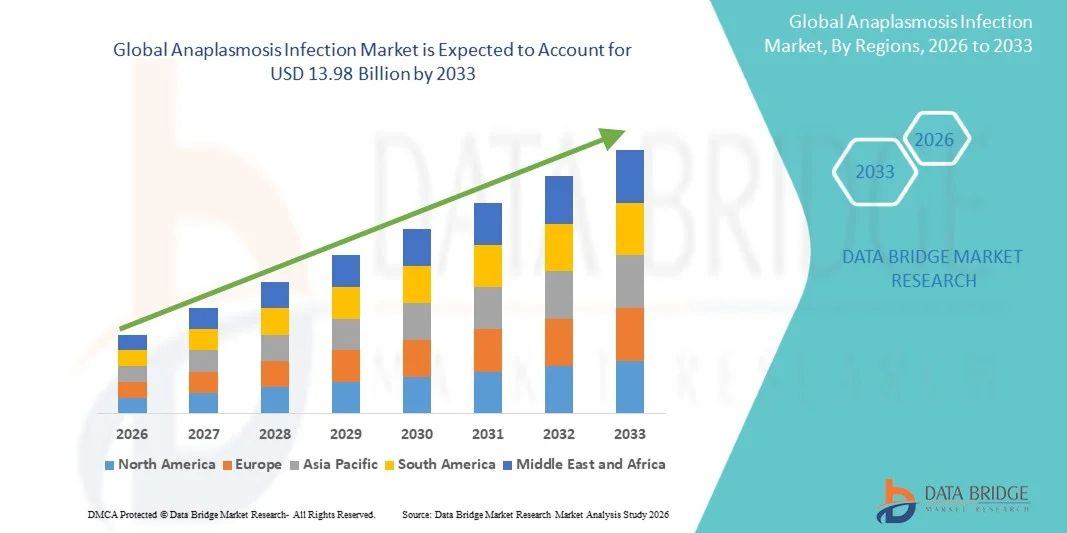
The global Anaplasmosis Infection market was valued at USD 8.91 billion in 2025 and is projected to reach USD 13.98 billion by 2033, growing at a CAGR of 5.80% from 2026 to 2033. The market is experiencing consistent growth driven by rising demand for safe and realistic driver training solutions, rapid advancements in simulation hardware and software, and expanding applications across automotive R&D, defense, and professional motorsport.
The increasing incidence of road accidents globally, combined with stricter government regulations on driver training and road safety, is compelling transportation authorities, driving schools, and military organizations to adopt advanced simulation technologies. Fixed-base and VR/AR-enabled simulators are replacing traditional on-road training in many markets, offering cost-effective, repeatable, and risk-free environments for skill development and autonomous vehicle validation.
Key Market Trends & Insights
- North America dominated the global Anaplasmosis Infection market with the largest revenue share of 36.12% in 2025, supported by advanced veterinary and healthcare infrastructure, strong surveillance systems for tick-borne and zoonotic diseases, and high adoption of molecular diagnostic techniques such as PCR and ELISA. The region also benefits from well-established livestock management practices, widespread awareness among healthcare professionals, and strong government initiatives focused on One Health programs integrating human, animal, and environmental disease monitoring. Increasing prevalence of tick exposure in cattle and companion animals, particularly in the United States and Canada, further strengthens regional demand for early diagnosis, antibiotic treatment, and preventive healthcare solutions.
- The Antibiotics segment led the market with a 52.46% share in 2025, driven by the widespread use of doxycycline-based therapies as the first-line treatment for Anaplasmosis infection in both humans and animals. Rapid therapeutic response, high clinical efficacy, and strong availability across hospital and veterinary settings support segment dominance. Increasing adoption of early treatment protocols in endemic regions further reinforces demand.
- Asia-Pacific is expected to be the fastest-growing region at a CAGR of 7.3% from 2026 to 2033, fueled by rising livestock population, expanding veterinary healthcare infrastructure, and increasing awareness of tick-borne diseases in countries such as China, India, and Australia. Government initiatives focused on improving animal health surveillance, expanding diagnostic access, and controlling vector-borne diseases are significantly accelerating regional market growth.
- PCR-based Diagnosis segment dominated the market with a 38.92% share in 2025, owing to its high sensitivity and accuracy in detecting early-stage Anaplasma infections. Increasing adoption of molecular diagnostic technologies in hospitals and veterinary laboratories, along with improved accessibility of automated PCR platforms, is strengthening its dominance across both human and animal health applications.
- The Livestock application segment dominated the market with a 46.57% share in 2025, driven by the high economic burden of Anaplasmosis in cattle and other farm animals. Rising demand for productivity protection in dairy and meat industries, along with large-scale veterinary vaccination and treatment programs, supports segment leadership globally.
- Hospital Pharmacy segment accounted for the largest share of 41.28% in 2025, supported by direct availability of antibiotics and diagnostic-linked treatment protocols in clinical settings. Strong integration between diagnostic labs and treatment centers ensures rapid initiation of therapy, improving disease outcomes in human cases.
- Online Pharmacy segment is expected to be the fastest-growing channel at a CAGR of 7.5% from 2026 to 2033, driven by increasing digital healthcare adoption, tele-veterinary services, and improved access to prescription-based antibiotics and supplements in remote and underserved regions.
- The Ixodes scapularis segment dominated the market with a share of 52.36% in 2025 due to its widespread presence across North America and its role as the primary vector responsible for transmitting Anaplasma phagocytophilum
Market Size & Forecast
- Global Market Value (2025): USD 8.91 Billion
- Expected Market Value (2033): USD 13.98 Billion
- Forecast CAGR (2026–2033): 5.80%
- Leading Region in 2025: North America
- Fastest Growing Region: Asia-Pacific
Report Scope and Global Anaplasmosis Infection Market Segmentation
|
Attributes |
Anaplasmosis Infection Key Market Insights |
|
Segments Covered |
|
|
Countries Covered |
North America · U.S. · Canada · Mexico Europe · Germany · France · U.K. · Netherlands · Switzerland · Belgium · Russia · Italy · Spain · Turkey · Rest of Europe Asia-Pacific · China · Japan · India · South Korea · Singapore · Malaysia · Australia · Thailand · Indonesia · Philippines · Rest of Asia-Pacific Middle East and Africa · Saudi Arabia · U.A.E. · South Africa · Egypt · Israel · Rest of Middle East and Africa South America · Brazil · Argentina · Rest of South America |
|
Key Market Players |
• Zoetis Inc. (U.S.) |
|
Market Opportunities |
· Expansion of rapid molecular diagnostics and point-of-care PCR testing · Rising investment in veterinary healthcare infrastructure · Growing adoption of integrated tick surveillance systems and climate-driven vector |
|
Value Added Data Infosets |
In addition to the insights on market scenarios such as market value, growth rate, segmentation, geographical coverage, and major players, the market reports curated by the Data Bridge Market Research also include in-depth expert analysis, geographically represented company-wise production and capacity, network layouts of distributors and partners, detailed and updated price trend analysis and deficit analysis of supply chain and demand. |
Global Anaplasmosis Infection Market Trends
Trend: Rising Burden of Tick-Borne Zoonotic Diseases and Climate-Driven Spread
The global Anaplasmosis Infection market is witnessing significant growth driven by the increasing incidence of tick-borne zoonotic diseases, particularly in livestock and human populations. Changing climate conditions, including rising temperatures and shifting rainfall patterns, are expanding the geographic distribution of tick vectors such as Ixodes scapularis and Ixodes pacificus, leading to higher infection rates in previously low-risk regions. Increased livestock movement, expanding dairy and meat production industries, and closer human-animal interaction in agricultural settings are further amplifying transmission risks. Enhanced diagnostic capabilities using PCR and ELISA-based testing are improving detection rates, with studies indicating that early molecular diagnostics can improve identification accuracy by more than 30–40% compared to traditional methods.
Global Anaplasmosis Infection Market Dynamics
Key Market Driver: Rising Demand for Rapid Veterinary Diagnostics and Preventive Healthcare
The global Anaplasmosis Infection market is being strongly driven by increasing demand for rapid diagnostic tools and preventive healthcare solutions in livestock management. Anaplasmosis significantly impacts cattle productivity by reducing milk yield, weight gain, and reproductive efficiency, resulting in substantial economic losses for the livestock industry. As a result, veterinary clinics and animal health organizations are increasingly adopting ELISA-based kits, PCR diagnostics, and point-of-care testing solutions for early detection and disease control. Major animal health companies such as Zoetis and Merck Animal Health are expanding their vaccine portfolios and antibiotic treatment solutions, supporting large-scale prevention programs. In addition, government-led livestock disease eradication initiatives in regions such as North America, Latin America, and Asia-Pacific are further accelerating adoption of advanced diagnostic and treatment solutions.
Key Restraint/Challenge: Limited Awareness and Underreporting in Emerging Regions
A key challenge in the global Anaplasmosis Infection market is the underdiagnosis and underreporting of cases, particularly in developing and resource-limited regions. Limited access to advanced diagnostic laboratories, lack of awareness among farmers and primary healthcare providers, and misdiagnosis with other febrile illnesses such as babesiosis and ehrlichiosis contribute to inaccurate disease reporting. In rural livestock farming communities, delayed diagnosis often leads to severe economic losses due to reduced herd productivity and increased mortality rates. In addition, inadequate veterinary infrastructure and limited availability of species-specific vaccines further restrict effective disease management. Despite increasing global awareness initiatives, the absence of standardized surveillance systems in many regions continues to hinder accurate epidemiological tracking and market expansion.
Key Market Opportunity: Expansion of Precision Veterinary Medicine and Digital Disease Surveillance
The Anaplasmosis Infection market presents significant opportunities through the integration of precision veterinary medicine and digital disease surveillance systems. Advances in genomics and pathogen sequencing are enabling the development of more targeted vaccines and improved antibiotic treatment protocols. In addition, AI-driven livestock monitoring systems and IoT-based herd health tracking platforms are enhancing early detection of infection outbreaks. Digital surveillance networks are increasingly being deployed to monitor tick populations and predict seasonal disease outbreaks, improving preventive intervention strategies. For example, predictive modeling tools have demonstrated up to 35% improvement in outbreak forecasting accuracy in pilot livestock health programs. Furthermore, expanding investments in veterinary biotechnology and increasing adoption of data-driven herd management systems across North America, Europe, and Asia-Pacific are creating strong long-term growth opportunities.
Global Anaplasmosis Infection Market Scope
The Anaplasmosis Infection market is segmented on the basis of treatment, species, application, diagnosis, end-users, and distribution channel.
- By Treatment
On the basis of treatment, the global Anaplasmosis Infection market is segmented into vaccines, antibiotics, and others. The Antibiotics segment dominated the market with a share of 46.82% in 2025 due to its strong efficacy in treating acute infection caused by Anaplasma species in both humans and livestock. antibiotics such as doxycycline are widely considered first-line therapy, offering rapid reduction in fever, hematological abnormalities, and systemic infection symptoms. their broad clinical availability, low treatment cost, and established inclusion in infectious disease treatment guidelines further reinforce their dominance. in veterinary applications, antibiotics are extensively used in cattle to control outbreaks and minimize productivity losses, strengthening demand across livestock healthcare systems. In addition, quick therapeutic response and ease of administration continue to support widespread adoption globally.
The Vaccine segment is expected to register the fastest CAGR of 7.1% from 2026 to 2033, driven by increasing focus on preventive disease management in livestock populations. rising economic losses in dairy and meat industries due to anaplasmosis infections are pushing governments and veterinary organizations to adopt vaccination programs. advancements in recombinant and inactivated vaccine development are improving efficacy and safety profiles. in addition, growing investments in veterinary immunology research and expanding awareness among farmers about tick-borne disease prevention are accelerating adoption. increasing prevalence of tick populations due to climate change is further boosting demand for long-term preventive solutions globally.
- By Species
On the basis of species, the global Anaplasmosis Infection market is segmented into Ixodes scapularis, Ixodes pacificus, and others. The Ixodes scapularis segment dominated the market with a share of 52.36% in 2025 due to its widespread presence across North America and its role as the primary vector responsible for transmitting Anaplasma phagocytophilum. this species thrives in forested and rural regions, increasing infection risks among humans and livestock populations. its expanding geographic distribution due to climate change has further intensified disease prevalence. strong epidemiological surveillance and higher reported infection rates associated with this tick species reinforce its dominance. In addition, its high adaptability to diverse environmental conditions supports sustained transmission cycles, strengthening its market leadership.
The Ixodes pacificus segment is expected to register the fastest CAGR of 6.9% from 2026 to 2033, driven by increasing expansion of tick habitats along western coastal regions of North America. climate variability, rising temperatures, and ecological changes are supporting population growth of this vector species. improved disease reporting systems and growing awareness of tick-borne infections are leading to higher detection rates. in addition, enhanced public health initiatives and vector control programs are supporting faster identification and management of infections. increasing research into regional tick ecology is further driving targeted prevention strategies.
- By Application
On the basis of application, the global Anaplasmosis Infection market is segmented into humans, livestock, and wildlife. The Livestock segment dominated the market with a share of 48.75% in 2025 due to the significant economic burden of infection on cattle productivity and livestock health. anaplasmosis leads to severe anemia, reduced milk yield, weight loss, and increased mortality rates in cattle, resulting in major financial losses for dairy and meat industries. widespread use of antibiotics and preventive veterinary care programs further strengthens this segment’s dominance. large-scale livestock farming across North America, Latin America, and Asia-Pacific contributes significantly to disease transmission and treatment demand. In addition, rising focus on herd health management and productivity optimization continues to support strong segment growth.
The Humans segment is expected to register the fastest CAGR of 7.3% from 2026 to 2033, driven by increasing awareness of zoonotic tick-borne diseases and improved diagnostic capabilities. growing outdoor activities, agricultural exposure, and occupational risks are increasing infection incidence in human populations. advancements in PCR-based diagnostics and early detection techniques are improving case identification rates. in addition, rising healthcare awareness and improved surveillance systems are supporting faster diagnosis and treatment. expanding access to specialized infectious disease care is further accelerating segment growth globally.
- By Diagnosis
On the basis of diagnosis, the global Anaplasmosis Infection market is segmented into ELISA, IFA, PCR, and others. The ELISA segment dominated the market with a share of 39.64% in 2025 due to its cost-effectiveness, high scalability, and widespread use in routine diagnostic screening for both human and veterinary applications. ELISA tests are highly preferred for detecting antibodies against Anaplasma infections due to their ease of use and rapid turnaround time. strong availability of commercial kits and integration into livestock health monitoring programs further support segment dominance. In addition, ELISA is widely used in resource-limited settings, making it a globally accessible diagnostic tool.
The PCR segment is expected to register the fastest CAGR of 7.5% from 2026 to 2033, driven by increasing demand for highly accurate and early-stage pathogen detection. PCR technology enables direct detection of Anaplasma DNA, offering superior sensitivity and specificity compared to traditional methods. growing adoption of molecular diagnostics in advanced healthcare systems is accelerating segment growth. in addition, rising investment in laboratory automation and genetic testing infrastructure is supporting expansion. increasing use of PCR in veterinary diagnostics for early outbreak detection is further driving demand globally.
- By End-Users
On the basis of end-users, the global Anaplasmosis Infection market is segmented into hospitals, homecare, specialty centers, and others. The Hospitals segment dominated the market with a share of 44.21% in 2025 due to high patient inflow for acute infectious disease treatment and availability of advanced diagnostic infrastructure. hospitals provide critical care support, intravenous antibiotic administration, and continuous monitoring for severe infection cases. strong presence of infectious disease specialists and well-developed laboratory networks further strengthen hospital dominance. In addition, established treatment protocols and reimbursement support contribute to sustained demand across healthcare systems.
The Specialty Centers segment is expected to register the fastest CAGR of 7.0% from 2026 to 2033, driven by increasing demand for focused and rapid diagnostic services. these centers offer specialized care for tick-borne and infectious diseases with faster testing and personalized treatment approaches. growing awareness of anaplasmosis and improved referral systems are increasing patient visits. in addition, expansion of outpatient care infrastructure and improved access to advanced diagnostics are supporting segment growth globally.
- By Distribution Channel
On the basis of distribution channel, the global Anaplasmosis Infection market is segmented into hospital pharmacy, online pharmacy, and retail pharmacy. The Hospital Pharmacy segment dominated the market with a share of 47.18% in 2025 due to its direct linkage with inpatient care and emergency treatment services. hospital pharmacies ensure immediate availability of antibiotics and supportive medications required for acute infection management. centralized procurement systems and physician-controlled dispensing processes further reinforce segment dominance. in addition, high dependency on hospital-based treatment for severe cases strengthens demand across this channel.
The Online Pharmacy segment is expected to register the fastest CAGR of 7.4% from 2026 to 2033, driven by rapid digital transformation in healthcare and increasing adoption of telemedicine services. patients increasingly prefer online platforms for purchasing maintenance medications due to convenience and cost efficiency. expanding internet penetration and improved logistics networks are supporting faster delivery systems. in addition, rising use of e-prescriptions and digital healthcare platforms is enhancing accessibility to essential medicines globally.
Global Anaplasmosis Infection Market Regional Analysis
North America dominated the global Anaplasmosis Infection market and accounted for the largest revenue share of 36.12% in 2025, supported by advanced veterinary and healthcare infrastructure, strong surveillance systems for tick-borne and zoonotic diseases, and high adoption of molecular diagnostic techniques such as PCR and ELISA. The region also benefits from well-established livestock management practices, widespread awareness among healthcare professionals, and strong government initiatives focused on One Health programs integrating human, animal, and environmental disease monitoring. Increasing prevalence of tick exposure in cattle and companion animals, particularly in the United States and Canada, is further strengthening demand for early diagnosis, antibiotic treatment, and preventive veterinary healthcare solutions. Expanding adoption of advanced laboratory diagnostics and rising investment in animal disease surveillance programs continue to reinforce North America’s leadership position in the global market.
U.S. Anaplasmosis Infection Market Insight
The U.S. Anaplasmosis Infection market is witnessing strong growth due to high livestock population exposure to tick-borne diseases, advanced diagnostic infrastructure, and strong adoption of PCR-based testing in veterinary and clinical settings. The country’s well-developed animal health surveillance systems, combined with increasing awareness among farmers and healthcare providers, are driving early detection and treatment adoption. In addition, strong presence of veterinary pharmaceutical companies and government-backed disease control programs is supporting market expansion.
Europe Anaplasmosis Infection Market Insight
The Europe Anaplasmosis Infection market remains a significant contributor to global growth, driven by strong veterinary healthcare systems, advanced diagnostic laboratory networks, and increasing focus on zoonotic disease monitoring. Widespread adoption of ELISA and PCR testing, along with structured livestock health programs across major countries, is supporting early disease detection and treatment. Rising government initiatives under One Health frameworks and increasing investment in animal disease surveillance continue to enhance market penetration across the region.
U.K. Anaplasmosis Infection Market Insight
The U.K. Anaplasmosis Infection market is experiencing steady growth due to increasing awareness of tick-borne diseases in livestock and wildlife, along with strong veterinary diagnostic capabilities. Adoption of advanced molecular testing methods and growing focus on animal health monitoring programs are supporting early diagnosis and treatment. In addition, government-led disease surveillance initiatives and strong veterinary research infrastructure are contributing to market development.
Germany Anaplasmosis Infection Market Insight
The Germany Anaplasmosis Infection market is expanding steadily due to advanced veterinary research systems, strong livestock disease monitoring frameworks, and high adoption of molecular diagnostics. The country’s focus on precision veterinary medicine and strong integration of laboratory testing in animal healthcare is improving early detection rates. Increasing investment in zoonotic disease control and livestock productivity protection is further driving demand.
Asia-Pacific Anaplasmosis Infection Market Insight
The Asia-Pacific Anaplasmosis Infection market is expected to witness the fastest growth, recording a CAGR of 7.3% from 2026 to 2033. Growth is driven by rising livestock population, expanding veterinary healthcare infrastructure, and increasing awareness of tick-borne diseases across China, India, and Australia. Governments are actively strengthening animal disease surveillance systems, improving access to diagnostic technologies, and promoting large-scale tick control programs. Rapid expansion of dairy and meat production industries, along with increasing veterinary pharmaceutical penetration, is further accelerating regional market growth.
Japan Anaplasmosis Infection Market Insight
The Japan Anaplasmosis Infection market is witnessing steady growth due to advanced veterinary diagnostic capabilities, strong research infrastructure, and increasing focus on animal health monitoring. Adoption of PCR and serological testing in veterinary clinics and research institutions is improving early detection rates. Rising investments in livestock health management and zoonotic disease prevention are further supporting market growth.
China Anaplasmosis Infection Market Insight
The China Anaplasmosis Infection market is growing rapidly due to expanding livestock farming, increasing awareness of tick-borne diseases, and strong government support for veterinary healthcare modernization. Rising adoption of molecular diagnostics, expansion of rural veterinary services, and growing investment in animal disease control programs are significantly boosting market demand. In addition, increasing focus on food safety and livestock productivity is strengthening long-term growth prospects.
Global Anaplasmosis Infection Market Share
The Anaplasmosis Infection industry is primarily led by well-established companies, including:
- Zoetis Inc. (U.S.)
- Merck & Co., Inc. (U.S.)
- Boehringer Ingelheim International GmbH (Germany)
- Elanco Animal Health Incorporated (U.S.)
- Bayer AG (Germany)
- Ceva Santé Animale (France)
- Virbac (France)
- IDEXX Laboratories, Inc. (U.S.)
- Vetoquinol S.A. (France)
- Phibro Animal Health Corporation (U.S.)
- Neogen Corporation (U.S.)
- Heska Corporation (U.S.)
- Zydus Animal Health (India)
- Intas Pharmaceuticals Animal Health Division (India)
- Hipra (Laboratorios Hipra S.A.) (Spain)
- Dechra Pharmaceuticals PLC (U.K.)
- Kyoritsu Seiyaku Corporation (Japan)
- MSD Animal Health (Merck Animal Health) (U.S.)
- Indian Immunologicals Limited (India)
- Bimeda Animal Health (Ireland)
- Ouro Fino Saúde Animal (Brazil)
- Norbrook Laboratories (U.K.)
- Huvepharma (Bulgaria)
- Biogénesis Bagó (Argentina)
Latest Developments in Global Anaplasmosis Infection Market
- In March 2021, the U.S. Centers for Disease Control and Prevention (CDC) updated national surveillance data on tick-borne diseases, reporting a continued rise in human granulocytic anaplasmosis cases across the Northeastern and Upper Midwestern United States. The update highlighted increasing Ixodes scapularis distribution, strengthening demand for early molecular diagnostics such as PCR-based testing and improving clinical awareness among healthcare providers
- In July 2021, peer-reviewed veterinary studies published in infectious disease journals highlighted optimized doxycycline treatment protocols for bovine anaplasmosis, demonstrating improved recovery outcomes and reduced relapse rates in infected cattle herds. This supported broader standardization of antibiotic treatment practices in livestock management across endemic regions
- In June 2022, the CDC released expanded tick-borne disease risk maps for the United States, showing geographic spread of Anaplasma phagocytophilum into previously low-risk areas. This development increased diagnostic screening demand in both human healthcare and veterinary surveillance systems, particularly in emerging endemic zones
- In September 2022, researchers reported advancements in multiplex PCR diagnostic platforms for tick-borne infections, enabling simultaneous detection of Anaplasma, Borrelia, and Ehrlichia species. This significantly improved early diagnosis accuracy and reduced misdiagnosis rates in clinical laboratories
- In April 2023, veterinary public health programs in North America expanded livestock tick-control initiatives, integrating acaricide treatment strategies and routine screening for anaplasmosis in cattle populations. These programs were introduced in response to rising economic losses in dairy and beef production sectors
- In November 2023, climate-linked vector ecology studies published in global infectious disease journals confirmed expansion of Ixodes tick habitats in North America and parts of Europe, increasing the risk of anaplasmosis transmission. This reinforced long-term demand for surveillance systems and preventive veterinary healthcare solutions
- In February 2024, European research consortiums published findings on climate-driven tick population growth, reporting increased tick activity duration and higher infection transmission probability for Anaplasma species. This contributed to stronger adoption of diagnostic testing and awareness programs across Europe
- In August 2024, advancements in PCR-based point-of-care diagnostic tools were reported in clinical infectious disease literature, improving rapid detection of Anaplasma phagocytophilum infections with higher sensitivity compared to traditional serological methods
- In March 2025, veterinary infectious disease conferences highlighted next-generation vaccine research efforts targeting tick-borne diseases, including early-stage recombinant vaccine candidates aimed at reducing transmission of anaplasmosis in cattle populations
- In May 2025, updated epidemiological assessments from North American surveillance programs confirmed sustained year-on-year increase in reported human anaplasmosis cases, reinforcing demand for early detection systems, hospital diagnostics, and preventive vector-control strategies

- Interactive Data Analysis Dashboard
- Company Analysis Dashboard for high growth potential opportunities
- Research Analyst Access for customization & queries
- Competitor Analysis with Interactive dashboard
- Latest News, Updates & Trend analysis
- Harness the Power of Benchmark Analysis for Comprehensive Competitor Tracking
Data collection and base year analysis are done using data collection modules with large sample sizes. The stage includes obtaining market information or related data through various sources and strategies. It includes examining and planning all the data acquired from the past in advance. It likewise envelops the examination of information inconsistencies seen across different information sources. The market data is analysed and estimated using market statistical and coherent models. Also, market share analysis and key trend analysis are the major success factors in the market report. To know more, please request an analyst call or drop down your inquiry.
The key research methodology used by DBMR research team is data triangulation which involves data mining, analysis of the impact of data variables on the market and primary (industry expert) validation. Data models include Vendor Positioning Grid, Market Time Line Analysis, Market Overview and Guide, Company Positioning Grid, Patent Analysis, Pricing Analysis, Company Market Share Analysis, Standards of Measurement, Global versus Regional and Vendor Share Analysis. To know more about the research methodology, drop in an inquiry to speak to our industry experts.
Data Bridge Market Research is a leader in advanced formative research. We take pride in servicing our existing and new customers with data and analysis that match and suits their goal. The report can be customized to include price trend analysis of target brands understanding the market for additional countries (ask for the list of countries), clinical trial results data, literature review, refurbished market and product base analysis. Market analysis of target competitors can be analyzed from technology-based analysis to market portfolio strategies. We can add as many competitors that you require data about in the format and data style you are looking for. Our team of analysts can also provide you data in crude raw excel files pivot tables (Fact book) or can assist you in creating presentations from the data sets available in the report.













