


Androgenetic Alopecia Market Size
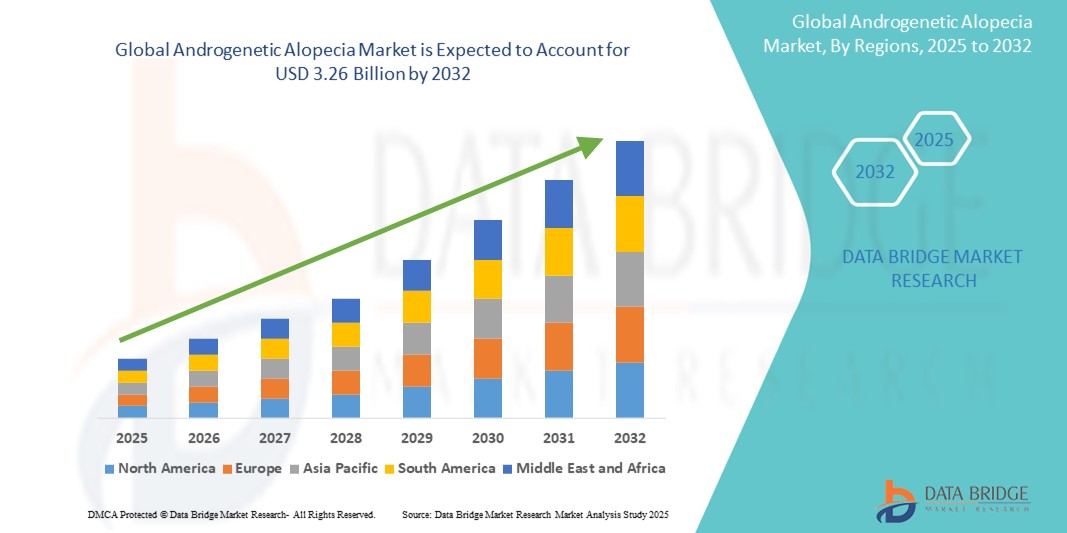
- The global androgenetic alopecia market size was valued at USD 1.56 billion in 2024 and is expected to reach USD 3.26 billion by 2032, at a CAGR of 9.60% during the forecast period
- The market growth is largely fueled by the increasing prevalence of hair loss disorders among both men and women, alongside heightened awareness regarding available treatment options such as topical, oral, and surgical therapies
- Furthermore, rising consumer interest in aesthetic appearance, coupled with the influence of social media and rising disposable incomes, is establishing hair restoration products and procedures as mainstream solutions. These converging factors are accelerating the demand for androgenetic alopecia treatments, thereby significantly boosting the industry's growth
Androgenetic Alopecia Market Analysis
- Androgenetic alopecia, a hereditary form of hair loss affecting both men and women, is increasingly recognized as a significant dermatological condition driving demand for therapeutic and aesthetic interventions, including pharmacological treatments, hair restoration surgeries, and regenerative therapies across global markets
- The escalating demand for androgenetic alopecia treatments is primarily fueled by rising awareness of hair loss issues, greater acceptance of cosmetic procedures, and increasing use of over-the-counter and prescription solutions such as minoxidil and finasteride
- North America dominated the androgenetic alopecia market with the largest revenue share of 39% in 2024, attributed to higher healthcare expenditure, early adoption of advanced therapies, and a well-established cosmetic dermatology infrastructure, with the U.S. showing notable growth driven by direct-to-consumer telehealth platforms and personalized treatment approaches
- Asia-Pacific is expected to be the fastest growing region in the androgenetic alopecia market during the forecast period due to a growing aging population, increasing urbanization, and rising beauty consciousness among younger demographics
- The male segment dominated the androgenetic alopecia market with a market share of 61.8% in 2024, driven by a higher prevalence of hair loss in men and the wide availability of targeted treatment options catering specifically to male pattern baldness
Report Scope and Androgenetic Alopecia Market Segmentation
|
Attributes |
Androgenetic Alopecia Key Market Insights |
|
Segments Covered |
|
|
Countries Covered |
North America
Europe
Asia-Pacific
Middle East and Africa
South America
|
|
Key Market Players |
|
|
Market Opportunities |
|
|
Value Added Data Infosets |
In addition to the insights on market scenarios such as market value, growth rate, segmentation, geographical coverage, and major players, the market reports curated by the Data Bridge Market Research also include in-depth expert analysis, pricing analysis, brand share analysis, consumer survey, demography analysis, supply chain analysis, value chain analysis, raw material/consumables overview, vendor selection criteria, PESTLE Analysis, Porter Analysis, and regulatory framework. |
Androgenetic Alopecia Market Trends
“Emergence of Regenerative Therapies and Personalized Treatment Solutions”
- A significant and accelerating trend in the global androgenetic alopecia market is the emergence of regenerative treatment modalities such as platelet-rich plasma (PRP), stem cell therapy, and exosome-based treatments, along with the rise of personalized medicine approaches tailored to individual genetic and hormonal profiles
- For instance, companies such as HairClone and RepliCel Life Sciences are advancing cell-based hair regeneration therapies aimed at rejuvenating dormant follicles and offering long-term solutions beyond traditional drugs. Meanwhile, firms such as Keeps and Hims are leveraging telehealth platforms to deliver custom treatment regimens based on individual assessments
- The adoption of personalized approaches allows providers to factor in patient-specific variables such as age, hormone levels, and family history, increasing the efficacy and acceptance of treatments. In tandem, regenerative therapies offer hope for hair regrowth in cases previously deemed irreversible, expanding treatment possibilities
- Moreover, the popularity of minimally invasive procedures and at-home solutions, such as low-level laser therapy (LLLT) devices, continues to grow. These products, such as those from iRestore and Capillus, offer consumers convenient options with fewer side effects compared to conventional oral medications
- The demand for evidence-backed, minimally invasive, and customized treatment regimens is rising rapidly across both male and female patient populations, with clinics and providers increasingly offering hybrid solutions combining pharmaceutical, procedural, and lifestyle-based care
- This trend toward more personalized, innovative, and regenerative therapies is reshaping patient expectations for hair restoration. Consequently, biotech and dermatology companies are investing in clinical trials and digital tools to capture this evolving demand and differentiate themselves in a competitive landscape
Androgenetic Alopecia Market Dynamics
Driver
“Increasing Awareness and Demand for Aesthetic and Preventive Hair Loss Solutions”
- The growing awareness around hair loss and its psychological impact especially in younger populations coupled with the global rise in aesthetic consciousness, is significantly driving demand for effective androgenetic alopecia treatments
- For instance, in March 2024, DS Healthcare Group launched a new hair regeneration serum combining nanotechnology and bioactive peptides for early-stage androgenetic alopecia, signaling rising R&D focus on non-invasive, cosmetically appealing products
- As individuals become more image-conscious and seek preventive care to delay or mitigate hair loss, the market is witnessing increased uptake of topical agents, nutritional supplements, and early-stage intervention strategies
- The proliferation of digital health platforms, including teleconsultations and app-based diagnostic tools, is also streamlining access to treatment and encouraging early diagnosis. These platforms often bundle services, products, and continuous care, making personalized treatment more accessible
- Furthermore, the growing availability of OTC and prescription treatments with improved delivery mechanisms such as minoxidil foam, derma rollers, and micro-needling kits—is supporting adoption in both home and clinical settings. The broadening appeal of these treatments across age groups and genders is helping the market scale rapidly
Restraint/Challenge
“Limited Efficacy of Existing Treatments and Regulatory Complexity”
- Despite ongoing innovations, many current therapies for androgenetic alopecia offer limited or temporary efficacy, especially in advanced stages of hair loss. This has led to patient dissatisfaction and dropout rates, hindering market momentum in certain segments
- For instance, finasteride and minoxidil, the two FDA-approved medications, are known to work best during early-stage intervention and may require lifelong use to sustain visible benefits. Moreover, they can be associated with side effects such as scalp irritation or sexual dysfunction, which can reduce adherence
- The regulatory path for new treatment modalities, including stem cell therapies and exosome-based products, remains complex and inconsistent across regions. Developers face prolonged timelines, high clinical validation costs, and evolving safety guidelines, particularly for regenerative and off-label treatments
- In addition, limited awareness in developing economies, high procedure costs for surgical hair restoration, and access disparities can restrict market growth in certain geographies. Addressing these barriers through increased education, cost-effective innovations, and clear regulatory frameworks will be essential to unlocking the full potential of this market
Androgenetic Alopecia Market Scope
The market is segmented on the basis of treatment, gender, route of administration, end-users, and distribution channel.
- By Treatment
On the basis of treatment, the androgenetic alopecia market is segmented into minoxidil, finasteride, dutasteride, oral antiandrogens, hair transplant, low-level laser therapy (LLLT), counseling, and others. The minoxidil segment dominated the market with the largest market revenue share in 2024, driven by its long-standing approval, accessibility as an over-the-counter solution, and wide usage across male and female demographics. Patients often choose minoxidil as a first-line treatment due to its ease of use, affordability, and effectiveness in early-stage hair thinning. The market also sees robust demand for minoxidil owing to its compatibility with other therapies and the growing availability of combination products.
The hair transplant segment is anticipated to witness the fastest growth rate from 2025 to 2032, fueled by increasing demand for permanent solutions among both men and women. Hair transplants offer a long-term, natural-looking result, with new techniques such as Follicular Unit Extraction (FUE) and advancements in robotic-assisted procedures making them less invasive and more efficient. The social acceptance of cosmetic procedures and the rise in medical tourism are further contributing to the popularity of surgical interventions for androgenetic alopecia.
- By Gender
On the basis of gender, the androgenetic alopecia market is segmented into male and female. The male segment dominated the market with the largest market revenue share of 61.8% in 2024, driven by the high prevalence of male pattern baldness globally and the availability of FDA-approved treatments targeting this group. Men are more such asly to seek treatment early due to visible patterns of recession and thinning, with a strong preference for pharmaceutical and surgical interventions.
The female segment is projected to witness fastest growth rate from 2025 to 2032, owing to increased awareness, destigmatization of female hair loss, and rising interest in safe and customized treatment options. With hormone-related hair loss becoming more widely diagnosed, companies are focusing on developing therapies specifically suited to female physiology and aesthetic preferences.
- By Route of Administration
On the basis of route of administration, the androgenetic alopecia market is segmented into oral and topical. The topical segment dominated the market with the largest market revenue share in 2024, driven by the widespread use of topical minoxidil as a front-line therapy. Topical formulations offer ease of use, minimal systemic side effects, and broad acceptance among patients seeking non-invasive treatments. The market continues to grow due to innovations in topical delivery systems such as foams and serums that improve absorption and user compliance.
The oral segment is expected to grow at fastest pace from 2025 to 2032, supported by increased prescription of drugs such as finasteride, dutasteride, and other antiandrogens. Oral therapies provide systemic benefits and are often used in moderate to severe cases. Their ability to be combined with topical treatments for synergistic results is further enhancing their adoption.
- By End-Users
On the basis of end-users, the androgenetic alopecia market is segmented into clinics, hospitals, diagnostic centres, surgical centres, and others. The clinics segment dominated the market with the largest market revenue share in 2024, driven by the strong preference for specialized dermatology and aesthetic clinics for diagnosis and management. Clinics offer personalized care and access to advanced options such as PRP therapy, LLLT, and hair transplants, making them the go-to destination for many patients.
The surgical centres segment is anticipated to witness the fastest growth from 2025 to 2032, fueled by the rising popularity of outpatient hair transplant procedures. These centres offer focused, efficient treatment delivery and are increasingly equipped with advanced tools to cater to the growing demand for hair restoration surgery, particularly in urban areas.
- By Distribution Channel
On the basis of distribution channel, the androgenetic alopecia market is segmented into hospital pharmacy, retail pharmacy, and online pharmacy. The retail pharmacy segment dominated the market with the largest market revenue share in 2024, due to easy accessibility and the availability of both over-the-counter and prescription treatments. Retail chains and local pharmacies remain a primary source for topical solutions and supplements.
The online pharmacy segment is projected to witness the fastest growth rate from 2025 to 2032, driven by increasing consumer preference for convenience, privacy, and direct-to-door delivery. The growth of e-commerce and digital health platforms offering hair loss solutions, such as Hims, Keeps, and Roman, is transforming product distribution by offering personalized regimens and virtual consultations that improve user engagement and adherence.
Androgenetic Alopecia Market Regional Analysis
- North America dominated the androgenetic alopecia market with the largest revenue share of 39% in 2024, attributed to higher healthcare expenditure, early adoption of advanced therapies, and a well-established cosmetic dermatology infrastructure
- Consumers in the region highly value early intervention, personalized treatment regimens, and access to advanced options such as prescription medications, PRP therapy, and hair transplantation procedures offered through both clinical and telehealth platforms
- This widespread adoption is further supported by strong direct-to-consumer marketing, growing aesthetic consciousness among both men and women, and the presence of key market players offering innovative and convenient treatment solutions, solidifying North America’s position as a leading region in the global androgenetic alopecia market
U.S. Androgenetic Alopecia Market Insight
The U.S. androgenetic alopecia market captured the largest revenue share of 79% in 2024 within North America, fueled by early diagnosis, high demand for aesthetic enhancement, and growing access to both pharmaceutical and procedural treatments. Consumers increasingly favor proactive hair loss solutions, with rising adoption of finasteride, minoxidil, and emerging regenerative therapies. The widespread use of telehealth platforms offering personalized treatments, combined with the influence of beauty standards and social media, further propels market expansion across both genders.
Europe Androgenetic Alopecia Market Insight
The Europe androgenetic alopecia market is projected to expand at a substantial CAGR throughout the forecast period, primarily driven by increasing awareness of hair loss disorders, aging populations, and the expanding availability of advanced hair restoration options. The rising demand for non-invasive therapies such as low-level laser therapy (LLLT), alongside supportive healthcare infrastructure, is accelerating adoption. Countries across the region are seeing growing consumer interest in cosmetic dermatology and personalized treatment programs tailored to hormone-related hair loss.
U.K. Androgenetic Alopecia Market Insight
The U.K. androgenetic alopecia market is anticipated to grow at a noteworthy CAGR during the forecast period, driven by rising acceptance of aesthetic treatments and growing consumer emphasis on early hair loss intervention. The strong presence of dermatology clinics, the growth of online consultations, and the increasing adoption of minimally invasive procedures such as PRP therapy are supporting market growth. Furthermore, increasing male and female patient awareness regarding the emotional and psychological effects of hair loss is stimulating demand for accessible, long-term solutions.
Germany Androgenetic Alopecia Market Insight
The Germany androgenetic alopecia market is expected to expand at a considerable CAGR during the forecast period, fueled by advancements in biotechnology, high demand for premium therapeutic options, and a strong inclination toward aesthetic well-being. With a well-developed medical infrastructure and a high standard of care, Germany continues to lead in the adoption of hair transplant procedures and personalized treatment regimens. Patient preference for clinically backed, sustainable solutions is also fostering the uptake of regenerative therapies and high-end prescription medications.
Asia-Pacific Androgenetic Alopecia Market Insight
The Asia-Pacific androgenetic alopecia market is poised to grow at the fastest CAGR of 23.6% during the forecast period of 2025 to 2032, driven by increasing aesthetic consciousness, rising disposable incomes, and greater access to dermatological care in countries such as India, China, and South Korea. A surge in awareness campaigns, expanding online pharmaceutical channels, and growing demand for cosmetic procedures are major contributors. Government-led healthcare digitalization and the emergence of telemedicine platforms are further enhancing treatment accessibility and market reach.
Japan Androgenetic Alopecia Market Insight
The Japan androgenetic alopecia market is gaining momentum due to its aging population, a deeply ingrained culture of personal grooming, and a preference for scientifically validated treatments. Japan sees high consumer demand for topical and oral therapies, with a growing interest in advanced treatments such as stem cell therapy and low-level laser devices. The market benefits from strong domestic R&D, high awareness, and integration of hair loss solutions into mainstream health and wellness routines.
India Androgenetic Alopecia Market Insight
The India androgenetic alopecia market accounted for the largest market revenue share in Asia-Pacific in 2024, attributed to a rapidly growing young population, expanding urbanization, and increased access to hair care treatments. Rising social awareness of hair loss and a growing middle-class consumer base have fueled demand for both cosmetic and clinical interventions. With rising telehealth adoption, cost-effective treatment availability, and a flourishing aesthetic medicine sector, India remains one of the fastest-growing and most dynamic markets for androgenetic alopecia treatments.
Androgenetic Alopecia Market Share
The androgenetic alopecia industry is primarily led by well-established companies, including:
- Hims & Hers Health, Inc. (U.S.)
- RepliCel Life Sciences Inc. (Canada)
- Stemson Therapeutics (U.S.)
- DS Healthcare Group, Inc. (U.S.)
- Follica, Inc. (U.S.)
- Labo Cosprophar Suisse AG (Switzerland)
- Alpecin (Germany)
- Shiseido Company, Limited (Japan)
- Merck & Co., Inc. (U.S.)
- Johnson & Johnson Services, Inc. (U.S.)
- AbbVie Inc. (U.S.)
- Histogen Inc. (U.S.)
- L'Oréal S.A. (France)
- Cipla Limited (India)
- Dr. Reddy's Laboratories Ltd. (India)
- Sun Pharmaceutical Industries Ltd. (India)
- Fagron NV (Netherlands)
- Taisho Pharmaceutical Co., Ltd. (Japan)
- Avicanna Inc. (Canada)
- Nanogen International Ltd. (U.K.)
What are the Recent Developments in Global Androgenetic Alopecia Market?
- In April 2023, RepliCel Life Sciences Inc., a regenerative medicine company, advanced its RCH-01 autologous cell therapy into the next phase of clinical trials in Japan and Europe, targeting long-term hair regrowth for patients with androgenetic alopecia. The therapy utilizes dermal sheath cup cells to stimulate dormant hair follicles. This progress emphasizes RepliCel’s commitment to offering innovative, biologically based treatments and highlights the growing role of regenerative medicine in reshaping hair loss management
- In March 2023, Hims & Hers Health, Inc., a prominent telehealth provider, expanded its personalized hair loss treatment offerings by launching an AI-enabled hair consultation tool. The platform tailors prescriptions of minoxidil, finasteride, and biotin supplements based on user-specific responses. This development reflects the growing demand for digital, direct-to-consumer solutions and underscores the trend toward customized, tech-driven approaches to androgenetic alopecia care
- In March 2023, DS Healthcare Group Inc. introduced Revita LASH Recovery Kit, a comprehensive system combining shampoo, serum, and a nanoxidil-based topical treatment designed to improve hair density and scalp health. This product launch builds on DS Healthcare’s strategy to offer non-invasive alternatives for early-stage hair loss, expanding its presence in both retail and clinical segments
- In February 2023, Stemson Therapeutics announced preclinical progress in developing induced pluripotent stem cell (iPSC)-derived hair follicles as part of its regenerative hair therapy platform. Targeted at severe androgenetic alopecia, this novel approach aims to generate entirely new hair follicles, offering a potential breakthrough for patients unresponsive to conventional treatments. The company’s work reinforces the global push toward curative, next-generation therapies in the hair restoration field
- In January 2023, Fagron, a global leader in personalized medicine, launched a regional compounding initiative in Southeast Asia, making customized topical treatments such as minoxidil with antiandrogens—more accessible through dermatology clinics. This initiative is part of Fagron’s strategy to expand its reach in emerging markets and meet rising demand for tailored therapies, reinforcing its role in advancing individualized treatment for androgenetic alopecia globally

- Interactive Data Analysis Dashboard
- Company Analysis Dashboard for high growth potential opportunities
- Research Analyst Access for customization & queries
- Competitor Analysis with Interactive dashboard
- Latest News, Updates & Trend analysis
- Harness the Power of Benchmark Analysis for Comprehensive Competitor Tracking
Data collection and base year analysis are done using data collection modules with large sample sizes. The stage includes obtaining market information or related data through various sources and strategies. It includes examining and planning all the data acquired from the past in advance. It likewise envelops the examination of information inconsistencies seen across different information sources. The market data is analysed and estimated using market statistical and coherent models. Also, market share analysis and key trend analysis are the major success factors in the market report. To know more, please request an analyst call or drop down your inquiry.
The key research methodology used by DBMR research team is data triangulation which involves data mining, analysis of the impact of data variables on the market and primary (industry expert) validation. Data models include Vendor Positioning Grid, Market Time Line Analysis, Market Overview and Guide, Company Positioning Grid, Patent Analysis, Pricing Analysis, Company Market Share Analysis, Standards of Measurement, Global versus Regional and Vendor Share Analysis. To know more about the research methodology, drop in an inquiry to speak to our industry experts.
Data Bridge Market Research is a leader in advanced formative research. We take pride in servicing our existing and new customers with data and analysis that match and suits their goal. The report can be customized to include price trend analysis of target brands understanding the market for additional countries (ask for the list of countries), clinical trial results data, literature review, refurbished market and product base analysis. Market analysis of target competitors can be analyzed from technology-based analysis to market portfolio strategies. We can add as many competitors that you require data about in the format and data style you are looking for. Our team of analysts can also provide you data in crude raw excel files pivot tables (Fact book) or can assist you in creating presentations from the data sets available in the report.












