


Aneurysmal Bone Cysts Treatment Market Size
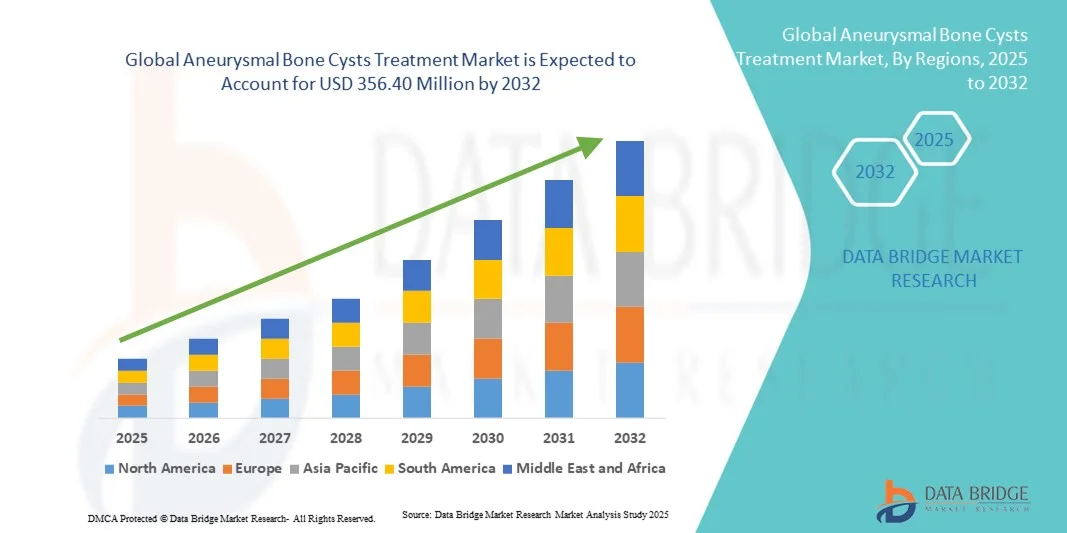
- The global aneurysmal bone cysts treatment market size was valued at USD 234.51 million in 2024 and is expected to reach USD 356.40 million by 2032, at a CAGR of 5.40% during the forecast period
- The market growth is largely fueled by the increasing prevalence of bone-related disorders among children and adolescents, coupled with rising awareness among healthcare providers and caregivers regarding early diagnosis and effective treatment of Aneurysmal Bone Cysts. Advances in surgical techniques, minimally invasive procedures, and adjuvant therapies are further driving market expansion
- Furthermore, growing demand for safe, effective, and accessible treatment options in both hospital and specialty clinic settings is establishing modern pharmacological and procedural solutions as the preferred approach for managing Aneurysmal Bone Cysts. These factors, combined with improvements in imaging technologies, early intervention protocols, and patient education initiatives, are significantly contributing to the adoption of Aneurysmal Bone Cysts Treatment solutions, thereby boosting overall industry growth
Aneurysmal Bone Cysts Treatment Market Analysis
- The Aneurysmal Bone Cysts (ABC) Treatment market is witnessing significant growth, driven by rising prevalence of bone disorders, increasing awareness among healthcare providers, and advancements in surgical techniques and adjuvant therapies for effective disease management
- The escalating demand for effective treatment options for Aneurysmal Bone Cysts (ABC) is primarily driven by increasing awareness among healthcare providers and patients, rising prevalence of bone disorders, and advancements in minimally invasive surgical techniques and adjuvant therapies
- North America dominated the aneurysmal bone cysts treatment market with the largest revenue share of 41.22% in 2024, characterized by advanced healthcare infrastructure, high awareness of bone disorders, and the strong presence of key pharmaceutical and medical device companies. The U.S. experienced substantial growth in ABC treatment adoption, particularly in specialized orthopedic and pediatric centers, driven by innovations in surgical interventions and targeted therapies
- Asia-Pacific is expected to be the fastest-growing region in the aneurysmal bone cysts treatment market during the forecast period, due to increasing healthcare access, rising awareness of bone disorders, expanding orthopedic facilities, and growing disposable incomes in countries such as China, India, and Japan. Government initiatives promoting early detection and improved treatment infrastructure are further supporting regional growth
- The Pain segment dominated the aneurysmal bone cysts treatment market with a revenue share of 50% in 2024, as pain is the most common presenting symptom prompting medical consultation and treatment initiation
Report Scope and Aneurysmal Bone Cysts Treatment Market Segmentation
|
Attributes |
Aneurysmal Bone Cysts Treatment Key Market Insights |
|
Segments Covered |
|
|
Countries Covered |
North America
Europe
Asia-Pacific
Middle East and Africa
South America
|
|
Key Market Players |
|
|
Market Opportunities |
|
|
Value Added Data Infosets |
In addition to the insights on market scenarios such as market value, growth rate, segmentation, geographical coverage, and major players, the market reports curated by the Data Bridge Market Research also include in-depth expert analysis, pricing analysis, brand share analysis, consumer survey, demography analysis, supply chain analysis, value chain analysis, raw material/consumables overview, vendor selection criteria, PESTLE Analysis, Porter Analysis, and regulatory framework. |
Aneurysmal Bone Cysts Treatment Market Trends
Enhanced Convenience Through Advanced Therapeutic Approaches
- A significant and accelerating trend in the global aneurysmal bone cysts treatment market is the adoption of minimally invasive procedures and advanced interventional therapies such as sclerotherapy, embolization, and targeted pharmaceutical interventions. These approaches are enhancing patient outcomes by reducing recovery times, minimizing complications, and improving precision in cyst management
- For instance, in 2023, a multicenter study in Europe demonstrated that percutaneous doxycycline injection achieved high rates of cyst healing in pediatric patients, reducing the need for invasive surgery
- Advances in imaging techniques such as MRI and CT-guided interventions are enabling clinicians to accurately localize lesions and monitor treatment response, resulting in more personalized and effective therapies. For instance, hospitals in the U.S. have increasingly adopted CT-guided sclerotherapy to precisely deliver treatment agents to cystic cavities
- Combination therapies are also gaining traction, where minimally invasive surgery is followed by pharmacological management to prevent recurrence and support bone regeneration. Studies in Japan reported significant improvements in healing rates when such combined approaches were employed
- The trend toward outpatient procedures and early intervention is reshaping patient expectations, with families increasingly seeking treatments that allow rapid return to daily activities and sports
- For instance, in India, tertiary pediatric orthopedic centers have reported shorter hospitalization periods and reduced post-operative complications through early percutaneous interventions
- The growing emphasis on bone preservation, aesthetic outcomes, and functional recovery is driving research into novel treatment protocols, including targeted biologics and regenerative techniques
- Overall, the adoption of these advanced, less invasive, and patient-friendly therapeutic approaches is a key trend shaping the global Aneurysmal Bone Cysts Treatment market
Aneurysmal Bone Cysts Treatment Market Dynamics
Driver
Growing Need Due to Rising Awareness and Advancements in Pediatric Orthopedic Care
- The increasing prevalence of aneurysmal bone cysts among children and adolescents, coupled with rising awareness among clinicians and caregivers about early diagnosis and advanced treatment options, is a significant driver for market growth
- For instance, in April 2024, the Children’s Hospital of Philadelphia reported successful outcomes using percutaneous doxycycline injections for ABCs in 50 pediatric patients, highlighting minimally invasive therapy as a preferred option
- Enhanced imaging and surgical techniques, combined with targeted pharmacological interventions, provide better outcomes and fewer complications than traditional surgical excision, attracting more patients toward these therapies
- Moreover, the rising number of specialized orthopedic centers and pediatric hospitals globally is increasing access to effective treatment options, further driving market adoption
- Patient demand for faster recovery, improved functional outcomes, and reduced recurrence rates is prompting healthcare providers to implement advanced ABC treatment protocols
- Preventive care, early diagnosis campaigns, and increasing investments in pediatric orthopedic research are also contributing to market growth
- Overall, the convergence of clinical awareness, technological advancements, and patient-centered care is fueling the expansion of the ABC treatment market globally
Restraint/Challenge
High Treatment Costs and Limited Access in Developing Regions
- The relatively high cost of advanced ABC treatment procedures, including image-guided interventions, targeted injections, and combination therapies, poses a challenge to widespread adoption, particularly in low-income regions
- For instance, in 2022, a survey conducted in Southeast Asia revealed that many families could not access percutaneous sclerotherapy due to cost constraints, leading to delayed or less effective surgical interventions
- Limited availability of specialized pediatric orthopedic centers and trained interventional radiologists in developing countries further restricts access to optimal treatment
- The variability in healthcare infrastructure and reimbursement policies across regions contributes to unequal adoption rates of advanced therapies
- While minimally invasive and targeted treatments reduce recovery time, the upfront procedure costs and associated hospital charges remain a barrier for price-sensitive patients.
- Overcoming these challenges through training programs for clinicians, expansion of specialized centers, and improved insurance coverage will be essential for the sustained growth of the ABC treatment market
Aneurysmal Bone Cysts Treatment Market Scope
The market is segmented on the basis of type, treatment, diagnosis, symptoms, end-users, and distribution channel.
- By Type
On the basis of type, the Aneurysmal Bone Cysts Treatment market is segmented into Active and Aggressive. The Active segment dominated the market with a revenue share of 55% in 2024, driven by the higher prevalence of slowly progressing cysts that respond well to conventional surgical interventions. Active ABCs are commonly diagnosed in children and adolescents, particularly in long bones such as the femur and tibia, which has created consistent demand for treatment options such as curettage and bone grafting. The market benefits from increased awareness among orthopedic surgeons and improved early diagnostic capabilities, facilitating prompt intervention. Moreover, treatment protocols for active ABCs are well-established and widely adopted across hospitals and specialized orthopedic centers. Active ABCs often require minimally invasive procedures, reducing recovery time and boosting patient acceptance, which further strengthens market dominance. The segment also sees steady adoption due to ongoing research on optimized bone graft materials and post-operative care strategies. Regional demand is highest in North America and Europe, where advanced surgical infrastructure supports extensive treatment availability. Insurance coverage for pediatric orthopedic procedures further enhances accessibility. Clinical guidelines recommend active monitoring and timely intervention, which has positively influenced treatment adoption rates. Technological advancements in imaging and surgical precision also contribute to maintaining the segment's leadership in market share.
The Aggressive segment is expected to witness the fastest CAGR of 21.5% from 2025 to 2032, fueled by the increasing recognition of aggressive cysts that may rapidly enlarge and compromise adjacent bone structures. Aggressive ABCs often require more complex surgical procedures, including marginal or wide excision, which is creating demand for advanced therapeutic solutions. The rising prevalence of aggressive ABCs in adolescent populations, combined with improved diagnostic technologies such as MRI and CT scans, is driving market growth. Surgeons increasingly prefer combination therapies such as cryotherapy or sclerotherapy as adjuncts, supporting segment expansion. In addition, awareness campaigns targeting early detection in high-risk age groups are contributing to increased treatment uptake. Aggressive ABCs are associated with higher recurrence risks, prompting the use of adjuvant therapies that enhance treatment efficacy and patient outcomes. Hospitals and clinics are incorporating multidisciplinary approaches to optimize management, which is further stimulating growth. Expanding healthcare infrastructure in Asia-Pacific and Latin America supports the rising demand for aggressive ABC treatment. Research initiatives focusing on novel biologics and bone substitutes are enhancing therapeutic options. The growing preference for personalized surgical planning and post-operative care protocols is fueling adoption. Rising insurance reimbursements and government healthcare programs are facilitating broader access, reinforcing the segment’s rapid growth.
- By Treatment
On the basis of treatment, the Aneurysmal Bone Cysts Treatment market is segmented into Curettage and Bone Grafting, Cryotherapy, Sclerotherapy, Marginal or Wide Excision, and Others. The Curettage and Bone Grafting segment dominated the market with a revenue share of 48% in 2024, supported by its widespread clinical use and established efficacy. Curettage combined with bone grafting allows for removal of the cyst while restoring bone integrity, making it the preferred approach in pediatric and adolescent patients. The segment benefits from extensive adoption in specialized orthopedic centers and high procedural success rates. Improved surgical instruments and bone graft materials are enhancing outcomes, reinforcing the segment’s leadership. Surgeons favor this approach for its minimally invasive nature and relatively low recurrence rates. Training programs for orthopedic surgeons and inclusion in clinical guidelines further promote its adoption. Advanced imaging assists in precise cyst removal, increasing the success rate. Patients and caregivers favor this method due to shorter hospital stays and lower post-operative complications. The segment also benefits from insurance coverage in key regions, ensuring broader treatment accessibility. Innovations in autograft and allograft techniques have increased safety and reduced donor site complications. Regional leaders such as North America and Europe continue to report high procedural volumes. Awareness campaigns regarding early treatment benefits also contribute to segment growth.
The Cryotherapy segment is expected to witness the fastest CAGR of 20.8% from 2025 to 2032, driven by the growing preference for minimally invasive approaches that reduce tissue damage and recovery time. Cryotherapy involves controlled freezing of the cystic tissue, providing effective treatment with limited disruption to surrounding bone. Rising adoption in hospitals and orthopedic clinics, particularly in Asia-Pacific, supports rapid segment growth. Clinical studies demonstrating low recurrence rates and favorable patient outcomes are further boosting market confidence. Cryotherapy is increasingly used as an adjunct to curettage in aggressive ABCs, enhancing treatment efficacy. Surgeons and patients appreciate the reduced post-operative pain and faster return to mobility. Technological advancements in cryotherapy equipment are improving precision and safety. The segment is also benefiting from training workshops and increasing physician awareness. Health insurance schemes in several countries are beginning to cover cryotherapy for ABCs, expanding access. The minimally invasive nature of the treatment appeals to younger patients and their families. Research and development in optimized cryoprobes and imaging-guided techniques are further fueling growth. The rising availability of advanced cryotherapy devices in emerging markets contributes to the high CAGR.
- By Diagnosis
On the basis of diagnosis, the market is segmented into X-Ray, Needle Biopsy, Computed Tomography (CT) Scan, Angiography, Magnetic Resonance Imaging (MRI), and Others. The MRI segment dominated with a revenue share of 46% in 2024 due to its superior soft tissue contrast, ability to delineate cyst boundaries, and detect fluid-fluid levels. MRI is widely used for both initial diagnosis and treatment planning, particularly in aggressive or recurrent ABCs. Radiologists and orthopedic surgeons rely on MRI to assess lesion size, location, and potential complications. Availability in tertiary care centers and specialized hospitals supports segment dominance. MRI assists in monitoring post-operative recurrence and treatment response, enhancing clinical decision-making. Its non-invasive nature makes it highly preferable for pediatric patients. Advanced MRI techniques such as contrast-enhanced and functional imaging further improve diagnostic accuracy. Guidelines recommend MRI as part of standard diagnostic protocols for ABCs, reinforcing adoption. Continuous improvements in image resolution and scanning speed contribute to growing usage. Training programs and physician familiarity with MRI increase confidence in its diagnostic reliability. The segment also benefits from integration with surgical planning software.
The CT Scan segment is expected to witness the fastest CAGR of 19.9% from 2025 to 2032, driven by its rapid acquisition time, detailed bone imaging, and compatibility with 3D reconstruction for pre-surgical planning. CT scans are particularly preferred in aggressive ABCs affecting complex anatomical sites. Hospitals in emerging markets are increasingly investing in CT technology, improving access. Physicians value CT for its ability to accurately define cortical involvement and assist in minimally invasive interventions. The growing use of image-guided procedures further stimulates segment growth. Adoption is supported by continuous technological advancements such as low-dose protocols. Increased awareness among orthopedic surgeons regarding CT-guided interventions contributes to adoption. Integration with digital planning tools enhances treatment precision. The segment is rapidly gaining popularity in Asia-Pacific due to expanding diagnostic infrastructure. Insurance coverage for CT imaging in ABC cases is improving in key countries.
- By Symptoms
On the basis of symptoms, the market is segmented into Pain, Stiffness, Weakness, Deformity in the Area of the Growth, Swelling, Feeling of Warmth over the Affected Area, Decreased Range of Motion, and Others. The Pain segment dominated with a revenue share of 50% in 2024, as pain is the most common presenting symptom prompting medical consultation and treatment initiation. Effective management of pain drives treatment adoption across hospitals and clinics. Pain severity influences the choice of treatment modality and timing of surgical intervention. Clinical guidelines emphasize early management of symptomatic ABCs to prevent complications. Patient-reported outcomes and quality-of-life measures further reinforce the focus on pain management. Pediatric patients and parents often prioritize pain relief in decision-making. Pain monitoring post-treatment helps guide rehabilitation protocols. The segment benefits from awareness campaigns highlighting early recognition of painful symptoms. Regional prevalence data supports consistent demand for interventions targeting pain.
The Swelling segment is expected to witness the fastest CAGR of 18.7% from 2025 to 2032, driven by rising awareness of visible swelling as an early sign of ABCs. Swelling detection facilitates prompt diagnosis, particularly in children and adolescents. Hospitals are increasingly using swelling as a criterion for early intervention. The segment benefits from improved imaging technologies that quantify lesion size and monitor response. Pediatric orthopedic programs focus on parental education to recognize swelling. Early detection through swelling contributes to better clinical outcomes. The growth is further supported by training initiatives for primary care physicians and pediatricians. Increasing incidence rates in Asia-Pacific support higher CAGR.
- By End-Users
On the basis of end-users, the market is segmented into Clinic, Hospital, and Others. The Hospital segment dominated with a revenue share of 62% in 2024, due to the need for specialized surgical procedures, advanced imaging, and post-operative care. Hospitals provide multidisciplinary management, including orthopedic surgeons, radiologists, and rehabilitation specialists. High-volume treatment centers in North America and Europe reinforce segment dominance. Hospitals also benefit from insurance coverage and reimbursement policies, ensuring access to ABC treatment. Clinical trials and research collaborations further support hospitals as primary treatment providers. Specialized pediatric and orthopedic centers are key contributors. Patient preference for hospital-based treatment due to safety and post-operative monitoring enhances adoption. Hospital-based adoption is reinforced by advanced infrastructure and trained personnel.
The Clinic segment is expected to witness the fastest CAGR of 20.2% from 2025 to 2032, driven by the growing presence of outpatient orthopedic and pediatric clinics offering minimally invasive procedures. Clinics provide convenient access to diagnostic imaging, local anesthesia procedures, and follow-up care. The segment benefits from rising investments in clinic infrastructure in Asia-Pacific and Latin America. Clinics are increasingly capable of performing curettage, sclerotherapy, and cryotherapy, supporting rapid growth. The convenience and reduced cost of clinic-based treatment attract patients and caregivers.
- By Distribution Channel
On the basis of distribution channel, the market is segmented into Hospital Pharmacy, Retail Pharmacy, and Online Pharmacy. The Hospital Pharmacy segment dominated with a revenue share of 57% in 2024, driven by direct availability of treatment options during hospital admissions and post-surgical care. Hospital pharmacies ensure timely access to medications, bone graft materials, and adjunctive therapies. Hospitals often stock specialized therapeutics required for ABC management. The segment benefits from partnerships between hospitals and pharmaceutical suppliers. Advanced inventory management ensures consistent supply.
The Online Pharmacy segment is expected to witness the fastest CAGR of 22.5% from 2025 to 2032, driven by increasing adoption of e-commerce, patient preference for home delivery, and greater awareness of ABC treatment options. Online platforms provide access to medications, supplements, and supportive care items, especially in regions with limited hospital access. The convenience and confidentiality of online purchase appeal to patients and caregivers. Rising digital literacy and smartphone penetration in emerging markets support rapid adoption. Government regulations and secure logistics are enhancing trust in online pharmacies.
Aneurysmal Bone Cysts Treatment Market Regional Analysis
- North America dominated the aneurysmal bone cysts treatment market with the largest revenue share of 41.22% in 2024, characterized by advanced healthcare infrastructure, high awareness of bone disorders, and the strong presence of key pharmaceutical and medical device companies. The U.S. experienced substantial growth in ABC treatment adoption, particularly in specialized orthopedic and pediatric centers, driven by innovations in surgical interventions and targeted therapies
- Consumers in the region increasingly prioritize early diagnosis, minimally invasive procedures, and effective treatment protocols for bone cyst management
- This widespread adoption is further supported by a well-established healthcare ecosystem, high availability of specialized clinics, and growing awareness of early intervention strategies, establishing North America as the leading region for ABC treatments
U.S. Aneurysmal Bone Cysts Treatment Market Insight
The U.S. aneurysmal bone cysts treatment market captured the largest revenue share of 78% in 2024 within North America, fueled by the expansion of pediatric orthopedic centers and specialized bone disease clinics. Increased focus on minimally invasive procedures, targeted therapies, and post-operative care has significantly enhanced treatment outcomes. The growing adoption of advanced imaging techniques, surgical tools, and interventional procedures is further driving the market’s growth. Moreover, increasing awareness campaigns for early detection of bone disorders among parents and healthcare professionals are contributing to the expanding ABC treatment landscape.
Europe Aneurysmal Bone Cysts Treatment Market Insight
The Europe aneurysmal bone cysts treatment market is projected to expand at a substantial CAGR throughout the forecast period, primarily driven by increased awareness of bone disorders, early diagnosis initiatives, and the growing number of specialized orthopedic centers. Rising healthcare investments and improved access to pediatric orthopedic care are fostering treatment adoption. The region is witnessing significant growth across hospitals, specialty clinics, and rehabilitation centers, with advanced surgical and interventional procedures being increasingly utilized.
U.K. Aneurysmal Bone Cysts Treatment Market Insight
The U.K. aneurysmal bone cysts treatment market is anticipated to grow at a noteworthy CAGR during the forecast period, driven by the rising incidence of pediatric bone disorders and increasing demand for effective and minimally invasive treatment options. Growing awareness about early detection, coupled with improved healthcare access and government-supported pediatric orthopedic initiatives, is encouraging the adoption of advanced ABC therapies across both hospitals and specialty clinics.
Germany Aneurysmal Bone Cysts Treatment Market Insight
The Germany aneurysmal bone cysts treatment market is expected to expand at a considerable CAGR during the forecast period, fueled by the country’s robust healthcare infrastructure, increasing awareness of bone disorders, and adoption of technologically advanced treatment protocols. Germany’s emphasis on clinical innovation and patient-centric care supports the utilization of minimally invasive procedures and targeted therapies for ABCs in both pediatric and adult populations.
Asia-Pacific Aneurysmal Bone Cysts Treatment Market Insight
The Asia-Pacific aneurysmal bone cysts treatment market is poised to grow at the fastest CAGR during the forecast period, driven by increasing healthcare access, rising awareness of bone disorders, expanding orthopedic facilities, and growing disposable incomes in countries such as China, India, and Japan. Government initiatives promoting early detection and the development of treatment infrastructure are further boosting market growth.
Japan Aneurysmal Bone Cysts Treatment Market Insight
The Japan aneurysmal bone cysts treatment market is gaining momentum due to the country’s advanced healthcare infrastructure, growing awareness of bone disorders, and the rising adoption of minimally invasive surgical procedures. The focus on early diagnosis, rehabilitation support, and improved post-operative care is driving the adoption of advanced ABC treatment protocols in both pediatric and adult populations.
China Aneurysmal Bone Cysts Treatment Market Insight
The China aneurysmal bone cysts treatment market accounted for the largest market revenue share in Asia-Pacific in 2024, attributed to the country’s expanding middle class, increasing healthcare access, and rising awareness of pediatric bone disorders. The availability of specialized orthopedic centers, government initiatives promoting early detection, and advancements in surgical and interventional therapies are key factors propelling the market in China.
Aneurysmal Bone Cysts Treatment Market Share
The Aneurysmal Bone Cysts Treatment industry is primarily led by well-established companies, including:
- Stryker (U.S.)
- Zimmer Biomet (U.S.)
- Boston Scientific Corporation (U.S.)
Latest Developments in Global Aneurysmal Bone Cysts Treatment Market
- In January 2025, a study published in Journal of Craniofacial Surgery reported the successful treatment of three pediatric patients with mandibular ABCs using image-guided percutaneous doxycycline sclerotherapy. The treatment resulted in resolution of clinical symptoms and stable bone healing on long-term follow-up, with no functional or cosmetic complications. This underscores the growing acceptance of sclerotherapy as a non-invasive treatment option for ABCs
- In June 2024, research published in European Spine Journal analyzed multiple treatment modalities for ABCs of the spine, including open surgery, percutaneous doxycycline/albumin injection, and denosumab therapy. The findings aimed to establish a comprehensive treatment algorithm, reflecting the evolving strategies in ABC management
- In April 2024, a study in European Spine Journal explored the use of doxycycline sclerotherapy for mandibular ABCs, reporting it as a safe and viable treatment for primary and recurrent cases. This highlights the increasing adoption of sclerotherapy as a non-invasive treatment option
- In January 2023, a study published in European Spine Journal discussed the management of a proximal femur ABC with a 10-year follow-up, emphasizing the importance of individualized treatment approaches and long-term monitoring
- In December 2021, research published in Healthcare journal evaluated the effectiveness of surgical treatment with curettage, cryotherapy, and bone grafting for ABCs of the pelvis in children and adolescents, reporting favorable outcomes

- Interactive Data Analysis Dashboard
- Company Analysis Dashboard for high growth potential opportunities
- Research Analyst Access for customization & queries
- Competitor Analysis with Interactive dashboard
- Latest News, Updates & Trend analysis
- Harness the Power of Benchmark Analysis for Comprehensive Competitor Tracking
Data collection and base year analysis are done using data collection modules with large sample sizes. The stage includes obtaining market information or related data through various sources and strategies. It includes examining and planning all the data acquired from the past in advance. It likewise envelops the examination of information inconsistencies seen across different information sources. The market data is analysed and estimated using market statistical and coherent models. Also, market share analysis and key trend analysis are the major success factors in the market report. To know more, please request an analyst call or drop down your inquiry.
The key research methodology used by DBMR research team is data triangulation which involves data mining, analysis of the impact of data variables on the market and primary (industry expert) validation. Data models include Vendor Positioning Grid, Market Time Line Analysis, Market Overview and Guide, Company Positioning Grid, Patent Analysis, Pricing Analysis, Company Market Share Analysis, Standards of Measurement, Global versus Regional and Vendor Share Analysis. To know more about the research methodology, drop in an inquiry to speak to our industry experts.
Data Bridge Market Research is a leader in advanced formative research. We take pride in servicing our existing and new customers with data and analysis that match and suits their goal. The report can be customized to include price trend analysis of target brands understanding the market for additional countries (ask for the list of countries), clinical trial results data, literature review, refurbished market and product base analysis. Market analysis of target competitors can be analyzed from technology-based analysis to market portfolio strategies. We can add as many competitors that you require data about in the format and data style you are looking for. Our team of analysts can also provide you data in crude raw excel files pivot tables (Fact book) or can assist you in creating presentations from the data sets available in the report.












