


What is the Angiostrongylus Infection Treatment Market Size and Overview ?
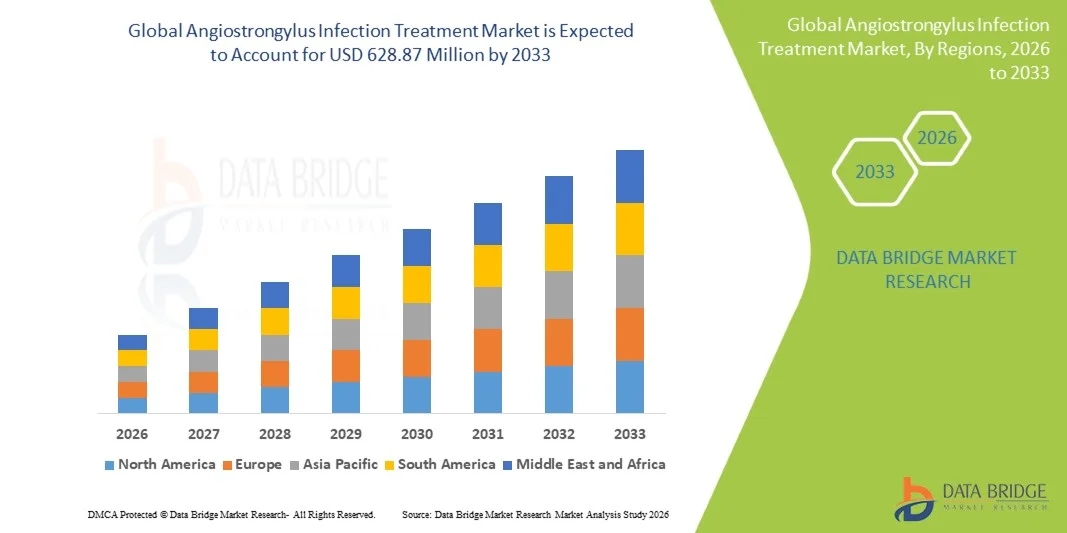
As per Data Bridge Market Research Analysis the Angiostrongylus Infection Treatment Market was valued at USD 350.00 million in 2025 and is projected to reach USD 628.87 million by 2033, growing at a CAGR of 7.60% from 2026 to 2033. The market is witnessing steady growth driven by increasing incidence of Angiostrongylus infections, rising awareness of foodborne parasitic diseases, and improving diagnostic and treatment capabilities in endemic regions across Asia-Pacific and parts of the Americas.
The growing consumption of raw or undercooked snails, slugs, and contaminated vegetables, combined with expanding global travel and climate-related spread of intermediate hosts, is contributing to higher infection rates. Governments and healthcare systems are strengthening surveillance, early diagnosis, and anti-parasitic treatment protocols, while pharmaceutical advancements in antiparasitic drugs and supportive therapies continue to support market expansion.
Market Size & Forecast
- Global Market Value (2025): USD 350.00 Million
- Expected Market Value (2033): USD 628.87 Million
- Forecast CAGR (2026–2033): 7.60%
- Leading Region in 2025: North America
- Fastest Growing Region: Asia Pacific
What are the Major Takeaways of Angiostrongylus Infection Treatment Market ?
- North America dominated the Angiostrongylus Infection Treatment Market with the largest revenue share of 36.21% in 2025, supported by advanced healthcare infrastructure, strong disease surveillance systems, and high clinical awareness for rare parasitic infections.
- The Corticosteroids segment led the market with a 48.26% share in 2025, driven by its critical role in reducing inflammation and controlling severe neurological complications such as eosinophilic meningitis caused by Angiostrongylus infection.
- Asia-Pacific is expected to be the fastest-growing region at a CAGR of 7.9% from 2026 to 2033, fueled by high endemic prevalence, rising diagnostic penetration, and increasing public health initiatives in countries such as Thailand, China, Vietnam, and India.
- Supportive Therapy are the fastest-growing treatment type, projected to register a CAGR of 7.8%, reflecting the surge in focus on symptom management and long-term neurological care in severe infection cases.
- The Laboratory Tests segment dominated the diagnosis category with a 61.34% revenue share in 2025, led by the reliance on blood tests, cerebrospinal fluid (CSF) analysis, and serological assays for confirming infection.
- Tablets accounted for 55.12% of the market, preferred by the widespread use of oral antiparasitic drugs such as albendazole and ivermectin.
- The Intravenous segment is the fastest-growing route of administration category, with a CAGR of 7.9%, driven by the increasing hospital-based management of severe neuroangiostrongyliasis cases.
Report Scope and Angiostrongylus Infection Treatment Market Segmentation
|
Attributes |
Angiostrongylus Infection Treatment Key Market Insights |
|
Segments Covered |
|
|
Countries Covered |
North America · U.S. · Canada · Mexico Europe · Germany · France · U.K. · Netherlands · Switzerland · Belgium · Russia · Italy · Spain · Turkey · Rest of Europe Asia-Pacific · China · Japan · India · South Korea · Singapore · Malaysia · Australia · Thailand · Indonesia · Philippines · Rest of Asia-Pacific Middle East and Africa · Saudi Arabia · U.A.E. · South Africa · Egypt · Israel · Rest of Middle East and Africa South America · Brazil · Argentina · Rest of South America |
|
Key Market Players |
· Merck & Co., Inc. (U.S.) · Pfizer Inc. (U.S.) · Thermo Fisher Scientific Inc. (U.S.) · Abbott (U.S.) · Johnson & Johnson Services, Inc. (U.S.) · Bayer AG (Germany) · Novartis AG (Switzerland) · Sanofi (France) · GSK plc (U.K.) · Roche Holding AG (Switzerland) · Takeda Pharmaceutical Company Limited (Japan) · Eisai Co., Ltd. (Japan) · AstraZeneca plc (U.K.) · Teva Pharmaceutical Industries Ltd. (Israel) · Bristol Myers Squibb Company (U.S.) · Merck KGaA (Germany) · Viatris Inc. (U.S.) · Bio-Rad Laboratories, Inc. (U.S.) · Seegene Inc. (South Korea) · Hikma Pharmaceuticals PLC (U.K.) |
|
Market Opportunities |
· Expansion of molecular diagnostics and point-of-care testing · Rising demand for repurposed antiparasitic drug development pipelines · Growth in travel medicine and preventive healthcare services |
|
Value Added Data Infosets |
In addition to the insights on market scenarios such as market value, growth rate, segmentation, geographical coverage, and major players, the market reports curated by the Data Bridge Market Research also include in-depth expert analysis, patient epidemiology, pipeline analysis, pricing analysis, and regulatory framework. |
What is the Key Trend in the Angiostrongylus Infection Treatment Market?
Trend: Rising Focus on Foodborne Parasitic Disease Awareness and Prevention
Public health authorities, ministries of health, and international organizations are increasingly strengthening awareness programs focused on preventing Angiostrongylus infections caused by consumption of raw or undercooked intermediate hosts such as snails, slugs, and contaminated vegetables. This shift is being driven by recurring outbreaks of eosinophilic meningitis in endemic regions, which has highlighted gaps in food safety practices and hygiene standards. Governments are also integrating parasitic disease education into broader food safety regulations, school health programs, and rural healthcare outreach initiatives to reduce exposure risk at the community level. At the same time, improvements in diagnostic reporting systems and laboratory confirmation methods are leading to higher case detection rates, which is helping authorities better map infection hotspots and design targeted intervention strategies. Digital health tools and surveillance databases are further improving real-time monitoring of infection trends across Asia-Pacific and emerging non-endemic regions, for instance WHO-supported parasitic disease awareness campaigns in Southeast Asia.
Angiostrongylus Infection Treatment Market Dynamics
Key Market Driver: Rising Incidence of Travel and Food-Linked Infection Cases
The increasing movement of people across borders for tourism, education, and employment is significantly contributing to the spread of imported Angiostrongylus infection cases in non-endemic regions such as North America and Europe. In addition, the growing popularity of exotic food consumption, including raw seafood and traditional dishes in certain cultures, is increasing exposure risk even in urban populations. Healthcare providers in developed regions are now reporting a higher number of suspected cases due to improved awareness of tropical and neglected parasitic diseases, supported by enhanced training and updated clinical guidelines. Advancements in molecular diagnostics, particularly PCR-based testing, are also enabling faster and more accurate detection of infections that were previously misdiagnosed as other neurological disorders.
Key Restraint/Challenge: Limited Awareness and Delayed Diagnosis in Non-Endemic Regions
One of the most significant barriers to effective market growth is the lack of awareness among healthcare professionals in non-endemic regions, where Angiostrongylus infection is rarely encountered in routine clinical practice. This often results in delayed suspicion and misdiagnosis, as early symptoms such as headache, fever, and neurological discomfort overlap with more common conditions such as viral meningitis or other central nervous system disorders. In many healthcare systems, especially in rural or resource-limited settings, access to specialized parasitological testing is limited, which further delays confirmation and treatment initiation. Even when suspected, the absence of standardized diagnostic pathways can lead to inconsistent treatment decisions and prolonged patient morbidity. In addition, limited availability of advanced laboratory infrastructure and trained parasitologists in several regions restricts early detection capabilities, increasing reliance on symptomatic treatment rather than targeted antiparasitic therapy, for instance delayed diagnosis of eosinophilic meningitis cases in hospitals lacking PCR-based testing facilities.
Key Market Opportunity: Expansion of Rapid Molecular Diagnostics and Global Surveillance Networks
The growing development and deployment of rapid molecular diagnostic technologies, particularly PCR-based and next-generation sequencing tools, are creating strong opportunities for earlier and more accurate detection of Angiostrongylus infections. These technologies are significantly reducing diagnostic turnaround time compared to traditional laboratory methods, enabling faster clinical decision-making and improved patient outcomes. In parallel, the expansion of integrated global disease surveillance networks is allowing better tracking of infection clusters, especially in regions experiencing climate-related spread of intermediate hosts. Governments and healthcare organizations are increasingly investing in digital reporting platforms and cross-border epidemiological monitoring systems to improve response times and containment strategies. Pharmaceutical and diagnostic companies are also collaborating to develop portable, cost-effective testing kits that can be deployed in remote and endemic areas, improving accessibility at the primary care level.
How is the Alkhurma Hemorrhagic Fever Treatment Market Segmented ?
The Angiostrongylus infection treatment market is segmented on the basis of treatment, diagnosis, dosage, route of administration, end-users, and distribution channel.
- By Treatment
On the basis of treatment, the Angiostrongylus Infection Treatment Market is segmented into corticosteroids, supportive therapy, and others. The Corticosteroids segment dominated the market with a 48.26% share in 2025, owing to its critical role in reducing inflammation and controlling severe neurological complications such as eosinophilic meningitis caused by Angiostrongylus infection. These drugs are widely prescribed alongside antiparasitic therapy to minimize brain and spinal cord inflammation. Their rapid symptom relief and effectiveness in preventing long-term neurological damage make them a standard component of hospital treatment protocols. Strong clinical adoption across endemic regions in Asia-Pacific and increasing awareness among physicians in non-endemic regions further support segment dominance. Established availability in hospital pharmacies and inclusion in treatment guidelines strengthen its market position. However, careful dosage monitoring is required due to potential side effects associated with prolonged corticosteroid use.
The Supportive Therapy segment is expected to register the fastest growth at a CAGR of 7.8% from 2026 to 2033, driven by the increasing focus on symptom management and long-term neurological care in severe infection cases. Supportive treatments include pain management, antiemetics, hydration therapy, and neurological rehabilitation support. These therapies are becoming increasingly important as clinicians recognize the need for comprehensive care beyond antiparasitic drugs. Rising hospitalization rates for severe neuroangiostrongyliasis cases are boosting demand for multidisciplinary care approaches. Improved critical care infrastructure in emerging economies is also enhancing adoption. Growing awareness of complication management is further accelerating the use of supportive therapy in combination with pharmacological treatment.
- By Diagnosis
On the basis of diagnosis, the market is segmented into laboratory tests and others. The Laboratory Tests segment dominated the market with a 61.34% share in 2025, supported by the reliance on blood tests, cerebrospinal fluid (CSF) analysis, and serological assays for confirming infection. Laboratory testing remains the gold standard for detecting eosinophilic meningitis associated with Angiostrongylus infection. Increasing availability of centralized diagnostic laboratories and improved healthcare infrastructure in endemic regions strongly support this dominance. Hospitals prefer laboratory confirmation before initiating targeted antiparasitic therapy to ensure accuracy and reduce misdiagnosis. Continuous improvements in immunological testing methods and ELISA-based detection are further strengthening this segment. Rising government investment in infectious disease diagnostics is also contributing to growth stability.
The Others segment, including molecular diagnostics such as PCR-based testing, is expected to grow fastest at a CAGR of 8.2% from 2026 to 2033, driven by demand for rapid, highly accurate, and early-stage detection methods. PCR techniques allow direct identification of parasite DNA, significantly improving diagnostic precision compared to traditional methods. These tests are particularly valuable in non-endemic regions where clinical suspicion is low. Expanding adoption of automated molecular platforms in reference laboratories is accelerating growth. Increasing research focus on point-of-care diagnostic kits is further enhancing accessibility. Growing need for early intervention to prevent neurological complications is making molecular diagnostics a key future growth driver.
- By Dosage
On the basis of dosage, the market is segmented into injection, tablets, and others. The Tablets segment dominated the market with a 55.12% share in 2025, primarily due to the widespread use of oral antiparasitic drugs such as albendazole and ivermectin. Tablets are preferred for their ease of administration, cost-effectiveness, and suitability for outpatient treatment in mild to moderate cases. They are widely available in both hospital and retail pharmacy channels, ensuring strong accessibility. Physicians often prescribe tablet formulations as first-line therapy for uncomplicated infections. Their stability, longer shelf life, and ease of dosage adjustment further support adoption. Increasing awareness and self-medication in endemic regions also contribute to segment dominance.
The Injection segment is expected to witness the fastest growth at a CAGR of 7.5% from 2026 to 2033, driven by rising hospital admissions for severe neurological cases requiring rapid therapeutic response. Injectable formulations, including corticosteroids and supportive drugs, are critical in managing acute inflammation and life-threatening complications. These treatments provide faster drug delivery and higher bioavailability compared to oral forms. Increasing use in intensive care units and emergency settings is boosting demand. Growing incidence of severe eosinophilic meningitis cases requiring immediate intervention is further accelerating adoption. Expansion of hospital infrastructure in emerging economies is also supporting segment growth.
- By Route of Administration
On the basis of route of administration, the market is segmented into oral, intravenous, and others. The Oral segment dominated the market with a 58.41% share in 2025, driven by the widespread use of tablet-based antiparasitic drugs for primary treatment of Angiostrongylus infection. Oral administration is preferred due to its convenience, non-invasive nature, and suitability for both hospital and outpatient care. It enables long-term treatment adherence, especially in mild cases. Strong availability of oral formulations in retail and hospital pharmacies further supports dominance. Physicians frequently recommend oral therapy as the first-line treatment before escalating to advanced care. Its low cost and high patient compliance make it the most widely used route globally.
The Intravenous segment is expected to register the fastest growth at a CAGR of 7.9% from 2026 to 2033, driven by increasing hospital-based management of severe neuroangiostrongyliasis cases. IV administration is essential for corticosteroids and supportive drugs in critical care settings, enabling rapid therapeutic action. Rising ICU admissions for neurological complications are boosting demand for intravenous therapies. Improved hospital infrastructure and emergency care capabilities in emerging economies are further supporting adoption. Clinicians prefer IV routes for patients with severe vomiting or impaired oral intake. Growing emphasis on acute care management is accelerating segment expansion.
- By End-Users
On the basis of end-users, the market is segmented into clinics, hospitals, and others. The Hospital segment dominated the market with a 63.27% share in 2025, due to the high number of severe cases requiring inpatient care, neurological monitoring, and multidisciplinary treatment approaches. Hospitals serve as primary centers for diagnosis, imaging, laboratory confirmation, and advanced treatment administration. Availability of specialized physicians and intensive care units supports effective management of complications. Most antiparasitic and corticosteroid therapies are initiated in hospital settings. Government healthcare infrastructure in endemic regions further strengthens hospital dominance. Increasing hospitalization rates for eosinophilic meningitis cases continue to drive segment growth.
The Clinics segment is expected to witness the fastest growth at a CAGR of 7.6% from 2026 to 2033, driven by expanding access to primary healthcare services and early-stage diagnosis in semi-urban and rural areas. Clinics play a key role in early symptom identification and referral to hospitals. Rising healthcare awareness and improved diagnostic capabilities in outpatient settings are supporting adoption. Growing availability of basic antiparasitic medications in clinics is further enhancing their role. Decentralization of healthcare services in emerging economies is boosting growth. Increasing focus on early intervention and disease prevention is strengthening this segment’s importance.
- By Distribution Channel
On the basis of distribution channel, the market is segmented into hospital pharmacy, retail pharmacy, and online pharmacy. The Hospital Pharmacy segment dominated the market with a 47.89% share in 2025, driven by centralized treatment protocols and the high dependency on hospital-based dispensing of corticosteroids, antiparasitic drugs, and supportive therapies. Most acute and severe cases are treated in hospitals, ensuring direct medication distribution through hospital pharmacies. Controlled drug administration and physician supervision further reinforce dominance. Strong procurement systems in public and private hospitals support consistent drug availability. Integration with inpatient care pathways strengthens this channel’s position. High patient inflow for neurological complications continues to sustain demand.
The Online Pharmacy segment is expected to register the fastest growth at a CAGR of 8.0% from 2026 to 2033, driven by increasing digital healthcare adoption and improved accessibility to medications in remote areas. E-commerce platforms are making antiparasitic drugs and supportive medications more accessible to patients in non-emergency cases. Rising smartphone penetration and telemedicine growth are supporting this shift. Patients in non-endemic regions also benefit from easier prescription fulfillment. Regulatory improvements in online drug distribution are enhancing trust and adoption. Convenience, faster delivery, and wider product availability are key factors driving segment expansion.
Which Region Holds the Largest Share of the Alkhurma Hemorrhagic Fever Treatment Market?
North America dominated the Angiostrongylus Infection Treatment Market with the largest revenue share of 36.21% in 2025, supported by advanced healthcare infrastructure, strong disease surveillance systems, and high clinical awareness for rare parasitic infections. The region benefits from well-established hospital networks, rapid adoption of molecular diagnostic techniques, and efficient disease surveillance systems that enable early detection of imported infection cases. Increasing international travel and immigration from endemic regions has also contributed to a steady rise in reported cases, further supporting treatment demand. Strong availability of antiparasitic drugs, corticosteroids, and supportive care therapies, along with robust clinical guidelines, continues to strengthen North America’s leadership position in the global market.
U.S. Angiostrongylus Infection Treatment Market Insight
The U.S. Angiostrongylus infection treatment market is witnessing steady growth due to increasing travel-related imported cases, strong diagnostic capabilities, and high clinical awareness of rare parasitic infections. The country’s advanced healthcare infrastructure, well-established hospital networks, and rapid adoption of molecular diagnostic technologies are driving early detection and treatment initiation. In addition, growing utilization of antiparasitic drugs, corticosteroids, and supportive care therapies across hospitals is supporting market expansion. Increasing focus on tropical disease surveillance, combined with strong research funding for infectious diseases, is further accelerating treatment adoption across clinical settings.
Europe Angiostrongylus Infection Treatment Market Insight
The Europe Angiostrongylus infection treatment market remains a growing contributor to global demand, driven by rising awareness of imported parasitic infections and strong public health surveillance systems. The region benefits from advanced diagnostic laboratories, well-structured hospital care networks, and increasing adoption of molecular testing for early detection. Growing international travel and immigration from endemic Asia-Pacific regions are contributing to rising reported cases. Strong clinical guidelines for eosinophilic meningitis management and increasing use of antiparasitic and corticosteroid therapies continue to support market expansion across Europe.
U.K. Angiostrongylus Infection Treatment Market Insight
The U.K. Angiostrongylus infection treatment market is experiencing gradual growth, supported by increasing awareness among clinicians regarding rare parasitic infections and improved diagnostic capabilities in tertiary care hospitals. Rising international travel and imported infection cases are contributing to higher demand for specialized treatment approaches. The National Health Service (NHS) plays a key role in providing structured diagnostic and treatment pathways for neurological parasitic diseases. Growing use of molecular diagnostics and supportive care therapies is further strengthening treatment outcomes and market development in the country.
Germany Angiostrongylus Infection Treatment Market Insight
The Germany Angiostrongylus infection treatment market is expanding steadily due to strong healthcare infrastructure, advanced laboratory systems, and increasing focus on infectious disease surveillance. Hospitals and research institutes are increasingly adopting molecular diagnostic techniques for accurate detection of rare parasitic infections. Rising awareness among healthcare professionals and improved clinical training programs are supporting early diagnosis and treatment. In addition, growing use of corticosteroids and antiparasitic therapies in hospital settings is contributing to consistent market growth in Germany.
Asia-Pacific Angiostrongylus Infection Treatment Market Insight
The Asia-Pacific Angiostrongylus infection treatment market is expected to witness strong growth, driven by high endemic prevalence, rising awareness of foodborne parasitic infections, and improving healthcare infrastructure across the region. Countries such as Thailand, Vietnam, China, and India are experiencing higher diagnosis rates due to enhanced surveillance and diagnostic accessibility. Increasing adoption of antiparasitic drugs and corticosteroids in hospital settings is supporting treatment demand. In addition, government-led public health initiatives and improved laboratory testing capabilities are accelerating regional market expansion.
Japan Angiostrongylus Infection Treatment Market Insight
The Japan Angiostrongylus infection treatment market is witnessing steady growth due to advanced healthcare infrastructure, strong disease surveillance systems, and high clinical awareness of parasitic neurological infections. The country benefits from early adoption of molecular diagnostic technologies and well-established hospital care protocols. Increasing international travel and imported infection cases are also contributing to treatment demand. Growing use of supportive therapies alongside antiparasitic drugs is further improving patient outcomes and strengthening market growth in Japan.
China Angiostrongylus Infection Treatment Market Insight
The China Angiostrongylus infection treatment market is growing rapidly, driven by high population exposure risk, improving diagnostic infrastructure, and increasing government focus on infectious disease control. Rising awareness of foodborne parasitic infections and expansion of hospital-based diagnostic facilities are supporting early detection and treatment. The adoption of molecular testing methods and standardized treatment protocols is improving clinical management outcomes. In addition, increasing availability of antiparasitic drugs and supportive care therapies across urban and semi-urban hospitals is accelerating market growth in China.
Which are the Top Companies in Angiostrongylus Infection Treatment Market?
The Angiostrongylus infection treatment industry is primarily led by well-established companies, including:
- Merck & Co., Inc. (U.S.)
- Pfizer Inc. (U.S.)
- Thermo Fisher Scientific Inc. (U.S.)
- Abbott (U.S.)
- Johnson & Johnson Services, Inc. (U.S.)
- Bayer AG (Germany)
- Novartis AG (Switzerland)
- Sanofi (France)
- GSK plc (U.K.)
- Roche Holding AG (Switzerland)
- Takeda Pharmaceutical Company Limited (Japan)
- Eisai Co., Ltd. (Japan)
- AstraZeneca plc (U.K.)
- Teva Pharmaceutical Industries Ltd. (Israel)
- Bristol Myers Squibb Company (U.S.)
- Merck KGaA (Germany)
- Viatris Inc. (U.S.)
- Bio-Rad Laboratories, Inc. (U.S.)
- Seegene Inc. (South Korea)
- Hikma Pharmaceuticals PLC (U.K.)
What are Latest Developments in Angiostrongylus Infection Treatment Market ?
- In November 2025, a peer-reviewed clinical review published via PubMed analyzed global trends in Angiostrongylus infection management, highlighting increased adoption of molecular diagnostics (PCR-based detection) and combined antiparasitic–steroid therapy protocols. The study emphasized improved survival outcomes due to early intervention and better neuroinflammatory control strategies. It also noted expanding research into drug optimization and CNS-penetrating antiparasitic formulations. This reinforced the shift toward precision diagnostics and standardized treatment pathways globally
- In March 2024, the Hawaii Department of Health continued active surveillance and public alerts regarding Angiostrongylus cantonensis cases, focusing on community education and food safety practices to reduce infection risk. The program included monitoring of snail populations and public reporting of suspected cases across islands. It also emphasized rapid clinical diagnosis and early corticosteroid-based intervention to reduce neurological complications. These efforts strengthened regional disease control and treatment readiness in a high-risk endemic area
- In July 2023, CDC updated clinical awareness guidance on Rat Lungworm disease (Angiostrongylus cantonensis), emphasizing early recognition of eosinophilic meningitis and the role of albendazole combined with corticosteroids in severe neurological cases. The update strengthened diagnostic awareness among clinicians in non-endemic regions such as the U.S., where travel-related infections are increasingly reported. It also highlighted improved laboratory confirmation techniques and the importance of CSF analysis for accurate diagnosis. This reinforced standardized treatment approaches across hospitals managing rare parasitic infections
- In September 2022, the World Health Organization reinforced its foodborne trematode and helminth control framework, including Angiostrongylus-related infections, focusing on prevention through food safety and surveillance expansion in endemic regions. The initiative emphasized strengthening national reporting systems and improving access to essential antiparasitic medicines in Southeast Asia and Pacific islands. It also encouraged integration of parasitic disease control into broader neglected tropical disease programs
- In May 2021, Queensland Health (Australia) issued renewed warnings on rat lungworm disease after reported cases linked to contaminated produce and snail exposure, reinforcing public health alerts on prevention measures. The advisory highlighted increased risk in tropical and subtropical regions and emphasized proper washing of vegetables and avoidance of raw snails. It also promoted early medical consultation for neurological symptoms such as severe headache and neck stiffness. This helped improve early detection and awareness in non-endemic populations

- Interactive Data Analysis Dashboard
- Company Analysis Dashboard for high growth potential opportunities
- Research Analyst Access for customization & queries
- Competitor Analysis with Interactive dashboard
- Latest News, Updates & Trend analysis
- Harness the Power of Benchmark Analysis for Comprehensive Competitor Tracking
Data collection and base year analysis are done using data collection modules with large sample sizes. The stage includes obtaining market information or related data through various sources and strategies. It includes examining and planning all the data acquired from the past in advance. It likewise envelops the examination of information inconsistencies seen across different information sources. The market data is analysed and estimated using market statistical and coherent models. Also, market share analysis and key trend analysis are the major success factors in the market report. To know more, please request an analyst call or drop down your inquiry.
The key research methodology used by DBMR research team is data triangulation which involves data mining, analysis of the impact of data variables on the market and primary (industry expert) validation. Data models include Vendor Positioning Grid, Market Time Line Analysis, Market Overview and Guide, Company Positioning Grid, Patent Analysis, Pricing Analysis, Company Market Share Analysis, Standards of Measurement, Global versus Regional and Vendor Share Analysis. To know more about the research methodology, drop in an inquiry to speak to our industry experts.
Data Bridge Market Research is a leader in advanced formative research. We take pride in servicing our existing and new customers with data and analysis that match and suits their goal. The report can be customized to include price trend analysis of target brands understanding the market for additional countries (ask for the list of countries), clinical trial results data, literature review, refurbished market and product base analysis. Market analysis of target competitors can be analyzed from technology-based analysis to market portfolio strategies. We can add as many competitors that you require data about in the format and data style you are looking for. Our team of analysts can also provide you data in crude raw excel files pivot tables (Fact book) or can assist you in creating presentations from the data sets available in the report.












