


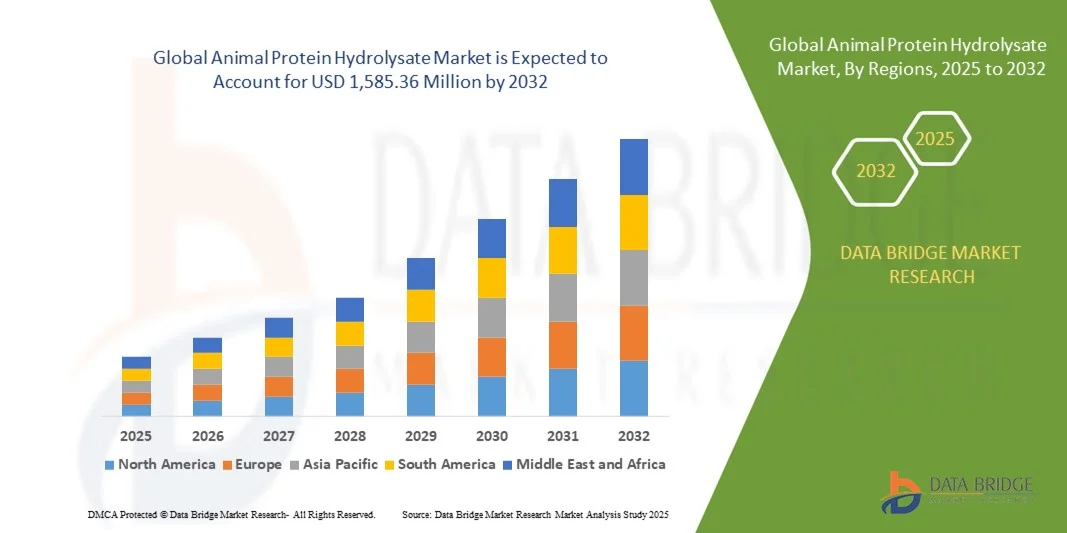
Animal Protein Hydrolysate Market Size
- The global animal protein hydrolysate market size was valued at USD 994.68 million in 2024 and is expected to reach USD 1,585.36 million by 2032, at a CAGR of 6.00% during the forecast period
- The market growth is largely fuelled by the increasing demand for easily digestible and nutrient-rich protein sources across the food, feed, and pharmaceutical industries
- Growing consumer awareness of protein supplementation and the rising use of hydrolysates in sports nutrition, dietary supplements, and clinical nutrition products are further supporting market expansion
Animal Protein Hydrolysate Market Analysis
- The global animal protein hydrolysate market is witnessing steady growth driven by the increasing utilization of hydrolyzed proteins in functional foods, pet nutrition, and medical applications. These hydrolysates offer enhanced bioavailability, faster absorption, and improved digestibility compared to intact proteins, making them suitable for specialized nutritional needs
- The market is also benefiting from technological advancements in enzymatic hydrolysis, which improve product purity and taste while reducing allergenic potential. In addition, the growing adoption of hydrolyzed protein ingredients in livestock and aquaculture feed is contributing to improved animal growth performance and immunity
- North America dominated the animal protein hydrolysate market with the largest revenue share in 2024, driven by the strong presence of leading food and feed manufacturers, advanced processing technologies, and growing consumer awareness regarding protein-enriched diets
- Asia-Pacific region is expected to witness the highest growth rate in the global animal protein hydrolysate market, driven by rising protein consumption, growing health consciousness, and rapid development in food and beverage processing industries
- The powder segment held the largest market revenue share in 2024, driven by its longer shelf life, convenient storage, and ease of incorporation into food, feed, and supplement formulations. Powdered protein hydrolysates are widely used in dietary supplements, sports nutrition products, and animal feed due to their superior stability and ease of transportation
Report Scope and Animal Protein Hydrolysate Market Segmentation
|
Attributes |
Animal Protein Hydrolysate Key Market Insights |
|
Segments Covered |
|
|
Countries Covered |
North America
Europe
Asia-Pacific
Middle East and Africa
South America
|
|
Key Market Players |
• Arla Foods Ingredients Group (Denmark) |
|
Market Opportunities |
• Rising Demand For Nutritional Supplements And Functional Foods |
|
Value Added Data Infosets |
In addition to the insights on market scenarios such as market value, growth rate, segmentation, geographical coverage, and major players, the market reports curated by the Data Bridge Market Research also include in-depth expert analysis, pricing analysis, brand share analysis, consumer survey, demography analysis, supply chain analysis, value chain analysis, raw material/consumables overview, vendor selection criteria, PESTLE Analysis, Porter Analysis, and regulatory framework. |
Animal Protein Hydrolysate Market Trends
Increasing Utilization Of Protein Hydrolysates In Sports Nutrition And Functional Foods
- The rising consumer focus on health, fitness, and muscle recovery is accelerating the use of animal protein hydrolysates in sports nutrition and functional food formulations. Their rapid absorption rate and superior amino acid profile make them ideal for post-workout recovery and muscle synthesis applications. This demand is further fuelled by the growing popularity of gym culture and professional sports, where athletes prefer products that support faster muscle repair and sustained energy levels
- Growing preference for easily digestible protein sources among aging populations and individuals with digestive issues is further driving demand for hydrolyzed proteins. These products support faster nutrient uptake and improve gut health, contributing to overall wellness. Manufacturers are increasingly targeting elderly consumers and patients recovering from illnesses through specialized formulations designed for easy digestion and improved metabolic response
- Food manufacturers are increasingly integrating hydrolyzed animal proteins into protein bars, beverages, and dietary supplements to meet clean-label and performance nutrition trends. The surge in e-commerce and private-label launches is expanding product accessibility and consumer awareness. Moreover, the rise in on-the-go consumption patterns and convenience-based nutrition options is encouraging innovation in ready-to-drink protein beverages and fortified snacks
- For instance, in 2023, several European sports nutrition brands introduced whey and collagen hydrolysate-based drink powders targeted at endurance athletes, emphasizing faster recovery and enhanced muscle maintenance. These new product launches are designed to offer sustained amino acid release and improve hydration post-workout. The trend has also encouraged collaborations between ingredient suppliers and fitness brands to develop customized formulations
- While this trend continues to gain momentum, manufacturers are focusing on improving taste profiles and reducing bitterness associated with hydrolyzed proteins to enhance consumer acceptance and expand application scope across the food and beverage sector. Companies are investing in flavor-masking technologies and enzymatic process optimization to create more palatable formulations. This is expected to significantly increase the consumer base for protein hydrolysate-enriched products across mainstream retail and health-focused outlets
Animal Protein Hydrolysate Market Dynamics
Driver
Rising Demand For Protein-Enriched Products Across Food And Feed Industries
- The increasing global awareness regarding the benefits of high-protein diets is boosting demand for animal protein hydrolysates in both human food and animal feed applications. These hydrolysates offer excellent bioavailability, superior digestibility, and essential amino acid composition, supporting overall health and growth. In particular, consumers seeking weight management, muscle gain, and improved immunity are driving widespread product adoption across various end-use segments
- In animal nutrition, hydrolyzed proteins enhance feed palatability, improve nutrient absorption, and promote faster growth rates in livestock and aquaculture species. This is particularly beneficial in high-performance animal production systems seeking to optimize feed efficiency. The inclusion of protein hydrolysates in feed also supports gut health and immunity, resulting in higher productivity and lower mortality rates among farmed animals
- Growing consumer preference for protein-rich foods, coupled with an expanding fitness and wellness culture, has driven food manufacturers to incorporate hydrolyzed proteins into a broader range of processed foods and beverages. This shift is particularly evident in functional dairy, bakery, and snack products enriched with high-quality animal proteins. Manufacturers are leveraging marketing strategies centered on “high-protein” claims to attract health-conscious consumers
- For instance, in 2022, several pet food producers in the U.S. launched hydrolyzed animal protein-based diets aimed at reducing food allergies and improving nutrient assimilation in companion animals. These formulations are designed to cater to pets with sensitive digestive systems, promoting better coat health and immunity. The growing pet humanization trend and premiumization in pet food are further stimulating product demand
- The continuous expansion of protein fortification trends and innovations in enzymatic hydrolysis technologies are expected to further stimulate market growth across diverse application areas. Emerging bioprocessing techniques are improving yield efficiency and cost-effectiveness, making hydrolyzed proteins more accessible to a wider range of industries. These advancements also support the development of sustainable protein solutions aligned with circular economy principles
Restraint/Challenge
High Production Costs And Raw Material Price Volatility
- The complex enzymatic hydrolysis process used in producing animal protein hydrolysates contributes to high manufacturing costs, limiting adoption among small-scale producers. Energy consumption, enzyme procurement, and purification add to operational expenses, impacting overall profitability. This cost barrier often restricts market entry for new participants and limits large-scale production in cost-sensitive regions
- Volatility in the prices of animal-derived raw materials such as meat, bones, and fish significantly affects cost stability in production. Supply chain disruptions, especially in regions with fluctuating livestock output, further constrain consistent production levels. Price variations also arise from seasonal availability and rising demand for animal by-products in other industries, such as cosmetics and pharmaceuticals
- Environmental and regulatory restrictions on animal by-product usage also pose challenges to sustainable sourcing and processing, creating bottlenecks for producers operating in highly regulated markets. Stringent policies regarding waste disposal, animal welfare, and traceability add to compliance costs. These regulatory complexities can delay product approvals and increase time-to-market for new protein hydrolysate formulations
- For instance, in 2023, several European manufacturers reported a surge in raw material prices due to supply shortages from the meat processing sector, leading to increased end-product costs and reduced competitiveness in export markets. The impact was particularly strong in small-scale operations, forcing companies to explore import alternatives or shift to blended protein formulations. Such market fluctuations can disrupt supply chains and affect consumer pricing trends
- Addressing these challenges requires investment in cost-effective processing technologies, alternative raw material sourcing, and improved waste valorization strategies to maintain affordability and ensure long-term market sustainability. Manufacturers are exploring circular production models using food processing by-products to reduce dependence on primary raw materials. This transition toward sustainable production methods could help stabilize costs and strengthen market resilience
Animal Protein Hydrolysate Market Scope
The market is segmented on the basis of product type, technology, and application.
- By Product Type
On the basis of product type, the animal protein hydrolysate market is segmented into powder and liquid. The powder segment held the largest market revenue share in 2024, driven by its longer shelf life, convenient storage, and ease of incorporation into food, feed, and supplement formulations. Powdered protein hydrolysates are widely used in dietary supplements, sports nutrition products, and animal feed due to their superior stability and ease of transportation.
The liquid segment is expected to witness the fastest growth rate from 2025 to 2032, driven by its rapid solubility and suitability for ready-to-drink beverages and liquid formulations. Liquid protein hydrolysates offer high absorption rates and are increasingly preferred in clinical nutrition and functional beverages, catering to consumers seeking quick nutrient delivery and enhanced digestibility.
- By Technology
On the basis of technology, the animal protein hydrolysate market is segmented into acid and alkaline hydrolysis and enzymatic hydrolysis. The enzymatic hydrolysis segment held the largest market share in 2024, attributed to its precision, efficiency, and ability to produce high-quality protein hydrolysates with minimal nutrient degradation. This method is increasingly adopted for food-grade applications due to its controlled enzymatic action, ensuring better flavor, functionality, and nutritional value.
The acid and alkaline hydrolysis segment is expected to witness steady growth from 2025 to 2032, primarily driven by its cost-effectiveness and scalability in industrial applications. This process is widely used for producing hydrolysates for animal feed and fertilizers where large-scale production and affordability are key considerations. However, advancements in process optimization are expected to enhance yield and reduce by-product formation, improving its competitiveness.
- By Application
On the basis of application, the animal protein hydrolysate market is segmented into infant nutrition, dietary supplements, sports nutrition, nutraceuticals, clinical nutrition, animal feed, and others. The animal feed segment held the largest market share in 2024, driven by increasing demand for protein-enriched feed to improve livestock health, growth performance, and feed efficiency. Animal protein hydrolysates are widely incorporated into feed formulations for poultry, aquaculture, and pet food due to their high digestibility and amino acid composition.
The sports nutrition segment is expected to witness the fastest growth rate from 2025 to 2032, fuelled by the increasing focus on muscle recovery, endurance, and performance enhancement among athletes and fitness enthusiasts. Hydrolyzed proteins are gaining traction in protein powders, bars, and beverages for their rapid absorption and superior bioavailability, aligning with the growing global trend of functional and performance-oriented nutrition.
Animal Protein Hydrolysate Market Regional Analysis
- North America dominated the animal protein hydrolysate market with the largest revenue share in 2024, driven by the strong presence of leading food and feed manufacturers, advanced processing technologies, and growing consumer awareness regarding protein-enriched diets
- The increasing demand for nutritional supplements, functional foods, and high-performance animal feed formulations continues to propel market growth across the region
- Moreover, supportive government regulations promoting sustainable protein production and the expansion of the sports nutrition sector are reinforcing the dominance of North America in the global animal protein hydrolysate market
U.S. Animal Protein Hydrolysate Market Insight
The U.S. animal protein hydrolysate market captured the largest revenue share in 2024 within North America, driven by increasing adoption in dietary supplements, clinical nutrition, and pet food applications. The strong focus on high-protein and clean-label products among health-conscious consumers is fostering innovation in formulation and processing. In addition, the presence of advanced biotechnology firms and robust R&D investments are contributing to enhanced product quality and bioavailability. The country’s growing fitness culture and rising demand for fortified foods continue to boost the use of hydrolyzed proteins in functional foods and beverages.
Europe Animal Protein Hydrolysate Market Insight
The Europe animal protein hydrolysate market is expected to witness substantial growth from 2025 to 2032, propelled by the growing emphasis on sustainable sourcing and strict regulations surrounding food safety and product labeling. European consumers are increasingly opting for hydrolyzed proteins in sports nutrition, infant formulas, and medical food applications due to their superior digestibility and amino acid profile. Furthermore, regional efforts to promote circular economy practices and reduce food waste are supporting the development of value-added protein ingredients derived from animal by-products.
U.K. Animal Protein Hydrolysate Market Insight
The U.K. animal protein hydrolysate market is expected to experience rapid growth from 2025 to 2032, driven by the rising consumer focus on functional nutrition and premium dietary supplements. The increasing adoption of high-protein food products among fitness enthusiasts and the aging population is boosting the demand for easily digestible protein sources. Moreover, strong retail infrastructure and expanding online supplement sales are improving product availability and market penetration. The U.K.’s shift toward health-conscious and sustainable food production practices further enhances market expansion.
Germany Animal Protein Hydrolysate Market Insight
The Germany animal protein hydrolysate market is projected to grow significantly from 2025 to 2032, supported by the country’s well-established food processing and biotechnology industries. German manufacturers are increasingly investing in enzymatic hydrolysis technologies to produce cleaner, high-quality protein ingredients for food, feed, and pharmaceutical applications. The rising awareness regarding protein functionality and digestibility is encouraging innovation across product lines. Moreover, sustainability initiatives and a preference for locally sourced materials are reinforcing the country’s strong position within the European market.
Asia-Pacific Animal Protein Hydrolysate Market Insight
The Asia-Pacific animal protein hydrolysate market is expected to witness the fastest growth from 2025 to 2032, driven by rising disposable incomes, population growth, and expanding demand for high-protein diets across emerging economies. Increasing investments in aquaculture and livestock feed production, particularly in China, India, and Southeast Asia, are contributing to robust market expansion. In addition, the growing adoption of functional foods, sports nutrition products, and dietary supplements among urban consumers is fueling product demand across the region.
China Animal Protein Hydrolysate Market Insight
The China animal protein hydrolysate market accounted for the largest market revenue share in Asia-Pacific in 2024, supported by rapid industrialization, a strong domestic food processing sector, and increasing investments in pet nutrition and aquaculture. The country’s expanding middle class and growing focus on health and wellness are driving the demand for protein-enriched foods and beverages. Moreover, government initiatives promoting efficient waste utilization and sustainable animal by-product processing are encouraging large-scale production of hydrolyzed proteins, reinforcing China’s leadership in the regional market.
Japan Animal Protein Hydrolysate Market Insight
The Japan animal protein hydrolysate market is expected to witness significant growth from 2025 to 2032, driven by the country’s advanced food processing technology, aging population, and rising interest in functional and medical nutrition products. Japanese consumers are increasingly adopting protein hydrolysate-based supplements and beverages for muscle maintenance, digestion improvement, and overall wellness. In addition, the strong presence of nutraceutical and pharmaceutical companies investing in enzymatic hydrolysis processes is accelerating product innovation. The demand for high-quality, easily digestible proteins is also expanding in clinical and elderly nutrition sectors, reinforcing Japan’s position as a key market within the Asia-Pacific region.
Animal Protein Hydrolysate Market Share
The Animal Protein Hydrolysate industry is primarily led by well-established companies, including:
• Arla Foods Ingredients Group (Denmark)
• Mead Johnson & Company, LLC (U.S.)
• Fonterra Co-operative Group Limited (New Zealand)
• Agropur (Canada)
• Milk Specialties (U.S.)
• BD (U.S.)
• The Tatua Co-operative Dairy Company Limited (New Zealand)
• FrieslandCampina (Netherlands)
• Kerry Inc. (Ireland)
• INGREDIA SA (France)
• AMCO Proteins (U.S.)
• Carbery Group (Ireland)
• Glanbia plc (Ireland)
• Danone Nutricia (France)
• Hilmar Cheese Company, Inc. (U.S.)
• Hill Pharma Inc. (U.S.)
• Kemin Industries, Inc. (U.S.)
• NAN Group (U.K.)
• Diana Group (France)
• New Alliance Dye Chem Pvt. Ltd. (India)

- Interactive Data Analysis Dashboard
- Company Analysis Dashboard for high growth potential opportunities
- Research Analyst Access for customization & queries
- Competitor Analysis with Interactive dashboard
- Latest News, Updates & Trend analysis
- Harness the Power of Benchmark Analysis for Comprehensive Competitor Tracking
Global Animal Protein Hydrolysate Market, Supply Chain Analysis and Ecosystem Framework
To support market growth and help clients navigate the impact of geopolitical shifts, DBMR has integrated in-depth supply chain analysis into its Global Animal Protein Hydrolysate Market research reports. This addition empowers clients to respond effectively to global changes affecting their industries. The supply chain analysis section includes detailed insights such as Global Animal Protein Hydrolysate Market consumption and production by country, price trend analysis, the impact of tariffs and geopolitical developments, and import and export trends by country and HSN code. It also highlights major suppliers with data on production capacity and company profiles, as well as key importers and exporters. In addition to research, DBMR offers specialized supply chain consulting services backed by over a decade of experience, providing solutions like supplier discovery, supplier risk assessment, price trend analysis, impact evaluation of inflation and trade route changes, and comprehensive market trend analysis.
Data collection and base year analysis are done using data collection modules with large sample sizes. The stage includes obtaining market information or related data through various sources and strategies. It includes examining and planning all the data acquired from the past in advance. It likewise envelops the examination of information inconsistencies seen across different information sources. The market data is analysed and estimated using market statistical and coherent models. Also, market share analysis and key trend analysis are the major success factors in the market report. To know more, please request an analyst call or drop down your inquiry.
The key research methodology used by DBMR research team is data triangulation which involves data mining, analysis of the impact of data variables on the market and primary (industry expert) validation. Data models include Vendor Positioning Grid, Market Time Line Analysis, Market Overview and Guide, Company Positioning Grid, Patent Analysis, Pricing Analysis, Company Market Share Analysis, Standards of Measurement, Global versus Regional and Vendor Share Analysis. To know more about the research methodology, drop in an inquiry to speak to our industry experts.
Data Bridge Market Research is a leader in advanced formative research. We take pride in servicing our existing and new customers with data and analysis that match and suits their goal. The report can be customized to include price trend analysis of target brands understanding the market for additional countries (ask for the list of countries), clinical trial results data, literature review, refurbished market and product base analysis. Market analysis of target competitors can be analyzed from technology-based analysis to market portfolio strategies. We can add as many competitors that you require data about in the format and data style you are looking for. Our team of analysts can also provide you data in crude raw excel files pivot tables (Fact book) or can assist you in creating presentations from the data sets available in the report.













