


Anterior Uveitis Treatment Market Analysis
The anterior uveitis treatment market is expanding rapidly due to the growing need for effective therapies in managing eye inflammation and preventing complications such as vision loss. Corticosteroids, both topical and systemic, remain the primary treatment for acute inflammation, but their long-term use raises concerns about side effects. This has led to a rise in interest in targeted therapies, such as immunosuppressive agents and biologics, which offer more specific action with fewer systemic effects.
Innovative drug delivery systems are also making waves in the market. Suprachoroidal injections, such as XIPERE (triamcinolone acetonide injectable suspension), are a breakthrough, enabling drugs to be delivered directly to the affected area, enhancing efficacy while reducing potential side effects. This approach is being closely followed by new product developments and ongoing clinical trials aiming to optimize drug delivery and improve patient outcomes. In addition, biologic therapies, including TNF inhibitors and interleukin inhibitors, are gaining traction in treating chronic and refractory cases of anterior uveitis. These biologics provide a promising alternative for patients who do not respond well to corticosteroids or other conventional therapies. With increasing investments in research and development, the anterior uveitis treatment market is set for significant growth, offering patients more personalized and effective treatment options.
Anterior Uveitis Treatment Market Size
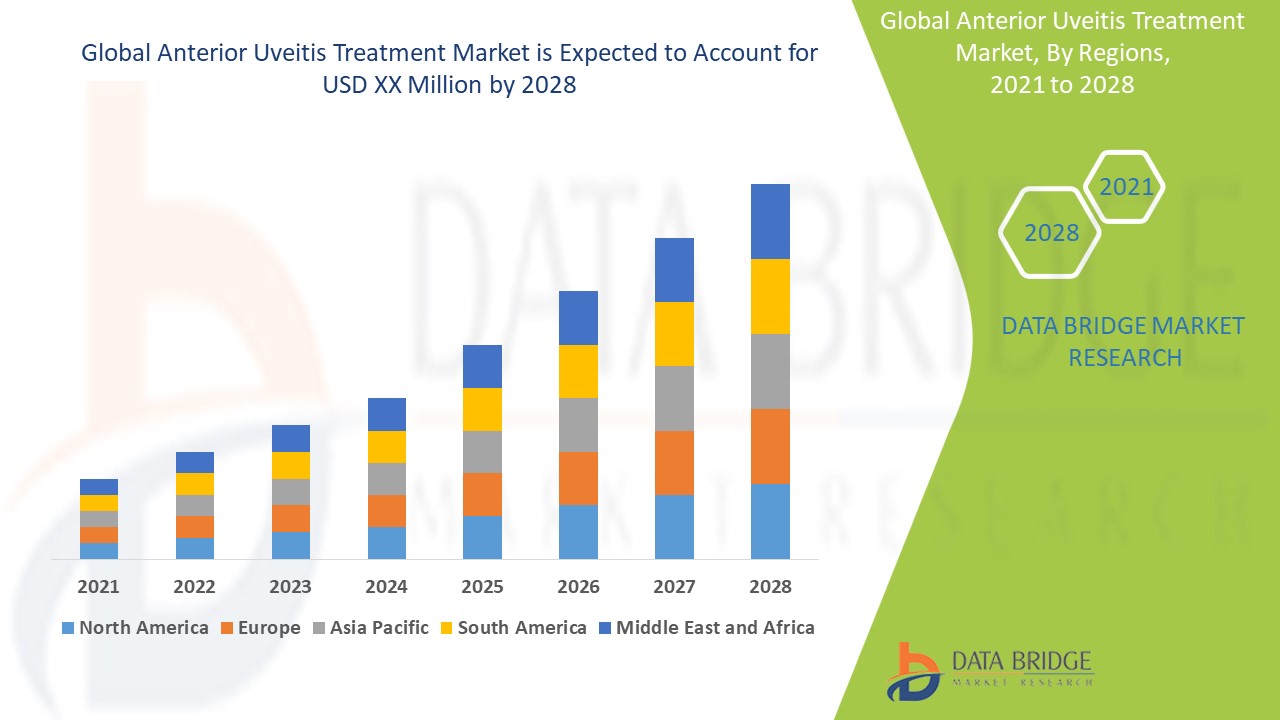
The global anterior uveitis treatment market size was valued at USD 457.18 million in 2024 and is projected to reach USD 731.43 million by 2032, with a CAGR of 6.05% during the forecast period of 2025 to 2032. In addition to the insights on market scenarios such as market value, growth rate, segmentation, geographical coverage, and major players, the market reports curated by the Data Bridge Market Research also include depth expert analysis, patient epidemiology, pipeline analysis, pricing analysis, and regulatory framework.
Anterior Uveitis Treatment Market Trends
“Increasing Demand for More Targeted and Effective Therapies”
Key reason the anterior uveitis treatment market is trending is the increasing demand for more targeted and effective therapies. Traditional treatments, such as corticosteroids, are commonly used to manage inflammation but often come with significant side effects, especially when used long-term. This has driven the need for alternative therapies that offer greater precision in targeting inflammation without systemic effects.
Biologics, such as TNF inhibitors and interleukin inhibitors, have emerged as promising options, particularly for patients with chronic or refractory uveitis who do not respond well to steroids. In addition, innovations in drug delivery systems, such as suprachoroidal injections (e.g., XIPERE), allow for localized treatment with enhanced efficacy and reduced side effects, offering a significant advancement in managing uveitis. As a result, these developments are shaping the market, providing patients with more personalized and effective treatment options, which is driving the market’s growth.
Report Scope and Anterior Uveitis Treatment Market Segmentation
|
Attributes |
Anterior Uveitis Treatment Key Market Insights |
|
Segments Covered |
|
|
Countries Covered |
U.S., Canada and Mexico, Germany, France, U.K., Italy, Russia, Spain, Denmark, Sweden, Norway, Rest of Europe, China, Japan, India, South Korea, Australia, Thailand, Rest of Asia-Pacific (APAC), Saudi Arabia, U.A.E, South Africa, Nigeria, Egypt, Kuwait, Rest of Middle East and Africa, Brazil, Argentina and Rest of South America |
|
Key Market Players |
Alcon Inc. (Switzerland), Amgen Inc. (U.S.), AbbVie Inc. (U.S.), Biogen (U.S.), Bayer AG (Germany), Bausch + Lomb (Canada), F. Hoffmann-La Roche Ltd (Switzerland), Gilead Sciences, Inc. (U.S.), Johnson & Johnson Vision Care, Inc. (U.S.), Kiora Pharmaceuticals, Inc. (U.S.), Lumenis Be Ltd. (Israel), Novartis AG (Switzerland), Ocular Therapeutix, Inc. (U.S.), Regeneron Pharmaceuticals Inc. (U.S.), Santen Pharmaceutical Co., Ltd. (Japan), Sanofi (France), Tarsier Pharma Ltd (Israel), Takeda Pharmaceutical Company Limited (Japan), Teva Pharmaceutical Industries Ltd. (Israel), UCB S.A. (Belgium) |
|
Market Opportunities |
|
|
Value Added Data Infosets |
In addition to the insights on market scenarios such as market value, growth rate, segmentation, geographical coverage, and major players, the market reports curated by the Data Bridge Market Research also include depth expert analysis, patient epidemiology, pipeline analysis, pricing analysis, and regulatory framework. |
Anterior Uveitis Treatment Market Definition
Anterior uveitis treatment involves the use of various medical interventions aimed at reducing inflammation in the front part of the eye (the anterior uvea), which includes the iris and ciliary body. The primary approach focuses on managing the inflammation and preventing complications such as vision loss. Corticosteroids, typically in the form of eye drops or oral medications, are the most common treatment to quickly reduce inflammation. In cases where uveitis is caused by an underlying autoimmune disorder, immunosuppressive drugs or biologics may be prescribed to modulate the immune response. In addition, pain relief medications and pupil-dilating eye drops are often used to reduce discomfort and prevent complications such as iris adhesions.
Anterior Uveitis Treatment Market Dynamics
Drivers
- Growing Prevalence of Autoimmune Diseases
A key driver of the anterior uveitis treatment market is the rising prevalence of autoimmune diseases, such as rheumatoid arthritis, ankylosing spondylitis, and inflammatory bowel disease. These conditions are often linked to the development of uveitis, especially non-infectious forms of the disease. Autoimmune diseases cause the body's immune system to attack its own tissues, which can trigger inflammation in the eyes. As autoimmune diseases continue to increase globally, the demand for treatments targeting uveitis has surged. For instance, biologic therapies such as TNF inhibitors (e.g., Humira and Remicade) are being used in uveitis management, particularly in patients with chronic autoimmune conditions. This growing prevalence of autoimmune disorders is contributing to the growing need for specialized treatments for anterior uveitis, promoting market growth.
- Advancements in Targeted Therapies and Drug Delivery Systems
Innovations in targeted therapies and drug delivery systems are significantly driving the growth of the anterior uveitis treatment market. Traditional corticosteroids, while effective, can have systemic side effects when used long-term. In response, companies are developing therapies that target the inflammation more precisely and reduce these side effects. For instance, XIPERE, a suprachoroidal injection of triamcinolone acetonide, is a breakthrough in the treatment of macular edema associated with uveitis. This method delivers drugs directly to the affected area, improving efficacy and minimizing systemic exposure. These advancements are making treatment more effective and safer, thus encouraging greater adoption of newer therapies and promoting the growth of the market.
Opportunities
- Expansion of Biologic Therapies for Uveitis
One significant opportunity in the anterior uveitis treatment market is the increasing adoption of biologic therapies, particularly for autoimmune-related uveitis. Biologics, such as TNF inhibitors (e.g., Adalimumab and Infliximab) and interleukin inhibitors, offer more targeted and effective treatments compared to conventional corticosteroids. These therapies are particularly beneficial for patients with chronic, recurrent, or severe uveitis that does not respond well to traditional treatments. The ability to reduce inflammation with fewer side effects, such as systemic suppression of the immune system, is appealing to both clinicians and patients. As clinical trials and real-world evidence continue to demonstrate the efficacy of biologic agents in managing uveitis, the demand for these treatments is expected to increase, creating a significant market opportunity. This expansion of biologics is contributing to the growth of the anterior uveitis treatment market.
- Increasing Focus on Personalized Medicine
Another promising opportunity for the anterior uveitis treatment market lies in the growing focus on personalized medicine, which aims to tailor treatment strategies based on individual patient characteristics, such as genetic profile, disease severity, and response to previous therapies. The development of precision therapies that are more effective and have fewer side effects could dramatically improve patient outcomes. For instance, the use of biomarkers and genetic testing could help identify which patients are most likely to benefit from specific biologic treatments or immunosuppressive agents. This approach ensures that patients receive the most appropriate therapy, leading to better treatment outcomes. As healthcare systems globally embrace personalized approaches, the anterior uveitis treatment market stands to benefit from the growing demand for individualized treatments, promoting market growth.
Restraints/Challenges
- High Cost of Biologic Therapies
A major restraint in the anterior uveitis treatment market is the high cost of biologic therapies, which can limit patient access to these advanced treatments. Biologics, such as TNF inhibitors and interleukin inhibitors, are effective in treating autoimmune-related uveitis but often come with a high price tag, making them inaccessible for many patients, especially in developing regions. For instance, Adalimumab (Humira), which is commonly used for uveitis, can cost thousands of dollars per month without insurance coverage. This financial burden on patients and healthcare systems limits the widespread adoption of biologic therapies. Consequently, the high cost of these treatments is restricting market growth by preventing a larger patient population from benefiting from more targeted, effective therapies.
- Limited Awareness and Diagnosis of Uveitis
A significant challenge faced by the anterior uveitis treatment market is the limited awareness and delayed diagnosis of uveitis, especially in its anterior form. Uveitis symptoms, such as eye redness, pain, and blurred vision, can easily be mistaken for other less serious conditions, leading to delays in treatment. Furthermore, a lack of awareness among the general population and healthcare providers about the severity and potential complications of uveitis means that many patients remain undiagnosed or receive late-stage treatment. This challenge is particularly pronounced in regions with limited access to specialized eye care. The delay in diagnosis and treatment contributes to increased complications such as cataracts and glaucoma, which complicate treatment and outcomes, ultimately affecting the growth of the anterior uveitis treatment market.
This market report provides details of new recent developments, trade regulations, import-export analysis, production analysis, value chain optimization, market share, impact of domestic and localized market players, analyses opportunities in terms of emerging revenue pockets, changes in market regulations, strategic market growth analysis, market size, category market growths, application niches and dominance, product approvals, product launches, geographic expansions, technological innovations in the market. To gain more info on the market contact Data Bridge Market Research for an Analyst Brief, our team will help you take an informed market decision to achieve market growth.
Anterior Uveitis Treatment Market Scope
The market is segmented on the basis of treatment type, cause, and distribution channel. The growth amongst these segments will help you analyze meagre growth segments in the industries and provide the users with a valuable market overview and market insights to help them make strategic decisions for identifying core market applications.
Treatment Type
- Corticosteroids
- Immunosuppressant
- Monoclonal Antibodies
- Cycloplegic Agents
- Antibiotics
- Antivirals
- Antifungal
- Analgesics
Cause
- Infectious
- Non-infectious
Distribution Channel
- Hospital Pharmacies
- Retail Pharmacies
- Online Pharmacies
- Drug Stores
Anterior Uveitis Treatment Market Regional Analysis
The market is analysed and market size insights and trends are provided by country, treatment type, cause, and distribution channel as referenced above.
The countries covered in the market report are U.S., Canada and Mexico, Germany, France, U.K., Italy, Russia, Spain, Denmark, Sweden, Norway, Rest of Europe, China, Japan, India, South Korea, Australia, Thailand, Rest of Asia-Pacific (APAC), Saudi Arabia, U.A.E, South Africa, Nigeria, Egypt, Kuwait, Rest of Middle East and Africa, Brazil, Argentina and Rest of South America.
North America is expected to dominate the anterior uveitis treatment market. This is primarily driven by factors such as advanced healthcare infrastructure, high awareness of eye diseases, and the availability of cutting-edge treatments. The United States, in particular, has a well-established healthcare system with access to a wide range of therapies, including biologics and novel drug delivery systems, which are increasingly used to treat anterior uveitis. In addition, the rising prevalence of autoimmune diseases, a major risk factor for uveitis, contributes to the growing demand for effective treatments in this region.
The Asia-Pacific (APAC) region is expected to exhibit the highest growth rate in the anterior uveitis treatment market. This growth can be attributed to several factors, including the increasing prevalence of autoimmune diseases and rising healthcare awareness in countries such as China, India, and Japan. As the region's healthcare infrastructure improves, more patients are being diagnosed and treated for conditions such as uveitis. Furthermore, the growing adoption of advanced medical technologies, the expansion of health insurance coverage, and an increasing focus on the development of innovative treatments are driving market growth in APAC.
The country section of the report also provides individual market impacting factors and changes in regulation in the market domestically that impacts the current and future trends of the market. Data points such as down-stream and upstream value chain analysis, technical trends and porter's five forces analysis, case studies are some of the pointers used to forecast the market scenario for individual countries. Also, the presence and availability of global brands and their challenges faced due to large or scarce competition from local and domestic brands, impact of domestic tariffs and trade routes are considered while providing forecast analysis of the country data.
Anterior Uveitis Treatment Market Share
The market competitive landscape provides details by competitor. Details included are company overview, company financials, revenue generated, market potential, investment in research and development, new market initiatives, global presence, production sites and facilities, production capacities, company strengths and weaknesses, product launch, product width and breadth, application dominance. The above data points provided are only related to the companies' focus related to market.
Anterior Uveitis Treatment Market Leaders Operating in the Market Are:
- Alcon Inc. (Switzerland)
- Amgen Inc. (U.S.)
- AbbVie Inc. (U.S.)
- Biogen (U.S.)
- Bayer AG (Germany)
- Bausch + Lomb (Canada)
- F. Hoffmann-La Roche Ltd (Switzerland)
- Gilead Sciences, Inc. (U.S.)
- Johnson & Johnson Vision Care, Inc. (U.S.)
- Kiora Pharmaceuticals, Inc. (U.S.)
- Lumenis Be Ltd. (Israel)
- Novartis AG (Switzerland)
- Ocular Therapeutix, Inc. (U.S.)
- Regeneron Pharmaceuticals Inc. (U.S.)
- Santen Pharmaceutical Co., Ltd. (Japan)
- Sanofi (France)
- Tarsier Pharma Ltd (Israel)
- Takeda Pharmaceutical Company Limited (Japan)
- Teva Pharmaceutical Industries Ltd. (Israel)
- UCB S.A. (Belgium)
Latest Developments in Anterior Uveitis Treatment Market
- In November 2024, Santen Pharmaceutical Co., Ltd. announced that it had entered into a commercial collaboration agreement with Arctic Vision for ARVN001, a triamcinolone acetonide suprachoroidal injectable suspension, along with its injector featuring the patented SCS Microinjector technology. This partnership is focused on the treatment of uveitic macular edema (UME) and other ophthalmic indications under development, specifically for China, excluding Taiwan, Hong Kong, and Macau (hereinafter referred to as the Territory).
- In April 2024, Roivant and Priovant Therapeutics announced positive results from the Phase 2 NEPTUNE study (NCT05523765) evaluating brepocitinib for the treatment of non-anterior non-infectious uveitis (NIU). The study found that at week 24, 29% (5/17) of participants in the brepocitinib 45 mg group and 44% (4/9) in the 15 mg group met the treatment failure criteria, with the lower failure rates indicating a greater benefit from the treatment.
- In March 2024, Kiora Pharmaceuticals, Inc. announced the publication of results from a Phase 1 double-masked study of KIO-101, a powerful non-steroidal anti-inflammatory agent. KIO-101 contains the same active molecule as KIO-104, which is part of a class of potent anti-inflammatory agents. The study demonstrated that a 12-day topical treatment of KIO-101, administered at multiple doses, was well tolerated by both healthy volunteers and patients with eye inflammation.
- In January 2024, Tarsier Pharma, Ltd. announced that it had received approval from the U.S. Food and Drug Administration (FDA) under a Special Protocol Assessment (SPA) for the clinical trial protocol and the proposed statistical analysis of the Tarsier-04 Phase 3 trial. This trial is designed to evaluate the efficacy of TRS01 eye drops for treating non-infectious uveitis, including uveitic glaucoma.
- In October 2021, Bausch + Lomb and Clearside Biomedical, Inc. announced that the U.S. Food and Drug Administration (FDA) had approved XIPERE (triamcinolone acetonide injectable suspension) for suprachoroidal use in treating macular edema associated with uveitis, a type of eye inflammation. With this FDA approval, XIPERE becomes the first and only treatment in the U.S. to utilize the suprachoroidal space for addressing macular edema in uveitis patients.

- Interactive Data Analysis Dashboard
- Company Analysis Dashboard for high growth potential opportunities
- Research Analyst Access for customization & queries
- Competitor Analysis with Interactive dashboard
- Latest News, Updates & Trend analysis
- Harness the Power of Benchmark Analysis for Comprehensive Competitor Tracking
Data collection and base year analysis are done using data collection modules with large sample sizes. The stage includes obtaining market information or related data through various sources and strategies. It includes examining and planning all the data acquired from the past in advance. It likewise envelops the examination of information inconsistencies seen across different information sources. The market data is analysed and estimated using market statistical and coherent models. Also, market share analysis and key trend analysis are the major success factors in the market report. To know more, please request an analyst call or drop down your inquiry.
The key research methodology used by DBMR research team is data triangulation which involves data mining, analysis of the impact of data variables on the market and primary (industry expert) validation. Data models include Vendor Positioning Grid, Market Time Line Analysis, Market Overview and Guide, Company Positioning Grid, Patent Analysis, Pricing Analysis, Company Market Share Analysis, Standards of Measurement, Global versus Regional and Vendor Share Analysis. To know more about the research methodology, drop in an inquiry to speak to our industry experts.
Data Bridge Market Research is a leader in advanced formative research. We take pride in servicing our existing and new customers with data and analysis that match and suits their goal. The report can be customized to include price trend analysis of target brands understanding the market for additional countries (ask for the list of countries), clinical trial results data, literature review, refurbished market and product base analysis. Market analysis of target competitors can be analyzed from technology-based analysis to market portfolio strategies. We can add as many competitors that you require data about in the format and data style you are looking for. Our team of analysts can also provide you data in crude raw excel files pivot tables (Fact book) or can assist you in creating presentations from the data sets available in the report.












