


Global Anti-Rickettsial Treatment Market Size
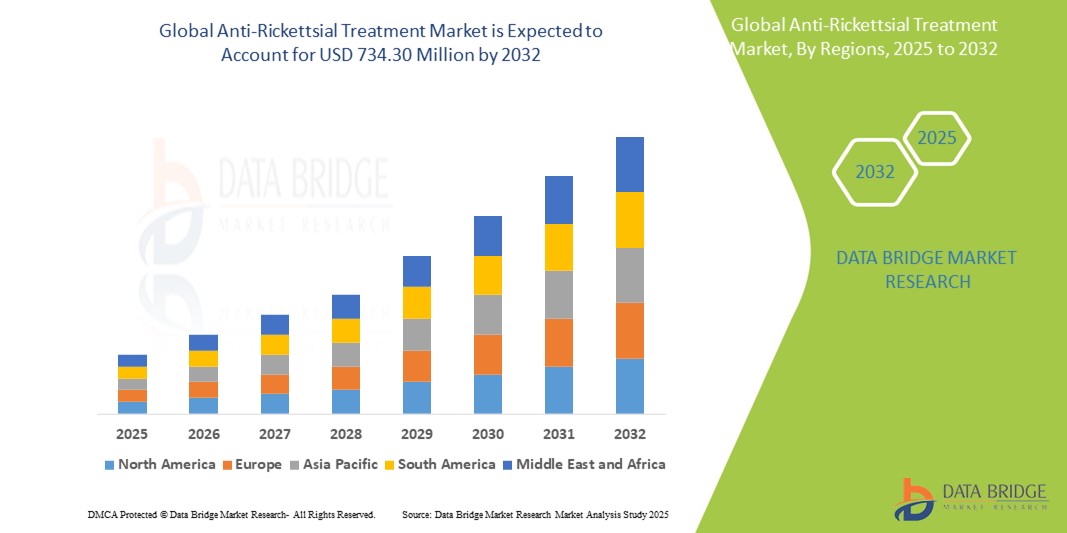
- The Global Anti-Rickettsial Treatment Market size was valued at USD 516.35 million in 2024 and is expected to reach USD 734.30 Million by 2032, at a CAGR of 4.5% during the forecast period
- The market growth is largely fueled by the rising prevalence of arthropod infections in humans worldwide and the emergence of new markets.
- Moreover, continuous clinical development for the treatment of bacterial and viral diseases and the availability of favorable reimbursement policies for expensive therapies will drive the global anti-rickettsial treatment market.
Global Anti-Rickettsial Treatment Market Analysis
- Anti-rickettsial treatments, primarily antibiotics, are crucial for managing rickettsial diseases, which are caused by obligate intracellular Gram-negative bacteria transmitted mainly by arthropods like ticks, mites, and lice. These treatments are vital due to the debilitating nature and diagnostic challenges of rickettsial infections, with untreated cases having high fatality rates and potential for multi-organ dysfunction.
- The increasing demand for anti-rickettsial treatments is primarily fueled by the rising global prevalence of arthropod-borne infections, increasing awareness among healthcare professionals, and the emergence of new markets.
- Asia- pacific dominates the Anti-Rickettsial Treatment Market with the largest revenue share of 41.5% in 2025 due to the high incidence of rickettsial diseases in countries like India, growing healthcare expenditure, and improving diagnostic capabilities.
- North America also holds a considerable share in the anti-rickettsial treatment market, driven by advanced healthcare infrastructure, significant research and development activities, and a focus on managing vector-borne diseases.
- The Doxycycline segment segment is expected to dominate the market with the largest share of 45.20% in 2025, driven by its established efficacy as the drug of choice for most rickettsial infections, its broad-spectrum activity, and its availability.
Report Scope and Global Anti-Rickettsial Treatment Market Segmentation
|
Attributes |
Global Anti-Rickettsial Treatment Market Insights |
|
Segments Covered |
|
|
Countries Covered |
North America
Europe
Asia-Pacific
Middle East and Africa
South America
|
|
Key Market Players |
|
|
Market Opportunities |
|
|
Value Added Data Infosets |
In addition to the insights on market scenarios such as market value, growth rate, segmentation, geographical coverage, and major players, the market reports curated by the Data Bridge Market Research also include in-depth expert analysis, pricing analysis, brand share analysis, consumer survey, demography analysis, supply chain analysis, value chain analysis, raw material/consumables overview, vendor selection criteria, PESTLE Analysis, Porter Analysis, and regulatory framework. |
Global Anti-Rickettsial Treatment Market Trends
"Advancements in Diagnostics and Targeted Therapies"
- A significant and accelerating trend in the global anti-rickettsial treatment market is the continuous advancement in diagnostic methods and the increasing focus on developing more targeted and effective therapies. This evolution in technologies is significantly improving the timely identification of rickettsial infections and guiding more precise treatment strategies.
- For instance, the development of recombinant protein-based ELISA for Rickettsia diagnosis offers an alternative to traditional, less accessible methods, enhancing detection in low-income settings. Similarly, molecular methods such as PCR and next-generation sequencing (NGS) are enabling earlier and more specific identification of various Rickettsia species, which is crucial for prompt treatment.
- The focus on targeted therapies involves deeper understanding of rickettsial pathogenesis, such as the role of outer membrane proteins (OmpA and OmpB) in immunity. This knowledge is paving the way for the development of new protective antigens and potentially novel therapeutic agents. For example, studies identifying small molecule inhibitors using machine learning models to predict growth inhibition in Rickettsia species represent a promising avenue for new drug discovery.
- These advancements in diagnostics and the quest for more targeted treatments facilitate better disease management and improve patient outcomes by allowing for earlier intervention and reducing reliance on broad-spectrum antibiotics, which can contribute to antimicrobial resistance.
- This trend towards more precise, efficient, and evidence-based treatment approaches is fundamentally reshaping the landscape of anti-rickettsial disease management. Consequently, research institutions and pharmaceutical companies are actively exploring novel diagnostic platforms and therapeutic compounds to address the challenges posed by emerging and re-emerging rickettsial infections.
- The demand for anti-rickettsial treatments that are supported by rapid and accurate diagnostics, along with the development of novel therapeutic options, is growing rapidly across regions, as healthcare systems prioritize early detection and effective management of these often-severe infections.
Global Anti-Rickettsial Treatment Market Dynamics
Driver
"Increasing Incidence of Rickettsial Diseases and Growing Diagnostic Capabilities"
- The increasing prevalence of rickettsial diseases globally, coupled with advancements in diagnostic capabilities, is a significant driver for the heightened demand for anti-rickettsial treatments.
- For instance, the re-emergence of scrub typhus in various regions and the increased recognition of spotted fever group rickettsioses are leading to a greater number of diagnosed cases. Such epidemiological shifts and improved detection are expected to drive the anti-rickettsial treatment market growth in the forecast period.
- As healthcare professionals become more adept at identifying these infections through advanced molecular and serological tests, timely and appropriate treatment becomes more critical, driving the demand for effective anti-rickettsial drugs.
- Furthermore, the expansion of healthcare infrastructure and accessibility in developing regions, along with a rising awareness among both medical practitioners and the general public about vector-borne diseases, are making early diagnosis and treatment of rickettsial infections more common.
- The severe clinical manifestations and potential for life-threatening complications of untreated rickettsial infections, such as multi-organ failure and neurological involvement, are key factors propelling the adoption of timely and effective anti-rickettsial therapies in both endemic and non-endemic areas. The focus on public health initiatives to control vector populations and the increasing travel to endemic regions further contribute to market growth.
Restraint/Challenge
"Challenges in Accurate Diagnosis and Development of Antimicrobial Resistance"
- Concerns surrounding the challenges in accurate and timely diagnosis of rickettsial infections, alongside the growing threat of antimicrobial resistance, pose a significant challenge to broader market penetration for anti-rickettsial treatments. As rickettsial diseases often present with non-specific symptoms, they can be misdiagnosed, leading to delayed or inappropriate treatment, raising anxieties among potential consumers and healthcare providers about effective disease management.
- For instance, the symptomatic overlap of rickettsial diseases with other febrile illnesses like dengue or malaria has led to misdiagnosis and suboptimal patient outcomes.
- Addressing these diagnostic challenges through improved laboratory infrastructure, widespread availability of rapid diagnostic tests, and enhanced training for healthcare professionals is crucial for building trust in the treatment efficacy. Companies and research institutions are actively working on developing more specific and sensitive diagnostic tools to overcome these limitations. Additionally, the increasing incidence of antimicrobial resistance, particularly to commonly used antibiotics like doxycycline, can be a barrier to effective treatment for price-sensitive consumers and in regions with limited access to alternative therapies. While doxycycline remains the first-line treatment, the emergence of resistance or the need for alternative drugs in specific patient populations (e.g., pregnant women, young children) presents a challenge.
- While research into novel drug targets is ongoing, the development of new anti-rickettsial agents is a slow and costly process, which can still hinder widespread adoption, especially for those who do not have immediate access to specialized diagnostics or alternative treatment options.
- Addressing these challenges through enhanced diagnostic capabilities, public health surveillance, and continued research and development of new anti-rickettsial agents will be vital for sustained market growth.
Global Anti-Rickettsial Treatment Market Scope
The market is segmented on the basis of type, group, end-users, and distribution channel.
- By Type
On the basis of type, the anti-rickettsial treatment market is segmented into tetracycline, doxycycline, azithromycin, rifampin, and others. The doxycycline segment dominates the market with the largest revenue share of 40.6% in 2025, driven by its established efficacy as the drug of choice for most rickettsial infections, its broad-spectrum activity, and its widespread availability. Healthcare providers often prioritize doxycycline for its effectiveness in treating various rickettsial diseases and its relatively favorable safety profile. The market also sees strong demand for doxycycline due to its inclusion in treatment guidelines by major health organizations and its affordability compared to some alternative therapies.
The azithromycin segment is anticipated to witness the fastest CAGR of 4.9% from 2025 to 2032, fueled by its effectiveness in specific patient populations, such as pregnant women and young children, where doxycycline might be contraindicated. Azithromycin offers an alternative treatment option with a different mechanism of action, and its ease of administration (once daily dosing) contributes to its growing popularity.
- By Group
On the basis of group, the anti-rickettsial treatment market is segmented into spotted fever group rickettsioses, typhus group rickettsioses, scrub typhus group rickettsioses, and others. The spotted fever group rickettsioses strength segment is expected to dominate the market with the largest revenue share of 39.2% in 2025, driven by the high incidence of diseases such as Rocky Mountain spotted fever in various regions and the critical need for prompt treatment. The widespread distribution of the vectors (ticks) for this group contributes to its higher prevalence.
The scrub typhus group rickettsioses segment is expected to witness substantial growth during the forecast period, driven by its high prevalence in Asia-Pacific and the increasing recognition of its public health burden. Efforts to improve diagnosis and surveillance in endemic areas are contributing to the growing demand for treatments specific to this group.
- By End-Users
On the basis of end-users, the anti-rickettsial treatment market is segmented into hospitals, specialty clinics, homecare, and others. The hospitals segment accounted for the largest market share, driven by the fact that severe rickettsial infections often require hospitalization for diagnosis, monitoring, and intravenous administration of antibiotics. Hospitals serve as primary care centers for acute and complicated cases, leading to higher consumption of anti-rickettsial drugs.
The specialty clinics segment is expected to witness significant growth during the forecast period, driven by the increasing number of infectious disease clinics and travel clinics that diagnose and manage rickettsial infections, particularly in areas with higher prevalence or for travelers returning from endemic regions.
- By Distribution Channel
On the basis of distribution channel, the anti-rickettsial treatment market is segmented into hospital pharmacy, retail pharmacy, online pharmacy, and others. The hospital pharmacy segment held the largest market share, driven by the fact that many anti-rickettsial treatments, especially for severe cases, are administered within a hospital setting. Hospital pharmacies ensure the immediate availability and controlled dispensing of these critical medications.
The retail pharmacy segment is expected to witness considerable growth during the forecast period, fueled by the increasing number of outpatient diagnoses and prescriptions for anti-rickettsial medications, particularly for less severe cases or for prophylaxis in at-risk individuals.
Global Anti-Rickettsial Treatment Market Regional Analysis
- North America Anti-Rickettsial Market Insight
North America dominates the anti-rickettsial treatment market with the largest revenue share of 41.5% in 2024, driven by the rising prevalence of rickettsial infections, well-established healthcare infrastructure, and increased awareness among healthcare professionals regarding early diagnosis and effective antibiotic therapies.
North America holds large share in the anti-rickettsial treatment market, driven by a well-established healthcare infrastructure, high awareness among medical professionals, and robust surveillance systems for vector-borne diseases. Consumers and healthcare providers in the region prioritize prompt diagnosis and effective treatment of rickettsial infections, leading to steady demand for therapeutic options. This widespread adoption is further supported by significant research and development activities, and the presence of key pharmaceutical companies, establishing anti-rickettsial treatments as a crucial component of infectious disease management.
- U.S. Anti-Rickettsial Treatment Market Insight
The U.S. anti-rickettsial treatment market captured the largest revenue share of 83% within North America in 2025, driven by the high incidence of tick-borne diseases, well-developed healthcare infrastructure, and the broad clinical preference for tetracycline-class antibiotics in both outpatient and inpatient infectious disease management. The U.S. anti-rickettsial treatment market captured a substantial revenue share within North America, fueled by the high incidence of specific rickettsial diseases like Rocky Mountain spotted fever and increasing diagnostic capabilities. Healthcare professionals are increasingly prioritizing the timely and accurate diagnosis of rickettsial infections through advanced laboratory tests. The robust pharmaceutical industry, combined with strong demand for effective therapies and access to specialized infectious disease care, further propels the anti-rickettsial treatment market. Moreover, the increasing public health focus on vector control and disease prevention is significantly contributing to the market's expansion.
- Europe Anti-Rickettsial Treatment Market Insight
The Europe anti-rickettsial treatment market is projected to expand at a noteworthy CAGR throughout the forecast period, primarily driven by the re-emergence of rickettsial diseases in certain areas, increasing travel to endemic regions, and enhanced diagnostic capabilities. The increase in surveillance efforts, coupled with the demand for effective treatments, is fostering the adoption of anti-rickettsial drugs. European healthcare systems are also focusing on improving patient outcomes through early diagnosis and appropriate therapeutic interventions. The region is experiencing growth across various rickettsial disease presentations, with anti-rickettsial treatments being incorporated into infectious disease management protocols.
- Asia-Pacific Anti-Rickettsial Treatment Market Insight
The Asia-Pacific anti-rickettsial treatment market is expected to grow at the fastest CAGR during the forecast period, driven by the high prevalence of diseases such as scrub typhus and murine typhus, rising public health awareness, and improving healthcare access in countries such as India, China, and Southeast Asian nations. The region's growing population and the increasing recognition of neglected tropical diseases are driving the demand for anti-rickettsial treatments. Furthermore, as APAC continues to invest in healthcare infrastructure and diagnostic capabilities, the affordability and accessibility of anti-rickettsial therapies are expanding to a wider patient base.
- Japan Anti-Rickettsial Treatment Market Insight
The Japan anti-rickettsial treatment market is gaining momentum due to the country’s advanced healthcare system, sophisticated diagnostic technologies, and increasing awareness of tick-borne illnesses. The Japanese market places a significant emphasis on precise diagnosis and effective treatment, and the adoption of anti-rickettsial therapies is driven by the growing number of reported cases and robust public health initiatives. The integration of advanced diagnostics with clinical management strategies is fueling growth. Moreover, Japan's focus on research and development in infectious diseases is likely to spur demand for improved and targeted treatment solutions.
- China Anti-Rickettsial Treatment Market Insight
The China anti-rickettsial treatment market accounted for a largest market revenue share in Asia-Pacific, attributed to the country's vast population, increasing incidence of rickettsial diseases, and rapidly developing healthcare sector. China stands as one of the largest markets for pharmaceuticals, and anti-rickettsial treatments are becoming increasingly crucial in both urban and rural areas. The government's push towards improving public health infrastructure and controlling infectious diseases, alongside the availability of various generic drug options, are key factors propelling the market in China.
Global Anti-Rickettsial Treatment Market Share
The anti-rickettsial treatment industry primarily involves pharmaceutical companies producing antibiotics and companies involved in diagnostic solutions. While a definitive list of market leaders for anti-rickettsial treatment alone is not as readily available as for broader anti-infective markets, key players in infectious disease therapeutics include:
- Pfizer Inc. (U.S.)
- Johnson & Johnson Services, Inc. (U.S.)
- Sanofi (France)
- Merck & Co., Inc. (U.S.)
- GlaxoSmithKline plc (U.K.)
- Novartis AG (Switzerland)
- F. Hoffmann-La Roche Ltd (Switzerland)
- Bristol-Myers Squibb Company (U.S.)
- AstraZeneca (U.K.)
- Takeda Pharmaceutical Company Limited (Japan)
- Cipla Inc. (India)
- Dr. Reddy's Laboratories Ltd. (India)
- Lupin (India)
- Sun Pharmaceutical Industries Ltd. (India)
- Aurobindo Pharma (India)
- Zydus Lifesciences Ltd. (India)
- Mylan N.V. (U.S.)
- Teva Pharmaceutical Industries Ltd. (Israel)
- Amgen Inc. (U.S.)
- Gilead Sciences, Inc. (U.S.)

- Interactive Data Analysis Dashboard
- Company Analysis Dashboard for high growth potential opportunities
- Research Analyst Access for customization & queries
- Competitor Analysis with Interactive dashboard
- Latest News, Updates & Trend analysis
- Harness the Power of Benchmark Analysis for Comprehensive Competitor Tracking
Data collection and base year analysis are done using data collection modules with large sample sizes. The stage includes obtaining market information or related data through various sources and strategies. It includes examining and planning all the data acquired from the past in advance. It likewise envelops the examination of information inconsistencies seen across different information sources. The market data is analysed and estimated using market statistical and coherent models. Also, market share analysis and key trend analysis are the major success factors in the market report. To know more, please request an analyst call or drop down your inquiry.
The key research methodology used by DBMR research team is data triangulation which involves data mining, analysis of the impact of data variables on the market and primary (industry expert) validation. Data models include Vendor Positioning Grid, Market Time Line Analysis, Market Overview and Guide, Company Positioning Grid, Patent Analysis, Pricing Analysis, Company Market Share Analysis, Standards of Measurement, Global versus Regional and Vendor Share Analysis. To know more about the research methodology, drop in an inquiry to speak to our industry experts.
Data Bridge Market Research is a leader in advanced formative research. We take pride in servicing our existing and new customers with data and analysis that match and suits their goal. The report can be customized to include price trend analysis of target brands understanding the market for additional countries (ask for the list of countries), clinical trial results data, literature review, refurbished market and product base analysis. Market analysis of target competitors can be analyzed from technology-based analysis to market portfolio strategies. We can add as many competitors that you require data about in the format and data style you are looking for. Our team of analysts can also provide you data in crude raw excel files pivot tables (Fact book) or can assist you in creating presentations from the data sets available in the report.












