Antibiotics for Cattle Feed Market Size
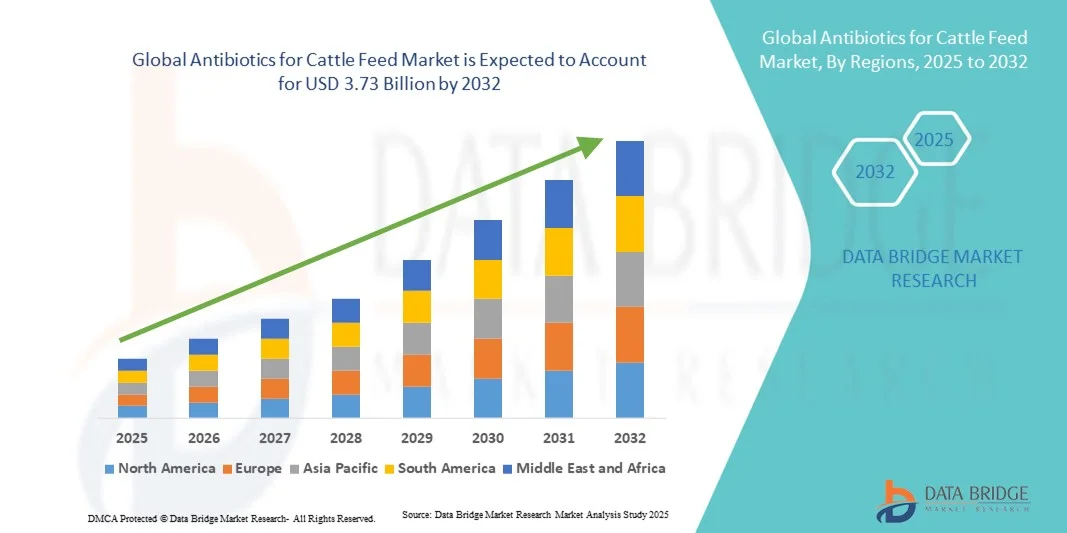
- The global antibiotics for cattle feed market size was valued at USD 2.9 billion in 2024 and is expected to reach USD 3.73 billion by 2032, at a CAGR of 3.20% during the forecast period
- The market growth is largely fueled by the increasing use of antibiotics to enhance cattle health, prevent infectious diseases, and improve feed efficiency, thereby ensuring higher productivity and profitability for livestock producers. Rising global demand for meat and dairy products continues to drive the adoption of antibiotic-infused feed formulations to maintain optimal animal performance and reduce mortality rates in large-scale cattle operations
- Furthermore, the growing focus on preventive animal healthcare and the expansion of intensive cattle farming practices are strengthening the need for controlled antibiotic use to sustain herd health and productivity. These factors are contributing to the steady market expansion as producers prioritize consistent output and disease management in response to rising global protein consumption
Antibiotics for Cattle Feed Market Analysis
- Antibiotics for cattle feed are additives used to prevent bacterial infections, promote growth, and improve feed conversion efficiency in beef and dairy cattle. These formulations help maintain gut health and prevent diseases such as bovine respiratory disease and mastitis, ensuring better overall herd performance
- The demand for antibiotics in cattle feed is driven by the need for efficient livestock management, growing meat and dairy consumption, and the focus on improving animal health and farm profitability. Increasing innovations in antibiotic formulations and regulatory emphasis on responsible usage are further shaping the market’s growth trajectory worldwide
- North America dominated the antibiotics for cattle feed market with a share of 39.1% in 2024, due to the high concentration of large-scale cattle farms and advanced livestock management practices
- Asia-Pacific is expected to be the fastest growing region in the antibiotics for cattle feed market during the forecast period due to rapid livestock expansion, increasing meat consumption, and improving animal health infrastructure in countries such as China, India, and Japan
- Tetracycline segment dominated the market with a market share of 57.8% in 2024, due to its broad-spectrum efficacy against various bacterial infections affecting respiratory, gastrointestinal, and urinary systems in cattle. Its cost-effectiveness and long-standing acceptance in livestock production have made tetracycline a preferred choice for feed formulation. Furthermore, its proven record in enhancing feed utilization and overall animal performance contributes to its continued dominance across intensive and semi-intensive farming systems
Report Scope and Antibiotics for Cattle Feed Market Segmentation
|
Attributes |
Antibiotics for Cattle Feed Key Market Insights |
|
Segments Covered |
|
|
Countries Covered |
North America
Europe
Asia-Pacific
Middle East and Africa
South America
|
|
Key Market Players |
|
|
Market Opportunities |
|
|
Value Added Data Infosets |
In addition to the insights on market scenarios such as market value, growth rate, segmentation, geographical coverage, and major players, the market reports curated by the Data Bridge Market Research also include import export analysis, production capacity overview, production consumption analysis, price trend analysis, climate change scenario, supply chain analysis, value chain analysis, raw material/consumables overview, vendor selection criteria, PESTLE Analysis, Porter Analysis, and regulatory framework. |
Antibiotics for Cattle Feed Market Trends
Rising Focus on Sustainable Antibiotic Use
- The global antibiotics for cattle feed market is witnessing a major shift toward sustainable antibiotic use aimed at balancing animal health needs with public health safety. Increasing concerns over antimicrobial resistance are prompting producers and feed manufacturers to adopt responsible antibiotic practices, emphasizing efficiency, reduced misuse, and regulatory alignment
- For instance, companies such as Elanco Animal Health and Zoetis Inc. have introduced antibiotic stewardship programs focusing on targeted use and dosage optimization. These initiatives promote precision medication tailored to specific disease profiles, ensuring effective outcomes while reducing the risk of resistance development in livestock systems
- The adoption of feed management practices incorporating probiotics, prebiotics, and natural growth promoters is gaining momentum as part of the strategy to reduce dependency on antibiotics. Such practices sustain animal growth rates and also improve gut health, immunity, and feed conversion efficiency, contributing to sustainable livestock production
- Advancements in diagnostics and precision livestock farming technologies are revolutionizing disease detection and prevention. Real-time monitoring of health indicators allows veterinarians to apply antibiotics only when medically necessary, optimizing resource use and minimizing environmental impact
- Increasing consumer demand for antibiotic-free and sustainably produced meat is exerting pressure on producers to transition toward responsible antibiotic management. Retailers and food brands are also implementing sourcing policies that favor suppliers adhering to antibiotic stewardship standards, reshaping trade dynamics across the livestock value chain
- This trend toward responsible antibiotic use is redefining the cattle feed industry through innovation, transparency, and technology adoption. As sustainability becomes central to feed practices, industry leaders are expected to integrate science-based frameworks to ensure both productivity and public health protection
Antibiotics for Cattle Feed Market Dynamics
Driver
Growing Need to Prevent Cattle Diseases
- The growing threat of infectious diseases in livestock herds remains a key driver for the antibiotics for cattle feed market. Antibiotics play a critical role in preventing bacterial infections, enhancing growth performance, and maintaining overall herd health essential for consistent milk and meat production
- For instance, Zoetis and Boehringer Ingelheim have expanded their range of feed-grade antibiotics and animal health products to target respiratory and gastrointestinal infections in cattle. These solutions ensure healthier livestock populations and reduced mortality rates, enabling farmers to sustain profitability and productivity
- Cattle production faces challenges from diseases such as bovine respiratory disease and mastitis, which can significantly reduce yield and increase production costs. Incorporating antibiotics in feed helps manage these health risks effectively, improving animal welfare and minimizing losses across the supply chain
- In addition, the expanding global demand for animal protein is correlating with higher livestock densities, elevating the risk of disease outbreaks. Controlled and preventive antibiotic use helps maintain herd stability and ensures adequate supply to meet the rising demand for beef and dairy products
- The essential role of antibiotics in disease prevention, coupled with advances in veterinary formulations, positions them as an integral component of modern livestock management. As industry standards evolve, the use of antibiotics under guided protocols will continue to strengthen productivity while safeguarding animal health outcomes
Restraint/Challenge
Strict Regulations on Antibiotic Usage
- Stringent regulations governing the use of antibiotics in feed formulation present a significant challenge for market participants. Regulatory bodies are imposing greater controls to mitigate antimicrobial resistance and ensure only medically justified antibiotic use in livestock production systems
- For instance, the European Food Safety Authority (EFSA) and the U.S. Food and Drug Administration have implemented strict legislations restricting antibiotics as growth promoters. Companies such as Elanco and Phibro Animal Health have had to adapt their portfolios, investing heavily in compliance systems and reformulated products to meet evolving standards
- The withdrawal of key antibiotics for preventive use has compelled market players to explore alternative feed additives such as enzymes, probiotics, and organic acids. While these substitutes support animal health, they often require higher R&D investment and can lead to short-term production inefficiencies during transition phases
- Adhering to regulatory frameworks demands robust data tracking, transparent supply chains, and continuous monitoring of antibiotic use at the farm level. These operational adjustments increase cost structures for producers and distributors navigating complex international compliance regimes
- Addressing this challenge through innovation, precise antibiotic application, and collaboration between regulatory agencies and livestock producers is becoming crucial. As the industry adapts, maintaining a balance between disease prevention and responsible antibiotic stewardship will be central to ensuring long-term market sustainability
Antibiotics for Cattle Feed Market Scope
The market is segmented on the basis of ingredient type, cattle type, and antibiotic type.
- By Ingredient Type
On the basis of ingredient type, the antibiotics for cattle feed market is segmented into protein meals/cakes, cereals and grains, brans, additives, and others. The protein meals/cakes segment dominated the largest market revenue share in 2024, attributed to their high nutritional content and ability to enhance feed efficiency when combined with antibiotics. These protein-rich ingredients help improve digestion and nutrient absorption, supporting faster weight gain and better overall health in cattle. The combination of protein meals with antibiotics enables optimal microbial balance in the gut, minimizing disease risks and improving growth performance, which drives their widespread use in both beef and dairy cattle production.
The additives segment is projected to witness the fastest growth rate from 2025 to 2032, driven by growing focus on improving feed quality and the inclusion of functional components such as probiotics, enzymes, and vitamins. Additives enhance the effectiveness of antibiotics by supporting gut health and immunity, reducing the frequency of infections, and promoting better productivity. Increasing research on antibiotic alternatives and synergistic feed formulations is also boosting the adoption of additives, especially among producers aiming for sustainable and regulated livestock farming practices.
- By Cattle Type
On the basis of cattle type, the antibiotics for cattle feed market is segmented into beef cattle and dairy cattle. The beef cattle segment held the largest market revenue share of 57.8% in 2024, as antibiotics are extensively used to prevent respiratory infections, foot rot, and digestive issues that commonly affect beef herds. The consistent demand for high-quality meat and the need for improved feed conversion efficiency have further strengthened antibiotic usage in beef production. Producers rely on controlled antibiotic supplementation to maintain herd health, ensure optimal weight gain, and reduce economic losses caused by disease outbreaks.
The dairy cattle segment is anticipated to register the fastest growth rate from 2025 to 2032, driven by the rising need to maintain udder health and reduce mastitis incidences that directly impact milk yield and quality. The use of antibiotics in dairy cattle helps manage infections and improve milk production efficiency, which is essential for meeting the growing global demand for dairy products. Advancements in veterinary care and strict hygiene management practices are also encouraging the adoption of precise antibiotic applications to balance productivity and compliance with residue regulations.
- By Antibiotic Type
On the basis of antibiotic type, the antibiotics for cattle feed market is segmented into neomycin and tetracycline. The tetracycline segment dominated the largest market revenue share of 62% in 2024, owing to its broad-spectrum efficacy against various bacterial infections affecting respiratory, gastrointestinal, and urinary systems in cattle. Its cost-effectiveness and long-standing acceptance in livestock production have made tetracycline a preferred choice for feed formulation. Furthermore, its proven record in enhancing feed utilization and overall animal performance contributes to its continued dominance across intensive and semi-intensive farming systems.
The neomycin segment is projected to exhibit the fastest growth rate from 2025 to 2032, driven by its effectiveness in treating enteric and bacterial infections, particularly in calves and young cattle. Neomycin’s limited systemic absorption and strong action against gram-negative bacteria make it suitable for preventive feed formulations. Growing adoption of targeted antibiotic programs and increased awareness of antimicrobial stewardship are further supporting the steady expansion of the neomycin segment in regulated livestock management environments.
Antibiotics for Cattle Feed Market Regional Analysis
- North America dominated the antibiotics for cattle feed market with the largest revenue share of 39.1% in 2024, driven by the high concentration of large-scale cattle farms and advanced livestock management practices
- The strong presence of leading feed producers and consistent demand for beef and dairy products further supports market growth
- The region’s well-established regulatory framework ensures controlled antibiotic usage, balancing productivity and compliance with food safety standards. Increasing focus on preventive animal healthcare and sustainable feeding solutions also reinforces market dominance
U.S. Antibiotics for Cattle Feed Market Insight
The U.S. antibiotics for cattle feed market captured the largest revenue share in 2024 within North America, driven by the extensive scale of beef production and growing emphasis on animal health management. The use of antibiotics to prevent bacterial infections, enhance feed efficiency, and reduce mortality rates remains a key factor supporting adoption. Rising awareness of antibiotic stewardship and ongoing innovation in feed formulations further strengthen the country’s leadership in the regional market.
Europe Antibiotics for Cattle Feed Market Insight
The Europe antibiotics for cattle feed market is projected to expand at a substantial CAGR during the forecast period, influenced by stringent regulations surrounding antibiotic use and the rising shift toward responsible livestock farming. The region’s focus on animal welfare, disease prevention, and feed optimization continues to drive innovation in antibiotic-based feed formulations. The growing demand for high-quality dairy and meat products, combined with increasing research on targeted antibiotic applications, supports steady market expansion across major cattle-producing nations.
U.K. Antibiotics for Cattle Feed Market Insight
The U.K. antibiotics for cattle feed market is anticipated to grow at a notable CAGR during the forecast period, fueled by the growing demand for premium meat and dairy products and the implementation of sustainable cattle-rearing practices. Farmers are increasingly adopting precision feeding and controlled antibiotic usage to maintain herd health and productivity. Continuous government initiatives promoting antibiotic stewardship and enhanced traceability in the livestock sector are expected to sustain market growth.
Germany Antibiotics for Cattle Feed Market Insight
The Germany antibiotics for cattle feed market is expected to witness considerable growth, supported by the country’s emphasis on food safety, livestock welfare, and high production standards. The increasing demand for antibiotic solutions that improve digestion and prevent infections aligns with Germany’s focus on efficient, regulated cattle farming. Strong collaborations between feed manufacturers and research institutions are also encouraging the development of optimized feed formulations, ensuring balanced antibiotic use within compliance limits.
Asia-Pacific Antibiotics for Cattle Feed Market Insight
The Asia-Pacific antibiotics for cattle feed market is projected to grow at the fastest CAGR from 2025 to 2032, driven by rapid livestock expansion, increasing meat consumption, and improving animal health infrastructure in countries such as China, India, and Japan. The growing awareness of feed quality, coupled with government support for modernizing cattle farming systems, is accelerating the adoption of antibiotic-based feed solutions. Expanding dairy industries and rising investments in feed manufacturing capacity further enhance the regional outlook.
China Antibiotics for Cattle Feed Market Insight
The China antibiotics for cattle feed market accounted for the largest market revenue share in Asia-Pacific in 2024, attributed to its vast cattle population and growing focus on productivity enhancement. The increasing adoption of antibiotic-integrated feeds to prevent bacterial diseases and improve growth performance is driving market growth. Moreover, China’s well-established feed production sector and government efforts to regulate antibiotic usage are shaping a more structured and sustainable cattle feed industry.
India Antibiotics for Cattle Feed Market Insight
The India antibiotics for cattle feed market is poised to record the fastest growth in Asia-Pacific, propelled by the expanding dairy industry and rising awareness of livestock health management. The increasing availability of cost-effective feed additives and antibiotics through local manufacturers is improving access for small and medium-scale farmers. Government initiatives aimed at improving cattle productivity and veterinary health standards are further contributing to the robust market expansion across the country.
Antibiotics for Cattle Feed Market Share
The antibiotics for cattle feed industry is primarily led by well-established companies, including:
- Ajinomoto Co., Inc. (Japan)
- Adisseo (France)
- ADM (U.S.)
- ERBER Group (Austria)
- Cargill, Incorporated (U.S.)
- Chr. Hansen Holding A/S (Denmark)
- DuPont (U.S.)
- DSM (Netherlands)
- Elanco (U.S.)
- Evonik Industries AG (Germany)
- Kemin Industries, Inc. (U.S.)
- Novozymes (Denmark)
- Novus International (U.S.)
- Nutreco N.V. (Netherlands)
- AMCO Proteins (U.S.)
- Covington & Burling LLP (U.S.)
- Land O'Lakes, Inc. (U.S.)
- Alltech (U.S.)
- AFB International (U.S.)
- Kent Pharmaceuticals (U.K.)
Latest Developments in Global Antibiotics for Cattle Feed Market
- In February 2025, Elanco Animal Health introduced Pradalex (pradofloxacin injection) following its U.S. FDA approval, marking the first new injectable antibiotic for bovine respiratory disease (BRD) and swine respiratory disease (SRD) in nearly two decades. This innovation represents a significant milestone in livestock health management, addressing two of the most economically damaging respiratory conditions in cattle and swine. The launch is expected to strengthen Elanco’s position in the antibiotics for cattle feed market by offering producers a highly effective treatment option that enhances herd health, minimizes mortality rates, and improves feed conversion efficiency
- In July 2024, Zoetis announced the expansion of its antimicrobial portfolio with Aurexia™, a next-generation antibiotic feed additive designed to combat bacterial infections in cattle while supporting antibiotic stewardship goals. The product’s improved formulation enhances gastrointestinal health and reduces the incidence of common infections without compromising performance. This development reinforces Zoetis’ focus on innovation and sustainability, contributing to increased market competitiveness and adoption of regulated antibiotic feed solutions across North American and European cattle farms
- In April 2024, the U.S. FDA granted approval for Pradalex (pradofloxacin injection) for the treatment of respiratory diseases in cattle and swine, highlighting growing regulatory support for targeted antibiotic solutions. The single-dose formulation enables precise administration under veterinary supervision, reducing misuse and ensuring effective treatment outcomes. This approval is expected to promote market confidence in new-generation antibiotics, driving further investment in research and development for livestock-specific antimicrobial therapies
- In September 2023, Boehringer Ingelheim launched Rovadiax Feed Premix, a broad-spectrum antibiotic formulation developed to prevent bacterial infections and enhance growth performance in beef and dairy cattle. The product’s advanced formulation ensures uniform distribution in feed, improving feed efficiency and reducing the incidence of gastrointestinal and respiratory infections. This launch reinforces Boehringer Ingelheim’s commitment to advancing livestock productivity and animal welfare while meeting evolving regulatory standards, thereby strengthening its foothold in the global antibiotics for cattle feed market
- In April 2022, Amlan International expanded its animal health feed additive portfolio by introducing Phylox® Feed and NeutraPath®, two natural alternatives aimed at supporting antibiotic-free production. These products help control enteric pathogens and mitigate digestive health challenges in cattle, offering a sustainable solution for producers seeking to reduce antibiotic dependence. This expansion aligns with the market’s transition toward integrated animal health strategies that balance productivity with antimicrobial resistance management, boosting demand for complementary feed solutions worldwide

- Interactive Data Analysis Dashboard
- Company Analysis Dashboard for high growth potential opportunities
- Research Analyst Access for customization & queries
- Competitor Analysis with Interactive dashboard
- Latest News, Updates & Trend analysis
- Harness the Power of Benchmark Analysis for Comprehensive Competitor Tracking
Data collection and base year analysis are done using data collection modules with large sample sizes. The stage includes obtaining market information or related data through various sources and strategies. It includes examining and planning all the data acquired from the past in advance. It likewise envelops the examination of information inconsistencies seen across different information sources. The market data is analysed and estimated using market statistical and coherent models. Also, market share analysis and key trend analysis are the major success factors in the market report. To know more, please request an analyst call or drop down your inquiry.
The key research methodology used by DBMR research team is data triangulation which involves data mining, analysis of the impact of data variables on the market and primary (industry expert) validation. Data models include Vendor Positioning Grid, Market Time Line Analysis, Market Overview and Guide, Company Positioning Grid, Patent Analysis, Pricing Analysis, Company Market Share Analysis, Standards of Measurement, Global versus Regional and Vendor Share Analysis. To know more about the research methodology, drop in an inquiry to speak to our industry experts.
Data Bridge Market Research is a leader in advanced formative research. We take pride in servicing our existing and new customers with data and analysis that match and suits their goal. The report can be customized to include price trend analysis of target brands understanding the market for additional countries (ask for the list of countries), clinical trial results data, literature review, refurbished market and product base analysis. Market analysis of target competitors can be analyzed from technology-based analysis to market portfolio strategies. We can add as many competitors that you require data about in the format and data style you are looking for. Our team of analysts can also provide you data in crude raw excel files pivot tables (Fact book) or can assist you in creating presentations from the data sets available in the report.