


Antimicrobial Plastics Market Size
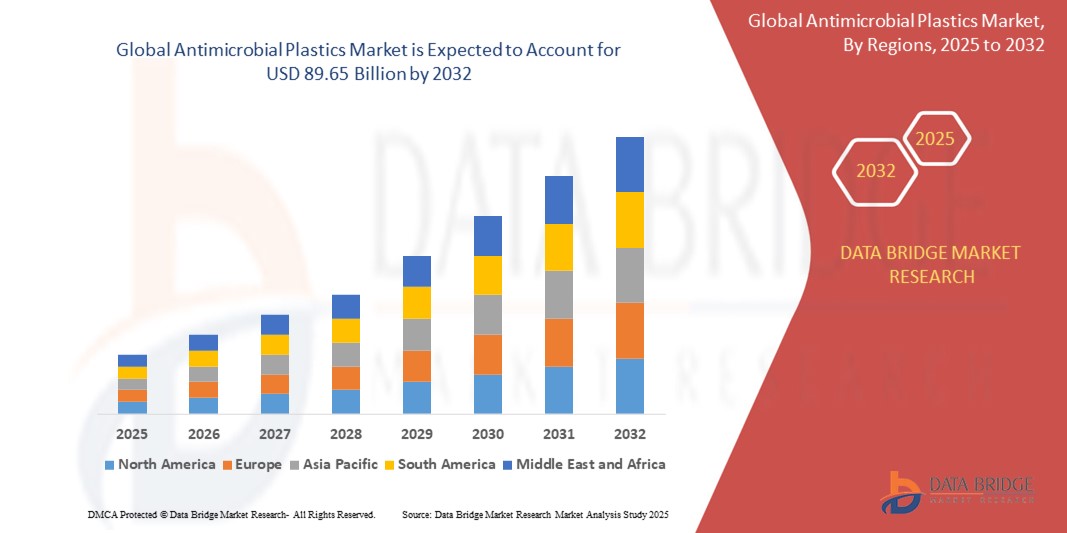
- The global antimicrobial plastics market size was valued at USD 47.90 billion in 2024 and is expected to reach USD 89.65 billion by 2032, at a CAGR of 8.15% during the forecast period
- The market growth is primarily driven by increasing demand for hygienic and safe materials in healthcare, packaging, and consumer goods, fueled by rising awareness of infection control and advancements in antimicrobial technologies
- In addition, growing consumer preference for durable, bacteria-resistant products in residential and commercial applications is positioning antimicrobial plastics as a preferred material, significantly boosting market expansion
Antimicrobial Plastics Market Analysis
- Antimicrobial plastics, embedded with additives that inhibit microbial growth, are increasingly critical in applications requiring high hygiene standards, such as medical devices, food packaging, and consumer goods, due to their ability to enhance safety and product longevity
- The surge in demand is driven by heightened awareness of health and hygiene, particularly in healthcare and food industries, coupled with innovations in additive technologies that ensure long-lasting antimicrobial properties
- Asia-Pacific dominated the antimicrobial plastics market with the largest revenue share of 42.5% in 2024, driven by rapid industrialization, a robust manufacturing base, and high demand in healthcare and packaging sectors, particularly in countries such as China and India
- North America is expected to be the fastest-growing region during the forecast period, fueled by stringent regulations on hygiene in healthcare and food industries, coupled with increasing adoption of advanced antimicrobial materials in consumer goods and automotive applications
- The inorganic additive segment dominated the largest market revenue share of 65% in 2024, driven by the superior antimicrobial properties of materials such as silver and copper, which are highly effective against bacteria, fungi, and viruses
Report Scope and Antimicrobial Plastics Market Segmentation
|
Attributes |
Antimicrobial Plastics Key Market Insights |
|
Segments Covered |
|
|
Countries Covered |
North America
Europe
Asia-Pacific
Middle East and Africa
South America
|
|
Key Market Players |
|
|
Market Opportunities |
|
|
Value Added Data Infosets |
In addition to the insights on market scenarios such as market value, growth rate, segmentation, geographical coverage, and major players, the market reports curated by the Data Bridge Market Research also include import export analysis, production capacity overview, production consumption analysis, price trend analysis, climate change scenario, supply chain analysis, value chain analysis, raw material/consumables overview, vendor selection criteria, PESTLE Analysis, Porter Analysis, and regulatory framework. |
Antimicrobial Plastics Market Trends
“Increasing Integration of Sustainable and Bio-based Antimicrobial Additives”
- The global antimicrobial plastics market is experiencing a notable trend toward the integration of sustainable and bio-based antimicrobial additives to meet growing environmental concerns
- These additives, including inorganic and organic compounds, are being developed to provide long-lasting antimicrobial protection while minimizing environmental impact
- Advanced manufacturing processes are enabling the production of antimicrobial plastics with enhanced durability, ensuring prolonged efficacy against bacteria, fungi, and viruses
- For instances, companies are innovating with eco-friendly additives such as BASF’s Ecovio Biomaster and Microban’s MicroGuard, which are designed for applications in packaging, healthcare, and consumer goods, aligning with sustainability goals
- This trend is increasing the appeal of antimicrobial plastics for environmentally conscious consumers and industries, particularly in packaging and healthcare, where hygiene and sustainability are critical
- Bio-based antimicrobial solutions are being tailored to meet stringent regulatory standards, enhancing their adoption in regions with robust environmental regulations
Antimicrobial Plastics Market Dynamics
Driver
“Rising Demand for Hygienic and Safe Materials Across Industries”
- The growing consumer and industrial demand for hygienic materials in applications such as medical devices, food packaging, and consumer goods is a key driver for the global antimicrobial plastics market
- Antimicrobial plastics enhance safety by inhibiting the growth of harmful microorganisms, reducing the risk of contamination and extending product lifespan in applications such as hospital equipment, food containers, and automotive interiors
- Government regulations, particularly in Europe and North America, mandating hygiene standards in healthcare and food safety are accelerating the adoption of antimicrobial plastics
- The expansion of IoT-enabled manufacturing and advancements in material science are enabling broader applications, with faster production and improved performance of antimicrobial plastics
- Manufacturers are increasingly incorporating antimicrobial plastics as standard features in products to meet consumer expectations for cleaner, safer environments, especially in Asia-Pacific, the dominating region, where healthcare and packaging sectors are expanding rapidly
Restraint/Challenge
“Rising Demand for Hygienic and Safe Materials Across Industries”
- The high cost of incorporating antimicrobial additives, such as silver or copper-based compounds, into plastics poses a significant barrier to adoption, particularly in cost-sensitive markets such as emerging economies
- The integration of antimicrobial properties into commodity, engineering, and high-performance plastics requires sophisticated manufacturing processes, increasing production complexity and costs
- Data privacy and environmental concerns related to the disposal of antimicrobial plastics present challenges, as some additives may have long-term environmental impacts, raising compliance issues with regulations such as the EU’s REACH framework
- The fragmented regulatory landscape across regions, particularly concerning the use of certain antimicrobial agents, complicates market operations for global manufacturers, especially in Asia-Pacific, where diverse regulations exist across countries such as China and India
- These factors may limit market growth in regions with high cost sensitivity or stringent environmental and safety regulations, despite North America being the fastest-growing region due to its focus on innovation and healthcare advancements
Antimicrobial Plastics market Scope
The market is segmented on the basis of additive, type, and application.
- By Additive
On the basis of additive, the antimicrobial plastics market is segmented into inorganic and organic additives. The inorganic additive segment dominated the largest market revenue share of 65% in 2024, driven by the superior antimicrobial properties of materials such as silver and copper, which are highly effective against bacteria, fungi, and viruses. These additives are widely used in healthcare, packaging, and construction due to their durability and non-volatile nature.
The organic additive segment is anticipated to witness significant growth from 2025 to 2032, driven by advancements in eco-friendly and biodegradable antimicrobial agents. Growing consumer and regulatory demand for sustainable materials is expected to boost the adoption of organic additives, particularly in consumer goods and food packaging applications.
- By Type
On the basis of type, the antimicrobial plastics market is segmented into commodity plastics, engineering plastics, high-performance plastics, and others. The commodity plastics segment dominated with a 55% market share in 2024, primarily due to its cost-effectiveness, versatility, and widespread use in packaging, healthcare, and consumer goods. Polypropylene (PP) and polyethylene (PE) are key subsegments, with PP alone accounting for approximately 20% of the commodity plastics market.
The engineering plastics segment is expected to exhibit the fastest growth rate of 8.3% from 2025 to 2032, driven by increasing demand for lightweight, durable materials in automotive and healthcare applications. Their superior mechanical and thermal properties make them ideal for high-value applications requiring enhanced performance.
- By Application
On the basis of application, the antimicrobial plastics market is segmented into packaging, automotive, consumer goods, medical and healthcare, building and construction, and others. The medical and healthcare segment held the largest market revenue share of 31.46% in 2024, driven by the critical need to reduce healthcare-associated infections (HAIs) through the use of antimicrobial plastics in medical devices, hospital furniture, and PPE.
The packaging segment is anticipated to witness the fastest growth from 2025 to 2032, with a projected market value of USD 32.2 billion by 2035. This growth is fueled by rising demand for antimicrobial packaging to enhance food safety, extend shelf life, and meet consumer hygiene expectations, particularly in the food and beverage industry.
Antimicrobial Plastics Market Regional Analysis
- Asia-Pacific dominated the antimicrobial plastics market with the largest revenue share of 42.5% in 2024, driven by rapid industrialization, a robust manufacturing base, and high demand in healthcare and packaging sectors, particularly in countries such as China and India
- Consumers prioritize antimicrobial plastics for reducing contamination risks, enhancing product longevity, and ensuring safety, particularly in healthcare and food packaging applications across diverse global markets
- Growth is supported by advancements in antimicrobial additive technologies, such as silver and copper-based inorganic additives, alongside rising adoption in both OEM and aftermarket applications across multiple industries
Japan Antimicrobial Plastics Market Insight
Japan’s antimicrobial plastics market is expected to witness rapid growth due to strong consumer preference for high-quality, technologically advanced plastics that enhance safety and hygiene. The presence of major manufacturers and the integration of antimicrobial plastics in OEM products, such as medical devices and electronics, accelerate market penetration. Rising interest in aftermarket applications also contributes to growth.
China Antimicrobial Plastics Market Insight
China holds the largest share of the Asia-Pacific antimicrobial plastics market, propelled by rapid urbanization, rising healthcare expenditure, and increasing demand for hygienic solutions. The country’s growing middle class and focus on infection prevention support the adoption of advanced antimicrobial plastics. Strong domestic manufacturing capabilities and competitive pricing enhance market accessibility.
North America Antimicrobial Plastics Market Insight
North America is the fastest-growing region in the antimicrobial plastics market, with a significant revenue share in 2023, driven by a robust healthcare sector, increasing consumer demand for hygienic products, and stringent regulatory standards for infection control. Consumers prioritize antimicrobial plastics for their ability to reduce microbial contamination, enhance product safety, and extend durability, particularly in healthcare, packaging, and consumer goods applications. Growth is supported by technological advancements in antimicrobial additives, such as inorganic silver and copper-based solutions, alongside rising adoption in OEM and aftermarket segments across diverse industries.
U.S. Antimicrobial Plastics Market Insight
The U.S. antimicrobial plastics market is expected to witness significant growth, fueled by y strong demand in healthcare, packaging, and consumer goods sectors. Increasing consumer awareness of hygiene and infection control, coupled with stringent regulatory standards, drives market expansion. The integration of antimicrobial plastics in medical devices and aftermarket products, such as consumer electronics, further supports a robust product ecosystem.
Europe Antimicrobial Plastics Market Insight
The Europe antimicrobial plastics market is expected to witness significant growth, supported by regulatory emphasis on infection control and hygiene standards. Consumers seek plastics that enhance safety while maintaining durability, particularly in healthcare and food packaging. Growth is prominent in both new product manufacturing and retrofit applications, with countries such as Germany and France showing significant adoption due to rising health consciousness and urban infrastructure demands.
U.K. Antimicrobial Plastics Market Insight
The U.K. market for antimicrobial plastics is expected to witness rapid growth, driven by demand for hygienic solutions in healthcare and consumer goods in urban and suburban settings. Increased awareness of antimicrobial benefits for infection prevention and product durability encourages adoption. Evolving regulations balancing antimicrobial efficacy with environmental compliance further influence consumer and manufacturer choices.
Germany Antimicrobial Plastics Market Insight
Germany is expected to witness rapid growth in the antimicrobial plastics market, attributed to its advanced manufacturing sector and high consumer focus on hygiene and sustainability. German consumers prefer technologically advanced antimicrobial plastics that reduce microbial growth and contribute to safer environments. The integration of these plastics in premium medical devices, automotive components, and aftermarket products supports sustained market growth.
Antimicrobial Plastics Market Share
The antimicrobial plastics industry is primarily led by well-established companies, including:
- DuPont (U.S.)
- BASF SE (Germany)
- Lonza (Switzerland)
- Avient Corporation (U.S.)
- Microban International (U.S.)
- Parx Materials NV (Netherlands)
- King Plastic Corporation (U.S.)
- BioCote Limited (U.K.)
- Milsuch asn & Company (U.S.)
- BY SANITIZED AG (Switzerland)
- Celanese Corporation (U.S.)
- Teknor Apex (U.S.)
- Bayer AG (Germany)
What are the Recent Developments in Global Antimicrobial Plastics Market?
- In July 2024, DuPont de Nemours, Inc. completed its acquisition of Donatelle Plastics Incorporated, a leading U.S.-based medical device contract manufacturer. This strategic move expands DuPont’s healthcare solutions portfolio, particularly in high-growth therapeutic areas such as electrophysiology, drug delivery, and diagnostics. Donatelle brings advanced capabilities in injection molding, liquid silicone rubber processing, and device assembly, which could support the integration of antimicrobial plastic technologies into future medical applications. The acquisition underscores DuPont’s commitment to innovation and its growing presence in the medical device manufacturing sector
- In July 2023, Microban International launched a new antimicrobial coating specifically designed for plastic surfaces, aimed at inhibiting the growth of bacteria, mold, and mildew. This advanced coating is suitable for a wide range of applications, including food packaging, medical devices, and toys, offering long-lasting protection and improved product hygiene. The innovation reflects Microban’s continued commitment to surface protection technologies, enhancing both durability and safety. By integrating antimicrobial functionality into plastics, Microban addresses growing consumer demand for cleaner, safer products, while supporting sustainability through extended product lifespans
- In June 2023, Solvay expanded its antimicrobial plastics portfolio with the launch of Sorona® Antimicrobial and Hytrel® Antimicrobial. These innovative materials offer built-in protection against microbial growth, making them ideal for applications in food packaging, medical devices, and textiles. Sorona Antimicrobial combines high performance with sustainability, while Hytrel Antimicrobial provides durability and flexibility for demanding environments. The launch reflects Solvay’s commitment to environmental responsibility and advanced material science, addressing growing market demand for hygienic and sustainable solutions across industries that rely on aliphatic hydrocarbon solvents in production
- In May 2023, BASF introduced Ecovio Biomaster, a bio-based, biodegradable plastic enhanced with antimicrobial properties. Designed for applications such as food packaging, medical devices, and personal care products, this innovative material combines sustainability with functionality. Ecovio Biomaster helps prevent microbial growth, thereby extending product lifespan and reducing waste. The launch reflects BASF’s commitment to eco-friendly solutions and addresses growing consumer and regulatory demand for sustainable antimicrobial technologies. By merging biodegradability with performance, BASF continues to lead in developing advanced materials for a circular economy
- In February 2023, Microban International launched MicroGuard™, a new series of metal-free antimicrobial additives designed to deliver antifungal protection for PVC, PU, and EVA plastics, including foam applications. This innovative technology offers 24/7 built-in protection, preventing microbial degradation and significantly extending product lifespan. MicroGuard is a non-leaching, environmentally conscious alternative to traditional arsenic-based OBPA additives, addressing growing regulatory concerns. Available in both pellet and liquid formulations, it can be seamlessly integrated during manufacturing and is globally registered. The launch underscores Microban’s commitment to product longevity, performance, and sustainable innovation

- Interactive Data Analysis Dashboard
- Company Analysis Dashboard for high growth potential opportunities
- Research Analyst Access for customization & queries
- Competitor Analysis with Interactive dashboard
- Latest News, Updates & Trend analysis
- Harness the Power of Benchmark Analysis for Comprehensive Competitor Tracking
Global Antimicrobial Plastics Market, Supply Chain Analysis and Ecosystem Framework
To support market growth and help clients navigate the impact of geopolitical shifts, DBMR has integrated in-depth supply chain analysis into its Global Antimicrobial Plastics Market research reports. This addition empowers clients to respond effectively to global changes affecting their industries. The supply chain analysis section includes detailed insights such as Global Antimicrobial Plastics Market consumption and production by country, price trend analysis, the impact of tariffs and geopolitical developments, and import and export trends by country and HSN code. It also highlights major suppliers with data on production capacity and company profiles, as well as key importers and exporters. In addition to research, DBMR offers specialized supply chain consulting services backed by over a decade of experience, providing solutions like supplier discovery, supplier risk assessment, price trend analysis, impact evaluation of inflation and trade route changes, and comprehensive market trend analysis.
Data collection and base year analysis are done using data collection modules with large sample sizes. The stage includes obtaining market information or related data through various sources and strategies. It includes examining and planning all the data acquired from the past in advance. It likewise envelops the examination of information inconsistencies seen across different information sources. The market data is analysed and estimated using market statistical and coherent models. Also, market share analysis and key trend analysis are the major success factors in the market report. To know more, please request an analyst call or drop down your inquiry.
The key research methodology used by DBMR research team is data triangulation which involves data mining, analysis of the impact of data variables on the market and primary (industry expert) validation. Data models include Vendor Positioning Grid, Market Time Line Analysis, Market Overview and Guide, Company Positioning Grid, Patent Analysis, Pricing Analysis, Company Market Share Analysis, Standards of Measurement, Global versus Regional and Vendor Share Analysis. To know more about the research methodology, drop in an inquiry to speak to our industry experts.
Data Bridge Market Research is a leader in advanced formative research. We take pride in servicing our existing and new customers with data and analysis that match and suits their goal. The report can be customized to include price trend analysis of target brands understanding the market for additional countries (ask for the list of countries), clinical trial results data, literature review, refurbished market and product base analysis. Market analysis of target competitors can be analyzed from technology-based analysis to market portfolio strategies. We can add as many competitors that you require data about in the format and data style you are looking for. Our team of analysts can also provide you data in crude raw excel files pivot tables (Fact book) or can assist you in creating presentations from the data sets available in the report.













