Antimicrobial Wipes Market Size
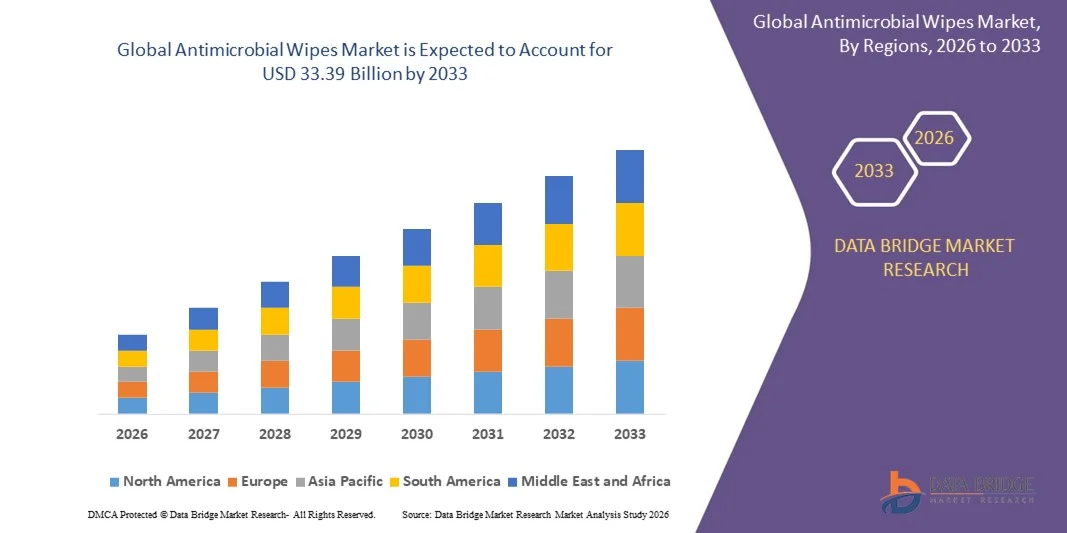
- The global antimicrobial wipes market size was valued at USD 11.38 billion in 2025 and is expected to reach USD 33.39 billion by 2033, at a CAGR of 14.40% during the forecast period
- The market growth is largely fuelled by the rising demand for convenient hygiene products across residential, commercial, and healthcare settings
- The increasing emphasis on infection prevention and surface disinfection continues to strengthen market expansion
Antimicrobial Wipes Market Analysis
- The antimicrobial wipes market is witnessing strong growth due to heightened hygiene awareness and the increasing need for quick and effective disinfection solutions across various industries
- The expansion of retail distribution channels, coupled with product innovations such as biodegradable and skin-friendly formulations, is shaping the overall market trajectory
- North America dominated the antimicrobial wipes market with the largest revenue share of 38.50% in 2025, driven by rising hygiene awareness, stringent infection control protocols, and increasing demand in healthcare, personal care, and commercial sectors
- Asia-Pacific region is expected to witness the highest growth rate in the global antimicrobial wipes market, driven by rapid urbanization, increasing disposable incomes, rising awareness of personal and surface hygiene, and expansion of modern retail and healthcare infrastructure
- The wet segment held the largest market revenue share in 2025, driven by its convenience, ready-to-use formulation, and superior cleaning efficiency. Wet wipes are widely preferred for personal hygiene, surface cleaning, and disinfection purposes, making them a popular choice across households, healthcare, and commercial establishments
Report Scope and Antimicrobial Wipes Market Segmentation
|
Attributes |
Antimicrobial Wipes Key Market Insights |
|
Segments Covered |
|
|
Countries Covered |
North America
Europe
Asia-Pacific
Middle East and Africa
South America
|
|
Key Market Players |
• Edgewell Personal Care (U.S.) |
|
Market Opportunities |
|
|
Value Added Data Infosets |
In addition to the insights on market scenarios such as market value, growth rate, segmentation, geographical coverage, and major players, the market reports curated by the Data Bridge Market Research also include in-depth expert analysis, pricing analysis, brand share analysis, consumer survey, demography analysis, supply chain analysis, value chain analysis, raw material/consumables overview, vendor selection criteria, PESTLE Analysis, Porter Analysis, and regulatory framework. |
Antimicrobial Wipes Market Trends
Rise of Point-Of-Care Testing In Livestock Diagnostics
- The global livestock diagnostics market is witnessing a strong shift toward point-of-care (POC) testing, enabling faster, on-farm disease detection and immediate treatment decisions. The portability, accuracy, and speed of POC systems are improving herd health outcomes and reducing disease-related losses across both large commercial farms and smallholder setups. This transition is significantly enhancing real-time decision-making and reducing reliance on centralized laboratory facilities
- Adoption of mobile diagnostic platforms is rising in remote and underserved regions, supported by handheld devices that eliminate delays caused by limited access to veterinary laboratories. Government programs and NGO initiatives focused on rural animal health continue to accelerate this trend, creating greater awareness among farmers regarding early disease detection. These tools are helping bridge the gap between advanced diagnostics and rural livestock communities
- The ease of use and cost-effectiveness of modern POC tools are expanding their utilization for routine herd screening, strengthening disease surveillance and improving farmers’ ability to manage infections early. Frequent testing without heavy financial or logistical burdens is enabling better monitoring of disease outbreaks. This is contributing to healthier livestock populations and improved farm productivity
- For instance, in 2023, dairy cooperatives in rural India reported a notable reduction in milk contamination after deploying on-farm mastitis POC kits, enabling early detection, better milk quality, and reduced treatment costs. These cost-effective solutions also helped farmers minimize economic losses associated with delayed diagnoses. The success of such programs is encouraging wider adoption of POC tools across emerging markets
- While POC diagnostics are reshaping livestock health management, sustained growth depends on improved affordability, user training, and technology localization to maximize adoption across diverse farming environments. Manufacturers are increasingly focusing on creating rugged, user-friendly tools suitable for harsh field conditions. Continued innovation and partnerships will be essential to unlock the full potential of POC solutions
Antimicrobial Wipes Market Dynamics
Driver
Growing Prevalence Of Zoonotic Diseases And Increasing Farmer Awareness
- The rising incidence of zoonotic diseases is compelling livestock producers and government bodies to prioritize early diagnostics to protect both animal and human health. Key diseases such as brucellosis, bovine tuberculosis, and leptospirosis are driving investments in veterinary testing as a preventive measure. This growing urgency is reinforcing the need for reliable, rapid, and accessible diagnostic tools
- Farmers are becoming more aware of the financial impact of undiagnosed infections, including productivity losses and trade restrictions, which is increasing the adoption of diagnostic kits even among small-scale operators. Better awareness campaigns and improved veterinary outreach have empowered farmers to incorporate regular testing into routine herd management. This shift is contributing to more resilient and disease-resistant livestock populations
- Regulatory agencies and international organizations are strengthening disease-monitoring frameworks through subsidized testing programs and structured surveillance systems. Supportive government policies are improving diagnostic access in both developed and developing regions. These initiatives are creating a strong foundation for proactive animal health management
- For instance, in 2022, the European Union expanded mandatory screening protocols for priority zoonotic diseases, boosting demand for rapid diagnostic tools across livestock farms. This regulatory expansion led to increased investments in modern testing technologies. The policy changes also promoted greater compliance among farmers and veterinarians
- Although awareness and institutional efforts support market growth, enhanced diagnostic accessibility and deeper integration of technology into routine farm practices are essential for long-term adoption. Bridging the knowledge gap between modern tools and end users will be critical for maximizing efficiency. Strengthening public–private collaborations will further accelerate diagnostic penetration
Restraint/Challenge
High Cost Of Advanced Diagnostic Equipment And Limited Access In Rural Regions
- Advanced diagnostic systems such as ELISA and PCR analyzers remain costly, limiting their use to well-funded veterinary centers and large commercial farms, while smaller farmers struggle to afford such technologies. These high-capital systems often require regular maintenance and specialized operation. The overall cost burden restricts their widespread adoption
- Rural regions face shortages of trained personnel and inadequate infrastructure, creating delays in testing and hindering timely disease detection. Veterinary professionals in remote areas often lack the resources needed to handle sophisticated equipment. This shortage contributes to inconsistent diagnostic practices and delayed treatment responses
- Supply chain inefficiencies in remote areas restrict the consistent availability of diagnostic kits and reagents, increasing reliance on symptomatic treatment that often results in higher mortality and productivity loss. Unreliable distribution networks and high transportation costs further compound these challenges. Such gaps ultimately slow down disease detection efforts in vulnerable regions
- For instance, in 2023, reports from Sub-Saharan Africa indicated that more than 70% of smallholder farmers lacked access to formal diagnostic services due to equipment cost and infrastructure barriers. Many farmers remain dependent on informal or traditional methods of diagnosis, which compromise accuracy and timely intervention. These constraints highlight the urgent need for scalable, field-friendly diagnostic models
- Although innovations continue to evolve, bridging the affordability gap, improving rural distribution networks, and deploying decentralized solutions will be crucial for expanding market penetration. Portable low-cost devices and mobile veterinary units offer promising alternatives for underserved regions. Addressing these barriers will enhance overall animal health outcomes and market growth
Antimicrobial Wipes Market Scope
The market is segmented on the basis of type, distribution channel, age group, fragrance, package, disposable type, usage, and application.
- By Type
On the basis of type, the antimicrobial wipes market is segmented into wet and dry. The wet segment held the largest market revenue share in 2025, driven by its convenience, ready-to-use formulation, and superior cleaning efficiency. Wet wipes are widely preferred for personal hygiene, surface cleaning, and disinfection purposes, making them a popular choice across households, healthcare, and commercial establishments.
The dry segment is expected to witness the fastest growth rate from 2026 to 2033, driven by its longer shelf life, cost-effectiveness, and ability to be moistened with customized solutions before use. Dry wipes are particularly popular for controlled applications in healthcare settings, travel kits, and industrial cleaning, where flexibility and portability are key factors.
- By Distribution Channel
On the basis of distribution channel, the market is segmented into hypermarkets or supermarkets, grocery stores, convenience stores, online, and others. The hypermarkets or supermarkets segment held the largest market share in 2025, owing to the wide product availability, competitive pricing, and one-stop shopping convenience.
The online segment is expected to witness the fastest growth from 2026 to 2033, driven by increasing e-commerce penetration, doorstep delivery convenience, bulk purchase options, and subscription-based models that cater to growing consumer demand for hygiene products.
- By Age Group
On the basis of age group, the market is segmented into kids, tween, teen, and adults. The adults segment held the largest market share in 2025, driven by the rising awareness of personal hygiene, regular use in workplaces, gyms, and healthcare facilities, and increased adoption of sanitizing routines.
The kids segment is projected to witness the fastest growth rate during 2026–2033, fueled by parental preference for safe and gentle hygiene products for children, along with the rising demand in daycare centers, schools, and recreational facilities.
- By Fragrance
On the basis of fragrance, the antimicrobial wipes market is segmented into lightly scented, scented, fragrance-free, unscented, and hypoallergenic. The lightly scented segment held the largest share in 2025, due to consumer preference for mild fragrances that provide a refreshing feel while performing cleaning and sanitizing functions effectively.
The fragrance-free segment is expected to witness the fastest growth from 2026 to 2033, driven by increasing demand for sensitive-skin products, allergy prevention, and applications in healthcare, childcare, and dermatology-sensitive environments.
- By Package
On the basis of package, the market is segmented into tub, pack, and soft pack. The soft pack segment held the largest market share in 2025, attributed to its portability, resealability, and convenience for on-the-go usage in households, offices, and travel scenarios.
The tub segment is expected to witness the fastest growth rate from 2026 to 2033, driven by bulk purchase preferences, frequent usage in commercial and healthcare settings, and cost efficiency for large-scale operations.
- By Disposable Type
On the basis of disposable type, the market is segmented into disposable and non-disposable. The disposable segment held the largest market share in 2025, due to hygiene concerns, single-use convenience, and widespread use in healthcare, food service, and personal care applications.
The non-disposable segment is expected to witness the fastest growth from 2026 to 2033, driven by sustainability trends, reusable cleaning solutions, and the increasing adoption of eco-friendly products in industrial and institutional settings.
• By Usage
On the basis of usage, the market is segmented into on the go, singles, big ones, and canisters. The on-the-go segment held the largest market share in 2025, attributed to rising demand for portable hygiene solutions during travel, outdoor activities, and commuting.
The big ones segment is expected to witness the fastest growth rate from 2026 to 2033, driven by bulk consumption in healthcare facilities, commercial cleaning operations, and households seeking higher value and extended usage.
- By Application
On the basis of application, the market is segmented into sanitizing, skin care, wound cleaning, and others. The sanitizing segment held the largest market share in 2025, due to heightened consumer awareness of hygiene, disease prevention, and frequent disinfection practices in households, workplaces, and healthcare facilities.
The skin care segment is projected to witness the fastest growth rate from 2026 to 2033, driven by rising consumer interest in multifunctional wipes that provide cleansing along with moisturizing, soothing, or protective benefits for the skin.
Antimicrobial Wipes Market Regional Analysis
- North America dominated the antimicrobial wipes market with the largest revenue share of 38.50% in 2025, driven by rising hygiene awareness, stringent infection control protocols, and increasing demand in healthcare, personal care, and commercial sectors
- Consumers and institutions in the region highly value the convenience, efficacy, and ready-to-use formulations offered by antimicrobial wipes for surface cleaning, hand sanitation, and wound care
- This widespread adoption is further supported by strong retail infrastructure, high disposable incomes, and increasing concern about infectious diseases, positioning antimicrobial wipes as a preferred solution across households, hospitals, and workplaces
U.S. Antimicrobial Wipes Market Insight
The U.S. antimicrobial wipes market captured the largest revenue share in North America in 2025, fueled by growing hygiene consciousness, the proliferation of healthcare facilities, and the expanding e-commerce sector. Consumers are increasingly adopting disinfecting wipes for personal and surface hygiene. Rising demand for travel-friendly and ready-to-use wipes, combined with preference for scented and hypoallergenic variants, is further driving the market. Moreover, ongoing campaigns for infection prevention in public spaces are significantly supporting market expansion.
Europe Antimicrobial Wipes Market Insight
The Europe antimicrobial wipes market is expected to witness the fastest growth rate from 2026 to 2033, primarily driven by stringent hygiene and sanitation regulations, rising infection control awareness, and the need for safer healthcare environments. Urbanization, increasing disposable incomes, and adoption of convenient cleaning solutions are encouraging widespread usage. Growth spans hospitals, hospitality, retail, and personal care sectors, with wipes being incorporated into both routine cleaning and emergency hygiene protocols.
U.K. Antimicrobial Wipes Market Insight
The U.K. antimicrobial wipes market is expected to witness the fastest growth rate from 2026 to 2033, driven by heightened hygiene consciousness, rising concerns over public health, and increasing use in healthcare and personal care settings. Consumer preference for quick, effective, and portable cleaning solutions is boosting adoption. The country’s strong retail and e-commerce channels further support market expansion.
Germany Antimicrobial Wipes Market Insight
The Germany antimicrobial wipes market is expected to witness rapid growth from 2026 to 2033, fueled by increasing focus on hygiene, infection prevention, and eco-friendly cleaning solutions. Germany’s well-developed healthcare infrastructure and emphasis on sustainability promote the adoption of antimicrobial wipes in hospitals, offices, and households. The integration of reusable and biodegradable wipes is gaining traction, aligning with local environmental and health standards.
Asia-Pacific Antimicrobial Wipes Market Insight
The Asia-Pacific antimicrobial wipes market is expected to witness the fastest growth rate from 2026 to 2033, driven by rising hygiene awareness, expanding healthcare infrastructure, and urbanization in countries such as China, Japan, and India. Government initiatives promoting public health and increasing penetration of retail and e-commerce channels are accelerating adoption. In addition, growing industrial and commercial cleaning requirements contribute to the rising demand.
Japan Antimicrobial Wipes Market Insight
The Japan antimicrobial wipes market is expected to witness significant growth from 2026 to 2033 due to high hygiene consciousness, increasing adoption in healthcare facilities, and demand for convenient personal care products. Japanese consumers are increasingly adopting travel-friendly, scented, and hypoallergenic wipes. Integration of wipes into daily hygiene routines and the emphasis on elderly care are further propelling market expansion.
China Antimicrobial Wipes Market Insight
The China antimicrobial wipes market accounted for the largest revenue share in Asia-Pacific in 2025, driven by rising urban population, increasing infection control awareness, and growing retail penetration. China is one of the largest markets for personal hygiene and surface cleaning products. The proliferation of e-commerce, coupled with demand for convenient, ready-to-use, and cost-effective antimicrobial wipes, is significantly contributing to market growth.
Antimicrobial Wipes Market Share
The Antimicrobial Wipes industry is primarily led by well-established companies, including:
• Edgewell Personal Care (U.S.)
• Johnson & Johnson Private Limited (U.S.)
• Nice-Pak Products, Inc. (U.S.)
• Reckitt Benckiser Group plc. (U.K.)
• 3M (U.S.)
• Unilever (U.K.)
• B. Braun Melsungen AG (Germany)
• Adventa Berhad (Malaysia)
• BD (U.S.)
• Hangzhou Beitai Daily Commodity Co., Ltd. (China)
• Cardinal Health (U.S.)
• Dynarex Corporation (U.S.)
• Ecolab (U.S.)
• Thermo Fisher Scientific (U.S.)
• Fuyang Yangyang Health Technology Co., Ltd. (China)
• Haining Twowell Daily Commodity Co., Ltd. (China)
• KCWW (China)
• LA Fresh (U.S.)
• Kutol (U.S.)
• Metrex Research, LLC. (U.S.)
• Novartis AG (Switzerland)
• Pharma-C (India)
• Smith & Nephew plc (U.K.)
• Shandong Star International Trade Co., Ltd. (China)
• Sage Products LLC (U.S.)
• Schülke & Mayr GmbH (Germany)
• Unicharm Corporation (Japan)
Latest Developments in Global Antimicrobial Wipes Market
- In August 2025, Clorox (U.S.) launched a new line of antimicrobial wipes featuring plant-based ingredients, aiming to meet growing consumer demand for sustainable and eco-friendly products. This initiative strengthens Clorox’s position in the green cleaning segment, enhances brand loyalty, and attracts a wider customer base, reinforcing its competitive advantage in the market
- In September 2025, 3M (U.S.) entered a strategic partnership with a leading technology firm to integrate AI into its antimicrobial wipes production. The move is designed to improve manufacturing efficiency, ensure consistent product quality, and reduce operational costs, enabling more competitive pricing and supporting growth in market share
- In October 2025, Ecolab (U.S.) expanded its distribution network across the Asia-Pacific region to increase accessibility of its antimicrobial wipes. This strategic expansion targets emerging markets with rising hygiene product demand, expected to drive sales growth, strengthen brand presence, and enhance Ecolab’s global market position

- Interactive Data Analysis Dashboard
- Company Analysis Dashboard for high growth potential opportunities
- Research Analyst Access for customization & queries
- Competitor Analysis with Interactive dashboard
- Latest News, Updates & Trend analysis
- Harness the Power of Benchmark Analysis for Comprehensive Competitor Tracking
Data collection and base year analysis are done using data collection modules with large sample sizes. The stage includes obtaining market information or related data through various sources and strategies. It includes examining and planning all the data acquired from the past in advance. It likewise envelops the examination of information inconsistencies seen across different information sources. The market data is analysed and estimated using market statistical and coherent models. Also, market share analysis and key trend analysis are the major success factors in the market report. To know more, please request an analyst call or drop down your inquiry.
The key research methodology used by DBMR research team is data triangulation which involves data mining, analysis of the impact of data variables on the market and primary (industry expert) validation. Data models include Vendor Positioning Grid, Market Time Line Analysis, Market Overview and Guide, Company Positioning Grid, Patent Analysis, Pricing Analysis, Company Market Share Analysis, Standards of Measurement, Global versus Regional and Vendor Share Analysis. To know more about the research methodology, drop in an inquiry to speak to our industry experts.
Data Bridge Market Research is a leader in advanced formative research. We take pride in servicing our existing and new customers with data and analysis that match and suits their goal. The report can be customized to include price trend analysis of target brands understanding the market for additional countries (ask for the list of countries), clinical trial results data, literature review, refurbished market and product base analysis. Market analysis of target competitors can be analyzed from technology-based analysis to market portfolio strategies. We can add as many competitors that you require data about in the format and data style you are looking for. Our team of analysts can also provide you data in crude raw excel files pivot tables (Fact book) or can assist you in creating presentations from the data sets available in the report.