


Antiretroviral Therapy Market Size
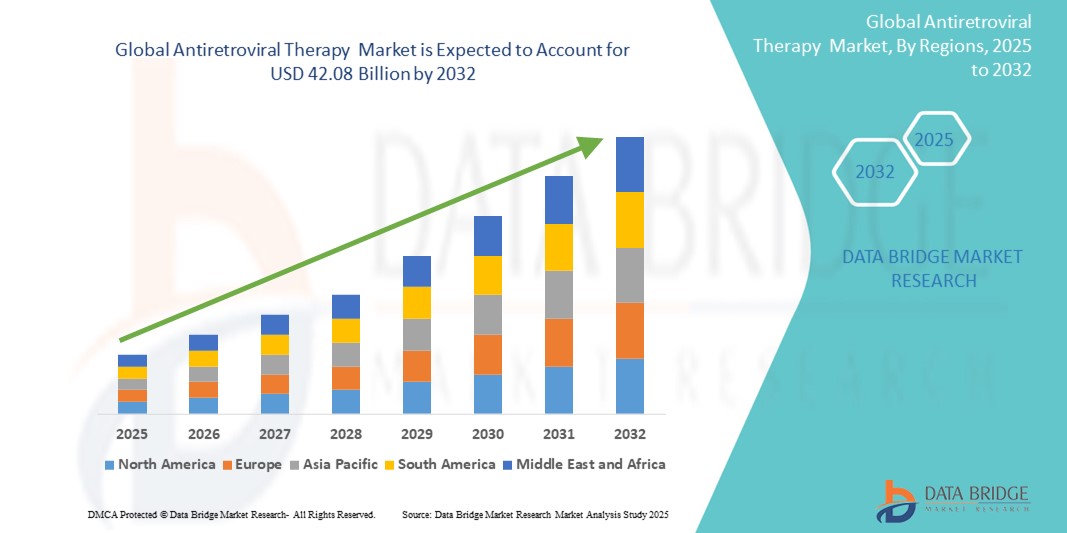
- The global Antiretroviral Therapy market size was valued at USD 28.7 Billion in 2024 and is expected to reach USD 42.08 Billion by 2032, at a CAGR of 4.9% during the forecast period
- The market growth is largely fueled by the growing adoption and technological progress within antiretroviral drugs and treatment protocols, leading to increased standardization and efficiency in both hospital and clinical settings.
- Furthermore, rising patient demand for effective, accessible, and well-integrated treatment options is establishing antiretroviral therapy as the cornerstone of HIV/AIDS management. These converging factors are accelerating the uptake of antiretroviral regimens, thereby significantly boosting the industry's growth.
Antiretroviral Therapy Market Analysis
- Antiretroviral therapy, offering pharmaceutical or therapeutic control of HIV infection, is increasingly vital components of modern infectious disease management systems in both hospital and clinical settings due to their enhanced efficacy, long-term viral suppression capabilities, and seamless integration with national treatment programs.
- The escalating demand for antiretroviral therapy is primarily fueled by the widespread adoption of standardized treatment guidelines, growing awareness of early HIV diagnosis and management, and a rising preference for simplified and accessible treatment regimens.
- North America dominates the antiretroviral therapy market with the largest revenue share of 40.01% in 2025, characterized by early adoption of combination therapies, high healthcare spending, and a strong presence of key pharmaceutical players, with the U.S. experiencing substantial growth in antiretroviral prescriptions, particularly in urban centers and high-prevalence areas, driven by innovations from both established drug manufacturers and biotech firms focusing on long-acting and injectable therapies.
- Asia-Pacific is expected to be the fastest growing region in the antiretroviral therapy market during the forecast period due to increasing disease awareness and rising access to healthcare infrastructure.
- Nucleoside reverse transcriptase inhibitors segment is expected to dominate the antiretroviral therapy market with a market share of 43.2% in 2025, driven by its established reputation for safety, effectiveness, and inclusion in first-line treatment regimens.
Report Scope and Antiretroviral Therapy Market Segmentation
|
Attributes |
Antiretroviral Therapy Key Market Insights |
|
Segments Covered |
|
|
Countries Covered |
North America
Europe
Asia-Pacific
Middle East and Africa
South America
|
|
Key Market Players |
|
|
Market Opportunities |
|
|
Value Added Data Infosets |
In addition to the insights on market scenarios such as market value, growth rate, segmentation, geographical coverage, and major players, the market reports curated by the Data Bridge Market Research also include in-depth expert analysis, pricing analysis, brand share analysis, consumer survey, demography analysis, supply chain analysis, value chain analysis, raw material/consumables overview, vendor selection criteria, PESTLE Analysis, Porter Analysis, and regulatory framework. |
Antiretroviral Therapy Market Trends
“Enhanced Efficacy Through AI and Digital Health Integration”
- A significant and accelerating trend in the global antiretroviral therapy market is the deepening integration with artificial intelligence (AI) and emerging digital health platforms such as remote monitoring tools, mobile health apps, and electronic health records. This fusion of technologies is significantly enhancing patient adherence and clinical decision-making in HIV treatment.
- For instance, mobile health applications integrated with AI algorithms can monitor patient medication adherence and send timely reminders, enabling continuous engagement in treatment. Similarly, AI-powered tools can analyze patient data from electronic health records to support clinicians in tailoring individualized antiretroviral regimens based on resistance patterns and comorbidities.
- AI integration in antiretroviral therapy enables features such as predicting patient adherence risks, recommending optimized dosing schedules, and providing intelligent alerts for potential drug interactions. For instance, some platforms utilize AI to analyze patterns in viral load and CD4 counts to flag treatment failure early and suggest alternative therapies. Furthermore, digital health solutions offer providers the ease of remote patient management, allowing them to monitor treatment outcomes and intervene proactively through telehealth consultations.
- The seamless integration of antiretroviral therapy with digital platforms and broader healthcare systems facilitates centralized management of HIV care. Through a single interface, clinicians can coordinate medication delivery, schedule appointments, and track health metrics alongside patient education and support services, creating a unified and data-driven treatment experience.
- This trend towards more intelligent, responsive, and interconnected care systems is fundamentally reshaping expectations in HIV treatment and chronic disease management. Consequently, companies such as ViiV Healthcare are developing AI-enabled adherence platforms with features such as predictive analytics, automated patient engagement, and integration with national HIV registries.
- The demand for antiretroviral therapies that offer seamless AI and digital health integration is growing rapidly across both high- and low-resource settings, as healthcare providers increasingly prioritize treatment outcomes, operational efficiency, and personalized care delivery.
Antiretroviral Therapy Market Dynamics
Driver
“Growing Need Due to Rising HIV Prevalence and Advancements in Treatment Access”
- The increasing prevalence of HIV infections globally, coupled with the accelerating implementation of universal treatment programs, is a significant driver for the heightened demand for antiretroviral therapy.
- For instance, in April 2024, ViiV Healthcare announced an expansion of its long-acting injectable therapy access programs in collaboration with global health organizations, aiming to improve delivery infrastructure in low-resource settings. Such strategies by key companies are expected to drive the antiretroviral therapy industry growth in the forecast period.
- As healthcare systems become more proactive in addressing the burden of HIV and seek enhanced patient outcomes, antiretroviral therapies offer advanced features such as once-daily dosing, high genetic barriers to resistance, and durable viral suppression, providing a compelling improvement over earlier-generation treatments.
- Furthermore, the growing availability of global health funding and the push for earlier diagnosis and treatment initiation are making antiretroviral therapies an integral component of national HIV programs, offering seamless integration with electronic health systems, laboratory services, and patient support platforms.
- The convenience of fixed-dose combinations, remote monitoring options for adherence, and the ability to manage treatment through mobile health applications are key factors propelling the adoption of antiretroviral therapy in both developed and developing regions. The trend towards simplified regimens and the increasing availability of affordable, generic options further contribute to market growth.
Restraint/Challenge
“Concerns Regarding Drug Resistance and High Treatment Costs”
- Concerns surrounding the emergence of drug-resistant HIV strains and the high cost of advanced antiretroviral regimens pose a significant challenge to broader market penetration. As antiretroviral therapies rely on long-term adherence and viral suppression, they are susceptible to treatment failure due to resistance mutations, raising anxieties among healthcare providers and patients about the durability and effectiveness of therapy.
- For instance, high-profile reports of rising resistance to certain first-line therapies in resource-limited settings have made some health systems hesitant to scale up antiretroviral programs without access to newer-generation drugs.
- Addressing these resistance concerns through regular viral load monitoring, resistance testing, and access to second- and third-line therapies is crucial for sustaining treatment success. Companies such as Gilead and ViiV Healthcare emphasize their portfolio of high-barrier-to-resistance therapies and ongoing research in their communications to reassure stakeholders. Additionally, the relatively high initial cost of some advanced antiretroviral therapy regimens compared to older generic options can be a barrier to adoption for price-sensitive healthcare systems, particularly in low-income regions or among uninsured populations. While basic regimens have become more affordable through generic manufacturing and global funding, premium options such as long-acting injectables or fixed-dose combinations often come with a higher price tag.
- While prices are gradually decreasing due to international procurement programs, the perceived premium for newer therapies can still hinder widespread adoption, especially for those who do not have access to reimbursement or subsidy mechanisms.
- Overcoming these challenges through expanded access to resistance management tools, provider education on optimal regimen selection, and the development of more affordable treatment innovations will be vital for sustained market growth.
Antiretroviral Therapy Market Scope
The market is segmented on the basis of class, route of administration, end-users, and distribution channel.
By Class
On the basis of class, the antiretroviral therapy market is segmented into nucleoside reverse transcriptase inhibitors, HIV protease inhibitors, non-nucleoside reverse transcriptase inhibitors, nucleotide reverse transcriptase inhibitors, HIV fusion inhibitors, and others. The nucleoside reverse transcriptase inhibitors segment dominates the largest market revenue share of 43.2% in 2025, driven by its established reputation for safety and effectiveness as a core component of first-line treatment regimens. Patients and healthcare providers often prioritize nucleoside reverse transcriptase inhibitors for their proven efficacy and manageable side effect profile. The market also sees strong demand for this class due to its inclusion in numerous fixed-dose combinations and its broad compatibility with various antiretroviral treatment protocols.
The HIV protease inhibitors segment is anticipated to witness the fastest growth rate of 21.7% from 2025 to 2032, fueled by increasing adoption in second- and third-line therapies, particularly in cases of drug resistance. Protease inhibitors offer high barriers to resistance and potent viral suppression, making them suitable for patients with treatment failure or complex therapeutic needs. The development of newer protease inhibitors with improved tolerability and dosing convenience also contributes to their growing popularity in clinical practice.
By Route of Administration
On the basis of route of administration, the antiretroviral therapy market is segmented into oral, parenteral, and others. The oral segment held the largest market revenue share in 2025, driven by the widespread availability of oral formulations and the ease of administration for patients. Oral antiretroviral therapies often offer convenient dosing schedules and high patient compliance, making them a popular choice for both first-line and maintenance treatments.
The parenteral segment is expected to witness the fastest CAGR from 2025 to 2032, driven by the development of long-acting injectable therapies that provide sustained drug release and reduce dosing frequency. Parenteral antiretroviral therapies are particularly valuable for patients with adherence challenges and those requiring specialized treatment regimens. Injectable formulations are increasingly favored for their potential to improve viral suppression rates and patient quality of life.
By End-Users
On the basis of end-users, the antiretroviral therapy market is segmented into hospitals, specialty clinics, and others. The hospitals segment held the largest market revenue share in 2025, driven by the widespread availability of comprehensive treatment facilities and the ability to provide integrated care for HIV patients. Hospitals often offer multidisciplinary support including diagnostics, counseling, and adherence monitoring, making them a central point for antiretroviral therapy delivery.
The specialty clinics segment is expected to witness the fastest CAGR from 2025 to 2032, favored for its focus on specialized HIV care and the ability to provide tailored treatment regimens. Specialty clinics are particularly popular in urban areas and regions with high HIV prevalence, where focused expertise and patient-centered approaches improve treatment outcomes.
By Distribution Channel
On the basis of distribution channel, the antiretroviral therapy market is segmented into hospital pharmacy, retail pharmacy, and others. The hospital pharmacy segment accounted for the largest market revenue share in 2024, driven by the widespread availability of antiretroviral therapies within healthcare institutions and the integration of treatment services. Hospitals often ensure reliable access to medications and provide patient counseling, making them a primary distribution point for antiretroviral drugs.
The retail pharmacy segment is expected to witness the fastest CAGR from 2025 to 2032, driven by increasing demand for convenient medication access and the expansion of pharmacy networks. Retail pharmacies benefit from their accessibility and ability to serve both urban and rural populations, offering flexibility for patients to obtain antiretroviral therapy outside of hospital settings.
Antiretroviral Therapy Market Regional Analysis
- North America dominates the antiretroviral therapy market with the largest revenue share of 40.01% in 2024, driven by a growing prevalence of HIV/AIDS, well-established healthcare infrastructure, and increased access to advanced treatment options.
- Patients and healthcare providers in the region highly value the availability of comprehensive antiretroviral therapy regimens, early diagnosis programs, and robust support services.
- This widespread adoption is further supported by high healthcare spending, strong government initiatives for HIV management, and the growing preference for personalized treatment plans, establishing antiretroviral therapy as a critical component of HIV care in both public and private healthcare settings.
U.S. Antiretroviral Therapy Market Insight
The U.S. antiretroviral therapy market captured the largest revenue share of 81% within North America in 2025, fueled by the widespread availability of advanced treatment options and strong government support for HIV/AIDS programs. Patients are increasingly prioritizing access to effective, well-tolerated antiretroviral regimens to improve long-term health outcomes. The growing emphasis on early diagnosis and treatment initiation, combined with robust demand for personalized medicine and adherence support services, further propels the antiretroviral therapy market. Moreover, the increasing integration of innovative therapies, including long-acting injectables and combination drugs, is significantly contributing to the market’s expansion.
Europe Antiretroviral Therapy Market Insight
The European antiretroviral therapy market is projected to expand at a substantial CAGR throughout the forecast period, primarily driven by strong government initiatives, increasing healthcare expenditure, and the growing prevalence of HIV/AIDS. The increase in urbanization, coupled with improved access to healthcare services, is fostering the adoption of antiretroviral therapies. European patients and healthcare providers are also drawn to the advancements in treatment efficacy and improved quality of life these therapies offer. The region is experiencing significant growth across hospital, clinic, and community healthcare settings, with antiretroviral therapies being incorporated into both public health programs and private healthcare plans.
U.K. Antiretroviral Therapy Market Insight
The U.K. antiretroviral therapy market is anticipated to grow at a noteworthy CAGR during the forecast period, driven by increasing awareness of HIV/AIDS management and a desire for improved treatment outcomes and patient adherence. Additionally, concerns regarding disease progression and transmission are encouraging both patients and healthcare providers to prioritize access to effective antiretroviral regimens. The U.K.’s robust healthcare infrastructure, alongside its strong public health initiatives and pharmaceutical distribution networks, is expected to continue to stimulate market growth.
Germany Antiretroviral Therapy Market Insight
The German antiretroviral therapy market is expected to expand at a considerable CAGR during the forecast period, fueled by increasing awareness of HIV management and the demand for advanced, patient-centric treatment options. Germany’s well-developed healthcare infrastructure, combined with its emphasis on innovation and high standards of care, promotes the adoption of antiretroviral therapies, particularly in hospital and specialty clinic settings. The integration of new treatment regimens with comprehensive patient support programs is also becoming increasingly prevalent, with a strong preference for effective, well-tolerated, and privacy-focused solutions aligning with local healthcare expectations.
Asia-Pacific Antiretroviral Therapy Market Insight
The Asia-Pacific antiretroviral therapy market is poised to grow at the fastest CAGR of over 24% in 2025, driven by increasing urbanization, rising healthcare expenditure, and technological advancements in countries such as China, Japan, and India. The region's growing focus on HIV awareness and government initiatives promoting access to treatment are driving the adoption of antiretroviral therapies. Furthermore, as APAC emerges as a manufacturing hub for pharmaceutical ingredients and formulations, the affordability and accessibility of antiretroviral therapies are expanding to a wider patient base.
Japan Antiretroviral Therapy Market Insight
The Japan antiretroviral therapy market is gaining momentum due to the country’s advanced healthcare infrastructure, rising awareness, and increasing focus on HIV management. The Japanese market places a significant emphasis on early diagnosis and effective treatment, and the adoption of antiretroviral therapies is driven by the increasing number of patients receiving continuous care. The integration of antiretroviral therapy with comprehensive healthcare services and patient support programs is fueling growth. Moreover, Japan’s aging population is likely to spur demand for safer, more tolerable treatment options in both outpatient and clinical settings.
China Antiretroviral Therapy Market Insight
The China antiretroviral therapy market accounted for the largest market revenue share in Asia Pacific in 2025, attributed to the country's expanding healthcare infrastructure, rising prevalence of HIV/AIDS, and increasing access to treatment. China stands as one of the largest markets for antiretroviral therapies, and these treatments are becoming increasingly available in both urban and rural healthcare settings. The government’s push towards improved healthcare access and the availability of affordable generic antiretroviral options, alongside strong domestic pharmaceutical manufacturers, are key factors propelling the market in China.
Antiretroviral Therapy Market Share
The Antiretroviral Therapy industry is primarily led by well-established companies, including:
- Teva Pharmaceutical Industries Ltd. (Israel)
- Lupin (India)
- ViiV Healthcare (UK)
- Bristol-Myers Squibb Company (USA)
- Mylan N.V. (USA)
- Sun Pharmaceutical Industries Ltd. (India)
- AbbVie Inc. (USA)
- Boehringer Ingelheim International GmbH (Germany)
- Novartis AG (Switzerland)
- Allergan (USA)
- Merck & Co., Inc. (USA)
- Sanofi (France)
- Gilead Sciences Inc. (USA)
- Johnson & Johnson (USA)
- GlaxoSmithKline plc (UK)
- Emcure Pharmaceuticals (India)
- Aurobindo Pharma (India)
- Viatris Inc. (USA)
- Cipla Healthcare Ltd. (India)
Latest Developments in Global Antiretroviral Therapy Market
- In March 2024, ViiV Healthcare announced that its gene-editing therapy, EBT-101, received fast-track designation from the FDA. This development underscores ViiV Healthcare’s commitment to pioneering innovative treatments aimed at achieving a functional cure for HIV by targeting and editing the viral genome.
- In August 2023, Aurobindo Pharma unveiled a pediatric HIV triple combination product tailored for children in low- and middle-income countries. This initiative highlights the company’s focus on improving pediatric HIV care accessibility and addressing the specific needs of vulnerable populations in resource-limited settings.
- In December 2022, Gilead Sciences received FDA approval for lenacapavir (brand name Sunlenca), a first-in-class capsid inhibitor for treating multi-drug resistant HIV. This approval marked a significant milestone in HIV treatment options.
- In October 2024, Gilead Sciences signed agreements with six generic drug manufacturers to produce affordable versions of its HIV prevention medication, lenacapavir, for 120 low- and lower-middle-income countries. This initiative aims to enhance global access to HIV prevention.
- In April 2023, UC Davis Health researchers deployed CAR T cell therapy to treat patients suffering from HIV, leveraging immunotherapy to stimulate the immune system and provide a novel approach to HIV treatment. This advancement highlights the growing integration of cutting-edge cellular therapies in managing chronic viral infections and represents a promising direction in HIV research and care.

- Interactive Data Analysis Dashboard
- Company Analysis Dashboard for high growth potential opportunities
- Research Analyst Access for customization & queries
- Competitor Analysis with Interactive dashboard
- Latest News, Updates & Trend analysis
- Harness the Power of Benchmark Analysis for Comprehensive Competitor Tracking
Data collection and base year analysis are done using data collection modules with large sample sizes. The stage includes obtaining market information or related data through various sources and strategies. It includes examining and planning all the data acquired from the past in advance. It likewise envelops the examination of information inconsistencies seen across different information sources. The market data is analysed and estimated using market statistical and coherent models. Also, market share analysis and key trend analysis are the major success factors in the market report. To know more, please request an analyst call or drop down your inquiry.
The key research methodology used by DBMR research team is data triangulation which involves data mining, analysis of the impact of data variables on the market and primary (industry expert) validation. Data models include Vendor Positioning Grid, Market Time Line Analysis, Market Overview and Guide, Company Positioning Grid, Patent Analysis, Pricing Analysis, Company Market Share Analysis, Standards of Measurement, Global versus Regional and Vendor Share Analysis. To know more about the research methodology, drop in an inquiry to speak to our industry experts.
Data Bridge Market Research is a leader in advanced formative research. We take pride in servicing our existing and new customers with data and analysis that match and suits their goal. The report can be customized to include price trend analysis of target brands understanding the market for additional countries (ask for the list of countries), clinical trial results data, literature review, refurbished market and product base analysis. Market analysis of target competitors can be analyzed from technology-based analysis to market portfolio strategies. We can add as many competitors that you require data about in the format and data style you are looking for. Our team of analysts can also provide you data in crude raw excel files pivot tables (Fact book) or can assist you in creating presentations from the data sets available in the report.













