


What is the Apple Juices Market Size and Growth Rate?
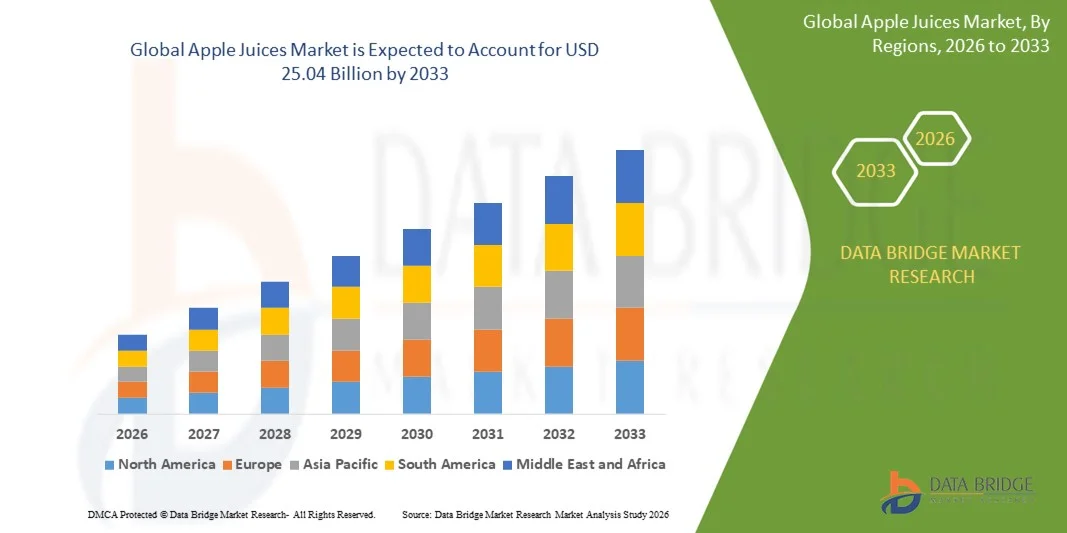
- As per Data Bridge Market Research Analysis the global apple juices market size was valued at USD 19.31 billion in 2025 and is expected to reach USD 25.04 billion by 2033, at a CAGR of 3.30% during the forecast period
- The market growth is largely fuelled by the increasing consumer inclination toward natural and healthy beverages, supported by the growing awareness of the nutritional benefits of apple juice such as antioxidants and vitamins
- Rising disposable incomes, urbanization, and the expansion of organized retail channels are further contributing to the growing consumption of packaged apple juices globally
Market Size & Forecast
- Global Market Value (2025): USD 19.31 Billion
- Expected Market Value (2033): USD 25.04 Billion
- Forecast CAGR (2026–2033): 3.30%
Apple Juices Market Analysis
- The global apple juices market is experiencing steady growth driven by shifting dietary preferences toward plant-based and fruit-derived beverages. The demand for 100% pure and organic apple juices is expanding, particularly among health-conscious consumers seeking alternatives to carbonated drinks
- Furthermore, innovations in processing technologies, packaging, and the introduction of new flavor blends and low-sugar variants are enhancing product appeal and supporting market penetration across diverse demographics
- North America dominated the apple juices market with the largest revenue share of 38.45% in 2025, driven by increasing consumer awareness of healthy beverages and the rising preference for natural fruit-based drinks over carbonated alternatives
- Asia-Pacific region is expected to witness the highest growth rate in the global apple juices market, driven by rising population, growing adoption of Western dietary habits, and expanding distribution networks for packaged fruit juices
- The conventional segment held the largest market revenue share in 2025, driven by its wide availability, lower price point, and extensive distribution across both developed and emerging markets. Conventional apple juices remain popular among mass consumers due to consistent taste, affordability, and accessibility through retail and foodservice channels
Report Scope and Apple Juices Market Segmentation
|
Attributes |
Apple Juices Key Market Insights |
|
Segments Covered |
|
|
Countries Covered |
North America
Europe
Asia-Pacific
Middle East and Africa
South America
|
|
Key Market Players |
|
|
Market Opportunities |
|
|
Value Added Data Infosets |
In addition to the insights on market scenarios such as market value, growth rate, segmentation, geographical coverage, and major players, the market reports curated by the Data Bridge Market Research also include in-depth expert analysis, pricing analysis, brand share analysis, consumer survey, demography analysis, supply chain analysis, value chain analysis, raw material/consumables overview, vendor selection criteria, PESTLE Analysis, Porter Analysis, and regulatory framework. |
What is the Key Trend in the Apple Juices Market?
Rising Demand For Organic And Cold-Pressed Apple Juices
- The increasing consumer shift toward health-conscious beverages is driving the popularity of organic and cold-pressed apple juices. Consumers are seeking minimally processed, nutrient-rich options free from additives and artificial sweeteners, which has led manufacturers to expand their organic product lines and invest in clean-label production. This growing preference for transparency and purity in ingredients is encouraging brands to obtain organic certifications and source sustainably grown apples to meet consumer trust and loyalty
- The preference for cold-pressed juices stems from their high nutritional retention and fresh taste, achieved through minimal heat processing. This has encouraged both established brands and new entrants to develop premium juice offerings targeting urban and health-focused consumers. Cold-pressed juices are increasingly positioned as luxury health beverages, with many companies introducing innovative packaging and direct-to-consumer models to capture evolving lifestyle trends
- The rising adoption of vegan and plant-based lifestyles has also boosted the demand for natural fruit beverages. Apple juice, being a versatile and widely accepted choice, is increasingly featured in plant-based drink portfolios and functional beverage innovations. The segment is further benefiting from collaborations between juice manufacturers and wellness brands to create energy-boosting and immunity-supporting apple juice blends tailored for active consumers
- For instance, in 2024, several European juice producers introduced organic cold-pressed apple juice blends with added vitamins and probiotics, appealing to wellness-driven consumers seeking both taste and health benefits. These innovations are not only meeting the rising demand for functional beverages but are also helping brands differentiate themselves in a competitive market. Companies adopting cold-pressed technology are also reducing energy consumption, contributing to sustainability goals while enhancing product value
- As consumer awareness regarding sustainability and ingredient sourcing grows, brands that emphasize eco-friendly packaging and organic farming practices are expected to gain a competitive edge in the market. Many producers are transitioning to recyclable and biodegradable packaging to reduce their carbon footprint. In addition, partnerships with local apple growers are becoming increasingly common to ensure traceability and promote farm-to-bottle transparency that resonates with modern consumers
Apple Juices Market Dynamics
Driver
Growing Focus On Health And Wellness Among Consumers
- The growing health consciousness among consumers is significantly propelling the apple juices market. Rising awareness of the benefits of antioxidants, vitamins, and natural sugars in apples has increased the demand for juices as healthy alternatives to carbonated beverages. This health-focused shift has encouraged beverage producers to highlight nutritional claims and health certifications, influencing purchasing decisions across both developed and emerging markets
- Consumers are increasingly opting for natural and preservative-free drinks that align with clean-label preferences. This trend is particularly prominent among millennials and urban populations, who prioritize nutritious beverages in their daily routines. With consumers becoming more ingredient-savvy, brands are reformulating products to eliminate artificial colors, flavors, and additives, thereby strengthening market credibility and customer loyalty
- Manufacturers are responding with product innovations such as low-sugar, fortified, and blended apple juice variants. These offerings cater to diverse dietary needs while enhancing the nutritional profile and market appeal of apple juices. Many producers are incorporating functional ingredients such as plant fibers, vitamins, and minerals to position their products as immunity-boosting beverages suitable for daily consumption
- For instance, in 2023, a U.S.-based beverage company launched a fortified apple juice line enriched with vitamin C and plant-based nutrients, targeting fitness enthusiasts and families seeking healthy hydration options. The company’s focus on sustainability and transparent sourcing helped attract a new segment of eco-conscious consumers. This development reflects a broader industry trend toward functional beverages designed to enhance health and vitality
- While health-driven demand continues to accelerate, ongoing efforts to educate consumers about natural juice benefits and maintain affordability will remain vital to sustaining growth. Strategic marketing campaigns emphasizing natural fruit content and the long-term health benefits of apple juices can further strengthen market presence. Expanding distribution through online platforms and retail chains will also be crucial to reach a broader audience
Restraint/Challenge
Fluctuating Raw Material Prices And High Sugar Content Concerns
- The apple juices market faces challenges from fluctuating apple supply and raw material costs due to unpredictable weather patterns and seasonal variations. These fluctuations impact production consistency and profit margins for manufacturers, especially in regions reliant on imported apples. Extreme weather conditions such as droughts or frost can disrupt supply chains and elevate costs, forcing companies to adjust pricing and sourcing strategies
- Rising consumer concerns over natural sugar levels in fruit juices have also led to cautious consumption, particularly among health-aware buyers. This trend has prompted brands to innovate with reduced-sugar or blended formulations to maintain appeal. Companies are introducing apple juice products mixed with other low-sugar fruits or infused with fiber to balance taste and nutritional value while responding to regulatory scrutiny on sugar content
- Small-scale juice producers often struggle with high processing costs and price competition from synthetic beverages, limiting their scalability and market penetration in developing economies. Many of these producers lack access to modern juicing technology and consistent raw material supplies, affecting production efficiency. Collaborative models, including co-manufacturing partnerships, are emerging as a solution to help smaller firms compete effectively
- For instance, in 2023, several Asian juice processors reported a 15% rise in production costs due to lower apple yields and higher logistics expenses, affecting overall supply chain efficiency. Manufacturers had to explore alternative sourcing and invest in storage technologies to stabilize year-round supply. This scenario underscores the need for diversified sourcing strategies to mitigate regional production risks
- Addressing these restraints will require industry players to strengthen supply chain resilience, diversify sourcing strategies, and invest in sugar-reduction technologies to meet evolving consumer expectations and ensure market stability. Strategic collaborations with local farmers and adoption of precision agriculture techniques can enhance productivity. Moreover, leveraging technology-driven forecasting tools can help manage supply fluctuations and stabilize pricing across markets
Apple Juices Market Scope
The market is segmented on the basis of nature, type, product type, form, end user, and distribution channel.
- By Nature
On the basis of nature, the apple juices market is segmented into organic and conventional. The conventional segment held the largest market revenue share in 2025, driven by its wide availability, lower price point, and extensive distribution across both developed and emerging markets. Conventional apple juices remain popular among mass consumers due to consistent taste, affordability, and accessibility through retail and foodservice channels.
The organic segment is expected to witness the fastest growth rate from 2026 to 2033, driven by rising consumer preference for chemical-free, non-GMO, and sustainably sourced beverages. Growing awareness of the health benefits associated with organic products and increasing demand for clean-label options are encouraging manufacturers to expand their organic juice offerings globally.
- By Type
On the basis of type, the apple juices market is segmented into jarred, boxed, tinned, bottled, and others. The bottled segment held the largest market revenue share in 2025, driven by its convenience, portability, and premium appeal among health-conscious consumers. Bottled apple juices dominate both retail and on-the-go consumption due to their easy availability and suitability for cold-pressed and fresh-pressed variants.
The boxed segment is expected to witness the fastest growth rate from 2026 to 2033, attributed to its eco-friendly packaging, longer shelf life, and cost-effectiveness. The rising focus on sustainability and the increasing adoption of recyclable carton packaging are supporting the expansion of boxed apple juices, especially in Europe and North America.
- By Product Type
On the basis of product type, the apple juices market is segmented into filtered and unfiltered. The filtered segment held the largest market revenue share in 2025, driven by its clarity, smooth texture, and long shelf stability preferred by mainstream consumers. Filtered apple juice is widely used in both direct consumption and food processing applications due to its consistent quality and appealing appearance.
The unfiltered segment is expected to witness the fastest growth rate from 2026 to 2033, owing to its higher nutrient retention and growing demand among health-conscious consumers. The presence of natural pulp and antioxidants makes unfiltered juice an attractive option for those seeking minimally processed beverages with authentic taste and added health benefits.
- By Form
On the basis of form, the apple juices market is segmented into powder, tablets, capsules, and liquid. The liquid segment held the largest market revenue share in 2025, supported by its dominance in traditional consumption patterns and extensive availability across retail, foodservice, and hospitality sectors. Liquid apple juice remains the most common format due to its freshness, flavor retention, and ease of use.
The powder segment is expected to witness the fastest growth rate from 2026 to 2033, driven by its long shelf life, lightweight packaging, and versatility in food and beverage formulations. Powdered apple juice is increasingly used in dietary supplements, instant beverages, and health products due to its concentrated nutritional profile and easy transportability.
- By End User
On the basis of end user, the apple juices market is segmented into food industry, dietary supplements, household (retail), and others. The household (retail) segment held the largest market revenue share in 2025, driven by high consumption of packaged fruit juices among families and individuals seeking healthy beverage alternatives. The convenience of ready-to-drink juices and the availability of multiple flavor variants continue to fuel this segment’s dominance.
The dietary supplements segment is expected to witness the fastest growth rate from 2026 to 2033, fueled by the integration of apple juice extracts into functional foods, nutraceuticals, and wellness products. The rising awareness of antioxidant and detoxifying benefits of apples is encouraging supplement manufacturers to incorporate apple juice powder and concentrates in their product lines.
- By Distribution Channel
On the basis of distribution channel, the apple juices market is segmented into supermarkets, e-commerce, convenience stores, retail stores, and others. The supermarkets segment held the largest market revenue share in 2025, supported by wide product availability, attractive discounts, and brand visibility. Supermarkets serve as the primary retail platform for both conventional and premium apple juice products globally.
The e-commerce segment is expected to witness the fastest growth rate from 2026 to 2033, driven by the rising popularity of online grocery shopping and direct-to-consumer delivery models. Increasing digitalization, subscription-based juice services, and growing trust in online food retail platforms are propelling the online sales of apple juices across urban and semi-urban markets.
Apple Juices Market Regional Analysis
- North America dominated the apple juices market with the largest revenue share of 38.45% in 2025, driven by increasing consumer awareness of healthy beverages and the rising preference for natural fruit-based drinks over carbonated alternatives
- The region’s market is strongly supported by advanced processing technologies, established distribution networks, and a growing demand for organic and preservative-free juice products
- High disposable incomes, evolving dietary habits, and strong retail penetration contribute to maintaining the region’s dominance, particularly in the U.S. and Canada, where consumers prioritize convenience and wellness-oriented beverage options
U.S. Apple Juices Market Insight
The U.S. apple juices market captured the largest revenue share in 2025 within North America, fuelled by the growing demand for natural and organic fruit juices. Rising health consciousness among consumers, coupled with an increasing shift away from sugary carbonated drinks, is propelling market growth. Major players are focusing on launching cold-pressed and preservative-free apple juice variants, appealing to consumers seeking freshness and nutritional value. Furthermore, the expansion of e-commerce and ready-to-drink packaging formats has enhanced product accessibility across the country.
Europe Apple Juices Market Insight
The Europe apple juices market is expected to witness steady growth from 2026 to 2033, driven by increasing consumer preference for sustainable, locally produced fruit beverages. European countries exhibit strong demand for organic and unfiltered apple juices, supported by strict regulations on artificial additives. The region’s emphasis on sustainability and eco-friendly packaging also contributes to the market’s expansion. Countries such as Germany, France, and the U.K. are key markets, where consumers favor premium-quality juice products made from fresh apples.
U.K. Apple Juices Market Insight
The U.K. apple juices market is expected to witness significant growth from 2026 to 2033, driven by rising health awareness and the growing consumption of functional beverages. Consumers in the U.K. are increasingly opting for organic and cold-pressed apple juices, motivated by the clean-label movement and preference for low-sugar drinks. Moreover, the country’s focus on local sourcing and sustainability is encouraging domestic production and innovation in apple juice formulations. Retail chains and e-commerce platforms are also playing a vital role in enhancing product reach and visibility.
Germany Apple Juices Market Insight
The Germany apple juices market is expected to witness substantial growth from 2026 to 2033, fuelled by the nation’s strong beverage manufacturing sector and consumer preference for natural, minimally processed drinks. German consumers have a long-standing cultural association with apple-based beverages, including traditional and premium juice varieties. The increasing trend of organic consumption and environmental awareness supports market expansion. Manufacturers are also focusing on recyclable packaging and high-quality juice extraction processes to cater to eco-conscious consumers.
Asia-Pacific Apple Juices Market Insight
The Asia-Pacific apple juices market is expected to witness the fastest growth rate from 2026 to 2033, driven by rising disposable incomes, rapid urbanization, and a growing shift toward healthier beverage alternatives. Countries such as China, Japan, and India are witnessing increasing demand for packaged fruit juices, supported by expanding retail infrastructure and digital sales channels. The region’s young consumer base, coupled with government initiatives promoting fruit consumption, further strengthens market prospects.
Japan Apple Juices Market Insight
The Japan apple juices market is expected to witness notable growth from 2026 to 2033, driven by strong domestic production of high-quality apples and consumer preference for premium, health-oriented beverages. Japanese consumers value freshness, purity, and local sourcing, which drives demand for cold-pressed and additive-free apple juices. The introduction of small-batch artisanal juices and functional variants enriched with vitamins is also contributing to the market’s growth. Convenience stores and vending machines play a key role in product accessibility and sales.
China Apple Juices Market Insight
The China apple juices market accounted for the largest market revenue share in Asia-Pacific in 2025, attributed to its vast consumer base, rapid urbanization, and growing focus on healthy lifestyles. China stands as one of the largest producers and consumers of apple juice globally, supported by abundant apple cultivation and processing capacity. The increasing popularity of on-the-go beverages and online retail channels is boosting sales. Furthermore, domestic brands offering affordable and natural juice options are gaining strong traction among health-conscious consumers.
Which are the Top Companies in Apple Juices Market?
The Apple Juices industry is primarily led by well-established companies, including:
- PepsiCo Inc. (U.S.)
- KRAFT Foods (U.S.)
- General Nutrition Centers, Inc. (U.S.)
- Tree Top, Inc. (U.S.)
- White House Foods (U.S.)
- Carl Kühne KG (GmbH & Co.) (Germany)
- Fruit Jump India Private Limited (India)
- Del Monte Food, Inc. (U.S.)
- Britvic PLC (U.K.)
- Citrus World, INC. (U.S.)
- S.G. Star Drinks Private Limited (India)
- Manzana Products Co. (U.S.)
- Apple & Eve, LLC (U.S.)
- THE COCA-COLA COMPANY (U.S.)
- Aspall (U.K.)
- SHREY NUTRACEUTICALS & HERBALS PVT. LTD (India)
- Eden Foods (U.S.)
- Patanjali Ayurved (India)
- Dabur India Ltd (India)
- Vivaks (India)
Latest Developments in Global Apple Juices Market
- In February 2024, Tree Top, a farmer-owned brand specializing in fruit-based products such as apple juices and sauces, announced the renewal of its partnership with 2023 DAYTONA 500 Champion Ricky Stenhouse Jr. and the Kroger Racing team for the 2024 NASCAR Cup Series season. As part of this development, Tree Top will act as a co-primary sponsor for Stenhouse Jr.'s No. 47 Camaro ZL1 at the Pennzoil 400 presented by Jiffy Lube, scheduled for March 3 at Las Vegas Motor Speedway. This strategic collaboration aims to strengthen Tree Top’s brand visibility and consumer engagement, reinforcing its presence in the competitive beverage market through enhanced sports marketing exposure

- Interactive Data Analysis Dashboard
- Company Analysis Dashboard for high growth potential opportunities
- Research Analyst Access for customization & queries
- Competitor Analysis with Interactive dashboard
- Latest News, Updates & Trend analysis
- Harness the Power of Benchmark Analysis for Comprehensive Competitor Tracking
Global Apple Juices Market, Supply Chain Analysis and Ecosystem Framework
To support market growth and help clients navigate the impact of geopolitical shifts, DBMR has integrated in-depth supply chain analysis into its Global Apple Juices Market research reports. This addition empowers clients to respond effectively to global changes affecting their industries. The supply chain analysis section includes detailed insights such as Global Apple Juices Market consumption and production by country, price trend analysis, the impact of tariffs and geopolitical developments, and import and export trends by country and HSN code. It also highlights major suppliers with data on production capacity and company profiles, as well as key importers and exporters. In addition to research, DBMR offers specialized supply chain consulting services backed by over a decade of experience, providing solutions like supplier discovery, supplier risk assessment, price trend analysis, impact evaluation of inflation and trade route changes, and comprehensive market trend analysis.
Data collection and base year analysis are done using data collection modules with large sample sizes. The stage includes obtaining market information or related data through various sources and strategies. It includes examining and planning all the data acquired from the past in advance. It likewise envelops the examination of information inconsistencies seen across different information sources. The market data is analysed and estimated using market statistical and coherent models. Also, market share analysis and key trend analysis are the major success factors in the market report. To know more, please request an analyst call or drop down your inquiry.
The key research methodology used by DBMR research team is data triangulation which involves data mining, analysis of the impact of data variables on the market and primary (industry expert) validation. Data models include Vendor Positioning Grid, Market Time Line Analysis, Market Overview and Guide, Company Positioning Grid, Patent Analysis, Pricing Analysis, Company Market Share Analysis, Standards of Measurement, Global versus Regional and Vendor Share Analysis. To know more about the research methodology, drop in an inquiry to speak to our industry experts.
Data Bridge Market Research is a leader in advanced formative research. We take pride in servicing our existing and new customers with data and analysis that match and suits their goal. The report can be customized to include price trend analysis of target brands understanding the market for additional countries (ask for the list of countries), clinical trial results data, literature review, refurbished market and product base analysis. Market analysis of target competitors can be analyzed from technology-based analysis to market portfolio strategies. We can add as many competitors that you require data about in the format and data style you are looking for. Our team of analysts can also provide you data in crude raw excel files pivot tables (Fact book) or can assist you in creating presentations from the data sets available in the report.













